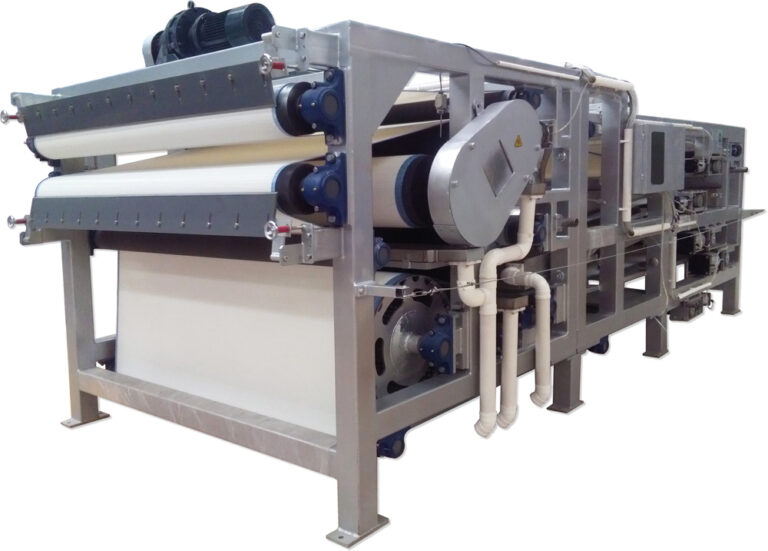
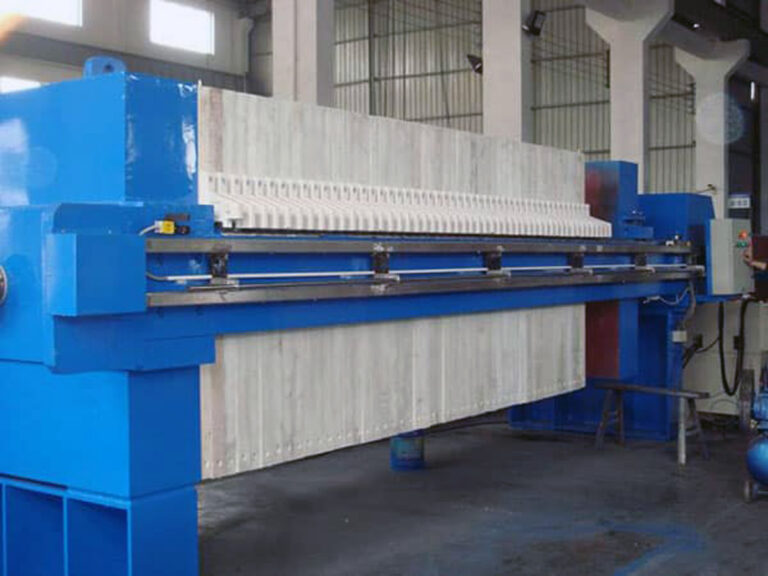
Bagi manajer pabrik dan teknisi proses, tingkat dosis polimer yang optimal untuk pengurasan tekan filter sabuk merupakan teka-teki operasional yang terus berlanjut. Tujuannya jelas: mencapai target padatan cake dan kejernihan filtrat dengan biaya bahan kimia terendah. Namun, jalurnya dikaburkan oleh jaringan kompleks variabel yang saling berinteraksi - jenis lumpur, laju umpan, karakteristik polimer - yang membuat dosis “terbaik” universal menjadi tidak mungkin. Mengandalkan setpoint historis atau rekomendasi vendor sering kali menyebabkan pengeluaran bahan kimia yang berlebihan atau kinerja yang terganggu.
Kompleksitas ini membuat optimasi sistematis menjadi prioritas finansial dan operasional yang penting. Polimer sering kali merupakan satu-satunya biaya konsumsi terbesar dalam pengurasan air secara mekanis. Dosis yang berlebihan mengikis anggaran dan dapat menghambat pengurasan, sementara dosis yang kurang meningkatkan biaya pembuangan dan risiko regulasi. Memahami sifat multivariat dari sistem ini adalah langkah pertama menuju kinerja yang dapat diprediksi dan hemat biaya.
Faktor Utama yang Mempengaruhi Dosis Polimer yang Optimal
Sistem Multivariat
Dosis optimal bukanlah angka yang tetap, melainkan titik setel dinamis dalam sistem variabel yang saling bergantung. Karakteristik lumpur membentuk fondasi; lumpur aktif limbah dengan kandungan organik yang tinggi membutuhkan lebih banyak polimer kationik daripada lumpur primer yang kaya mineral. Parameter polimer - jenis, kerapatan muatan, berat molekul - harus disesuaikan dengan karakteristik ini. Namun, faktor-faktor ini tidak beroperasi secara terpisah.
Tuas Dominan: Laju Umpan Lumpur
Parameter proses memberikan pengaruh yang sangat besar. Di antaranya, laju umpan lumpur secara konsisten merupakan pengungkit yang paling signifikan terhadap hasil seperti kualitas filtrat dan penangkapan padatan. Interaksinya dengan variabel polimer sering kali menutupi efek individu dari perubahan dosis polimer saja. Ini berarti efektivitas penyesuaian polimer yang diberikan sepenuhnya tergantung pada keluaran lumpur saat ini. Dosis yang bekerja pada 50 GPM mungkin gagal pada 70 GPM.
Menyingkap Interaksi Tersembunyi
Pengujian tradisional satu variabel pada satu waktu gagal mengungkapkan interaksi kritis ini, sehingga kinerja pabrik tidak dapat diprediksi. Misalnya, efek dari peningkatan konsentrasi polimer dapat berubah secara dramatis berdasarkan kecepatan belt atau padatan umpan yang bersamaan. Pengoptimalan yang efektif memerlukan perubahan perspektif: lihat proses pengeringan sebagai sistem multivariat di mana parameter seperti laju umpan, dosis polimer, dan kinerja pra-pengentalan berinteraksi untuk menentukan optimal yang sebenarnya.
Biaya Dosis Polimer: Menyeimbangkan Kinerja & Anggaran
Trade-Off Non-Linear
Hubungan antara dosis polimer dan kinerja pengeringan pada dasarnya bersifat non-linier, menciptakan pertukaran ekonomi yang tidak dapat dihindari. Data industri menunjukkan bahwa kondisi yang memaksimalkan kekeringan kue - sering kali membutuhkan dosis polimer yang tinggi - berbeda dengan kondisi yang mengoptimalkan kualitas filtrat dan penangkapan padatan, yang biasanya mencapai puncaknya pada dosis sedang. Pemutusan hubungan yang mendasar ini memaksa pilihan strategis.
Menentukan Prioritas Berbasis Biaya
Manajer pabrik harus menentukan prioritas operasional yang jelas dan berbasis biaya. Meminimalkan penggunaan polimer secara bersamaan sambil memaksimalkan padatan cake dan kejernihan filtrat tidak mungkin dilakukan. Mengejar cake yang terlalu kering dengan cara memberi dosis yang berlebihan akan meningkatkan biaya bahan kimia dan dapat menstabilkan kembali koloid lumpur, yang ironisnya menghambat pengeringan. Sebaliknya, mengurangi dosis untuk menghemat polimer menghasilkan cake yang basah, tangkapan yang buruk, dan biaya pembuangan spiral. Tujuannya adalah untuk menemukan dosis yang meminimalkan total biaya, yang mencakup biaya bahan kimia, biaya pembuangan, dan biaya tambahan untuk kualitas limbah yang buruk.
Matriks Kinerja-Biaya
Memahami pertukaran ini sangat penting untuk pengendalian anggaran. Tabel berikut ini menguraikan keputusan ekonomi utama yang dihadapi ketika menargetkan sasaran kinerja yang berbeda:
| Sasaran Kinerja | Dosis Polimer Khas | Trade-off Ekonomi Primer |
|---|---|---|
| Memaksimalkan Kekeringan Kue | Dosis tinggi | Biaya bahan kimia yang tinggi |
| Optimalkan Kualitas Filtrat | Dosis sedang | Potensi kue yang lebih basah |
| Meminimalkan Penggunaan Polimer | Dosis rendah | Biaya pembuangan yang tinggi |
Sumber: Dokumentasi teknis dan spesifikasi industri.
Cara Menentukan Dosis Polimer Optimal Anda
Bergerak Melampaui Setpoint
Menentukan optimal spesifik lokasi Anda memerlukan pengabaian setpoint statis untuk metodologi berbasis bukti yang sistematis. Pemeriksaan awal melalui uji tabung laboratorium, dipandu oleh standar seperti ASTM D2035 Praktik Standar untuk Uji Tabung Koagulasi-Flokulasi Air, berguna untuk memilih jenis polimer dan menetapkan kisaran dosis awal dengan mengevaluasi pembentukan flok dan drainabilitas. Namun, uji tabung tidak dapat mereplikasi profil geser dan tekanan dari penyaring sabuk skala penuh.
Pentingnya Uji Coba Faktorial
Langkah yang pasti adalah melakukan uji coba multivariabel skala pilot atau skala penuh. Menggunakan desain eksperimental terstruktur seperti metode Box-Behnken sangat penting untuk mengukur efek utama dan interaksi dari parameter-parameter utama: laju umpan lumpur, dosis polimer, konsentrasi polimer, dan kecepatan belt. Pendekatan ini mengembangkan model statistik prediktif untuk menemukan jendela operasi yang optimal, yang mengungkapkan bagaimana variabel-variabel digabungkan untuk mempengaruhi hasil.
Memetakan Lanskap Kinerja
Wawasan inti dari proses ini adalah bahwa “dosis optimal” adalah target yang bergerak yang ditentukan oleh interaksi sesaat. Oleh karena itu, tujuan pengujian bukanlah untuk menemukan angka ajaib, tetapi untuk memetakan lanskap kinerja. Peta ini memungkinkan kontrol yang cerdas dan responsif, yang menunjukkan bagaimana menyesuaikan beberapa tuas ketika satu input, seperti konsistensi lumpur, berubah. Menurut pengalaman kami, pendekatan ini secara konsisten mengungkapkan pengoptimalan tersembunyi yang mengurangi penggunaan polimer sebesar 10-20% sambil mempertahankan atau meningkatkan kinerja.
Tingkat Dosis Polimer vs Konsentrasi: Mana yang Lebih Penting?
Menentukan Perbedaan
Temuan penting dari uji coba faktorial lanjutan adalah bahwa perbedaan dan interaksi antara laju dosis dan konsentrasi lebih signifikan daripada salah satu parameter saja. Laju dosis mengacu pada aliran volumetrik larutan polimer ke aliran lumpur. Konsentrasi adalah kekuatan larutan itu, biasanya dinyatakan sebagai persen polimer aktif. Praktik umum menjaga konsentrasi tetap konstan dan hanya menyesuaikan kecepatan pompa dosis.
Konsentrasi sebagai Tuas Kontrol
Bukti-bukti yang ada mengubah praktik ini. Penelitian menunjukkan bahwa interaksi antara laju aliran lumpur dan polimer konsentrasi lebih signifikan secara statistik untuk pengoptimalan daripada interaksi dengan laju dosis. Ini berarti menyesuaikan konsentrasi itu sendiri - mengencerkan atau memperkuat larutan polimer - dapat menjadi tuas kontrol yang lebih kuat daripada sekadar mempercepat atau memperlambat pompa umpan. Konsentrasi yang lebih tinggi pada laju aliran yang lebih rendah dapat menghasilkan struktur flok dan hasil pengeringan yang berbeda dari konsentrasi yang lebih rendah pada laju aliran yang lebih tinggi, bahkan jika total massa polimer yang dikirim serupa.
Pergeseran Paradigma untuk Kontrol
Hal ini memerlukan pergeseran ke arah sistem kontrol yang mampu memodulasi kedua variabel secara dinamis. Mengandalkan hanya pada laju dosis yang terkait dengan aliran lumpur hanya memberikan respons satu dimensi. Pengoptimalan generasi berikutnya membutuhkan sistem yang dapat menyesuaikan konsentrasi berdasarkan parameter umpan balik waktu nyata, seperti kekeruhan filtrat atau reologi lumpur yang dikondisikan, untuk mempertahankan kinerja yang konsisten dan mencapai penghematan biaya yang lebih dalam.
Kisaran Dosis Polimer Umum berdasarkan Jenis Lumpur
Menetapkan Garis Dasar
Meskipun pengujian spesifik lokasi tidak dapat dinegosiasikan, rentang dosis yang telah ditetapkan memberikan dasar yang penting untuk pembandingan, pengadaan, dan pemecahan masalah. Kisaran ini biasanya dinyatakan sebagai kilogram polimer aktif per ton padatan kering (kg/tds). Untuk pengepres filter sabuk yang menggunakan polielektrolit organik, konsumsi keseluruhan dapat berkisar antara 2 hingga 11 kg/tds, dengan kisaran spesifik yang sangat bergantung pada asal lumpur.
Ranges by Sludge Composition
The following table outlines common starting ranges, which highlight the impact of sludge composition on polymer demand:
| Jenis Lumpur | Typical Dosing Range (kg active polymer/tonne dry solids) | Relative Polymer Demand |
|---|---|---|
| Primary Sludge | 2 – 3 kg/tds | Rendah |
| Mixed Primary & WAS | 3 – 5 kg/tds | Sedang |
| Digested Sludge | 4 – 5 kg/tds | Sedang-Tinggi |
| Waste-Activated Sludge (WAS) | 4 – 6 kg/tds | Tinggi |
Catatan: Ranges are for belt filter presses using organic polyelectrolytes. Overall consumption spans 2–11 kg/tds.
Sumber: Dokumentasi teknis dan spesifikasi industri.
The Critical Caveat
It is vital to view these figures as starting points only. The actual optimal dose within these ranges will be dictated by the interacting factors previously discussed, particularly the instantaneous sludge feed rate and the performance of any upstream pre-thickening processes. A well-thickened sludge will always require less polymer than a thin, dilute feed.
Optimizing Dewatering Performance with Automated Controls
Beyond Flow-Paced Dosing
Automation is the key to maintaining the optimal dose identified through testing amidst real-world plant fluctuations. Effective control must extend beyond simply tying a polymer pump to a sludge flow meter. Given the importance of polymer concentration, next-generation systems should incorporate the ability to adjust solution strength dynamically, not just dosing rate.
Key Parameters for Control
A modern control strategy integrates several key parameters, each affecting specific performance indicators:
| Parameter Kontrol | What It Adjusts | Key Performance Indicator (KPI) Affected |
|---|---|---|
| Polymer Dosing Rate | Solution volumetric flow | Filtrate quality, Solids capture |
| Polymer Concentration | Solution strength | Filtrate quality, Cost efficiency |
| Belt Speed / Tension | Mechanical pressure | Cake solids percentage |
| Rheology (Yield Stress) | Polymer conditioning | Filtrate Suspended Solids (FSS) |
Sumber: ISO 15839 Water quality — On-line sensors/analysing equipment for water. This standard provides the framework for evaluating online sensors, which are critical for real-time monitoring of parameters like turbidity (related to filtrate quality) to enable dynamic control of polymer dosing.
The Role of Rheology
Research shows a clear power-law relationship between the conditioned sludge’s yield stress (a rheological property) and filtrate suspended solids. This allows inline rheological measurements to predict and control effluent quality in real-time by modulating polymer addition. However, a critical nuance is that yield stress does not correlate with final cake solids. Achieving target dryness must be controlled through separate mechanical setpoints like belt tension and pressure zone configuration, underscoring the need for a multi-variable control approach.
Practical Steps for On-Site Polymer Dosing Trials
Laying the Groundwork
Conducting an effective on-site trial requires meticulous planning to generate actionable data. First, ensure baseline stability by verifying consistent sludge feed characteristics (source, age, solids content) and precise, repeatable polymer solution preparation. Any trial conducted on a shifting foundation will produce unreliable results.
Designing the Multivariable Experiment
The most common error is running a simple test that varies only the polymer dose. This is insufficient. Instead, structure a factorial experiment that simultaneously varies sludge feed rate, polymer dosing rate, and polymer concentration at two or three levels. Measure key responses continuously: cake solids percentage, filtrate turbidity or suspended solids, and calculated solids capture rate.
Analyzing with a Systems View
During analysis, a critical insight is that pre-dewatering equipment performance can be a significant main parameter. For instance, the speed of an upstream linear screen directly affects feed solids to the press, thereby influencing the required polymer dose and final cake dryness. This variable must be included in your experimental design and statistical model. The outcome should be an operational model that reveals trade-offs and interaction effects, providing a decision framework for operators.
The following table outlines the phased approach for a successful trial:
| Trial Phase | Tindakan Utama | Critical Measured Response |
|---|---|---|
| Preparation | Ensure stable sludge feed | Consistent feed characteristics |
| Experimental Design | Use multivariable factorial approach | Interaction effects |
| Variable Manipulation | Adjust sludge feed, polymer rate, concentration | Cake solids percentage |
| Data Analysis | Model pre-dewatering equipment effects | Solids capture rate |
Sumber: Dokumentasi teknis dan spesifikasi industri.
Selecting the Right Polymer for Your Belt Filter Press
The First Optimization Step
Polymer selection is the foundational step toward optimal dosing. The primary choice is dictated by sludge surface charge: cationic polymers for organic, negatively charged sludges like WAS, and anionic or non-ionic polymers for mineral-rich or industrial sludges. Within these categories, charge density and molecular weight must be matched to the specific sludge through bench-scale testing. High molecular weight polymers generally form larger, stronger flocs beneficial for the gravity drainage section of a belt filter press dewatering system.
A Holistic Technology Assessment
Selection cannot be viewed in isolation from the broader dewatering technology strategy. For specific challenging sludge characteristics, such as high fats, oils, and grease (FOG) or extreme fineness, the fundamental dewatering technology should be reassessed. In such cases, alternative technologies like centrifuges may offer a superior technical and economic solution. Polymer selection is therefore integral to a holistic analysis of sludge composition and full-process train performance, guided by frameworks like the EPA 832-F-00-068 Wastewater Technology Fact Sheet Belt Filter Press.
The optimal polymer dosing rate is a dynamic equilibrium, not a static setpoint. Success hinges on understanding the multivariate interactions between sludge feed, polymer variables, and mechanical settings, then implementing control strategies that respond to these relationships. Prioritize defining your cost-based performance goal, as chasing simultaneous extremes in dryness, clarity, and low chemical use is not operationally feasible.
Need professional guidance to map your specific dewatering performance landscape and implement a cost-effective control strategy? The engineers at PORVOO specialize in systematic optimization, from polymer selection through to automated control integration, ensuring your belt filter press operates at its true peak efficiency.
Pertanyaan yang Sering Diajukan
Q: How should we design an on-site trial to find the optimal polymer dose for our belt filter press?
A: Effective trials require a multivariable factorial design, not a simple one-factor test. Simultaneously vary sludge feed rate, polymer dosing rate, and polymer concentration at different levels, while measuring cake solids, filtrate quality, and capture rate. Include pre-dewatering equipment settings in your model, as they significantly impact results. For projects where polymer is a major cost driver, plan for this structured testing to develop a predictive operational model, not just a single setpoint.
Q: Why is adjusting polymer concentration often more effective than just changing the dosing pump speed?
A: Advanced analysis shows the interaction between sludge flow and polymer solution strength is more statistically significant for optimization than interactions with volumetric dosing rate. While common practice fixes concentration and adjusts pump speed, dynamically modulating the solution strength itself is a more powerful control lever. This means facilities with variable sludge loads should prioritize control systems capable of adjusting both parameters, as this paradigm shift is key to consistent performance and cost control.
Q: What are the typical polymer consumption ranges for different sludge types in belt filter presses?
A: Consumption is expressed as kg of active polymer per tonne of dry solids (kg/tds). For organic polyelectrolytes, common ranges are 2–3 for primary sludge, 3–5 for mixed primary/WAS, 4–5 for digested sludge, and 4–6 for waste-activated sludge alone. These baselines are dictated by sludge origin and composition. If your operation processes a challenging, high-organic sludge like WAS, expect to budget for the higher end of these ranges and conduct site-specific testing to pinpoint the exact optimum.
Q: How can we use automation to maintain optimal dewatering performance with fluctuating conditions?
A: Next-generation control should move beyond simple flow-proportional dosing to dynamically adjust both polymer dosing rate and solution concentration. Incorporating real-time sludge rheology (yield stress) measurements can predict and control filtrate quality, as established by a clear power-law relationship. However, yield stress does not correlate with cake dryness. This means if your priority is consistent effluent compliance, plan for controls using rheological feedback, while cake solids must be managed through separate mechanical adjustments.
Q: What is the core economic trade-off we must manage with polymer dosing?
A: The primary trade-off is between chemical cost and process outcomes. Conditions that maximize cake dryness often require high polymer doses, inflating costs and potentially harming dewatering. Conversely, minimizing polymer use saves money but leads to wet cakes and poor solids capture, increasing disposal expenses. You cannot simultaneously minimize polymer cost while maximizing all performance metrics. Facilities must define a cost-based priority, analyzing total cost including disposal fees, to find their operational sweet spot.
Q: Which standards are relevant for monitoring and controlling the polymer dosing process?
A: For online monitoring of critical water quality parameters like turbidity in the filtrate stream, the performance of sensors and analyzers should be evaluated against ISO 15839. This standard specifies requirements for online equipment used in water quality monitoring. If your compliance strategy relies on real-time filtrate data for control, ensure your selected instrumentation and control logic can meet the performance tests outlined in this framework.