Memahami Grit dalam Air Limbah Industri
Siapa pun yang pernah bekerja di bidang pengelolaan air limbah industri tahu bahwa pasir lebih dari sekadar “pasir dan batu”. Dalam ekosistem proses pengolahan industri yang kompleks, grit mewakili salah satu tantangan paling gigih dan merusak yang dihadapi fasilitas saat ini. Tetapi apa sebenarnya yang dimaksud dengan grit dalam konteks khusus ini?
Pasir dalam air limbah industri biasanya mencakup partikel anorganik mulai dari pasir, kerikil, dan pecahan logam hingga cangkang telur, bubuk kopi, biji-bijian, dan berbagai sisa produksi. Partikel-partikel ini umumnya berkisar antara 0,1 hingga 3,0 mm dan memiliki gravitasi spesifik yang jauh lebih tinggi daripada bahan organik - biasanya antara 2,4 dan 2,65. Tidak seperti bahan yang dapat terurai secara hayati, pasir tidak akan terurai dalam proses pengolahan biologis.
Komposisinya sangat bervariasi tergantung pada sektor industrinya. Fasilitas pengolahan makanan sering kali menghasilkan pasir berlapis organik dengan tantangan penanganan yang unik, sementara manufaktur logam menghasilkan partikel logam abrasif yang merusak peralatan dengan cepat.
“Banyak manajer fasilitas yang meremehkan volume dan dampak pasir dalam sistem mereka,” kata Dr. James Rodriguez, spesialis pengolahan air limbah di Water Environment Federation. “Fasilitas industri yang khas dapat menghasilkan antara 0,5 dan 30 kaki kubik pasir per juta galon air limbah, tergantung pada sektor dan proses yang terlibat.”
Konsekuensi dari pembuangan pasir yang tidak memadai mengalir ke seluruh sistem pengolahan. Pasir yang tidak tertangani terakumulasi dalam jaringan pipa, mengurangi kapasitas aliran dan meningkatkan biaya pemompaan hingga 30%. Di bak aerasi, ia menghabiskan volume pengolahan yang berharga sambil menciptakan “zona mati” yang menampung kondisi anaerobik. Mungkin yang paling mahal, sifat abrasif pasir mempercepat keausan peralatan, terutama pada impeler, katup, dan komponen mekanis, sehingga mengurangi masa pakai peralatan selama bertahun-tahun.
Saya telah berjalan melalui fasilitas di mana kru pemeliharaan mengganti pompa setiap beberapa bulan dan bukannya setiap beberapa tahun - semua karena pembuangan pasir hulu yang tidak memadai. Dampak ekonomi tidak hanya mencakup penggantian suku cadang, tetapi juga peningkatan konsumsi energi, waktu henti yang tidak terjadwal, dan biaya tenaga kerja yang dapat melebihi $100.000 per tahun untuk operasi berukuran sedang.
Evolusi Teknologi Penghapusan Grit
Sejarah pembuangan pasir air limbah industri mencerminkan tren yang lebih luas dalam teknik lingkungan - sebuah perjalanan dari solusi mekanis dasar menuju sistem yang semakin canggih dan efisien. Pendekatan awal sangat sederhana menurut standar saat ini.
Pada tahun 1940-an dan 1950-an, sebagian besar fasilitas industri mengandalkan ruang pengendapan sederhana - pada dasarnya bak beton besar yang memperlambat aliran air limbah sehingga partikel yang lebih berat dapat tenggelam. Sistem pasif ini hanya menghilangkan partikel-partikel terbesar dan membutuhkan pembersihan manual yang sering - tugas yang padat karya dan sering kali berbahaya. Saya telah berbicara dengan para pensiunan insinyur yang menggambarkan pekerjaan yang melelahkan dalam menyekop pasir yang terkumpul dari ruang-ruang awal ini, kadang-kadang melakukan tugas ini setiap minggu.
Tahun 1960-an menghadirkan ruang pasir aerasi pertama, yang memperkenalkan udara untuk memisahkan bahan organik dari pasir anorganik yang lebih berat melalui pengendapan diferensial. Hal ini menandai kemajuan yang signifikan, tetapi sistem ini masih berjuang dengan efisiensi penyisihan yang konsisten dan menderita biaya operasional yang tinggi.
Momen daerah aliran sungai terjadi pada tahun 1970-an dan 1980-an dengan pengembangan sistem pembuangan pasir pusaran. Unit-unit ini menggunakan pola hidraulik terkontrol untuk meningkatkan pemisahan sekaligus secara dramatis mengurangi kebutuhan tapak. Ketika peraturan lingkungan diperketat sepanjang tahun 1990-an, sistem pembuangan pasir air limbah industri menjadi semakin canggih.
Sistem modern saat ini mewakili lompatan kuantum ke depan. Menurut penelitian Dr. Sarah Chen di Departemen Teknik Lingkungan MIT, “Teknologi penghilangan pasir kontemporer mencapai efisiensi penghilangan yang melebihi 95% untuk partikel yang lebih besar dari 150 mikron sambil mengonsumsi 30-40% lebih sedikit energi daripada sistem yang hanya dua dekade yang lalu.”
Perkembangan teknologi tidak hanya meningkatkan efisiensi - tetapi juga mengubah cara fasilitas industri melakukan pendekatan terhadap pengolahan air limbah secara holistik. Sistem pembuangan pasir modern sekarang terintegrasi secara mulus dengan proses hilir, berkomunikasi dengan sistem kontrol terpusat, dan menyesuaikan diri dengan berbagai kondisi aliran.
Evolusi ini juga mencerminkan perubahan prioritas. Sementara sistem awal berfokus hampir secara eksklusif pada pencegahan kerusakan peralatan, sistem pembuangan pasir air limbah industri saat ini dirancang dengan berbagai tujuan: melindungi peralatan, memaksimalkan efisiensi pengolahan, mengurangi konsumsi energi, meminimalkan penggunaan bahan kimia, dan memungkinkan aplikasi penggunaan kembali air.
Komponen Utama Sistem Penghapusan Grit Modern
Sistem pembuangan pasir air limbah industri modern terdiri dari beberapa komponen terintegrasi, masing-masing melayani fungsi spesifik dalam proses pengolahan secara keseluruhan. Memahami komponen-komponen ini sangat penting bagi siapa pun yang mengevaluasi, menentukan, atau mengoperasikan sistem tersebut.
Struktur saluran masuk merupakan komponen penting pertama, mengelola karakteristik aliran masuk untuk mengoptimalkan pemisahan pasir di bagian hilir. Saluran masuk yang dirancang dengan baik meminimalkan turbulensi sambil memberikan distribusi aliran dan kontrol kecepatan. Mereka sering kali menggabungkan baffle, gerbang, atau saluran khusus yang menyiapkan air limbah untuk pengolahan yang efektif. Desain yang paling canggih termasuk gerbang yang digerakkan yang secara otomatis menyesuaikan dengan berbagai kondisi aliran - mempertahankan kecepatan optimal terlepas dari laju aliran yang masuk.
Inti dari setiap sistem penghilangan pasir terletak pada ruang pasir itu sendiri. Bejana khusus ini menciptakan kondisi hidraulik yang diperlukan untuk pemisahan partikel yang efektif. Desain ruang sangat bervariasi berdasarkan mekanisme pemisahan yang digunakan:
| Jenis Kamar | Prinsip Kerja | Efisiensi Khas | Aplikasi Terbaik | Keterbatasan |
|---|---|---|---|---|
| Aliran Horisontal | Pengendapan gravitasi dengan kecepatan terkontrol | 60-70% untuk partikel >200µm | Laju aliran yang konsisten | Tapak yang besar, kurang efektif dengan variasi aliran |
| Diangin-anginkan | Pola aliran spiral yang diinduksi udara | 75-85% untuk partikel >150µm | Aplikasi aliran variabel | Konsumsi energi yang lebih tinggi, lebih banyak perawatan |
| Vortex | Pola aliran toroidal dengan pusaran paksa | 85-95% untuk partikel> 100µm | Fasilitas dengan ruang terbatas | Kontrol yang lebih kompleks, biaya awal yang lebih tinggi |
| Hidrosiklon | Pemisahan sentrifugal dalam bejana berbentuk kerucut | 90-98% untuk partikel >75µm | Kebutuhan kinerja tinggi | Kebutuhan energi yang lebih tinggi, lebih sensitif terhadap perubahan aliran |
Mekanisme pengumpulan memindahkan pasir yang terpisah dari ruang ke sistem pencucian dan pengeringan. Pilihannya meliputi konveyor ulir, elevator rantai dan ember, atau sistem pemompaan pneumatik, masing-masing dengan keunggulan yang berbeda. Konveyor ulir unggul dalam hal keandalan tetapi sulit menangani pasir yang sangat basah, sedangkan sistem pneumatik dapat mengangkut pasir dalam jarak yang lebih jauh tetapi membutuhkan lebih banyak energi.
Peralatan pencucian dan pengurasan merupakan tahap komponen terakhir, yang menyiapkan pasir yang terkumpul untuk dibuang. Sistem ini menghilangkan bahan organik (pencucian) dan kelebihan air (pengurasan) untuk mengurangi volume dan biaya pembuangan sekaligus meminimalkan bau. Selama tur fasilitas baru-baru ini, saya menyaksikan pengklasifikasi pasir modern mengurangi volume material yang terkumpul hingga hampir 60% dibandingkan dengan sistem fasilitas sebelumnya, yang secara signifikan memangkas biaya pembuangan tahunan.
Sistem kontrol dan otomatisasi mengintegrasikan komponen-komponen fisik ini, menyediakan fungsi pemantauan, penyesuaian, dan pelaporan. Sistem modern menggunakan sensor yang mengukur laju aliran, konsentrasi pasir, dan efisiensi pembuangan, yang memberikan data ke pengontrol logika terprogram (PLC) yang secara otomatis menyesuaikan parameter operasional untuk kinerja yang optimal.
“Kecanggihan sistem kontrol telah mengubah keandalan penyisihan pasir,” jelas Mark Thompson, manajer operasi di sebuah fasilitas pengolahan air limbah industri besar. “Di mana kami pernah menghadapi fluktuasi efisiensi sebesar 30% atau lebih tergantung pada kondisi aliran, sistem kontrol modern mempertahankan kinerja yang konsisten meskipun inputnya sangat bervariasi.”
Jenis-jenis Sistem Pembuangan Grit Air Limbah Industri
Pasar pengolahan air limbah industri menawarkan beberapa pendekatan yang berbeda untuk menghilangkan pasir, masing-masing dengan kekuatan dan keterbatasan karakteristik. Memilih teknologi yang optimal membutuhkan evaluasi yang cermat terhadap karakteristik air limbah, batasan ruang, dan persyaratan kinerja.
Ruang pasir aliran horizontal mewakili teknologi yang paling mapan, menggunakan prinsip yang mudah: mengontrol kecepatan aliran secara tepat sehingga pasir mengendap sementara bahan organik yang lebih ringan tetap tersuspensi. Sistem ini biasanya mempertahankan kecepatan antara 0,8-1,3 kaki/detik, menciptakan kondisi di mana partikel pasir mengendap sesuai dengan Hukum Stokes sementara bahan organik terus melalui sistem. Ruang horizontal modern menggabungkan mekanisme kontrol aliran yang canggih dan sistem pembersihan mekanis yang menghilangkan persyaratan pemindahan manual dari desain sebelumnya.
Meskipun secara konseptual sederhana, ruang horisontal yang dirancang dengan baik mencapai 60-70% penghilangan partikel yang lebih besar dari 200 mikron. Keuntungan utama mereka meliputi kesederhanaan mekanis, konsumsi energi yang rendah (sering kali tidak memerlukan daya eksternal untuk proses pemisahan), dan parameter desain yang mapan. Namun, mereka biasanya menuntut area tapak yang signifikan dan berkinerja tidak konsisten dalam berbagai kondisi aliran.
Ruang grit aerasi memasukkan udara bertekanan di sepanjang satu sisi tangki persegi panjang, menciptakan pola aliran spiral yang meningkatkan pemisahan. Injeksi udara yang terkontrol menciptakan manfaat sekunder: agitasi membantu menghilangkan bahan organik dari partikel pasir, sehingga menghasilkan pasir yang lebih bersih yang membutuhkan lebih sedikit pemrosesan hilir. Sistem ini mencapai efisiensi penyisihan yang lebih tinggi - biasanya 75-85% untuk partikel di atas 150 mikron - sambil mengakomodasi aliran variabel lebih efektif daripada ruang horizontal.
Setelah mengamati banyak instalasi, saya telah mencatat bahwa sistem aerasi sering kali mewakili titik manis untuk fasilitas industri menengah, menyeimbangkan kinerja dengan kesederhanaan operasional. Kelemahan utama mereka adalah peningkatan konsumsi energi dari kebutuhan aerasi terus menerus, menambah biaya operasi sekitar $0.20-0.40 per seribu galon yang diolah.
Vortex grit removal systems create a toroidal flow pattern within a circular chamber. This controlled hydraulic environment produces superior separation in significantly smaller footprints—typically 60-75% smaller than equivalent horizontal flow systems. The incoming flow tangentially enters the main chamber, establishing a rotating flow pattern that drives heavier grit particles toward the center collection point while lighter organic materials exit with the effluent flow.
Advanced vortex systems achieve impressive 85-95% removal efficiencies for particles larger than 100 microns. Their compact design makes them particularly valuable for facilities with space constraints or those undergoing retrofits within existing structures. However, these advantages come with higher capital costs and more complex control requirements.
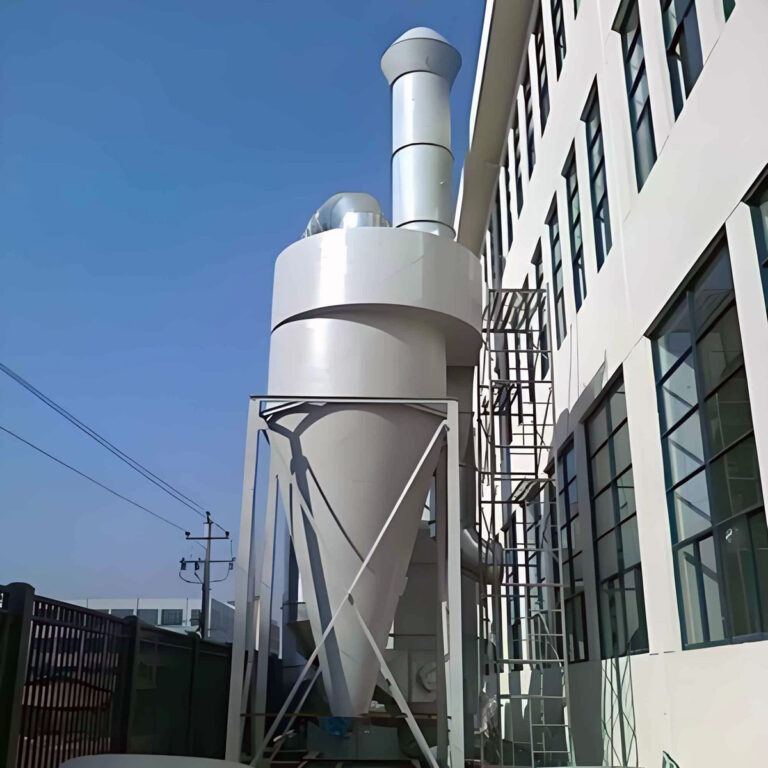
Hydrocyclone-based systems represent the highest-performance option, employing centrifugal forces significantly greater than gravity to separate particles. These conical vessels create intense centrifugal forces that can effectively capture particles as small as 75 microns with efficiency exceeding 90%.
| Jenis Sistem | Footprint Requirement | Konsumsi Energi | Efisiensi Penghapusan | Aplikasi Khas | Relative Capital Cost |
|---|---|---|---|---|---|
| Aliran Horisontal | Large (100%) | Low (baseline) | 60-70% (>200μm) | Consistent flows, space-unconstrained sites | $ |
| Diangin-anginkan | Medium (70-80%) | Medium (150-200% of baseline) | 75-85% (>150μm) | Variable flows, mixed industrial/municipal | $$ |
| Vortex | Small (25-40%) | Medium-High (175-225% of baseline) | 85-95% (>100μm) | Space-constrained sites, retrofits | $$$ |
| Hidrosiklon | Very Small (15-25%) | High (225-300% of baseline) | 90-98% (>75μm) | High-performance applications, sensitive downstream processes | $$$$ |
Recent innovations include hybrid systems that combine multiple technologies to address specific wastewater challenges. For instance, some facilities now employ aerated chambers as pre-treatment before hydrocyclone systems, gaining the organic-stripping benefits of aeration while achieving the superior particle capture of cyclonic separation.
Performance Factors and Design Considerations
The effectiveness of an industrial wastewater grit removal system depends on numerous interrelated factors that must be carefully balanced during the design phase. Understanding these critical parameters helps ensure optimal system performance under real-world conditions.
Flow rate management stands as perhaps the most fundamental consideration. Grit removal efficiency directly correlates with the system’s ability to maintain optimal hydraulic conditions across varying flow scenarios. During a recent consulting project at a food processing facility, I observed firsthand how flow fluctuations of just 25% reduced grit capture efficiency by nearly 40% in their poorly designed system.
Modern designs incorporate several strategies to address this challenge:
- Flow equalization basins that buffer variations before grit removal
- Variable frequency drives on pumps and blowers to adjust operational parameters
- Multiple parallel treatment trains that can be activated based on incoming flow
- Automated control systems that continuously optimize settings based on real-time conditions
Particle size capture efficiency defines the system’s ability to remove grit across different size fractions. While larger particles (>300 microns) are relatively easy to capture, industrial applications often require removal of much smaller particles to protect sensitive downstream equipment. The relationship between particle size and removal efficiency typically follows a logarithmic curve, with significantly diminishing returns for capturing particles below approximately 75 microns.
Dr. Sarah Chen’s research demonstrates that “optimizing for particles between 150-300 microns typically provides the best balance between protection and cost-effectiveness for most industrial applications, though certain specialized processes may require targeting smaller particle ranges.”
Retention time—how long wastewater remains in the grit removal system—directly impacts separation effectiveness. Insufficient retention prevents proper settling or separation, while excessive retention wastes capacity and can lead to unwanted biological activity. The optimal retention time varies by technology:
| Jenis Teknologi | Optimal Retention Time | Impact of Insufficient Time | Impact of Excessive Time |
|---|---|---|---|
| Aliran Horisontal | 45-90 seconds | Incomplete settling, especially of smaller particles | Resuspension of captured grit, biological growth |
| Diangin-anginkan | 2-5 minutes | Poor air-induced separation, inadequate organic stripping | Energy waste, excessive turbulence disrupting separation |
| Vortex | 30-60 seconds | Insufficient vortex development, poor separation | Minimal negative impact, primarily capacity reduction |
| Hidrosiklon | 6-12 seconds | Inadequate centrifugal force development | Minimal impact beyond capacity reduction |
Space requirements present significant constraints, particularly when retrofitting existing facilities. The dramatic differences in footprint between technologies often drive selection decisions. A vortex system typically requires less than 40% of the space needed for a horizontal flow system of equivalent capacity, making it the preferred choice for space-constrained installations despite higher capital costs.
Energy consumption varies dramatically across technologies, with passive horizontal systems consuming minimal energy while high-performance hydrocyclone systems may require 3-4 times more. This operational cost difference can substantially impact the total cost of ownership over the system’s lifespan. Increasingly, designers are incorporating energy recovery systems and high-efficiency motors to mitigate these differences.
Location within the treatment train significantly affects performance as well. Positioning grit removal too early may mean dealing with excessive debris that interferes with separation, while positioning it too late risks damage to upstream equipment. The optimal location typically follows screening but precedes primary treatment.
Tantangan dan Solusi Implementasi
Installing and operating industrial wastewater grit removal systems presents numerous challenges that require careful planning and management. Understanding these potential pitfalls helps facilities avoid costly mistakes and operational disruptions.
One nearly universal challenge involves accurately characterizing the wastewater stream during the design phase. Many facilities discover too late that their grit profiles differ significantly from standard assumptions. During a recent food processing plant upgrade, preliminary testing indicated grit concentrations three times higher than industry averages, necessitating substantial design revisions before implementation.
The solution lies in comprehensive pre-design testing. Collecting and analyzing multiple samples across different production conditions provides the data necessary for proper sizing and technology selection. This investment typically represents less than 2% of total project costs while potentially preventing far costlier redesign requirements later.
Retrofitting existing facilities presents particular difficulties, especially when space constraints limit options. Many industrial sites face the challenge of upgrading grit removal capacity without expanding footprint. A chemical manufacturer I visited had addressed this by selecting a high-efficiency vortex system that fit within their existing basin dimensions while doubling removal capacity through more efficient hydraulic design.
Construction sequencing poses another challenge when maintaining operations during implementation. Most industrial facilities cannot shut down wastewater treatment for extended periods, requiring carefully planned construction phases. Strategies include:
- Installing temporary treatment systems during construction
- Building new systems parallel to existing operations
- Constructing bypass capabilities that allow phased implementation
- Scheduling intensive work during planned production downtime
- Using prefabricated components to minimize on-site construction time
Operational challenges often emerge after commissioning. The most common issues include:
Flow variations: Industrial production often creates significant wastewater flow fluctuations that challenge grit removal systems. Mark Thompson, the operations manager I mentioned earlier, notes that “flow variations of 300-400% between production shifts created serious performance issues until we implemented advanced flow equalization and control systems.”
Material handling difficulties: The removed grit must be transported, dewatered, and disposed of efficiently. Systems that separate grit effectively but struggle with material handling create operational bottlenecks. Modern designs integrate grit washing, dewatering, and transport systems to create seamless operation.
Control system integration: Many facilities struggle to properly integrate grit removal controls with their broader treatment system automation. Successful implementations typically involve:
- Standardized communication protocols
- Centralized SCADA systems with remote monitoring capabilities
- Automated sampling and performance verification
- Predictive maintenance monitoring
- Alarm systems with appropriate escalation protocols
Maintenance requirements often exceed initial expectations, particularly regarding wear parts in high-grit environments. Successful operations implement comprehensive preventive maintenance programs, maintain adequate spare parts inventories, and train operations staff thoroughly on routine maintenance procedures.
A food processing facility I consulted for addressed this challenge by implementing a dual-chamber design that allowed alternating operation, enabling maintenance on one chamber while maintaining treatment capacity through the other. This redundancy added approximately 15% to the capital cost but eliminated costly production interruptions during maintenance.
Case Studies: Successful Grit Removal Implementation
Examining real-world implementations provides valuable insights into how industrial wastewater grit removal systems perform under actual operating conditions. The following cases illustrate successful approaches across different industrial sectors.
Chemical Manufacturing Facility Overcomes Space Constraints
A specialty chemical manufacturer in Ohio faced persistently high maintenance costs in their wastewater treatment system despite having an older horizontal grit chamber installed. Equipment downstream of the existing system experienced excessive wear, with pump impellers requiring replacement every 3-4 months instead of the expected 2-year service life.
Analysis revealed that while their existing horizontal flow system theoretically provided adequate capacity, its actual performance suffered during the production peak flows that occurred during shift changes. The facility needed greater removal efficiency but faced severe space constraints that prevented expanding the existing system’s footprint.
After evaluating alternatives, they implemented a compact vortex grit removal system with 40% smaller footprint than their existing system while doubling removal efficiency. The new system incorporated variable frequency drives on all motors to adapt to changing flow conditions automatically.
Results after 18 months of operation were remarkable:
- Pump impeller replacement frequency decreased by 85%
- Annual maintenance costs reduced by approximately $87,000
- Downstream clarifier performance improved due to reduced inorganic loading
- Energy consumption for the entire treatment system decreased by 12% despite the more sophisticated grit removal system
The project achieved financial payback in approximately 2.1 years, significantly better than the projected 3.5-year estimate, primarily due to greater-than-anticipated maintenance savings.
Food Processing Plant Addresses Unique Grit Characteristics
A large potato processing facility in Idaho contended with extraordinarily high volumes of food-coated grit with unusual characteristics. Their conventional grit removal system captured larger particles effectively but struggled with smaller, organic-coated particles that caused downstream process issues.
Initial testing revealed their wastewater contained high concentrations of starch-coated soil particles from the potato washing process. These particles exhibited different settling characteristics than typical inorganic grit, with specific gravities averaging 1.8 instead of the typical 2.65 for mineral grit.
The solution combined multiple technologies: an aerated grit chamber to strip organic coatings followed by a specialized hydrocyclone system calibrated for their specific particle profile. The system also incorporated a unique grit washing system that removed residual organic material, reducing disposal costs and odor issues.
Performance results included:
- Total grit removal increased from approximately 65% to over 92%
- Captured grit volume increased by 280% compared to the previous system
- Disposal costs decreased by 35% due to cleaner, more concentrated grit
- Downstream biological treatment efficiency improved significantly due to reduced inorganic loading
- Annual chemical savings of approximately $42,000 from improved biological treatment performance
The facility’s environmental manager noted: “The new system not only solved our maintenance problems but unexpectedly improved our downstream biological treatment enough to reduce our chemical consumption substantially.”
Metal Finishing Operation Addresses Hazardous Grit Challenges
A metal finishing operation in Pennsylvania faced a complex challenge: their wastewater contained both conventional grit and metal-laden particles with potential hazardous characteristics. Their existing treatment system struggled with these mixed streams, resulting in poor separation and potential compliance issues.
Working with environmental consultants and equipment manufacturers, they developed a custom solution that incorporated advanced separation technology with specialized material handling capabilities. The implemented system featured:
- A multi-stage separation process optimized for their specific particle size distribution
- Special abrasion-resistant materials for all wetted components
- An integrated metal recovery system that allowed reclamation of valuable metals
- A sophisticated control system that adapted to varying production schedules
The results demonstrated both environmental and economic benefits:
- Hazardous waste disposal volume reduced by 76%
- Recovered metal value offset approximately 18% of the system’s operating costs
- Compliance violations eliminated entirely
- Equipment maintenance costs throughout the treatment system decreased by 62%
This case particularly highlights how specialized industrial wastewater grit removal systems can address unique industry-specific challenges while providing substantial operational and environmental benefits.
Future Trends in Grit Removal Technology
The industrial wastewater grit removal landscape continues to evolve rapidly, with emerging technologies and approaches reshaping what’s possible. Understanding these trends helps facilities make forward-looking decisions that anticipate future capabilities and requirements.
Automation and IoT integration represents perhaps the most transformative trend. Traditional grit removal systems operated as relatively isolated processes with minimal instrumentation and manual adjustments. Today’s advanced systems incorporate extensive real-time monitoring and automated control. Sensors continuously measure flow rates, turbidity, grit concentration, and removal efficiency, feeding this data to sophisticated control systems that automatically optimize operation.
The next evolution, already emerging in leading facilities, connects these systems to broader Industrial Internet of Things (IIoT) platforms. This integration enables predictive maintenance, performance optimization across multiple treatment processes, and data-driven decision making. A pharmaceutical manufacturer I recently toured demonstrated how their cloud-connected grit removal system automatically adjusted based not just on current conditions but on production schedule data from their ERP system—anticipating flow changes before they occurred.
Energy efficiency improvements continue to reshape the cost equation for high-performance systems. New designs focus on minimizing energy consumption through:
- Advanced computational fluid dynamics to optimize hydraulic efficiency
- High-efficiency motors and variable frequency drives
- Energy recovery systems that capture kinetic energy from wastewater flow
- Precision air control in aerated systems to minimize blower requirements
- Smart control algorithms that continuously optimize energy usage
These innovations are narrowing the operational cost gap between low-energy horizontal flow systems and high-performance vortex or hydrocyclone alternatives. Dr. James Rodriguez notes that “the energy consumption difference between technology classes has narrowed from roughly 4:1 to approximately 2:1 over the past decade, making higher-performance options increasingly competitive on total cost of ownership.”
Material science advancements address one of the fundamental challenges in grit removal—the extremely abrasive operating environment. New wear-resistant materials including specialized ceramics, advanced polymer composites, and nano-engineered surfaces dramatically extend component lifespan. Some manufacturers now offer critical components with 5-7 year wear guarantees where previously 1-2 years represented the standard expectation.
| Technology Area | Current State | Emerging Developments | Potential Impact |
|---|---|---|---|
| Automation & Control | Automated adjustment based on current conditions | Predictive control using production data and machine learning algorithms | 15-25% efficiency improvement, 30-40% reduction in operational variations |
| Efisiensi Energi | High-efficiency components with optional VFDs | Integrated energy recovery, smart energy management | 20-35% energy reduction compared to current best-in-class |
| Materials Science | Abrasion-resistant metals and polymers | Advanced ceramics, self-healing surfaces, nano-engineered materials | 2-3× improvement in component lifespan, expanded temperature and pH tolerance |
| Modular Design | Standardized systems with limited customization | Factory-tested modules with plug-and-play installation | 30-50% reduction in installation time, improved reliability through factory testing |
Regulatory influences continue to shape technology development as well. Increasingly stringent discharge requirements and growing focus on water reuse applications drive demand for higher performance grit removal. The trend toward resource recovery from wastewater also influences system design, with new emphasis on recovering not just water but potentially valuable materials from waste streams.
The most forward-looking manufacturers are developing systems specifically optimized for water reuse applications, where removing even fine grit becomes critical for preventing membrane fouling and equipment damage in advanced treatment processes.
Economic Considerations and ROI Analysis
Implementing an industrial wastewater grit removal system represents a significant capital investment with long-term operational implications. Understanding the economic dimensions helps facilities make decisions that balance initial costs against lifetime benefits.
The initial investment varies dramatically depending on system type, capacity, material construction, and implementation complexity. As a general guideline, current market prices for complete systems including installation typically range:
| Jenis Sistem | Rentang Kapasitas | Approximate Cost Range (USD) |
|---|---|---|
| Aliran Horisontal | Small (< 0.5 MGD) | $150,000 – $300,000 |
| Aliran Horisontal | Medium (0.5-2 MGD) | $250,000 – $600,000 |
| Aliran Horisontal | Large (> 2 MGD) | $500,000 – $1,200,000+ |
| Diangin-anginkan | Small (< 0.5 MGD) | $200,000 – $400,000 |
| Diangin-anginkan | Medium (0.5-2 MGD) | $350,000 – $800,000 |
| Diangin-anginkan | Large (> 2 MGD) | $700,000 – $1,500,000+ |
| Vortex | Small (< 0.5 MGD) | $250,000 – $450,000 |
| Vortex | Medium (0.5-2 MGD) | $400,000 – $900,000 |
| Vortex | Large (> 2 MGD) | $800,000 – $1,700,000+ |
| Hidrosiklon | Small (< 0.5 MGD) | $300,000 – $550,000 |
| Hidrosiklon | Medium (0.5-2 MGD) | $500,000 – $1,100,000 |
| Hidrosiklon | Large (> 2 MGD) | $950,000 – $2,000,000+ |
These figures reflect complete system costs including equipment, controls, installation, and commissioning but exclude site preparation and ancillary systems that vary significantly by location.
Beyond purchase and installation costs, operational expenses significantly impact total ownership costs. Annual operating costs typically include:
- Energy consumption (highest for hydrocyclone systems, lowest for horizontal flow)
- Maintenance materials and labor
- Replacement parts for wear components
- Grit handling and disposal
- Chemical costs for grit washing (if applicable)
- Laboratory testing and monitoring
Depending on technology and capacity, these operational costs typically range from $15,000 to $120,000 annually. However, these figures represent direct costs only and don’t account for the indirect benefits of effective grit removal.
The full economic picture emerges when considering the downstream benefits. Properly designed grit removal systems typically deliver:
Extended equipment life: Pumps, valves, diffusers, and other equipment downstream of effective grit removal systems typically experience 2-5× longer operational lifespans. For a medium-sized facility, this can represent $50,000-$150,000 annually in avoided replacement costs.
Reduced maintenance labor: Facilities with effective grit removal typically report 30-50% reductions in maintenance hours for downstream equipment. Beyond the direct labor savings, this allows maintenance personnel to focus on preventive rather than reactive tasks.
Improved treatment efficiency: Removing grit improves downstream biological treatment efficiency, potentially reducing chemical usage and energy consumption. Facilities often report 5-15% improvements in overall treatment efficiency.
Reduced disposal costs: Effective grit removal and washing reduces overall solids volume requiring disposal, often by 3-8% of total solids handling costs.
These benefits create typical payback periods ranging from 2-5 years for most industrial applications. However, facilities with particularly abrasive wastewater or sensitive downstream processes may see payback in as little as 12-18 months.
When evaluating grit removal technologies, PORVOO and other industry experts recommend considering not just capital costs but the complete lifecycle financial picture. The lowest initial cost solution rarely delivers the best long-term value, particularly for industrial applications with high grit loading or abrasiveness.
A comprehensive ROI analysis should include sensitivity analysis for key variables such as grit concentration, maintenance costs, and equipment replacement schedules. This approach provides a more robust financial evaluation than simple payback calculations and better aligns with the long service life typical of these systems.
Selecting the Right System for Your Facility
Choosing the optimal industrial wastewater grit removal system requires methodical evaluation of both facility needs and technology capabilities. The selection process should begin with thorough characterization of your wastewater stream and treatment objectives.
Start by analyzing your specific grit profile through proper sampling and testing. This should include not just concentration but particle size distribution, specific gravity, organic content, and abrasiveness. These characteristics vary dramatically across industries – food processing typically generates organic-coated grit with lower specific gravity, while metal fabrication produces highly abrasive metallic particles requiring specialized handling.
Space availability often significantly constrains technology options. When evaluating potential locations, consider not just the footprint of the treatment unit itself but also maintenance access requirements, grit handling equipment, and control systems. Some technologies offer significantly more compact designs – vortex systems typically require 60-75% less space than equivalent horizontal flow chambers.
Flow characteristics represent another critical consideration. Systems with highly variable flows often benefit from technologies with broader operating ranges, such as aerated or vortex designs, despite their higher energy requirements. Facilities should analyze both typical and peak flows, considering:
- Daily flow variations
- Production-related fluctuation patterns
- Seasonal changes
- Future capacity needs
- Storm event impacts (for facilities with combined systems)
Removal efficiency requirements should align with your specific protection needs. While higher efficiency systems typically cost more initially, they often deliver better lifetime value by providing superior downstream protection. Consider which downstream processes or equipment are most vulnerable to grit damage and set removal targets accordingly.
Operational considerations should include:
- Sumber daya dan keahlian pemeliharaan yang tersedia
- Automation requirements and integration with existing systems
- Reliability needs and tolerance for potential downtime
- Energy efficiency goals and associated operating costs
- Grit handling and disposal capabilities
For facilities undertaking new construction, the decision matrix typically favors selecting the technology best aligned with their specific wastewater characteristics. However, retrofit projects often face additional constraints that may necessitate compromises between ideal performance and practical implementation.
When evaluating proposals from equipment suppliers, look beyond purchase
Frequently Asked Questions about Industrial Wastewater Grit Removal Systems
Q: What is an industrial wastewater grit removal system, and why is it important?
A: An industrial wastewater grit removal system is a crucial component of wastewater treatment that focuses on removing heavy inorganic particles, such as sand, gravel, and other abrasive materials, from the wastewater stream. This process is essential for protecting mechanical equipment from damage, maintaining treatment efficiency, and ensuring compliance with environmental regulations. By removing grit early in the treatment process, facilities can prevent costly maintenance issues and extend the lifespan of their equipment.
Q: How does an industrial wastewater grit removal system work?
A: Industrial wastewater grit removal systems typically employ gravitational, centrifugal, or aerated techniques to separate grit from the wastewater flow. These methods utilize tanks or chambers where the wastewater is manipulated to either settle or be centrifuged to remove the grit. For example, aerated systems introduce air to create a spiral flow, allowing heavier particles to settle while lighter organics remain suspended. The choice of method depends on factors like wastewater characteristics and plant capacity.
Q: What types of grit removal systems are available for industrial wastewater treatment?
A: There are several types of grit removal systems used in industrial wastewater treatment, including:
- Aerated Grit Chambers: Use air to create a spiral flow pattern for efficient grit removal.
- Vortex-Type Systems: Employ a rotational flow to separate grit from wastewater.
- Horizontal Flow Grit Chambers: Simple and energy-efficient, suitable for smaller operations.
- Hydrocyclones: Centrifugal separators effective for removing grit and suspended solids.
Each type has its advantages and is selected based on specific operational needs.
Q: What are the benefits of implementing an industrial wastewater grit removal system in ceramic or stone processing industries?
A: Implementing a grit removal system in industries like ceramic or stone processing offers several benefits:
- Equipment Protection: Reduces abrasion and wear on pumps, valves, and other mechanical components.
- Peningkatan Efisiensi: Enhances the overall efficiency of the wastewater treatment process.
- Penghematan Biaya: Minimizes maintenance costs by preventing grit accumulation in pipes and channels.
- Environmental Compliance: Assists in meeting stringent effluent quality standards required for wastewater discharge.
Q: How can an industrial wastewater grit removal system improve the bottom line of a treatment plant?
A: A grit removal system can significantly improve a treatment plant’s bottom line by reducing maintenance costs associated with equipment damage, enhancing treatment efficiency, and preventing downtime due to grit-related issues. Additionally, effective grit removal can lead to better quality treated water and sludge, making it suitable for reuse or land application, thus reducing operational expenses over the long term.