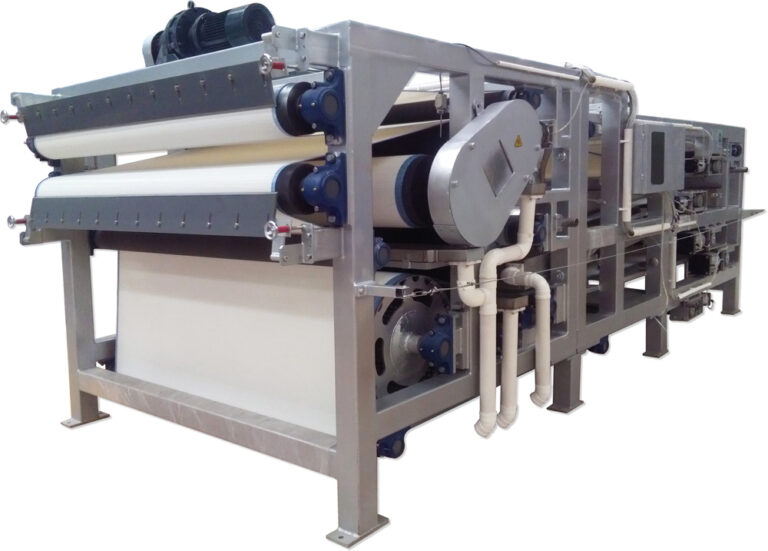
For plant managers and process engineers, the optimal polymer dosing rate for belt filter press dewatering is a persistent operational puzzle. The goal is clear: achieve target cake solids and filtrate clarity at the lowest chemical cost. Yet, the path is obscured by a complex web of interacting variables—sludge type, feed rate, polymer characteristics—that make a universal “best” dose impossible. Relying on historical setpoints or vendor recommendations often leads to either excessive chemical expenditure or compromised performance.
This complexity makes systematic optimization a critical financial and operational priority. Polymer is frequently the single largest consumable cost in mechanical dewatering. Overdosing erodes budgets and can hinder dewatering, while underdosing increases disposal costs and regulatory risk. Understanding the multivariate nature of this system is the first step toward predictable, cost-effective performance.
Key Factors Influencing Optimal Polymer Dosing
The Multivariate System
The optimal dose is not a fixed number but a dynamic setpoint within a system of interdependent variables. Sludge characteristics form the foundation; waste-activated sludge with high organic content demands more cationic polymer than mineral-rich primary sludge. Polymer parameters—type, charge density, molecular weight—must be matched to these characteristics. However, these factors do not operate in isolation.
The Dominant Lever: Sludge Feed Rate
Process parameters exert profound influence. Among these, the sludge feed rate is consistently the most significant lever on outcomes like filtrate quality and solids capture. Its interaction with polymer variables often overshadows the individual effect of changing the polymer dose alone. This means the effectiveness of a given polymer adjustment is entirely dependent on the current sludge throughput. A dose that works at 50 GPM may fail at 70 GPM.
Uncovering Hidden Interactions
Traditional one-variable-at-a-time testing fails to reveal these critical interactions, leading to unpredictable plant performance. For instance, the effect of increasing polymer concentration may change dramatically based on the concurrent belt speed or feed solids. Effective optimization requires a shift in perspective: view the dewatering process as a multivariate system where parameters like feed rate, polymer dose, and pre-thickening performance interact to define the true optimum.
The Cost of Polymer Dosing: Balancing Performance & Budget
The Non-Linear Trade-Off
The relationship between polymer dose and dewatering performance is inherently non-linear, creating unavoidable economic trade-offs. Industry data shows that the conditions which maximize cake dryness—often requiring a high polymer dose—are different from those that optimize filtrate quality and solids capture, which typically peak at a medium dose. This fundamental disconnect forces a strategic choice.
Defining the Cost-Based Priority
Plant managers must define a clear, cost-based operational priority. Simultaneously minimizing polymer use while maximizing cake solids and filtrate clarity is not feasible. Chasing an excessively dry cake through overdosing inflates chemical costs and can restabilize sludge colloids, ironically hindering dewatering. Conversely, underdosing to save on polymer results in wet cakes, poor capture, and spiraling disposal fees. The goal is to find the dose that minimizes the total cost, which includes chemical expense, disposal fees, and any potential surcharges for poor effluent quality.
The Performance-Cost Matrix
Understanding these trade-offs is essential for budget control. The following table outlines the primary economic decisions faced when targeting different performance goals:
| Sasaran Kinerja | Typical Polymer Dose | Primary Economic Trade-off |
|---|---|---|
| Maximize Cake Dryness | High dose | High chemical cost |
| Optimize Filtrate Quality | Medium dose | Potential wetter cake |
| Minimize Polymer Use | Low dose | High disposal costs |
Sumber: Dokumentasi teknis dan spesifikasi industri.
How to Determine Your Optimal Polymer Dose
Moving Beyond Setpoints
Determining your site-specific optimum requires abandoning static setpoints for a systematic, evidence-based methodology. Initial screening via laboratory jar tests, guided by standards like ASTM D2035 Standard Practice for Coagulation-Flocculation Jar Test of Water, is useful for selecting polymer types and establishing a preliminary dose range by evaluating floc formation and drainability. However, jar tests cannot replicate the shear and pressure profiles of a full-scale belt filter press.
The Imperative of Factorial Trials
The definitive step is conducting pilot or full-scale multivariable trials. Employing structured experimental designs like the Box-Behnken method is essential to quantify the main effects and interactions of key parameters: sludge feed rate, polymer dose, polymer concentration, and belt speed. This approach develops a predictive statistical model to locate the optimum operating window, revealing how variables combine to affect outcomes.
Mapping the Performance Landscape
The core insight from this process is that the “optimal dose” is a moving target defined by instantaneous interactions. Therefore, the objective of testing is not to find a single magic number but to map the performance landscape. This map enables intelligent, responsive control, showing how to adjust multiple levers when one input, like sludge consistency, changes. In our experience, this approach consistently reveals hidden optimizations that reduce polymer use by 10-20% while maintaining or improving performance.
Polymer Dosing Rate vs. Concentration: Which Matters More?
Defining the Distinction
A pivotal finding from advanced factorial trials is that the distinction and interaction between dosing rate and concentration are more significant than either parameter alone. The dosing rate refers to the volumetric flow of the polymer solution to the sludge stream. Concentration is the strength of that solution, typically expressed as percent active polymer. Common practice holds concentration constant and adjusts only the dosing pump speed.
Concentration as a Control Lever
Evidence turns this practice on its head. Research indicates that interactions between sludge flow rate and polymer concentration are more statistically significant for optimization than interactions with dosing rate. This means adjusting the concentration itself—diluting or strengthening the polymer solution—can be a more powerful control lever than simply speeding up or slowing down the feed pump. A higher concentration at a lower flow rate can produce a different floc structure and dewatering outcome than a lower concentration at a higher flow rate, even if the total mass of polymer delivered is similar.
The Paradigm Shift for Control
This necessitates a shift toward control systems capable of dynamically modulating both variables. Relying solely on dosing rate tied to sludge flow provides only a one-dimensional response. Next-generation optimization requires systems that can adjust concentration based on real-time feedback parameters, such as filtrate turbidity or conditioned sludge rheology, to maintain consistent performance and achieve deeper cost savings.
Common Polymer Dosing Ranges by Sludge Type
Establishing a Baseline
While site-specific testing is non-negotiable, established dosing ranges provide a crucial baseline for benchmarking, procurement, and troubleshooting. These ranges are typically expressed as kilograms of active polymer per tonne of dry solids (kg/tds). For belt filter presses using organic polyelectrolytes, overall consumption can span from 2 to 11 kg/tds, with the specific range heavily dependent on sludge origin.
Ranges by Sludge Composition
The following table outlines common starting ranges, which highlight the impact of sludge composition on polymer demand:
| Jenis Lumpur | Typical Dosing Range (kg active polymer/tonne dry solids) | Relative Polymer Demand |
|---|---|---|
| Primary Sludge | 2 – 3 kg/tds | Rendah |
| Mixed Primary & WAS | 3 – 5 kg/tds | Sedang |
| Digested Sludge | 4 – 5 kg/tds | Sedang-Tinggi |
| Waste-Activated Sludge (WAS) | 4 – 6 kg/tds | Tinggi |
Catatan: Ranges are for belt filter presses using organic polyelectrolytes. Overall consumption spans 2–11 kg/tds.
Sumber: Dokumentasi teknis dan spesifikasi industri.
The Critical Caveat
It is vital to view these figures as starting points only. The actual optimal dose within these ranges will be dictated by the interacting factors previously discussed, particularly the instantaneous sludge feed rate and the performance of any upstream pre-thickening processes. A well-thickened sludge will always require less polymer than a thin, dilute feed.
Optimizing Dewatering Performance with Automated Controls
Beyond Flow-Paced Dosing
Automation is the key to maintaining the optimal dose identified through testing amidst real-world plant fluctuations. Effective control must extend beyond simply tying a polymer pump to a sludge flow meter. Given the importance of polymer concentration, next-generation systems should incorporate the ability to adjust solution strength dynamically, not just dosing rate.
Key Parameters for Control
A modern control strategy integrates several key parameters, each affecting specific performance indicators:
| Parameter Kontrol | What It Adjusts | Key Performance Indicator (KPI) Affected |
|---|---|---|
| Polymer Dosing Rate | Solution volumetric flow | Filtrate quality, Solids capture |
| Polymer Concentration | Solution strength | Filtrate quality, Cost efficiency |
| Belt Speed / Tension | Mechanical pressure | Cake solids percentage |
| Rheology (Yield Stress) | Polymer conditioning | Filtrate Suspended Solids (FSS) |
Sumber: ISO 15839 Water quality — On-line sensors/analysing equipment for water. This standard provides the framework for evaluating online sensors, which are critical for real-time monitoring of parameters like turbidity (related to filtrate quality) to enable dynamic control of polymer dosing.
The Role of Rheology
Research shows a clear power-law relationship between the conditioned sludge’s yield stress (a rheological property) and filtrate suspended solids. This allows inline rheological measurements to predict and control effluent quality in real-time by modulating polymer addition. However, a critical nuance is that yield stress does not correlate with final cake solids. Achieving target dryness must be controlled through separate mechanical setpoints like belt tension and pressure zone configuration, underscoring the need for a multi-variable control approach.
Practical Steps for On-Site Polymer Dosing Trials
Laying the Groundwork
Conducting an effective on-site trial requires meticulous planning to generate actionable data. First, ensure baseline stability by verifying consistent sludge feed characteristics (source, age, solids content) and precise, repeatable polymer solution preparation. Any trial conducted on a shifting foundation will produce unreliable results.
Designing the Multivariable Experiment
The most common error is running a simple test that varies only the polymer dose. This is insufficient. Instead, structure a factorial experiment that simultaneously varies sludge feed rate, polymer dosing rate, and polymer concentration at two or three levels. Measure key responses continuously: cake solids percentage, filtrate turbidity or suspended solids, and calculated solids capture rate.
Analyzing with a Systems View
During analysis, a critical insight is that pre-dewatering equipment performance can be a significant main parameter. For instance, the speed of an upstream linear screen directly affects feed solids to the press, thereby influencing the required polymer dose and final cake dryness. This variable must be included in your experimental design and statistical model. The outcome should be an operational model that reveals trade-offs and interaction effects, providing a decision framework for operators.
The following table outlines the phased approach for a successful trial:
| Trial Phase | Tindakan Utama | Critical Measured Response |
|---|---|---|
| Preparation | Ensure stable sludge feed | Consistent feed characteristics |
| Experimental Design | Use multivariable factorial approach | Interaction effects |
| Variable Manipulation | Adjust sludge feed, polymer rate, concentration | Cake solids percentage |
| Data Analysis | Model pre-dewatering equipment effects | Solids capture rate |
Sumber: Dokumentasi teknis dan spesifikasi industri.
Selecting the Right Polymer for Your Belt Filter Press
The First Optimization Step
Polymer selection is the foundational step toward optimal dosing. The primary choice is dictated by sludge surface charge: cationic polymers for organic, negatively charged sludges like WAS, and anionic or non-ionic polymers for mineral-rich or industrial sludges. Within these categories, charge density and molecular weight must be matched to the specific sludge through bench-scale testing. High molecular weight polymers generally form larger, stronger flocs beneficial for the gravity drainage section of a belt filter press dewatering system.
A Holistic Technology Assessment
Selection cannot be viewed in isolation from the broader dewatering technology strategy. For specific challenging sludge characteristics, such as high fats, oils, and grease (FOG) or extreme fineness, the fundamental dewatering technology should be reassessed. In such cases, alternative technologies like centrifuges may offer a superior technical and economic solution. Polymer selection is therefore integral to a holistic analysis of sludge composition and full-process train performance, guided by frameworks like the EPA 832-F-00-068 Wastewater Technology Fact Sheet Belt Filter Press.
The optimal polymer dosing rate is a dynamic equilibrium, not a static setpoint. Success hinges on understanding the multivariate interactions between sludge feed, polymer variables, and mechanical settings, then implementing control strategies that respond to these relationships. Prioritize defining your cost-based performance goal, as chasing simultaneous extremes in dryness, clarity, and low chemical use is not operationally feasible.
Need professional guidance to map your specific dewatering performance landscape and implement a cost-effective control strategy? The engineers at PORVOO specialize in systematic optimization, from polymer selection through to automated control integration, ensuring your belt filter press operates at its true peak efficiency.
Pertanyaan yang Sering Diajukan
Q: How should we design an on-site trial to find the optimal polymer dose for our belt filter press?
A: Effective trials require a multivariable factorial design, not a simple one-factor test. Simultaneously vary sludge feed rate, polymer dosing rate, and polymer concentration at different levels, while measuring cake solids, filtrate quality, and capture rate. Include pre-dewatering equipment settings in your model, as they significantly impact results. For projects where polymer is a major cost driver, plan for this structured testing to develop a predictive operational model, not just a single setpoint.
Q: Why is adjusting polymer concentration often more effective than just changing the dosing pump speed?
A: Advanced analysis shows the interaction between sludge flow and polymer solution strength is more statistically significant for optimization than interactions with volumetric dosing rate. While common practice fixes concentration and adjusts pump speed, dynamically modulating the solution strength itself is a more powerful control lever. This means facilities with variable sludge loads should prioritize control systems capable of adjusting both parameters, as this paradigm shift is key to consistent performance and cost control.
Q: What are the typical polymer consumption ranges for different sludge types in belt filter presses?
A: Consumption is expressed as kg of active polymer per tonne of dry solids (kg/tds). For organic polyelectrolytes, common ranges are 2–3 for primary sludge, 3–5 for mixed primary/WAS, 4–5 for digested sludge, and 4–6 for waste-activated sludge alone. These baselines are dictated by sludge origin and composition. If your operation processes a challenging, high-organic sludge like WAS, expect to budget for the higher end of these ranges and conduct site-specific testing to pinpoint the exact optimum.
Q: How can we use automation to maintain optimal dewatering performance with fluctuating conditions?
A: Next-generation control should move beyond simple flow-proportional dosing to dynamically adjust both polymer dosing rate and solution concentration. Incorporating real-time sludge rheology (yield stress) measurements can predict and control filtrate quality, as established by a clear power-law relationship. However, yield stress does not correlate with cake dryness. This means if your priority is consistent effluent compliance, plan for controls using rheological feedback, while cake solids must be managed through separate mechanical adjustments.
Q: What is the core economic trade-off we must manage with polymer dosing?
A: The primary trade-off is between chemical cost and process outcomes. Conditions that maximize cake dryness often require high polymer doses, inflating costs and potentially harming dewatering. Conversely, minimizing polymer use saves money but leads to wet cakes and poor solids capture, increasing disposal expenses. You cannot simultaneously minimize polymer cost while maximizing all performance metrics. Facilities must define a cost-based priority, analyzing total cost including disposal fees, to find their operational sweet spot.
Q: Which standards are relevant for monitoring and controlling the polymer dosing process?
A: For online monitoring of critical water quality parameters like turbidity in the filtrate stream, the performance of sensors and analyzers should be evaluated against ISO 15839. This standard specifies requirements for online equipment used in water quality monitoring. If your compliance strategy relies on real-time filtrate data for control, ensure your selected instrumentation and control logic can meet the performance tests outlined in this framework.