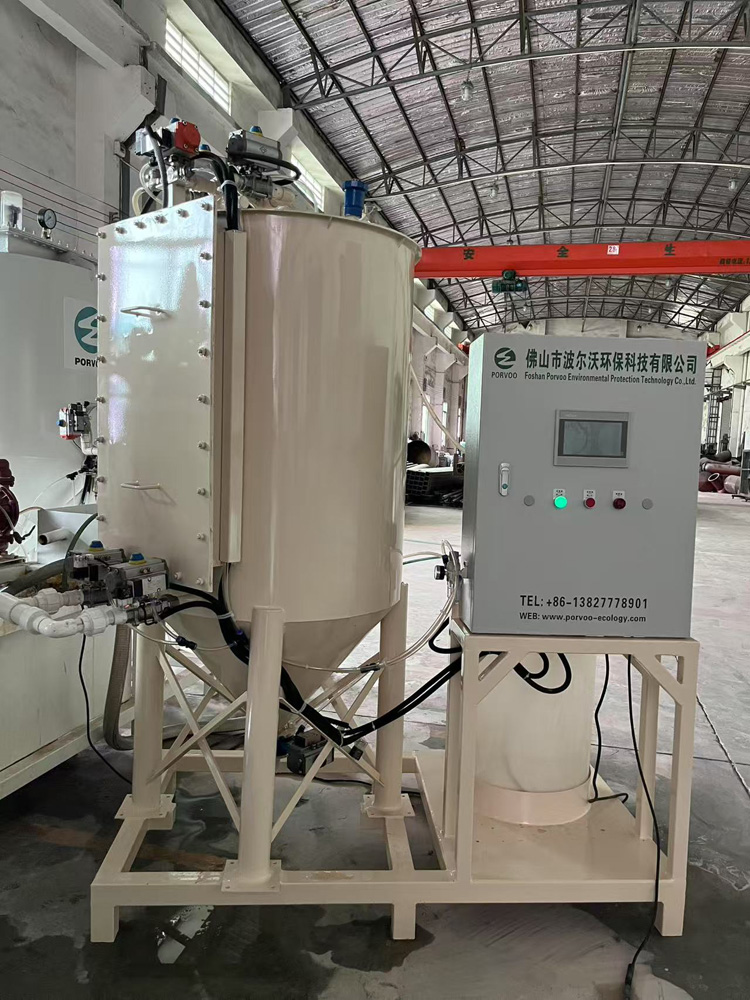
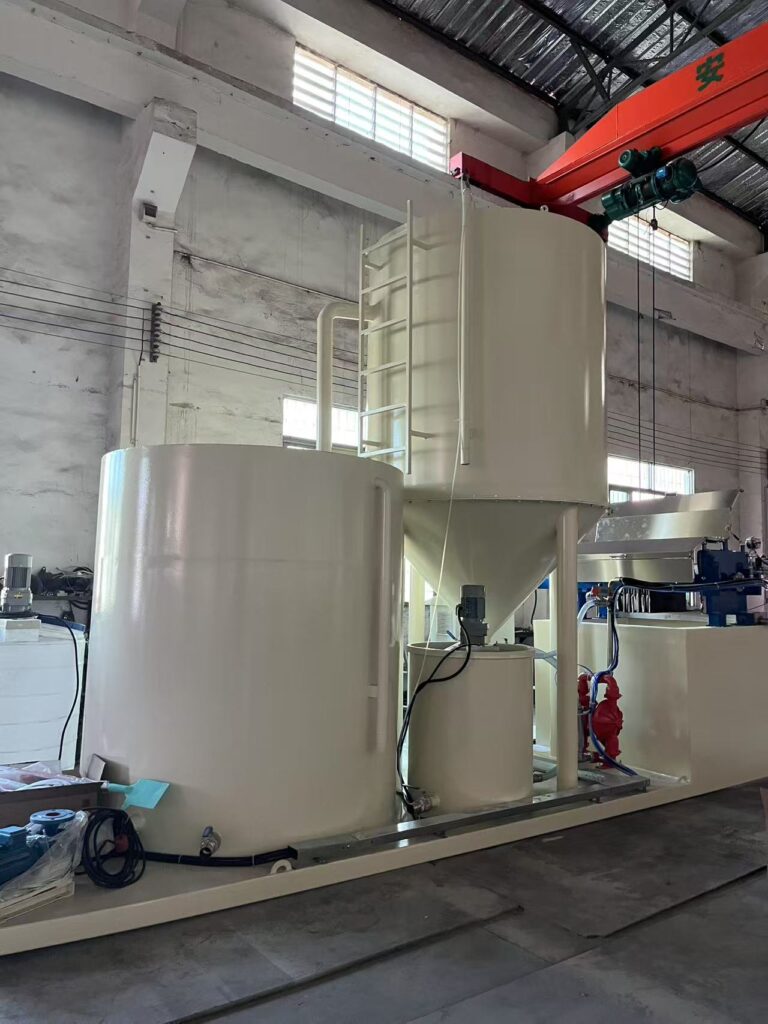
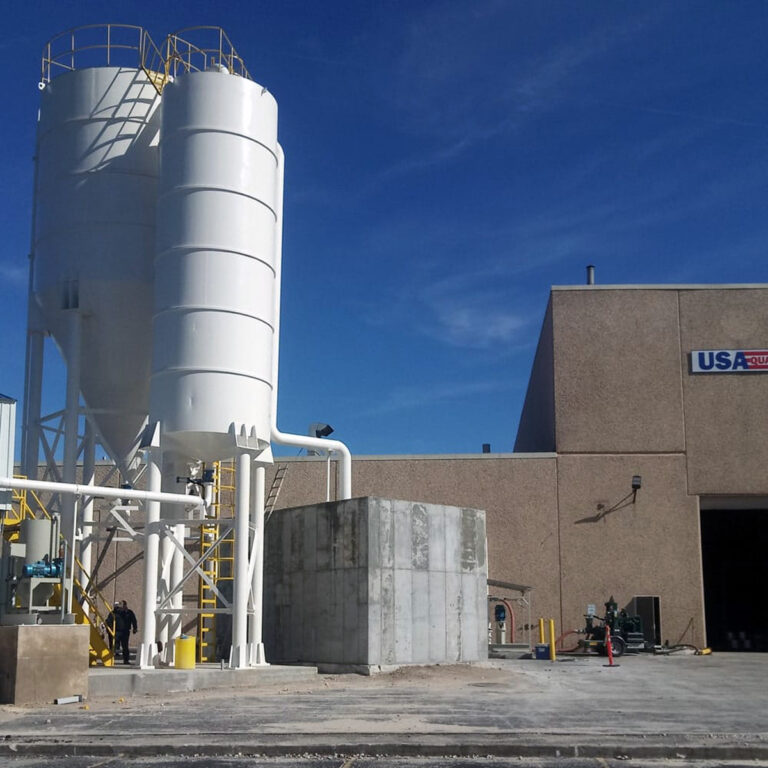
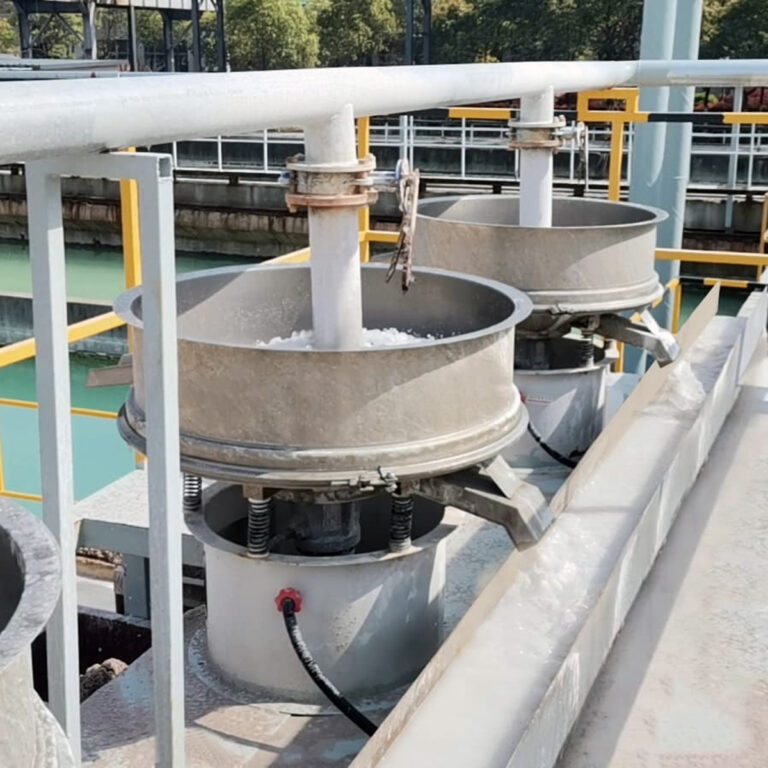
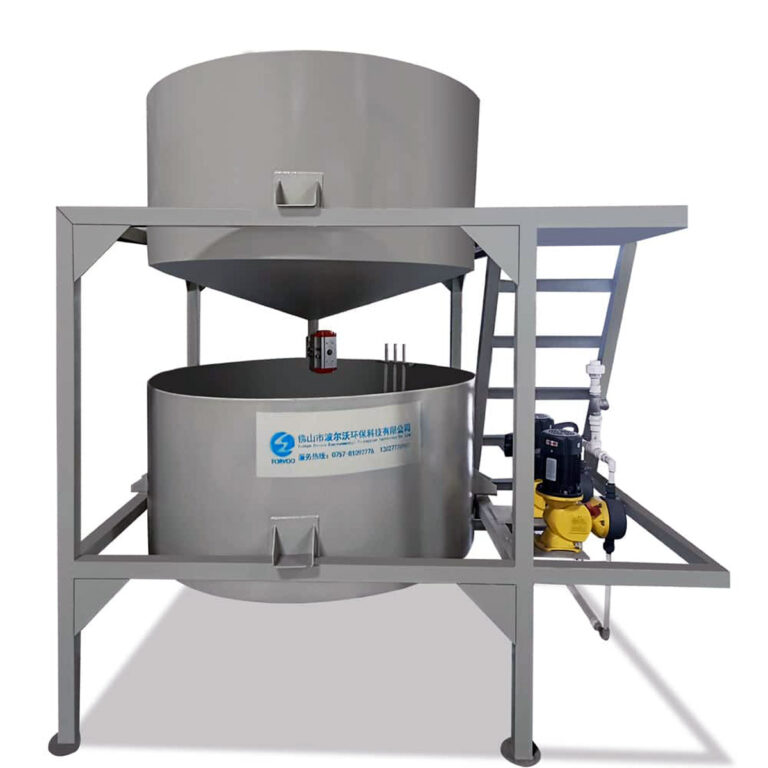
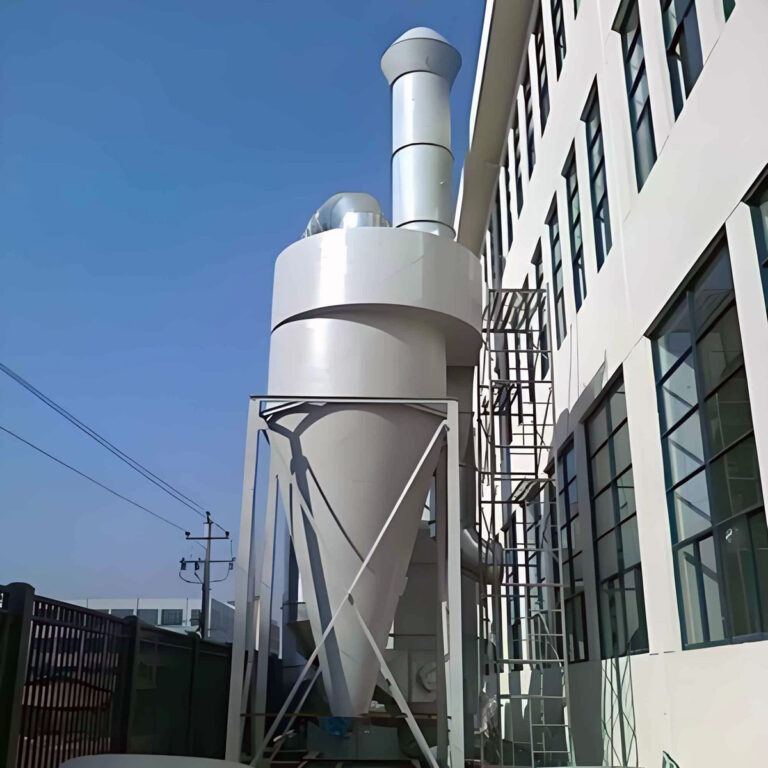
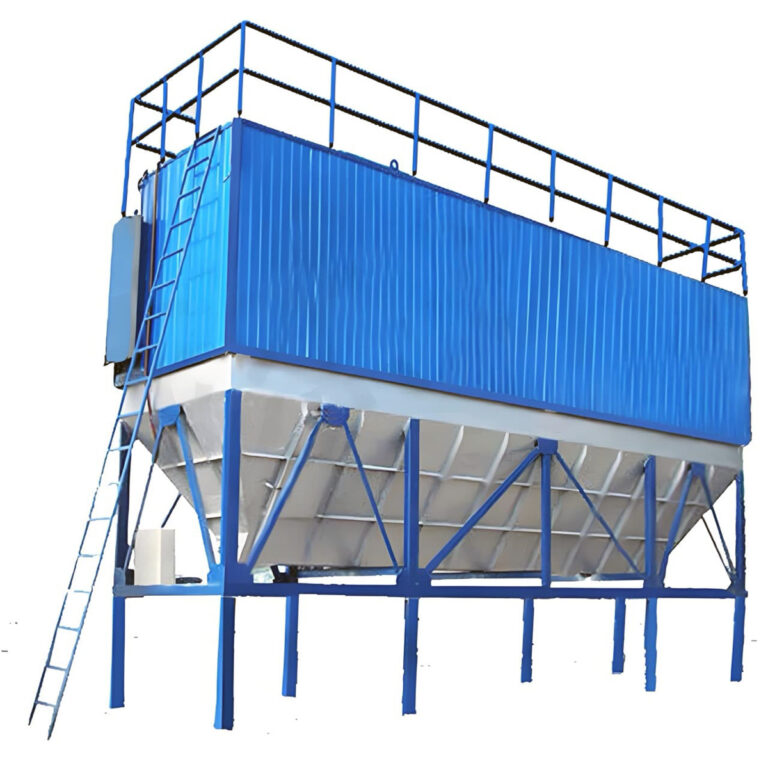
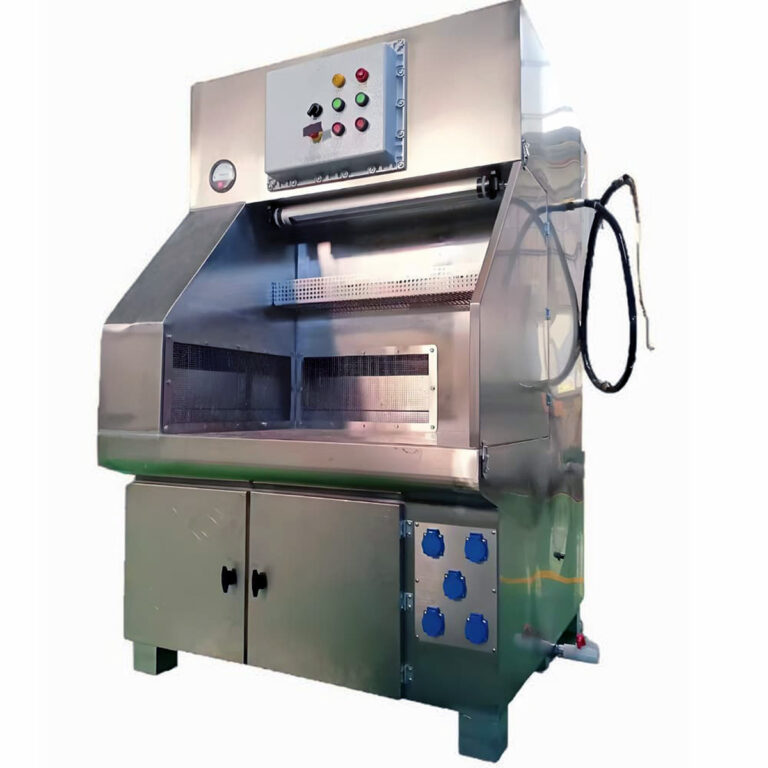
For facility managers and plant engineers in stone processing, planning a silo system’s footprint is often reduced to a simple calculation of storage volume. This approach overlooks the critical operational envelope—the space required for feed systems, discharge mechanisms, maintenance access, and ancillary equipment. Misjudging this envelope leads to costly rework, operational bottlenecks, and constrained future expansion, particularly within the 50-500 GPM capacity range where scale-up is common.
Accurate space planning is now a primary competitive metric, measured as operational capability per square meter. With rising land costs and the push for integrated, automated workflows, the silo’s role has evolved from passive storage to an active process node. This shift makes intelligent layout a strategic imperative for efficiency, safety, and scalability.
Core Principles of Silo Footprint Design for 50-500 GPM
Defining the True Operational Envelope
The silo’s footprint extends far beyond the base diameter of the storage vessel. It encompasses the structure, its foundation, and a mandatory clear zone for operational and safety functions. This envelope must accommodate feed conveyors or elevator legs, discharge equipment, external ladders and platforms, and service vehicle access. Neglecting to plan for this full envelope is a common oversight that compromises long-term plant functionality.
Capacity Dictates Design Strategy
The required GPM capacity directly dictates the spatial strategy. Lower-capacity systems (50-150 GPM) can leverage modular, containerized designs for radical space savings and flexible deployment. Mid-range operations (150-300 GPM) often use hybrid or purpose-built stationary structures. For high-volume facilities (300-500 GPM), large stationary silos with significant permanent footprints become necessary. The strategic choice hinges on balancing immediate spatial constraints with long-term volumetric needs.
The Efficiency Metric: Capability per Square Meter
The emerging benchmark for evaluating silo systems is the operational capability delivered per unit of occupied space. This metric forces a comparison beyond mere storage volume to include integrated functions like in-silo cooling, direct weighing, and automated material flow. In our analysis of project layouts, systems designed with this metric in mind consistently demonstrated lower handling costs and greater process resilience.
| Capacity Range (GPM) | Primary Design Strategy | Key Spatial Metric |
|---|---|---|
| 50-150 GPM | Modular, containerized deployment | Radical space savings |
| 150-300 GPM | Hybrid or stationary structures | Moderate footprint |
| 300-500 GPM | Large stationary installations | Large permanent footprint |
| All capacities | Operational envelope planning | Capability per square meter |
Sumber: Dokumentasi teknis dan spesifikasi industri.
Key Components and Their Spatial Impact on Facility Layout
Feed and Discharge: The Primary Footprint Drivers
The material handling systems for filling and emptying the silo are the largest drivers of spatial demand. Feed systems require linear clearance for conveyor trajectories or vertical space for elevator legs. The discharge mechanism is even more critical: conical hoppers demand significant vertical clearance below the silo for reclaim equipment, while flat-bottom silos with reclaim tunnels consume extensive subterranean space. The choice here fundamentally shapes the facility’s vertical and underground profile.
The Silo as an Active Process Node
Modern silos are increasingly integrated with processing functions. Direct-weigh hoppers mounted beneath the silo, internal cooling coils, and automated level control systems transform storage into a controlled process step. This integration optimizes workflow and product quality but requires careful spatial allocation for sensors, control panels, and integrated material handling paths. It turns the silo footprint into a hub of process control.
Ancillary Infrastructure: The Supporting Cast
Ancillary components, while supporting, claim substantial perimeter space. External access systems like caged ladders and work platforms require a clear safety zone. Dust control units, mandated by standards like NFPA 61 Standard for the Prevention of Fires and Dust Explosions, need dedicated rooftop or adjacent pad space with specific separation distances. Utility runs for power, water, and compressed air also require planned pathways that are often forgotten in initial layouts.
Foundation Requirements: From Spread Footings to Deep Piles
Soil and Load Analysis Dictates Foundation Type
The foundation design is a direct function of silo load and soil bearing capacity. For moderate-sized silos on stable ground, spread footings or mat foundations suffice, extending the concrete pad slightly beyond the silo wall. For large-capacity silos (300-500 GPM) or sites with poor soil conditions, deep foundations like piles or caissons are necessary to transfer loads to stable strata. The ASTM C150 Standard Specification for Portland Cement ensures the structural concrete for these foundations meets the required strength and durability for such critical applications.
The Spatial Cost of Foundation Installation
The installation process for deep foundations requires significant temporary workspace for pile-driving equipment, crane operations, and material staging. This temporary footprint must be accounted for in the site plan, especially in constrained locations. A key advantage of modular, containerized systems is their ability to sit on simple pre-cast pads or minimal piles, dramatically reducing both the permanent foundation footprint and the temporary disruption during installation.
| Foundation Type | Aplikasi Khas | Key Spatial/Cost Impact |
|---|---|---|
| Spread footings | Stable soil, moderate loads | Extended concrete pad |
| Mat foundations | Larger silos, stable ground | Full-area concrete slab |
| Deep piles/caissons | Poor soil, 300-500 GPM | Significant temporary workspace |
| Simple pads/piles | Modular containerized systems | Dramatically reduced site prep |
Sumber: ASTM C150 Standard Specification for Portland Cement (https://www.cement.org/cement-concrete/types-of-cement/). This standard ensures the structural concrete used in all foundation types meets required strength and durability criteria, directly influencing the design and material specifications for pads, mats, and piles.
Optimizing Layout for Material Flow and Operational Efficiency
Vertical Integration as a Space-Saving Tactic
The primary advantage of silo storage is building upward, not outward. Optimizing layout means maximizing vertical integration of processes. Sequencing feed, processing, and load-out in a vertical stack minimizes transfer distances and conveyor runs. For example, integrating a cooling silo directly above a weighing hopper creates a seamless, gravity-fed flow that reduces energy use and product degradation.
Sequencing for Linear Material Flow
Horizontal layout should enforce a logical, linear material flow to avoid conveyor crossovers and traffic conflicts. A U-shaped or linear process flow from raw feed to finished product storage minimizes handling and potential contamination. Maintenance access routes must be designed concurrently, ensuring ample clearance for service vehicles and mobile cranes, as stipulated in equipment safety standards like ANSI/ASME B30.11 Monorails and Underhung Cranes.
Minimizing Thermal and Quality Loss
An optimized layout does more than save space; it preserves product integrity. By reducing transfer points and enclosure distances, heat loss from processed stone is minimized. This directly impacts the efficiency of downstream processes and final product quality. The most efficient plants we’ve audited treat material flow as a continuous, enclosed process, with the silo system acting as the central regulating node.
Modular vs. Stationary Silo Systems: A Space and Scalability Comparison
Defining the Footprint Trade-Off
The choice between modular and stationary systems presents a clear spatial trade-off. Modular systems, often containerized, offer extreme footprint reduction—some complete systems fit within a single 40-foot container footprint. They enable plug-and-play deployment, ideal for temporary sites or space-constrained upgrades. Stationary silos, necessary for the upper end of the 500 GPM range, offer greater volumetric capacity but require larger permanent footprints, typically 30 to 60 feet in diameter, with complex, permanent foundations.
Scalability and Integration Pathways
Scalability methods differ fundamentally. Modular systems scale by adding adjacent containerized units, offering easier incremental expansion. Stationary plants scale through more complex site re-engineering, which is often limited by initial foundation design. However, the promised simplicity of modular solutions can introduce integration challenges with legacy control systems and material handling equipment. Successful deployment depends on sophisticated controls synchronization, making vendor selection a decision for an ecosystem partner, not just an equipment supplier.
| Jenis Sistem | Footprint Characteristic | Scalability Method |
|---|---|---|
| Modular (Containerized) | Single 40-foot container | Adding adjacent units |
| Stationary (Large-scale) | 30-60+ ft diameters | Complex site re-engineering |
| Modular | Plug-and-play deployment | Easier incremental expansion |
| Stationary | Greater volumetric capacity | Limited by initial foundation |
Sumber: ISO 21873-1 Building construction machinery and equipment — Mobile crushers (https://www.iso.org/obp/ui/en/#!iso:std:50886:en). This standard defines specifications for mobile equipment, analogous to modular systems, informing the spatial requirements and operational clearances critical for comparing deployment strategies.
Integrating Ancillary Systems: Dust Control, Access, and Utilities
Mandatory Safety Systems Dictate Layout
Ancillary systems are non-negotiable for safe, compliant operation and their spatial demands are often underestimated. Dust control equipment, such as baghouses or cyclones, is required by NFPA 61 for combustible dust and requires substantial rooftop or adjacent pad space with specific clearance for maintenance and explosion venting. Access systems like stairs, platforms, and manholes demand a clear perimeter around the silo for safe operation and emergency egress.
The Strategic Advantage of Closed-Loop Systems
A critical integration point is utilities, particularly water management. Implementing a closed-loop water system with integrated heat exchangers represents a convergence of sustainability and spatial efficiency. This system circulates water internally, eliminating the need for large external settlement ponds. This approach not only shrinks the facility’s external infrastructure footprint but also reduces water procurement costs and environmental discharge risks, justifying the initial investment.
| Ancillary System | Spatial Demand | Strategic Integration Benefit |
|---|---|---|
| Dust control (Baghouses) | Rooftop or adjacent pad | Mandatory for combustible dust |
| Access stairs/elevators | Clear perimeter | Required for maintenance safety |
| Utility runs | Dedicated pathways | Essential for plant operations |
| Closed-loop water system | Internal heat exchangers | Eliminates large settlement ponds |
Sumber: NFPA 61 Standard for the Prevention of Fires and Dust Explosions (https://www.nfpa.org/product/nfpa-61-standard/p0061code). This standard mandates safety measures for dust control and equipment design, which dictate the required separation distances and spatial layout for ancillary systems like baghouses.
Future-Proofing Your Layout: Planning for Expansion and Upgrades
Allocating Space for Growth
Future-proofing begins with the intentional allocation of space for capacity increases during the initial site plan. For modular systems, this means designing the site with clear, level adjacent pads and utility stubs for additional containerized units. For stationary plants, it involves reserving land for future silos or process expansions. This forward-thinking approach avoids the prohibitive cost and disruption of acquiring new land or re-engineering the entire site layout later.
Designing for Technological Evolution
Planning must also consider the silo’s evolution as a process node. This means selecting systems with upgradeable control architectures and considering physical provisions for integrating advanced sensors, automation for material flow, or additional processing stages like advanced screening or mixing. Conduit runs, additional power capacity, and network infrastructure should be oversized or easily accessible to accommodate this evolution.
The Partnership Imperative for Long-Term Viability
This long-view strategy is only viable with solution-oriented technology providers. A partner capable of collaborative design and ongoing support ensures the system can adapt to new regulations, technologies, and market demands. This partnership protects your capital investment and enables scalable growth, turning the silo system from a static asset into a dynamic platform for operational improvement.
A Decision Framework for Space-Efficient Silo System Planning
A Five-Step Strategic Process
A disciplined framework moves planning from speculation to strategy. First, rigorously define current and projected capacity needs across the 50-500 GPM spectrum. Second, conduct a thorough site-specific analysis of spatial constraints, soil bearing capacity, and zoning regulations. Third, evaluate discharge mechanisms not just on cost but on their long-term impact on operational flexibility and spatial use—vertical clearance versus subterranean space.
Prioritizing Integration and Sustainability
Fourth, prioritize technologies that align sustainability with operational efficiency. Closed-loop water systems are a prime example, reducing both environmental footprint and long-term cost. Fifth, and most critically, select technology partners based on demonstrated integration capability and a collaborative approach to design. This final step ensures the chosen industrial wastewater treatment and silo storage solution delivers not just equipment, but a coherent, efficient system.
Validating the Decision with Quantitative Drivers
Each step in the framework must be driven by quantitative and technical data, not assumption. Soil reports dictate foundation design. Throughput calculations determine conveyor sizing. Safety standards define clearance zones. This data-driven approach de-risks the project and ensures the layout is built on a foundation of verified requirements, not estimated guesses.
| Decision Step | Pertimbangan Utama | Quantitative/Technical Driver |
|---|---|---|
| 1. Define needs | Current & future capacity | 50-500 GPM range |
| 2. Site analysis | Spatial & soil constraints | Soil bearing capacity |
| 3. Discharge mechanism | Operational cost & flexibility | Vertical vs. subterranean space |
| 4. Technology priority | Sustainability alignment | Closed-loop water systems |
| 5. Partner selection | Integration capability | Ecosystem partnership over transaction |
Sumber: ANSI/ASME B30.11 Monorails and Underhung Cranes (https://ehs.psu.edu/sites/ehs/files/cranehoistdanslingsafety_program.docx). This standard’s provisions on equipment installation and operational zones inform the spatial analysis and safety clearances required in steps 2 and 3 of the framework.
Effective silo system planning balances immediate spatial constraints with long-term operational goals. The decision hinges on accurately defining the full operational envelope, selecting a foundation and system type aligned with your site and capacity, and rigorously optimizing layout for material flow. Prioritizing integrated, sustainable technologies like closed-loop systems often yields the greatest long-term spatial and economic efficiency.
Need professional guidance to navigate the trade-offs between modular and stationary systems for your specific site? The engineering team at PORVOO specializes in creating space-optimized, integrated solutions that align footprint with future capacity. Contact us to develop a layout that maximizes your capability per square meter. Hubungi Kami
Pertanyaan yang Sering Diajukan
Q: How do we determine the right foundation type for a 300-500 GPM stationary silo?
A: The foundation design is dictated by the silo’s total load and your site’s soil bearing capacity. For large capacities on stable ground, a spread footing or mat foundation may suffice. However, poor soil conditions or seismic factors often necessitate deep foundations like piles or caissons to transfer the load to stable strata. This means facilities planning for high-volume operations must budget for extensive geotechnical surveys and allocate significant temporary workspace for foundation installation.
Q: What are the key space considerations when integrating dust control for a stone processing silo?
A: Dust control equipment, such as baghouses or cyclones, requires dedicated rooftop or adjacent pad space, expanding the silo’s clear perimeter. Compliance with NFPA 61 for combustible dust hazards also influences layout, mandating specific separation distances and equipment design. For projects where site area is constrained, you should prioritize vendors who offer compact, integrated dust suppression solutions to minimize the ancillary footprint.
Q: How does choosing a modular, containerized silo system impact our site preparation and scalability?
A: Modular systems dramatically reduce site preparation by eliminating the need for complex, poured-in-place foundations, often sitting on simple pads or piles. This allows for plug-and-play deployment. Scalability is facilitated by adding adjacent containerized units on pre-planned pads. If your operation faces spatial constraints or requires future capacity flexibility, you should plan your initial site layout with clear adjacent space reserved for these modular expansions.
Q: Why is the discharge mechanism a critical factor in our overall silo footprint planning?
A: The discharge system fundamentally shapes your spatial needs, both above and below ground. A conical hopper requires significant vertical clearance below the silo for equipment, while a flat floor with a reclaim tunnel consumes substantial subterranean space. This means facilities prioritizing a minimal above-ground footprint must engineer and budget for the necessary below-grade excavation and support structures required by their chosen unloading solution.
Q: What standards should we reference for the structural concrete in our silo foundation?
A: The structural concrete for foundations and supporting infrastructure must meet specific strength and durability criteria. Adherence to ASTM C150 ensures the Portland cement used provides the required chemical and physical properties for a long-lasting build. For projects in demanding environments, you should specify the appropriate cement type from this standard during the design phase to guarantee foundation integrity.
Q: How can we future-proof our silo system layout against capacity increases?
A: Future-proofing requires allocating physical space and planning for system integration during the initial design phase. For modular setups, this means designing the site with clear pads for additional units. For stationary plants, it involves reserving land for future silos or process expansions and selecting systems with upgradeable controls. If your growth model is uncertain, you should prioritize technology partners who support collaborative, scalable design over those offering only fixed equipment specs.
Q: What is the operational advantage of a vertically integrated cooling and storage silo design?
A: Vertical integration, where cooling systems or direct-weigh hoppers are built into the silo structure, creates a seamless automated material flow. This design reduces transfer distances, minimizes thermal energy loss, and enhances final product quality by limiting handling. For operations where product consistency and energy efficiency are priorities, you should evaluate designs that transform the silo from passive storage into an active, integrated process control point.