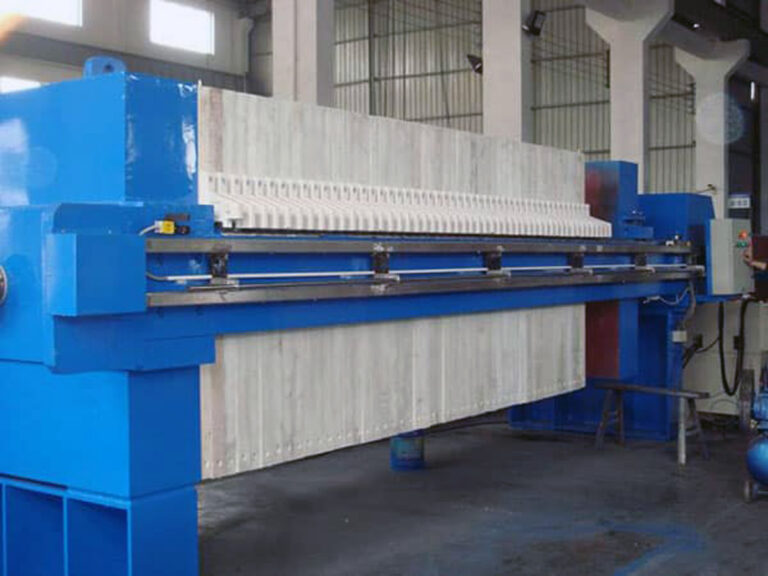
Selecting the correct feed distribution method for a recessed plate filter press is a critical design decision with long-term operational and financial consequences. Many plant managers and process engineers face a choice between center feed and corner feed systems, often based on legacy practices or initial cost, without fully understanding the downstream impact on throughput, maintenance, and total cost of ownership. This decision locks in performance parameters and can limit future process flexibility.
The distinction between these two methods is not merely a matter of piping layout; it defines the fundamental hydraulics of your dewatering process. As industries face increasing pressure for consistent output, lower operational expenses, and higher equipment reliability, understanding the technical and economic implications of this core design choice is more important than ever. The right selection directly influences your plant’s efficiency and bottom line.
Center Feed vs Corner Feed: Defining the Core Difference
The Hydraulic Foundation
The core difference lies in the geometry and fluid dynamics of slurry introduction. A center feed system uses a single, large feed port at the geometric center of each plate, connected by a continuous, centralized manifold. This design allows slurry to enter each chamber across a broad front, promoting simultaneous and even filling. In contrast, a corner feed system directs material through one or more of the smaller corner ports, a design carryover from older plate and frame presses. This creates a restricted, directional flow where slurry must travel across the chamber from the corner.
Impact on Process Dynamics
This fundamental mechanical difference dictates the press’s operational envelope. The center feed’s large-diameter conduit acts as a high-capacity pathway, minimizing flow restriction from the outset. The corner feed’s smaller ports inherently create higher velocity and greater friction loss. Industry experts recommend evaluating this choice not just for today’s slurry but for potential future process changes, as switching feed methods later typically requires a complete plate pack replacement. The initial design decision is therefore a strategic commitment to a specific type of process control and reliability profile.
Cost Comparison: Capital, Operational, and Total Cost of Ownership
Beyond the Purchase Price
While the initial capital expenditure for either feed type can be comparable, the true financial divergence emerges in operational and lifecycle costs. A center feed system’s robust design and uniform pressure distribution typically lead to lower long-term operating expenses. The reduced risk of clogging and pressure imbalances minimizes stress on plates and cloths, directly extending component life and reducing the frequency of unplanned downtime events.
The Hidden Cost of Maintenance
Corner feed systems often incur higher hidden costs. Their susceptibility to port clogging demands more vigilant monitoring and labor-intensive cleaning. A single clogged port can create a pressure imbalance, risking catastrophic plate failure or gasket blowouts—events that carry significant repair costs and production losses. In our comparison of long-term operational records, plants with corner feed systems frequently report higher annual maintenance budgets specifically for cloth replacement and plate repairs. Investing in a system with a lower total cost of ownership often means prioritizing operational robustness over a marginally lower sticker price.
Analyzing the Cost Components
The following table breaks down the key financial considerations between the two feed methods across their lifecycle.
| Komponen Biaya | Center Feed | Corner Feed |
|---|---|---|
| Biaya Modal | Minimal difference | Minimal difference |
| Operational Expense | Jangka panjang yang lebih rendah | Jangka panjang yang lebih tinggi |
| Component Life | Extended plate/cloth life | Frequent cloth replacement |
| Downtime Risk | Reduced unplanned stops | Higher from plate failure |
| Fokus Pemeliharaan | Central pipe & seals | Multiple small port cleaning |
Sumber: Dokumentasi teknis dan spesifikasi industri.
Performance Compared: Flow Rate, Cake Uniformity, and Cycle Time
Throughput and Output Quality
Feed distribution directly governs three interlinked performance metrics. The center feed’s efficient hydraulic design enables faster chamber filling and higher designed throughput, which is critical for large-scale dewatering applications. This efficient distribution is also the key to consistent filter cake thickness and dryness across all chambers, leading to predictable, high-quality output that simplifies downstream handling or disposal.
The Cycle Time Challenge
Corner feed systems often struggle with performance consistency. The restrictive ports can lead to slower, sequential filling, resulting in variable cake thickness within and between chambers. This inconsistency frequently necessitates longer cycle times to ensure complete solids capture and adequate dewatering in all chambers, which reduces overall system capacity. This variability also complicates efforts to automate and optimize the press cycle via programmable logic controllers (PLCs).
Quantifying Performance Metrics
The table below summarizes how each feed method impacts critical operational performance indicators.
| Metrik Kinerja | Center Feed | Corner Feed |
|---|---|---|
| Flow Rate & Throughput | High-capacity hydraulic conduit | Restrictive, smaller ports |
| Cake Uniformity | Consistent thickness & dryness | Variable thickness |
| Waktu Siklus | Predictable, optimized | Longer, sequential filling |
| Process Optimization | Readily automated | Complicates automation |
| Pump Requirement | Variable speed capability | Critical for efficiency |
Sumber: Dokumentasi teknis dan spesifikasi industri.
Which Method Is Better for High-Solid or Abrasive Slurries?
The Superior Choice for Demanding Feeds
For applications involving high-solid or abrasive slurries—common in mining, mineral processing, or metal hydroxide treatment—the center feed method is unequivocally superior. Its large feed port minimizes flow restriction and the potential for clogging from coarse or fibrous solids. More critically, the uniform slurry distribution prevents damaging localized pressure spikes that can bend plates or blow out gaskets when handling dense, challenging feeds.
Material Specification as a Strategic Decision
The abrasive nature of these slurries necessitates a strategic approach to material selection beyond standard polypropylene. Specifying corrosion- and wear-resistant materials like stainless steel, CPVC, or PVDF for the feed manifold and associated components is not an optional upgrade but a essential capital protection measure. This represents a higher upfront investment that pays dividends in extended service life and dramatically reduced downtime. A common mistake is pairing a corner feed system with an abrasive slurry, which accelerates wear in the small ports and leads to frequent, costly failures.
Application-Specific Recommendations
This table outlines the key factors for selecting a feed method when processing difficult slurries.
| Application Factor | Center Feed | Corner Feed |
|---|---|---|
| High-Solid Slurries | Superior, minimizes clogging | High clogging potential |
| Abrasive Slurries | Prevents pressure imbalances | Risk of plate bending |
| Feed Port Design | Large, single port | Small, corner ports |
| Recommended Materials | Stainless steel, CPVC, PVDF | Standard polypropylene risk |
| Service Life & Downtime | Extended life, reduced stops | Frequent failures likely |
Sumber: Dokumentasi teknis dan spesifikasi industri.
Maintenance, Reliability, and Long-Term Operational Impact
Divergent Maintenance Philosophies
Maintenance requirements and long-term reliability profiles are starkly different. A center feed system’s maintenance is focused on the central feed pipe assembly and its seals. A critical, yet often overlooked, ancillary requirement is a dedicated core blow-down function. This system purges residual solids from the manifold after each cycle, preventing plugging and the associated unplanned maintenance stops that cripple throughput.
The Labor and Risk Equation
Corner feed systems demand more labor. They require vigilant monitoring and cleaning of multiple small ports spread across the plate pack. The risk of a pressure imbalance from a single clogged port poses a continuous threat to mechanical reliability, potentially leading to cascading plate damage and slurry leakage. Investing in premium cloth construction with welded feed necks (versus stitched) further multiplies reliability by eliminating a primary failure point, directly reducing yield loss and operational interruptions.
Comparing Maintenance Profiles
The following comparison highlights the operational impact of each system’s maintenance needs.
| Maintenance Aspect | Center Feed | Corner Feed |
|---|---|---|
| Primary Focus | Central feed pipe & seals | Multiple corner ports |
| Critical Ancillary System | Dedicated core blow-down | Manual port cleaning |
| Labor Intensity | Lower, less frequent | Higher, vigilant monitoring |
| Failure Risk | Reduced leakage points | Plate damage & leakage |
| Cloth Construction | Welded feed necks preferred | Stitched necks risk leakage |
Sumber: Dokumentasi teknis dan spesifikasi industri.
Space and Integration: Feed System Footprint and Piping Layout
Physical Plant Integration
The chosen feed method influences the physical layout of the dewatering system. A center feed press requires a centralized feed line aligned with the press’s axis, typically resulting in a straightforward and compact piping arrangement at one end of the machine. Corner feed systems utilize a manifold that runs along the side of the plate stack, connecting to each corner port. This can create a more complex piping network that may require additional lateral space alongside the press for access and maintenance.
Readiness for Smart Control
As dewatering processes integrate with broader plant automation, the feed system impacts sensor placement and control integration. Center feed designs, with their inherent pressure uniformity, are more readily instrumented with pressure and flow sensors. This allows for real-time data collection and cycle adjustment via SCADA systems, enabling true optimization of squeeze time and cake dryness without major spatial or mechanical reconfiguration. The simpler piping of a center feed system also facilitates cleaner integration with other peralatan filtrasi industri in a coordinated process line.
Decision Framework: Selecting the Right Feed Method for Your Application
Prioritizing Application Requirements
Selecting the appropriate feed method requires a structured evaluation of your specific process requirements. For the vast majority of industrial dewatering applications—especially those involving high solids, abrasive materials, or where consistent cake dryness and automated operation are priorities—the center feed system is the recommended strategic choice. Its advantages in reliability, output uniformity, and lower lifecycle cost are decisive for maintaining profitable, continuous operation.
When Corner Feed Remains Viable
Corner feed may be considered only for specialized, low-solids polishing applications, often in sectors like pharmaceuticals or food processing, where legacy compatibility or specific sanitary plate designs dictate its use. However, even in these cases, the operational trade-offs in maintenance and potential for cake variation must be carefully weighed. The decision framework must also account for broader trends like increasing sustainability pressures, which favor closed-loop systems where operational simplicity and robustness are paramount.
A Structured Selection Guide
Use the following framework to guide your specification process based on clear decision criteria.
| Decision Criteria | Recommended Method | Key Rationale |
|---|---|---|
| High-Solid/Abrasive Slurries | Center Feed | Reliability, uniformity, lifecycle cost |
| Consistent Cake Dryness | Center Feed | Uniform pressure distribution |
| Automated Operation Priority | Center Feed | Ease of sensor/SCADA integration |
| Low-Solids Polishing | Corner Feed | Legacy compatibility cases |
| Strategic Goal | Operational robustness | Over legacy design flexibility |
Sumber: Dokumentasi teknis dan spesifikasi industri.
The choice between center and corner feed is a foundational commitment to a specific operational philosophy. Center feed delivers predictable performance, lower lifetime costs, and superior handling of challenging slurries by design. Corner feed, while suitable for niche applications, introduces variability and higher maintenance burdens. Your priority should be aligning the equipment’s inherent capabilities with your plant’s need for reliability and total cost control.
Need a professional assessment for your specific slurry dewatering challenge? The engineering team at PORVOO can provide a detailed analysis and recommendation based on your process parameters, helping you specify a filter press system built for long-term performance and efficiency. For a direct consultation, you can also Hubungi Kami.
Pertanyaan yang Sering Diajukan
Q: How does the feed method impact filter cake uniformity and overall cycle time?
A: Feed distribution directly controls cake consistency and process speed. A center feed system fills all chambers simultaneously, creating uniform cake thickness and dryness for predictable output and faster cycles. A corner feed system often fills chambers sequentially, leading to variable cake quality and requiring longer cycles to ensure complete dewatering. This means operations prioritizing consistent product quality and high throughput should select a center feed design to optimize their batch efficiency.
Q: Which feed system is more reliable for processing abrasive, high-solid slurries like mining waste?
A: The center feed method is superior for abrasive, high-solid applications. Its large central port resists clogging from coarse solids and promotes even pressure distribution, which prevents plate bending or gasket blowout. For these harsh services, specifying wear-resistant materials like stainless steel or PVDF for the feed manifold is a critical investment. If your facility handles dense mineral or metal hydroxide slurries, you should prioritize a center feed system to minimize unplanned downtime and protect your capital asset.
Q: What are the long-term maintenance differences between center feed and corner feed filter presses?
A: Maintenance profiles differ significantly. A center feed system focuses on the central pipe and seals, with a critical need for a core blow-down function to purge solids and prevent manifold plugging. A corner feed system demands frequent cleaning of many small ports and carries a higher risk of pressure imbalance from a single clog, which can damage plates. For projects where minimizing operational labor and preventing catastrophic failure are key, the center feed design offers a more manageable and predictable maintenance regime.
Q: How should we evaluate the total cost of ownership when comparing feed methods?
A: Look beyond initial capital cost to operational and lifecycle expenses. A center feed system typically has lower long-term costs due to reduced clogging, less stress on plates and cloths, and extended component life, which cuts downtime. A corner feed system can incur higher costs from frequent maintenance, cloth replacements, and potential plate failure. When selecting a vendor, you should prioritize their total support ecosystem and spare parts availability, as this will determine your plant’s long-term operational expenditure.
Q: Does the feed method affect how we integrate the filter press with automated process controls?
A: Yes, the feed strategy influences control integration. The inherent pressure uniformity of a center feed design allows for more straightforward placement of pressure sensors and automated valves, enabling real-time cycle adjustments via a SCADA system. A corner feed’s more complex flow dynamics can complicate sensor placement and automated optimization. If your operational goal is smart, data-driven process control, you should plan for a center feed system to simplify integration and maximize the return on your automation investment.
Q: When might a corner feed filter press still be the appropriate technical choice?
A: Corner feed systems are generally reserved for specialized, low-solids polishing applications. They may be considered in industries like pharmaceuticals or food processing where legacy compatibility or specific plate designs dictate their use. For the vast majority of industrial dewatering tasks, especially those requiring automation or handling challenging materials, the center feed is the recommended choice. This means unless your process is a niche, low-solids application, you should default to a center feed system for greater operational robustness.