Selecting and sizing a pulse jet baghouse is a critical capital decision that directly impacts production uptime, energy costs, and long-term operational safety. The primary challenge lies in translating complex process requirements into a physical system that balances performance, cost, and compliance. Missteps in initial calculations or component selection can lead to chronic performance issues, excessive maintenance, and costly retrofits.
This focus is essential now as manufacturing facilities face intensifying pressure to optimize efficiency and meet stricter environmental and safety regulations. A correctly sized and designed baghouse is not merely a compliance tool; it is a strategic asset for material recovery and operational reliability. The following framework provides a decision-oriented approach to this technical specification process.
Air-to-Cloth Ratio: The Core of Pulse Jet Baghouse Sizing
Defining the Critical Metric
The air-to-cloth (A/C) ratio is the fundamental calculation governing baghouse sizing, representing the volume of air (CFM) flowing through each square foot of filter media. For pulse jet systems, this ratio typically ranges from 2:1 to 10:1 CFM/ft². The specific selection balances capital cost against operating pressure and energy costs. A lower ratio means a larger, more expensive filter area but results in lower pressure drop and extended bag life. The formula Filtration Area (ft²) = System CFM / Air-to-Cloth Ratio is the cornerstone of all subsequent design decisions.
Application and Strategic Implications
The chosen A/C ratio dictates the system’s physical footprint and maintenance architecture. A strategic implication often overlooked is that this choice commits your facility to a specific service model. Larger systems with lower ratios necessitate more complex access and procedures, influencing long-term operational logistics and labor planning. This initial sizing decision is a primary driver of total cost of ownership, not just upfront capital expenditure.
Impact on System Performance
Industry experts recommend a conservative approach for applications with fine, abrasive, or hygroscopic dusts, opting for a lower A/C ratio to ensure stable operation. According to research from filtration authorities, common mistakes include selecting an overly aggressive ratio to minimize initial cost, which leads to higher fan horsepower, increased cleaning frequency, and premature bag wear. The table below outlines typical application contexts.
| Application Context | Typical A/C Ratio (CFM/ft²) | Primary Trade-off |
|---|---|---|
| Standard Duty | 2:1 – 6:1 | Higher cost vs. lower pressure drop |
| Aggressive Cleaning | 6:1 – 10:1 | Lower cost vs. higher energy use |
| Design Calculation | Filtration Area = CFM / A/C Ratio | Sizing driver |
Sumber: Dokumentasi teknis dan spesifikasi industri.
How to Calculate CFM for Your Manufacturing Facility
Establishing the Non-Negotiable Baseline
Accurate CFM determination is the non-negotiable starting point. This volume is derived from your process exhaust needs, encompassing capture hoods, ductwork losses, and required transport velocities to convey dust without settling. An undersized CFM cripples capture efficiency and creates housekeeping or compliance issues, while significant oversizing increases capital and energy costs unnecessarily. In my experience, facilities often underestimate ductwork pressure losses, leading to an underpowered fan at startup.
Translating CFM into Physical Design
Once established, the CFM value is used with your selected A/C ratio to define the total filter area. For example, 70,000 CFM at a 3.97:1 ratio requires approximately 17,630 ft² of media. This calculation directly influences supporting velocity parameters: can velocity (between bags and housing walls) and interstitial velocity (between bags themselves). Proper design limits these velocities to prevent dust re-entrainment and uneven loading, which can create premature wear zones.
Planning for Operational Reality
Strategically, this stage must also consider future expansion or process changes. Designing with modularity or leaving physical space for additional filter compartments converts capital expenditure into operational flexibility. The following data illustrates the relationship between core parameters.
| Design Parameter | Contoh Nilai / Rentang | Impact on System |
|---|---|---|
| System CFM | 70,000 CFM | Base sizing input |
| Target A/C Ratio | 3.97:1 | Determines filter area |
| Resulting Filter Area | ~17,630 ft² | Physical system scale |
| Can Velocity | Must be limited | Mencegah masuk kembali |
| Interstitial Velocity | Must be limited | Ensures even loading |
Sumber: Dokumentasi teknis dan spesifikasi industri.
Key Design Specifications: From Filter Bags to Fan Sizing
Configuring the Filter Array
With the total filtration area known, physical configuration begins. Filter bag count is determined by dividing the total area by the surface area of a single bag, based on standard diameters like 4.5” or 6” and lengths of 8-14 feet. The arrangement of these bags into rows and compartments is critical for effective cleaning and maintenance access. A critical strategic insight is to view the baghouse as an integrated system where pre-filtration design, like inertial separators, protects the filter bags from abrasive wear, dramatically extending bag life.
Sizing the Air Handling System
The system fan is then sized to overcome the total system pressure drop, typically 4-8 inches water gauge (iwg) for the baghouse itself, plus all ductwork losses, at the design CFM. Variable frequency drives (VFDs) allow precise airflow control and significant energy savings at partial load. The pulse-jet cleaning system, with valves sequenced by a PLC, must be sized for the total filter area, with compressed air supplied at 60-100 psi. We compared standard solenoid valves with high-flow alternatives and found the latter can reduce compressed air consumption by improving valve actuation speed.
Component Interdependence
The performance of each component is interdependent. Filter media selection affects pressure drop, which changes fan horsepower. Cleaning efficiency influences the stable pressure drop, which impacts energy use. Specifications must be coordinated, not siloed. The table below outlines key component specifications.
| Komponen | Key Specification | Typical Range / Standard |
|---|---|---|
| Filter Bag Diameter | Standard size | 4.5” or 6” |
| Filter Bag Length | Standard size | 8 – 14 feet |
| Penurunan Tekanan Sistem | Fan sizing basis | 4 – 8 iwg |
| Cleaning Air Pressure | Pulse jet supply | 60 – 100 psi |
| Airflow Control | Fan modulation | Variable Frequency Drive (VFD) |
Sumber: ISO 11057:2011 Air quality — Test method for filtration characterization of cleanable filter media. This standard provides the test methodology for key filter media performance parameters like pressure drop and dust holding capacity, which directly inform the selection and sizing of filter bags and the overall system pressure drop specification.
Operational Costs: Energy, Maintenance, and Bag Life Analysis
Dominant Cost Drivers
Operational costs are dominated by energy (fan and compressor), maintenance labor, and filter bag replacement. The chosen A/C ratio directly impacts fan energy; a higher ratio increases pressure drop and horsepower. Cleaning system efficiency is paramount; “clean-on-demand” controls triggered by differential pressure optimize compressed air use versus fixed timers, which can waste air and cause excessive bag flexing.
The Filter Media Investment
Here, advanced filter media like PTFE membranes offer a strategic total-cost-of-ownership advantage. While premium priced, their superior release properties minimize particulate buildup, reducing cleaning frequency and compressed air consumption. This extends bag life and lowers energy costs, transforming a material selection from a simple filtration choice into a key operational efficiency lever. Easily overlooked details include the cost of bag change-out labor and production downtime, which premium media can reduce.
Optimizing the Maintenance Cadence
Maintenance labor is heavily influenced by housing design, which dictates access and procedure. Implementing a condition-based monitoring system for pressure drop and fan motor amps can shift maintenance from reactive to predictive, preventing unexpected failures. The following analysis breaks down the primary cost influences.
| Penggerak Biaya | Influence Factor | Strategi Pengoptimalan |
|---|---|---|
| Fan Energy | A/C Ratio & Pressure Drop | Lower ratio reduces HP |
| Compressed Air | Cleaning frequency | Clean-on-demand controls |
| Bag Replacement | Media selection | Premium membranes (e.g., PTFE) |
| Tenaga Kerja Pemeliharaan | Housing design | Access-driven efficiency |
Sumber: Dokumentasi teknis dan spesifikasi industri.
Comparing Top-Access, Bottom-Access, and Walk-In Designs
Design as a Function of Scale
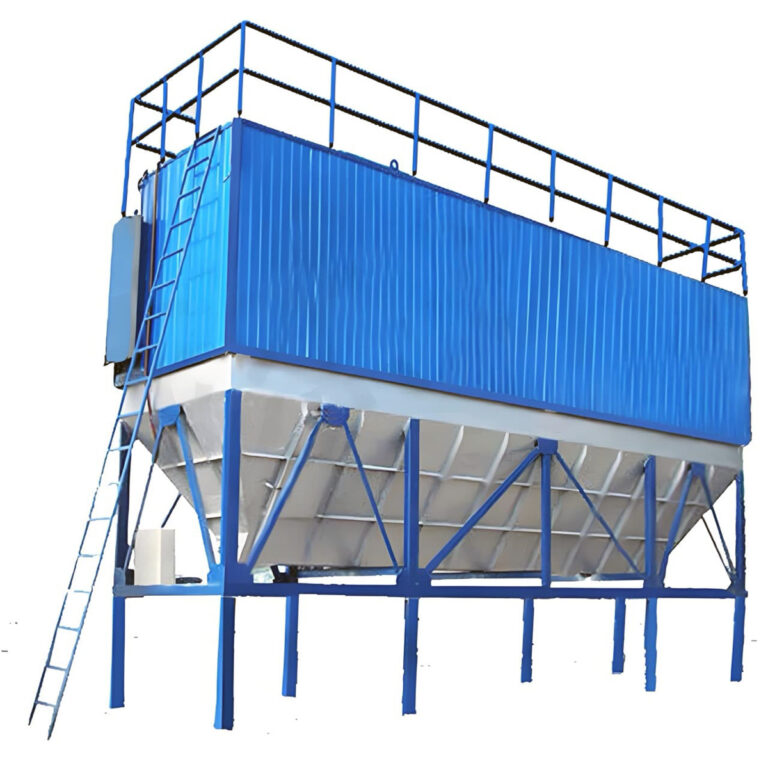
Housing design is a direct function of scale and CFM, dictating maintenance procedures and safety protocols. Smaller systems (e.g., under 20,000 CFM) often use top-access or side-hatch designs where bags are removed externally with a crane or platform. Larger systems (e.g., 100,000+ CFM) typically require walk-in plenums, allowing technicians to work inside the clean-air plenum for safer, all-weather bag replacement.
Strategic Implications for Operations
This scaling insight is crucial: your target CFM commits you to a specific maintenance footprint and safety protocol complexity. Walk-in designs require confined space entry procedures and internal lighting but offer faster bag change times for large arrays. Furthermore, modular designs with redundancy, where large CFM is split across independent modules, convert capital expenditure into production continuity insurance, allowing online maintenance.
Evaluating Trade-offs
The trade-off between initial cost and long-term operational efficiency is clear. A top-access design may have a lower purchase price but higher long-term labor costs and greater exposure to weather delays during maintenance. The decision must align with your facility’s maintenance philosophy, available skilled labor, and tolerance for downtime.
Which Filter Media Is Best for Your Process Temperature?
The Primary Selection Criterion
Filter media selection is primarily dictated by process gas temperature and chemical composition. Exceeding the media’s maximum continuous temperature leads to rapid degradation and failure. Common materials include polyester (<275°F), PPS (<375°F), meta-aramid (<425°F), and PTFE membrane (<500°F). The choice must also consider dust characteristics like moisture, alkalinity, or the presence of hydrocarbons.
Beyond Temperature: Chemical Compatibility
This decision is emblematic of the industry trend where customization is the de facto standard. Handling diverse, often challenging dusts forces most projects into engineered territory. For example, PPS (Rylon) offers excellent resistance to acidic environments but is vulnerable to oxidative damage at high temperatures. The strategic implication is that procurement must allocate time for proper specification, as treating media selection as a commodity purchase risks premature failure.
Validating Performance Claims
Laboratory testing per recognized standards is essential for validating media performance for specific applications. The methodology outlined in ISO 11057:2011 provides a basis for comparing pressure drop and dust release characteristics across different media under controlled conditions. The following table provides a temperature-based starting point for selection.
| Media Filter | Maximum Temperature | Common Application Note |
|---|---|---|
| Poliester | < 275°F | General purpose |
| PPS (Rylon) | < 375°F | High heat, chemical resistance |
| Meta-Aramid (Nomex) | < 425°F | High temperature |
| PTFE Membrane | < 500°F | High efficiency, low drag |
Sumber: ISO 11057:2011 Air quality — Test method for filtration characterization of cleanable filter media. This standard’s methodology for testing cleanable filter media under controlled conditions is essential for validating the temperature tolerance, durability, and filtration efficiency claims of different media types before selection.
Integrating Safety and Compliance into Your Baghouse Design
Engineering for Hazard Mitigation
Safety and compliance must be engineered into the design from the outset, not added as an afterthought. For combustible dusts, this mandates features like explosion venting sized per NFPA 68, flame-retardant media, isolation valves, and comprehensive bonding and grounding. The classification of the dust (Kst, Pmax values) dictates the level of protection required, making a dust hazard analysis a prerequisite for design.
Hopper and Discharge Design
Hopper and discharge design also play a key safety and operational role. The choice between manual slide gates and automated double-dump valves creates a trade-off between labor cost and system autonomy. This determines the operational cadence, as manual systems force periodic stops, while automated systems enable continuous, unattended material handling. Bridging in hoppers is a common failure point; proper hopper angle and potential vibrator or air pad installation are critical details.
The Evolving Regulatory Landscape
Strategically, regulatory trends are driving closed-loop material handling, where baghouses transition from pollution controls to material recovery assets. This turns a cost center into a compliance and economic advantage. Designing for easy integration with material handling systems, whether pneumatic or mechanical, future-proofs the installation. The table summarizes key safety integrations.
| Safety Feature | Application Context | Purpose / Requirement |
|---|---|---|
| Explosion Venting | Combustible dusts | Pressure relief |
| Flame-Retardant Media | Combustible dusts | Ignition prevention |
| Isolation Valves | Combustible dusts | Prevent propagation |
| Hopper Discharge | Manual vs. Automated | Slide gates or double-dump valves |
Sumber: Dokumentasi teknis dan spesifikasi industri.
A Step-by-Step Framework for Final System Selection
A Disciplined Specification Process
A disciplined selection framework mitigates risk and ensures all critical factors are addressed. First, accurately define process CFM, temperature, dust characteristics, and any applicable regulatory drivers (e.g., combustible dust, specific emission limits). This foundational data gathering is the most critical phase and often requires direct measurement and analysis.
Translating Requirements into Specifications
Second, select an appropriate A/C ratio and calculate the required filtration area. Third, choose a housing design (top-access, walk-in) and filter media compatible with your operational and maintenance strategy. Fourth, specify supporting systems: fan with VFD, hopper discharge mechanism, and all mandated safety features. This is where engaging with a specialist for your pulse jet bag filter system can ensure integration is considered holistically.
Vendor Evaluation and Data Strategy
Finally, evaluate vendors on integration capability, as the market shift favors single-source providers offering full design, fabrication, and smart monitoring services. Crucially, negotiate data ownership rights for the operational intelligence from IoT-enabled monitors. This data is a strategic asset for predictive maintenance and future optimization, preventing vendor lock-in and enabling continuous improvement of your filtration asset.
The core decision points hinge on accurate CFM calculation, a strategic A/C ratio selection that balances capex and opex, and filter media chosen for both process compatibility and total cost of ownership. Implementation priorities must include safety-by-design for hazard mitigation and planning for operational data ownership.
Need professional guidance to specify a system that aligns with your production and compliance goals? The engineers at PORVOO provide integrated design and fabrication services, translating complex requirements into reliable performance. For a detailed discussion of your application, you can also Hubungi Kami.
Pertanyaan yang Sering Diajukan
Q: How do you determine the correct air-to-cloth ratio for a new pulse jet baghouse?
A: The air-to-cloth ratio is a primary design variable balancing capital and operating costs, typically set between 2:1 and 10:1 CFM/ft². You calculate the required filtration area by dividing your system’s total CFM by this chosen ratio. This means facilities prioritizing lower long-term energy and maintenance costs should select a lower ratio, accepting a larger initial system footprint and investment.
Q: What is the most critical step in accurately sizing a dust collection system?
A: Precisely calculating the required system CFM is the essential first step, as all subsequent sizing depends on this value. This volume must account for process exhaust needs, capture hood efficiency, and ductwork pressure losses. For projects where future expansion is likely, plan to oversize the fan capacity or design with modular redundancy to avoid costly system replacements.
Q: How does filter media selection impact total operational costs?
A: Media choice directly dictates energy consumption, cleaning frequency, and bag replacement cycles. Premium materials like PTFE membranes offer superior dust release, which reduces compressed air use for cleaning and extends bag service life significantly. This means operations with high dust loads or expensive downtime should evaluate media based on total cost of ownership, not just initial purchase price.
Q: When should a facility specify a walk-in baghouse design versus a top-access unit?
A: The decision is primarily driven by system scale and target CFM. Smaller systems under 20,000 CFM often use top-access designs, while large systems exceeding 100,000 CFM typically require internal walk-in plenums for safe, all-weather maintenance. If your operation cannot tolerate extended external maintenance shutdowns, a walk-in or modular design becomes a necessary investment for production continuity.
Q: Which standards are used to evaluate the performance of cleanable filter media for baghouses?
A: The key international standard for testing cleanable filter media is ISO 11057:2011, which characterizes pressure drop, efficiency, and dust holding capacity over multiple cleaning cycles. This provides a standardized basis for comparing media options. For a broader framework on particulate filtration efficiency, ISO 16890-1: 2016 establishes a modern classification system based on PM removal.
Q: What design features are non-negotiable for baghouses handling combustible dust?
A: Systems for combustible dusts must integrate explosion protection from the outset, including explosion venting, isolation valves, flame-retardant filter media, and comprehensive static grounding. This means any project involving potentially explosive particulates must budget for these engineered safety features and factor them into the layout and maintenance procedures during the initial design phase.
Q: How should we approach vendor selection for a large-scale baghouse project?
A: Prioritize vendors with full integration capability, offering design, fabrication, and smart monitoring as a single-source service. Crucially, negotiate for ownership of operational data from IoT-enabled system monitors. If your goal is predictive maintenance and avoiding vendor lock-in, securing these data rights is as important as evaluating the mechanical equipment specifications.