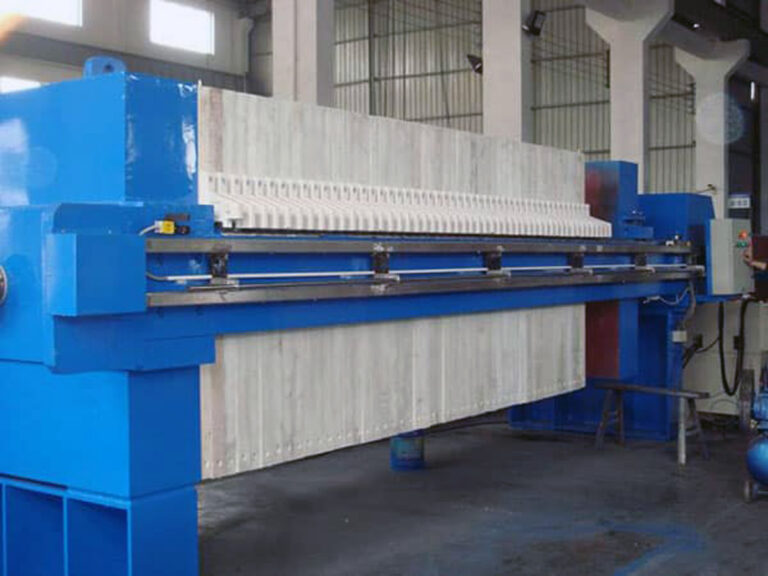
For process engineers, sizing a plate and frame filter press is a critical design task where miscalculations lead directly to operational bottlenecks and capital waste. The common mistake is treating it as a simple volumetric exercise, matching flow rate to chamber volume. This overlooks the core physics of filtration: it’s a mass transfer operation governed by slurry characteristics and cycle dynamics. An undersized press cannot meet throughput; an oversized one wastes footprint and budget.
Precision in sizing is now a non-negotiable for cost control and regulatory compliance. With disposal costs soaring and environmental regulations tightening, the financial penalty for an inefficient filtration system is severe. The right sizing methodology transforms the filter press from a cost center into a strategic asset for volume reduction and process stability.
Fundamental Parameters for Sizing a Filter Press
Defining the Feed Slurry Profile
The design foundation is a complete characterization of the feed material. Dry solids content, slurry density, and particle size distribution are baseline data. The pivotal parameter is filterability, typically expressed as specific resistance or capillary suction time. This determines the fundamental rate of solids/liquid separation. Without this data, any sizing estimate is speculative. Industry experts recommend pilot testing as a risk-mitigation step, as sludge filterability dictates cycle time economics, with times ranging from 15 minutes for mineral slurries to 8 hours for biological sludges.
Establishing Process Requirements
Performance targets must be quantified. This includes the total daily mass of dry solids to be processed, allowable operating hours per day, and the required final cake solids percentage. The cake dryness target is not arbitrary; it directly impacts downstream handling and disposal costs. Engineers must also define ancillary conditions like feed pressure limits and cloth washing frequency. We compared projects with and without clear process requirements and found the latter often required costly retrofits to meet actual plant needs.
The Criticality of Pilot Data
Laboratory or pilot-scale testing closes the data gap between theoretical design and field performance. It provides empirical data for filtration rate, optimal cake thickness, and potential chemical conditioning needs. This stage reveals easily overlooked details, such as the need for pre-coat filtration or the impact of temperature on viscosity. According to research from filtration specialists, pilot testing reduces sizing risk by over 70%, making it a essential step before capital commitment. Chemical conditioning, identified here, becomes a major operational cost driver, scaling directly with batch size.
Table: Fundamental Parameters for Sizing a Filter Press
| Parameter | Rentang / Nilai Khas | Dampak pada Desain |
|---|---|---|
| Sludge Filterability | 15 min to 8 hours | Dictates cycle time economics |
| Dry Solids Content | Slurry dependent | Key for mass balance |
| Final Cake Dryness | Process-defined target | Sets performance goal |
| Pengujian Percontohan | Critical step | Mitigates sizing risk |
Sumber: Dokumentasi teknis dan spesifikasi industri.
Core Calculation: The Mass Balance Methodology
The Solids Balance as a Non-Negotiable
Robust sizing is a mass balance, not just volume. The principle is conservation of mass: all incoming solids must be accounted for in the discharged filter cake. The calculation starts with the daily mass of dry solids (M_dry) from slurry flow rate and concentration. This mass is invariant. Using the target cake solids percentage, the daily wet cake mass and volume are derived. This approach prevents the critical error of sizing based on slurry volume alone, which fails if the slurry concentration varies.
Calculating Required Chamber Volume
The mass balance outputs the key equipment parameter: net usable filter chamber volume per cycle (Vf). This is calculated by dividing the total daily wet cake volume by the target number of cycles per day. The cycle count is an initial estimate based on filterability and operational shifts. For example, a slow-filtering sludge allowing only two cycles per day will require a larger Vf than a fast-filtering one running eight cycles for the same daily solids load. This calculation forms the non-negotiable core of the design.
From Mass to Equipment Specifications
With V_f established, preliminary equipment geometry can be assessed. This volume must be accommodated by the combined chamber volume of the selected plate stack. This step integrates the mass balance with mechanical design, setting the stage for selecting plate size and count. In my experience, engineers who skip the formal mass balance often discover a 20-30% capacity shortfall during commissioning, leading to expensive corrective measures.
Determining Filtration Area and Plate Count
Selecting Plate Size and Chamber Geometry
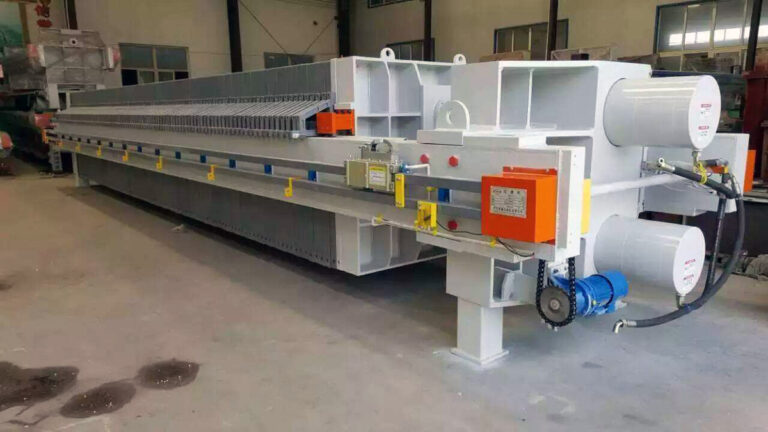
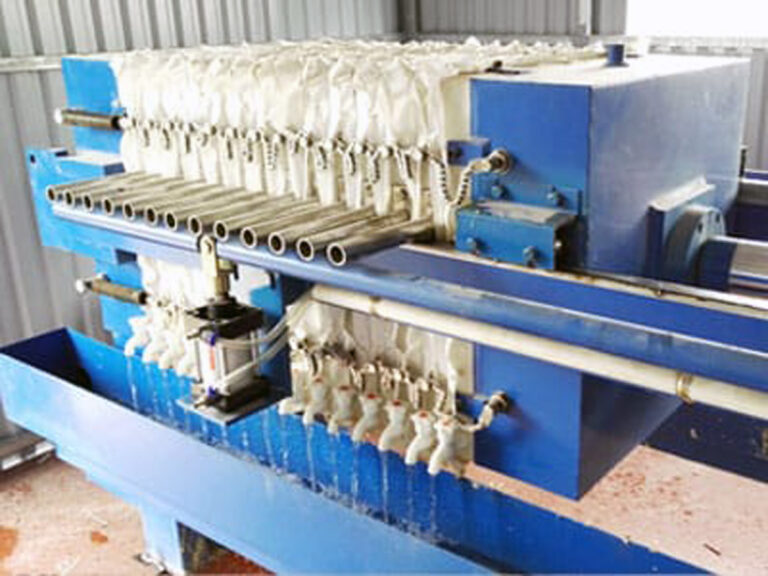
With the required chamber volume (Vf) known, the engineer selects from standard plate sizes (e.g., 800mm, 1000mm, 1500mm square) and chamber thicknesses. Vendor catalogs provide the filtration area (Sp) and volume (Vp) for a single chamber of a given configuration. The number of chambers needed is simply Vf / Vp, rounded up. The total plate count is the chamber count plus one for the end plate. The total filtration area is chamber count multiplied by Sp.
Evaluating the Filtration Area Trade-off
The same chamber volume can be achieved with different plate size and count combinations. This presents a key design trade-off between plate size and count. Smaller plates in higher counts offer greater total filtration area for the same volume, which can reduce filtration time for area-limited processes. However, this increases the number of cloths, plate-shifting time, and potential leak points. Larger plates reduce count and simplify mechanics but may offer less area.
Table: Determining Filtration Area and Plate Count
| Variabel Desain | Trade-off Consideration | Spesifikasi Umum |
|---|---|---|
| Ukuran piring | Larger plates reduce count | e.g., 1000mm x 1000mm |
| Chamber Thickness | Volume vs. flow path length | Vendor-specific data |
| Chamber Count | Vf / Vp calculation | Determines plate count |
| Filtration Area | Chamber count x S_p | Key performance metric |
Sumber: Dokumentasi teknis dan spesifikasi industri.
Leveraging Vendor Experience for Configuration
When specific filterability data is incomplete, data gaps transform supplier experience into a key asset. Reputable vendors have historical data on similar applications and can recommend a starting configuration for plate size and chamber thickness. This input is valuable but should be validated against the engineer’s mass balance. This collaboration helps navigate the choice between standard and engineered solutions, ensuring the design matches process criticality.
Integrating Cycle Time and Throughput Calculations
Deconstructing the Filtration Cycle
Cycle time (T_cycle) is the sum of all operational phases: closing, filling, filtration, compaction (if using membrane plates), cake washing, opening, discharge, and cloth cleaning. Throughput is the net result. Solids throughput is fixed by the mass balance. Slurry throughput depends on the slurry volume processed per cycle, which is derived from feed concentration and the cake mass per cycle. A detailed cycle analysis is essential for accurate capacity prediction.
The Throughput Multiplier of Automation
Automation options directly impact labor and throughput. Membrane squeeze plates can reduce consolidation time by 75-80% via secondary compaction, significantly shortening T_cycle. Automatic plate shifters and cake discharge systems minimize non-productive downtime between batches. These are not mere conveniences; they are throughput multipliers. The economic analysis must weigh higher automation capital expenditure against increased daily capacity and reduced operating labor.
Table: Integrating Cycle Time and Throughput Calculations
| Cycle Phase | Impact on Throughput | Optimization Method |
|---|---|---|
| Filtration/Compaction | 75-80% time reduction | Membrane squeeze plates |
| Opening/Discharge | Non-filtration downtime | Automatic plate shifters |
| Total Cycle Time (T_cycle) | Direct capacity impact | Automation investment |
| Slurry Throughput | Volume per cycle dependent | Linked to feed concentration |
Sumber: Dokumentasi teknis dan spesifikasi industri.
Validating Design Against Shift Capacity
The final check is validating that the calculated cycles per day (Operating Hours / Tcycle) meet the required daily solids processing. If the throughput is insufficient, the engineer must iterate: increase plate count to raise Vf, reduce T_cycle via automation, or add a second operating shift. This validation ensures the designed system meets the plant’s production schedule.
Practical Sizing Procedures and Empirical Methods
The Field-Engineering Shortcut
When detailed lab data is unavailable, an empirical method provides a preliminary size. Determine the daily slurry volume. Estimate a practical number of cycles per shift (e.g., 2-4 cycles in 8 hours). Calculate the slurry volume to be processed per cycle. Use vendor-provided graphs or rules-of-thumb that correlate slurry volume per cycle and solids content to required chamber volume. This method is common in fast-paced project environments.
Navigating Vendor-Led Design Tools
This practice reflects the prevalence of vendor-led design through sizing calculators. Suppliers offer software or nomograms that frame equipment sales as solutions to calculated needs. While useful for initial scoping, engineers must treat these as preliminary tools. The outputs require independent verification via the mass balance principle to avoid specification lock-in to a single vendor’s product range.
Classifying the Application
This stage requires defining the process as either a commodity or critical application. Standard solutions suffice for routine, non-hazardous dewatering. Critical applications involving toxic materials, extreme pH, or high-value product recovery demand engineered solutions with specific materials of construction and control systems. This classification, part of standards like [HG/T 3248-2017 Plate and frame filter press for the chemical industry](), guides engagement with the appropriate supplier tier and prevents over- or under-engineering.
Technical Trade-offs: Chamber Thickness and Plate Size
Chamber Thickness: Volume vs. Dewatering Efficiency
Chamber thickness is a primary technical lever. Thicker chambers increase volume per plate, reducing the total plate count and cost for a given V_f. This is optimal for fast-filtering, coarse solids. For slow-filtering, fine sludges, thinner chambers shorten the liquid flow path through the cake, improving dewatering efficiency and potentially reducing cycle time. The choice balances equipment cost against operational performance.
Plate Size: Filtration Area vs. System Complexity
The plate size decision involves trading filtration area against mechanical complexity. For a fixed V_f, smaller plates yield more chambers and greater total filtration area, beneficial for rate-limited processes. Larger plates reduce the number of chambers, simplifying the frame, hydraulic closure system, and automation. The optimal choice balances footprint, cloth replacement costs, and the mechanical limits of plate shifting systems.
Table: Technical Trade-offs: Chamber Thickness and Plate Size
| Konfigurasi | Advantage | Best For |
|---|---|---|
| Thicker Chambers | Higher volume per plate | Fast-filtering sludges |
| Thinner Chambers | Shorter liquid flow path | Slow-filtering materials |
| Smaller Plates (High Count) | More filtration area | Speed-critical processes |
| Larger Plates (Low Count) | Reduced mechanical complexity | Footprint-constrained sites |
Sumber: Dokumentasi teknis dan spesifikasi industri.
The Holistic System Context
These trade-offs are not made in isolation. Integrated system design supersedes isolated equipment selection. The chamber and plate configuration affects feed pump pressure requirements, cake discharge mechanism design, and cloth washing systems. A holistic view ensures the selected press configuration is compatible with all ancillary components from day one.
Optimizing Cycle Time for Maximum Throughput
Targeting Non-Filtration Downtime
Optimization focuses on minimizing T_cycle to maximize daily cycles. The largest gains often come from reducing non-filtration time. Automated plate shifters, simultaneous double-sided cake discharge, and programmed cloth wash cycles slash the time between batches. For high-throughput plants, these features offer a direct, linear increase in annual capacity, providing a clear return on investment.
Enhancing Filtration and Compaction Phases
Within the filtration phase, optimization includes using membrane squeeze plates for efficient secondary dewatering. Optimizing the feed pump profile—starting at lower pressure to form a permeable cake, then ramping—can improve average filtration rate. For applications like hazardous waste volume reduction justifying rapid ROI, even marginal cycle time improvements are financially critical, as they accelerate the payback from drastically reduced disposal volumes.
The Role of Process Control
Advanced process control integrates sensors for filtrate clarity and cake resistivity to determine optimal cycle endpoints, preventing over-filtration. Consistent, automated cycles reduce variability and operator dependency. This transforms the press from a batch manual operation into a reliable, continuous-process unit. The business case for automation is overwhelmingly driven by downstream cost avoidance and capacity assurance.
A Step-by-Step Sizing and Selection Framework
Phase 1: Data Collection and Mass Balance
Execute a rigorous mass balance to determine the required net chamber volume per cycle (V_f). This is the cornerstone. Collect all feed slurry data and process requirements. Define cake dryness targets. This phase outputs a non-negotiable volume specification.
Phase 2: Preliminary Equipment Sizing
Select a standard plate size and chamber thickness based on slurry characteristics. Calculate the required number of chambers and total filtration area. This generates initial equipment dimensions and plate count. Reference basic parameters from standards like [JB/T 4333.1-2019 Plate and frame filter press type and basic parameters]() for alignment with industry norms.
Phase 3: Cycle Analysis and Validation
Estimate total cycle time based on filterability data and planned automation level. Calculate achievable cycles per day and verify total daily throughput meets or exceeds the process requirement. Iterate on plate configuration or automation level if there is a shortfall. This phase confirms the feasibility of the selected design.
Phase 4: Ancillary System Specification and Finalization
Specify the complete integrated system. This includes the feed pump (type, pressure, flow), chemical conditioning system, cake handling conveyor or bin, and control philosophy. Ensure all components are compatible. This holistic approach results in a complete, justified specification ready for quotation and detailed engineering.
The sizing process culminates in three priorities: a validated mass balance defining chamber volume, a configured plate stack optimized for the specific sludge, and an automation strategy that ensures throughput targets are met reliably. Each decision point must be documented against process requirements to ensure the design is traceable and defensible.
Need professional support in specifying a filter press that aligns precisely with your mass balance and throughput goals? The engineers at PORVOO specialize in translating complex process requirements into optimized filtration system designs, ensuring your capital investment delivers guaranteed performance.
Hubungi Kami to discuss your application data and receive a preliminary sizing assessment.
Pertanyaan yang Sering Diajukan
Q: How do you establish the required filtration area and number of plates from a basic mass balance?
A: The process starts by calculating the required wet cake volume per cycle from your daily dry solids mass and target cake dryness. You then divide this volume by the single-chamber capacity of a selected plate size and thickness to determine the number of chambers needed; the plate count is one higher. This calculation forces a key trade-off: using smaller plates increases the total filtration area but also raises mechanical complexity and cloth count. For projects where filterability data is limited, you should rely on vendor experience to navigate this geometry selection.
Q: What is the most critical data gap that increases reliance on vendor sizing tools?
A: The absence of reliable sludge filterability data is the primary gap, as this property directly dictates achievable cycle times and thus daily throughput. Without lab or pilot test results, engineers must use empirical methods and vendor-provided calculators that correlate slurry volume with chamber volume. These tools frame equipment as a direct solution to a calculated need. This means facilities considering a first-time application should budget for pilot testing to avoid specification lock-in and ensure the selected press meets long-term capacity targets.
Q: When does investing in automated features like membrane plates or plate shifters provide a clear ROI?
A: Automation delivers the fastest return when applied to slow-filtering, difficult sludges or operations with high downstream disposal costs. Membrane plates can cut cycle time by 75-80% through secondary compaction, while automatic shifters minimize non-productive downtime between batches. These features act as throughput multipliers. For applications like hazardous waste volume reduction, where the business case is driven by slashing disposal volumes, even a modest throughput gain can rapidly justify the higher initial capital expenditure.
Q: How do you choose between a thicker or thinner chamber for a given sludge volume?
A: The choice balances volume efficiency against dewatering performance. Thicker chambers hold more volume per plate, reducing the total plate count and cost for a target capacity. However, for slow-filtering materials, thinner chambers shorten the liquid flow path through the cake, which can improve dewatering efficiency and reduce cycle time. This means facilities processing difficult, slow-draining sludges should evaluate thinner chambers despite a higher plate count, as the potential cycle time reduction may lower overall operating costs.
Q: Why is a holistic system design more important than just selecting the filter press unit?
A: The press is the core of an integrated system that includes feed pumps, chemical conditioning, and cake handling equipment. These ancillary components directly impact cycle time, final cake dryness, and operational reliability. A design that isolates the press specification risks bottlenecks, such as an undersized feed pump or inadequate conditioning. This means successful projects require a cohesive process design from the outset, where the press selection is validated against the performance of the entire dewatering line.
Q: What operational cost factor is most frequently underestimated in filter press ownership?
A: The ongoing expense for chemical conditioning agents, such as lime or polymers, is a major and often underestimated operational cost driver. These requirements scale directly with the batch size and incoming solids content of the slurry. While capital cost is a primary focus, the total cost of ownership analysis must include this recurring consumable cost. For operations with high daily solids loading, you should model chemical consumption early in the design phase, as it can significantly impact long-term operating budgets.