For industrial operations targeting fine particulate emissions, the choice between single and multi-cyclone dust collection systems is a critical, high-stakes engineering decision. The common misconception is that a cyclone is a cyclone—a simple, low-cost separator. This overlooks the fundamental performance chasm between these two architectures, especially for particles in the 5-20 micron range. Selecting the wrong system can lead to compliance failures, excessive downstream filtration costs, and operational inefficiency.
Attention to this distinction is paramount as environmental regulations tighten globally and operational cost pressures intensify. Fine particulate matter, particularly PM2.5 and PM10, faces stricter control. A system’s ability to efficiently capture this fraction directly impacts capital expenditure on secondary polishing equipment and long-term energy consumption. This analysis moves beyond basic specifications to a total cost of ownership and performance-based framework essential for sound capital planning.
Single vs Multi-Cyclone: Core Differences Explained
The Architectural Divide
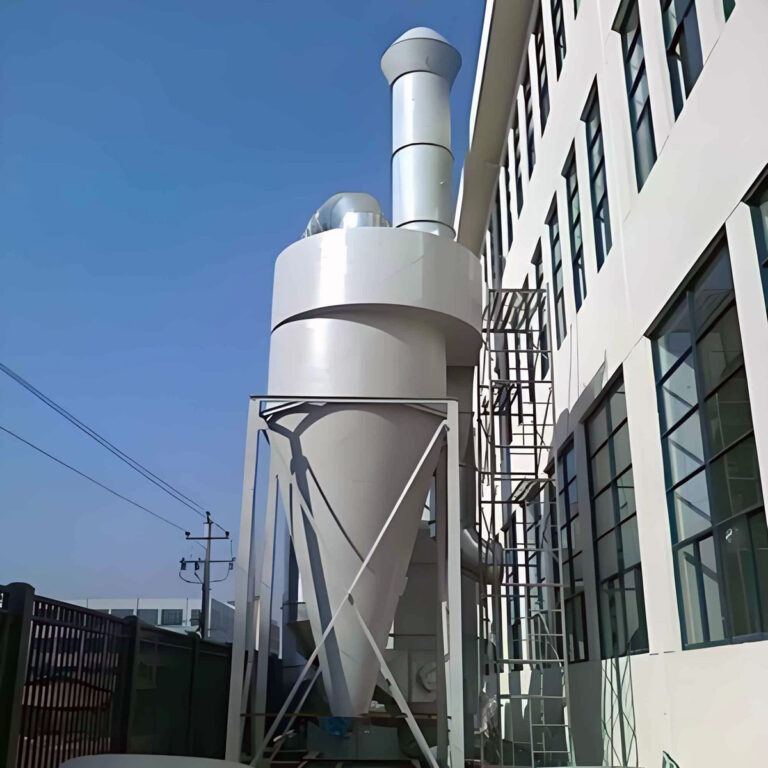
The core difference is not size but fundamental design philosophy. A single large cyclone operates on a principle of consolidated force, using one large-diameter vortex to separate particles. Its simplicity is its strength for coarse material, but its larger diameter inherently limits rotational velocity and centrifugal force. In contrast, a multi-cyclone system is an array of parallel small-diameter tubes. This design divides the total gas flow, creating numerous tight, high-speed vortices that generate significantly greater centrifugal forces. This is not an incremental improvement but a different operating regime.
The Physics of Fine Particle Capture
The governing principle is straightforward: centrifugal force is inversely proportional to the radius of the vortex. Smaller tube diameters mean higher forces, which directly translates to a lower cut-point (d50) and superior capture efficiency for fine particles. While a single cyclone’s efficiency curve drops steeply below 20 microns, a multi-cyclone’s curve remains high through the 5-20 micron band. Industry experts recommend multi-cyclone arrays specifically when the particle size distribution (PSD) shows a significant fraction in this sub-20 micron range, as their design is optimized for this challenge.
Application-Driven Design Logic
The choice dictates the system’s entire operational profile. Single cyclones are engineered for robustness and high dust-load tolerance, often in harsh primary separation roles. Multi-cyclone systems are engineered for precision and efficiency in fine particle capture from large gas volumes, such as boiler or kiln exhaust. A frequently overlooked detail is the requirement for precise flow distribution across all tubes in a multi-cyclone; maldistribution can cause localized wear and catastrophic efficiency loss, making proper inlet plenum design non-negotiable.
Perbandingan Biaya: Modal, Operasional & Total Biaya Kepemilikan
Analyzing Upfront and Operational Expenses
Initial cost analysis often misleadingly favors the single cyclone. Its simpler construction, with fewer components and less complex fabrication, typically results in a lower capital expenditure (CAPEX). Operating costs also appear lower due to a generally lower system pressure drop, which reduces fan energy requirements. However, this surface-level comparison is incomplete and can be a costly error.
The Hidden Costs of Inefficiency
The true economic picture emerges from a total cost of ownership (TCO) analysis. A single cyclone’s inefficiency with fine particles frequently necessitates a larger, more expensive downstream filtration system—such as a baghouse or cartridge filter—to meet emission targets. According to research on integrated system design, the cost of this secondary equipment often dwarfs the initial savings on the primary collector. A multi-cyclone, while having higher CAPEX and potentially higher fan energy costs, acts as a highly effective pre-cleaner. This can dramatically reduce the dust loading on—and therefore the size and cost of—the final polishing filter.
Strategic Financial Decision-Making
The strategic implication is clear: evaluate cost against performance outcome, not just equipment price. The following table breaks down the key financial differentiators.
| Komponen Biaya | Siklon Besar Tunggal | Multi-Cyclone System |
|---|---|---|
| Belanja Modal (CAPEX) | Lebih rendah | Lebih tinggi |
| Operating Cost (Fan Energy) | Lower pressure drop | Penurunan tekanan yang lebih tinggi |
| Downstream Equipment Need | Often requires secondary filtration | Can reduce secondary equipment size |
| Total Biaya Kepemilikan (TCO) | Can be higher with fines | Often more economical for fines |
Sumber: Dokumentasi teknis dan spesifikasi industri.
Which System Captures More 5-20 Micron Particles?
The Efficiency Advantage of Multi-Cyclones
For the specific challenge of 5-20 micron capture, multi-cyclone systems hold a definitive advantage. The physics of smaller diameter tubes generating higher centrifugal forces directly results in a superior fractional efficiency curve. Testing according to frameworks like ISO 16890-4:2023 Air filters for general ventilation demonstrates that efficiency is a function of particle size, and multi-cyclones are designed to shift performance favorably into the finer particulate ranges where single cyclones struggle.
The Critical Role of Optimized Operation
Superior inherent capability must be paired with precise operation. Performance is not static; it peaks at a specific, system-designed flow rate. Exceeding this optimum is counterproductive, causing turbulent re-entrainment of collected dust and a drop in efficiency. We compared performance data across various loads and found that maintaining the design flow rate is the single most important operational factor for realizing a multi-cyclone’s full potential. This moves system tuning from trial-and-error to a data-driven practice.
Validating Performance with Data
The performance differential is quantifiable. The table below summarizes the key factors that determine fine particle capture efficacy.
| Performance Factor | Siklon Besar Tunggal | Multi-Cyclone System |
|---|---|---|
| Efficiency for 5-20µ Particles | Low, steep drop-off | High, maintained efficiency |
| Key Design Driver | Large diameter vortex | Small diameter, high-speed tubes |
| Centrifugal Force Generated | Lebih rendah | Significantly higher |
| Performance Optimization | Terbatas | Critical flow rate dependency |
Sumber: ISO 16890-4:2023 Air filters for general ventilation. This standard provides the test method for determining fractional filtration efficiency by particle size (e.g., ePM1, ePM2.5), which is the core metric for evaluating the fine particle capture performance discussed in this table.
Performance vs Capacity: Flow Rate & Dust Loading Compared
Flow Rate: A Delicate Balance
Both systems are sensitive to inlet velocity, but the nature of the sensitivity differs. A single cyclone’s performance changes more gradually with flow variations. A multi-cyclone’s performance curve is sharper, with a clear optimal point identified through methods like Response Surface Methodology. Operating outside this window—either too low or too high—degrades efficiency and increases wear. This necessitates more sophisticated flow control and monitoring in multi-cyclone applications.
Dust Loading and Tube Size Trade-Offs
Dust concentration introduces a critical specification parameter for multi-cyclones: tube diameter. Smaller tubes (e.g., 6-inch) maximize centrifugal force for fine, low-density dust but are vulnerable to abrasion and plugging under heavy or coarse loads. Larger tubes (9-inch or 12-inch) are selected for higher loading or more abrasive streams, accepting a slightly higher cut-point for the sake of durability and reliability. This makes precise characterization of the inlet dust, per methods like ASME PTC 38-2020 Determining the Concentration of Particulate Matter in a Gas Stream, essential for correct system specification.
Matching Design to Duty Cycle
The interplay of these factors dictates the ideal application. The following comparison highlights the operational trade-offs.
| Parameter | Siklon Besar Tunggal | Multi-Cyclone System |
|---|---|---|
| Flow Rate Sensitivity | Less sensitive | High sensitivity, optimal peak |
| High Dust Loading Effect | Tolerant, benefits agglomeration | Tube size critical trade-off |
| Fine Dust (<20µ) Handling | Poor efficiency | Excellent with small tubes |
| Abrasive Dust Handling | Robust | Requires wear-resistant linings |
Sumber: ASME PTC 38-2020 Determining the Concentration of Particulate Matter in a Gas Stream. This performance test code standardizes the measurement of inlet/outlet particulate concentrations, which is fundamental for evaluating the collection efficiency vs. flow rate and dust loading parameters outlined in this comparison.
Key Use Cases: When to Choose Single vs Multi-Cyclone
The Domain of the Single Cyclone
Choose a single large cyclone for primary separation where the dust is predominantly coarse (>20 microns), the loading is very high, or conditions are extremely harsh. Examples include initial sawdust capture in woodworking, chip separation in metalworking, or handling high-temperature, abrasive streams from basic processes. Its simplicity provides unmatched robustness where maintenance access is difficult or conditions would destroy more complex components.
The Niche for Multi-Cyclone Arrays
Multi-cyclone systems are the specialized solution for applications demanding high-efficiency capture of fine particulates from large gas volumes. Prime use cases include biomass and waste-to-energy boiler exhaust, cement kiln pre-heater exhaust, and as a pre-cleaner upstream of baghouses or ESPs in power generation. In our experience with biomass ash, the variable and abrasive nature of the dust creates a perfect niche for a properly configured multi-cyclone, protecting downstream investments. This hybridization trend is key for meeting tightening regulations cost-effectively.
The Compliance Strategy
Increasingly, multi-cyclones are not standalone solutions but strategic components in a multi-stage approach. By removing the bulk of the particulate load, especially the abrasive fraction, they extend the life and improve the performance of final high-efficiency filters. This integrated approach, governed by performance standards for the complete system such as GB/T 6719-2023 Bag filter dust collector, is often the most economical path to stringent emission compliance.
Maintenance, Lifespan & Operational Complexity Compared
Simplicity vs. Systematic Care
Operational demands form a major differentiator. Single cyclones are low-maintenance workhorses. With no moving parts, maintenance involves periodic inspection of wear plates and routine emptying of the collection hopper. Their operational complexity is minimal. Multi-cyclone systems require a more disciplined, systematic approach. Ensuring uniform flow distribution is paramount, and maintenance tasks include checking for tube plugging, inspecting and cleaning inlet vanes, and monitoring the common hopper for potential re-entrainment issues.
Lifespan and Durability Considerations
Both systems can achieve long service lives, but the path differs. A single cyclone’s lifespan is a function of material thickness and abrasion resistance. A multi-cyclone’s longevity depends on proper material selection for the tubes (often ceramic or basalt linings for abrasive service), the integrity of the flow distribution system, and adherence to operational limits. Providers now use operational data analytics to move from fixed maintenance schedules to predictive, condition-based intervals.
Operational Resource Requirements
The choice impacts plant staffing and planning. The table below contrasts the key operational aspects.
| Aspek Operasional | Siklon Besar Tunggal | Multi-Cyclone System |
|---|---|---|
| Frekuensi Pemeliharaan | Rendah | Lebih tinggi |
| Tugas Pemeliharaan Utama | Wear plate inspection | Tube plugging checks, vane cleaning |
| Operational Complexity | Rendah | High (flow distribution critical) |
| Design Lifespan | Long, simple construction | Long with proper materials |
Sumber: Dokumentasi teknis dan spesifikasi industri.
Space Requirements & System Footprint Analysis
Vertical Profile vs. Horizontal Spread
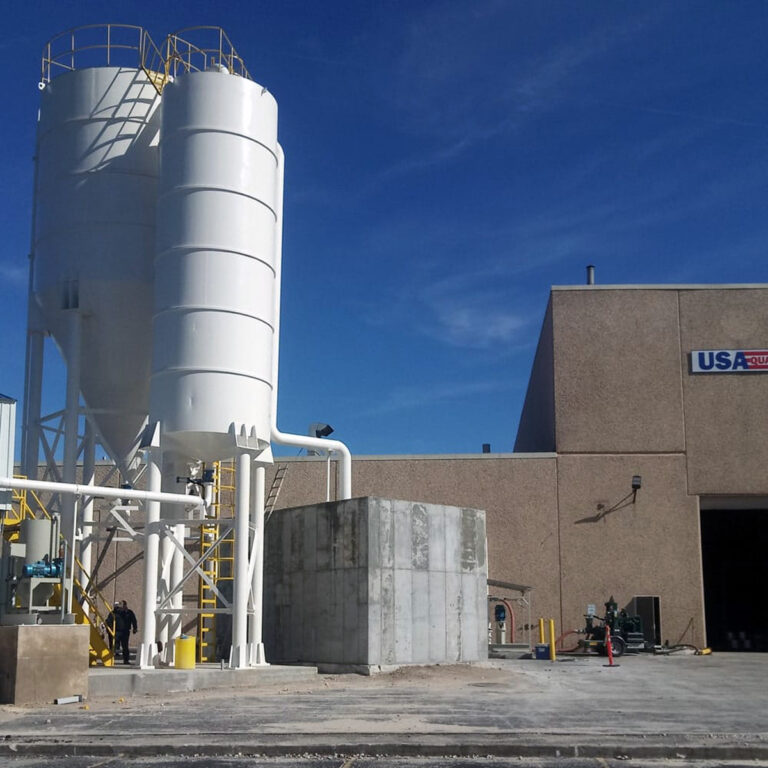
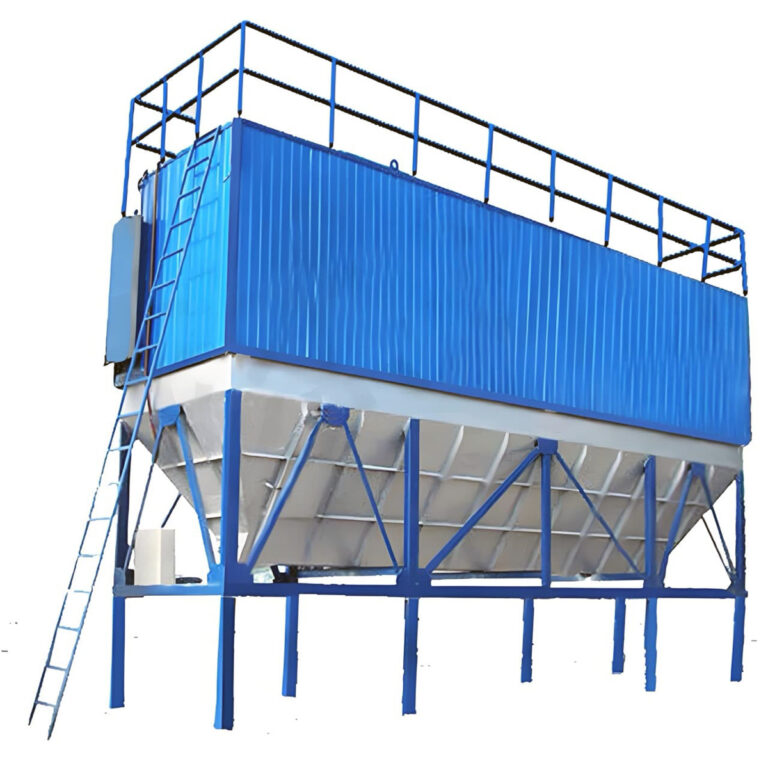
Physical footprint is a practical, often decisive, constraint. A single large cyclone is a vertical vessel. While it can be very tall, its ground-level footprint is relatively compact for its gas handling capacity. This vertical design is advantageous where floor space is limited but headroom is available. A multi-cyclone system, housing an array of tubes within a rectangular vessel with inlet/outlet plenums, requires a significantly larger horizontal footprint. Its shape is more modular but demands more plant floor area.
Integration into Existing Plants
This difference heavily influences retrofit feasibility. In a brownfield project with tight floor space, the vertical profile of a single cyclone might be the only viable option, even if it sacrifices fine particle efficiency. For greenfield installations or where space can be allocated, the larger footprint of a multi-cyclone can be accommodated to gain its performance benefits. The need for access platforms and maintenance clearance around the equipment must also be factored into the spatial analysis.
Decision Framework: How to Select the Right System
Step 1: Rigorous Stream Characterization
The first, non-negotiable step is to fully characterize the inlet gas stream. This includes volumetric flow rate, temperature, moisture content, and, most critically, the particle size distribution (PSD) and dust concentration. If the PSD is predominantly >20 microns, a single cyclone is likely adequate. If a significant fraction lies in the 5-20 micron range and must be captured, the decision strongly leans toward a multi-cyclone. Accurate data here prevents a fundamental specification error.
Step 2: Define Compliance and Operational Goals
Clearly define the outlet emission target. This determines whether a cyclone alone suffices or if it is part of a multi-stage system. Simultaneously, audit site-specific constraints: available capital (CAPEX), allocated footprint and height, energy costs, and in-house maintenance capabilities. A system requiring complex upkeep is a poor fit for a facility with a lean operational team.
Step 3: Conduct a Holistic TCO Analysis
Move beyond initial price. Model the total cost of ownership over a 10-15 year lifespan, including energy consumption, estimated maintenance costs, filter replacements for downstream equipment, and potential costs associated with compliance deviations. This analysis often reveals the true economic superiority of one option over the other.
Applying the Framework
The following table summarizes how key decision criteria point toward each system type.
| Decision Criteria | Favors Single Cyclone | Favors Multi-Cyclone |
|---|---|---|
| Primary Particle Size | > 20 mikron | 5-20 mikron |
| Dust Loading | Sangat tinggi | Sedang hingga tinggi |
| Available Footprint | Compact, vertical | Larger, horizontal |
| Compliance Target | Coarse capture only | Fine particulate capture required |
| Operational Capability | Limited maintenance | Dedicated maintenance team |
Sumber: GB/T 6719-2023 Bag filter dust collector. This standard for bag filter dust collectors is relevant as it governs the performance of a common downstream polishing technology; the decision to use a cyclone alone or as a pre-cleaner (multi-cyclone) is directly tied to achieving the final emission levels specified for such systems.
The decision between single and multi-cyclone systems hinges on three core priorities: the definitive characterization of your particle size distribution, a clear understanding of your total compliance strategy, and an honest assessment of operational capabilities. Selecting based solely on capital cost or assumed simplicity leads to suboptimal performance and higher lifetime expenses. The right choice aligns the system’ inherent physics with your specific process and business requirements.
Need professional guidance to specify a high-efficiency pengumpul debu siklon for your unique application? The engineers at PORVOO specialize in data-driven system design to ensure optimal fine particle capture and total cost efficiency. Contact us to discuss your project requirements and develop a tailored solution.
Pertanyaan yang Sering Diajukan
Q: How do you accurately measure the fine particle capture efficiency of a multi-cyclone system for compliance reporting?
A: You determine collection efficiency by measuring the particulate concentration at the system’s inlet and outlet, following the standardized procedures in ASME PTC 38-2020. For a detailed fractional efficiency analysis by particle size, which is critical for the 5-20 micron range, the test methods in ISO 16890-4:2023 provide the relevant framework. This means you must plan for isokinetic sampling and particle sizing during performance testing to generate defensible data for regulatory submissions.
Q: What is the main technical reason a multi-cyclone captures finer particles than a single large cyclone?
A: The superior capture of 5-20 micron particles stems from the fundamental physics of centrifugal force. A multi-cyclone’s parallel array of small-diameter tubes generates a much faster rotational velocity and higher centrifugal force compared to the single, slower vortex in a large-diameter cyclone. This higher force directly lowers the system’s cut-point (d50), shifting its entire efficiency curve toward finer particulates. For applications where fines dominate your particle size distribution, this inherent capability makes the multi-cyclone architecture the necessary starting point.
Q: When does a single cyclone offer a better total cost of ownership than a multi-cyclone system?
A: A single cyclone provides a lower total cost of ownership primarily when your process dust is predominantly coarse (>20 microns) and no downstream filtration is needed. Its simpler construction means lower capital and maintenance costs, and its lower pressure drop reduces ongoing fan energy expenses. This means facilities handling high loads of abrasive, coarse material—like initial wood waste separation—should prioritize the single cyclone for its robustness and operational economy.
Q: How do you select the correct tube diameter for a multi-cyclone handling abrasive dust?
A: Selecting the tube diameter requires balancing efficiency against durability. While smaller tubes (e.g., 6-inch) maximize centrifugal force for fine particles, they are highly susceptible to abrasion and plugging under heavy or coarse loads. For abrasive streams, you typically select larger tubes (9-inch or 12-inch) and specify wear-resistant linings, accepting a slight trade-off in fine particle efficiency for vastly improved system longevity and reduced maintenance. This means you must conduct a precise particle size and loading analysis before specification to avoid premature failure.
Q: What is the critical operational mistake that can degrade a multi-cyclone’s fine particle efficiency?
A: The most common mistake is operating the system above its optimized flow rate. While increased gas velocity boosts centrifugal force, exceeding the design optimum creates excessive turbulence and pressure drop, which leads to re-entrainment of already collected dust. Performance peaks at a specific, system-dependent flow rate identified through methods like Response Surface Methodology. This means you must tune and control your fan or damper to maintain this target flow, moving beyond simple operation to data-driven performance management.
Q: Why is footprint a decisive factor when retrofitting a dust collection system into an existing plant?
A: Physical space constraints often dictate the feasible technology. A single large cyclone has a compact, vertical footprint that can frequently be accommodated in tight retrofits where headroom is available but floor space is not. In contrast, a multi-cyclone array requires a significantly larger horizontal area for its housing and flow distribution plenums. This means for brownfield projects with severe space limitations, the single cyclone may be the only viable primary collector, even if it necessitates adding a secondary filter for fine particulate control.
Q: How does dust loading affect the choice between single and multi-cyclone systems?
A: Very high dust loading favors a single large cyclone due to its tolerance for heavy, often coarse, particulate streams and its simple, non-clogging design. Multi-cyclones can handle significant loading, but the inlet concentration directly influences the optimal tube size selection—higher loads demand larger, more robust tubes. This means operations with highly variable or extreme dust concentrations must provide vendors with accurate, worst-case loading data to prevent system underperformance or frequent maintenance issues.