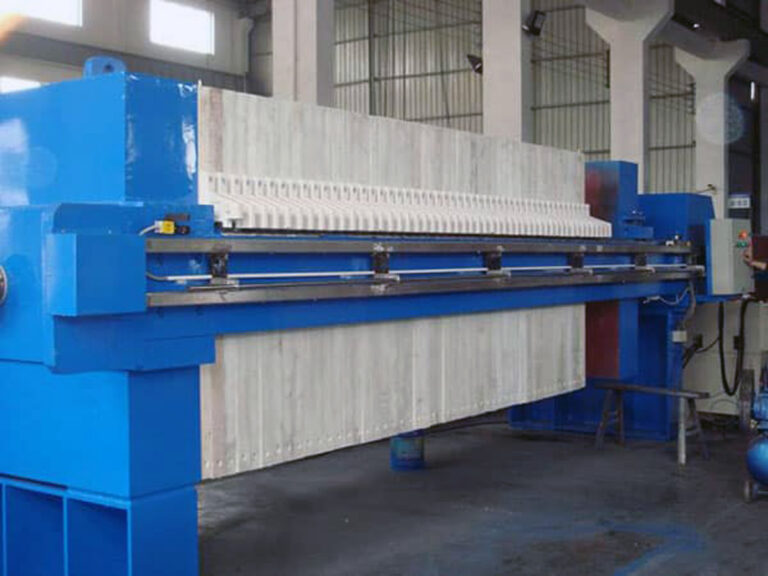
Memilih teknologi filter press yang tepat adalah keputusan modal penting yang secara langsung berdampak pada laba dan efisiensi operasional Anda. Pilihan antara filter press membran dan chamber press tradisional sering disederhanakan menjadi perbandingan biaya dasar, yang menyebabkan kesalahan perhitungan jangka panjang yang signifikan. Para profesional harus bergerak melampaui label harga awal untuk mengevaluasi kinerja siklus hidup total.
Tekanan untuk mengoptimalkan pengurasan air-didorong oleh meningkatnya biaya pembuangan, peraturan lingkungan yang ketat, dan kebutuhan akan pemulihan air proses-membuat evaluasi teknis ini menjadi lebih mendesak daripada sebelumnya. Memahami delapan perbedaan kinerja utama antara sistem-sistem ini sangat penting untuk melakukan investasi yang selaras dengan tujuan operasional langsung dan strategi keuangan jangka panjang.
Membran vs Chamber Filter Press: Perbedaan Inti Dijelaskan
Menentukan Mekanisme Filtrasi
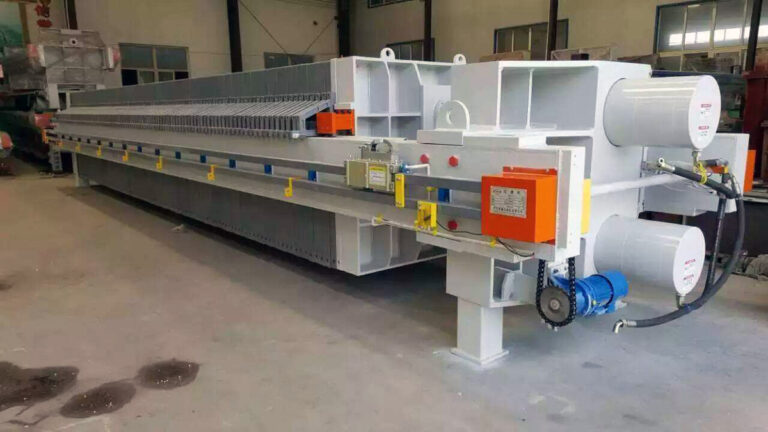
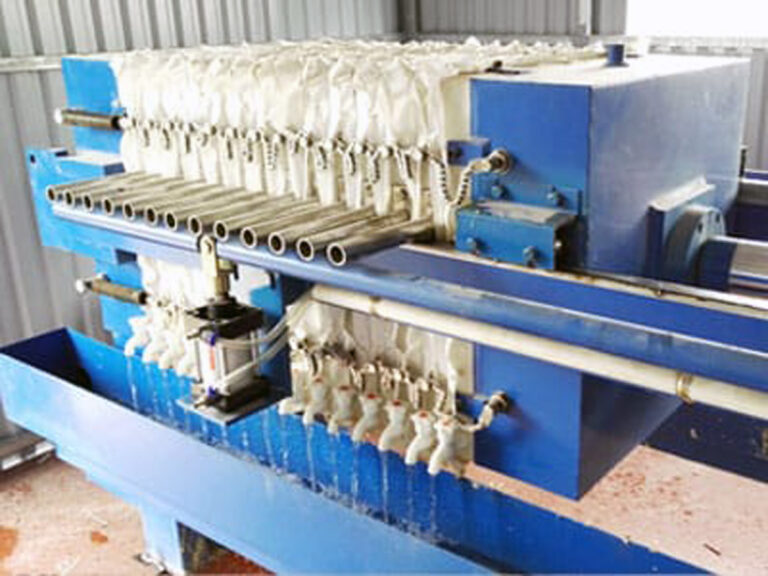
Perbedaan operasional yang mendasar adalah pengurasan pasif versus pengurasan aktif. Mesin press ruang tradisional beroperasi dengan prinsip satu tahap: bubur dipompa ke dalam ruang volume tetap, dan cairan dipaksa melalui kain saring hanya dengan tekanan pompa umpan. Filtrasi berhenti setelah ruang-ruang secara fisik penuh dengan kue padat. Proses ini sepenuhnya tergantung pada tekanan hidrolik dari sistem umpan.
Memperkenalkan Kompresi Aktif
Sebuah filter membran menggabungkan tahap kedua yang menentukan. Setelah siklus pengumpanan awal, diafragma tiup atau membran yang melapisi setiap ruang diberi tekanan, biasanya dengan air atau udara sekitar 15 bar. Ini menerapkan gaya pemerasan mekanis yang seragam langsung ke kue yang telah dibentuk sebelumnya. Menurut JB / T 4333.3-2017 Mesin penyaring membran standar, tahap kompresi sekunder ini merupakan fitur penentu yang memisahkan teknologi ini dari desain ruang dasar.
Dampak pada Kontrol Proses
Perbedaan utama ini-menambahkan kompresi aktif-menghilangkan kekeringan kue akhir dari keterbatasan tekanan pompa umpan saja. Ini mengubah proses dari operasi pengisian dan pengurasan pasif menjadi urutan pengeringan dua fase yang terkendali. Kemampuan membran untuk menyesuaikan diri dengan cake menerapkan tekanan isostatik, menutup rongga internal dan memaksa keluar air kapiler tambahan yang tidak dapat dijangkau oleh tekanan pompa. Dalam analisis kami terhadap data uji coba, tindakan mekanis ini secara konsisten memberikan perubahan langkah dalam kekeringan yang tidak dapat dicapai oleh tekanan hidraulik saja.
Biaya Modal vs Biaya Operasional: Analisis Investasi Total
Mengevaluasi Investasi Awal
Mesin penyaring membran membutuhkan pengeluaran modal awal yang lebih tinggi. Peningkatan kompleksitas pelat membran, sistem inflasi tekanan tinggi khusus (pompa, katup, kontrol), dan sering kali konstruksi rangka yang lebih kuat adalah pendorong biaya utama. Mesin cetak ruang tradisional, dengan desain pelat yang lebih sederhana dan tidak adanya sistem inflasi, menghadirkan penghalang keuangan di muka yang lebih rendah, seperti yang diuraikan dalam persyaratan komponen JB/T 4333.2-2017 Mesin penyaring ruang.
Menghitung Pengeluaran Operasional
Narasi keuangan bergeser ketika menganalisis biaya operasional. Kekeringan yang unggul dari pengepresan membran secara langsung mengurangi massa dan volume kue basah. Untuk operasi dengan tonase tinggi, ini berarti penghematan besar pada biaya transportasi dan biaya penimbunan atau insinerasi, yang biasanya merupakan biaya berulang terbesar dalam pengelolaan lumpur. Selain itu, pengepres membran dapat mencapai target kekeringan dengan pompa umpan bertekanan sedang (6-7 bar), sedangkan pengepres ruang mungkin memerlukan pompa bertekanan tinggi yang mahal untuk mendekati kinerja yang sama, sehingga meningkatkan konsumsi energi.
Kerangka Biaya Siklus Hidup
Hal ini merupakan pertukaran Capex-untuk-Opex yang disengaja. Evaluasi yang tepat membutuhkan model biaya kepemilikan total yang diproyeksikan selama masa pakai peralatan. Tabel berikut ini menguraikan pembeda keuangan utama.
| Kategori Biaya | Tekan Filter Membran | Mesin Cetak Kamar Tradisional |
|---|---|---|
| Biaya Modal Awal | Lebih tinggi | Lebih rendah |
| Pemicu Biaya Utama | Pelat membran, sistem inflasi | Desain pelat yang lebih sederhana |
| Tekanan Pompa Umpan | Sedang (6-7 bar) | Berpotensi tekanan tinggi |
| Dampak Biaya Operasional Terbesar | Biaya pembuangan yang lebih rendah | Biaya pembuangan yang lebih tinggi |
| Pertukaran Strategis | Belanja modal yang lebih tinggi untuk penghematan biaya operasional | Belanja modal yang lebih rendah, belanja modal yang lebih tinggi |
Sumber: JB/T 4333.3-2017 Press filter membran dan JB/T 4333.2-2017 Press filter ruang. Standar-standar ini mendefinisikan persyaratan teknis dan komponen untuk setiap jenis mesin press, yang secara langsung menginformasikan kompleksitas dan pendorong biaya yang mendasari perbedaan belanja modal (Capex).
Filter Press Mana yang Menghasilkan Padatan Kue yang Lebih Kering?
Mengukur Keuntungan Kekeringan
Mesin penyaring membran secara konsisten menghasilkan kue dengan kandungan padatan kering yang lebih tinggi. Peningkatan ini tergantung pada jenis lumpur. Untuk lumpur mineral yang dikondisikan dengan baik, seperti yang diolah dengan kapur atau semen, peningkatan kekeringan sebesar 4 hingga 5 poin persentase di atas pengepresan ruang adalah hal yang umum. Untuk lumpur organik yang dapat dimampatkan dari pengolahan air limbah, yang dikondisikan dengan polimer, kenaikan 2 hingga 3 poin persentase adalah tipikal. Angka-angka ini tidak bersifat teoritis; angka-angka ini merupakan hasil terukur dari fase kompresi aktif yang ditentukan dalam uji kinerja.
Menilai Homogenitas Kue
Di luar perolehan poin persentase, keseragaman kompresi sangat penting. Pemerasan membran yang merata menghilangkan inti yang basah dan lengket atau “puding” yang sering ditemukan di bagian tengah kue chamber press. Hal ini menghasilkan kue yang homogen dan rapuh yang keluar dengan bersih dari kain. Konsistensi ini merupakan manfaat operasional yang utama, mengurangi hang-up di hopper dan meningkatkan penanganan hilir atau pengumpanan ke insinerator.
Dasar Teknis untuk Kinerja
Kesenjangan kinerja berasal dari mekanisme fundamental. Sebuah chamber press bergantung pada laju filtrasi yang berkurang saat cake menumpuk dan resistensi meningkat. Mesin press membran mengatasi hal ini dengan menerapkan gradien tekanan baru yang lebih tinggi setelah formasi kue. Tabel di bawah ini merinci kinerja komparatif ini.
| Metrik Kinerja | Tekan Filter Membran | Mesin Cetak Kamar Tradisional |
|---|---|---|
| Keuntungan Kekeringan Khas (Lumpur Mineral) | +4 hingga +5 poin persentase | Baseline |
| Keuntungan Kekeringan Khas (Lumpur Organik) | +2 hingga +3 poin persentase | Baseline |
| Mekanisme Kompresi | Peras diafragma aktif | Hanya penyaringan tekanan pompa |
| Konsistensi Kue | Homogen, tidak ada bagian yang basah | Can be inconsistent |
| Key Enabling Feature | Decouples dryness from pump pressure | Dryness limited by feed pressure |
Source: JB/T 4333.3-2017 Membrane filter press. This standard specifies the performance and testing methods for membrane filter presses, including the secondary compression stage that is the technical basis for achieving higher, more consistent cake dryness compared to traditional designs.
Throughput Compared: Cycle Time and Processing Capacity
Analyzing Cycle Time Components
Throughput is a function of total cycle time: filling, squeezing, cake release, and cloth washing. In a chamber press, the filling/filtration phase is often the longest, as the system must wait for pressure-driven filtration to completely fill the chambers. The process cannot be shortened without sacrificing cake solidity.
The Membrane Press Efficiency Gain
The membrane press introduces a faster, more efficient path to final dryness. The initial filtration phase can be terminated earlier, once a sufficient cake base is formed. The high-pressure squeeze phase then acts rapidly—often in minutes—to achieve the target moisture content. On readily filterable sludges, this can reduce overall cycle time by 30-40%, significantly increasing daily processing capacity for a given plate area.
The Critical Caveat: Sludge Filterability
This throughput advantage is not universal. For problematic, slow-filtering organic sludges with high compressibility, the filtration phase remains the limiting bottleneck for both technologies. In these cases, the membrane press still delivers drier cake, but the cycle time reduction may be marginal. Industry experts consistently emphasize that accurate capacity projections are impossible without representative sludge testing under both filtration and compression conditions, a principle embedded in the general testing methods of GB/T 34331-2017 Filter press.
| Throughput Factor | Tekan Filter Membran | Mesin Cetak Kamar Tradisional |
|---|---|---|
| Cycle Time Reduction (Filterable Sludge) | 30-40% faster | Baseline cycle |
| Limiting Phase | Rapid high-pressure squeeze | Slow pressure filtration |
| Capacity Determinant | Sludge filterability testing required | Sludge filterability testing required |
| Problematic Sludge Impact | Throughput benefit may be negligible | Consistently slower |
Source: GB/T 34331-2017 Filter press. As the general standard for filter presses, it establishes the foundational test methods for evaluating key performance parameters like cycle time and processing capacity, which are essential for this comparative analysis.
Maintenance, Complexity, and Long-Term Reliability
Comparing System Complexity
Mechanical simplicity favors the traditional chamber press. Its system comprises plates, cloths, a closing mechanism, and a feed pump. The membrane press adds significant complexity: the membrane plates themselves (elastomer diaphragms bonded to polypropylene), a high-pressure inflation media system (pump, accumulators, piping), and more sophisticated controls to manage the two-stage cycle.
Evaluating Maintenance Overhead
Complexity dictates maintenance. Chamber press maintenance focuses on cloth replacement, plate inspection, and pump upkeep. Membrane press maintenance includes all of that plus the critical inspection and replacement of membranes, which are wear items subject to fatigue and chemical attack. The inflation system also requires regular servicing. This translates to higher routine maintenance costs and a greater need for skilled operational oversight, a factor addressed in standards for automated systems like JB/T 4333.4-2017 Mesin penyaring otomatis.
Debunking the “Fully Automatic” Claim
Both systems can be automated for cycling, but cake discharge often remains a supervisory task. Sticky or cohesive cakes may not release cleanly without operator intervention, regardless of press type. Assuming a membrane press is a “hands-off” solution is a common strategic error. The reliability of the entire system hinges on a robust maintenance program tailored to its specific components.
| System Aspect | Tekan Filter Membran | Mesin Cetak Kamar Tradisional |
|---|---|---|
| Mechanical Complexity | Lebih tinggi | Lebih rendah |
| Key Wear Components | Membranes, inflation system | Filter cloths, plates |
| Perawatan Rutin | Higher overhead | Lower overhead |
| Operational Oversight | Requires more skilled labor | Simpler to operate |
| Automation Potential | High, but discharge may need supervision | Can be automated |
Source: JB/T 4333.4-2017 Automatic filter press. This standard outlines requirements for automatic control systems and safety, which relate directly to the operational complexity, labor requirements, and reliability considerations for both types of presses when automated.
Space Requirements and System Footprint Comparison
Assessing the Press Frame
For equivalent filtration area, the physical footprint of the press frame itself is often similar between the two technologies. The size is dictated by the number and dimensions of the plates. The difference lies in the ancillary systems that support the core dewatering function.
Accounting for Ancillary Equipment
A membrane filter press requires dedicated floor space for its membrane inflation unit—a high-pressure pump or air compressor system with associated tanks and controls. A traditional chamber press may require space for larger, higher-horsepower feed pumps if high pressure is needed to maximize dryness. The ancillary footprint is technology-dependent and must be included in plant layout planning.
Considering Downstream Footprint
The drier, more compact cake produced by a membrane press can reduce the required size of downstream handling infrastructure. Conveyor systems, storage bunkers, and transport containers can be sized for a lower volumetric flow. This secondary space saving is frequently overlooked in initial layout designs but contributes to overall plant efficiency.
Best Applications: Which Sludge Type Is Right for Each?
Optimal Applications for Membrane Presses
Membrane filter presses deliver maximum value where dryness, throughput, and cake consistency are paramount. They are the preferred solution for municipal wastewater treatment sludges, where drier cake directly slashes disposal costs. They excel on fine mineral tailings in mining, enhancing water recovery and tailings stack stability. Their adaptability also makes them suitable for variable chemical and industrial sludges. For operations considering advanced sludge dewatering equipment like membrane filter presses, the justification is strongest in these areas.
Ideal Uses for Traditional Chamber Presses
Traditional chamber presses remain a robust, cost-effective choice for less demanding applications. They are well-suited for coarse, fast-draining mineral concentrates, certain pretreatment stages where ultimate dryness is not critical, and operations with limited maintenance capabilities or capital budgets. Their simplicity is an asset in environments where operational complexity is a liability.
Making the Application-Specific Choice
The decision matrix must be driven by sludge characteristics and process economics. The following table provides a guideline based on common industry applications.
| Application / Sludge Type | Recommended Press Type | Pengemudi Utama |
|---|---|---|
| Municipal Wastewater (Organic) | Tekan Filter Membran | Disposal cost savings |
| Mineral Tailings (Fine) | Tekan Filter Membran | Water recovery, stability |
| Non-demanding Mineral Processing | Mesin Cetak Kamar Tradisional | Cost-effectiveness |
| Chemical Sludges | Tekan Filter Membran | Adaptability to variability |
| Pretreatment Stages | Mesin Cetak Kamar Tradisional | Dryness not critical |
Sumber: Dokumentasi teknis dan spesifikasi industri.
Key Selection Criteria for Your Dewatering Operation
Defining Non-Negotiable Outcomes
Begin by establishing fixed requirements: target cake dryness percentage, minimum daily throughput (in dry tons), available operator skill level, and allowable footprint. These are your boundary conditions. Any technology that cannot meet these thresholds is eliminated from consideration.
Conducting Representative Testing
Generic performance data is insufficient. A detailed sludge characterization study, including bench-scale or pilot testing with both technologies, is non-negotiable. Test with your actual, conditioned sludge to generate reliable data on filtration rate, achievable dryness, and optimal cycle time. This data feeds the financial model and de-risks the capital investment.
Executing a Total Lifecycle Cost Analysis
Build a financial model that spans the expected asset life. Factor in capital cost, installation, energy consumption (feed and inflation pumps), routine maintenance, membrane/cloth replacement costs, labor, and—most significantly—projected disposal costs based on the cake dryness achieved. This model will reveal the true cost differential and payback period for a membrane press investment.
The choice between a membrane and chamber filter press is a strategic trade-off between capital expenditure and long-term operational efficiency. Prioritize definitive sludge testing over manufacturer claims, and let a total lifecycle cost analysis—not just an equipment quote—guide the final decision. For operations where disposal costs are dominant or water recovery is critical, the membrane press offers a compelling return on investment.
Need professional guidance to specify the right filter press technology for your specific sludge and operational goals? The engineering team at PORVOO can help you navigate this critical analysis with data-driven recommendations. Contact us to discuss your dewatering challenges and explore performance-based solutions.
Pertanyaan yang Sering Diajukan
Q: How does the core operating mechanism of a membrane filter press lead to better dewatering results?
A: The key difference is the addition of an active compression stage. After initial slurry feed, an inflatable diaphragm pressurizes to around 15 bar, applying direct mechanical force to the pre-formed cake. This active squeeze decouples final dryness from feed pump limitations, enabling more controlled moisture reduction. This means facilities targeting minimal residual moisture for disposal cost savings should prioritize the membrane press’s mechanical compression capability over a chamber press’s passive filtration.
Q: What is the total cost of ownership trade-off between a membrane and a chamber filter press?
A: Membrane presses require higher capital investment for their complex design and inflation system, but they strategically lower operational expenses. The drier cake reduces disposal and transport costs, and they often use less energy with moderate-pressure feed pumps. For projects where sludge disposal fees are a major cost driver, a detailed lifecycle analysis that quantifies these downstream savings is essential to justify the initial capital outlay.
Q: How much drier can we expect cake solids to be with a membrane press for municipal wastewater sludge?
A: For polymer-conditioned organic sludges like those from municipal wastewater, membrane presses typically achieve dry solids content 2 to 3 percentage points higher than chamber presses. This performance is sludge-dependent, making detailed feed characterization mandatory for accurate projections. If your operation requires minimized cake volume for cost-effective landfill disposal or incineration, the membrane press provides a clear technical advantage in final dryness and cake homogeneity.
Q: Do membrane filter presses always process sludge faster than traditional chamber presses?
A: Not universally. While the high-pressure squeeze phase can shorten overall cycle time by 30-40% on well-conditioned sludges, this throughput gain diminishes with problematic, slow-filtering feeds. Capacity projections must be based on site-specific testing rather than generic claims. For operations with highly variable or difficult sludge, the potential cycle time benefit should be validated with pilot testing before final equipment selection.
Q: What are the long-term maintenance implications of choosing a more complex membrane filter press?
A: The added complexity of the inflation system and the membranes themselves increases maintenance overhead. Membranes are wear items needing periodic inspection and replacement, requiring more skilled operational oversight. While automation is common, fully automatic cake discharge is not guaranteed for all sludge types. This means facilities with limited technical staff should carefully evaluate the ongoing maintenance demands and potential labor costs against the performance benefits.
Q: Which technical standards should we reference when specifying a membrane filter press for a project in China?
A: The primary standard for membrane filter press design and testing is JB/T 4333.3-2017. For general filter press requirements including safety and marking, consult the foundational GB/T 34331-2017. This means your procurement specifications and performance guarantees should align with these standards to ensure equipment meets recognized technical and safety benchmarks for the region.
Q: How should we select the right filter press technology for a mining tailings application?
A: For mineral tailings where water recovery and tailings stability are priorities, membrane presses are often preferred due to their superior dryness and consistent cake. Start by defining non-negotiable outcomes like target solids content and throughput, then conduct a detailed sludge characterization study. If your operation values process adaptability and can support the system’s complexity, the membrane press’s performance typically justifies its use in demanding mineral processing environments.