For plant managers and process engineers in stone processing, optimizing flocculation with PAM polymers often hits a frustrating wall: inconsistent performance despite precise dosing. The hidden variable controlling this inconsistency is slurry pH. It’s not merely a number on a meter; it’s the master switch for electrostatic interactions, polymer conformation, and ultimately, dewatering efficiency. Misalignment here leads to excessive chemical consumption, poor clarity, and a sludge that resists mechanical dewatering, directly impacting operational cost and waste disposal.
Understanding pH’s role is critical because it moves polymer selection from a trial-and-error exercise to a predictable science. The charge of mineral particles and the functional groups on the polymer chain are both pH-dependent. Failing to engineer this match wastes polymer, compromises settling rates, and creates downstream handling problems. A strategic approach to pH control transforms flocculation from a cost center into a lever for process reliability and reduced environmental footprint.
The Role of pH in Particle and Polymer Charge Dynamics
Defining the Electrostatic Landscape
In stone slurry, particles like calcium carbonate and silicates carry a surface charge, measured as zeta potential. This charge originates from ionization and ion adsorption at the particle-water interface. Each mineral has a specific isoelectric point (IEP), the pH at which its net charge is zero. Simultaneously, pH governs the ionization state of Polyacrylamide (PAM) polymers. Anionic PAM contains carboxylate groups that protonate in acidic conditions, reducing its negative charge, and deprotonate in alkali, making it highly negative. Cationic PAM’s positive charge is more stable across a range, while non-ionic PAM relies on hydrogen bonding and van der Waals forces.
The Application of Charge Matching
Effective flocculation requires a strategic electrostatic match. The polymer’s ionic character must be selected to counteract the predominant particle charge at the process pH. For the typically negative stone slurry particles, cationic PAM is used to neutralize charge, reducing repulsion and allowing aggregation. This is more than simple neutralization; it’s about engineering specific interfacial interactions to enable close particle approach. In my experience, the most common oversight is assuming particle charge is constant, when in reality, changes in quarry source or process water can shift the IEP, requiring a polymer re-evaluation.
The Impact on Flocculation Fundamentals
This charge dynamic dictates the primary aggregation mechanism—charge neutralization or polymer bridging—setting the stage for all downstream performance. A mismatch here means polymers adsorb inefficiently, leading to high residual turbidity and wasted chemical. The foundational specifications for these polymers are outlined in standards like GB/T 31246-2014 Water treatment chemicals – Polyacrylamide, which defines the general requirements for PAM used in such water treatment applications. Moving beyond basic charge matching to tailor polymers for specific slurry chemistry represents the next level of process optimization.
Optimal pH Ranges for Anionic vs. Cationic PAM Polymers
Performance Requirements by Polymer Type
Selecting the correct polymer ionic type is a strategic decision dictated by slurry pH. Cationic PAM is typically deployed for negatively charged slurries across a broad window, generally from pH 4 to 9, where its primary mechanism is charge neutralization. Anionic PAM requires an alkaline environment (pH 7-10) to perform, as its chains must be fully extended and charged. Non-ionic PAM serves as a robust, charge-insensitive option for highly variable pH conditions or where dissolved ion interference is high.
Methods for Selection and Validation
The selection method is grounded in laboratory testing. Jar tests across a pH gradient, paired with zeta potential measurements, identify the optimal window for a given polymer-slurry combination. This empirical approach prevents the costly mistake of forcing a polymer to work outside its effective range. For instance, applying anionic PAM to an acidic slurry will fail regardless of dose, as the polymer chains remain coiled and inactive.
Decision Framework for Chemical Strategy
The decision extends beyond immediate performance. A key strategic insight is that organic polymers like PAM add minimal dissolved solids and generate less sludge volume compared to inorganic coagulants like alum or ferric salts. While PAM may have a higher unit cost, its efficiency and reduced sludge handling often justify the investment. The technical specifications for cationic and anionic types are further detailed in industry standards. For example, HG/T 5568-2019 Water treatment agent – Cationic polyacrylamide defines the requirements for CPAM, while GB/T 17514-2017 Water treatment chemicals – Anionic and nonionic polyacrylamide covers APAM and NPAM, providing the framework for qualifying these materials.
How pH Affects Polymer Conformation and Bridging Efficiency
The Problem of Chain Collapse
Beyond electrostatic charge, pH critically influences the physical shape of polymer chains in solution. For anionic PAM, this is the difference between success and failure. In acidic conditions, the carboxylate groups gain protons, reducing intra-chain repulsion and causing the molecule to collapse into a tight coil. This coiled conformation presents a small hydrodynamic radius and few active sites for particle attachment, severely crippling its ability to form bridges between particles.
The Solution of Chain Extension
In alkaline conditions, the carboxylate groups are fully deprotonated. The resulting negative charges along the polymer backbone repel each other, forcing the chain to extend into a long, linear configuration. This maximized conformation is essential for the bridging mechanism, where loops and tails of a single polymer can adsorb onto multiple particles, pulling them into a large aggregate. Cationic PAM conformation is less pH-sensitive but can be affected at extremely high pH.
Validation Through Performance Metrics
The impact is directly measurable in settling velocity and supernatant clarity. Extended chains at high pH create large, fast-settling flocs. Coiled chains at low pH result in slow settling, pin-floc formation, and persistent turbidity. This interplay underscores a critical point: future flocculant innovation lies in engineering polymers with precise control over charge density and molecular architecture to maintain optimal conformation across wider pH ranges.
The relationship between pH, polymer shape, and bridging capability is summarized below:
How pH Affects Polymer Conformation and Bridging Efficiency
| pH Condition | Anionic PAM Conformation | Bridging Efficiency |
|---|---|---|
| High (Alkaline) | Fully extended chains | Maximum efficiency |
| Low (Acidic) | Coiled/collapsed chains | Severely limited |
| Neutral | Partially extended | Moderate efficiency |
Sumber: GB/T 17514-2017 Water treatment chemicals – Anionic and nonionic polyacrylamide. The standard covers anionic PAM, whose performance is highly dependent on its molecular conformation—a state directly controlled by slurry pH, as described in the table.
The Impact of pH on Floc Characteristics and Dewatering
Defining Floc Physical Properties
The pH-driven mechanisms of charge neutralization and polymer bridging directly dictate the physical properties of the resulting flocs. Alkaline conditions with extended anionic polymers often produce large, open-structure flocs that settle rapidly but can be fragile and shear-sensitive. Conditions favoring cationic PAM, typically in slightly acidic to neutral ranges, often yield stronger, denser, and more compact aggregates due to a combination of charge patch effects and polymer conformation.
Application in Dewatering Equipment Selection
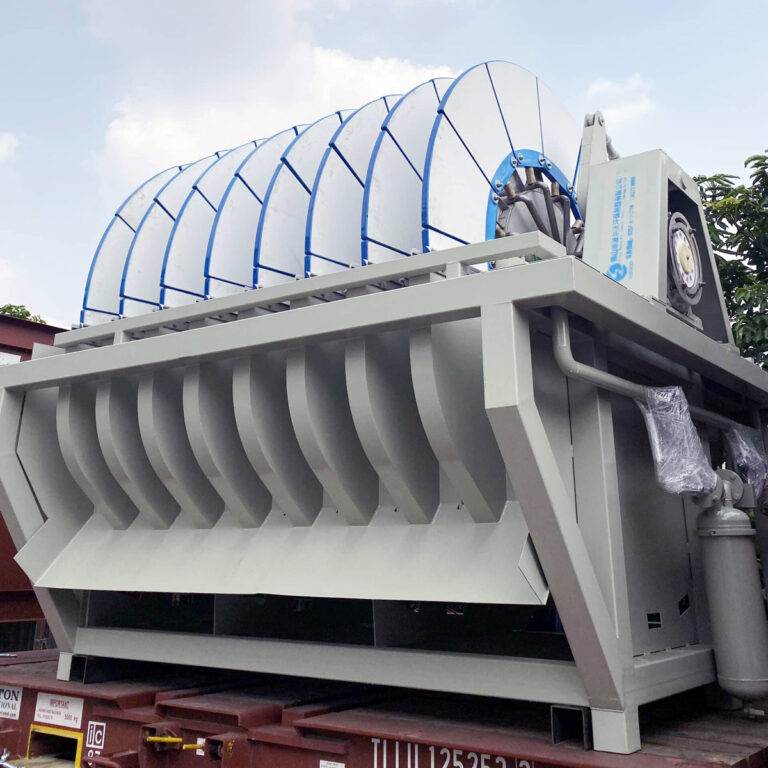
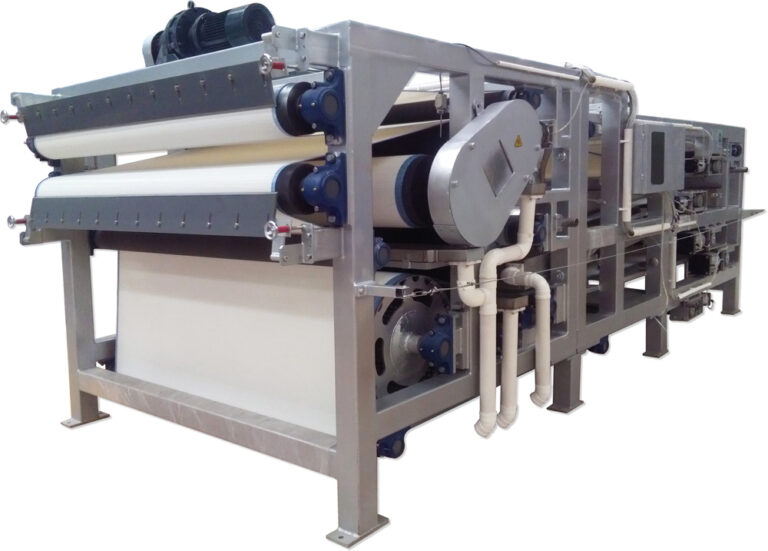
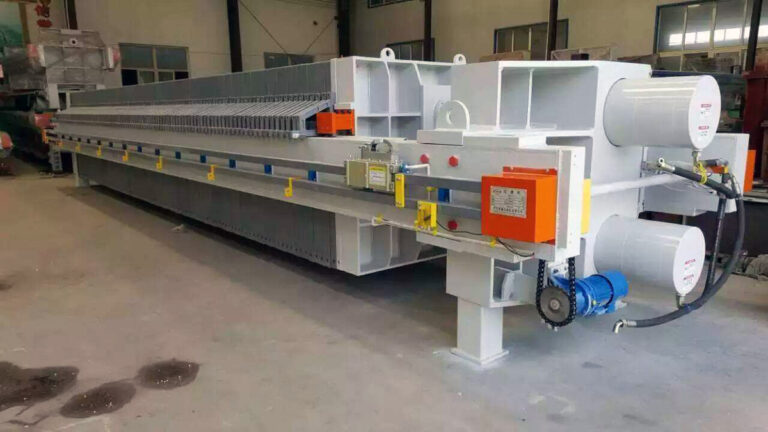
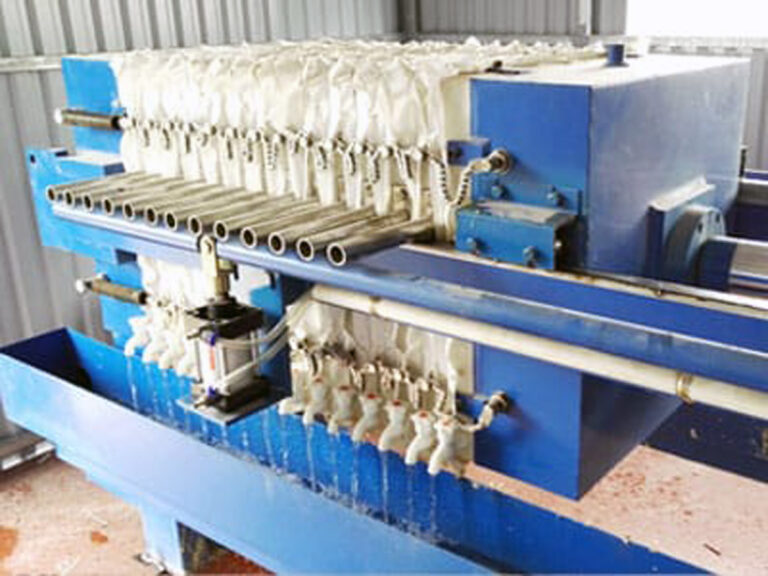
These floc characteristics determine the optimal downstream dewatering method. Large, fast-settling flocs from high-pH systems are ideal for gravity thickeners or clarifiers. The stronger, denser aggregates formed in neutral pH ranges are better suited to withstand the high shear forces in mechanical dewatering equipment like centrifuges, belt presses, or filter presses, leading to higher cake solids and drier sludge.
Impact on Overall Sludge Handling
Furthermore, pH influences water chemistry in ways that affect floc density. In alkaline conditions, multivalent cations like calcium (Ca²⁺) can precipitate as carbonates or hydroxides, acting as natural coagulants or bridges that enhance aggregate density and stability. Therefore, pH control is not just about achieving clear water; it’s about engineering a sludge with optimal handling and disposal characteristics, which is a major cost driver.
The downstream effects of pH on sludge properties are critical for equipment selection:
The Impact of pH on Floc Characteristics and Dewatering
| pH Environment | Typical Floc Characteristic | Best Suited for Dewatering |
|---|---|---|
| Alkaline conditions | Large, fast-settling flocs | Pengendapan gravitasi |
| Slightly acidic/Neutral | Stronger, denser aggregates | Centrifuges & filter presses |
| High pH with Ca²⁺ | Enhanced floc density | Improved solids handling |
Sumber: JC/T 2600-2021 Test method for dewatering performance of slurry in stone processing. This application-specific standard provides the test method for evaluating dewatering performance, which is directly influenced by the floc characteristics formed under different pH conditions.
Key Mechanisms: Charge Neutralization vs. Polymer Bridging
The Dominant Mechanism Requirements
pH determines which aggregation mechanism is primary. Charge neutralization dominates when using cationic PAM on negatively charged particles. The positively charged polymer segments adsorb onto negative sites on the particles, neutralizing surface charge and reducing electrostatic repulsion. This allows particles to approach closely enough for van der Waals forces to cause permanent aggregation. The process is efficient and often requires lower molecular weight polymers.
The Methods of Polymer Bridging
Polymer bridging becomes significant with extended-chain anionic polymers at high pH. Here, a single, long polymer chain adsorbs onto one particle with one segment, while loops and tails extend into solution to capture other particles. This mechanism creates larger, more voluminous flocs and typically requires high molecular weight polymers. In practice, both mechanisms frequently work in concert, especially with dual polymer systems or when using inorganic coagulants.
The Decision Framework for Chemical Systems
A critical related decision involves inorganic coagulants like sodium aluminate, whose use is intensely pH-dependent. Sodium aluminate provides a strategic lever for targeted magnesium and silica reduction without increasing calcium hardness, but it only functions within a specific, narrow pH window. This highlights that total chemical demand, sludge yield, and final water chemistry must be modeled based on the complete flocculant-coagulant system, not just the polymer alone. Choosing the right mechanism is the first step toward a reliable automatic dosing system for PAM and PAC.
Practical Guidelines for pH Testing and Process Optimization
Step 1: Laboratory Characterization
The optimization process must begin with evidence. Measure the slurry’s zeta potential across the full anticipated pH range (e.g., pH 4-11) to identify the IEP. Conduct parallel jar tests with candidate polymers across the same pH range, monitoring settling rate, supernatant clarity, and floc size. This baseline data pinpoints the optimal pH window that minimizes polymer consumption—overdosing is a common and expensive result of operating outside this window.
Step 2: Implementing Process Control
Process stability is non-negotiable. Consistent pH control is vital, as fluctuations from changing feed material or process water can cause severe upsets, including fines breakthrough and collapsed sludge beds. For systems operating as warm or hot processes, such as certain softening applications, temperature stability is equally critical. We’ve observed that temperature variations exceeding 2°C per hour can cause gross carryover in clarifiers, making investment in reliable thermal management and feedback loops essential.
Step 3: Monitoring and Adjustment
Establish routine monitoring of both pH and polymer efficacy. Simple visual checks of floc formation and settling, combined with periodic turbidity measurements, provide early warning of drift. Automated pH probes with failsafe alarms are a minimum requirement for continuous processes. The goal is a closed-loop system where pH is a controlled input, not a variable output.
A systematic approach to testing and control is outlined below:
Practical Guidelines for pH Testing and Process Optimization
| Langkah | Tindakan Utama | Critical Parameter |
|---|---|---|
| 1. Lab Characterization | Measure zeta potential | Across full pH range |
| 2. Jar Testing | Identify optimal pH window | Minimizes polymer consumption |
| 3. Process Control | Ensure consistent pH | Prevents fines breakthrough |
| 4. Thermal Management | Limit temperature variation | < 4°F/hr (< 2°C/hr) change |
Sumber: Dokumentasi teknis dan spesifikasi industri.
Common pH-Related Challenges and Troubleshooting Tips
Identifying the Problem Set
Common operational challenges often trace back to pH misalignment. These include poor floc formation, high polymer demand with little effect, turbid overflow, and sludge that is difficult to dewater. Another insidious issue is the slow hydrolysis of PAM in highly alkaline conditions, which can gradually increase the anionic character of a cationic polymer, degrading its performance over time.
Deploying Corrective Solutions
For poor anionic PAM performance, first check if the slurry is too acidic and adjust into the alkaline range (pH >7). If cationic PAM demand suddenly increases, verify the particle charge hasn’t shifted due to a new quarry source or process change—re-run zeta potential tests. For systems involving lime softening, a common challenge is an unstable, high-pH (~10.2) effluent where precipitation reactions continue downstream in pipes or tanks.
Validating Process Stability
The solution for incomplete softening reactions is a post-treatment stabilization step, such as adding acid or carbon dioxide (CO₂) to lower and stabilize the pH to a range of 8.0-9.0. This step is a critical cost and control factor often overlooked in initial system design. Regular polymer solution age monitoring can also preempt performance loss due to hydrolysis or microbial degradation.
A quick-reference guide for diagnosing pH-related issues is essential for operators:
Common pH-Related Challenges and Troubleshooting Tips
| Observed Problem | Likely pH Cause | Tindakan Korektif |
|---|---|---|
| Poor anionic PAM performance | Slurry too acidic | Adjust to alkaline range |
| High cationic PAM demand | Particle charge shift | Verify process stability |
| Unstable high-pH effluent | Incomplete lime softening | Post-stabilization to pH 8.0-9.0 |
| Polymer hydrolysis | Prolonged alkaline exposure | Monitor & adjust dosage |
Sumber: Dokumentasi teknis dan spesifikasi industri.
Selecting the Right PAM Polymer Based on Slurry pH
Synthesis of Characterization Data
Final polymer selection synthesizes slurry characterization, jar test results, and dewatering goals. Begin by establishing the typical and extreme pH ranges of your slurry. For consistent, high-pH (>8) slurry, anionic PAM may deliver the most efficient bridging and settling. For variable or consistently acidic slurry, cationic or non-ionic PAM offers greater robustness and reliability.
The Application of a Decision Matrix
Create a decision matrix that weighs pH, particle charge (zeta potential), water hardness (cation content), and the target dewatering method. For example, a neutral pH, negative zeta potential slurry destined for a centrifuge strongly suggests a medium-charge-density cationic PAM. This structured approach replaces guesswork with a reproducible selection protocol.
Strategic Outlook on Flocculant Development
The long-term view points toward sustainable innovation. The push for circular bioeconomies positions modified biopolymers from lignin, chitin, or starch as future flocculant feedstocks. These materials offer the potential for tailored performance and a reduced environmental footprint. However, the current industrial standard remains synthetic PAM, selected and applied with precision based on the fundamental principles of pH and charge interaction.
The foundational choice of polymer type is guided by its defined operational window:
Optimal pH Ranges for Anionic vs. Cationic PAM Polymers
| Jenis Polimer | Optimal pH Range | Primary Performance Driver |
|---|---|---|
| PAM kationik | pH 4 to 9 | Netralisasi muatan |
| PAM anionik | pH 7 to 10 | Chain extension & bridging |
| Non-ionic PAM | Wide/variable pH | Non-electrostatic forces |
Sumber: HG/T 5568-2019 Water treatment agent – Cationic polyacrylamide dan GB/T 17514-2017 Water treatment chemicals – Anionic and nonionic polyacrylamide. These standards define the technical specifications for cationic, anionic, and non-ionic PAM types, which are selected based on their performance within specific pH windows as outlined in the table.
Mastering stone slurry flocculation requires prioritizing two actions: first, mandate comprehensive lab characterization of zeta potential across the operational pH range before any polymer is selected. Second, implement robust, automated pH control as a non-negotiable process parameter, not a post-measurement. These steps transform polymer dosing from a reactive cost into a predictable efficiency lever.
Need professional guidance to engineer a flocculation system tailored to your specific slurry chemistry and pH profile? The experts at PORVOO specialize in designing optimized chemical conditioning and dosing solutions that address these precise challenges, ensuring reliable performance and cost-effective sludge management.
Pertanyaan yang Sering Diajukan
Q: How do we select the right PAM polymer type for our stone slurry based on its pH?
A: Your selection is dictated by slurry pH and the resulting particle charge. For common alkaline slurries (pH 7-10), anionic PAM is most effective as its chains are fully extended. For acidic to neutral conditions (pH 4-9), cationic PAM is the typical choice for charge neutralization. Non-ionic PAM offers robustness for highly variable pH. This means facilities with consistent, high-pH feed should test anionic PAM first for efficiency, while operations with acidic or fluctuating slurry must prioritize cationic or non-ionic types for stability.
Q: What is the optimal pH range for using cationic polyacrylamide in stone slurry dewatering?
A: Cationic PAM delivers effective performance across a broad pH window, typically from 4 to 9, making it a versatile choice for many stone processing applications. Its positive charge remains relatively stable, allowing it to neutralize the negative surface charge of common mineral particles. For projects where slurry pH is variable or tends toward acidity, expect to rely on cationic PAM as your primary flocculant, as detailed in its technical specifications under HG/T 5568-2019.
Q: Why does anionic PAM often underperform in acidic stone slurry, and how can we troubleshoot this?
A: Anionic PAM’s performance drops in acidic conditions because its carboxylate groups protonate, reducing the polymer’s negative charge and causing its molecular chain to coil into a compact configuration. This severely limits its ability to bridge between particles. If your anionic polymer is underperforming, first check if slurry pH has fallen below 7 and adjust it into the alkaline range (7-10) to restore chain extension and bridging efficiency, as supported by the classifications in GB/T 17514-2017.
Q: How does pH affect the final floc characteristics and downstream dewatering equipment performance?
A: pH dictates floc structure by controlling the dominant aggregation mechanism. Alkaline conditions with extended anionic polymers create large, fast-settling flocs that may break under shear. Slightly acidic to neutral conditions with cationic PAM often yield stronger, denser aggregates that better withstand the forces in centrifuges or filter presses. This means if your process relies on mechanical dewatering, you should optimize pH to produce denser flocs, directly impacting sludge handling costs and equipment throughput.
Q: What are the critical first steps for optimizing pH and polymer dosage in a new stone slurry treatment process?
A: Begin with systematic lab characterization: measure the slurry’s zeta potential across a pH range and conduct jar tests to identify the optimal pH window for your selected polymer type. This evidence-based approach minimizes chemical consumption and prevents costly overdosing. If your operation has variable feed material, plan for continuous pH monitoring and control systems to maintain process stability, as fluctuations are a primary cause of poor dewatering and fines breakthrough.
Q: What standardized test method should we use to evaluate dewatering performance when selecting a flocculant?
A: Use the industry-standard JC/T 2600-2021 test method, which specifies procedures for assessing dewatering performance specifically for stone processing slurry. This provides a consistent, comparable benchmark for evaluating different PAM polymers or process conditions. This means for any vendor evaluation or internal process change, you should insist on performance data generated according to this standard to ensure valid comparisons and predictable full-scale results.
Q: How does pH influence the choice between charge neutralization and polymer bridging as the primary flocculation mechanism?
A: The dominant mechanism shifts with pH. Charge neutralization is primary when using cationic PAM on negatively charged particles at lower pH, where it adsorbs and neutralizes surface charge. Polymer bridging becomes more significant with fully extended anionic chains at high pH, where a single polymer can link multiple particles. In practice, these mechanisms often work together. This means your process optimization should focus on creating the pH environment that maximizes the effectiveness of your chosen polymer’s primary mechanism.