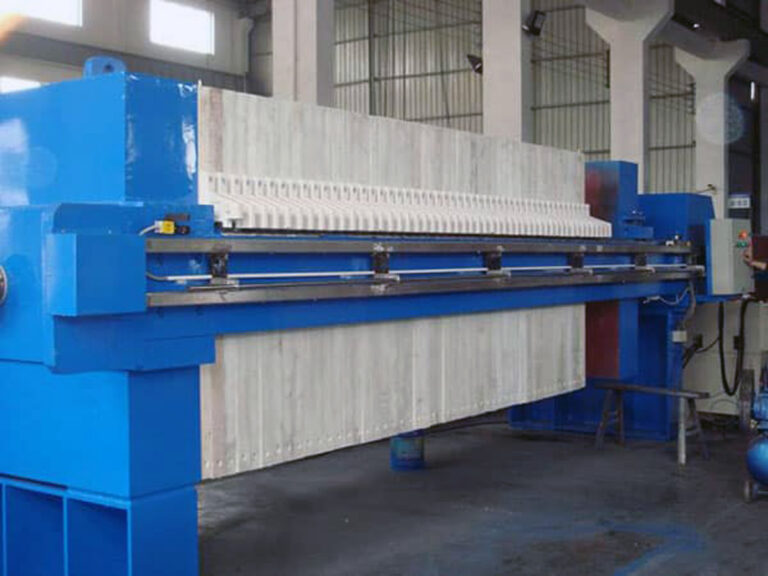
For dewatering professionals, achieving consistent cake dryness below 20% is a persistent operational bottleneck. Conventional filter presses often hit a hard limit, leaving significant residual moisture that inflates disposal costs and complicates handling. The challenge isn’t just applying more pressure; it’s overcoming the inefficient final phase of pressure filtration where diminishing returns set in.
Membrane squeeze technology directly addresses this core inefficiency. It transforms the dewatering curve from a passive, resistance-limited process into an active, high-compression operation. Understanding its mechanisms and implementation requirements is critical for operations targeting maximum cake dryness, reduced cycle times, and a tangible reduction in total disposal costs.
The Core Principle: How Membrane Squeeze Technology Works
Defining the Two-Phase Cycle
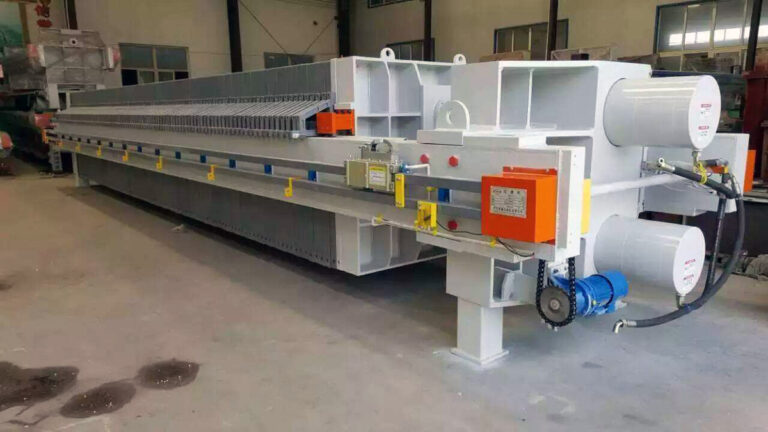
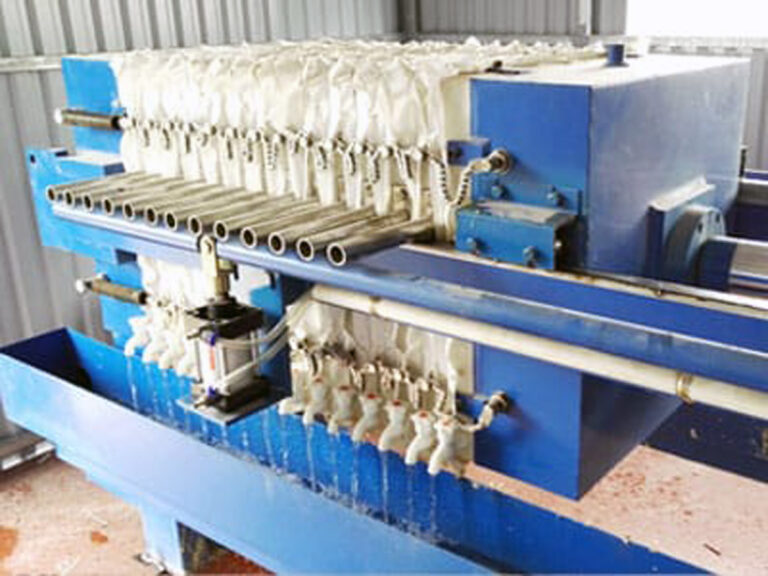
Membrane squeeze technology is a targeted enhancement engineered to replace the inefficient tail-end phase of conventional filtration. The process follows a defined, automated sequence. First, slurry is pumped into chambers formed between membrane plates, where solids are captured and filtrate drains. This primary filtration phase continues until resistance builds and flow rate declines, typically when the chamber is approximately 80% full.
The Active Compression Step
This flow-rate decline triggers the critical secondary phase. A squeeze medium—explicitly recommended to be water for safety—is injected behind the flexible membrane at high pressure. The membrane expands, applying uniform mechanical compression directly onto the pre-formed cake. This active force expresses bound and interstitial water that pump pressure alone cannot overcome, fundamentally altering the dewatering endpoint.
Overcoming the Conventional Bottleneck
The shift is from passive to active dewatering. In a conventional press, the final stage is characterized by high energy input for minimal additional water removal. The membrane squeeze phase specifically targets this bottleneck, applying a secondary force of 12-16 bar to collapse the cake structure. From my experience in system validation, this precise transition point, controlled by process parameters rather than a simple timer, is what unlocks consistent, low-moisture outcomes.
Key Technical Mechanisms for Achieving <20% Moisture
The Role of High-Pressure Squeeze
Achieving sub-20% moisture hinges on applied squeeze pressure. Operating between 12-16 bar, this force directly overcomes the capillary forces that trap water within the cake matrix. It’s not merely higher pressure, but optimally timed pressure. The system initiates compression when flow rate indicates a full chamber, preventing energy waste on an incomplete cake and maximizing the efficiency of the high-force phase.
Engineering for Uniform Compression
Effective pressure distribution is as critical as pressure magnitude. Plate design incorporates profiled surfaces beneath the membrane, allowing it to lift and expand evenly across the entire cake area. This uniform compression prevents localized dry spots and ensures maximum water expression from the entire cake volume, a detail often overlooked in performance evaluations.
Automated Process Control
Reliable moisture reduction depends on precise cycle control. Modern systems use integrated sensors to monitor filtrate flow or chamber pressure, automatically initiating the squeeze phase at the optimal moment. This automation removes operator guesswork and adapts to minor slurry variations, ensuring each cycle is as efficient as the last. The technical specifications for this automated squeeze phase are governed by standards like the JB/T 4333.3-2019 Membrane filter press, which defines the performance testing for this critical function.
The following table outlines the core technical mechanisms and their direct impact on achieving low moisture content.
Core Mechanisms and Their Impact
| Mechanism | Key Parameter / Range | Impact on Moisture |
|---|---|---|
| Tekanan Peras | 12-16 bar | Overcomes capillary forces |
| Cycle Initiation | On flow rate decline | Maximizes efficiency |
| Desain Piring | Profiled surfaces | Ensures uniform compression |
| Cake Thickness | Min. 1/3 chamber volume | Prerequisite for effective squeeze |
Sumber: JB/T 4333.3-2019 Membrane filter press. This standard governs the technical specifications and performance testing for membrane filter presses, directly defining the parameters for the secondary squeeze phase critical to achieving low moisture content.
Critical Factors Influencing Final Cake Dryness
Feed Slurry Characteristics
The technology’s effectiveness is not guaranteed; it is contingent on feed material. Fine or highly compressible solids present a greater challenge, as they can form a dense, impermeable cake. This often necessitates upstream chemical conditioning with polymers to agglomerate particles and create a more permeable structure that responds better to mechanical compression. The requirement for stable slurry characteristics is a foundational principle outlined in broader equipment standards like GB/T 37781-2019 Dewatering equipment.
Operational Parameter Optimization
Squeeze pressure and duration must be calibrated for the specific material. Applying maximum pressure for an extended period on a compressible cake can lead to diminishing returns—increased energy use for negligible additional drying. Furthermore, effective membrane function requires a minimum pre-squeeze cake thickness, typically one-third of the chamber volume, to act as a substrate for compression.
The Interdependence of Variables
Final dryness results from interacting variables, not a single setting. A change in particle size distribution affects optimal polymer dose, which influences cake permeability, which in turn dictates the required squeeze pressure and duration. This interdependence means performance must be validated with a client’s specific slurry; generic moisture guarantees are operationally meaningless.
The table below summarizes the critical factors and their consequences for final cake dryness.
Key Factors and Operational Consequences
| Faktor | Specification / Requirement | Consequence |
|---|---|---|
| Feed Slurry | Fine, compressible solids | Requires chemical conditioning |
| Tekanan Peras | Must be material-optimized | Avoids diminishing returns |
| Cake Thickness | One-third chamber volume | Minimum for standard plates |
| Konsistensi Proses | Stable slurry characteristics | Prerequisite for optimal performance |
Sumber: GB/T 37781-2019 Dewatering equipment. This standard establishes common technical conditions and performance requirements for dewatering equipment, providing a framework for evaluating how feed characteristics and operational parameters impact final dryness.
Membrane Squeeze vs. Conventional Filter Press Performance
Dewatering Mechanism Comparison
The performance differential originates in the fundamental dewatering force. A conventional chamber press relies solely on pumping pressure, which becomes exponentially less effective as cake resistance increases. The membrane press utilizes this same pumping phase, then adds a secondary, higher-pressure mechanical compression. This active squeeze collapses the cake pores, expressing water that remains trapped after filtration.
Outcomes in Moisture and Cycle Time
The impact is measurable in two key metrics: final moisture and cycle time. Conventional presses often leave cakes with 25-35% moisture, while membrane systems consistently achieve results below 20%. Furthermore, by replacing the slow, inefficient filtration tail with a rapid compression step, overall cycle times are often shorter. This increases throughput capacity for the same footprint.
Economic and Operational Implications
The shift transforms cost structures. Drier cake directly reduces weight and volume for disposal, slashing transportation and handling costs. The potential for faster cycles can alleviate production bottlenecks. In side-by-side trials I’ve reviewed, the total cost of ownership often favors the membrane press despite a higher initial investment, due to these operational savings.
The direct comparison below highlights the performance differences between the two technologies.
Performance Comparison: Conventional vs. Membrane Press
| Aspek Kinerja | Conventional Press | Membrane Squeeze Press |
|---|---|---|
| Primary Dewatering Force | Hanya tekanan pompa | Pompa + pemerasan mekanis |
| Final Phase Efficiency | Inefficient, slows dramatically | Active high-pressure compression |
| Hasil Umum | Kelembaban sisa yang lebih tinggi | Consistent sub-20% moisture |
| Dampak Waktu Siklus | Extended final stage | Often faster overall cycles |
Sumber: JB/T 4333.2-2019 Chamber filter press & JB/T 4333.3-2019 Membrane filter press. These complementary standards define the performance and testing criteria for chamber (conventional) and membrane filter presses, enabling a direct comparison of their dewatering mechanisms and efficiency.
Optimizing Feed Slurry and Chemical Conditioning
The Foundation of Stable Feed
Since the automated squeeze cycle triggers at a specific chamber fill level, consistent slurry density and solids content are non-negotiable. Unstable feed leads to variable cake thickness, which can prevent the squeeze phase from initiating or cause uneven compression. This creates a direct dependency on reliable upstream processes like thickening or flocculation.
Chemical Conditioning as an Enabler
For challenging slurries, polymers are not an add-on but a core system enabler. Effective flocculation creates larger, more rigid agglomerates that form a permeable cake structure. This allows filtrate to drain freely during the initial phase and provides a matrix that can be effectively compressed. Selecting the right polymer and injection point is a specialized task that impacts the entire dewatering curve.
Strategic Feed Port Selection
Feed port design is an application-specific critical choice. Center feed is optimal for slurries with large or abrasive particles, minimizing port clogging. Corner feed designs, often integrated with wash ports, provide superior cake washing efficiency for applications requiring solute recovery or salt reduction. Selecting the wrong design during procurement can permanently limit system capability.
Application-Specific Benefits and Economic Impact
Waste Management: Cost Avoidance
In sludge dewatering, the primary benefit is direct disposal cost reduction. A cake at 18% moisture versus 30% represents a 40% reduction in water weight, translating to dramatically lower hauling and landfill fees. This cost avoidance often provides a clear, rapid return on investment.
Process Industries: Value Recovery
In chemical, pharmaceutical, or food production, the narrative shifts from cost to value. Here, a membrane filter press for advanced dewatering serves as a product recovery and purification asset. Efficient cake washing recovers valuable mother liquor or removes impurities, increasing final product yield and purity. The ROI calculation then incorporates increased revenue alongside operational savings.
Specialized Configurations
The market reflects these diverse needs with tailored solutions. Options include food-grade membrane materials, mobile skid-mounted units for site remediation, and corrosion-resistant builds for aggressive chemistries. This move beyond a generic design underscores the importance of partnering with a supplier possessing deep sector-specific expertise to capture the full scope of benefits.
Implementing and Maintaining a Membrane Squeeze System
Safety and Medium Selection
Implementation starts with a critical safety decision: the squeeze medium. Using water is explicitly recommended over compressed air. Should a membrane rupture, water causes a contained leak, while compressed air can lead to hazardous explosive failure of the plate. This choice is a fundamental design and safety consideration.
Plate Design Dictates Maintenance Strategy
The choice between welded membrane plates and plates with removable diaphragms defines your long-term maintenance profile and spare parts strategy. Welded plates are robust but require complete plate replacement upon any membrane failure. Plates with replaceable diaphragms allow for quick in-press membrane swaps, drastically reducing downtime and mean time to repair (MTTR).
Planning for Total Cost of Ownership
Procurement must look beyond capital cost. Evaluate the expected membrane lifespan, ease of replacement, and local service support. A system with a slightly higher initial price but lower maintenance complexity and downtime often delivers a superior total cost of ownership over a five-year horizon.
The following table details key implementation choices and their long-term operational impact.
Implementation Choices and Long-Term Impact
| Komponen | Key Choice / Specification | Dampak Operasional |
|---|---|---|
| Squeeze Medium | Water (recommended) | Safe leak vs. hazardous rupture |
| Membrane Plate Type | Welded membrane | Full plate replacement on failure |
| Membrane Plate Type | Removable diaphragm | Quick in-press membrane swap |
| Maintenance Metric | Mean Time To Repair (MTTR) | Directly impacts downtime |
Sumber: JB/T 4333.3-2019 Membrane filter press. This standard details the technical requirements and safety considerations for membrane filter presses, including design and maintenance aspects that affect long-term reliability and total cost of ownership.
Selecting the Right System for Your Dewatering Goals
Defining the Primary Objective
Selection begins by prioritizing the goal. Is it ultimate cake dryness for disposal cost minimization? Is it high-purity cake washing for product recovery? Or is it handling a highly variable, unpredictable feed? This priority dictates the core configuration: standard plates for consistent feeds, empty chamber plates for variable feeds, and specific feed/wash port layouts for washing duties.
Assessing Upstream Process Stability
Honestly evaluate the consistency of your upstream slurry. Stable density and particle size allow the use of standard, more cost-effective plates. Highly variable feeds may necessitate the added capability and cost of “empty chamber” membrane plates, which can initiate a squeeze cycle effectively even with a thinner cake layer.
Choosing the Operational Model
Determine the required level of automation. Fully automatic systems with integrated plate shifters, cloth washers, and cake dischargers enable unmanned operation, reallocating labor from manual tasks to system oversight. Semi-automatic or manual systems have lower capital costs but higher operational labor costs. The choice should align with your site’s labor strategy and operational philosophy.
Achieving reliable sub-20% moisture requires moving beyond viewing the filter press as an isolated unit. It demands a system perspective that integrates optimized feed conditioning, precise mechanical compression, and strategic maintenance. The decision hinges on aligning the technology’s capabilities—high-pressure squeeze, automated control, and robust design—with your specific material characteristics and operational priorities.
Need professional dewatering solutions tailored to your slurry and economic goals? The engineers at PORVOO specialize in validating performance with client samples to configure systems that meet precise moisture and throughput targets. For a detailed technical consultation, you can also Hubungi Kami.
Pertanyaan yang Sering Diajukan
Q: How does membrane squeeze technology achieve lower moisture than a standard filter press?
A: It replaces the inefficient final stage of conventional pressure filtration with an active, high-pressure mechanical squeeze. After initial cake formation, a membrane expands using hydraulic pressure, typically 12-16 bar, to compress the cake uniformly and expel bound water. This targeted force directly overcomes capillary resistance that pump pressure cannot. For operations where disposal costs are critical, this mechanical action transforms low moisture from a challenge into a reliable outcome, directly reducing cake weight and hauling expenses.
Q: What are the most critical factors for consistently achieving below 20% cake moisture?
A: Consistent sub-20% results depend on optimizing three interdependent factors: slurry characteristics, applied squeeze pressure duration, and sufficient pre-squeeze cake thickness. Fine solids often require chemical conditioning to create a permeable structure, while pressure and timing must be tuned to avoid diminishing returns. Equipment standards like those in JB/T 4333.3-2019 Membrane filter press govern the performance of this secondary compression phase. This means vendors must test your specific slurry, as generic moisture guarantees are unreliable without accounting for your feed’s variability.
Q: How should we choose between center feed and corner feed port designs?
A: The choice is application-specific and hinges on your slurry’s particle size and whether cake washing is needed. Center feed ports are superior for slurries with large, coarse particles as they minimize clogging risks. Corner feed designs optimize washing efficiency for purification or product recovery processes. This fundamental design choice permanently impacts performance, so facilities must conduct thorough particle size analysis before system specification to avoid a costly mismatch with their process goals.
Q: What are the key maintenance and safety trade-offs in membrane plate design?
A: The primary trade-off lies between plate robustness and mean time to repair (MTTR). Welded membrane plates are durable but require full replacement if the diaphragm fails. Plates with removable, replaceable diaphragms enable faster in-press swaps, reducing downtime and spare parts inventory. For safety, using water as the squeeze medium is explicitly recommended over air to prevent hazardous plate breakage upon membrane rupture. Operations prioritizing minimal downtime and lower long-term operating costs should favor designs with replaceable membranes and plan for the associated spare parts inventory.
Q: When is an automated, fully integrated membrane filter press system justified?
A: Fully automatic systems, which handle plate shifting, washing, and discharge, are justified when your primary goals are unmanned operation, high throughput, and shifting labor from manual tasks to oversight. They require a higher capital investment and depend on stable upstream slurry characteristics to function reliably. This makes them ideal for large-scale, continuous operations with consistent feed. For projects with highly variable feed or batch processing, a semi-automatic system may offer better flexibility and a lower initial cost.
Q: How do industry standards apply to evaluating membrane squeeze dewatering efficiency?
A: Dewatering equipment performance is framed by overarching standards like GB/T 37781-2019 Dewatering equipment, which establish common technical conditions and metrics. The specific operation of membrane squeeze technology is directly governed by JB/T 4333.3-2019 Membrane filter press, which details technical requirements and test methods for the secondary compression phase. This means procurement specifications should reference these standards to ensure vendor claims align with defined testing protocols and performance benchmarks.