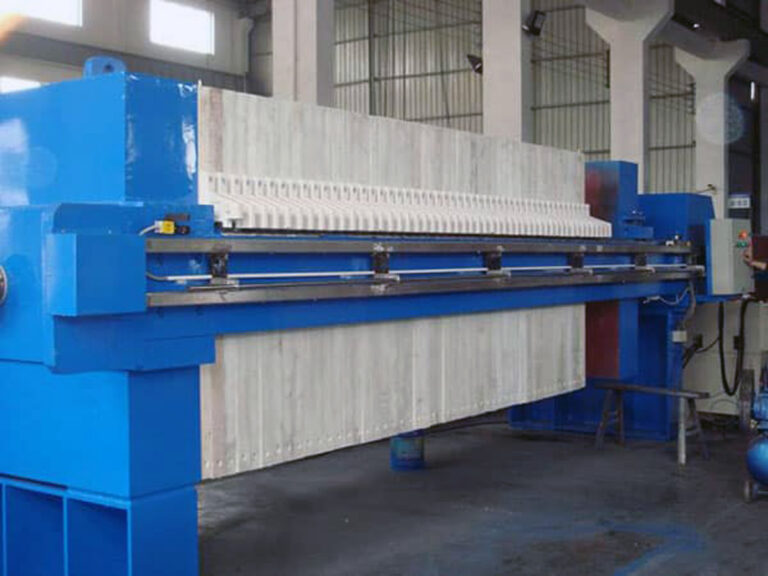
For sludge dewatering professionals, the belt filter press is a workhorse, yet its initial stage is often misunderstood. The gravity drainage zone is frequently viewed as a passive prelude to the main mechanical action. This misconception leads to suboptimal press selection and chronic operational issues. The real challenge is recognizing that this zone is a critical, active component where the foundation for all downstream efficiency is laid. Its design and performance dictate the press’s ultimate capacity, cake dryness, and operational cost.
Optimizing this stage is not a minor adjustment; it’s a strategic imperative. In an era of tightening disposal regulations and rising energy and polymer costs, maximizing free water removal through gravity alone delivers the highest return on investment. A well-designed and operated gravity zone reduces the hydraulic and mechanical burden on subsequent stages, directly impacting throughput, final cake solids, and the total cost of ownership for the entire dewatering process.
The Core Function of the Gravity Drainage Zone
Defining the Active Separation Stage
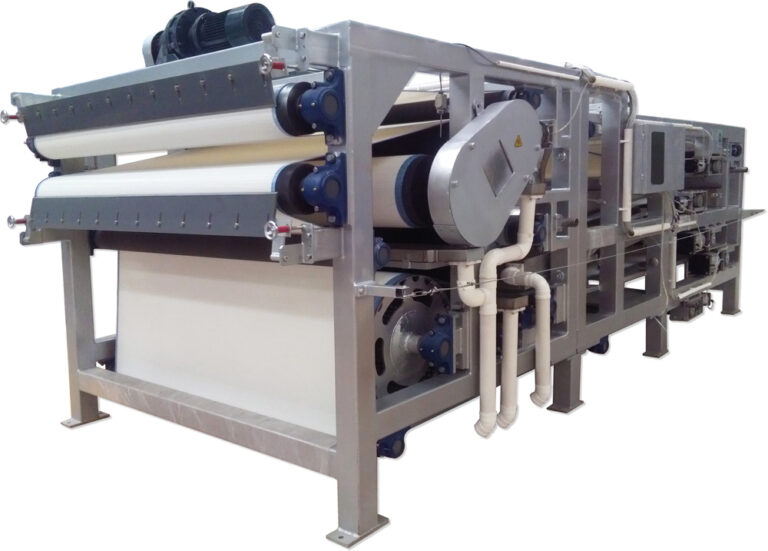
The gravity drainage zone is the first and most critical dewatering stage in a belt filter press. Its core function is to remove free water from chemically conditioned sludge solely through gravitational force. This is not a passive holding area. It is an active separation process that significantly increases solids concentration, transforming a pumpable slurry into a thickened sludge mat. This initial thickening is essential; it prepares the sludge to withstand the mechanical pressures applied in the wedge and high-pressure zones without extrusion or belt damage.
Application Scope and Configurability
The design of this zone is not universal. Its length and configuration must be matched to specific sludge characteristics, particularly initial solids content and drainability. A standard-length zone may suffice for typical municipal biological sludges. However, for dilute feeds with solids consistently below 1.5%, such as certain industrial wastes or digested sludges, a standard design will fail. In our experience, this mismatch is the most common root cause of poor press performance, often leading operators to invest in costly standalone pre-thickeners to compensate for an undersized gravity section.
Dampak pada Desain Sistem
This configurability dictates the entire press’s application scope. Selecting a press with an appropriately sized gravity zone during procurement is a fundamental capital decision. An extended or independent gravity zone provides the necessary residence time and drainage area for challenging sludges, often eliminating the need for additional equipment. This decision directly impacts plant footprint, capital expenditure, and long-term operational flexibility, making it a critical factor in lifecycle cost analysis.
Key Technologies That Enhance Gravity Drainage
Extending Residence Time and Area
The most direct method to enhance gravity drainage is to increase the sludge’s residence time on the belt before compression begins. This is achieved through an extended belt length in the gravity section or, more effectively, through an independent gravity zone that operates like a dedicated gravity belt thickener. This design provides a larger surface area and more time for free water to drain, creating a thicker, more stable sludge cake that enters the pressure zones. For highly dilute sludges, this extended time is non-negotiable for achieving adequate pre-thickening.
Mechanical Aids and Agitation
Beyond simple lengthening, mechanical aids are engineered to disrupt the sludge bed and promote drainage. Standard plow systems, set at a precise depth and angle, gently turn the sludge to break liquid surface tension and expose trapped water to drainage channels. More advanced elements, such as rotating cones or rakes, create controlled micro-turbulence. This action enhances drainage rates without shearing the fragile polymer flocs. The evolution from static drainage to active, high-rate drainage technologies represents a key area of innovation, offering significant gains in throughput and dryness.
The Innovation Battleground
The pursuit of higher drainage efficiency is a competitive focus for manufacturers. Innovations that accelerate free water removal in the gravity zone often deliver a faster return on investment than incremental improvements in high-pressure rollers. Technologies that optimize floc structure interaction with the drainage medium or that apply gentle vibrational energy can dramatically improve performance. This highlights why evaluating the gravity zone’s technological sophistication is as important as assessing the pressure section when specifying new equipment.
The Critical Role of Chemical Conditioning
The Hybrid Chemical-Mechanical Process
Effective dewatering is a hybrid process. The mechanical action of a belt filter press cannot succeed without optimal chemical conditioning, especially in the gravity zone. Polymers are used to neutralize the negative charges on sludge particles, causing them to aggregate into large, porous flocs. These flocs create a permeable structure that readily releases free water while retaining fine solids. The conditioning process fundamentally alters the sludge’s rheology, making it amenable to gravity drainage.
Visual and Operational Indicators
The success of conditioning is immediately visible on the belt. Well-conditioned sludge will show clear water rapidly separating from distinct flocs within the first meter of the gravity zone. Inadequate polymer dosing or poor mixing results in slow drainage, turbid filtrate, and a soupy sludge that migrates or extrudes. This failure in the gravity zone cascades, causing poor solids capture, high polymer consumption in a futile attempt to compensate, and excessive wear in downstream sections.
The following table outlines the key parameters and implications of chemical conditioning:
Evaluating Conditioning Parameters
| Parameter | Typical Range / Indicator | Operational Significance |
|---|---|---|
| Dosis Polimer | 4-18 lbs per dry ton | Sludge-specific, requires testing |
| Conditioning Success | Clear, rapid water separation | Visual indicator on belt |
| Inadequate Dosing | Poor drainage, turbid filtrate | Leads to downstream failures |
| Optimal Floc Structure | Large, porous flocs | Releases free water, retains fines |
Sumber: ISO 5667-13:2011 Water quality — Sampling — Part 13: Guidance on sampling of sludges. This standard ensures representative sludge sampling, which is the critical prerequisite for accurate laboratory testing to determine the correct polymer type and dose for effective conditioning.
Strategic Implications for Investment
Determining the optimal polymer dose is not guesswork; it requires rigorous jar testing and often full-scale trials. This underscores a critical operational truth: investments in automated polymer feed systems and dedicated lab capabilities are essential for controlling long-term costs. A precise, consistent feed system unlocks the full mechanical potential of the press, turning polymer from a variable expense into a controlled process input.
Measuring Gravity Zone Performance & Optimization
Key Performance Metrics
Performance is quantified through specific, interlinked metrics. The primary goal is the solids concentration of the thickened sludge exiting the gravity zone. A higher concentration directly reduces the volumetric load on the wedge and pressure zones. Filtrate clarity is a real-time indicator of solids capture efficiency and conditioning quality; persistent turbidity signals floc shear or inadequate polymer. Throughput capacity, measured in gallons per minute per meter of belt width, is fundamentally limited by the gravity zone’s ability to drain water quickly.
Adopting a Diagnostic Model
Moving from reactive to proactive management requires adopting a zone-based failure model. Symptoms like poor drainage or turbid filtrate are not generic press problems; they point to specific root causes in the gravity zone, such as feed rate, polymer dose, or plow settings. This model transforms dewatering from a black-box operation into a diagnosable system. For instance, if the gravity zone performance is poor but the filtrate is clear, the issue may be hydraulic overload rather than conditioning.
The performance of the gravity section is measured by several key indicators that inform overall system health:
Performance Indicators and Impact
| Metrik Kinerja | What It Measures | Dampak pada Proses |
|---|---|---|
| Konsentrasi Padatan | Thickened sludge dryness | Reduces hydraulic load downstream |
| Kejernihan Filtrat | Solids capture efficiency | Indicates conditioning/shear issues |
| Throughput Capacity | GPM or solids/meter width | Directly dependent on zone efficiency |
| Zone-Based Failure Model | Targets root causes | Enables specific troubleshooting |
Sumber: Dokumentasi teknis dan spesifikasi industri.
Optimization Levers
Optimization involves adjusting key levers. Feed rate must be balanced against drainage capacity. Plow depth and speed must be set to aid drainage without destroying flocs. Perhaps most critically, the transition wedge zone must be correctly adjusted to gradually consolidate the gravity-drained sludge, preventing it from being pushed out the sides. These adjustments are not set-and-forget; they require ongoing attention as sludge characteristics change.
Impact on Overall Dewatering Capacity & Cost
Reducing Downstream Hydraulic Load
The most significant impact of an efficient gravity zone is the reduction of free water volume before the sludge enters the mechanical pressure stages. By removing this water through low-energy gravitational force, the wedge and high-pressure zones can focus their energy on removing bound water from a thicker sludge mat. This leads to higher final cake solids percentages and increased throughput, as the press is not volumetrically overloaded with water.
Lowering Operational Expenditures
This efficiency cascades into direct cost savings. Reduced hydraulic load means lower polymer consumption, as less chemical is needed to condition the remaining solids. It also leads to lower energy consumption in the drive motors and reduced wear on belts and rollers, extending their service life. The reliability gains from stable, thickened feed also reduce maintenance downtime and labor costs for cleaning and adjustments.
Lifecycle Cost Analysis
This highlights why a lifecycle cost analysis is superior to a capital cost focus. A press with a robust, well-designed gravity zone may have a higher initial price but can deliver a significantly lower total cost of ownership through savings in polymer, energy, maintenance, and disposal costs. Conversely, a cheaper press with an undersized gravity section will incur higher ongoing operational costs and may require premature replacement or supplementation with additional thickening equipment.
Common Challenges and Operational Best Practices
Identifying Root Causes
Common gravity zone challenges are diagnostic signposts. Poor drainage coupled with turbid filtrate almost always points to suboptimal polymer conditioning—either incorrect dose, type, or mixing energy. Sludge migrating over the belt edges or a soupy consistency indicates hydraulic overloading or a mismatch between feed solids and zone design. Recognizing these symptoms accurately is the first step toward resolution.
Foundational Best Practices
Best practices start before the sludge reaches the press. Conducting rigorous bench testing, guided by representative sampling as defined in standards like ISO 5667-13:2011, to determine the correct polymer is non-negotiable. Operationally, ensure feed is evenly distributed across the full belt width to maximize drainage area. Control plow settings meticulously; they should aid drainage, not homogenize the sludge bed.
The Critical Wedge Zone Adjustment
A frequently overlooked but critical practice is the precise adjustment of the wedge zone. This converging section must gradually apply light pressure to the gravity-drained sludge, sealing the edges and forming a coherent cake. An improperly set wedge will allow soft, poorly drained sludge to extrude, causing constant cleanup issues and poor solids capture. Getting this transition right is a key lever for maximizing overall press performance and minimizing maintenance headaches.
Comparing Standard vs. Extended Gravity Zone Designs
Design Selection Driven by Application
The choice between gravity zone designs is fundamentally application-driven. A standard gravity zone, integrated into the press frame, is typically sufficient for sludges that drain readily, such as many primary or waste-activated sludges with solids above 1.5%. It provides a cost-effective solution for predictable, easier-to-dewater streams.
Extended and Independent Configurations
For dilute, voluminous, or poorly draining sludges, an extended gravity section provides the additional residence time required. The most flexible design is an independent gravity zone, which operates as a separate module analogous to a gravity belt thickener. This design, such as a three-belt system, offers strategic process flexibility. It can function as a standalone thickener or be integrated with the dewatering press, adapting to variable feed conditions.
The following comparison outlines the primary applications and benefits of different gravity zone designs:
Design Comparison and Flexibility
| Design Type | Aplikasi Utama | Key Benefit & Flexibility |
|---|---|---|
| Standard Gravity Zone | Readily draining sludges (>1.5% solids) | Sufficient for typical municipal feeds |
| Extended Gravity Zone | Dilute, poorly draining sludges | Additional residence time for drainage |
| Independent Gravity Zone | Very dilute sludges (<1.5% solids) | Acts as standalone thickener; max flexibility |
| Three-Belt System | Variable/seasonal sludge streams | Eliminates need for separate thickener |
Sumber: DIN 19569-10:2016-12 Wastewater treatment plants – Principles for the design of structures and technical equipment – Part 10: Specific principles for the equipment for thermal sludge drying. This standard outlines design principles for downstream thermal drying, a process where optimized pre-dewatering via an appropriately selected gravity zone is critical for overall system efficiency and energy savings.
Implikasi Strategis untuk Desain Pabrik
This configurability can simplify entire plant layouts. Selecting a press with an independent gravity zone can eliminate the capital cost and footprint of a separate thickener unit. It also provides operational resilience, allowing the plant to handle seasonal flow variations or changes in sludge characteristics without process bottlenecks.
Selecting the Right Gravity Zone for Your Sludge Type
Analysis of Sludge Characteristics
Selection begins with a thorough analysis of sludge characteristics. The two most critical parameters are initial percent solids and specific resistance to filtration or capillary suction time, which indicate drainability. Historical data and future projections for sludge type (e.g., primary, WAS, digested, industrial) must be considered. This analysis prevents the costly error of specifying a standard press for a sludge that requires extended drainage.
Matching Design to Feedstock
As a rule, sludges with consistent solids above 1.5% and good drainability can be served by a standard or slightly extended zone. For feeds consistently below 1.5% solids or with high fiber content that retains water, an independent gravity zone is often necessary. This is particularly true for plants considering advanced processes like thermal drying, where pre-dewatering efficiency is paramount for energy savings, as referenced in standards like DIN 19569-10.
The right configuration depends on a clear understanding of the sludge profile:
Selection Guide Based on Sludge Profile
| Sludge Characteristic | Recommended Zone Design | Pertimbangan Strategis |
|---|---|---|
| Initial Solids >1.5% | Standard or slightly extended | Often sufficient for biological sludges |
| Initial Solids <1.5% | Independent gravity zone | Necessary for adequate pre-thickening |
| Poor Drainability | Extended or independent zone | Requires more residence time |
| Variable Feedstock | Scalable, interoperable equipment | Allows adaptation to changing conditions |
Sumber: ISO 5667-13:2011 Water quality — Sampling — Part 13: Guidance on sampling of sludges. Reliable selection depends on accurate sludge characterization, which begins with representative sampling as defined by this standard to inform laboratory simulation testing.
The Role of Testing and Strategic Procurement
Laboratory simulation testing, such as gravity drainage tests or bench-scale belt press simulations, is essential to validate the selection. This testing reveals potential failure modes and optimal conditioning parameters before capital commitment. Strategically, favor vendors whose equipment offers data interoperability and scalability, ensuring your dewatering assets can adapt within a holistic, data-driven sludge management strategy. For detailed specifications on configurable systems, review technical data on modern belt filter press dewatering equipment.
The gravity zone is not an entryway; it is the foundation. Its optimization dictates press throughput, cake dryness, polymer use, and operating costs. Prioritize accurate sludge characterization and match the zone design to your specific feed stock. Implement a diagnostic, zone-based approach to troubleshooting, and recognize that chemical conditioning is a non-negotiable partner to mechanical design.
Need professional guidance to specify or optimize your sludge dewatering system? The engineers at PORVOO can help analyze your sludge characteristics and operational goals to recommend the most efficient configuration. For a direct consultation, you can also Hubungi Kami.
Pertanyaan yang Sering Diajukan
Q: How do we determine if our sludge requires an extended or independent gravity zone on a belt filter press?
A: The decision hinges on your sludge’s initial solids concentration and drainability, which you must measure through representative sampling and testing. For typical municipal sludges above 1.5% solids, a standard zone often suffices, but for dilute feeds like industrial waste or digested sludge below 1.5% solids, an extended or independent gravity zone is usually necessary. This means facilities handling variable or consistently dilute streams should prioritize vendors offering configurable, interoperable designs and invest in lab simulation testing during procurement to avoid costly underperformance.
Q: What are the key performance indicators for optimizing the gravity drainage zone?
A: The primary metrics are the solids concentration of the thickened sludge exiting the zone, filtrate clarity, and throughput capacity per meter of belt width. High solids concentration reduces hydraulic load downstream, while clear filtrate indicates effective polymer conditioning and high solids capture. This transforms dewatering into a diagnosable system; if you see poor drainage or turbid filtrate, you should immediately investigate polymer dosing or feed rate issues rather than adjusting the entire press blindly.
Q: Why is chemical conditioning so critical for gravity drainage efficiency, and how is it optimized?
A: Optimal polymer conditioning is the non-negotiable chemical step that enables mechanical separation by forming large, porous flocs that release free water. The correct dose, typically between 4 to 18 pounds per dry ton, is sludge-specific and must be determined through jar testing to achieve rapid, clear water separation. This underscores that investments in automated polymer feed systems and regular lab testing are essential for controlling long-term operational costs and unlocking the press’s full mechanical potential.
Q: What operational best practices prevent common gravity zone challenges like poor drainage or sludge migration?
A: Best practices start with rigorous bench testing to establish the correct polymer type and dose. During operation, control plow depth and speed to avoid shearing flocs, ensure even feed distribution across the belt, and properly adjust the wedge zone to act as a transition buffer. This means operators must view the gravity zone not as passive but as an active process requiring precise control; neglecting these adjustments will lead to turbid filtrate, reduced solids capture, and increased maintenance.
Q: How does an optimized gravity zone impact the total cost of ownership for a dewatering system?
A: An efficient gravity zone removes most free water early, which reduces hydraulic load on high-pressure stages, leading to higher final cake solids, increased throughput, and lower polymer and energy consumption. It also extends belt life by feeding thicker, less abrasive sludge into the pressure zones. For projects where lifecycle cost is key, you should expect a well-designed gravity zone to deliver a better net present cost than a cheaper, failure-prone alternative, making capital cost a poor sole selection criterion.
Q: What standards guide the sampling and testing needed to select the right gravity zone design?
A: Reliable selection depends on accurate sludge characterization, which begins with representative sampling per ISO 5667-13:2011. Subsequent dewaterability tests (e.g., CST, SRF) on these samples will reveal drainability and optimal conditioning parameters. This means your procurement process must allocate time and budget for proper sampling and testing; skipping this step risks a fundamental design mismatch that no operational adjustment can fully correct.
Q: When should we consider an independent three-belt gravity zone versus a standard extended design?
A: An independent gravity zone, functioning like a standalone thickener, is the most flexible option for highly variable, very dilute (<1.5% solids), or poorly draining sludges. It provides strategic process flexibility, allowing a single unit to handle thickening and dewatering or manage seasonal flows. If your plant faces diverse sludge streams or space constraints, you should plan for this design to potentially eliminate separate thickening equipment, saving capital cost and footprint.