Pemisahan padat-cair merupakan kendala operasional yang terus-menerus. Bagi para profesional di bidang pertambangan, pengolahan kimia, atau pengelolaan air limbah, tantangannya bukan sekadar pengeringan—melainkan melakukannya secara efisien, dengan kue padat berkadar air rendah dan filtrat yang jernih, sekaligus mengendalikan biaya energi dan kompleksitas pemeliharaan. Masih ada kesalahpahaman umum bahwa vakum yang lebih tinggi selalu berarti konsumsi energi yang lebih tinggi, atau bahwa untuk mencapai filtrasi halus diperlukan penggantian media secara berkala.
Filter vakum keramik mengubah paradigma ini. Prinsip kerjanya memadukan fisika pasif dengan rekayasa aktif untuk menghadirkan lompatan signifikan dalam hal kinerja. Memahami teknologi ini kini sangat penting, mengingat berbagai industri menghadapi tekanan yang semakin besar terkait penggunaan air, efisiensi energi, dan keselamatan operasional. Pemilihan teknologi pengeringan yang tepat berdampak langsung pada laba bersih dan kepatuhan terhadap peraturan.
Prinsip Utama: Fenomena Kapiler vs. Vakum Mekanis
Mendefinisikan Sinergi
Efisiensi sistem ini berasal dari kerja sama antara media keramik hidrofilik dan pompa vakum mekanis. Pelat keramik berpori mikro, saat bersentuhan dengan bubur, memanfaatkan aksi kapiler untuk secara spontan menarik cairan ke dalam pori-porinya. Hal ini menciptakan penghalang cairan yang stabil. Pompa vakum kemudian menghasilkan tekanan negatif yang signifikan di belakang pelat tersebut. Yang terpenting, pori-pori yang jenuh mencegah masuknya udara, sehingga hanya filtrat cair yang dapat melewatinya. Sinergi inilah yang menjadi inti inovasi.
Dampak Efisiensi Energi
Segel kapiler ini secara drastis mengurangi energi yang diperlukan untuk mempertahankan vakum yang efektif dibandingkan dengan filter kain atau sabuk tradisional. Sistem ini mencapai tingkat vakum yang tinggi, biasanya antara -0,09 hingga -0,098 MPa, namun dengan beban pompa yang jauh lebih rendah. Berdasarkan penelitian yang mengacu pada standar industri, desain ini dapat menghasilkan penghematan energi lebih dari 90% dalam proses pembentukan vakum. Hal ini secara mendasar mengubah total biaya kepemilikan, dengan mengalihkan pengeluaran operasional utama dari energi ke pemeliharaan yang teratur.
Memverifikasi Kinerja
Efektivitas prinsip ini diukur melalui metrik kinerja yang terstandarisasi. Kami membandingkan filter vakum konvensional dengan varian keramik dan menemukan bahwa segel yang konsisten memungkinkan pengoperasian yang lebih stabil serta tingkat penangkapan partikel padat yang lebih tinggi. Salah satu detail yang sering terlewatkan adalah ketahanan kimiawi bawaan bahan keramik, yang manfaatnya tidak hanya terbatas pada penghematan energi, tetapi juga memperpanjang masa pakai media filter dalam kondisi bahan baku yang agresif.
Tabel: Prinsip Dasar: Fenomena Kapiler vs. Vakum Mekanis
| Komponen | Parameter Utama / Peran | Dampak / Hasil |
|---|---|---|
| Aksi Kapiler | Pori-pori pasif dan hidrofilik | Membentuk lapisan pelindung cairan awal |
| Vakum Mekanis | -0,09 hingga -0,098 MPa | Mendorong ekstraksi filtrat secara berkelanjutan |
| Efek Sinergi | Mencegah masuknya udara | Memungkinkan terciptanya segel vakum tinggi |
| Konsumsi Energi | Tabungan >90% | Menurunkan total biaya kepemilikan |
Sumber: [JB/T 14401-2023 Filter Vakum Keramik](). Standar ini menetapkan parameter kinerja dan pengujian untuk mesin filter vakum keramik, termasuk spesifikasi tingkat vakum kritis yang memungkinkan sinergi yang efisien dengan aksi kapiler sebagaimana dijelaskan dalam tabel.
Komponen Utama Sistem Filter Vakum Keramik
Struktur Filtrasi
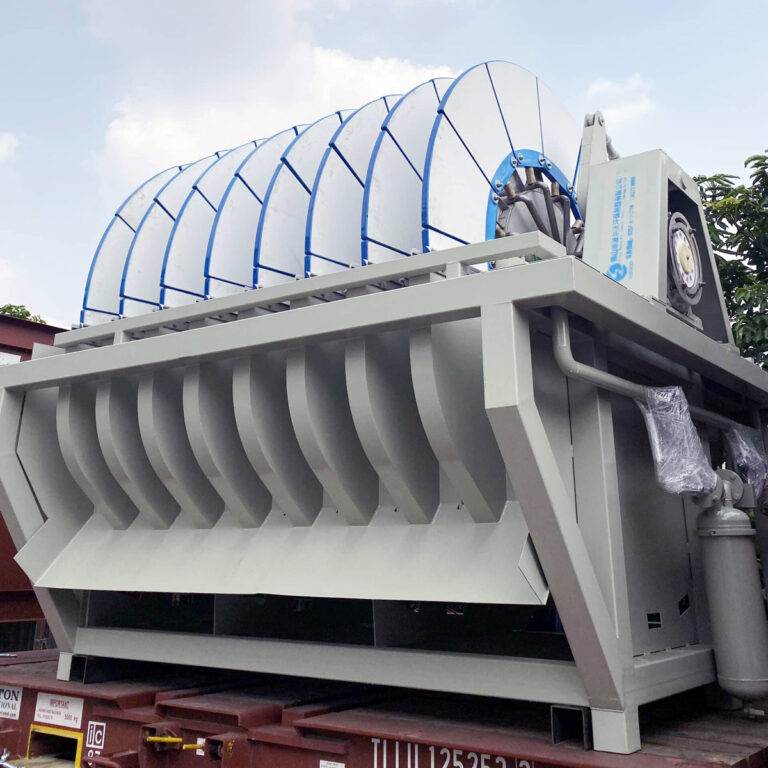
Inti dari sistem ini adalah sebuah cakram atau drum berputar yang dilengkapi dengan sejumlah pelat keramik. Setiap pelat berfungsi sebagai sel filtrasi tersendiri. Pelat-pelat tersebut dipasang pada struktur yang kokoh yang dirancang untuk terendam dan berputar secara terus-menerus melalui zona-zona proses. Jenis bahan keramik—biasanya alumina atau zirkonia—dipilih berdasarkan tingkat abrasivitas dan sifat kimiawi slurry, sebuah pertimbangan yang secara langsung memengaruhi masa pakai operasional.
Pusat Pengendalian: Katup Distribusi dan PLC
Setiap pelat keramik terhubung melalui pipa-pipa terpisah ke katup distribusi pusat. Komponen presisi ini merupakan pusat kendali sistem, yang secara cermat menyalurkan vakum, udara pembersih, dan cairan pembilas balik ke pelat yang tepat pada tahap rotasi yang tepat. Sebuah Programmable Logic Controller (PLC) mengotomatiskan katup ini serta seluruh siklusnya, mengelola laju aliran bubur, tingkat vakum, dan urutan pembersihan. Berdasarkan pengalaman saya, keandalan katup ini dan logika program PLC sangat penting untuk mencapai operasi yang konsisten dan tanpa campur tangan manusia.
Konfigurasi Sistem Khusus
Untuk aplikasi yang menuntut, desain terbuka standar terus berkembang. Varian MF Fully Enclosed dilengkapi dengan sistem pembilasan gas inert, paduan logam tahan korosi seperti baja tahan karat 316L atau duplex 2205, serta fitur antistatis. Konfigurasi ini bukanlah sekadar peningkatan, melainkan suatu keharusan dalam pengolahan slurry yang mudah menguap, mudah terbakar, atau sangat korosif, sehingga secara efektif memperluas cakupan aplikasi aman teknologi ini ke sektor farmasi dan bahan kimia khusus.
Siklus Penyaringan Empat Tahap: Dari Bubur hingga Kue Kering
Tahap 1: Pembentukan Lapisan
Di zona formasi terendam, sinergi kapiler-vakum menarik filtrat melalui pori-pori keramik. Bahan padat tertahan di permukaan pelat, membentuk lapisan basah yang konsisten. Ketebalannya dikendalikan oleh kepadatan bubur, tingkat vakum, dan waktu perendaman. Para ahli industri merekomendasikan untuk mengoptimalkan zona ini terlebih dahulu, karena zona ini menjadi landasan bagi semua tahap selanjutnya.
Tahap 2 & 3: Pencucian dan Pengeringan
Zona pencucian opsional menggunakan bilah semprot dan vakum berkelanjutan untuk menghilangkan kotoran yang larut dari endapan, sebuah langkah penting untuk menjamin kemurnian produk dalam aplikasi kimia. Endapan tersebut kemudian berputar masuk ke zona pengeringan. Di sini, vakum tinggi menarik udara melalui pori-pori endapan yang telah terbentuk, menghilangkan kelembapan sisa, dan menghasilkan produk yang padat serta mudah ditangani. Efisiensi pada tahap ini sangat bergantung pada kualitas endapan awal.
Tahap 4: Pemulangan dan Persiapan
Hampa udara diputus saat pelat memasuki zona pembuangan. Sebuah denyut udara balik yang singkat dan tajam—yang disebut “snap-blowback”—dengan rapi melepaskan endapan kering ke dalam saluran pembuangan. Pelat tersebut kemudian berputar melalui zona pembersihan (seringkali merupakan bagian dari stasiun backflush khusus) sebelum kembali memasuki larutan, sehingga menyelesaikan siklus berkelanjutan. Urutan otomatis ini, yang diatur oleh [HG/T 20521-2014 Spesifikasi untuk desain sistem filter vakum keramik](), memastikan operasi yang presisi dan dapat diulang.
Keunggulan Teknis dan Spesifikasi Kinerja
Keunggulan Hasil yang Dapat Diukur
Spesifikasi teknis tersebut memberikan manfaat operasional langsung. Vakum yang tinggi dan stabil secara konsisten menghasilkan produk padat dengan kadar air sisa yang sangat rendah, sehingga mengurangi biaya pengeringan pada tahap selanjutnya atau berat pengiriman. Pada saat yang sama, pori-pori keramik berukuran sub-mikron memberikan presisi filtrasi yang luar biasa, yang sering menghasilkan filtrat dengan kandungan padatan di bawah 50 ppm.
Dampak terhadap Sumber Daya Strategis dan Kepatuhan
Kejernihan filtrat ini mengubah air proses dari aliran limbah menjadi sumber daya yang dapat digunakan kembali. Hal ini memungkinkan penerapan sistem air berputar tertutup, yang secara drastis mengurangi pengambilan air tawar dan menyederhanakan kepatuhan terhadap peraturan pembuangan air limbah. Semakin ditekankannya pengelolaan air oleh perusahaan dan emisi Lingkup 2 menjadikan keunggulan ini sebagai pendorong strategis, bukan sekadar faktor operasional.
Skalabilitas dan Peramalan Desain
Kinerja sistem berbanding lurus dengan luas filter. Unit seluas 150 m² akan membutuhkan luas lahan dan daya terpasang yang secara proporsional lebih besar daripada unit percontohan seluas 1 m², namun hubungan tersebut bersifat linier. Hal ini memungkinkan pemodelan CAPEX dan tata letak pabrik yang akurat selama studi kelayakan, sehingga dapat mencegah desain yang kurang atau berlebihan yang dapat menimbulkan biaya tinggi.
Tabel: Keunggulan Teknis dan Spesifikasi Kinerja
| Keunggulan | Metrik Kinerja Utama | Hasil / Spesifikasi Umum |
|---|---|---|
| Kemampuan Pengeringan | Tingkat vakum tinggi | Kadar air sisa pada ampas yang rendah |
| Ketepatan Penyaringan | Sub-micron pores | Filtrate clarity <50 ppm solids |
| Efisiensi Energi | Capillary seal effect | >90% pump energy savings |
| System Scalability | Filter area (1-150 m²) | Linear footprint & power scaling |
Source: [YS/T 1189-2017 Test method for ceramic vacuum filter](). This standard provides the unified test methods for evaluating ceramic filter performance, directly covering the verification of key metrics like filtration rate and cake moisture content that quantify the advantages listed.
Critical Maintenance: Ceramic Plate Cleaning and Regeneration
The Non-Negotiable Cleaning Protocol
Long-term performance is entirely dependent on maintaining ceramic permeability. A disciplined, multi-stage cleaning protocol is mandatory. Regular automated backflushing with filtrate dislodges particles near the pore surface. For deeper contamination, ultrasonic energy agitates and removes embedded fines. This regimen prevents the gradual decline in flow rate known as blinding.
Chemical Regeneration for Inorganic Fouling
Periodically, a low-concentration acid wash is necessary to dissolve cemented salts or metal oxides that physical cleaning cannot remove. The specific acid and concentration must be compatible with the ceramic material and process residuals. Adherence to this schedule is so critical that its automation via the PLC is a standard best practice, not an optional feature.
The Cost of Neglect
Skipping or shortening cleaning cycles leads to irreversible pore blockage. The result is a permanent loss of vacuum seal efficiency, causing higher energy consumption for reduced throughput. This operational discipline directly preserves the asset’s value and the core energy-saving principle of the system.
Table: Critical Maintenance: Ceramic Plate Cleaning and Regeneration
| Maintenance Stage | Method / Agent | Tujuan Utama |
|---|---|---|
| Regular Backflushing | Filtrate / Service water | Dislodges near-surface particles |
| Deep Cleaning | Ultrasonic energy | Agitates embedded fine particles |
| Chemical Regeneration | Low-concentration acid wash | Dissolves cemented salts/oxides |
| Kontrol Proses | Automated PLC cycles | Ensures schedule adherence |
Source: [HG/T 20521-2014 Specification for design of ceramic vacuum filter system](). This design standard outlines the engineering requirements for complete filter systems, including the integration of automated controls and cleaning system components essential for the maintenance regimen detailed above.
Comparing Applications: Mining, Chemical, and Industrial Use Cases
Mining and Metallurgy: The Primary Domain
In mining, the technology excels at dewatering fine, abrasive concentrates like iron ore, copper, or zinc tailings. The robust ceramic handles the harsh feed, while the low cake moisture significantly reduces transport costs. The standard [GB/T 35052-2018 Ceramic filter for mineral processing]() governs the technical requirements for these applications, emphasizing durability and performance under high solids loading.
Pengolahan Kimia dan Farmasi
For the chemical industry, the fully enclosed, corrosion-resistant variants are essential. They safely process volatile solvents, acidic slurries, or crystalline products where containment and material compatibility are paramount. The anti-static design mitigates explosion risks, making it a viable option where other filters cannot operate.
Industrial Wastewater and ESG Drivers
In industrial wastewater treatment, the sub-50 ppm filtrate quality is the key advantage. It allows for direct recycle of process water, addressing stringent discharge limits. Beyond compliance, this capability directly supports corporate Environmental, Social, and Governance (ESG) goals related to water stewardship and reducing Scope 2 emissions from dewatering operations, accelerating adoption.
Table: Comparing Applications: Mining, Chemical, and Industrial Use Cases
| Sektor Industri | Aplikasi Utama | Pendorong Utama untuk Adopsi |
|---|---|---|
| Mining & Metallurgy | Fine concentrate dewatering | Low moisture reduces transport cost |
| Chemical Industry | Volatile/corrosive slurry processing | Enclosed, anti-static design safety |
| Industrial Wastewater | Process water recycle | <50 ppm filtrate enables reuse |
| Cross-Industry | ESG compliance | Water stewardship & lower Scope 2 emissions |
Source: [GB/T 35052-2018 Ceramic filter for mineral processing](). This national standard specifies the technical requirements for ceramic filters in mineral processing, directly governing their application in the mining sector, which is a primary use case highlighted in the comparison.
Limitations and Considerations for System Selection
Capital and Feedstock Constraints
The primary limitation is higher initial capital investment compared to conventional vacuum filters. Furthermore, the ceramic plates can be susceptible to irreversible blinding from oily feeds, certain organic colloids, or gels. Prolonged exposure to extreme pH, either high-concentration caustic or acid, can also degrade certain ceramic materials over time.
The Imperative of Feed Characterization
These limitations make comprehensive feed slurry characterization a critical prerequisite. Particle size distribution, chemical composition, temperature, and the presence of surfactants must be thoroughly analyzed. This step is analogous to selecting the correct pore size in membrane filtration; choosing the wrong ceramic grade guarantees operational failure and negates the investment.
The Total Cost of Ownership Analysis
Selection cannot be based on CAPEX alone. A rigorous Total Cost of Ownership (TCO) analysis must factor in the dramatic energy savings, reduced maintenance media replacement (no cloths or belts), filtrate reuse value, and disposal cost savings from drier cake. For suitable applications, the TCO over a 5-year period often justifies the higher initial outlay.
Implementing a Ceramic Vacuum Filter: A Practical Guide
Phase 1: Pilot Testing and Design
Implementation begins with definitive pilot testing on a representative slurry sample. This validates expected cake moisture, filtrate clarity, and throughput rates, and identifies potential blinding agents. Data from this stage finalizes the design parameters for the full-scale ceramic vacuum filtration system, ensuring it is correctly sized and specified.
Phase 2: Engineering and Commissioning
Detailed engineering must account for the system’s footprint, utility connections (power, water, compressed air, drain), and integration with upstream and downstream processes. During commissioning, establishing and automating the precise backflush and chemical cleaning regimen is the single most important task for ensuring long-term system health and performance.
Phase 3: Operation and Evolution
Operationally, leverage the system’s inherent data generation from the PLC for condition monitoring and predictive maintenance. The market is stratifying, with performance tiers linked to advanced ceramic blends and smart control packages. Procurement is evolving from buying a piece of equipment to partnering for a tailored dewatering solution. Future competitiveness will lie in the analytics derived from operational data.
The decision to implement a ceramic vacuum filter hinges on three priorities: validating feed compatibility through pilot testing, committing to the disciplined automated maintenance protocol, and analyzing the true TCO beyond initial price. For fine, abrasive, or chemically challenging slurries where low moisture, clear filtrate, and energy efficiency are critical, it presents a compelling solution.
Need a professional assessment for your specific solid-liquid separation challenge? The engineers at PORVOO specialize in matching advanced filtration technology to complex industrial processes, from pilot testing to full-scale implementation.
Hubungi Kami to discuss your application requirements and explore a data-driven path to optimized dewatering.
Pertanyaan yang Sering Diajukan
Q: How does the ceramic vacuum filter achieve such high vacuum efficiency compared to traditional filters?
A: The system combines the passive capillary action of hydrophilic ceramic plates with an active mechanical vacuum pump. The capillary effect creates a liquid seal in the micropores, preventing air ingress and drastically reducing the energy needed to maintain a high vacuum, typically -0.09 to -0.098 MPa. This synergy is the core innovation documented in standards like JB/T 14401-2023 Ceramic vacuum filter. For operations focused on reducing dewatering energy costs, this principle fundamentally shifts the total cost of ownership calculation.
Q: What are the critical steps for maintaining ceramic plate permeability over the long term?
A: Sustaining performance requires a disciplined, multi-stage cleaning protocol: regular backflushing with filtrate, periodic ultrasonic cleaning for embedded fines, and occasional low-concentration acid washes to dissolve cemented salts. This regimen prevents irreversible pore blinding and is so vital that automated PLC control of these cycles is a necessity. This operational discipline directly preserves the energy-saving capillary action and high vacuum that define the system’s value, impacting long-term ROI.
Q: When selecting a ceramic vacuum filter, what feed slurry characteristics pose the highest risk of failure?
A: The primary risks are feeds containing oils, certain colloidal materials, or slurries with prolonged exposure to high-concentration acids or alkalis, which can blind or degrade the ceramic plates. Accurate pre-selection analysis of particle size, chemistry, and temperature is therefore a critical prerequisite, analogous to selecting the correct membrane pore size for specific filtration. If your slurry has these challenging characteristics, you must conduct comprehensive pilot testing to validate compatibility before procurement.
Q: How does the fully enclosed ceramic filter variant expand application possibilities?
A: The MF Fully Enclosed design incorporates inert gas purging, corrosion-resistant alloys like 316L or 2205, and anti-static features. This configuration safely contains volatile, combustible, or corrosive process materials. It unlocks the ability to process solvents, acids, or sensitive crystalline products, meeting stringent safety requirements in chemical and pharmaceutical sectors. For projects involving hazardous materials, this variant transforms the technology from a simple dewatering tool into a critical process safety asset.
Q: What performance advantages make ceramic filters strategic for mining and wastewater compliance?
A: The technology delivers a filtrate with solid content often below 50 ppm and produces a very dry filter cake. This clarity allows direct water recycling for closed-loop systems, while low cake moisture cuts transport costs. These outputs directly address key ESG pressures: water stewardship and reducing Scope 2 emissions from dewatering. This means facilities facing stringent environmental regulations or corporate sustainability targets should evaluate this technology for both compliance and operational efficiency gains.
Q: What engineering considerations are paramount when scaling up a ceramic filter system?
A: Scaling requires accounting for the linear relationship between filter area, physical footprint, and installed power. Performance scales predictably, but with diminishing returns on operational intensity for larger units. Engineering design must integrate these factors, along with utilities and automated controls, as outlined in standards like HG/T 20521-2014 Spesifikasi untuk desain sistem filter vakum keramik. This linear correlation provides accurate models for plant infrastructure, helping engineers avoid costly under- or over-provisioning during expansion.
Q: How should procurement strategy evolve when sourcing a ceramic vacuum filter system?
A: Sourcing is shifting from buying discrete equipment to securing a partnered, application-specific solution. The market stratifies into performance tiers based on advanced ceramic blends (e.g., alumina, zirconia), and the trend is toward hybridized, smart units. This means you should focus on deep technical collaboration with vendors, using pilot test data from your actual slurry to finalize design, rather than relying on generic specifications.