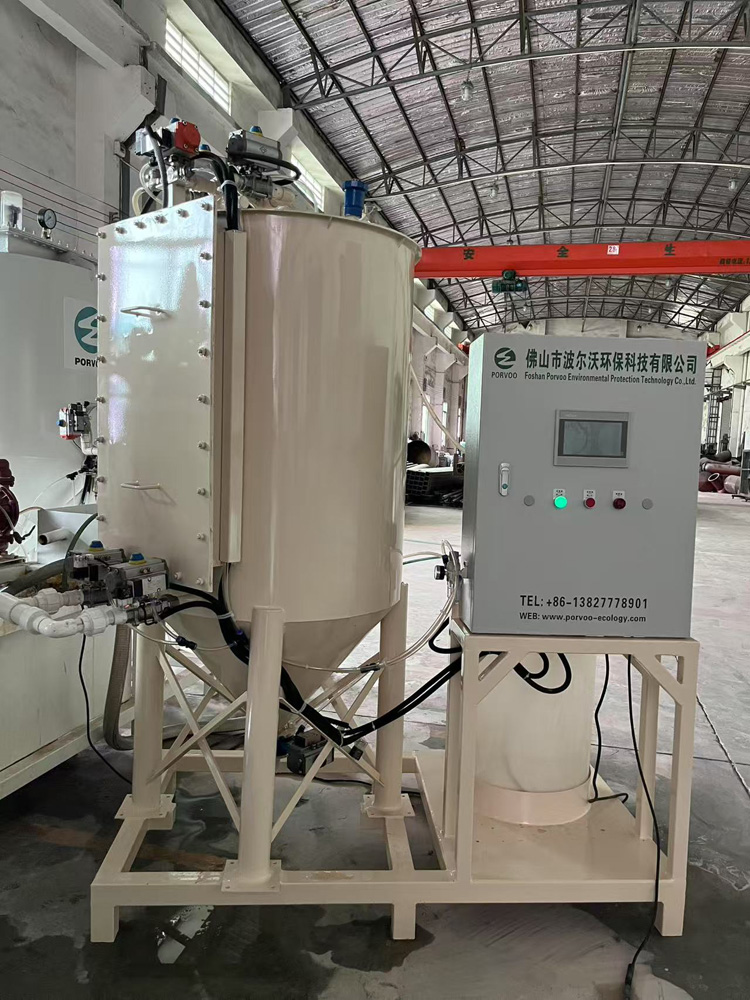
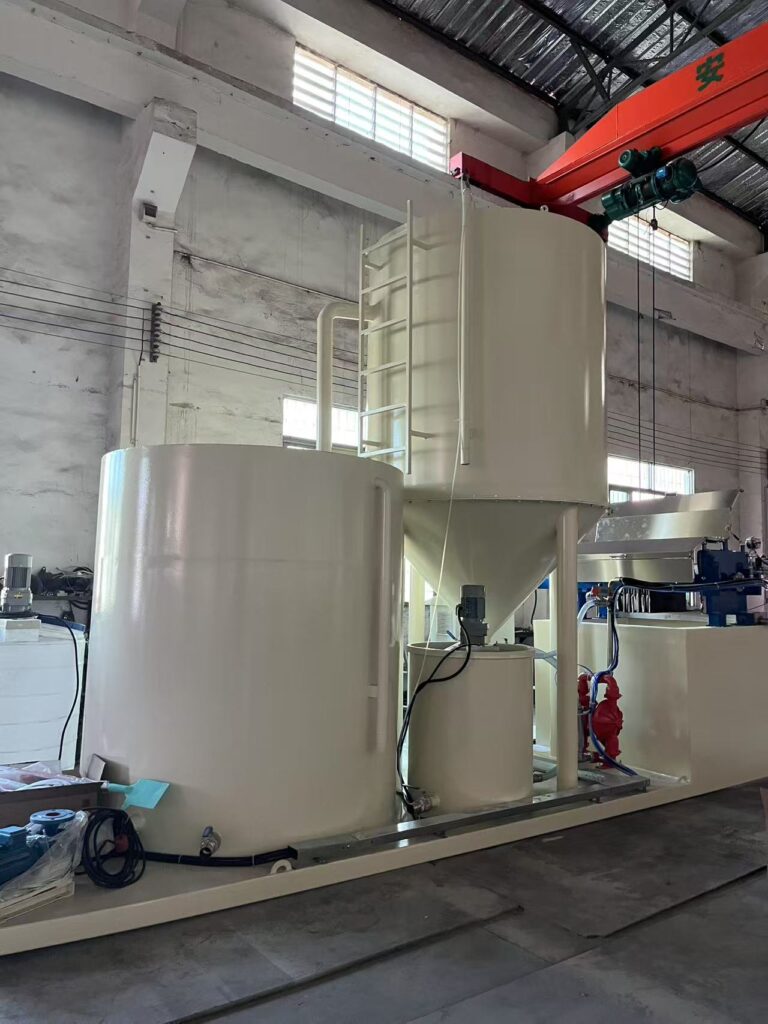
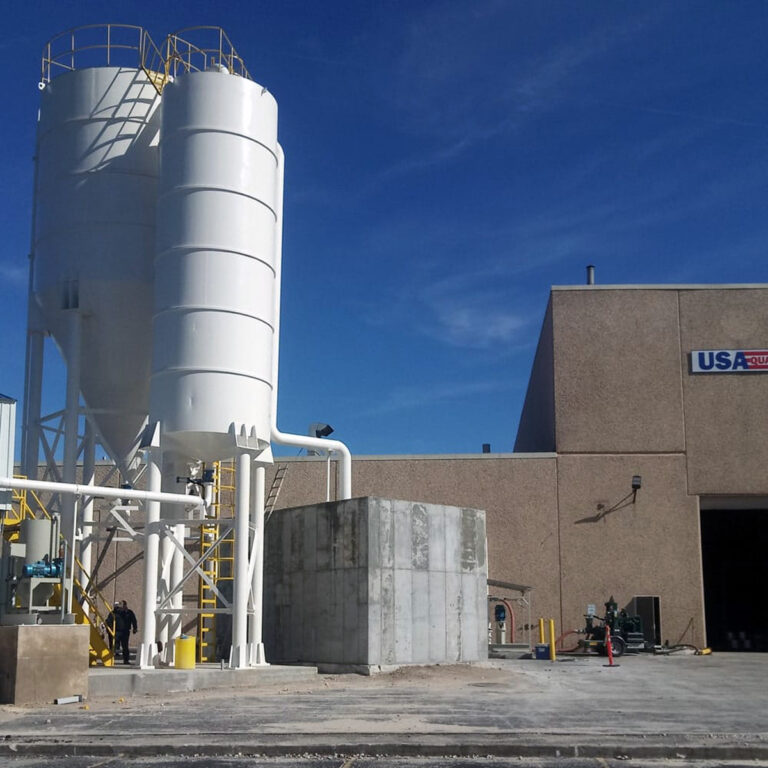
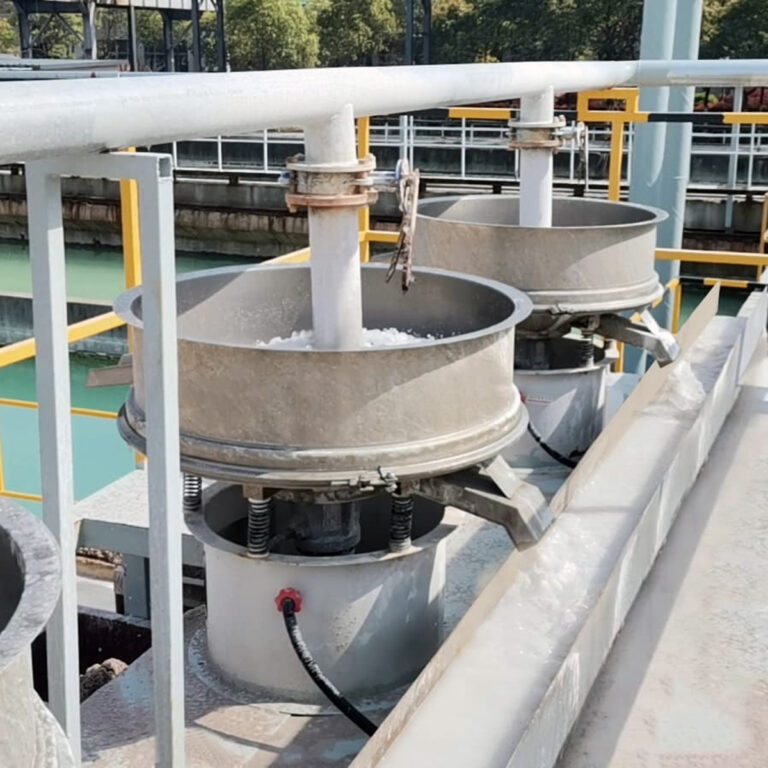
Memilih teknologi pemisahan padat-cair yang tepat adalah keputusan modal yang penting dengan konsekuensi operasional selama beberapa dekade. Pilihan antara filter cakram keramik dan filter press sering kali direduksi menjadi perbandingan biaya yang sederhana, dengan mengabaikan pertukaran mendasar dalam filosofi proses, kinerja, dan integrasi pabrik. Salah langkah ini dapat mengunci operasi ke dalam sistem yang tidak sesuai dengan tujuan produksi inti mereka, yang mengarah ke kemacetan kronis atau biaya operasi yang berlebihan.
Keputusan ini sangat penting saat ini karena industri menghadapi tekanan yang semakin meningkat untuk mengoptimalkan pemulihan air, meminimalkan volume pembuangan limbah, dan meningkatkan kesinambungan proses. Memahami DNA operasional yang berbeda dari setiap sistem - tekanan batch versus vakum kontinu - sangat penting untuk menyelaraskan investasi Anda dengan tujuan strategis jangka panjang dalam pengolahan mineral, manufaktur kimia, atau pengolahan air limbah.
Filter Cakram Keramik vs Filter Press: Perbedaan Inti yang Ditetapkan
Pembagian Mekanisme Pemisahan
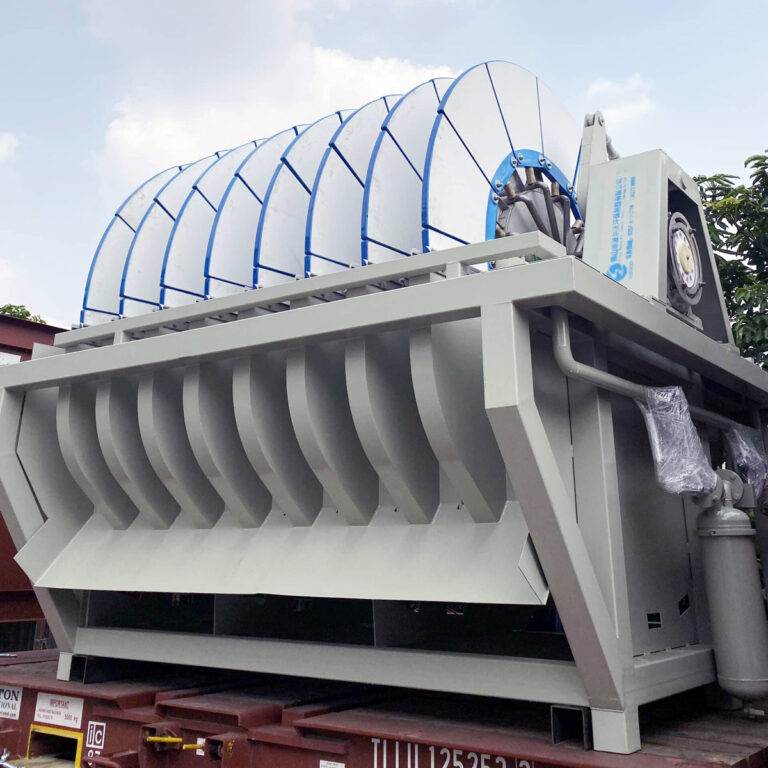
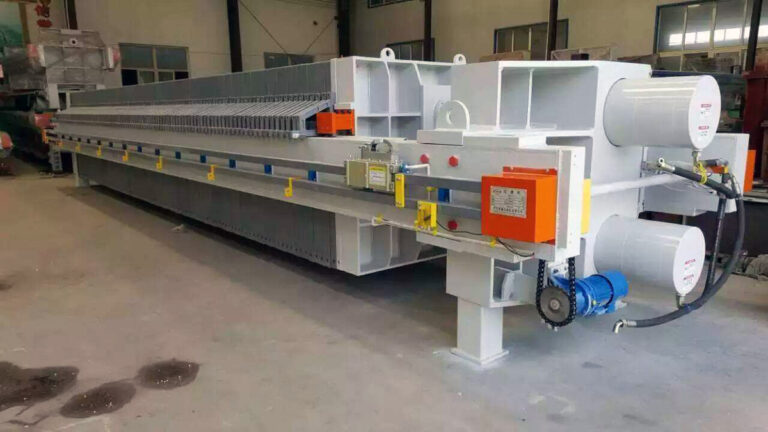
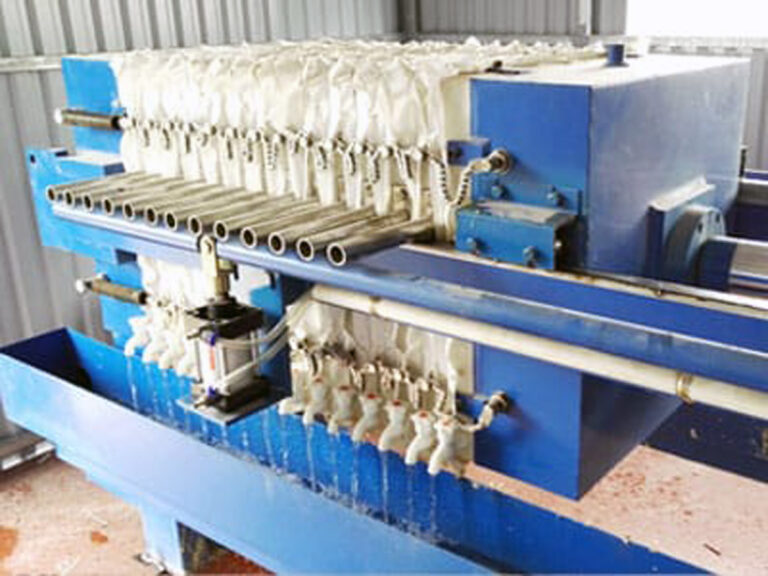
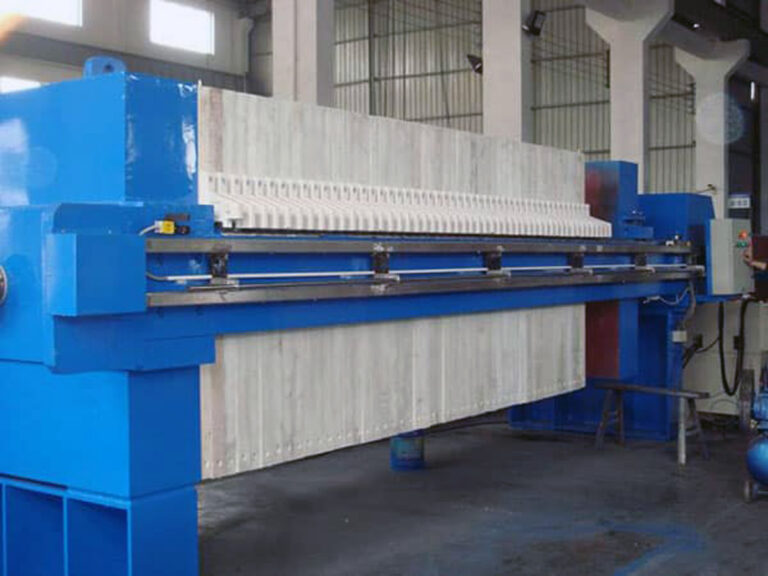
Perbedaan inti tidak hanya bersifat mekanis tetapi mendasar pada bagaimana setiap sistem mencapai pemisahan. Filter press adalah unit penyaringan tekanan proses batch. Bubur dipompa ke dalam ruang yang dibentuk oleh pelat tersembunyi, di mana tekanan tinggi memaksa cairan melalui media kain, meninggalkan kue padat di belakang. Pengoperasiannya bersifat siklus, ditentukan oleh tahap pengisian, pengepresan, dan pengosongan. Sebaliknya, filter cakram keramik beroperasi dengan prinsip vakum kontinu. Beberapa cakram, yang dilapisi dengan membran keramik berpori mikro, berputar melalui tangki bubur. Vakum yang diterapkan pada bagian dalam cakram menciptakan aksi kapiler yang menarik air melalui pori-pori halus sementara partikel-partikel membentuk kue di permukaan, yang secara terus menerus dikikis.
Filosofi Operasional: Batch vs Kontinu
Perbedaan mekanistik ini menentukan paradigma operasional yang sama sekali berbeda. Sifat batch dari filter press berarti throughput-nya adalah fungsi dari volume ruang dan jumlah siklus. Penjadwalan produksi harus mengakomodasi siklus ini, biasanya masing-masing 2-4 jam. Filter cakram keramik, secara desain, memberikan output kondisi tunak. Keluarannya diatur oleh luas permukaan cakram yang tersedia dan efisiensi vakum, sehingga secara inheren cocok untuk diintegrasikan ke dalam aliran proses yang berkelanjutan tanpa gangguan untuk pembuangan kue.
Dampak pada Desain dan Kontrol Sistem
Filosofi yang dipilih mengalir ke setiap sistem tambahan. Instalasi filter press berpusat pada pompa lumpur bertekanan tinggi, unit tenaga hidrolik untuk kompresi pelat, dan sering kali penanganan kue secara manual atau semi-otomatis. Kontrol adalah per batch. Desain filter cakram keramik berkisar pada sistem pompa vakum, stasiun pembersih asam atau ultrasonik otomatis untuk pemeliharaan membran, dan kontrol terintegrasi untuk pemantauan dan penyesuaian berkelanjutan. Dari pengalaman kami dalam integrasi sistem, filosofi kontrol - pengurutan batch versus loop PID kontinu - menjadi faktor penting dalam strategi otomasi dan pelatihan operator.
Perbandingan Biaya Modal & Biaya Operasional: Analisis TCO
Investasi di Muka vs Pengeluaran Jangka Panjang
Pandangan yang dangkal pada daftar peralatan mungkin menunjukkan pemenang biaya yang jelas, tetapi analisis yang benar membutuhkan pandangan siklus hidup. Filter penekan sering kali memberikan pengeluaran modal awal yang lebih rendah untuk rangka inti dan tumpukan pelat. Filter cakram keramik memiliki harga yang lebih tinggi karena media keramik yang dirancang secara presisi dan sistem vakum/pembersihan yang terintegrasi. Namun, perbedaan modal ini hanyalah titik awal. Total biaya kepemilikan (TCO) membalikkan skrip ketika biaya operasional diperhitungkan selama masa pakai aset 10-15 tahun.
Persamaan Bahan Habis Pakai dan Tenaga Kerja
Biaya operasional berbeda secara tajam. Untuk filter press, sebagian besar terkait dengan tenaga kerja manual untuk pembuangan cake dan pencucian kain, ditambah penggantian media kain secara berkala - bahan habis pakai bervolume tinggi. Filter cakram keramik mengotomatiskan siklus pembuangan, meminimalkan tenaga kerja, tetapi mengalihkan biaya ke energi untuk pompa vakum dan pembersihan bahan kimia secara berkala. Membran keramik itu sendiri merupakan bahan habis pakai yang bernilai tinggi dan tahan lama. Pakar industri mencatat bahwa meskipun penggantian membran jarang terjadi, biaya dan ketergantungan teknis pada pemasok untuk layanan merupakan pertimbangan keuangan dan operasional yang penting.
Membangun Model TCO yang Realistis
Tabel berikut ini menguraikan komponen-komponen TCO utama, menyoroti di mana biaya terakumulasi untuk setiap teknologi. Model yang kuat harus memproyeksikannya selama masa pakai sistem, dengan memasukkan tarif tenaga kerja lokal, biaya energi, dan masa pakai media yang diharapkan.
| Komponen Biaya | Tekan Filter | Filter Cakram Keramik |
|---|---|---|
| Investasi Modal | Biaya di muka yang lebih rendah | Investasi modal yang lebih tinggi |
| Bahan Habis Pakai Utama | Media kain | Membran keramik |
| Biaya Habis Pakai | Penggantian berkala | Mahal, tahan lama |
| Kebutuhan Tenaga Kerja | Tinggi (pelepasan manual) | Minimal (otomatis) |
| Fokus Energi/Utilitas | Unit tenaga hidrolik | Sistem pompa vakum |
Sumber: JB/T 4333.2-2019 Kondisi teknis pers filter pelat dan bingkai dan JB/T 20092-2019 Filter keramik. Standar industri ini menetapkan persyaratan teknis dan kondisi manufaktur untuk kedua jenis peralatan, yang secara langsung menginformasikan struktur biaya modal, kualitas material, dan parameter operasional yang diharapkan yang digunakan dalam pemodelan TCO.
Throughput & Kapasitas Dibandingkan untuk Operasi Bervolume Tinggi
Menentukan Kapasitas Sistem
Potensi throughput adalah di mana pembagian operasional memiliki dampak yang paling nyata. Kapasitas mesin cetak filter dihitung berdasarkan batch: total volume ruang dikalikan dengan siklus yang dapat dicapai per hari. Hal ini sering kali selaras dengan jendela produksi 8 atau 12 jam, setelah itu mesin cetak harus dibersihkan atau dirawat. Filter ini unggul dalam memproses batch yang ditentukan, tetapi menciptakan plafon alami untuk operasi 24/7. Kapasitas filter cakram keramik adalah fungsi dari total area filtrasi (permukaan cakram) dan laju filtrasi berkelanjutan yang diaktifkan oleh vakum, yang memungkinkannya untuk memproses laju umpan konstan tanpa batas.
Kesesuaian untuk Skala dan Kontinuitas
Untuk volume tinggi, aliran kontinu-seperti pada konsentrator mineral yang besar-sifat batch dari filter press dapat menjadi hambatan. Ukuran untuk tugas seperti itu sering kali membutuhkan beberapa pengepresan atau unit yang sangat besar, tata letak dan kontrol yang rumit. Filter cakram kontinu dirancang secara arsitektural untuk tugas ini, memberikan output konstan yang sesuai dengan proses hulu yang berkelanjutan. Trade-off-nya adalah kinerjanya sangat sensitif terhadap konsistensi umpan; fluktuasi dalam kepadatan bubur atau ukuran partikel dapat segera berdampak pada laju pembentukan kue dan kelembaban.
Mengukur Perbedaan Output
Tabel di bawah ini membandingkan driver throughput. Wawasan penting adalah bahwa membandingkan “filter press 100 m²” dengan “filter disk 100 m²” adalah menyesatkan tanpa menyatakan waktu siklus batch versus laju operasi kontinu.
| Metrik | Tekan Filter | Filter Cakram Keramik |
|---|---|---|
| Jenis Proses | Operasi batch | Pengoperasian berkelanjutan |
| Waktu Siklus | 2-4 jam per batch | N/A (berkelanjutan) |
| Pengemudi Throughput | Volume ruang, siklus/hari | Luas permukaan cakram, efisiensi vakum |
| Kesesuaian Volume Tinggi | Batch yang ditentukan dan terputus-putus | Superior for steady-state flows |
| Production Window | Often 8-hour basis | 24/7 operation possible |
Sumber: Dokumentasi teknis dan spesifikasi industri.
Final Cake Moisture Content: Which System Performs Better?
The Physics of Dewatering
Achieving the driest possible cake reduces downstream handling, transportation, and disposal costs. The final moisture content is dictated by the dewatering force applied. Filter presses utilize mechanical pressure, often between 100-225 psi (7-15 bar), to squeeze residual moisture from the formed cake. This high-pressure “expression” stage is highly effective. Ceramic disc filters rely on vacuum, which is theoretically limited to one atmosphere (14.7 psi) of pressure differential. While the capillary action of the micro-porous ceramic is exceptionally efficient at pulling free water, it cannot mechanically compress the cake structure.
Typical Performance and Trade-Offs
Consequently, filter presses generally produce a consistently drier cake. This makes them the preferred choice when cake dryness is the paramount objective, such as for landfill disposal or thermal drying feed. Ceramic disc filters typically yield a cake with moderately higher residual moisture. The trade-off is clear: the press sacrifices continuous throughput for ultimate dryness, while the disc filter accepts slightly higher moisture for the benefit of uninterrupted, automated operation.
Matching Technology to Particle Characteristics
The suitability extends to particle size. Filter presses handle a broad spectrum well. Ceramic disc filters demonstrate a particular advantage with very fine, colloidal particles that are difficult to settle, where their capillary action can achieve excellent solids recovery and clear filtrate, even if the cake isn’t the absolute driest. Standards like GB/T 26114-2010 Plate and frame filter press dan GB/T 34329-2017 Ceramic filter for water treatment provide the test methodologies to validate these performance characteristics for a given slurry.
| Parameter | Tekan Filter | Filter Cakram Keramik |
|---|---|---|
| Driving Force | High closing pressure (100-225 psi) | Vacuum (one atmosphere max) |
| Typical Performance | Consistently low moisture | Moderately higher residual moisture |
| Primary Goal | Ultimate cake dryness | Continuous throughput |
| Particle Suitability | Wide range of slurries | Very fine, difficult-to-settle particles |
| Trade-off | Dryness vs. batch cycle time | Throughput vs. final dryness |
Sumber: GB/T 26114-2010 Plate and frame filter press dan GB/T 34329-2017 Ceramic filter for water treatment. These national standards establish the fundamental performance and test methods for each technology, providing the authoritative basis for comparing their dewatering mechanisms and expected outcomes like cake moisture.
Footprint & Space Requirements: A Critical Layout Analysis
Primary Machine Layout
A preliminary assessment might conclude that the vertical disc design of a ceramic filter has a smaller footprint than the horizontal, linear layout of a filter press. This is often true for the primary machine in isolation. However, this view is dangerously incomplete. The filter press requires space for its plate stack to be accessed for maintenance and cake discharge, which can add significant length to its operational envelope.
The “Balance of Plant” Reality
The critical analysis must include all ancillary systems—the “balance of plant.” A filter press installation needs space for its high-pressure feed pumps, hydraulic power pack, control panel, and often a cake conveyor or collection bin. A ceramic disc filter system must accommodate its vacuum pump (which can be sizable), acid cleaning or CIP station, control cabinet, and filtrate receiver tank. When all subsystems are accounted for, the footprint advantage of one technology over the other can narrow considerably or even reverse based on specific site constraints.
Facility and Integration Costs
This holistic footprint directly impacts facility design and cost. Overlooking ancillary space can lead to costly plant modifications post-installation. The table below outlines the key components that must be included in any layout planning. We’ve seen projects where the choice was ultimately dictated not by process performance, but by the physical footprint of the vacuum pump system relative to available space in an existing plant.
| Komponen Sistem | Tekan Filter | Filter Cakram Keramik |
|---|---|---|
| Primary Machine Layout | Horizontal layout | Vertical disc design |
| Key Ancillary Systems | Hydraulic power unit, feed pumps | Vacuum pump system, acid cleaning station |
| Additional Space Needs | Cake conveyor, collection area | Control panel, cleaning station |
| Layout Consideration | “Balance of plant” analysis required | Ancillary systems narrow footprint gap |
| Facility Cost Impact | Dictated by support systems | Must include all subsystems |
Sumber: Dokumentasi teknis dan spesifikasi industri.
Which Technology Is Better for Your Specific Slurry?
The Non-Negotiable: Representative Testing
There is no universal “best” technology. The optimal choice is dictated entirely by your slurry’s specific characteristics: particle size distribution, solids concentration, pH, temperature, and the presence of oils or organics. Filter presses are renowned for their robustness and versatility across a wide range of materials. Ceramic disc filters show superior efficiency on very fine, difficult-to-dewater particles like those in many mineral concentrates (e.g., copper, iron ore, phosphates).
The Role of Pilot-Scale Validation
Given the high capital stakes, lab and pilot testing is not a recommendation; it is a requirement. Testing should simulate both technologies using your actual process slurry. Modern modular test cells allow for this direct comparison, generating essential data on filtration rate, cake formation, wash efficiency, and achievable moisture. This data de-risks the final selection. For instance, testing might reveal that a slurry thought to require a press can be effectively processed on a disc filter with a pre-coat, or vice versa.
Process Integration Considerations
The choice also hinges on desired outcomes beyond mere dewatering. Is the goal maximum solids recovery? Crystal clear filtrate? A handleable cake? The ceramic disc filter often produces a exceptionally clear filtrate suitable for direct recycle, a key advantage in water-scarce regions. The filter press might offer better washing efficiency for removing soluble impurities from the cake. Understanding these nuanced process goals is as important as the particle size analysis.
Key Decision Criteria: Selecting the Right Separation System
Prioritizing Conflicting Objectives
Selection requires weighting often competing criteria against your operation’s non-negotiable priorities. Is the primary driver the driest possible cake to minimize disposal tonnage? Or is it maximizing continuous throughput to match upstream production? Capital budget constraints might favor a filter press initially, but a detailed TCO analysis may justify the higher upfront cost of a disc filter through labor and consumable savings.
Operational and Environmental Factors
The decision framework must extend beyond the process itself. Consider the available skill level of operations and maintenance staff. A highly automated ceramic disc filter requires different technical skills than a manually operated filter press. The operating environment matters—corrosive or explosive atmospheres will dictate specific material and safety requirements for either system. While extreme conditions might necessitate specialized equipment, for most industrial applications, the core trade-off remains.
The Decision Matrix
The following table summarizes how key decision drivers typically align with each technology. Use this as a starting point to score your own project requirements.
| Decision Driver | Favors Filter Press | Favors Ceramic Disc Filter |
|---|---|---|
| Cake Dryness | Required low moisture | Not the primary goal |
| Throughput Volume | Defined batch capacity | Continuous, high-volume flows |
| Capital Budget | Lower upfront cost tolerance | Higher initial investment possible |
| Operating Cost Focus | Tolerates higher labor costs | Prefers lower labor, higher energy |
| Tingkat Otomasi | Manual or semi-automated | Fully automated operation preferred |
Sumber: Dokumentasi teknis dan spesifikasi industri.
Next Steps: How to Validate Your Filtration Choice
From Data to Decision
The path forward is systematic. First, compile a comprehensive process data package for potential suppliers, including slurry samples. Engage with vendors who can provide not just equipment, but consultative support and access to test facilities. Insist on witnessing tests with your slurry. During technical scoping, detail every requirement: materials of construction, automation interfaces, safety features, and spare parts philosophy.
Procurement and Lifecycle Strategy
Recognize that most industrial filtration systems are built-to-order. Clarify delivery timelines, commissioning support, and training provisions. Your final TCO model must include a 10-year view of consumables (media, seals, pumps) and an assessment of the vendor’s long-term support capability. This recurring cost and dependency often outweighs initial price differences. Ensure your selection includes robust peralatan filtrasi industri designed for your specific duty, not an off-the-shelf compromise.
The decision between a ceramic disc filter and a filter press hinges on a clear hierarchy of operational priorities: cake dryness versus continuous throughput, capital versus operating expenditure, and manual versus automated operation. There is no hybrid solution; you are selecting a core process philosophy that will influence plant layout, staffing, and operating costs for years. The most critical step is moving from theoretical comparison to empirical validation with your specific material.
Need professional guidance to pilot-test your slurry and model the true total cost of ownership for each option? The filtration engineers at PORVOO specialize in this exact comparative analysis, helping clients de-risk their separation technology investment through data-driven validation. Hubungi Kami to discuss your application and arrange for representative testing.
Pertanyaan yang Sering Diajukan
Q: How do you accurately compare the total cost of ownership between a ceramic disc filter and a filter press?
A: A true TCO analysis must extend far beyond the initial capital expenditure. While filter presses typically have a lower upfront cost, their long-term expenses are driven by labor for batch cycles and frequent cloth media replacement. Ceramic disc filters require a higher initial investment but shift costs toward energy for vacuum pumps and periodic acid cleaning, with minimal operational labor. This means facilities with tight capital budgets but available operational staff may favor a filter press, while operations prioritizing automation and lower long-term labor costs should model the ceramic filter’s lifecycle expenses.
Q: Which system delivers a drier final cake for high-volume mineral concentrate processing?
A: For achieving the lowest possible cake moisture, a recessed plate filter press is generally superior. Its design allows for a final high-pressure mechanical squeeze, often between 100 and 225 psi, to extract more water. The ceramic disc filter, governed by a one-atmosphere vacuum limit, typically produces a cake with higher residual moisture. If your operation’s downstream handling or disposal costs are critically sensitive to ultimate solids dryness, you should prioritize testing with a filter press, even if it means accepting a batch-process workflow.
Q: What are the key technical standards for evaluating a plate and frame filter press?
A: The core performance and safety criteria for filter presses are defined by national and industry standards. The fundamental parameters and requirements are established in GB/T 26114-2010. For detailed technical conditions covering manufacturing, assembly, and quality control, you should reference the more recent industry standard JB/T 4333.2-2019. This means your procurement specifications and vendor evaluations must align with these documents to ensure equipment meets standardized performance and safety benchmarks.
Q: How should we validate which filtration technology is best for our specific slurry before purchasing?
A: The only reliable method is to conduct representative lab testing using your actual slurry. Engage suppliers who can provide modular test cells that simulate both pressure (filter press) and vacuum-driven ceramic capillary action. This direct comparison generates essential data on filtration rate and achievable cake moisture. For projects where slurry characteristics are variable or poorly defined, you must budget for and insist on this testing phase to de-risk the capital investment and prevent a costly mismatch.
Q: Does a ceramic disc filter truly have a smaller plant footprint than a filter press?
A: Not necessarily when evaluating the complete system. While the primary machine may have a compact vertical design, a full layout analysis must include all ancillary equipment. For a filter press, this includes hydraulic power units and feed pumps, while a ceramic filter requires vacuum pumps and an acid cleaning station. This means your facility planning cannot assess the main unit in isolation; you must require vendors to provide detailed “balance of plant” layouts to accurately compare total space requirements and associated facility costs.
Q: What standards apply to the ceramic filter component in a disc filtration system?
A: Ceramic filters used in separation systems are governed by specific technical standards that define their quality and performance. For general classification and technical requirements in water treatment applications, refer to GB/T 34329-2017. Detailed industry specifications on terms, manufacturing, and testing are provided in JB/T 20092-2019. This means your evaluation of ceramic media longevity and performance claims should be benchmarked against the criteria in these documents.
Q: How do throughput requirements influence the choice between these two technologies?
A: The decision hinges on whether your process is batch-oriented or requires continuous, high-volume flow. A filter press operates in cycles of 2-4 hours, making its daily capacity a function of chamber volume and cycles completed, which suits intermittent production. A ceramic disc filter provides steady-state, continuous processing limited only by disc surface area. If your operation runs with large, uninterrupted slurry volumes, the continuous system will likely deliver superior overall tonnage, but you must verify this advantage through testing with your material.