Biaya Tersembunyi dari Debu Pertukangan Kayu
Debu kayu menghadirkan masalah multifaset yang jauh melampaui ketidaknyamanan pembersihan. Partikel-partikel yang paling halus-yang hampir tidak dapat Anda lihat-memiliki risiko kesehatan terbesar. Partikel mikroskopis ini (biasanya di bawah 10 mikron) dengan mudah melewati sistem penyaringan alami tubuh Anda, yang berpotensi menyebabkan masalah pernapasan mulai dari iritasi hingga kondisi serius seperti asma akibat kerja. Menurut data OSHA, paparan jangka panjang terhadap debu kayu telah dikaitkan dengan kanker hidung, terutama di kalangan pekerja kayu.
Selain masalah kesehatan, debu yang tidak terkendali menciptakan masalah alur kerja yang nyata. Debu mengendap di permukaan proyek di antara tahap-tahap penyelesaian, sehingga mengorbankan kualitas pekerjaan Anda. Debu menyusup ke dalam motor dan bantalan alat, yang secara substansial mengurangi masa pakainya. Saya secara pribadi harus mengganti router yang mengalami akumulasi debu-sebuah pelajaran dari $300 tentang pentingnya manajemen debu.
Ada juga dimensi keselamatan yang sering diabaikan. Serbuk kayu, khususnya dari spesies tertentu, dapat menimbulkan ledakan yang sangat kuat dan bahaya kebakaran ketika partikel di udara mencapai konsentrasi tertentu. Percikan api dari alat atau listrik statis dapat memicu bencana di bengkel. Hal ini bukanlah teori- fasilitas pengerjaan kayu telah mengalami kebakaran yang menghancurkan justru karena pengendalian debu yang tidak memadai.
Dampak finansial bertambah seiring waktu. Di antara proyek-proyek yang terganggu dan membutuhkan pengerjaan ulang, peralatan yang rusak dan perlu diganti, serta potensi biaya kesehatan, harga sebenarnya dari pengumpulan debu yang tidak memadai jauh melebihi investasi untuk solusi manajemen yang tepat.
Memahami Meja Pengamplasan Downdraft
Teknologi downdraft secara fundamental mengubah cara kita melakukan pendekatan terhadap pengumpulan debu di bengkel. Tidak seperti metode pengumpulan debu tradisional yang mencoba menangkap debu di sumber alat - sering kali dengan hasil yang beragam - meja pengamplasan downdraft menciptakan lingkungan aliran udara terkontrol yang menarik debu ke bawah, menjauh dari proyek dan zona pernapasan Anda.
Konsep ini berasal dari lingkungan industri tetapi telah berkembang secara signifikan untuk aplikasi bengkel. Sistem awal pada dasarnya adalah platform berlubang yang terhubung ke penyedot debu industri yang kuat. Namun, meja pengamplasan downdraft modern menggabungkan rekayasa aliran udara canggih yang memaksimalkan efisiensi pengumpulan sekaligus meminimalkan daya isap yang diperlukan.
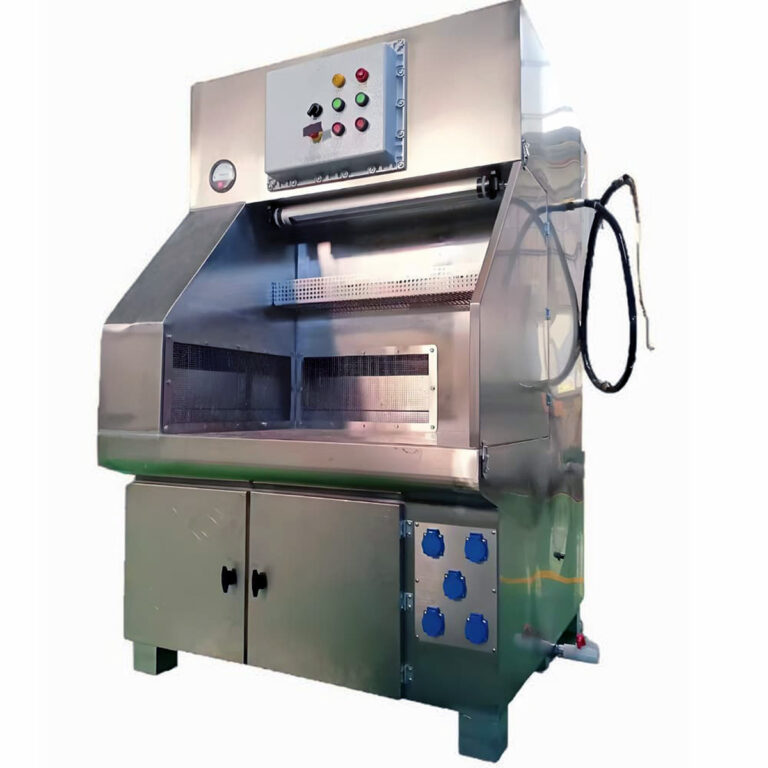
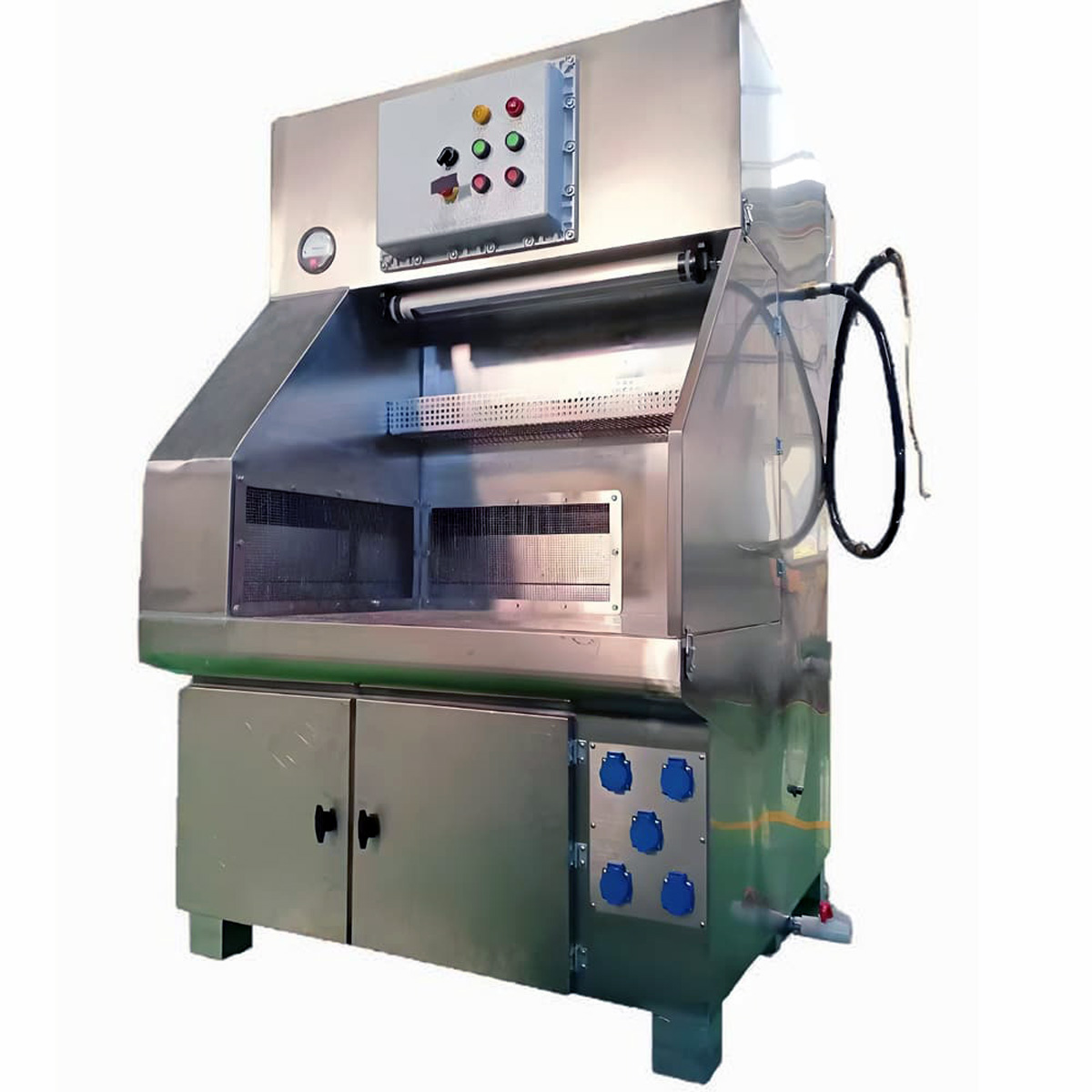
Pada intinya, sistem ini mengandalkan prinsip sederhana: udara bergerak dari tekanan tinggi ke tekanan rendah. Dengan menciptakan tekanan negatif di bawah benda kerja Anda, debu secara alami mengikuti jalur yang paling sedikit hambatannya-melalui permukaan meja dan bukannya menyebar ke udara toko Anda. Apa yang membuat sistem kontemporer seperti PORVOO meja kerja pengumpul debu yang sangat efektif adalah bagaimana mereka menerapkan prinsip ini.
Komponen utama dari meja pengamplasan downdraft yang efektif meliputi:
- Permukaan Kerja - Biasanya menampilkan pola lubang atau slot dengan ukuran yang tepat yang menyeimbangkan area terbuka untuk aliran udara sekaligus mempertahankan dukungan struktural untuk benda kerja Anda
- Ruang Pleno - Area di bawah permukaan kerja yang membantu mendistribusikan tekanan negatif secara merata di seluruh meja
- Sistem Pengumpulan - Sering kali dilengkapi dengan penyekat atau ruang sekunder yang memisahkan partikel yang lebih berat dari aliran udara
- Filtrasi - Sangat penting untuk menangkap partikel debu yang paling halus dan berbahaya
- Sistem Pembuangan - Baik kipas terintegrasi atau port untuk menghubungkan ke pengumpul debu eksternal
Yang membedakan sistem downdraft biasa dengan sistem downdraft yang luar biasa adalah bagaimana elemen-elemen ini berinteraksi. Sistem terbaik menciptakan aliran udara laminar-di mana udara bergerak dalam lapisan paralel dengan turbulensi minimal-memungkinkan penangkapan debu yang lebih konsisten di seluruh permukaan kerja.
Saya telah mengamati perbedaan yang nyata di antara sistem-sistem dalam hal seberapa efektif mereka mengelola area tepi. Meja yang kurang canggih sering kali memiliki “zona mati” di dekat perimeter di mana aliran udara menurun secara dramatis. Sistem yang dirancang dengan lebih baik mempertahankan efek downdraft yang konsisten hingga ke bagian paling tepi permukaan kerja.
Aspek yang terabaikan dari teknologi downdraft adalah pengoperasiannya yang sangat senyap dibandingkan dengan vakum toko. Ketika saya pertama kali meningkatkan ke meja downdraft yang tepat, pengurangan kebisingan bengkel segera terlihat - manfaat yang tidak saya perkirakan tetapi sekarang sangat saya hargai selama sesi pengamplasan yang panjang.
Fitur Penting dari Meja Kerja Pengumpul Debu yang Efektif
Setelah bertahun-tahun menggunakan berbagai pengaturan pengumpulan debu, saya menyadari bahwa tidak semua meja pengamplasan downdraft dibuat sama. Perbedaan antara rasa frustasi dan kepuasan sering kali bermuara pada beberapa elemen desain penting yang secara langsung berdampak pada kinerja.
Rekayasa Aliran Udara
Aspek yang paling penting dari setiap meja kerja pengumpul debu adalah desain aliran udaranya. Sistem yang efektif mendistribusikan tekanan negatif secara merata di seluruh permukaan kerja. Hal ini biasanya membutuhkan:
- Ruang pleno dengan ukuran yang tepat yang mempertahankan kecepatan udara yang konsisten
- Pola lubang yang direkayasa yang menyeimbangkan aliran udara dengan dukungan struktural
- Jalur internal yang meruncing yang mencegah kemacetan aliran udara
Dalam percakapan baru-baru ini dengan Marcus Kaplan, seorang spesialis pengumpulan debu dengan pengalaman 25 tahun di bidang desain industri, ia menekankan bahwa “kesalahan paling umum dalam desain meja downdraft adalah memperlakukan aliran udara sebagai renungan dan bukan sebagai pertimbangan desain utama.”
Pengujian laboratorium menunjukkan bahwa meja downdraft yang optimal mempertahankan kecepatan permukaan minimum (kecepatan udara yang bergerak melalui permukaan kerja) 100-200 kaki per menit. Di bawah ambang batas ini, partikel debu halus dapat lolos; jauh di atasnya, dan Anda berisiko menciptakan turbulensi yang benar-benar mengurangi efisiensi pengumpulan.
Kemampuan Filtrasi
Sistem filtrasi menentukan apakah meja kerja pengumpul debu Anda benar-benar melindungi kesehatan Anda atau hanya memindahkan debu yang terlihat sambil membiarkan partikel halus yang berbahaya bersirkulasi kembali.
Perbandingan efektivitas penyaringan menunjukkan perbedaan yang signifikan:
| Tingkat Filtrasi | Penangkapan Partikel | Aplikasi Khas | Perlindungan Kesehatan |
|---|---|---|---|
| Penyedot Debu Toko Standar | Turun hingga 10-20 mikron | Pembersihan dasar, debu yang terlihat | Minimal |
| MERV 10-12 | Turun hingga 1-3 mikron | Pengumpul debu tingkat pemula | Sedang |
| Bersertifikat HEPA | Turun hingga 0,3 mikron (efisiensi 99,97%) | Sistem yang berfokus pada kesehatan | Luar biasa |
| NANO Filtration | Below 0.3 microns | Advanced industrial systems | Maximum |
The most hazardous wood dust particles range from 0.5 to 5 microns—invisible to the naked eye yet capable of penetrating deep into lung tissue. This makes high-efficiency filtration non-negotiable for health-conscious woodworkers.
Construction Quality
The physical construction of a dust collection workbench significantly impacts both performance and longevity. Key considerations include:
- Material durability – Heavy-gauge steel or solid phenolic tops resist warping that can create air leaks
- Sealing integrity – Quality gaskets and sealed seams prevent efficiency-robbing air leaks
- Structural rigidity – A rigid frame prevents flexing that can compromise airflow patterns
- Surface flatness – Critical for both airflow consistency and workpiece support
I once purchased a budget-friendly downdraft table that seemed like a bargain until I noticed significant performance degradation after just six months. The thin sheet metal had subtly warped, creating gaps around the edges that drastically reduced suction efficiency.
Adaptability and Integration
The most practical dust collection workbenches offer integration with existing shop systems and adaptability to various project types. This might include:
- Standard-sized dust ports (typically 4″ or 6″) for connecting to central collection systems
- Modular work surfaces that can be reconfigured for different tasks
- Height adjustability to accommodate various working positions
- Additional functionality such as integrated clamping systems or tool storage
These features transform a single-purpose dust collector into a versatile workstation that enhances your entire workflow.
PORVOO’s Approach to Dust Management
When examining PORVOO’s dust collection workbench, several design elements immediately stand out as departures from conventional approaches. Rather than merely iterating on existing designs, they appear to have reconsidered fundamental assumptions about how a downdraft sanding table should function.
The most notable innovation is their dual-zone work surface that addresses one of the persistent challenges in downdraft technology: maintaining consistent suction across different project sizes. By creating independently controlled collection zones, the system can concentrate airflow where it’s actually needed rather than dispersing it across the entire surface. This approach makes intuitive sense—why waste collection capacity on areas where you’re not currently working?
Looking at the technical specifications, the workbench achieves impressive performance metrics with a notably compact footprint. The system maintains approximately 800 CFM (cubic feet per minute) airflow when connected to a standard 2HP dust collector—sufficient to capture fine sanding dust even from aggressive power sanding. This efficiency comes from careful internal engineering rather than brute-force suction power.
What particularly impressed me was the integration potential. While many downdraft tables exist as standalone units that require significant workshop reorganization, this system is designed to complement existing setups. The standard 4″ dust ports allow connection to virtually any workshop dust collection system, while the bench-top design lets you incorporate it into your current workflow rather than forcing adaptation to a new workstation.
Construction quality appears to prioritize longevity and performance stability. The heavy-gauge steel construction prevents the warping issues that plague lighter-weight alternatives. This matters significantly for maintaining airtight seals throughout the system—even minor distortions can create air leaks that dramatically reduce collection efficiency.
From a practical perspective, the incorporation of T-track systems along the perimeter shows thoughtful consideration of how the workbench will actually be used. This allows secure workpiece clamping without compromising airflow patterns—a common problem with aftermarket clamping solutions that often block critical collection areas.
Some workshop dust management specialists might question whether the 52″ × 32″ work surface provides sufficient area for larger projects. However, after considering typical sanding workflows, I believe this represents a reasonable balance between workpiece accommodation and maintaining sufficient air velocity across the surface. Larger tables often suffer from reduced performance as airflow gets distributed across too wide an area.
Setting Up Your Downdraft System
Installing a dust collection workbench requires more thoughtful planning than simply placing it in an available corner of your shop. The system’s performance depends significantly on its positioning relative to your workflow, existing dust collection infrastructure, and ambient shop conditions.
When I added a downdraft table to my own workshop, I initially made the mistake of positioning it too far from my existing dust collector. The extended duct run created enough static pressure loss to significantly reduce the system’s effectiveness. The general rule—which I learned through frustration—is to keep duct runs as short and straight as possible, with gradual bends rather than sharp turns when directional changes are unavoidable.
For optimal positioning, consider:
- Workflow integration – Place the table where it naturally fits your movement patterns
- Dust collector proximity – Minimize distance to reduce static pressure losses
- Ambient airflow patterns – Avoid locations near open windows or HVAC vents that can disrupt downdraft effectiveness
- Power availability – Ensure adequate electrical supply for both the table and connected dust collection
The actual installation process varies by system, but typically involves:
- Assembling the base structure according to manufacturer specifications
- Connecting the dust port to your existing collection system
- Ensuring all seams and connections are properly sealed
- Testing airflow across different sections of the work surface
For connection to existing dust collection systems, it’s worth investing in quality ducting components. The small additional cost of smooth-wall metal ducting over corrugated flexible hose yields significant performance improvements by reducing air turbulence and pressure drops.
Maintenance requirements vary between systems, but all benefit from regular attention to:
- Surface cleaning – Periodically clearing the perforated top of embedded particles
- Internal inspection – Checking for dust buildup in plenum chambers or ductwork
- Seal integrity – Verifying that gaskets and connections remain airtight
- Filter condition – Replacing or cleaning filters according to manufacturer recommendations
I’ve found that establishing a monthly maintenance schedule prevents the gradual performance degradation that often goes unnoticed until efficiency has significantly declined. A simple shop calendar reminder has saved me considerable frustration.
One maintenance tip that’s served me well: periodically checking for negative pressure using the “tissue test.” Place a small piece of tissue paper at various points on the work surface with the system running. The paper should be firmly drawn against the surface across the entire table. Areas with weak attraction indicate potential issues with internal baffling or ductwork that require attention.
Real-World Applications and Projects
The true test of any dust collection workbench comes during actual project work across different woodworking disciplines. Having used various systems for everything from furniture construction to turning to carving, I’ve developed a nuanced appreciation for when a downdraft sanding table truly proves its worth.
Furniture making presents perhaps the clearest demonstration of a downdraft system’s value. During a recent credenza build, I conducted a side-by-side comparison—sanding one drawer front on my downdraft table and another using just my random orbit sander’s dust port. The difference was striking: the downdraft-assisted sanding left virtually no visible dust on the surface or in the air, while the sander-only approach created a noticeable dust cloud despite its built-in collection. More importantly, the finish quality was noticeably better on the drawer processed on the downdraft table, requiring less between-coat cleaning.
Cabinet makers find particular value in these systems when working with sheet goods like MDF or plywood. These materials produce exceptionally fine dust that traditional collection methods struggle to capture. Master cabinetmaker Elena Gonzalez notes that “switching to a downdraft system reduced my between-coat sanding time by almost 70% because I’m no longer fighting residual dust on the surfaces.”
| Project Type | Dust Collection Challenges | Downdraft Table Benefits |
|---|---|---|
| Furniture Making | Large surface areas, fine finishing requirements | Even dust extraction across broad surfaces, cleaner finish preparation |
| Carving | Complex shapes, hand tool use without built-in collection | Captures dust regardless of tool type, maintains clean work area for detail visibility |
| Turning | Combination of chips and fine dust | Captures fine sanding dust during finishing stages |
| Small Items/Jewelry | Tiny workpieces that can be affected by suction | Provides dust control without disturbing delicate workpieces when properly balanced |
For instrument makers working with exotic and sometimes toxic wood species, the health protection aspect becomes paramount. Cocobolo, padauk, and rosewood—all prized for beautiful instruments—produce dust that can trigger severe allergic reactions in sensitive individuals. A proper dust collection workbench provides critical protection when working with these materials.
One particularly interesting application I’ve discovered is using a downdraft table for non-wood materials. When I recently branched into working with carbon fiber composites, the downdraft system proved invaluable for capturing the potentially hazardous dust that traditional dust collection struggles to handle.
The system’s limitations become apparent with certain applications, however. When working with very small items, the downward suction can sometimes be strong enough to affect the workpiece itself. This requires careful airflow adjustment or using simple solutions like placing the work on a slightly elevated platform while still benefiting from the surrounding dust capture.
Comparing Dust Management Solutions
Understanding where a downdraft sanding table fits within the broader ecosystem of dust management solutions helps clarify its value proposition. Each approach has distinct strengths and limitations worth considering when designing your dust collection strategy.
Traditional chip collectors—the standard single-stage dust collectors found in many workshops—excel at capturing larger wood chips and shavings but typically miss the finer dust particles most dangerous to respiratory health. Their primary advantage is handling high volumes of material from machines like planers and jointers, but they often recirculate the finest particles back into shop air.
Shop vacuums with cyclone separators represent a step up in fine dust management, offering improved filtration and maintaining suction even as the collection chamber fills. They’re highly portable but typically lack the airflow volume needed for consistently clearing a full-sized workbench surface.
At the higher end, two-stage cyclonic separators with HEPA filtration provide excellent fine dust removal but require significant space and financial investment. Dr. Neil Carlson, an occupational health specialist who studies woodshop environments, explains: “The ideal workshop employs multiple, complementary dust management approaches rather than relying on a single solution.”
This brings us to where downdraft tables shine: targeted dust capture at the specific point of generation. Unlike ambient air filtration systems that attempt to clean dust after it’s dispersed throughout the shop, downdraft tables prevent dispersion in the first place.
Consider these comparative factors:
| Jenis Sistem | Biaya Awal | Operational Cost | Persyaratan Ruang | Fine Dust Capture | Kompleksitas Integrasi |
|---|---|---|---|---|---|
| Basic Dust Collector | $200-500 | Rendah | Sedang | Poor to Moderate | Simple |
| Shop Vac with Cyclone | $150-300 | Moderate (filters) | Rendah | Sedang | Simple |
| Two-Stage with HEPA | $1,000-2,500+ | Sedang | Tinggi | Luar biasa | Complex |
| Ambient Air Filtration | $300-700 | Moderate (filters) | Low (ceiling mounted) | Good (over time) | Simple |
| Downdraft Table | $500-2,000 | Rendah | Sedang | Excellent (at source) | Sedang |
For smaller workshops with space constraints, a quality downdraft table combined with tool-mounted dust collection often provides the most efficient solution. This approach concentrates resources where dust is actually generated rather than attempting to clean the entire shop volume.
What’s often overlooked in these comparisons is the operational efficiency factor. Time spent cleaning surfaces between finishing steps or clearing dust from tools represents a hidden cost. Workshop efficiency expert James Thornton observes that “a proper dust management system pays for itself not just in health benefits but in reclaimed productive hours.”
My own workshop employs a hybrid approach: a downdraft table for hand sanding and detail work, direct collection at major dust-producing machines, and ambient filtration as a final safety net. This layered strategy provides far better protection than any single system could deliver alone.
Future Trends in Workshop Dust Control
The landscape of workshop dust management continues to evolve, driven by advances in filtration technology, growing awareness of health impacts, and changing regulatory environments. Several emerging trends suggest where the field is heading.
Automation is increasingly entering the dust collection space. New systems incorporate sensors that detect when tools are in use and automatically adjust suction power accordingly. This not only improves energy efficiency but also optimizes collection performance based on real-time needs. I recently tested a prototype system that used tool current sensors to ramp up collection power precisely when needed—an elegant solution to the constant manual adjustment typically required.
Filtration technology itself is undergoing significant advancement. Beyond traditional HEPA standards, we’re now seeing ULPA (Ultra-Low Penetration Air) filters capable of capturing 99.999% of particles down to 0.12 microns. These next-generation filtration systems provide unprecedented protection against the finest and most dangerous dust particles.
The regulatory environment is also shifting toward greater stringency. European workshops already face stricter dust exposure limits than their North American counterparts, but this gap is narrowing. Industrial hygienist Sarah Williams notes that “US regulations regarding fine particulate exposure in small workshops are likely to follow the European model within the next decade.” Forward-thinking woodworkers are getting ahead of these changes by upgrading their dust management infrastructure now.
Perhaps most interesting is the trend toward integrated systems that combine dust collection with other workshop functions. The convergence of dust management with workflow optimization is creating multifunctional workstations that save space while improving both health protection and efficiency.
There’s also growing interest in sustainability considerations. Newer dust collection designs focus on reducing energy consumption while maintaining or improving performance. Some innovative systems even repurpose collected wood waste for biomass heating or composting applications—creating closed-loop systems that transform a workshop byproduct into a resource.
What seems clear is that dust management is increasingly being recognized not as an optional accessory but as a fundamental workshop system. As one veteran furniture maker told me, “We used to think of dust collection as something you added to a workshop if you had extra space and budget. Today, it’s one of the first systems I planning when setting up a new shop.”
Making the Right Choice for Your Workshop
When I first started researching downdraft sanding tables, I quickly realized that the perfect system depends heavily on your specific working style, project types, and shop configuration. Rather than seeking a universal “best” solution, consider how different features align with your particular needs.
For those working primarily with hand tools on smaller projects, a compact downdraft table with moderate CFM requirements might provide perfect dust control without overwhelming your space or budget. Conversely, production workshops handling larger pieces benefit from more expansive work surfaces with higher airflow capacity, even if that means a higher investment.
Workshop volume represents another crucial consideration. In my 400 square foot workshop, a mid-sized downdraft table paired with my existing dust collector provides excellent coverage. In significantly larger spaces, you might need either a more powerful system or multiple collection points to maintain effective dust control throughout the environment.
The connection between your dust collection workbench and your existing infrastructure deserves careful consideration. Some systems require dedicated collectors, while others—like the PORVOO model—are designed to integrate with standard dust collection setups. This flexibility can significantly impact both initial costs and long-term satisfaction.
Over my years of woodworking, I’ve come to recognize that dust management isn’t merely about workshop cleanliness—it’s about creating a sustainable environment where I can continue practicing my craft for decades without compromising health. This perspective shifts the calculation from immediate cost to long-term value, making superior dust collection an investment rather than an expense.
Whatever system you choose, implement it with attention to proper sealing, regular maintenance, and appropriate workflow integration. Even the most advanced dust collection workbench will underperform if poorly installed or maintained. Conversely, a modestly priced system that’s thoughtfully implemented and consistently used can provide excellent protection.
Finally, remember that perfect dust control typically involves layered solutions. Your downdraft sanding table represents one crucial component in a comprehensive approach that might also include tool-mounted collection, ambient air filtration, and appropriate respiratory protection for particularly hazardous operations. When these elements work in concert, they create a workshop environment that protects your health while enhancing your woodworking experience.
Frequently Asked Questions about Downdraft Sanding Table / Dust Collection Workbench
Q: What is a Downdraft Sanding Table / Dust Collection Workbench?
A: A downdraft sanding table, also known as a dust collection workbench, is a specialized work surface designed to minimize dust and particle exposure during sanding and other woodworking or metalworking processes. Equipped with a powerful ventilation system, it pulls air and contaminants downward, filtering them before releasing clean air back into the workspace. This technology enhances both worker safety and air quality by reducing airborne dust and debris.
Q: What are the key benefits of using a Downdraft Sanding Table / Dust Collection Workbench?
A: The benefits of using a downdraft sanding table include:
- Peningkatan Kualitas Udara: Reduces exposure to harmful dust and fumes.
- Enhanced Safety: Protects workers from respiratory risks and eye irritation.
- Peningkatan Produktivitas: Keeps the workspace clean and organized, minimizing distractions.
- Reduced Maintenance: Prevents equipment clogging by removing debris, extending machinery lifespan.
Q: How does a Downdraft Sanding Table / Dust Collection Workbench improve worker safety?
A: Downdraft sanding tables significantly enhance worker safety by capturing airborne particles at the source, reducing the risk of respiratory problems and eye irritation. This is particularly important in environments where combustible dusts could pose fire hazards. Wet downdraft tables can also prevent the ignition of combustible particles, further safeguarding the work area.
Q: Can a Downdraft Sanding Table / Dust Collection Workbench help with regulatory compliance?
A: Yes, using a downdraft sanding table can aid in regulatory compliance regarding worker health and safety. By minimizing exposure to harmful airborne contaminants, these tables help employers meet standards that require maintaining a safe and healthy work environment. This reduces the risk of fines or penalties associated with non-compliance.
Q: What types of tasks are best suited for a Downdraft Sanding Table / Dust Collection Workbench?
A: Downdraft sanding tables are ideal for tasks that generate significant amounts of dust or particles, such as sanding, grinding, deburring, and polishing. They are versatile and can be adapted to various applications across woodworking and metalworking industries.
Q: Are there different types of Downdraft Sanding Tables available?
A: Yes, downdraft sanding tables come in various forms, including portable and industrial models. Specialized tables are designed for specific tasks like sanding, offering features such as adjustable heights and backstops to enhance efficiency and dust collection performance. The choice of table depends on the specific needs of the workspace, including size, material handling, and workflow efficiency.