For ceramic processing plant managers and environmental engineers, the choice between single-chemical and sequential chemical dosing systems is often framed as a trade-off between simplicity and performance. This is a false dichotomy. Relying on a single coagulant or flocculant creates a fragile treatment process vulnerable to the inherent variability of industrial wastewater. The real decision is between a system designed to cope with average conditions and one engineered to guarantee performance under all conditions.
The push for water recycling and stringent discharge limits makes this optimization critical. Inefficient treatment directly impacts operating costs through excessive sludge disposal, high chemical consumption, and reduced water recovery. A system that cannot consistently produce clear effluent also jeopardizes downstream membrane filters and disinfection units, leading to costly maintenance and operational downtime. Optimizing the coagulation-flocculation stage is the foundation for a reliable, cost-effective water management loop.
The Core Difference: PAC vs. PAM vs. Sequential Dosing
Defining the Mechanisms
Single-chemical treatments force one reagent to perform both coagulation and flocculation, a fundamental compromise. Polyaluminum chloride (PAC) works primarily via charge neutralization, destabilizing colloidal particles. Polyacrylamide (PAM) functions as a bridging agent, agglomerating destabilized particles into larger flocs. Using either alone means accepting a suboptimal process: PAC alone often yields small, slow-settling microflocs, while PAM alone cannot effectively coagulate stable suspensions.
The Sequential Advantage
The PAC-PAM approach creates a robust, multi-stage treatment train. This mirrors a core principle of water treatment: no single method can address all contaminant types. PAC establishes the first barrier by neutralizing charges and initiating floc formation. PAM then provides the secondary barrier, building these particles into large, dense aggregates that settle rapidly. This decoupled process is inherently more adaptable to changes in wastewater chemistry.
Operational Consequence
In practice, we’ve observed that plants using standalone treatments frequently experience “chasing” the process, constantly adjusting doses in response to upsets. The sequential system’s staged approach provides a buffer. By ensuring complete destabilization before flocculation, it delivers consistent clarifier performance, which is non-negotiable for protecting sensitive downstream processes like membrane filtration.
Comparaison des coûts : Coût d'investissement, coût d'exploitation et coût total de possession
Analyzing Upfront Investment
A superficial analysis favors single-chemical systems for lower capital expenditure (CAPEX). They require fewer dosing pumps, tanks, and control loops. However, this narrow view ignores the total cost of ownership (TCO). The initial savings can be quickly eroded by higher operating costs and shorter equipment lifespans downstream.
The Real Cost Drivers: OPEX
The most significant operational expenses in wastewater treatment are often chemical consumption and sludge disposal. Sequential dosing directly targets these. By optimizing each chemical for its specific role, overall consumption is frequently lower than the massive overdose required for a single chemical to work. More importantly, the dense, compact flocs formed reduce sludge volume by 30-50%, drastically cutting hauling and disposal costs.
Total Cost of Ownership Perspective
Investing in effective pre-treatment offers higher long-term returns by reducing downstream complexity and costs. The superior effluent clarity from sequential dosing extends the service life of filters and membranes, reducing replacement frequency and maintenance labor. The TCO advantage becomes increasingly pronounced at scale, making sequential dosing the economically sustainable choice for continuous operation.
| Élément de coût | Single-Chemical System | Sequential PAC-PAM System |
|---|---|---|
| Capital Cost (CAPEX) | Coût initial moins élevé | Higher (extra pumps/controls) |
| Sludge Disposal (OPEX) | Higher (voluminous sludge) | 30-50% lower volume |
| Maintenance (OPEX) | Higher filter/membrane replacement | Extended equipment lifespan |
| Coût total de possession | Plus élevé à long terme | Lower, scales with size |
Source : Documentation technique et spécifications industrielles.
Performance Compared: Turbidity, Sludge Volume, and Water Recovery
Effluent Quality Benchmark
Performance metrics decisively favor sequential dosing. For turbidity removal, PAC-PAM systems consistently achieve effluent clarity below 1 NTU. This benchmark is critical for protecting subsequent disinfection or membrane processes. Single-chemical treatments often struggle to reliably meet this target, especially with variable influent, risking compliance violations and downstream fouling.
Sludge Characteristics and Handling
The sludge profile is fundamentally different. The dense, compact flocs from sequential dosing dewater more efficiently, yielding a higher solids concentration cake. This directly translates to lower hauling and disposal costs. In contrast, the voluminous, hydrated sludge from single-chemical treatment increases handling complexity and expense.
Impact on Water Reuse
For ceramic plants aiming to close the water loop, recovery rate is key. Clearer supernatant from the clarifier and reduced filter blinding allow more process water to be recycled. This minimizes fresh water intake and wastewater discharge volumes. The performance gap here directly affects sustainability metrics and operational resilience.
| Mesure de la performance | Single-Chemical Treatment | Sequential PAC-PAM Dosing |
|---|---|---|
| Effluent Turbidity | Often above 1 NTU | Consistently below 1 NTU |
| Volume des boues | Higher, hydrated flocs | 30-50% reduction |
| Sludge Dewatering | Lower cake solids | Higher solids concentration |
| Taux de récupération de l'eau | Lower, filter blinding | Higher, clearer supernatant |
Source : Documentation technique et spécifications industrielles.
Which Is Better for High-Solids or High-Alkalinity Wastewater?
The High-Solids Challenge
Challenging wastewater chemistries expose the limitations of single-chemical treatment. High-solids streams, common in glaze washdowns, can overwhelm a standalone coagulant like PAC. This leads to excessive doses and generates voluminous, difficult-to-dewater sludge. The treatment protocol cannot be standardized and must respond to raw water quality.
The High-Alkalinity Problem
In sanitaryware casting, high-alkalinity water presents a different issue. The stable particle charges in these conditions make a standalone flocculant like PAM ineffective. Successful treatment requires first destabilizing these particles with a coagulant suited to the task.
Sequential System Adaptability
The sequential system excels by decoupling the coagulation and flocculation steps. PAC dose can be optimized for charge neutralization regardless of solids load, guided by standards like GB/T 22627-2022 Produits chimiques pour le traitement de l'eau - Chlorure de polyaluminium. PAM dose is then independently tuned for bridging and settling, selecting polymers based on performance criteria in GB/T 14591-2016 Polyacrylamide. This adaptability is crucial for high-risk, variable streams.
| Wastewater Challenge | Single-Chemical Limitation | Sequential Dosing Advantage |
|---|---|---|
| High-Solids Streams | PAC overdose, voluminous sludge | Optimized PAC dose, robust flocs |
| High-Alkalinity Water | PAM ineffective alone | PAC neutralizes stable charges |
| Contrôle des processus | Compromised, single mechanism | Decoupled, independent optimization |
| System Robustness | Low, vulnerable to variability | High, multi-barrier protection |
Source : GB/T 14591-2016 Polyacrylamide. This standard for PAM provides the technical basis for selecting flocculants effective in challenging conditions, supporting the need for tailored polymer use in sequential systems. GB/T 22627-2022 Produits chimiques pour le traitement de l'eau - Chlorure de polyaluminium defines PAC specifications, ensuring a consistent, high-quality coagulant for reliable charge neutralization in high-alkalinity streams.
Operational Impact: Dosing Control, Maintenance, and System Stability
Control Philosophy and Resilience
Operational simplicity for single-chemical systems often masks instability. Sequential dosing offers finer control and inherent resilience. Operators can adjust PAC and PAM doses independently based on real-time turbidity or streaming current readings, preventing process upsets before they affect the clarifier.
Maintenance and Reliability
While involving more components, modern automated dosing systems with integrated sensors reduce manual intervention and error. This addresses the hidden determinant of system success: operational competence. A well-controlled sequential system with clear protocols proves more reliable than a basic, poorly managed single-tank system. The stability in clarifier performance also reduces maintenance frequency on downstream equipment.
The Human Factor
The transition requires a shift in control philosophy. Staff must understand the purpose of each chemical stage. However, once implemented, the system provides clearer diagnostic indicators—if effluent clarity suffers, the issue can be isolated to either the coagulation or flocculation stage, speeding up troubleshooting.
Key Decision Criteria for Implementing Sequential Dosing
Primary Technical Drivers
The decision should be driven by specific criteria. Key drivers include consistently high or variable influent turbidity, stringent effluent targets for water reuse, and a clear need to minimize sludge handling costs. If the current system is constantly at its limits, sequential dosing is likely the solution.
Assessing Operational Readiness
The plant’s operational maturity is critical. The system requires proper calibration and monitoring. Budgeting for operator training and potentially certified support is essential for sustained performance. Furthermore, all chemicals and dosing system components must be compatible, as liability extends to all materials in contact with process water.
The Strategic Choice
The choice is ultimately strategic. It involves scaling treatment robustness to match the challenge of the wastewater stream. For facilities viewing water treatment as a core utility for production reliability and cost control, the sequential system represents a long-term asset.
Real-World Use Cases and Validation in Ceramic Processing
Tile Manufacturing Applications
In tile glaze washwater treatment, sequential dosing handles high colloidal clay loads effectively. The system enables over 90% process water recovery by producing effluent clear enough for direct reuse in washing operations. This turns a waste stream into a resource.
Sanitaryware Production Results
For sanitaryware plants dealing with high alkalinity and fine silica from casting processes, sequential dosing has demonstrated a 40% reduction in sludge volume compared to using alum alone. This drastic reduction directly lowers disposal costs and handling footprint.
Industry Validation Trend
These integrated systems function as validated treatment packages, reducing design uncertainty. The industry is consolidating around smart, sensor-controlled solutions that provide reliable, verifiable performance. This contrasts with the high-risk approach of using undersized standalone treatments, which often fail under load.
| Application | Caractéristiques des eaux usées | Sequential Dosing Result |
|---|---|---|
| Tile Glaze Washwater | High colloidal clay loads | >90% process water recovery |
| Sanitaryware Casting | High alkalinity, fine silica | 40% lower sludge volume |
| General Plant Operation | Variable influent quality | Reliable, verifiable performance |
| Industry Trend | Consolidating solutions | Sensor-controlled, smart packages |
Source : Documentation technique et spécifications industrielles.
Making the Switch: A Framework for Treatment Optimization
Step 1: Comprehensive Characterization
Transitioning requires a structured approach. Begin with a full wastewater characterization to understand baseline chemistry, variability, and peak loads. This data is non-negotiable for correct system sizing and chemical selection.
Step 2: Bench and Pilot Testing
Jar testing determines optimal PAC and PAM types and dose ranges. Pilot testing is strongly recommended to validate full-scale performance, sludge characteristics, and control parameters. This step de-risks the capital investment.
Step 3: Implementation and Competence Building
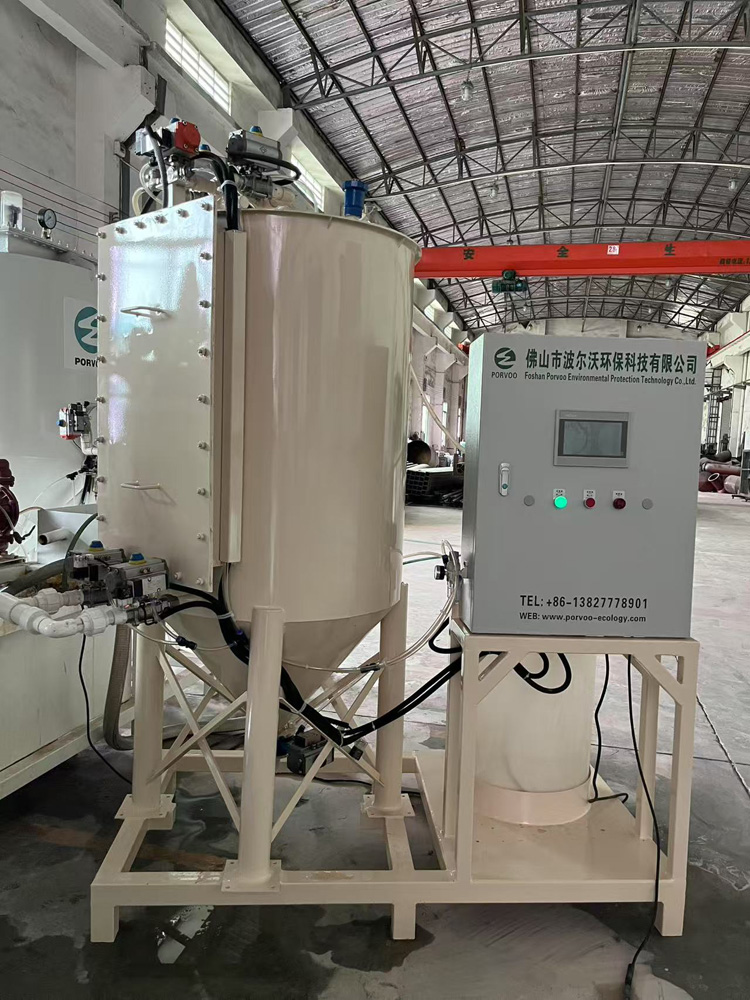
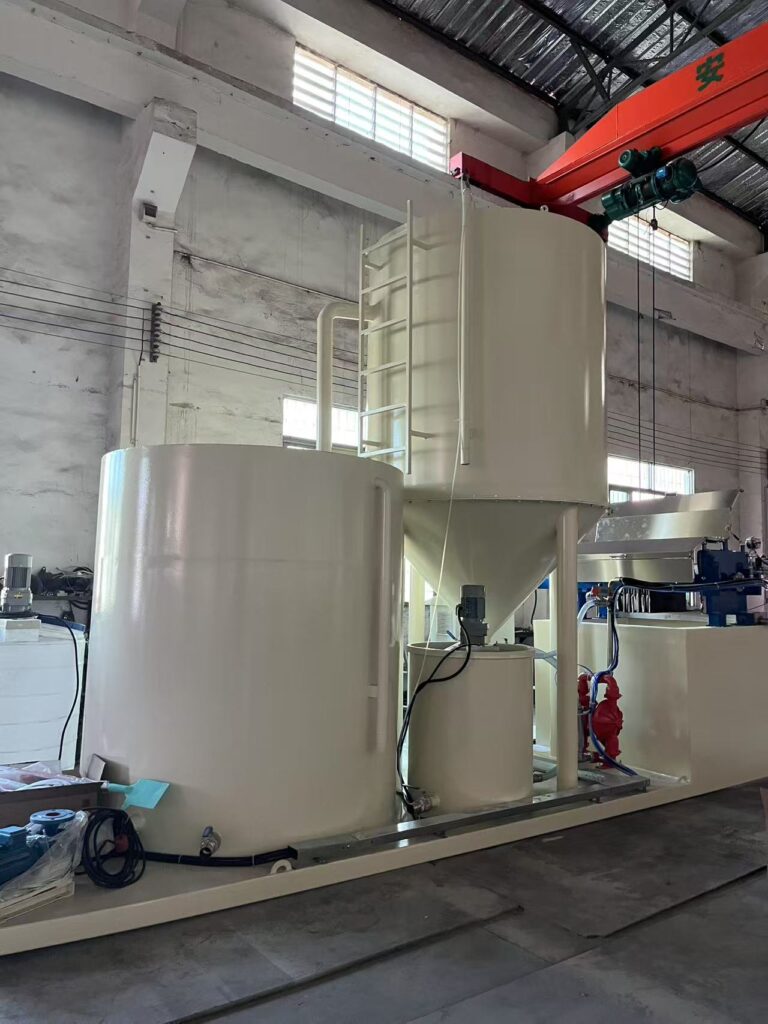
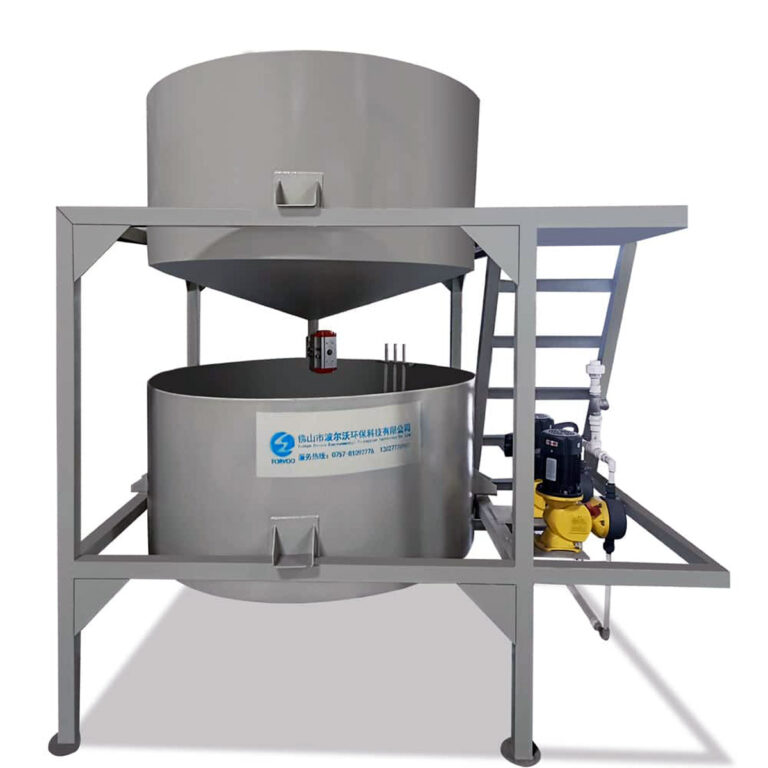
The implementation phase must prioritize staff training on the new chemical handling and control philosophy. Human error is a common point of failure. Establishing clear Key Performance Indicators (KPIs)—like treated water turbidity, sludge cake solids percentage, and water recovery rate—transforms the upgrade into a strategic optimization of the entire water management loop. For facilities considering this upgrade, evaluating a purpose-built automatic dosing system for ceramic wastewater is a logical next step to ensure precision and reliability.
The decision hinges on three priorities: consistent compliance with effluent targets, minimizing the lifetime cost of sludge management, and maximizing water recovery for operational resilience. Sequential PAC-PAM dosing addresses these systematically, moving from reactive treatment to predictive process control. Its higher initial cost is offset by operational savings and risk reduction, making it the definitive choice for facilities prioritizing long-term reliability.
Need professional guidance to optimize your ceramic wastewater treatment? The experts at PORVOO can help you design and implement a sequential dosing system tailored to your plant’s specific chemistry and operational goals.
Questions fréquemment posées
Q: How does sequential PAC-PAM dosing improve system stability compared to a single chemical?
A: Sequential dosing separates the coagulation and flocculation steps, allowing independent, precise control of each chemical based on real-time water quality. This multi-barrier approach prevents process upsets from variable influent, unlike a single-chemical system that forces a compromise. For plants with fluctuating wastewater chemistry, this operational resilience is critical to protect downstream filters and membranes from turbidity spikes.
Q: What are the key cost factors when comparing single-chemical and sequential dosing systems?
A: While sequential systems have higher initial capital costs for extra pumps and controls, they deliver lower total cost of ownership. They reduce sludge volume by 30-50%, cutting the major operational expense of disposal, and improve downstream equipment lifespan through superior effluent clarity. This means facilities focused on long-term operational savings and water reuse should model the total cost of ownership, not just upfront investment.
Q: Which treatment approach is more effective for high-alkalinity ceramic wastewater?
A: Sequential PAC-PAM dosing is superior for high-alkalinity streams. In these conditions, stable particle charges can resist a standalone flocculant like PAM, while using PAC alone creates excessive, weak sludge. The sequential method lets you optimize the polyaluminium chloride dose for charge neutralization first, then use PAM for effective bridging. If your plant deals with challenging water chemistry, this decoupled process is essential for reliable compliance and sludge minimization.
Q: What performance benchmarks justify switching to a PAC-PAM system?
A: The sequential method consistently achieves treated water turbidity below 1 NTU, a key threshold for protecting reuse or membrane systems, while also producing denser sludge that dewaters to a higher solids concentration. These improvements directly boost water recovery rates and lower disposal costs. Facilities with strict effluent clarity targets or high sludge hauling expenses will see a direct return on investment from these performance gains.
Q: How do relevant standards guide the selection of PAC and PAM for ceramic water treatment?
A: Coagulant selection should reference national standards for purity and performance. For PAC, key references include GB/T 22627-2022 for general water treatment and the stricter GB/T 15892-2020 for drinking water-grade product. For the flocculant, consult GB/T 14591-2016 for polyacrylamide (PAM) classifications. This means your procurement and quality checks should verify chemical compliance with these specifications to ensure predictable treatment results.
Q: What is the critical first step in a framework for optimizing treatment with sequential dosing?
A: A comprehensive wastewater characterization is the non-negotiable first step. You must establish a baseline for chemistry, turbidity, solids load, and their variability to inform effective jar testing and pilot studies. Skipping this leads to incorrect chemical selection and dosing. For any plant considering an upgrade, investing in detailed influent analysis upfront reduces implementation risk and ensures the designed system matches the actual processing challenge.
Q: When does operational complexity outweigh the benefits of a sequential dosing system?
A: The complexity is justified when influent quality is highly variable, effluent targets are stringent, or sludge disposal costs are significant. The system requires proper calibration, monitoring, and operator training to realize its stability benefits. If your facility lacks the operational maturity or resources for this control philosophy, a simpler system may be preferable, but you accept higher long-term operating costs and performance volatility.