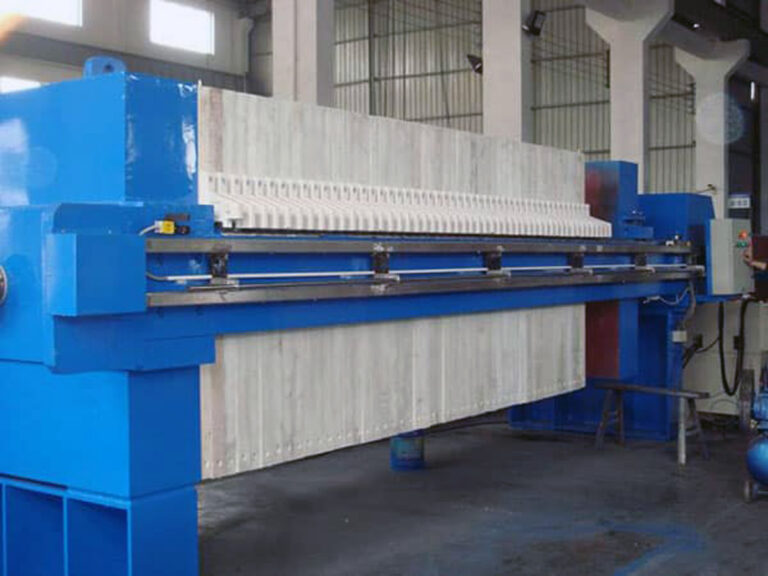
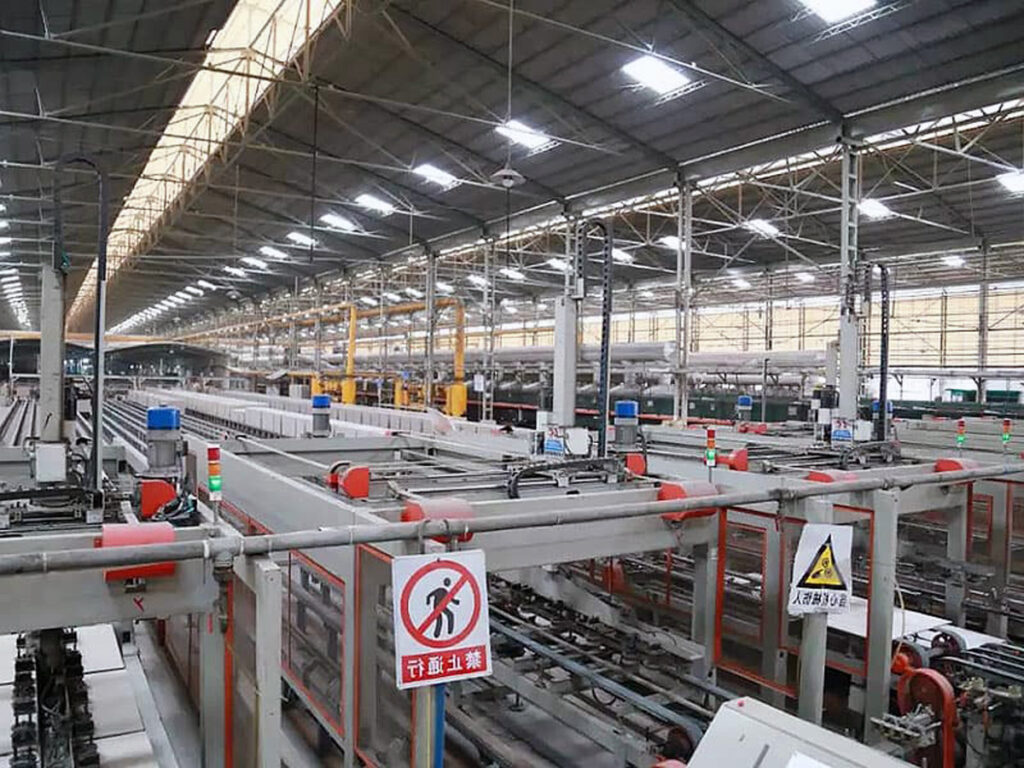
For high-volume industrial operations, the choice between manual and automatic filter press cake discharge is not a minor specification. It is a fundamental decision that dictates labor costs, operational reliability, and plant-wide efficiency. Many operations mistakenly view automation as a simple upgrade for speed, overlooking its primary role: guaranteeing discharge under variable, challenging conditions. This misalignment can lead to significant capital investment in systems that fail to solve the core problem of sticky cake adhesion.
The shift toward unattended, 24/7 operations and rising labor costs make this decision critical. Selecting the right discharge mechanism impacts total cost of ownership, downstream handling expenses, and the ability to scale. A system that fails under load doesn’t just slow production; it introduces unpredictable downtime and safety risks. Understanding the technical and economic trade-offs is essential for future-proofing your dewatering process.
Manual vs Automatic Discharge: Defining the Core Operational Difference
The Core Distinction: Operator Dependency
The fundamental difference lies in human intervention. Manual discharge requires personnel to physically open the press, remove plates, and scrape or knock off the filter cake. This creates a labor-intensive bottleneck, exposes workers to potential hazards, and introduces variability in cycle times. Automation aims to eliminate this dependency entirely, but not all automated systems are created equal. The core challenge, as industry experts note, is unreliable cake release from the filter cloth, especially with adhesive materials.
The Evolution to Guaranteed Discharge
Early automation, like plate vibrators or simple moving cloths, merely assisted gravity. They often failed when cake adhesion overcame the applied loosening force, negating the purpose of automation and requiring manual intervention anyway. This unreliability reset industry standards. The paradigm shift came with positive-contact systems, such as integrated cake scrapers, which mechanically separate the cake from the cloth. This evolution transfers liability for discharge failures from the operations team to the equipment design, enabling truly unattended cycles.
Impact on Operational Paradigm
This shift redefines what’s possible in a filtration plant. An operation is no longer constrained by crew size or shift schedules. We’ve observed that successful automation allows a single control system to manage the entire discharge sequence, integrating with plate shifting and cloth washing. This transforms the operator’s role from manual laborer to process overseer, monitoring performance data rather than performing repetitive physical tasks.
Cost Comparison: Capital Investment vs Long-Term Operational Expense
Comprendre le coût total de possession
The financial analysis must extend far beyond the initial purchase price. Manual systems present low capital expenditure but incur perpetually high, variable labor costs. Automatic systems require a significant upfront investment but convert labor into a predictable, minimal fixed cost. Justification demands a multi-year total cost of ownership (TCO) model that accounts for all operational variables.
The Labor and Downstream Cascade
Evidence from high-volume municipal plants shows that effective automation enables a small crew of 2-4 operators to manage an entire facility around the clock. The benefits cascade downstream. Crucially, automated systems are often paired with high-pressure membrane technology, which produces drier, more consistent cakes. This reduces mass, lowering transportation, landfill, and any subsequent thermal drying costs. The higher capital outlay is thus strategically offset by expanded process capability and compounded operational savings.
Evaluating the Financial Trade-Offs
The decision matrix balances immediate budget constraints against long-term financial health. A manual system may seem economical but locks in high recurring labor expenses and limits scalability. An automatic system represents a strategic capital investment that delivers predictable operating costs and often unlocks new efficiencies. The framework established in standards like ANSI/AWWA B130-2020 for evaluating reliability in water treatment provides a basis for modeling these long-term operational costs against capital investment.
| Élément de coût | Manual Discharge System | Automatic Discharge System |
|---|---|---|
| Investissement en capital | Faible | Haut |
| Coût du travail | High, variable | Low, fixed |
| Crew Size (24/7 plant) | Larger crew | 2-4 operators |
| Économies en aval | Minime | Reduced transport & landfill costs |
| Coût total de possession | High over time | Moins à long terme |
Source : ANSI/AWWA B130-2020 Filtres-presses pour le traitement de l'eau. This standard establishes requirements for filter press reliability and performance in municipal applications, providing a framework for evaluating the long-term operational cost and reliability claims of automated systems versus manual operations.
Performance & Capacity: Throughput and Reliability in High-Volume Use
Reliability Defines True Throughput
In high-volume contexts, performance is measured by sustained, reliable throughput, not peak discharge speed. Systems like vibratory shakers may offer fast cycle times but fail catastrophically with sticky materials, leading to incomplete discharge, manual clean-up, and extended downtime. This unreliability cripples effective capacity. True throughput is achieved through uninterrupted, sequential cycles where each step, including discharge, is guaranteed.
The Enabling Role of High Pressure
The shift to 30-bar (450 psi) membrane squeeze technology is a key enabler for reliable automated discharge. This high pressure produces a drier, more friable cake that inherently has lower adhesion to the cloth. It creates a material condition that allows mechanical discharge systems to function with minimal force and wear. The combination of high-pressure dewatering and positive discharge mechanisms is what makes high-volume, unattended operation technically feasible.
Analyzing Cycle Time Impact
A common concern is that mechanical scrapers add time to the cycle. While integrated scraper systems may add 10-12 seconds to the plate-shift phase, this is a minimal trade-off. Within typical 3-5 hour municipal sludge filtration cycles, this addition is negligible—often less than a 1% increase in total cycle time. The guarantee of complete discharge far outweighs this minor time cost, as a single failed discharge can waste hours of production.
| Type de système | Discharge Reliability | Impact sur le temps de cycle | Key Enabling Technology |
|---|---|---|---|
| Vibratory / Assisted Gravity | Unreliable (sticky cakes) | Fast discharge | Plate vibrators, moving cloths |
| Integrated Scraper System | Guaranteed discharge | +10-12 seconds per cycle | Positive-contact mechanical scrapers |
| High-Pressure Membrane Press | High (drier, friable cake) | Typical 3-5 hour cycles | 30-bar (450 psi) squeeze pressure |
Source : JB/T 4333.4-2021 Technical conditions for automatic plate and frame filter presses. This standard directly governs the performance and testing of automated mechanisms in filter presses, including discharge reliability and cycle integration, which are critical for assessing true throughput in high-volume use.
Which System Is Better for Sticky or Adhesive Filter Cakes?
The Inadequacy of Non-Contact Methods
For challenging, adhesive sludges, gravity and vibratory systems are fundamentally inadequate. When cake adhesion to the cloth exceeds the loosening force provided by vibration or cloth movement, the cake remains stuck. Even complex moving cloth designs can fail if the adhesive bond isn’t broken. This makes partial automation risky; a system that works 80% of the time still requires 100% operator oversight, negating its value.
The Mechanics of Positive Removal
The integrated cake scraper system is engineered specifically for this challenge. It employs a precise two-stage process. First, a cloth spreader separates the filter cloth from the plate surface, breaking the initial vacuum seal. Second, scraper blades made from materials like UHMWPE (Ultra-High-Molecular-Weight Polyethylene) perform a controlled shearing motion against the cloth, mechanically detaching the adhered material. This positive action guarantees complete discharge, which is the non-negotiable requirement for unattended operation.
Balancing Effectiveness and Cloth Life
A valid concern is that scraping will accelerate cloth wear. Counterintuitively, with compatible soft scraper materials and proper system design, cloth longevity of 1.5 to 3 years or more is achievable. The key is the shearing action and material compatibility, which remove cake without abrading the cloth fibers. Furthermore, the GB/T 10894-2022 standard for separated plate filter presses provides the foundational technical requirements for the equipment platform, ensuring compatibility between the mechanical action and the filter cloth integrity. Regular automated cloth washing also maintains cloth permeability, further extending life. This makes consumable costs predictable and manageable.
| Discharge Mechanism | Effectiveness on Sticky Cakes | Action clé | Cloth Longevity Impact |
|---|---|---|---|
| Gravity / Vibrators | Fails (adhesion overcomes force) | Loosening force only | Standard wear |
| Moving Cloth Designs | Fails (adhesion remains) | Cloth movement | Potential for increased wear |
| Integrated Cake Scraper | Guaranteed removal | Two-stage shearing motion | 1.5 – 3+ years achievable |
Remarque : Scraper system uses UHMWPE blades and a cloth spreader.
Source : GB/T 10894-2022 Separated plate filter presses. This standard specifies technical requirements for the core filter press equipment, including the mechanical platform and cloth compatibility, which are foundational for evaluating the durability and effectiveness of integrated scraper systems on challenging materials.
Implementation & Integration: Space, Maintenance, and Staffing Impact
Spatial and Structural Requirements
Implementing an automatic discharge system affects the entire facility layout. A positive scraper system requires integration into a press structure robust enough to withstand high squeeze pressures, often exceeding 30 bar. Space must be allocated for the scraper carriage travel, typically on an overhead beam running the length of the press. This contrasts with a manual system, which only requires clearance for operator access. The integration principles mirror those in standards like ISO 12176-4:2023 for ancillary equipment, emphasizing safe, coordinated operation within a larger system.
Shifting Maintenance Regimes
Maintenance evolves from frequent, reactive manual cleaning to scheduled, preventive checks of mechanical and electrical components. Instead of dealing with cake buildup, technicians inspect limit switches, encoders, drive mechanisms, and scraper blade wear. This scheduled maintenance is more predictable and less disruptive than the urgent clean-outs required after a failed discharge. The system’s reliability is directly tied to the rigor of this maintenance schedule.
Transforming the Workforce Role
The most significant impact is on staffing. Labor is reallocated from repetitive, physically demanding, and potentially hazardous discharge tasks to higher-value roles involving plant oversight, data monitoring, and quality control. This transformation improves safety and job satisfaction. It also unlocks operational possibilities, allowing deployment in remote, harsh, or hazardous environments where consistent operator presence is impractical or unsafe.
| Aspect | Manual System | Automatic Scraper System |
|---|---|---|
| Besoin d'espace | Minimal for press only | Overhead beam for carriage |
| Primary Maintenance | Frequent manual cleaning | Scheduled mechanical checks |
| Staffing Role | Repetitive, hazardous tasks | Plant oversight & monitoring |
| Structural Need | Standard press frame | Robust, high-pressure capable |
| Deployment Flexibility | Limited to manned sites | Suitable for remote/harsh sites |
Source : ISO 12176-4:2023 Plastics pipes and fittings — Fusion equipment — Part 4: Ancillary equipment. The principles in this standard for automated control system integration, safety, and performance validation of industrial ancillary machinery are directly relevant to the implementation of automated discharge systems within a larger plant workflow and control architecture.
Key Decision Criteria for Selecting Your Discharge System
Primary Criterion: Cake Characteristics
The selection process must start with a rigorous analysis of the material. Is the sludge consistently friable, or is it variable and adhesive? Pilot testing under realistic conditions is non-negotiable. Adhesive or highly variable sludges demand a positive removal system; assuming a vibratory system will suffice based on average behavior invites failure. The cake’s physical properties dictate the necessary discharge force and mechanism.
Secondary Criteria: Throughput and Integration
Required plant throughput dictates the tolerance for cycle time extensions. High-frequency applications must account for the added time of a scraper cycle. Furthermore, the discharge system cannot be evaluated in isolation. Downstream handling—conveyors, hoppers, or trucks—must be compatible with the cake format and discharge timing. The entire cake handling path must be designed as a cohesive system.
The Vendor Evaluation: Total System Capability
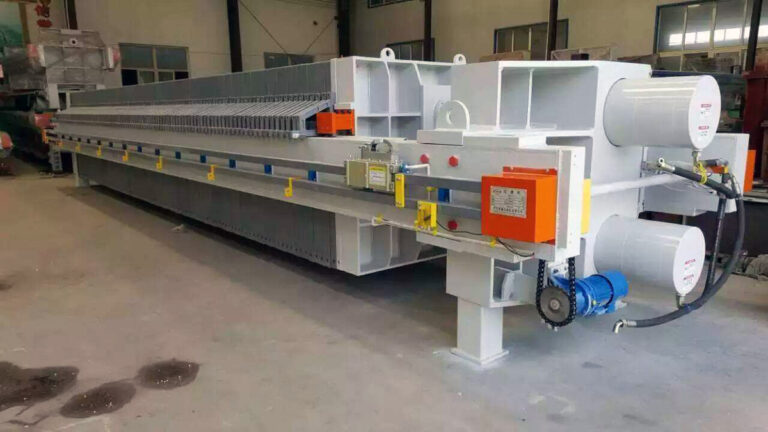
Vendors must be evaluated on their total system integration capability, not just component specifications. The discharge mechanism must be seamlessly linked with plate shifting, feeding, and cloth washing via a central PLC with a coherent control philosophy. The best systems provide a unified, intelligent operation where each phase is optimized in relation to the others. This holistic approach to a système de filtre-presse à plaques encastrées is what separates adequate suppliers from strategic partners.
Future-Proofing Your Operation: Automation and Industry Trends
The Baseline: Guaranteed Unattended Operation
The clear industry trend is establishing guaranteed unattended operation as the baseline for new installations, moving beyond partial or assisted automation. This makes integrated, high-pressure scraper systems a strategic default choice for capacity expansion or new plants. Investing in technology that still requires an operator on standby does not future-proof an operation; it merely postpones the inevitable upgrade.
Beyond Discharge: The Intelligent Dewatering Cycle
As basic automation becomes standard, competitive advantage will shift to vendors who optimize the entire dewatering cycle as a unified, intelligent system. This includes advanced process monitoring, data analytics for predictive maintenance, and adaptive control algorithms that adjust parameters based on feed stock variation. The discharge system becomes one integrated component of a smart, data-driven asset.
Evaluating Niche Alternatives
Niche solutions like vertical tower presses guarantee discharge via moving filter belts, eliminating the cake adhesion problem entirely. However, they trade off high capital cost, mechanical complexity, and limited filter area for that single benefit. For scaling high-volume operations, this trade-off often makes them less flexible and more expensive than a well-engineered, high-reliability recessed plate press with an integrated scraper. The strategic path focuses on adaptable, high-reliability technology that minimizes operational variability and total lifecycle cost.
The core decision pivots on material characteristics and total cost of ownership. For adhesive cakes, positive mechanical discharge is non-negotiable. The financial analysis must model labor, downtime risk, and downstream savings over a 5-10 year horizon, not just initial purchase price. Implementation success depends on treating the discharge system as an integrated component within a larger automated process, requiring vendor expertise in total system control.
Need professional guidance to specify a discharge system for your specific sludge profile and operational goals? The engineering team at PORVOO can help you model the trade-offs and design a filtration plant built for reliability and low lifetime cost. For a detailed discussion of your application, you can also Nous contacter.
Questions fréquemment posées
Q: How do you guarantee reliable cake discharge for sticky, adhesive sludges in an automated filter press?
A: Only a positive-contact mechanical system, like an integrated scraper, guarantees discharge for adhesive materials. It uses a two-stage process where a spreader separates the cloth, followed by UHMWPE blades shearing the cake from the plate surface. This engineered approach ensures complete removal for unattended cycles. This means facilities processing variable or sticky industrial waste must prioritize scraper-based automation over assisted-gravity systems to eliminate discharge failures.
Q: What are the key standards for specifying and validating an automated plate and frame filter press?
A: The design and performance of the automated mechanisms are directly governed by standards like JB/T 4333.4-2021, which sets technical conditions for automatic plate shifting and discharge systems. For municipal water applications, ANSI/AWWA B130-2020 provides critical reliability and testing requirements. If your project is in a regulated sector, you should mandate vendor compliance with these specific standards during the procurement phase.
Q: How does a 30-bar membrane squeeze pressure impact the choice of discharge system?
A: Operating at 30 bar (450 psi) produces a drier, more friable filter cake that inherently releases more easily from the cloth. This physical change enables positive scraper systems to function with minimal wear and maintenance. The higher pressure is a key enabler for reliable, unattended automation. For projects aiming to minimize downstream disposal costs, you should evaluate high-pressure membrane technology and scraper discharge as an integrated system.
Q: What is the real throughput trade-off between a fast vibratory system and a slower integrated scraper?
A: While a simple vibrator may have a faster nominal discharge time, its unreliability with challenging cakes causes failed cycles and downtime, crippling effective capacity. An integrated scraper adds only 10-12 seconds per plate shift but guarantees discharge, ensuring sustained, sequential cycles. This means for high-volume operations with typical 3-5 hour cycles, you should prioritize guaranteed reliability over peak speed to maximize overall plant throughput.
Q: How do staffing requirements change when implementing a fully automated, high-pressure filter press system?
A: Automation fundamentally transforms labor from repetitive, hazardous manual cake removal to broader plant oversight and monitoring. Evidence shows a small crew of 2-4 operators can manage an entire automated plant running 24/7. This reallocation also enables deployment in remote or harsh environments. If you are justifying capital expenditure, model the shift from variable labor costs to a fixed, minimal staffing overhead.
Q: What should we look for in a vendor beyond component specs for an automated discharge system?
A: Evaluate vendors on their total system integration capability, not just individual component specifications. The critical factor is their ability to seamlessly link the discharge mechanism with plate shifting, feeding, and cloth washing through a centralized PLC. This holistic control is essential for unattended operation. For future-proofing, you should select partners who optimize the entire dewatering cycle as a unified, intelligent system.
Q: How does the ISO 12176-4 standard relate to filter press automation?
A: While ISO 12176-4:2023 primarily governs fusion equipment for plastics piping, its principles for automated control systems, safety, and performance validation of ancillary machinery are highly relevant. It provides a framework for designing and integrating automated discharge systems as part of a larger industrial equipment suite. When specifying automation, you can reference such standards to ensure robust control system design and validation practices.