For ceramic plant managers and environmental engineers, selecting the right polyacrylamide (PAM) flocculant is a critical operational decision. The choice between anionic and cationic polymers directly impacts water clarity, sludge volume, and total treatment cost. A common misconception is that one type is universally superior, leading to suboptimal performance and wasted chemical spend.
The composition of ceramic wastewater—clays, silicates, glazes, and pigments—varies significantly between facilities. This variability demands a contaminant-specific selection strategy. Getting the polymer chemistry wrong can mean slow settling, poor dewatering, and increased disposal expenses. A methodical, data-driven approach is essential for maximizing return on investment and ensuring regulatory compliance.
Anionic vs Cationic PAM: Core Differences for Ceramic Wastewater
Defining the Interaction Mechanisms
The fundamental distinction lies in their charge-based interaction with suspended solids. Anionic PAM (APAM) carries a negative charge and operates primarily through bridging flocculation. Its very long molecular chains adsorb onto particle surfaces, pulling destabilized solids into large, fast-settling aggregates. Cationic PAM (CPAM) carries a positive charge and employs both charge neutralization and bridging. It directly attracts and neutralizes the negative surface charge common to clays and silicates.
Molecular Weight as a Performance Lever
Molecular weight is an independent variable that controls floc size and strength. For bridging flocculation with APAM, very high molecular weight (15-20+ million Daltons) is typically required to form the long chains necessary for effective particle capture. CPAM is available in a broader range, from medium to very high molecular weight, with its charge density acting as a second, critical performance lever. This two-dimensional selection matrix moves procurement beyond a simple binary choice.
Matching Polymer to Contaminant Profile
Selection is inherently contaminant-specific. A detailed wastewater characterization is the first non-negotiable step. The polymer’s ionic charge must match the dominant suspended solids’ surface properties, measured by zeta potential, for optimal efficiency. Industry experts recommend testing both types against your specific effluent, as generalizations can be misleading.
Cost & ROI: Anionic vs Cationic PAM Performance Comparison
Analyzing Total System Cost
A true cost analysis extends far beyond polymer price per kilogram. The optimal choice minimizes total system cost, which includes downstream impacts on sludge volume, disposal fees, water recovery rates, and ancillary chemical use. A cheaper polymer that produces wetter sludge or requires a pre-coagulant may have a higher total lifecycle cost than a more expensive, efficient standalone option.
Operational Complexity and Overhead
System design significantly influences cost. A dual-chemical system using an inorganic coagulant with a very high MW anionic PAM may offer a lower combined chemical cost but requires more complex dosing infrastructure and control. A standalone high-charge cationic PAM can simplify operations but often carries a higher unit cost. The trade-off between chemical expense and operational simplicity must be evaluated.
Quantifying the Real ROI Drivers
The highest return on investment is achieved by selecting the polymer that delivers the best settled water clarity and driest sludge cake. This directly reduces costs associated with water reuse (less post-treatment) and waste handling (lower volume and weight for disposal). We compared numerous installations and found that focusing on these output metrics, rather than input chemical cost, consistently yields superior financial outcomes.
| Facteur de coût | Anionic PAM System | Cationic PAM System |
|---|---|---|
| Polymer Unit Cost | Plus bas | Plus élevé |
| Complexité du système | Higher (often dual-chemical) | Lower (often standalone) |
| Key ROI Driver | Lower combined chemical cost | Simplified dosing infrastructure |
| Total Cost Focus | Water clarity & sludge volume | Sludge cake dryness & disposal |
Remarque : Highest ROI achieved by optimizing for total lifecycle costs (water reuse, waste handling).
Source : Documentation technique et spécifications industrielles.
Which Performs Better for Clarification & Settling?
The Case for Dual-Chemical Systems
For thick, high-solid slurries like raw clay slip wastewater, a dual-chemical regimen is often non-optional. A cationic coagulant like polyaluminum chloride (PAC) first neutralizes particle charges. A subsequent very high MW anionic PAM then builds large, shear-resistant flocs ideal for rapid settlement in ponds or clarifiers. This approach is highly effective but adds process steps.
Standalone Cationic Flocculation
For many general ceramic process streams, a high molecular weight cationic PAM used as a primary flocculant can be equally effective and more operationally simple. Its performance is highly dependent on system pH. Acidic conditions (pH<6) act as a critical catalyst, dramatically enhancing its charge-neutralizing power and floc formation rate. This pH dependency is an easily overlooked operational detail.
Validating Performance for Your Effluent
Both pathways can achieve clarity, but their efficacy is stream-dependent. Jar testing is the definitive method to compare settling speed, supernatant clarity, and floc robustness for your specific wastewater. According to research from application engineers, the optimal regimen often depends on the balance between colloidal content and larger particulate matter.
| Scénario d'application | Recommended Polymer Type | Key Performance Catalyst |
|---|---|---|
| Thick, high-solid slurries | PAC + Very High MW Anionic | Dual-chemical regimen |
| General ceramic streams | High MW Cationic | System pH < 6 |
| Rapid settlement in ponds | Very High MW Anionic | Large, shear-resistant flocs |
Source : HG/T 5568-2019 Water treatment chemicals Polyacrylamide. This industry standard provides specifications for PAM products, including the molecular weight and performance characteristics critical for effective clarification and settling in industrial applications.
Which Is Superior for Sludge Dewatering & Thickening?
Mechanical Dewatering Demands
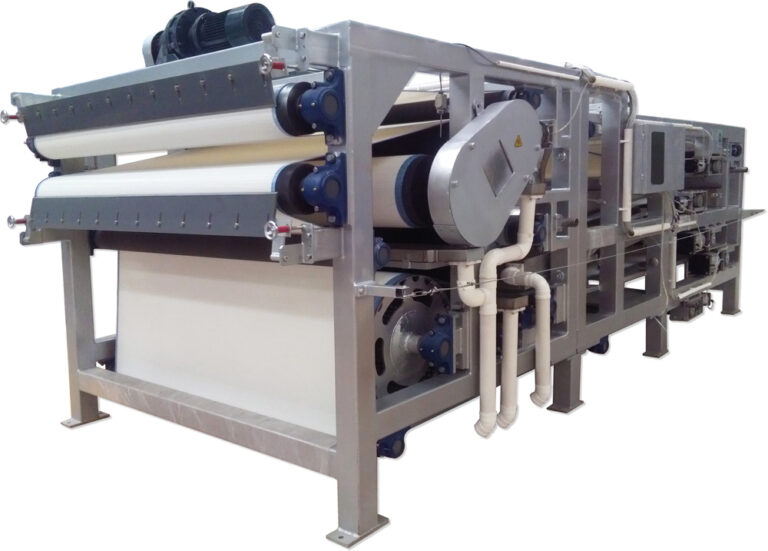
For processes like belt filter presses or centrifuges, cationic PAM is typically the superior choice. High to very high molecular weight CPAM produces dense, cohesive flocs that effectively release bound water under mechanical pressure and shear. This yields a drier cake, directly reducing sludge volume and disposal costs. Specialized “Very High Molecular Weight Cationic” products are engineered specifically to withstand these high-shear environments.
Gravity Thickening Objectives
For gravity thickening, the goal is rapid solids compaction and clear overflow. Here, very high MW anionic PAM often excels by maximizing bridging flocculation to create large, fast-settling aggregates. The strategic implication is clear: polymer selection must align with the specific solid-liquid separation unit process following the flocculation stage.
The Impact on Disposal Logistics
The choice directly impacts downstream logistics. A drier sludge cake from optimal cationic PAM use reduces hauling frequency, lowers transportation costs, and can open opportunities for alternative disposal or reuse. Investing in a premium, purpose-engineered polymer for dewatering often pays for itself through these tangible savings, a point frequently validated in full-scale operations.
| Process | Superior Polymer Type | Critical Polymer Property |
|---|---|---|
| Mechanical Dewatering (e.g., press) | PAM cationique | Very High Molecular Weight |
| Gravity Thickening | PAM anionique | Very High Molecular Weight |
| Primary Performance Goal | Drier sludge cake | Rapid solids compaction |
Source : GB/T 31246-2014 Water treatment chemicals Polyacrylamide. The standard governs the quality and technical requirements of PAM, ensuring products like very high MW cationic PAM meet the performance needs for demanding applications like sludge dewatering.
Key Selection Factors: pH, Dosage, and Mixing Energy
The Critical Role of System pH
pH is not just a measurement; it’s a performance lever. Cationic PAM charge activity is often maximized in acidic to neutral conditions (pH < 6). Anionic PAM generally favors neutral to alkaline ranges. Adjusting pH, even slightly, can dramatically improve flocculation efficiency and reduce required polymer dosage. This parameter is not intrinsic to the polymer but is activated by correct process control.
Optimizing Dosage for Efficiency
Dosage must be optimized, not minimized. The goal is the lowest dose that achieves target clarity and dewatering. Over-dosing can re-stabilize particles through charge reversal, waste chemicals, and increase sludge volume. Under-dosing fails to achieve clarity. The optimal point is narrow and must be found empirically for each wastewater-polymer combination.
Managing Mixing Energy
The mixing sequence dictates floc formation. Rapid, high-energy mixing is required for initial polymer dispersion and contact. This must be followed immediately by gentle, low-shear agitation to grow flocs without breaking them apart. Inadequate initial mixing leads to poor performance; excessive secondary mixing shears flocs, resulting in pin-floc and turbid supernatant.
| Operational Lever | Cationic PAM Optimal Range | Anionic PAM Optimal Range |
|---|---|---|
| pH du système | Acidic to neutral (pH < 6) | Neutral to alkaline |
| Dosage Principle | Optimized, not minimized | Optimized, not minimized |
| Mixing Sequence | Rapid dispersion, then gentle | Rapid dispersion, then gentle |
Source : Documentation technique et spécifications industrielles.
Optimizing PAM for Specific Ceramic Waste Streams
Stream-Specific Tailoring
Ceramic wastewater is not monolithic. Glaze lines produce metallic oxides and colorants. Clay preparation creates high-load silicate suspensions. Spray booth water contains fine particulates. A single polymer is unlikely to optimize all streams. A tailored strategy, potentially using different polymers for different waste streams, is required for maximum efficiency and cost-effectiveness.
Addressing Colloids and Color
For colloidal clays and silicates, very high MW anionic PAMs are a strong starting point for testing. For effluents containing negatively charged colloidal colorants from pigments or glazes, cationic PAM may be more effective at precipitation and removal. The surface charge of the target contaminant dictates the initial polymer charge selection.
The Formulation Logistics
The physical form of the polymer—powder, emulsion, or solid block—impacts handling, storage, and preparation logistics. For sites without sophisticated mixing and aging systems, solid “Flocc Blocks” or easy-disperse emulsions can offer a practical advantage, reducing operator burden and ensuring consistent solution preparation. This logistical factor is often as important as the chemical specification.
Step-by-Step Jar Testing & Process Validation Protocol
Foundational Characterization
Begin with comprehensive wastewater analysis. Measure pH, total suspended solids (TSS), and, if possible, zeta potential. This data informs the initial polymer selection, indicating whether the solids carry a strong negative charge (favoring CPAM) or are near-neutral (possibly favoring APAM with a coagulant).
Systematic Parameter Optimization
Use a methodical jar test procedure. Test both anionic (very high MW) and cationic (high MW, various charge densities) polymers, with and without a coagulant like PAC. Systematically vary pH, coagulant dose, polymer dose, and mixing intensity. The goal is to identify the regimen that yields fast-forming, strong flocs, clear supernatant, and compact sludge.
Performance Measurement and Scale-Up
Evaluate results quantitatively. Measure settlement rates, supernatant turbidity, and sludge volume. For dewatering assessment, measure capillary suction time (CST) or simulate cake solids. The best-performing lab regimen must then be validated at pilot or full scale, as shear conditions and retention times differ. This process underscores that supplier value lies in application engineering support to navigate this complex matrix.
| Étape | Action clé | Measurable Output |
|---|---|---|
| 1. Characterize | Analyze pH, zeta potential | Suspended solids data |
| 2. Select Candidates | Test APAM & CPAM +/- PAC | Candidate shortlist |
| 3. Optimize Parameters | Jar test pH, dose, mixing | Fast-forming, strong flocs |
| 4. Evaluate Performance | Measure settlement rate | Supernatant turbidity |
| 5. Valider | Scale-up best regimen | Pilot/full-scale confirmation |
Source : GB/T 13940-2018 Polyacrylamide for industrial use. This general standard for industrial PAM underpins the need for methodical testing and validation to ensure product performance, as outlined in the protocol steps.
Final Decision Framework: Selecting Your Optimal PAM
Define the Primary Process Goal
First, clarify the objective: is it primarily clarification for water reuse, or sludge dewatering for disposal? For clarification, test dual systems (PAC + high MW APAM) versus standalone high MW CPAM. For mechanical dewatering, prioritize high-charge, very high MW CPAM from the outset. This initial decision narrows the field significantly.
Audit Operational Constraints
Objectively assess site capabilities. Can you reliably adjust and control pH? Do you have the infrastructure for precise dual-chemical dosing? What is the skill level of operations staff? The most technically effective polymer is useless if it cannot be implemented reliably within your plant’s operational framework. The polymer’s physical form must match your preparation capabilities.
Future-Proof Your Selection
Anticipate regulatory and operational trends. Source polymers with certified low residual acrylamide monomer content (≤0.05%) to comply with evolving safety standards like GB/T 17514-2017. Consider suppliers who offer technical support and can assist with ongoing optimization, not just a one-time sale. The right partner helps adapt to changing wastewater characteristics or production volumes.
The decision hinges on aligning polymer chemistry with contaminant profile, separation process, and operational reality. Prioritize jar testing to generate site-specific data over generic recommendations. Evaluate total lifecycle cost, not unit price. Finally, ensure your selected regimen is robust, operator-friendly, and scalable.
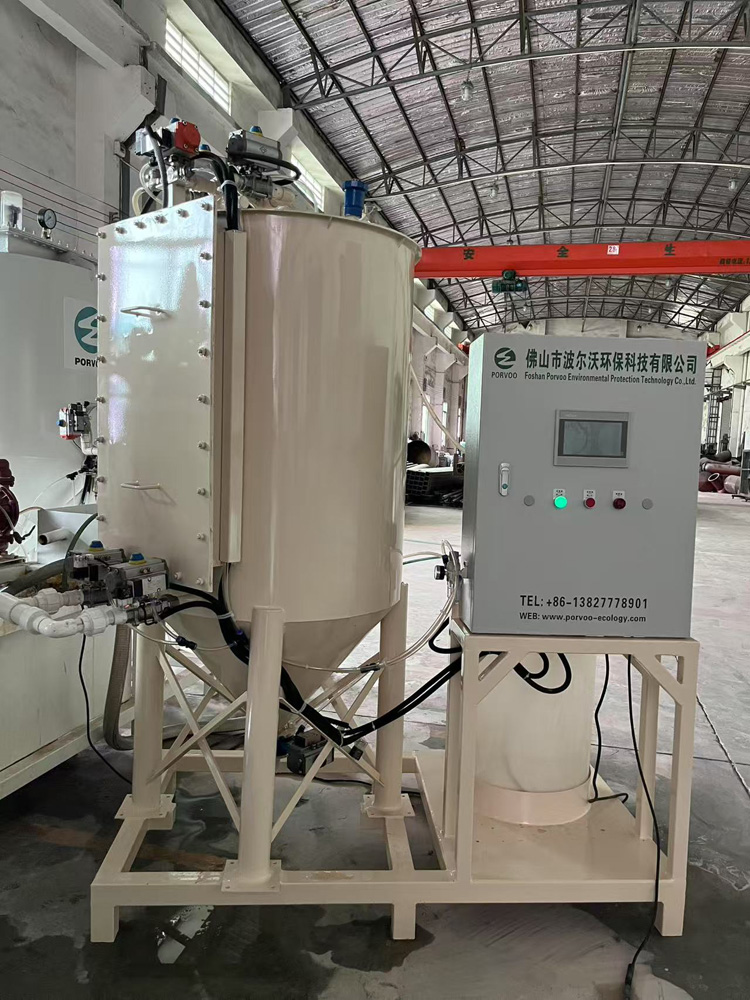
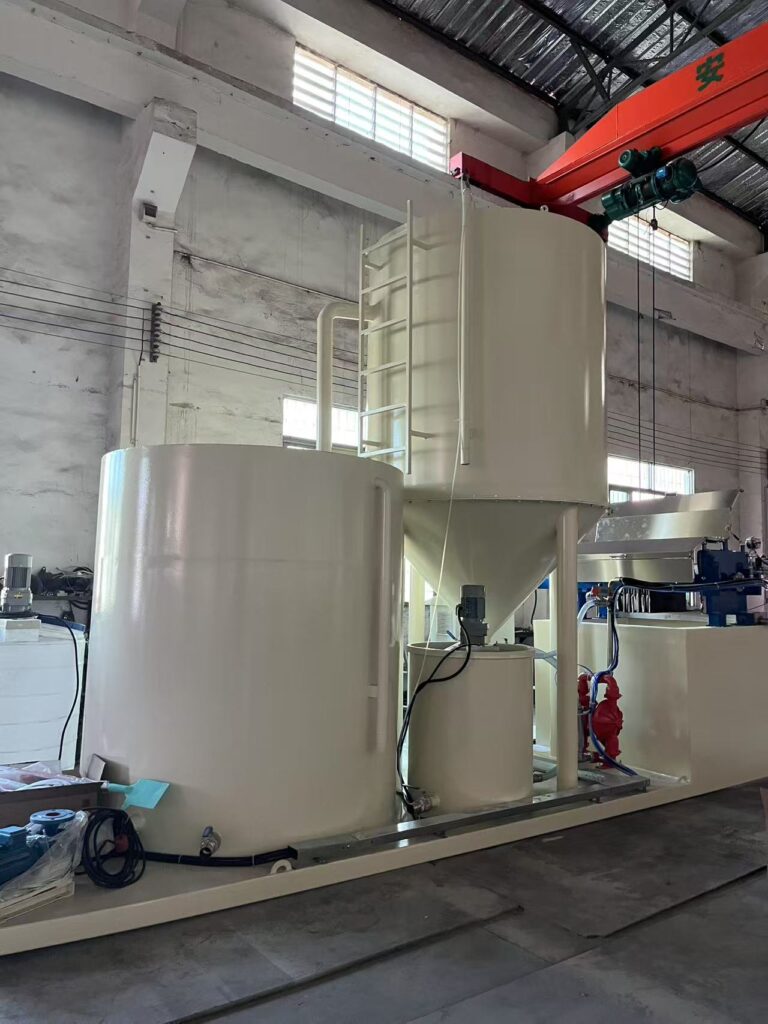
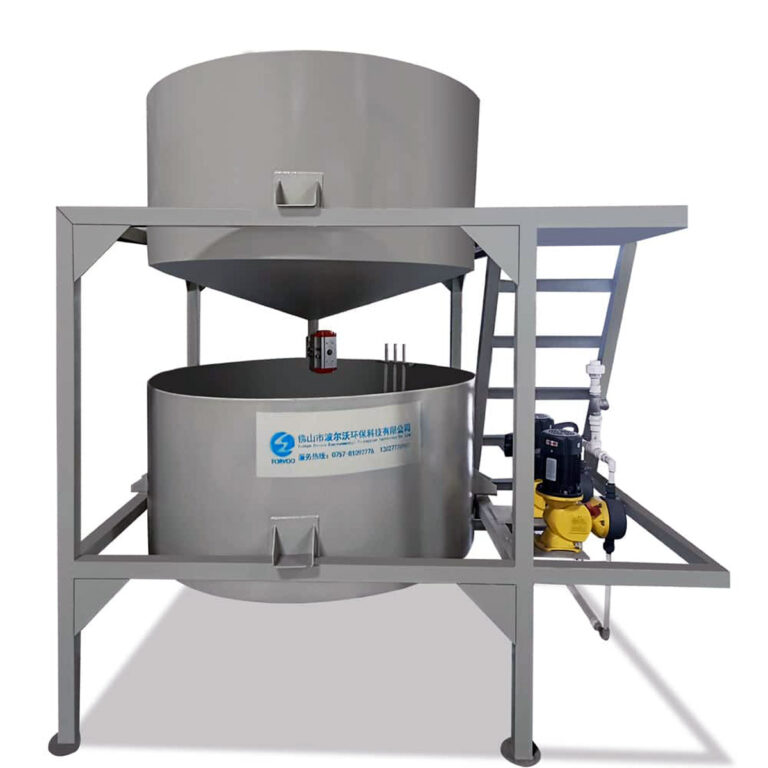
Need professional guidance to implement this framework for your ceramic wastewater? The engineers at PORVOO specialize in designing optimized chemical treatment programs, including tailored automatic dosing systems for PAM and PAC that ensure consistent performance and cost control. Contact us to discuss your specific stream challenges and treatment goals.
Questions fréquemment posées
Q: How do you determine whether to use anionic or cationic PAM for ceramic wastewater clarification?
A: The choice depends on your wastewater’s specific contaminant profile and the required process simplicity. For high-solid slurries like clay slip, a dual system with a cationic coagulant followed by a very high molecular weight anionic PAM often yields the strongest flocs. For other streams, a high molecular weight cationic PAM alone can be effective, especially under acidic conditions which boost its charge-neutralizing power. This means facilities with complex, variable waste streams must conduct jar testing to compare both approaches for their specific effluent.
Q: Which PAM type delivers better performance for mechanical sludge dewatering in ceramic plants?
A: Cationic PAM is typically superior for mechanical dewatering processes like belt filter presses. High to very high molecular weight cationic products create dense, cohesive flocs that effectively release water under pressure, resulting in a drier sludge cake and lower disposal volume. For gravity thickening, however, very high MW anionic PAM often performs better. If your operation’s primary cost driver is sludge disposal, you should prioritize investing in purpose-engineered, high-grade cationic PAM for your dewatering equipment.
Q: What are the key operational factors that influence PAM performance after selection?
A: Three critical levers control performance: system pH, polymer dosage, and mixing energy. Cationic PAM works best in acidic to neutral conditions, while anionic PAM favors neutral to alkaline ranges. Dosage must be precisely optimized to avoid re-stabilizing particles, and mixing must transition from rapid dispersion to gentle floc growth. These parameters are not fixed but require activation through correct process control as outlined in polymer application standards like GB/T 17514-2017. This implies that successful implementation demands on-site tuning, not just correct product selection.
Q: How should we structure jar testing to validate the best PAM for our specific waste stream?
A: Follow a methodical protocol: first characterize your wastewater’s pH and solids, then test both anionic (very high MW) and cationic polymers with varying charge densities, with and without a coagulant like PAC. Systematically optimize for pH, dose, and mixing sequence to achieve fast-forming, strong flocs and clear supernatant. Performance should be measured by settlement rate and supernatant turbidity. This process underscores that you should select suppliers based on their application engineering support to navigate this complex testing matrix effectively.
Q: What compliance factors should we consider when sourcing PAM for industrial wastewater treatment?
A: Beyond performance, ensure the polymer meets relevant national standards for quality and safety. Key specifications are defined in standards such as GB/T 31246-2014 for water treatment chemicals and HG/T 5568-2019 for polyacrylamide. Critically, source products with certified low residual acrylamide monomer content (≤0.05%) to anticipate stricter environmental regulations. This means your procurement criteria must include technical data sheets verifying compliance with these standards to future-proof your operation.
Q: When is a dual-chemical system necessary versus a single-polymer approach?
A: A dual system using an inorganic coagulant (e.g., PAC) with an anionic PAM is often non-optional for treating thick, high-solid slurries like clay slip wastewater, where it builds large, shear-resistant flocs. For many other ceramic streams, a single, high molecular weight cationic PAM can provide sufficient clarification with simpler operation. Your decision should start by defining the primary process goal: if achieving maximum clarification of challenging slurries is critical, plan for the infrastructure and control needed for a dual-chemical regimen.