Dans le traitement de la pierre, le principal goulot d'étranglement opérationnel est souvent la gestion de l'eau. La boue fine générée par la coupe et le polissage de la pierre d'ingénierie, du granit et du marbre contient de la silice colloïdale et des poussières qui résistent à la décantation par gravité. Il en résulte des silos pleins, des arrêts de production et des coûts d'élimination croissants. On pense souvent à tort qu'un silo constitue à lui seul une solution de traitement ; il s'agit simplement d'un récipient de stockage. Sans un système de dosage chimique correctement conçu, la sédimentation est inefficace, les taux de réutilisation de l'eau chutent et l'ensemble du processus de gestion des eaux usées devient un centre de coûts récurrents.
L'attention portée au dosage intégré des produits chimiques est aujourd'hui essentielle en raison des réglementations de plus en plus strictes sur l'élimination des poussières de silice et des boues. Atteindre une recirculation de l'eau >95% n'est plus seulement un objectif environnemental, mais un impératif financier qui a un impact direct sur les coûts d'outillage et la continuité de la production. L'intégration stratégique des coagulants et des floculants transforme les eaux usées d'un passif en un actif récupérable, mais seulement si le système est conçu pour la précision, la durabilité et l'automatisation.
Composants clés d'un système de dosage de produits chimiques pour les silos en pierre
Le cœur de la station
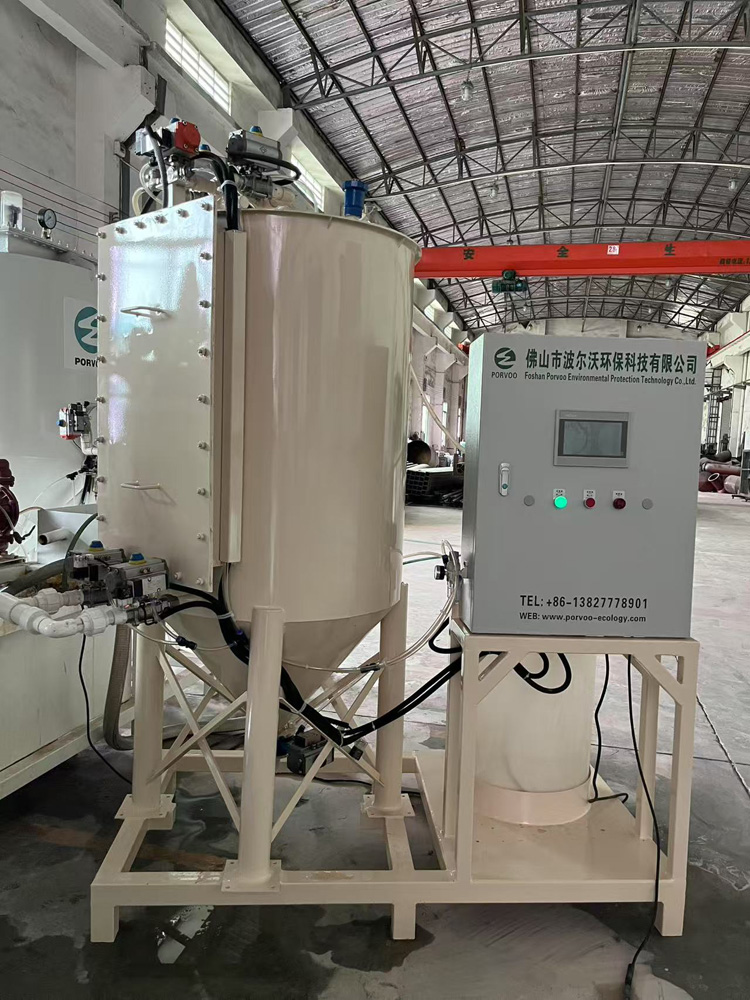
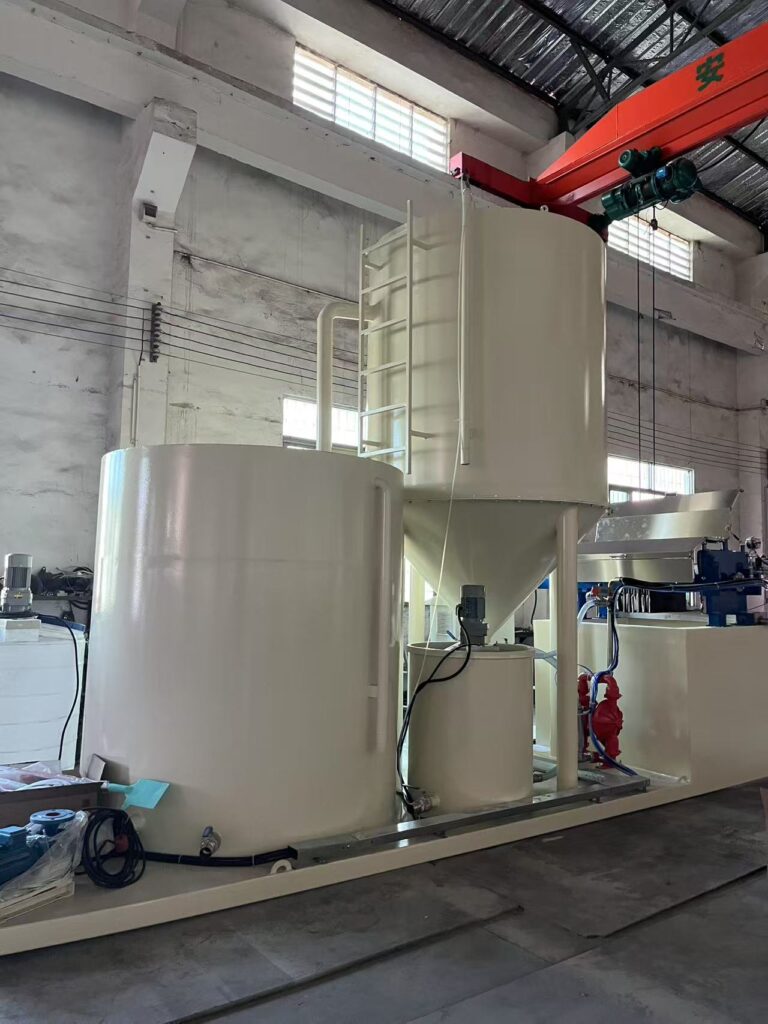
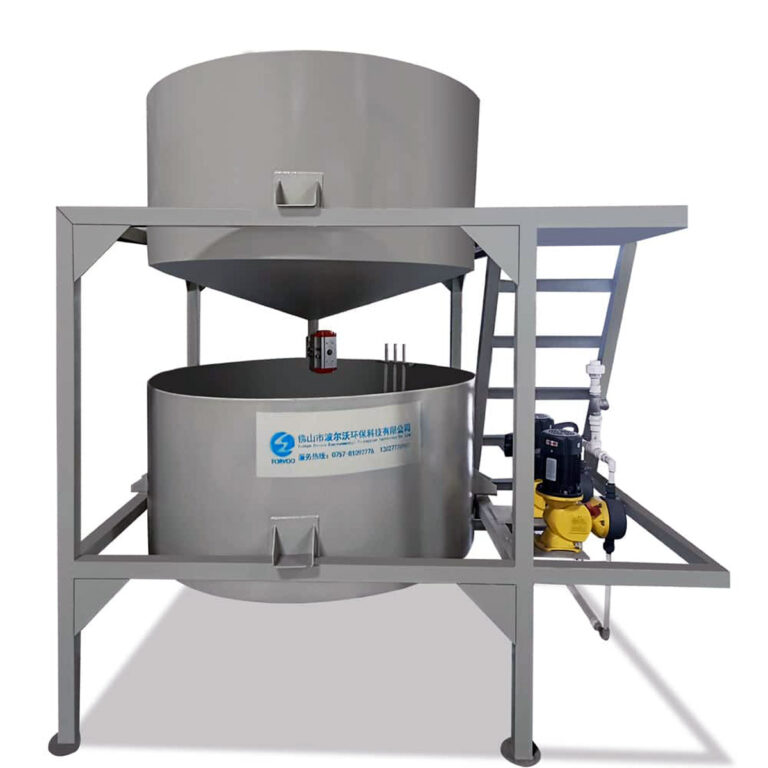
Un système de dosage de produits chimiques est un ensemble conçu pour la précision et la fiabilité. Son cœur est la station de dosage, qui abrite l'équipement de préparation et d'injection. Elle comprend un réservoir gradué avec un agitateur mécanique, essentiel pour une bonne dissolution des polymères dans l'eau douce - une étape souvent négligée qui dicte l'efficacité finale. Le cœur du système est la pompe doseuse de précision, généralement à membrane ou électromagnétique, qui dose la solution chimique dans le flux d'eaux usées. Cette pompe est complétée par des solutions de stockage dédiées : une trémie pour le floculant sec et des conteneurs pour le coagulant liquide.
L'intégration et l'impératif d'agitation
Pour une intégration efficace, ces composants doivent être injectés dans le tuyau d'élévation de l'eau sale ou dans une chambre de mélange dédiée en amont du silo, en veillant à ce que le temps de contact soit suffisant. D'après nos évaluations sur le terrain, il est essentiel de constater que ce système chimique est inefficace sans agitation mécanique complémentaire de la boue. Les mélangeurs de fosse, qu'ils soient mécaniques ou hydrauliques, sont donc un élément essentiel, et non un accessoire. Ils maintiennent les solides en suspension pour une réaction chimique uniforme et empêchent la sédimentation qui dégrade les performances globales du système et la densité des boues.
Considérations relatives au matériel et au contrôle
La longévité des composants dépend de la compatibilité des matériaux. Les surfaces en contact permanent avec des produits chimiques concentrés doivent être fabriquées dans des matériaux résistants à la corrosion, comme l'acier inoxydable (AISI 304 ou 316) pour les châssis et les pompes, et des plastiques spécialisés à parois lisses pour les réservoirs et les tuyauteries. L'intégration du contrôle est également essentielle ; le système de dosage doit être relié au contrôleur principal de l'usine, ce qui permet d'ajuster les débits de dose en fonction des données de flux en temps réel, et de passer d'un point de consigne fixe à un processus réactif.
Coagulant vs. floculant : Fonctions et séquence de dosage
Définir les différents rôles
La coagulation et la floculation sont des processus séquentiels et non interchangeables. Les coagulants, généralement des solutions à base de polyamine, sont d'abord dosés pour neutraliser les charges électriques négatives des particules colloïdales telles que la silice fine. Cette déstabilisation permet aux microparticules de former des microflocs. Des floculants, des polyélectrolytes à longue chaîne, sont ensuite ajoutés pour relier ces micro-flocs en macro-flocs larges et denses qui se déposent rapidement. L'utilisation des deux agents permet de capturer une gamme plus large de tailles de particules, ce qui donne des boues plus denses et une eau plus claire que les approches monochimiques.
La séquence non négociable
La séquence de dosage est essentielle. L'inversion de l'ordre - en ajoutant d'abord le floculant - échoue parce que les particules chargées repoussent les chaînes de polymères, empêchant un pontage efficace. Le coagulant doit toujours préparer la boue pour le floculant. Cette action séquentielle n'est pas négociable pour atteindre les objectifs de clarté de l'eau et les taux de décantation, en particulier pour les matériaux synthétiques tels que la pierre artificielle. La conception du système doit intégrer des points de dosage distincts et contrôlés avec précision pour chaque type de produit chimique afin de tirer parti de cette synergie.
Valider le processus à l'aide de données
La distinction fonctionnelle et l'ordre requis sont mieux illustrés par un cadre comparatif.
Coagulant vs. floculant : Fonctions et séquence de dosage
| Fonction | Type de produit chimique | Ordre de dosage |
|---|---|---|
| Neutralisation des charges | Coagulant à base de polyamine | Première |
| Formation de micro-flocs | Coagulant | Première |
| Pontage de particules | Floculant polyélectrolyte | Deuxième |
| Formation de macro-flocs | Floculant | Deuxième |
| Capture de particules à grande échelle | Les deux agents | Séquentiel |
Source : Documentation technique et spécifications industrielles.
Ce tableau clarifie la stratégie chimique par étapes. Dans la pratique, nous avons observé que les ateliers qui tentent d'utiliser uniquement un floculant ont une consommation de produits chimiques plus élevée, une clarté plus faible et un volume de boues plus important, ce qui a un impact direct sur leurs coûts de traitement des déchets.
Stations de dosage semi-automatiques ou entièrement automatiques
Définition de l'intensité opérationnelle
Le choix entre les stations semi-automatiques et les stations entièrement automatiques définit l'intensité opérationnelle quotidienne et la structure des coûts à long terme. Les stations semi-automatiques se composent d'un réservoir de préparation, d'un mélangeur et d'une pompe doseuse. Elles exigent que les opérateurs préparent manuellement les lots de produits chimiques, contrôlent les niveaux et lancent les cycles de dosage. Bien que leur coût d'investissement initial soit inférieur, elles entraînent des coûts de main-d'œuvre variables plus élevés et comportent le risque d'un dosage incohérent en raison d'une erreur humaine ou d'un retard dans la préparation des lots.
L'avantage de l'automatisation
Les stations entièrement automatiques sont dotées de deux réservoirs de préparation et d'un système d'alimentation en polymère automatisé via un système de vis sans fin. Un réservoir prépare une solution fraîche tandis que l'autre alimente activement la pompe, assurant ainsi un fonctionnement continu et ininterrompu. Cela élimine les interventions manuelles pour les mélanges par lots. Le principal moteur du retour sur investissement opérationnel est cette automatisation, qui réduit la main-d'œuvre jusqu'à 90% et minimise les temps d'arrêt de la production causés par les vérifications du système ou les retards dans la préparation des lots.
Cadre de décision financière
La comparaison financière révèle la réorientation de l'investissement stratégique des dépenses en capital vers l'efficacité opérationnelle.
Stations de dosage semi-automatiques ou entièrement automatiques
| Fonctionnalité | Station semi-automatique | Station entièrement automatique |
|---|---|---|
| Coût initial | Plus bas | Plus élevé |
| Besoin en main-d'œuvre | Haut | Réduction jusqu'à 90% |
| Mode de fonctionnement | Préparation manuelle des lots | Continu, à deux réservoirs |
| Cohérence chimique | Risque d'incohérence | Ininterrompu, précis |
| Principal facteur de retour sur investissement | Économies de coûts de capital | Efficacité opérationnelle et temps de fonctionnement |
Source : Documentation technique et spécifications industrielles.
Pour les installations fonctionnant en plusieurs équipes, le retour sur investissement d'une station entièrement automatique est souvent réalisé dans les 12 à 18 mois, rien que par les économies de main-d'œuvre et la prévention des arrêts de production. La décision va au-delà de la conformité pour atteindre une prévisibilité significative des coûts opérationnels.
Intégration du système avec les silos et les clarificateurs
Intégration des systèmes hydrauliques et de contrôle
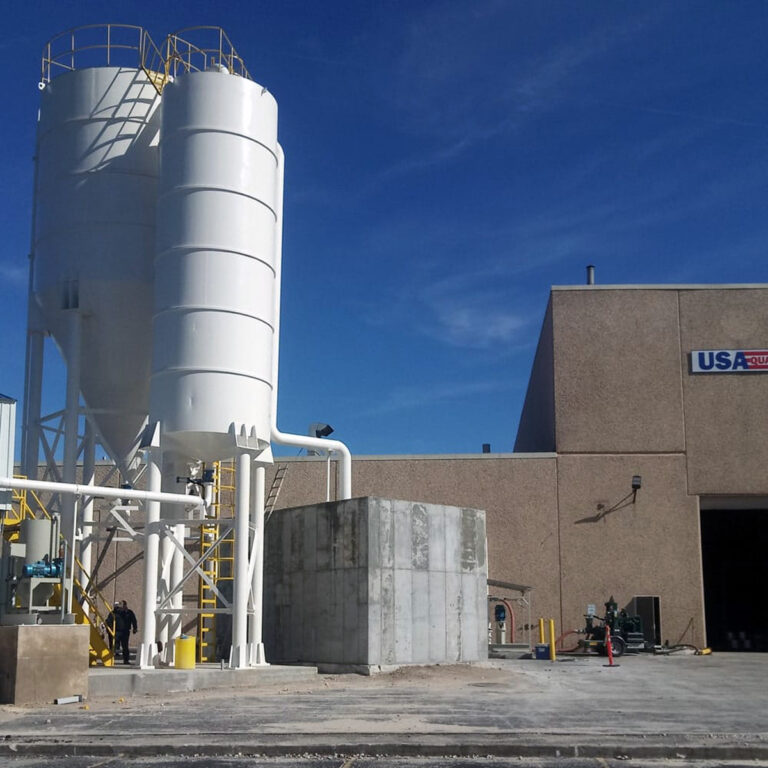
Une intégration efficace garantit que les processus chimiques et mécaniques fonctionnent comme une chaîne de traitement unifiée. L'injecteur du système de dosage doit être placé de manière à favoriser un mélange turbulent dans la conduite d'eaux usées avant l'entrée dans le silo ou le clarificateur, afin d'assurer une dispersion adéquate. La logique de contrôle doit être reliée au contrôleur principal de la station ou au débitmètre, ce qui permet d'ajuster les débits de dosage de manière proportionnelle. Le silo lui-même doit être dimensionné pour un temps de rétention adéquat - typiquement 45-60 minutes - et présenter un fond conique profond pour faciliter la collecte des boues.
Considérations relatives à la conception axée sur la sécurité
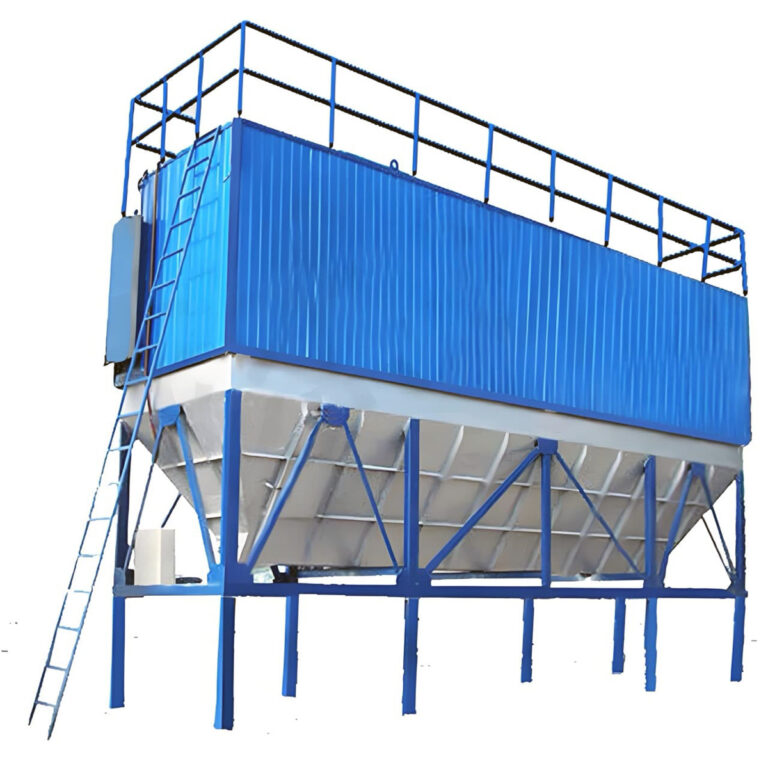
Le fait que ces silos soient des espaces confinés reconnus par l'OSHA est un élément essentiel qui influe sur la conception. Cette classification impose des protocoles de sécurité stricts pour l'entrée, l'inspection et le nettoyage manuel. Cela influence stratégiquement les choix de conception vers des vannes automatisées de purge des boues et des plates-formes d'accès externes avec des échelles fixes et des garde-corps. Minimiser le besoin d'une entrée manuelle dangereuse n'est pas seulement un avantage sur le plan de la sécurité ; cela réduit les temps d'arrêt des procédures et la responsabilité. Une bonne intégration comprend la spécification d'équipements tels que vannes de purge de silo automatisées qui permettent de gérer les boues à distance.
Boucles de rétroaction des performances
L'intégration avancée incorpore des mécanismes de retour d'information. Bien que cela ne soit pas toujours nécessaire au départ, la spécification de la tuyauterie et des connexions compatibles avec les futurs capteurs en ligne, régis par des normes telles que ISO 15839:2003 pour les analyseurs de qualité de l'eau, crée une voie de contrôle en boucle fermée. Cela permet au système d'ajuster le dosage des produits chimiques en fonction de la turbidité ou du pH en temps réel, optimisant ainsi la consommation et la cohérence.
Sélection des produits chimiques et test des bocaux pour des résultats optimaux
Le processus de sélection basé sur les données
La sélection des produits chimiques n'est pas une décision unique ; il s'agit d'un processus fondé sur des données spécifiques au flux d'eaux usées de chaque atelier. Les formules optimales de floculant et de coagulant - qui varient en termes de charge ionique, de poids moléculaire et de structure des polymères - doivent être déterminées par des essais en bocal sur l'eau de traitement réelle. Ce test en laboratoire permet d'identifier le dosage précis, la séquence et l'énergie de mélange nécessaires pour le mélange de pierres traité, qu'il s'agisse de granit, de quartz ou de marbre.
Atténuer les risques liés à la chaîne d'approvisionnement
La pureté des produits chimiques est un facteur de risque parallèle. L'utilisation de produits chimiques dilués ou “coupés” peut entraîner un sous-dosage, des performances médiocres, voire des dommages à long terme sur les joints de la pompe et les pièces en contact avec le liquide en raison de charges ou de contaminants inconnus. Le contrôle des fournisseurs et la validation des fiches de données de sécurité (FDS) constituent une stratégie d'approvisionnement nécessaire. L'approvisionnement en produits chimiques passe ainsi d'une simple décision fondée sur les coûts à un effort d'atténuation des risques techniques visant à protéger les biens d'équipement et à garantir la stabilité des processus.
Du test à la mise en œuvre
L'essai en bocal fournit les données de base, mais l'étalonnage sur le terrain est essentiel. La dose optimale identifiée en laboratoire doit être affinée lors de la mise en service du système, en tenant compte de la dynamique du mélange à l'échelle réelle et des variations de débit. La mise en place d'un protocole régulier de test des pots - tous les trimestres ou lorsque les mélanges de pierres changent - garantit que le programme chimique reste optimisé au fur et à mesure de l'évolution des matières premières.
Compatibilité des matériaux et longévité du système
Le mandat de résistance à la corrosion
La compatibilité des matériaux est primordiale pour la durabilité du système et la prévention des défaillances catastrophiques et coûteuses. Les composants en contact permanent avec des coagulants liquides concentrés ou des solutions de polymères préparées sont soumis à des contraintes chimiques constantes. La construction de ces pièces en contact avec le liquide à partir de matériaux non réactifs est une exigence fondamentale de la conception. Cela inclut l'acier inoxydable (AISI 304 ou 316) pour les têtes de pompe, les corps de vanne et les cadres structurels.
Plastiques et intégrité de l'installation
Pour les réservoirs, la tuyauterie et les raccords, les plastiques spécialisés à parois lisses comme le PEHD ou le PP sont standard. Leur nature non réactive empêche la dégradation et permet un nettoyage facile. L'intégrité de l'installation de ces systèmes en plastique est critique et régie par des normes telles que ISO 12176-1:2017 pour la fusion bout à bout et ISO 12176-2:2008 pour l'assemblage par électrofusion. Ces normes garantissent des joints étanches et fiables qui contiennent des produits chimiques et empêchent les infiltrations dans l'environnement ou la défaillance du système.
Un cadre de spécification
La sélection des matériaux appropriés doit suivre un cadre défini pour garantir la longévité.
Compatibilité des matériaux et longévité du système
| Composant | Matériau recommandé | Propriété principale |
|---|---|---|
| Cadres et pompes | Acier inoxydable (AISI 304/316) | Résistant à la corrosion |
| Réservoirs et tuyauteries | Plastiques spécialisés à parois lisses | Non réactif, facile à nettoyer |
| Surfaces de contact | Matériaux résistants à la corrosion | Prévient la dégradation |
| Orientation de la conception du système | Compatibilité des matériaux | Stabilité opérationnelle à long terme |
Source : ISO 12176-1:2017 Tuyaux et raccords en matières plastiques - Équipement pour l'assemblage par fusion des systèmes en polyéthylène - Partie 1 : Assemblage par fusion bout à bout. Cette norme garantit une installation fiable et sans fuite des systèmes de tuyauterie en PE, qui sont essentiels pour le transport en toute sécurité des produits chimiques et des eaux usées dans les systèmes de dosage, en favorisant directement la longévité et le confinement. La norme ISO 12176-2:2008 fournit des exigences complémentaires pour l'assemblage par électrofusion.
Cet objectif soutient directement la stabilité opérationnelle à long terme promise par les systèmes automatisés, en protégeant l'investissement en capital et en maintenant l'approvisionnement constant en eau de l'atelier, essentiel à la continuité de la production.
Coûts opérationnels et analyse du retour sur investissement des performances
Modélisation de l'ensemble du spectre du retour sur investissement
La justification d'un système de dosage de produits chimiques nécessite une analyse du retour sur investissement qui va au-delà des simples économies sur la facture d'eau. Les principaux facteurs financiers sont la réduction de la main-d'œuvre et le temps de production, car l'automatisation réduit les tâches manuelles quotidiennes. Les gains de performance apportent une valeur ajoutée : une clarification plus rapide augmente le débit du système, des boues plus denses réduisent les coûts de déshydratation et d'élimination, et une eau recirculée plus claire prolonge la durée de vie des outils diamantés en réduisant la teneur en particules abrasives.
Transformer l'eau en atout
Le modèle financier est fondamentalement recadré par la réutilisation de l'eau à haut rendement. Le passage à la recirculation 95%+ transforme la gestion de l'eau d'un coût utilitaire consommable en un actif capitalisé. Le retour sur investissement doit donc être modélisé sur la base de l'amortissement à long terme de l'infrastructure, et pas seulement sur la base des économies annuelles. Ce modèle doit également tenir compte de la valeur de la prévisibilité opérationnelle et de l'assurance de la conformité à l'évolution des réglementations concernant la silice en suspension dans l'air et l'élimination des boues, qui représentent d'importants risques de responsabilité à l'avenir.
Quantifier les facteurs de valeur
Une analyse complète permet de décomposer les facteurs contributifs afin d'élaborer un dossier convaincant.
Coûts opérationnels et analyse du retour sur investissement des performances
| Facteur de retour sur investissement | Bénéfice principal | Impact financier |
|---|---|---|
| Réduction de la main-d'œuvre | L'automatisation réduit les tâches manuelles | Des économies importantes |
| Temps de production | Élimination des temps d'arrêt pour les contrôles | Augmentation des recettes liées au débit |
| Densité des boues | Réduction des coûts de déshydratation et d'élimination | Réduction des coûts de traitement des déchets |
| Clarté de l'eau | Prolonge la durée de vie de l'outil | Réduction du coût des consommables |
| Réutilisation de l'eau | >95% taux de recyclage | Transformation du coût en actif |
Source : Documentation technique et spécifications industrielles.
Dans nos évaluations, l'impact combiné de la réduction des coûts d'élimination et de la prolongation de la durée de vie de l'outillage dépasse souvent les économies réalisées grâce à la réduction de la consommation d'eau, ce qui en fait un élément essentiel de la proposition de valeur totale.
La mise en œuvre de votre système : Un guide étape par étape
Phase 1 : Évaluation et conception
La mise en œuvre commence par un test de jarre sur l'eau de traitement actuelle pour définir les besoins en produits chimiques et le dosage optimal. Ensuite, il faut choisir une architecture de système. Il s'agit d'une bifurcation stratégique : une solution propriétaire entièrement intégrée offre un fonctionnement transparent et une responsabilité unique, tandis qu'une approche modulaire peut offrir une certaine souplesse pour la mise à niveau des systèmes existants. La conception doit garantir un emplacement adéquat de la station de dosage à proximité de la pompe de relevage et du stockage des produits chimiques, avec des points d'intégration définis pour les signaux de mélange et de contrôle.
Phase 2 : Installation et mise en service
L'installation comprend la mise en place de tous les composants mécaniques : la station de dosage, le stockage des produits chimiques et les mélangeurs en fosse pour l'homogénéisation essentielle de la boue. La mise en service est la phase critique pour atteindre les performances prévues. Elle consiste à étalonner les pompes de dosage en fonction des résultats des tests sur les bocaux, à régler les minuteries des vannes de purge sur le silo en fonction des taux d'accumulation de boue observés et à programmer le contrôleur du système pour les séquences automatisées. Cette phase nécessite une étroite collaboration entre les opérateurs de l'installation et le fournisseur du système.
Phase 3 : Optimisation et utilisation des données
La dernière phase, en cours, exploite les données du système pour une amélioration continue. Les contrôleurs modernes fournissent des données sur la consommation de produits chimiques, les durées de cycle et les journaux d'erreurs. Ces données opérationnelles deviennent un atout stratégique, permettant d'analyser les tendances, d'optimiser l'utilisation des produits chimiques et d'évoluer vers une maintenance prédictive. L'établissement d'indicateurs clés de performance (ICP) pour la clarté de l'eau, la densité des boues et le coût par gallon traité transforme le système d'assainissement d'un service public à boîte noire en un processus géré et porteur de valeur.
Les points de décision essentiels sont l'engagement en faveur de l'automatisation par rapport aux opérations manuelles et la sélection d'un système intégré par rapport à des composants modulaires. Il faut donner la priorité à la compatibilité des matériaux et à la sécurité dès la conception pour s'assurer que la solution offre une stabilité opérationnelle à long terme, et pas seulement une conformité immédiate. La séquence d'essais en bocal, l'intégration précise et la mise en service guidée par les données ne sont pas négociables pour atteindre le retour sur investissement promis.
Vous avez besoin de conseils professionnels pour concevoir un système de dosage de produits chimiques qui corresponde à vos objectifs de production et à vos exigences en matière de sécurité ? L'équipe d'ingénieurs de PORVOO est spécialisée dans les solutions de traitement des eaux usées clés en main qui intègrent le dosage des produits chimiques, la gestion des silos et l'automatisation des contrôles. Nous pouvons vous aider à modéliser le retour sur investissement spécifique à votre installation. Pour une consultation détaillée, Nous contacter.
Questions fréquemment posées
Q : Comment déterminer le floculant et le coagulant adéquats pour une boue de pierre spécifique ?
R : Vous devez effectuer des essais en bocal sur votre eau de traitement réelle pour identifier le type de polymère, la charge ionique et le poids moléculaire optimaux. Ce processus basé sur les données définit le dosage précis et la séquence pour votre mélange de pierres spécifique. Pour les projets où la constance de la qualité de l'eau est essentielle, prévoyez d'intégrer des capteurs en ligne qui répondent à des spécifications de performance telles que celles figurant dans le document ISO 15839:2003 afin de fournir un retour d'information pour le contrôle automatisé du dosage.
Q : Quelles sont les principales exigences en matière de compatibilité des matériaux pour un système de dosage durable ?
R : Les composants en contact permanent avec des produits chimiques doivent être fabriqués dans des matériaux résistants à la corrosion, comme l'acier inoxydable (AISI 304 ou 316) pour les châssis et les pompes, et les plastiques à parois lisses pour les réservoirs et les tuyauteries. Cela permet d'éviter la dégradation et de garantir un nettoyage facile pour des performances à long terme. Cela signifie que les installations manipulant des produits chimiques agressifs doivent donner la priorité aux spécifications des matériaux plutôt qu'au coût initial afin de protéger leur investissement et d'assurer la continuité de leur fonctionnement.
Q : Quand faut-il choisir une station de dosage entièrement automatique plutôt qu'une station semi-automatique ?
R : Choisissez une station entièrement automatique avec deux cuves et une alimentation automatisée en polymères lorsque votre priorité est de maximiser le temps de production et de réduire les coûts de main-d'œuvre. Ce système élimine la préparation manuelle des lots, réduisant la main d'œuvre de 90% et évitant les temps d'arrêt. Si votre activité exige une qualité d'eau constante et des coûts d'exploitation prévisibles, l'investissement initial plus élevé dans l'automatisation se traduit par un retour sur investissement plus important à long terme.
Q : Quel est l'impact de l'intégration des systèmes sur la sécurité des silos à eaux usées en pierre ?
R : Une intégration efficace doit tenir compte du fait que ces silos sont des espaces confinés reconnus par l'OSHA. Les choix de conception doivent donc inclure des vannes automatisées de purge des boues et des plates-formes d'accès sûres pour minimiser la nécessité d'une entrée et d'un nettoyage manuels dangereux. Cela signifie que votre plan de mise en œuvre doit stratégiquement donner la priorité aux contrôles techniques qui réduisent les risques de sécurité procédurale pour le personnel de maintenance.
Q : Quelles sont les normes qui garantissent la fiabilité des canalisations pour le transport des produits chimiques et des eaux usées dans ces systèmes ?
R : Pour les réseaux de tuyauterie en polyéthylène (PE), une installation fiable est obtenue en suivant les normes d'équipement pour les joints de fusion. Utiliser ISO 12176-1:2017 pour la fusion bout à bout et ISO 12176-2:2008 pour les équipements d'assemblage par électrofusion. Cela garantit un confinement sans fuite des produits chimiques et des eaux usées. Vous devez donc vérifier que les procédures de votre installateur sont conformes à ces spécifications afin d'éviter les défaillances.
Q : Pourquoi l'agitation des boues est-elle considérée comme un élément essentiel, et non comme un accessoire, du dosage des produits chimiques ?
R : Les agitateurs de fosse sont essentiels car ils maintiennent les solides en suspension, ce qui permet une réaction chimique uniforme et empêche la sédimentation qui dégrade les performances du traitement. Sans une agitation efficace, même un système chimique dosé avec précision échouera. Cela signifie que votre conception doit intégrer des agitateurs mécaniques ou hydrauliques en tant qu'élément fondamental, et non en tant que complément optionnel, pour atteindre les objectifs de clarté de l'eau et les taux de décantation.
Q : Comment calculer le retour sur investissement d'un système de dosage de produits chimiques au-delà des économies d'eau ?
R : Modéliser le retour sur investissement de la réduction de la main d'œuvre grâce à l'automatisation, à l'augmentation du temps de production et à la réduction des coûts d'élimination des boues grâce à des flocs plus denses. En outre, la réutilisation de l'eau à 95%+ transforme la gestion de l'eau en un bien d'équipement amorti au fil du temps. Pour les opérations confrontées à l'évolution des réglementations sur la silice, vous devez également prendre en compte la valeur de l'assurance de la conformité et de la prévisibilité opérationnelle dans votre analyse financière.