Determining the optimal Poly Aluminum Chloride (PAC) dosage for ceramic tile glazing wastewater is a critical operational decision. The high concentration of fine suspended solids, including clays, pigments, and glaze frits, creates a complex treatment challenge. An incorrect dosage leads directly to compliance failures, increased sludge handling costs, or system overloads that can halt production.
This precision is more urgent than ever. Stricter discharge regulations and the push for water recycling demand a data-driven approach. Finding the economic optimum between chemical cost and treatment efficiency is no longer optional; it’s a core component of sustainable, competitive manufacturing. This analysis moves beyond generic guidelines to a plant-specific framework.
Key Factors Determining Optimal PAC Dosage for Glazing Wastewater
Defining the Coagulation Challenge
The primary goal is destabilizing colloidal particles so they aggregate and settle. The key variable is influent Total Suspended Solids (TSS) concentration, which dictates base coagulant demand. However, particle size distribution and surface charge (zeta potential) are equally critical. Fine zircon or tin oxide opacifiers behave differently than coarser clay particles. The ionic strength and pH of the water also alter PAC’s hydrolysis and effectiveness.
The Multi-Variable Optimization Problem
Achieving the lowest effluent turbidity is just one metric. The true objective is minimizing total lifecycle cost, which includes PAC consumption, sludge volume for disposal, and system energy. Overdosing increases all costs and can re-stabilize particles. Underdosing fails compliance. Solving this requires bridging R&D and operations, a gap often addressed through structured technical programs akin to specialized water research grants.
From Laboratory to Full-Scale Operation
Laboratory jar tests provide the starting point, but full-scale performance depends on hydraulic conditions, mixing energy, and consistent wastewater characteristics. We’ve seen facilities struggle because lab data wasn’t contextualized for plant flow rates. The strategic implication is clear: data silos between production chemistry and wastewater operations impede optimal problem-solving. Glaze formulation databases must inform treatment parameters.
Comparing PAC Dosage Ranges: Low, Medium, and High TSS Levels
Categorizing by Contamination Severity
Dosage strategy scales directly with the contamination load. Low-TSS streams, perhaps from final rinses, primarily require charge neutralization. Medium-TSS wastewater, typical of mixed process flows, needs sufficient coagulant for sweep flocculation. High-TSS glazing wastewater, the focus here, demands the highest dosage to encapsulate a dense load of fine, often charged, particles.
Mechanism-Based Dosage Framework
The coagulation mechanism shifts with dosage. Understanding this prevents misapplication. The following table outlines the relationship between TSS level, required PAC dosage range, and the dominant treatment mechanism.
| TSS Level | PAC Dosage Range (ppm) | Primary Coagulation Mechanism |
|---|---|---|
| Low TSS | 50 – 150 ppm | Charge neutralization |
| Medium TSS | 150 – 400 ppm | Sweep flocculation |
| High TSS | > 400 ppm | Particle encapsulation |
Kaynak: HJ 2002-2010 Technical specification of coagulation and sedimentation for wastewater treatment. This standard governs the coagulation process design, providing the technical framework for determining chemical dosage ranges based on wastewater characteristics like suspended solids concentration.
Operational Implications of Each Range
For high-TSS streams, underinvestment in chemical treatment risks primary production. System overloads from inadequate coagulation can lead to clarifier failure and permit violations. The dosage must be sufficient to form strong, fast-settling flocs. This often necessitates complementary polymer addition. The correct categorization, as shown in the table, is the first step toward reliable operation.
Cost Analysis: Balancing PAC Dosage with Treatment Efficiency
Understanding the Non-Linear Cost Curve
Chemical purchase cost increases linearly with dosage. Treatment efficiency, however, follows a curve of diminishing returns. Incremental dosage increases yield smaller TSS removal gains after the optimal point. The true economic optimum lies before the plateau of maximum theoretical removal. This analysis must include all cost drivers, not just the chemical invoice.
Comprehensive Cost Component Breakdown
A complete assessment captures both variable and fixed expenses. Overdosing has a cascading effect, increasing downstream costs significantly. The table below breaks down the key cost components and their relationship to PAC dosage.
| Maliyet Bileşeni | Trend vs. Dosage | Önemli Hususlar |
|---|---|---|
| Chemical Purchase | Linear increase | Major variable cost |
| TSS Removal Efficiency | Diminishing returns | Optimal point exists |
| Sludge Disposal Cost | Increases with overdosing | Significant operational expense |
| System Energy & Labor | Relatively fixed | Baseline operational cost |
Kaynak: Teknik dokümantasyon ve endüstri spesifikasyonları.
Finding the Economic Optimum
The goal is to minimize cost per unit of TSS removed. This requires jar testing to establish the efficiency curve, then applying local chemical and sludge disposal rates. Future compliance will integrate digital systems linking real-time dosage data to environmental performance metrics, automating this cost-benefit analysis for standards like Mostadam.
Which PAC Dosage Is Best for Your Specific Wastewater Stream?
The Fallacy of a Universal Answer
There is no single best dosage. Your optimal point is dictated by unique glaze formulations, process water recycling rates, and local discharge limits. A plant using heavy clay bodies produces different wastewater than one using polished porcelain. Discharge to sewer versus surface water imposes different final effluent targets.
The Critical Role of Influent Characterization
You must define your starting point. Regular testing against standards like GB/T 31962-2015 Water quality – Determination of suspended solids provides accurate TSS data. But go further: analyze particle size distribution and zeta potential. This detailed characterization, often overlooked, reveals whether charge neutralization or sweep flocculation will dominate, directly informing your initial jar test range.
A Decision Framework for Plant Managers
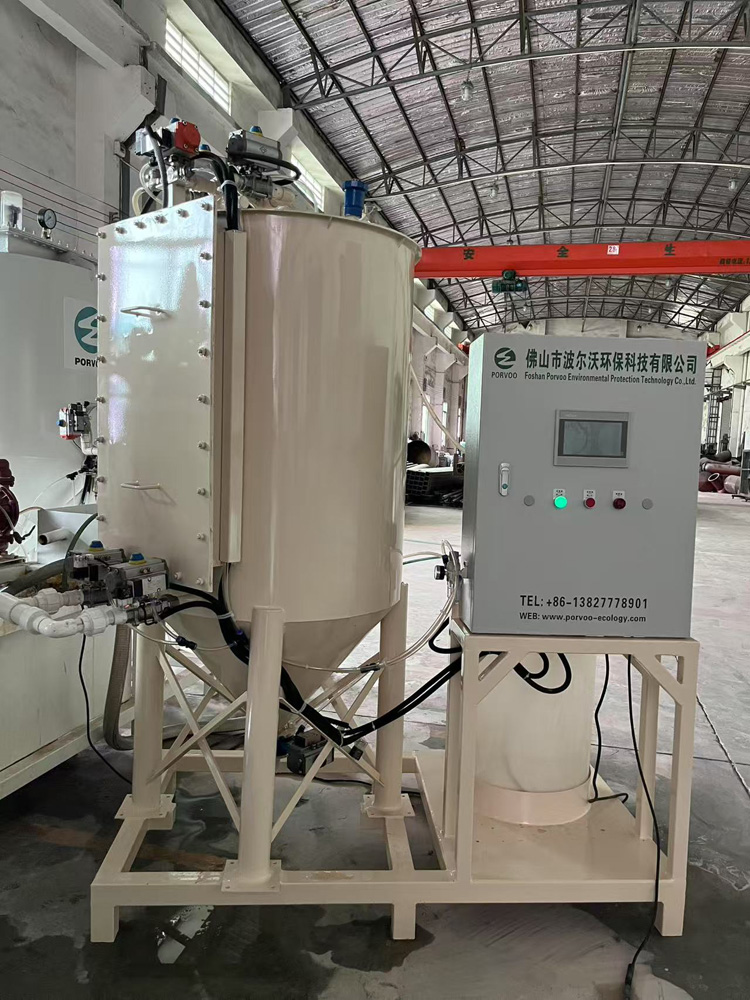
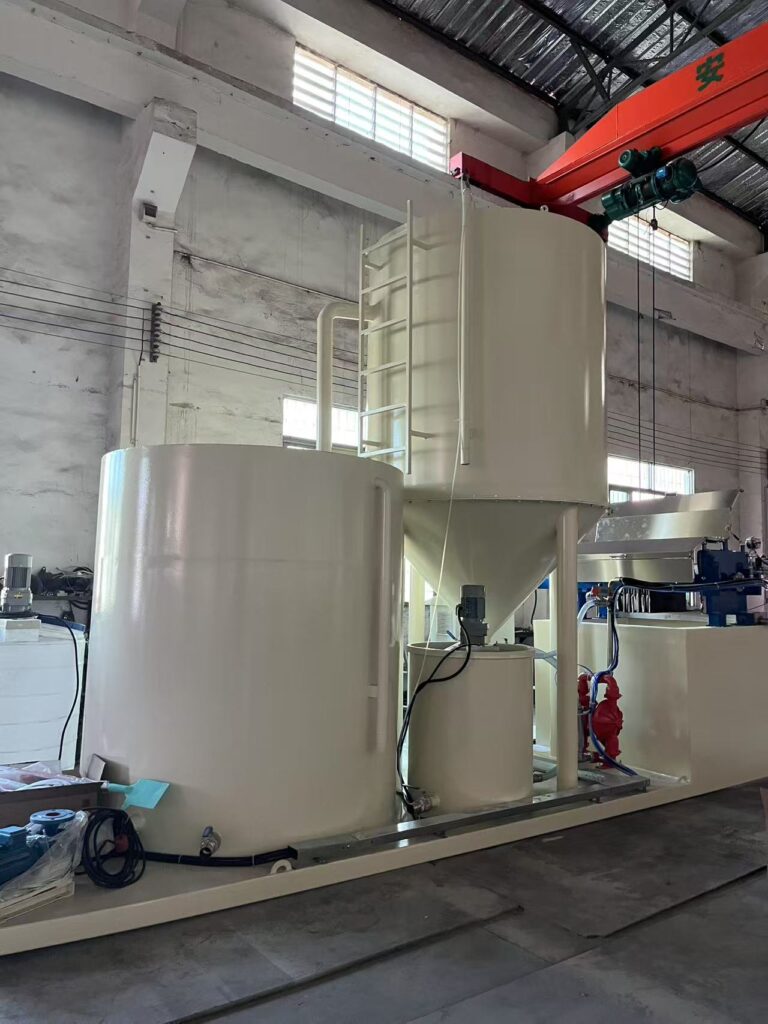
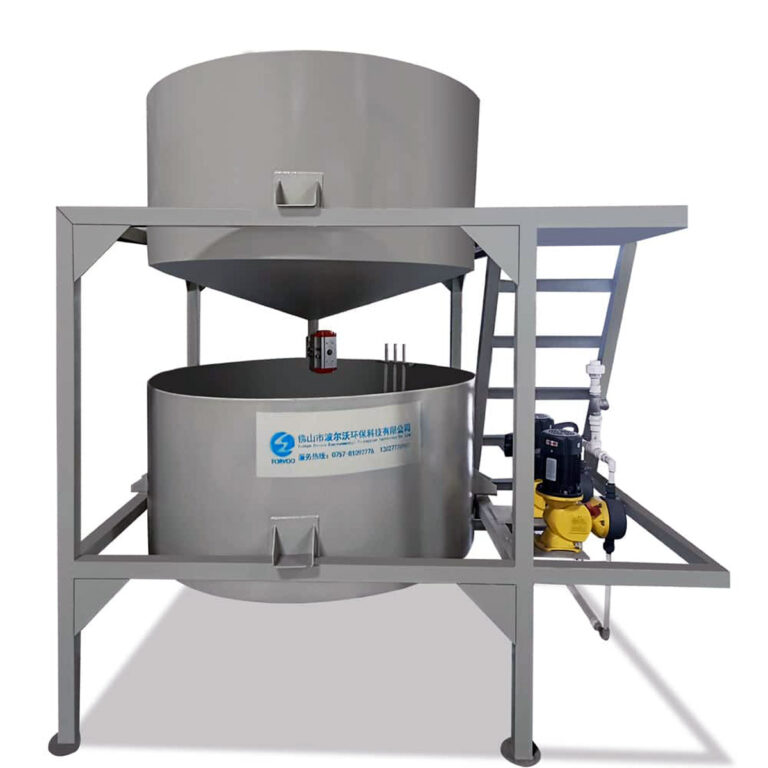
Begin with your compliance endpoint. Work backward to determine the required treatment efficiency. Then, analyze your wastewater’s specific characteristics. This plant-specific profile, not a generic guideline, determines the correct starting dosage for testing. For facilities dealing with complex, high-load streams, a tailored approach often involves pilot-scale testing of a dedicated automatic dosing and treatment system to validate lab findings under real conditions.
How to Test and Validate Your Optimal PAC Dosage Range
Systematic Jar Testing Protocol
Validation begins with controlled lab simulation. Use wastewater samples and simulate the plant’s rapid mix, flocculation, and settling stages. Test a wide dosage range around your estimated optimum. The key is consistency in method, as outlined in industry-specific standards like JC/T 1043-2007 Test method for waste water of ceramic tile production. Reliable, well-documented jar tests are the non-negotiable foundation.
Evaluating Performance Metrics
Judge results by multiple criteria. Settled water turbidity is primary, but also assess supernatant clarity, floc size, and settleability. Weak, fluffy flocs indicate poor formation. The following table outlines the critical phases and evaluation metrics for a robust testing protocol.
| Test Phase | Key Evaluation Metric | Critical Success Factor |
|---|---|---|
| Jar Testing | Settled water turbidity | Simulate plant mixing |
| Jar Testing | Supernatant clarity | Visual and instrumental check |
| Jar Testing | Flok oluşum özellikleri | Strong, settleable flocs |
| Periodic Validation | Consistent effluent TSS | Guard against process “drift” |
Kaynak: JC/T 1043-2007 Test method for waste water of ceramic tile production. This industry-specific standard provides the authoritative test methodologies for analyzing ceramic tile production wastewater, forming the basis for reliable jar testing and performance validation of PAC treatment.
Guarding Against Process Drift
A one-time test is insufficient. Wastewater characteristics drift with production changes, raw material batches, and seasonal water temperature shifts. Implement periodic validation testing—quarterly or with any major process change. This proactive stance is your only defense against the inefficiency of “set-and-forget” dosing based on outdated data.
The Impact of pH and Temperature on PAC Performance
The pH Dependency of Coagulation
PAC efficiency is highly sensitive to pH, with an optimal window typically between 6.5 and 8.0. Within this range, PAC hydrolyzes to form the most effective cationic species for charge neutralization and floc formation. Glazing wastewater is often alkaline due to cleaning agents and certain glaze components, requiring pre-adjustment with acid. Operating outside the optimal pH range is a common reason for poor performance despite correct dosage.
Temperature Effects on Reaction Kinetics
Colder water slows the hydrolysis and particle collision rates, resulting in slower floc formation and weaker flocs. This may require a slight increase in PAC dosage, extended flocculation time, or the use of a flocculant aid. Temperature control is often impractical, so the treatment process must be robust enough to handle seasonal variations.
Managing Environmental Parameters
Controlling pH and monitoring temperature are infrastructure challenges. The table below summarizes their operational impact and optimal ranges.
| Parametre | Optimal Range | Performans Etkisi |
|---|---|---|
| pH | 6.5 – 8.0 | Maximum coagulation efficiency |
| Low Temperature | Slows kinetics | Requires dose adjustment |
| Alkaline Wastewater | > 8.0 | Needs pre-adjustment |
Kaynak: Teknik dokümantasyon ve endüstri spesifikasyonları.
Maintaining precise pH adjustment relies on a mature support ecosystem for sensors and dosing equipment. Consistent treatment requires this underlying technical precision, making it more than just a chemical addition process.
Common Mistakes in PAC Dosing and How to Avoid Them
Operational Errors and Their Consequences
The most frequent failures stem from poor process control, not chemical selection. “Set-and-forget” dosing ignores influent variability. Incorrect rapid mix energy (G-value) prevents proper coagulant dispersion, leading to uneven floc formation. Overdosing as a safety blanket increases costs and sludge volume, and can potentially re-stabilize colloids.
A Framework for Error Mitigation
Avoidance requires a systematic approach to process management. Each common error has a direct corrective action. Standardized procedures for mixing energy verification, dose calibration, and effluent monitoring must be in place. This aligns with the need for logical, granular parameter tracking, much like a well-structured equipment catalog.
Corrective Actions for Reliable Dosing
Implementing the right mitigation steps transforms dosing from an art to a controlled science. The following table outlines common pitfalls and how to address them.
| Common Mistake | Primary Consequence | Mitigation Action |
|---|---|---|
| “Set-and-forget” dosing | Compliance fluctuations | Implement process control |
| Incorrect rapid mix | Poor PAC dispersion | Optimize mixing energy |
| Overdosing (safety buffer) | Increased sludge & cost | Find economic optimum |
| Inadequate slow mix | Weak floc formation | Ensure proper flocculation time |
Kaynak: HJ 2002-2010 Technical specification of coagulation and sedimentation for wastewater treatment. This standard outlines the technical specifications for proper coagulation process operation, including mixing conditions, which are critical to avoiding the common dosing mistakes listed.
Next Steps: Implementing and Monitoring Your PAC Treatment Plan
From Validation to Commissioning
Implementation starts with a pilot-scale test of your jar-test-derived dosage. This bridges the gap between the 1-liter beaker and the full-scale clarifier. Monitor floc formation, settling rates, and final effluent quality closely during commissioning. Adjust mixing energies and dose points based on real hydraulic performance, not just lab data.
Establishing a Performance Feedback Loop
Define clear Key Performance Indicators (KPIs): effluent turbidity/TSS, PAC consumption per cubic meter treated, and sludge volume. Track these metrics consistently using standard methods like those in CJ/T 51-2018 Standard methods for the examination of municipal wastewater and sludge. This data creates a feedback loop for continuous optimization, allowing you to fine-tune dosage in response to process changes.
Turning Compliance into Advantage
A robust, monitored treatment plan is a strategic asset. It ensures operational continuity by preventing compliance shutdowns. For plants investing in advanced treatment, aligning projects with relevant technical grant mechanisms can offset capital costs. Effective wastewater management transitions from a cost center to a value driver, supporting sustainability certification and market access.
The optimal PAC dosage is a dynamic target defined by your wastewater’s specific chemistry, your plant’s hydraulic reality, and your compliance requirements. Success hinges on systematic testing, comprehensive cost analysis, and relentless process monitoring. Avoid the universal formula; commit to the discipline of characterization, validation, and control.
Need a professional partner to navigate the complexities of high-TSS wastewater treatment? The engineers at PORVOO specialize in translating jar test data into reliable, automated treatment systems tailored to the ceramic industry’s unique challenges. Bize Ulaşın to discuss a characterization and pilot testing program for your facility.
Sıkça Sorulan Sorular
Q: How do we determine the starting PAC dosage range for our specific glazing wastewater?
A: The optimal starting point is unique to your plant, dictated by your specific glaze chemistry, TSS levels, and local discharge limits. A facility using zircon opacifiers will have different coagulant demands than one using tin oxide. This requires cross-disciplinary collaboration, where production glaze recipes directly inform wastewater treatment parameters. For projects where data is siloed, plan for initial jar testing to be more extensive to establish a reliable baseline dosage.
Q: What is the most common operational mistake in PAC dosing for this application?
A: The primary error is using a “set-and-forget” dosing rate based on an old jar test, which ignores natural fluctuations in wastewater strength. Incorrect mixing energy during rapid or slow mix phases also frequently undermines floc formation and settling. This means facilities with variable glaze lines should prioritize implementing a structured, granular tracking system for TSS, pH, and dose to enable proactive adjustments and avoid compliance risks.
Q: Which industry standards are critical for testing and monitoring TSS removal performance?
C: Temel standartlar şunları içerir JC/T 1043-2007 for industry-specific ceramic tile wastewater analysis and GB/T 31962-2015 for the gravimetric suspended solids measurement method. The technical specifications for the coagulation process itself are governed by HJ 2002-2010. If your operation requires demonstrable compliance, you must integrate these standardized test protocols into your routine monitoring plan.
Q: How does pH affect PAC performance in typically alkaline glazing wastewater?
A: PAC efficiency is highly dependent on pH, with an optimal range typically between 6.5 and 8.0. Alkaline glazing wastewater often requires pre-adjustment into this range to ensure proper coagulant hydrolysis and charge characteristics. This means facilities must budget for and maintain reliable pH adjustment and monitoring systems, as inconsistent control directly leads to higher chemical consumption and poorer effluent quality.
Q: What is the proper method to validate an optimal PAC dosage before full-scale implementation?
A: Validation begins with systematic jar testing that simulates your plant’s mixing conditions across a range of PAC doses, evaluating settled turbidity and floc formation. The integrity of this test data is paramount, and the process must be repeated periodically to account for drifting wastewater characteristics. If your operation lacks consistent data management, expect to face operational inefficiency and difficulty scaling lab results to cost-effective plant operation.
Q: Why is overdosing PAC a costly mistake beyond just chemical purchase?
A: Overdosing increases chemical costs linearly while providing diminishing TSS removal returns, and it can re-stabilize particles, increasing effluent turbidity. It also significantly raises sludge volume, impacting handling and disposal expenses. This means the true economic optimum balances removal efficiency against the total cost of chemicals, sludge, and energy, not just achieving the lowest possible TSS reading.
Q: What are the next steps after identifying an optimal dosage from jar tests?
A: Implementation requires pilot-scale testing of the derived dosage, followed by full-scale commissioning with established KPIs for effluent quality and chemical use. Creating this feedback loop enables continuous optimization. Furthermore, aligning advanced treatment projects with relevant research grant mechanisms can offset capital costs. For plants seeking sustainability certification, a robust, monitored treatment plan is now a competitive necessity for market access.