Procurement teams regularly approve a recycling skid based on a clean single-point test, then discover within weeks that daily solids loading swings push the system outside its operating window. The visible cost comes later: inconsistent reuse-water quality, overflow events that require manual intervention, and separator performance that degrades in ways that are hard to trace back to the original sizing decision. The less visible cost is the operator time absorbed by a system that was undersized for variability rather than undersized for average flow. Understanding where equalization volume, solids control, and reuse-water stability evidence each need to appear in a vendor package is what determines whether a bid comparison reflects plant reality or a controlled demonstration.
Which inflow-variability data should anchor a recycling bid comparison
Bid comparisons that use average daily flow as the primary benchmark will almost always overestimate how well a system handles real plant conditions. The meaningful comparison is the full operating range — minimum to maximum GPM under normal production conditions — paired with the tank operating capacity that has to absorb the difference.
A design flow range of 0–15 GPM tells you that the system is sized for relatively low continuous throughput, but that number alone does not tell you what happens when a shift change, equipment flush, or process surge pushes demand above that band. Peak flow capability — for example, 80 GPM to a pressure washer — is the relevant figure for assessing whether the hydraulic system can accept a short-term spike without forcing a bypass or overflow event. If the vendor cannot demonstrate that peak flow handling is managed separately from the continuous design range, you are looking at a system that may perform well on a flow meter average while being structurally unprepared for the spikes that occur multiple times per shift.
Tank operating capacity is the third variable that connects flow range to practical surge tolerance. A 622-gallon operating volume and a 1,834-gallon operating volume represent meaningfully different buffering envelopes. When inflow variability is high and equalization volume is limited, solids load irregularities reach the downstream separation stages faster and with less damping. ISO 5667-10:2020 provides useful process guidance on how inflow sampling and variability data should be collected to produce reliable baseline inputs — the point being that the figures you bring into a bid comparison are only as reliable as the sampling protocol that produced them.
Each vendor’s capacity figures should be compared against your own measured inflow variability data, not against each other in isolation.
| Data point | What to compare | Why it matters | Example value |
|---|---|---|---|
| Design flow range | Full operating range (min–max GPM) | Prevents surprises from variable inflow; defines hydraulic and solids-load handling envelope | 0–15 GPM |
| Tank operating capacity | Usable tank volume (gallons) | Sets buffer against surges and directly affects downstream stability | 622 gal, 1,834 gal |
| Peak flow capability | Short-term surge capacity (GPM) | Determines ability to handle spikes without overflow or bypass | 80 GPM |
The risk of skipping this comparison is not just an oversized or undersized purchase — it is that the system passes commissioning cleanly and then fails operationally, making the root cause difficult to attribute when the procurement record shows acceptable specs.
How equalization volume affects downstream solids stability
Equalization volume does one thing that no downstream component can compensate for after the fact: it slows the rate at which solids load variation reaches the separator, pump, and dosing stages. When that buffer is undersized, every downstream component has to operate across a wider input range than it was designed for.
The contrast between a 622-gallon and a 1,834-gallon tank operating capacity illustrates this trade-off as a planning criterion, not as a code-defined minimum. A smaller equalization volume means that a solids surge arriving at the inlet will reach the separation stage sooner and with less attenuation. The inclined plate clarifier, the chemical dosing loop, and any biological treatment media are all designed around an expected input range. When that range widens because equalization volume is insufficient, separator performance degrades, dosing becomes reactive rather than controlled, and reuse-water turbidity becomes inconsistent. The individual component failures are visible; the equalization shortfall that caused them often is not.
Larger equalization volume reduces — but does not eliminate — this propagation risk. A well-sized equalization tank that holds roughly three times the volume of a smaller model gives the system time to average out inflow irregularities before they reach the separation stages. That buffering effect is most valuable during shift changes, high-load production runs, or equipment flushing events, precisely the conditions that never appear in a vendor’s single-point test data.
The downstream consequence worth tracking in procurement is not whether the separator itself is rated for the solids load — most are — but whether equalization volume is sufficient to keep the separator operating within its preferred input window across the full daily load profile. A separator rated for a given solids concentration is only reliably effective when the concentration it actually receives stays within that range. Equalization volume is what controls that.
Why footprint savings can hide operator burden and upset risk
A compact above-ground configuration eliminates in-ground sump construction, which is a legitimate installation cost reduction. The trade-off is that the cost does not disappear — it shifts from a one-time civil works line item into recurring operator time and a higher sensitivity to solids surge events.
Above-ground systems that route settled solids to a hopper require daily manual disposal. That is not a design defect; it is an operational characteristic that belongs in the procurement comparison. The relevant question is not whether daily hopper disposal is acceptable in principle, but whether the operator capacity at your facility can absorb it reliably, including during high-production periods when disposal frequency may need to increase. If it cannot, the gap appears as deferred sludge handling, which reduces effective equalization volume and accelerates the upstream solids instability described in the previous section.
The slower recovery after a solids surge is the harder risk to evaluate at procurement stage. A compact system with limited equalization volume that has just processed a surge event is also slower to return to steady-state, because the smaller buffer means incoming flow continues to deliver solids to the separation stage before the previous surge has fully cleared. A larger system with more equalization volume can absorb a subsequent event more safely during that recovery window. The practical consequence is that in a facility where surge events are not isolated — where one production event is often followed quickly by another — the compact system’s recovery behavior becomes a reliability issue, not just an efficiency one.
This framing is not an argument against compact designs. It is an argument for acknowledging the operational implications before purchase rather than discovering them during the first high-load week of operation. A vendor who cannot describe post-surge recovery behavior in concrete terms is leaving a material risk undefined.
What reuse-water stability should look like in a vendor test package
Capacity figures and recovery rates are the two data points most consistently prominent in vendor documentation. Reuse-water stability under sustained variable load is the data point most consistently absent. This asymmetry is the core procurement risk in this category.
A useful vendor test package should demonstrate that reuse-water quality holds across a full operating day, not just at a controlled design point. Daily treatment capacity figures — such as 1,250, 3,030, or 6,050 gallons depending on system size — are the relevant benchmark for confirming that a system can sustain throughput without progressive quality degradation. A system that clears 3,030 gallons at stable reuse quality under a steady controlled inflow, but degrades when that inflow varies across shift changes, is not demonstrating the performance profile that matters for plant operations.
Biological media surface area is a specification that belongs in this test package and is frequently absent from it. A system with 1,152 square feet of biological media (as in one Model 750 configuration) has a defined organic removal and turbidity reduction capacity. Without knowing the media surface area, it is not possible to assess whether the biological treatment stage can maintain reuse-water stability under the organic load that actual production generates. ISO 46001:2019, as a water efficiency management framework, reinforces the principle that water reuse systems should be evaluated against real operating conditions rather than nominal capacity — the practical implication being that sustained-load demonstration data carries more weight than a single clean test result.
Requiring the vendor to confirm tank operating capacity alongside daily treatment capacity is also worthwhile, because the two figures together show whether the equalization buffer is proportional to the throughput being claimed. A system claiming high daily capacity with a small equalization volume is making an implicit assumption about inflow consistency that may not hold in your facility.
| Test package item | What to confirm | Why it matters | Example value |
|---|---|---|---|
| Daily treatment capacity | Sustained throughput over a full operating day | Demonstrates ability to maintain stable reuse quality under continuous load | 1,250 gal; 3,030 gal; 6,050 gal |
| Tank operating capacity | Usable equalization volume in the system | Buffers flow and solids variations, preventing upsets that degrade reuse water | 622 gal; 1,834 gal |
| Biological media surface area | Surface area for attached-growth biological treatment | Higher area indicates greater organic removal and turbidity reduction for stable reuse | 1,152 sq ft (Model 750) |
If a vendor’s test package cannot address all three columns in this framework, the missing items should be treated as open procurement risk, not as minor documentation gaps.
How to evaluate overflow and recovery behavior after a solids surge
Overflow risk and recovery speed are two sides of the same question, and both depend on variables that vendors rarely volunteer during bid review. The evaluation requires asking about them directly.
Peak flow capability — for example, 80 GPM — defines the maximum hydraulic load the system can process before overflow risk increases. This figure functions as a surge tolerance threshold. If your plant can generate inflow events that approach or exceed that rate, and the system does not have a managed hydraulic bypass or sufficient equalization volume to absorb the spike, overflow is a foreseeable outcome rather than an edge case. The important procurement check is not whether 80 GPM is adequate in absolute terms, but whether it is adequate relative to your measured peak inflow events.
Recovery speed after a surge is signaled, in part, by the solids removal frequency built into the system design. A system that dispenses collected solids into an above-ground hopper on a daily cycle is telling you something about how quickly it can return to steady-state: if the hopper fills faster than the dispensing cycle during a surge event, solids accumulate upstream and slow the return to normal operating conditions. Asking the vendor specifically how the system behaves during back-to-back surge events — not just isolated ones — is the diagnostic question most likely to reveal recovery limitations that are not visible in standard test data.
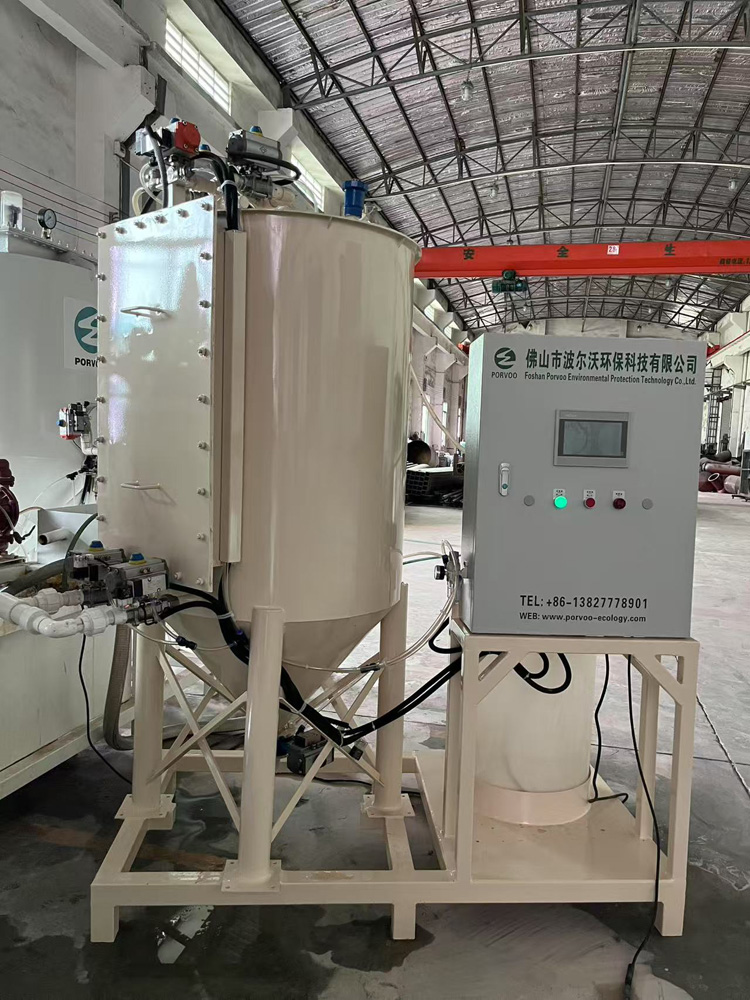
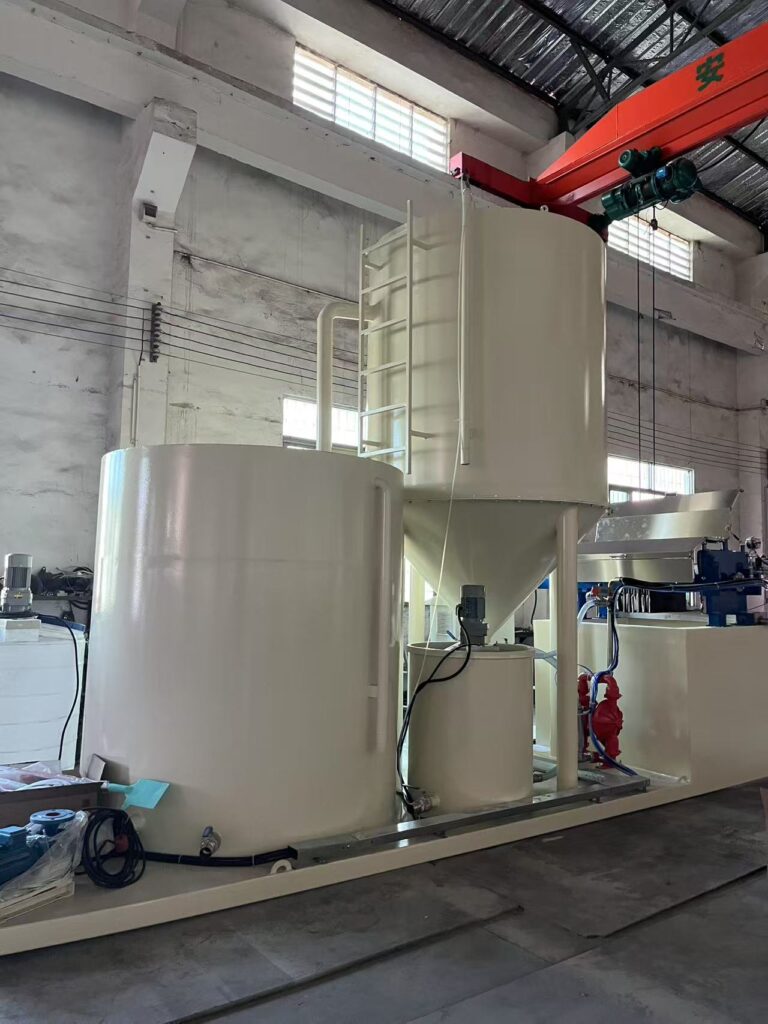
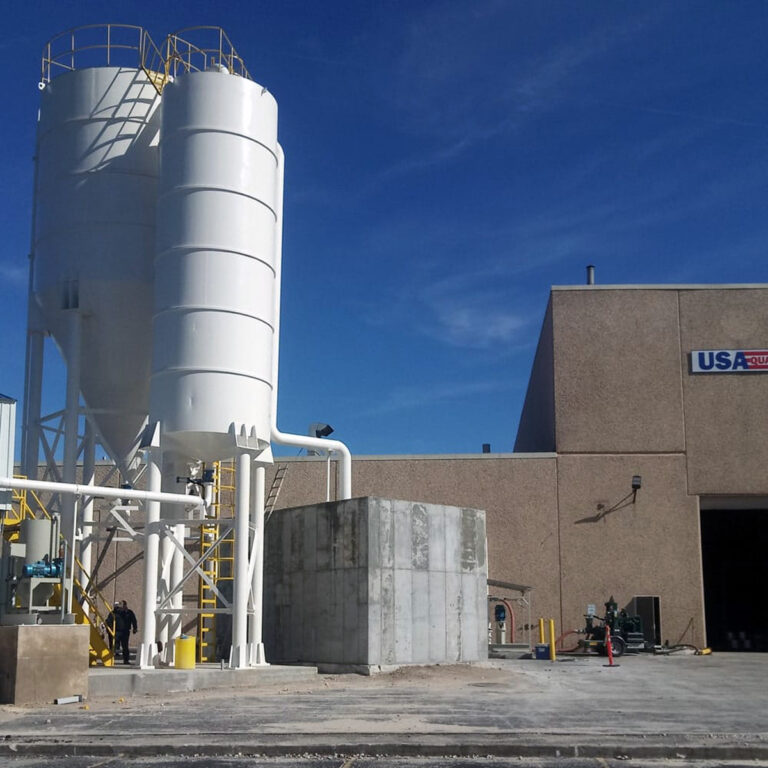
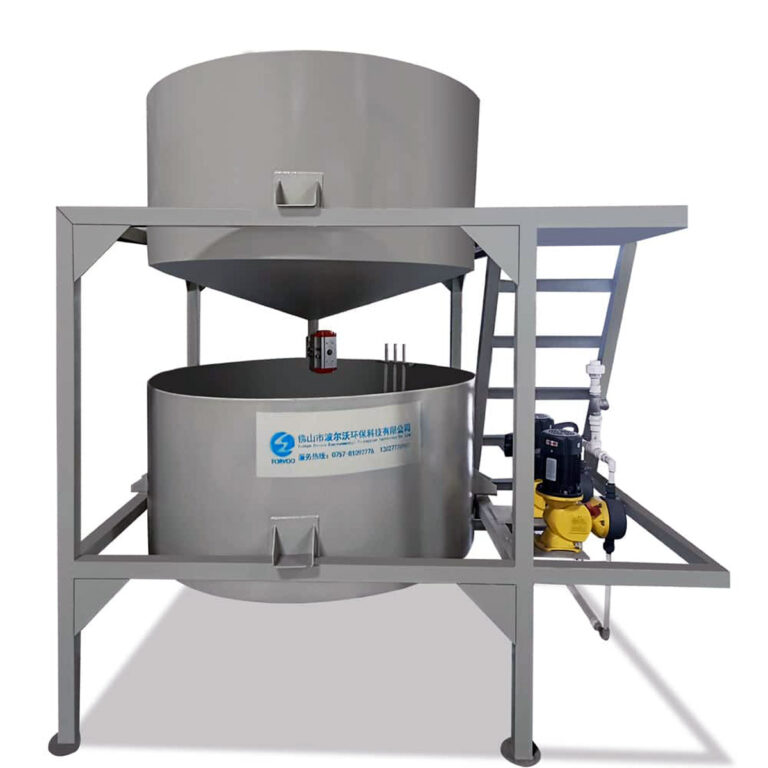
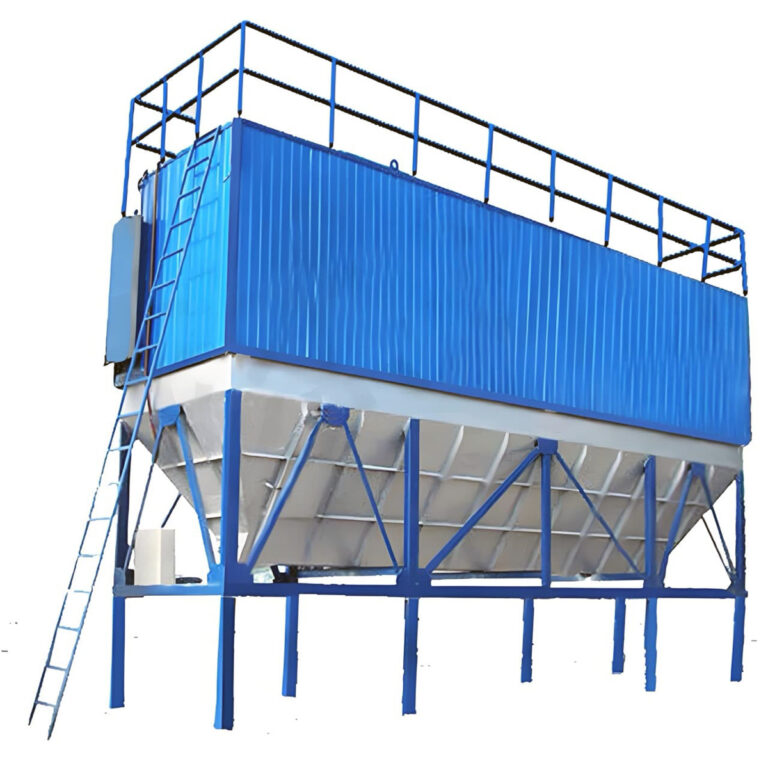
For ceramic and stone processing applications, where cutting slurry can generate rapid solids loading spikes, the recovery question is particularly material. A system that recovers cleanly from a single event but degrades progressively under repeated events within the same shift represents a different operational risk profile than its headline specifications suggest. The compact silo system design addresses some of these conditions through above-ground containment and controlled solids routing, but the recovery behavior under repeated surges should still be explicitly confirmed during the bid review, not assumed from the design configuration alone.
What clarification questions belong in the final procurement review
By the time a bid reaches final review, most procurement teams have compared capacity figures, footprint dimensions, and price. The questions that remain unanswered at that stage are usually the ones that determine operational reliability rather than installation cost.
Inclined plate clarifier surface area is one of the most useful specifications to request before approval. A 700-series configuration with 277 square feet of clarifier area is a specific design figure that speaks directly to solids separation efficiency and the volume of solids carryover that reaches the reuse water stream. A larger clarifier area reduces carryover and stabilizes the downstream treatment stages. Without knowing this figure, it is not possible to compare solids separation performance across vendors who may be quoting the same flow rate from different internal configurations.
Biological media surface area carries similar weight for organic removal and turbidity control. If two systems are quoted at the same daily treatment capacity but one has 1,152 square feet of biological media and the other has significantly less, the reuse-water quality profile will differ in ways that are not visible from the capacity figure alone. Asking this question before approval is considerably less expensive than discovering the difference during the first month of operation.
Water loss to evaporation is a question that often gets deferred because it appears minor relative to other specifications. In practice, it affects the water balance calculation that underpins the recovery rate claims in the bid. If evaporation is not accounted for, the effective recovery rate is lower than quoted, and makeup water requirements are higher. A vendor who cannot provide even an estimated evaporation figure is leaving a gap in the water balance that will show up as a shortfall in practice.
Electrical and utility compatibility — 240V single phase, 40-amp service, 3/4-inch fresh water supply line — are specifications that should be confirmed against your site’s existing infrastructure before the procurement decision is made, not during installation scheduling. Infrastructure incompatibilities discovered late create delay costs that erode the installation cost advantage that often drives the initial system selection. Full technical specification documentation, such as what is outlined in wastewater treatment technical specifications for industrial systems, should be available from the vendor before the final review is complete.
| Clarification area | What to ask | Why it matters | Example / reference |
|---|---|---|---|
| Solids separation efficiency | Inclined plate clarifier surface area | Larger area improves solids separation and reduces carryover to reuse water | 277 sq ft (700 series) |
| Biological treatment capacity | Biological media surface area | Directly affects organic contaminant removal and turbidity control | 1,152 sq ft (Model 750) |
| Water loss | Expected water loss to evaporation | Evaporation reduces effective recovery and may require makeup water | Ask for estimate; no fixed number |
| Site compatibility | Electrical requirements and fresh water supply size | Avoids hidden infrastructure costs and installation delays | 240 V, single phase, 40 A; 3/4″ line |
Leaving any of these questions unanswered at approval is not a minor paperwork gap — each one represents a downstream consequence that transfers cost from the purchase decision into operations, infrastructure, or maintenance.
Procurement approval for a recycling system should rest on evidence across variable-load conditions, not on performance at a single clean test point. Equalization volume, solids surge recovery, reuse-water stability, and site compatibility all need to be documented before the approval decision, because the cost of discovering gaps in any one of them after installation is substantially higher than the cost of asking for the data during bid review.
The most practical pre-decision check is to map the vendor’s stated equalization volume and peak flow capacity against your measured inflow variability profile — not against industry averages or the vendor’s reference facility. If that comparison reveals a mismatch, or if the vendor cannot provide biological media surface area, clarifier area, or sustained-load test data when asked, those are material gaps in the evidence base, not minor documentation omissions. A system that is sized correctly for your variability, operated by a team that understands its solids removal cycle, and supported by a vendor who can answer the clarification questions in this review is a meaningfully lower operational risk than one that passes bid review on capacity figures alone.
Sıkça Sorulan Sorular
Q: What if our facility doesn’t have measured inflow variability data before issuing a bid?
A: Collect at least shift-level flow and solids concentration readings for a representative production week before comparing bids — without this, any capacity figure a vendor quotes is being evaluated against an assumption rather than your plant reality. A bid comparison built on industry averages or the vendor’s reference facility profile will mask whether the equalization volume and peak flow handling are actually sized for your variability, not someone else’s. ISO 5667-10:2020 provides process guidance on how wastewater sampling should be structured to produce reliable baseline inputs for exactly this purpose.
Q: After a wastewater recycling system is approved and installed, what should be confirmed during the first weeks of operation before declaring commissioning complete?
A: Track reuse-water turbidity and solids carryover across at least one full week of variable production load — including shift changes, equipment flushes, and any high-output runs — before signing off on commissioning. A system that performs cleanly during a controlled startup test but has not been observed through a realistic surge cycle has not yet demonstrated the operational behavior that determines long-term reliability. Recovery time after the first real solids surge event, and whether hopper disposal frequency stays manageable during high-load periods, are the two data points most likely to reveal undersizing that commissioning tests did not expose.
Q: At what point does additional equalization volume stop improving reuse-water stability and become unnecessary cost?
A: Equalization volume delivers diminishing returns once the buffer is large enough to absorb your longest measured surge duration without allowing solids concentration at the separator inlet to exceed the separator’s rated input range. Beyond that threshold, additional volume adds civil or equipment cost without meaningfully improving downstream stability. The practical ceiling is facility-specific: it depends on how frequently surge events occur, how long they last, and how quickly your production cycle generates back-to-back events — a facility with isolated, infrequent surges reaches that threshold at a lower volume than one where multiple events occur within the same shift.
Q: Is a compact above-ground system ever the lower operational risk choice compared to a larger footprint configuration?
A: Yes — when surge events are infrequent and well-separated in time, operator capacity for daily hopper disposal is reliably available, and inflow variability is genuinely low across the full production schedule. The compact configuration’s trade-offs become operational liabilities specifically when surge events are clustered, recovery windows are short, or staffing during peak production cannot absorb increased solids handling frequency. If your facility profile matches the low-variability, well-staffed condition, the footprint savings represent a real efficiency gain rather than a deferred cost.
Q: How should evaporation loss factor into deciding whether a quoted recovery rate is acceptable for our water balance targets?
A: Treat the vendor’s recovery rate as a ceiling rather than a deliverable figure until evaporation loss is quantified and subtracted from it. If a vendor cannot supply even an estimated evaporation figure, calculate a conservative downside scenario by applying a 3–5% reduction to the quoted recovery rate and check whether the resulting effective recovery still meets your makeup water budget and reuse volume targets. A recovery rate that clears your threshold only at its quoted maximum, with no margin for evaporative loss, creates a structural shortfall in the water balance that will require makeup water beyond what the procurement case assumed.