Industrial solid-liquid separation presents a persistent engineering challenge: balancing throughput, clarity, and operational cost. For professionals specifying equipment, the choice between a plate and frame filter press and its recessed chamber counterpart is often oversimplified, leading to misapplied technology and suboptimal process performance. A clear understanding of their distinct operational principles and inherent limitations is critical for capital planning and long-term operational efficiency.
The decision is more relevant than ever as production demands intensify and sustainability goals tighten. Selecting the wrong press design can lock in higher consumable costs, excessive labor, and chronic downtime. This guide provides a technical framework to match the correct filter press architecture to your specific slurry characteristics and process objectives, moving beyond generic specifications to application-engineered selection.
How Plate and Frame Filter Presses Work: Core Principles
The Mechanical Filtration Foundation
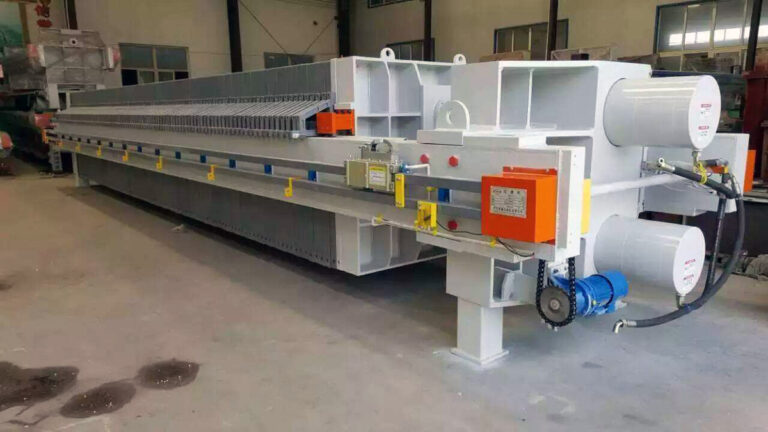
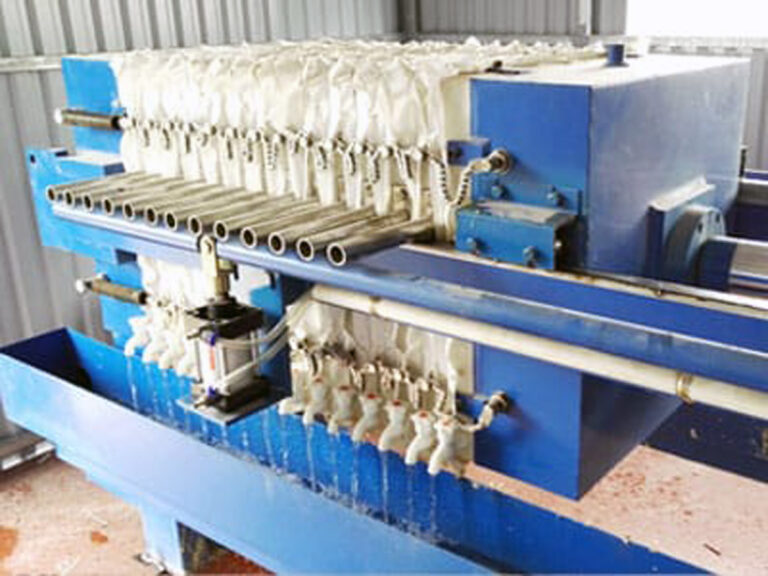
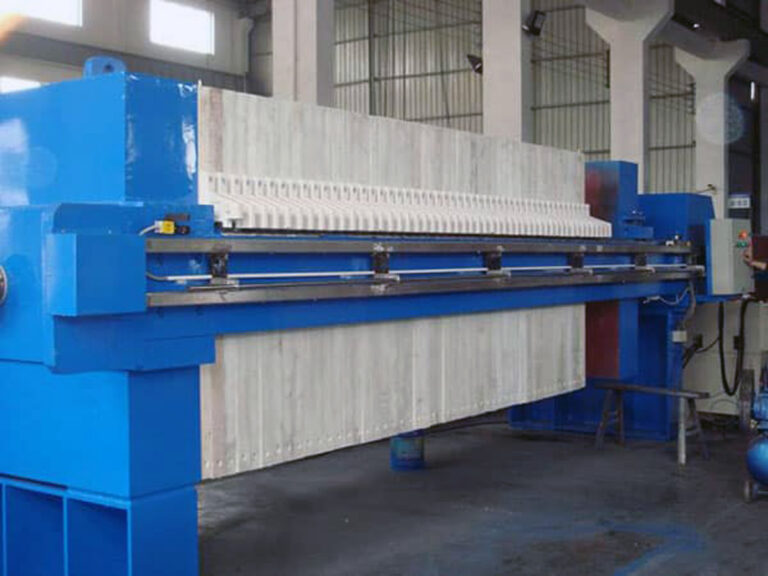
A plate and frame filter press operates on a foundational mechanical principle. Its design alternates solid, flat plates with hollow frames, all covered by filter cloths. When clamped together under hydraulic pressure, each frame forms a discrete chamber. Slurry is pumped into a corner feed port, filling each cavity. Solids are captured on the cloths, building a filter cake inside the frame, while clarified filtrate passes through the cloth, travels across the plate’s drainage surface, and exits via a discharge port. The cycle concludes when frames are full; the press opens for manual cake discharge.
Clarification Over Volume
This design prioritizes filtration area over chamber volume. The large surface area of the cloth-covered plates is the system’s primary asset, making it exceptionally effective for capturing fine particulates from low-solids streams. Industry experts recommend this configuration when the primary goal is achieving superior liquid clarity, not producing a dense, dry cake. Its operation is inherently batch-oriented, a factor that must be integrated into overall plant flow design.
The Critical Cycle Endpoint
A commonly overlooked detail is the endpoint determination. Filtration continues until the frames are completely packed with solids, often signaled by a sharp rise in feed pressure. Unlike continuous systems, this batch nature means process flow must be diverted or buffered during the cake discharge and press reassembly phases. In my experience, failing to account for this standby capacity in system design is a frequent cause of bottlenecking in otherwise well-planned filtration lines.
Plate and Frame vs. Recessed Chamber: Key Design Differences
Chamber Architecture and Feed Dynamics
The distinction in chamber formation dictates fundamental process capability. The recessed chamber press forms its cavity from a depression within each plate, typically fed through a large center port. This key difference drives performance: the recessed chamber’s center feed promotes uniform, rapid filling with lower clogging risk. Conversely, the plate and frame’s small corner ports can lead to uneven filling and pressure imbalances, a critical bottleneck for high-solids feeds.
Sealing and Cake Release Mechanics
Beyond feeding, sealing and discharge mechanisms diverge significantly. Recessed plates are often gasketed to prevent leakage and feature tapered chambers for easier cake release, aligning with automated, high-volume operations. The plate and frame design is typically non-gasketed, which can lead to potential liquid wicking and necessitates installation over collection pits. Furthermore, its square-sided frames often require manual scraping, directly impacting cycle time and labor cost.
Application Dichotomy Driven by Design
This creates a clear application dichotomy. The following table summarizes the key design differences that lead to distinct operational profiles:
Design Comparison for Informed Selection
| Özellik | Plate and Frame Design | Recessed Chamber Design |
|---|---|---|
| Chamber Formation | Hollow frames between plates | Depression within each plate |
| Feed Port Location | Small corner port | Large center port |
| Filling & Pressure | Uneven filling risk | Uniform, rapid filling |
| Sealing | Typically non-gasketed | Often gasketed |
| Cake Release | Manual scraping often needed | Tapered chambers for easier release |
| Birincil Uygulama | Polishing, clarification | High-volume dewatering |
Kaynak: Teknik dokümantasyon ve endüstri spesifikasyonları.
Technical Advantages and Ideal Application Scenarios
Unparalleled Media Flexibility
The plate and frame configuration offers distinct technical benefits. Its primary advantage is unparalleled filter media flexibility; it readily accommodates disposable papers or pads supported by reusable cloths. This enables precision “polishing” filtration for ultra-fine particles that would blind standard cloths. It is indispensable in pharmaceuticals for sterile filtration and in food & beverage for achieving final product brilliance in juices or edible oils.
Optimized for Maximum Surface Area
Secondly, the design is optimized where achieving maximum filtration area is the goal, not cake volume. This makes it perfect for low-solids (<1%) clarification duties. Cake thickness is easily adjustable by swapping frame depths, allowing for process optimization based on slurry characteristics. This specialization signals a market trend where plate and frame presses are becoming niche tools for high-value polishing.
The Niche for Precision Filtration
According to research from process engineering firms, the plate and frame design excels where the value of the filtrate justifies the operational complexity. We compared applications across chemicals and food processing and found its use is justified when product purity or clarity commands a premium, and solids handling is a secondary concern. This requires buyers to source from vendors with specific application experience in these niche polishing roles.
Critical Limitations and Operational Challenges
Inherent Feed and Pressure Risks
Understanding its constraints is vital for successful implementation. The design’s corner feed is a persistent risk for clogging and uneven chamber filling, which can create unequal pressure distribution and damage plates. This limitation necessitates careful feed conditioning and potentially pre-filtration to remove large agglomerates that could block the ports, adding complexity to the overall system.
Manual Labor and Leakage Trade-offs
Cake discharge is less efficient than with recessed designs. The square-sided frames often require manual scraping, impacting cycle time and labor costs—a significant factor in total operational expenditure. Furthermore, non-gasketed plates can lead to leakage, requiring drip trays or pits. Mechanically, the frame structure may have lower pressure limits than reinforced recessed plates, capping its dewatering capability.
Automation Hurdles
These limitations collectively mean that for bulk, high-solids dewatering or fully automated lines, the plate and frame design presents significant operational hurdles. Its architecture favors the recessed chamber’s more robust and automation-friendly design for such duties. A common mistake is attempting to automate a plate and frame press for a high-volume application, only to face frequent interruptions for manual intervention and cleaning.
Key Specifications for Sizing and Selection
Defining the Primary Process Objective
Selecting a plate and frame press requires evaluating specific technical parameters against process goals. First, rigorously define the objective: is it clarification/polishing or dewatering? This fundamental question dictates the core technology choice. For polishing, sizing is driven by required filtration area, calculated from process flow rate and the flux rate (volume/area/time), not simple volumetric throughput.
Calculating Area and Accounting for Redundancy
This area-driven sizing necessitates redundant press capacity to maintain continuous process flow during batch cycles, a critical factor in capital and layout planning. Key physical specs include plate size (e.g., 800mm, 630mm) and material, with polypropylene being typical for corrosion resistance. Operational feed pressure and auxiliary systems like feed pumps or cake wash must be specified in tandem.
Navigating Consumables and Vendor Dependence
The need for disposable media for fine particles must be factored into consumable costs. The following table outlines the key parameters that guide the sizing and selection process:
Technical Parameters for Specification
| Parametre | Tipik Aralık / Değer | Önemli Hususlar |
|---|---|---|
| Primary Objective | Clarification vs. Dewatering | Drives technology choice |
| Feed Solids Concentration | <1% for polishing | Defines process goal |
| Plate Size | 630mm, 800mm common | Impacts filtration area |
| Plate Material | Polypropylene typical | For corrosion resistance |
| Sizing Driver | Filtration area & flux rate | Not simple volumetric throughput |
| Medya Türü | Disposable papers/cloths | Critical for fine particles |
Kaynak: Teknik dokümantasyon ve endüstri spesifikasyonları.
Implementation, Maintenance, and Industry Use Cases
Industry-Specific Deployment
Plate and frame filters are implemented in industries where their advantages are paramount. In chemical manufacturing, they purify catalysts and intermediates. Pharmaceuticals use them for sterile bulk drug filtration. Food & beverage applications include clarifying sugars, wines, and edible oils. Implementation often involves customization, such as dividing plates for multi-stage filtration or specifying sanitary fittings and finishes to meet regulatory hygiene standards.
The Maintenance Trade-off: Agility vs. Integrity
Maintenance presents a core trade-off. The drape-over cloth design allows for relatively quick changes, a boon for operations requiring frequent media swaps or stringent batch-to-batch cleanliness. However, this agility comes at the cost of potential leakage due to non-gasketed plates. In contrast, recessed chamber presses offer superior sealing but with more labor-intensive cloth installation involving gaskets and sealing rings.
Cost-Benefit Based on Filtrate Value
This balance between operational agility and process integrity is a key calculation. It hinges on the value of the filtrate and the economics of labor. For a high-value pharmaceutical product, the ability to quickly change and validate new filter media may justify the design. For a continuous wastewater stream, the labor cost and potential downtime tip the scales toward a more sealed, automated system.
Total Cost of Ownership and Operational Considerations
Looking Beyond Capital Expenditure
Evaluating total cost extends far beyond the initial capital outlay. Consumables—specialized cloths, disposable papers, and replacement plates—represent a significant recurring expense. Vendor lock-in is a real concern, as plate designs and cloth fittings are often proprietary. The supplier’s long-term parts availability and pricing strategy become critical factors in the lifetime cost equation.
Quantifying Operational Inefficiencies
Operational costs are influenced by cycle efficiency. The potential for manual cake scraping increases direct labor costs. Feed-related downtime from clogging ports reduces effective throughput, increasing cost per unit of filtrate. Energy costs for the feed pump, which must overcome the growing cake resistance, must also be modeled over the system’s lifespan.
Comparative Analysis of Lifetime Costs
The following table breaks down the major cost categories impacting the total cost of ownership for a plate and frame system:
| Maliyet Kategorisi | Plate and Frame Press | Key Impact Factor |
|---|---|---|
| Initial Capital | Varies with size/material | Lower potential entry cost |
| Recurring Consumables | Specialized cloths, papers | Significant long-term expense |
| Vendor Dependency | Proprietary parts/fittings | Risk of vendor lock-in |
| İşçilik Maliyeti | Manual cake scraping possible | Increases operational expense |
| Throughput Cost | Downtime from clogging ports | Reduces cycle efficiency |
| Automation Suitability | Lower, more manual | Higher long-term labor cost |
Kaynak: Teknik dokümantasyon ve endüstri spesifikasyonları.
When comparing technologies, the recessed chamber’s easier automation pathway may offer lower long-term operational costs for high-volume duties, despite a potentially higher initial investment. This makes a detailed lifecycle cost analysis essential.
A Framework for Selecting the Right Filter Press
Step 1: Rigorous Slurry and Goal Analysis
A structured selection framework ensures technology matches process. Begin by rigorously analyzing the slurry: feed solids concentration, particle size distribution, and desired cake dryness. This data determines if the goal is area-driven polishing (favoring plate and frame) or volume-driven dewatering (favoring recessed chamber). A threshold of <1% solids often signals a polishing application.
Step 2: Technical Sizing and Specification
Next, calculate the required filtration area and acceptable cycle time, accounting for necessary standby capacity. Evaluate operational pressure needs and media compatibility, especially if disposable filter papers are required for sub-micron clarity. This stage often requires pilot testing to establish accurate flux rates for your specific slurry.
Step 3: Operational and Commercial Evaluation
Consider the desired level of automation; the recessed chamber’s reliable cake release better supports unmanned operation. Finally, engage with engineering-focused suppliers to explore custom or hybrid plate designs. The framework below provides a decision pathway:
Systematic Selection Pathway
| Decision Step | Key Analysis | Quantitative/Technical Threshold |
|---|---|---|
| 1. Bulamaç Analizi | Solids concentration, particle size | <1% solids favors plate & frame |
| 2. Process Goal | Polishing vs. dewatering | Area-driven vs. volume-driven |
| 3. Capacity Sizing | Filtration area, cycle time | Calculate from flow rate & flux |
| 4. Pressure & Media | Operational pressure, media type | Filter paper requirement check |
| 5. Automation Level | Desired manual intervention | Recessed chamber better for unmanned |
Kaynak: Teknik dokümantasyon ve endüstri spesifikasyonları.
Innovation is moving toward application-engineered solutions. For complex challenges, discuss potential hybrid designs or modified plate features with a specialist to solve specific bottlenecks, rather than forcing a standard unit into an unsuitable role.
The decision pivots on three points: your slurry’s solids content defines the primary goal, the required filtrate clarity dictates media needs, and your labor economics determine the automation threshold. Misalignment in any area increases lifetime cost and operational friction. A plate and frame press is a precision instrument for clarification, not a volume dewatering tool.
Need professional guidance to specify the right solid-liquid separation system for your unique process? The engineering team at PORVOO can help you apply this framework to your specific data, ensuring your capital investment delivers optimal clarity and efficiency. Explore detailed specifications and design options for industrial filtration equipment like plate and frame presses.
For a direct consultation on your application, you can also Bize Ulaşın.
Sıkça Sorulan Sorular
Q: How do you decide between a plate and frame filter press and a recessed chamber design for a new application?
A: The decision hinges on your primary process goal. Choose a plate and frame press for polishing or clarifying low-solids (<1%) feeds where maximum filtration area and disposable media flexibility are critical. Select a recessed chamber press for high-solids dewatering, as its center feed and gasketed design support uniform filling, higher pressure, and easier automation. This means facilities with high-volume slurry waste should prioritize recessed chamber technology to avoid the clogging and manual discharge challenges inherent to plate and frame corner feeds.
Q: What are the main operational challenges when running a plate and frame filter press?
A: The corner feed ports are prone to clogging, which can cause uneven chamber filling and pressure imbalances that risk plate damage. Cake discharge is less efficient, often requiring manual scraping from square-sided frames, increasing cycle time and labor. Furthermore, non-gasketed plates can lead to filtrate leakage, necessitating installation over a collection pit. For projects where high throughput or full automation is required, expect to encounter significant operational hurdles that make a recessed chamber press a more robust alternative.
Q: How is a plate and frame filter press sized for a polishing or clarification duty?
A: Sizing is driven by the required filtration area, not simple volumetric throughput. You calculate the area based on your process flow rate and the specific flux rate (volume filtered per unit area per time) for your slurry. This calculation must account for redundant press capacity to maintain overall flow during the batch filtration and cake discharge cycle. If your operation requires consistent flow for final product clarity, plan for a larger installed filtration area than the nominal process demand to accommodate this batch nature.
Q: Why would an industry select a plate and frame press over more modern recessed chamber designs?
A: Industries select plate and frame presses for their unparalleled filter media flexibility, which is essential for precision polishing. The design readily accommodates disposable filter papers or pads supported by reusable cloths, enabling the capture of ultra-fine particles that would blind standard cloths. This makes it indispensable in pharmaceuticals, food, and beverage for achieving final product clarity. If your process requires this level of filtrate purity and frequent media changes, the plate and frame’s operational agility justifies its niche role despite other limitations.
Q: What are the key cost factors beyond the initial purchase price for a plate and frame filter press?
A: Total cost of ownership is heavily influenced by recurring consumables like specialized cloths and disposable filter papers, as well as potential vendor lock-in for proprietary plate designs and parts. Operational costs include labor for manual cake scraping, downtime from feed port clogging, and energy for the feed pump. This means when comparing technologies, you must evaluate the recessed chamber’s potential for lower long-term operational costs through easier automation, even if its initial capital investment is higher.
Q: How does maintenance for a plate and frame press compare to a recessed chamber press?
A: Plate and frame presses offer quicker filter cloth changes due to their drape-over design, which benefits processes requiring frequent media swaps. However, this comes with a higher risk of leakage from non-gasketed plates. In contrast, recessed chamber presses provide superior sealing with gaskets but have more labor-intensive cloth installation procedures. This creates a core trade-off: choose plate and frame for maintenance agility when filtrate value permits some leakage risk, but select recessed chamber for guaranteed process integrity in sealed, automated lines.
Q: What framework should engineers use to select the right filter press technology?
A: Start by rigorously analyzing your slurry’s solids concentration, particle size, and desired cake dryness to define the goal as either area-driven polishing or volume-driven dewatering. Next, calculate the required filtration area and acceptable cycle time, including standby capacity. Then, evaluate needed operational pressure, media compatibility, and automation level. Finally, engage engineering-focused suppliers to explore custom or hybrid plate designs. If your slurry presents specific bottlenecks like extreme fineness, plan to source from application-experienced vendors who offer these engineered solutions.