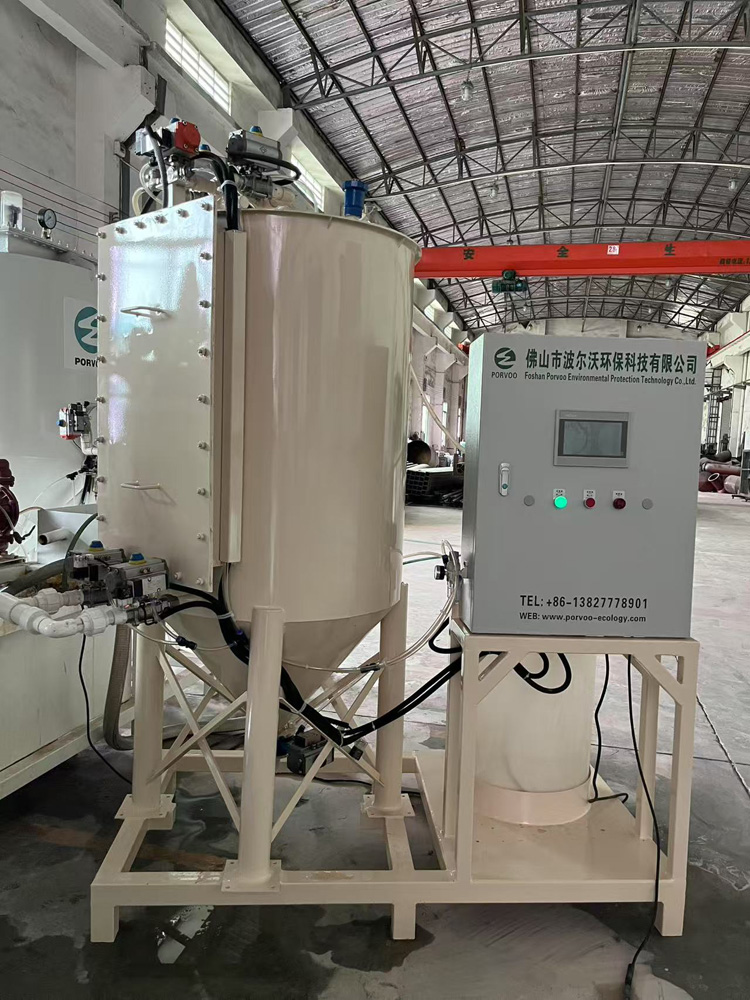
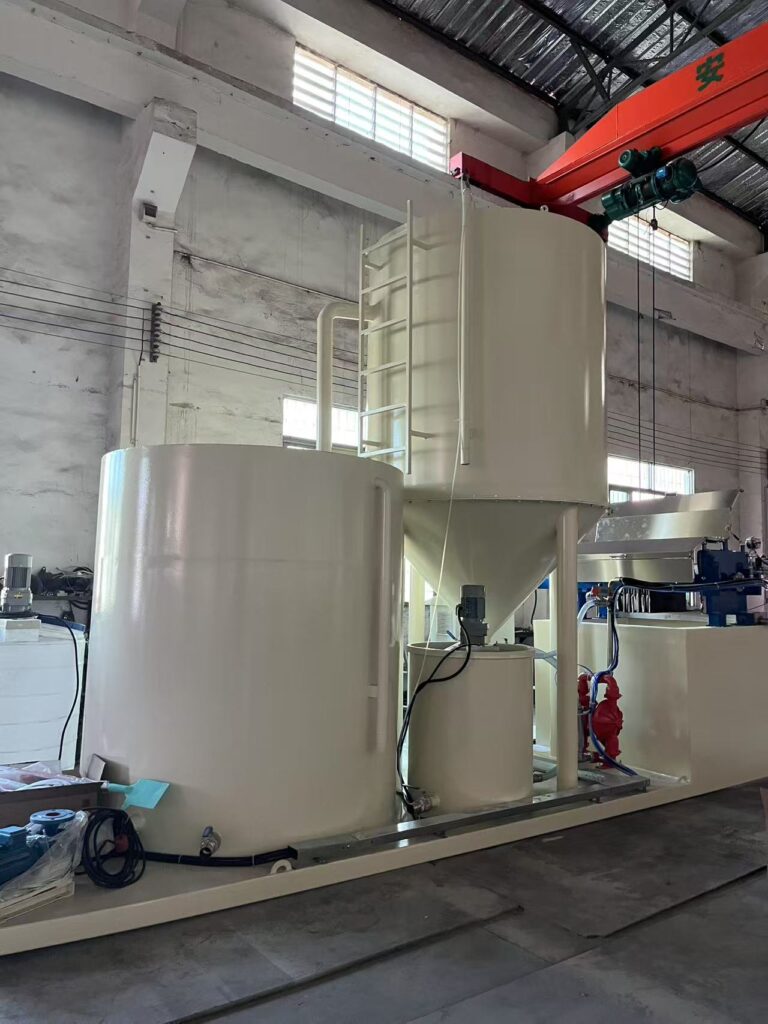
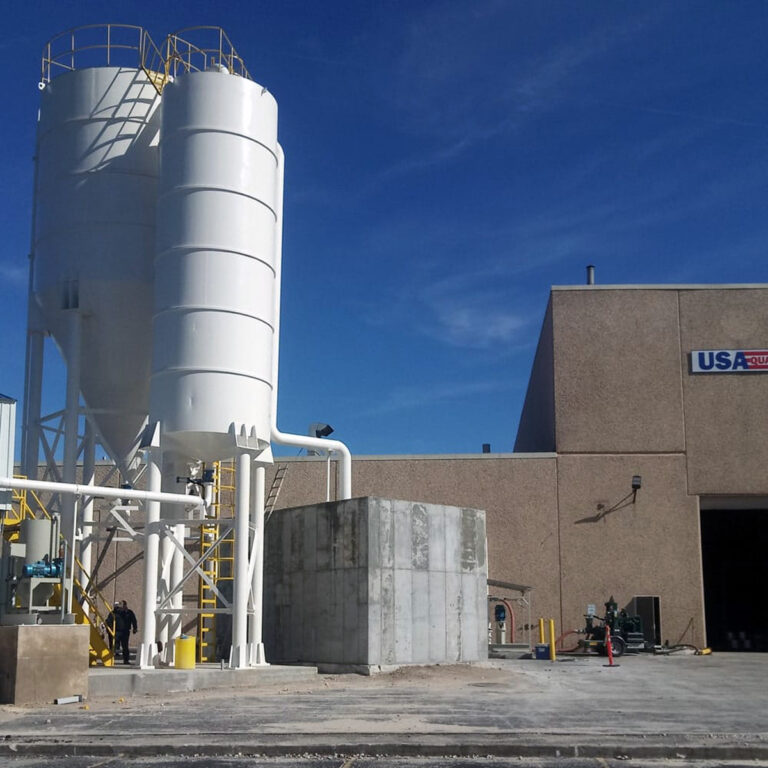
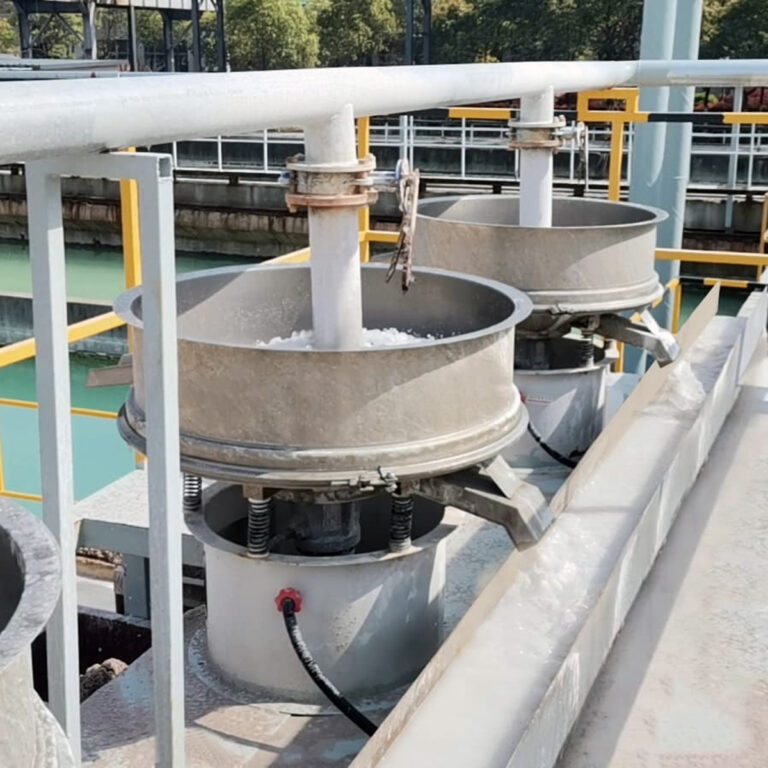
Polymer invoices and hauling manifests are the wrong place to first notice that your thickening process is out of control. By the time those costs show up, the dewatering machine has already been absorbing feed variability for weeks — and someone has probably already started writing a capital request for a press replacement. The actual root cause, in many of these cases, is not the dewatering equipment. It is inconsistent underflow concentration arriving from the upstream thickening stage, combined with a solids balance that no one on the team owns end to end. Understanding exactly where that instability originates, and what threshold conditions make it worse, is what lets you cut polymer spend and hauling cost without replacing equipment that is not actually broken.
Why sludge thickening quality controls the economics of dewatering
The dewatering machine — whether it is a belt filter press, centrifuge, or screw press — was sized and commissioned at a specific feed solids range. When the thickened underflow delivered to that machine varies significantly from shift to shift, the machine cannot compensate. Polymer dosing gets adjusted upward to chase inconsistent feed, belt speeds and pressures get changed reactively, and cake solids fluctuate in ways that look like mechanical problems but trace back to the front end. The dewatering unit absorbs the variability, but the cost shows up in polymer consumption, wet cake weight, and ultimately in haulage volume.
The upper boundary matters just as much as the lower one. Sludge driven beyond roughly 12–15% total solids begins to lose its free-flowing behavior. At that point, conveyance systems — pumps, pipes, feed channels — can be strained or blocked, and the feed consistency advantage of dense thickening is offset by handling complexity downstream. This is an engineering tradeoff, not a compliance limit: the gains in volume reduction become real costs if the material can no longer be reliably moved to the dewatering machine. The optimization target for thickening is a controlled band, not simply “as dense as possible.”
What this means in practice is that thickening needs to be managed as the first stage of an integrated solids-handling system, not as a standalone utility step upstream of the press. The economic consequences of treating it otherwise — excess polymer, elevated cake moisture, inflated hauling loads — only become measurable at the billing stage, often well after the process design window where the fix would have been inexpensive.
Which underflow consistency mistakes quietly increase polymer demand
The most common underflow mistake is not running too low or too high on average — it is running with too much variation around the target. A thickener that delivers 4% total solids reliably will cause far less downstream disruption than one that oscillates between 2% and 6% even if the mean is nominally acceptable. Polymer conditioning systems for dewatering are designed around an expected feed concentration and flow rate. When both vary simultaneously, correct dosing becomes guesswork, and operators default to over-dosing to avoid cake failure — which adds cost without improving consistency.
For centrifugal thickening specifically, operating within an 85–95% solids recovery range represents a practical design benchmark where polymer use and capture efficiency are reasonably balanced. Below that band, solids are being lost to the overflow and returned to the system as recycle load. Above it, polymer demand often increases sharply for diminishing gains in recovery. Research into cationic polyacrylamide behavior in sludge dewatering contexts confirms that polymer performance is sensitive to feed consistency and sludge character, reinforcing why underflow stability matters beyond just the average concentration figure.
| Performans Parametresi | Hedef Aralığı | Why it Matters |
|---|---|---|
| Solids Recovery | 85–95% | Optimal range for balancing polymer use and solids capture efficiency. |
| Polymer Feed Rate | 0–6.0 g/kg of dry solids | Typical range required to achieve the target solids recovery. |
Operating outside the target recovery range is not just an efficiency problem — it has a compounding effect. Solids escaping to the overflow recirculate as additional load on the biological or clarification train, which can gradually degrade thickener influent quality and make the underflow less consistent over time. The mistake is treating high polymer dose as the fix rather than recognizing it as the symptom of an underflow control problem that started earlier in the process.
How overflow quality and residence time affect the downstream machine
Thickener overflow is rarely treated as a process variable that affects the dewatering machine, but the connection is direct. Overflow clarity reflects how well solids are being captured in the thickening stage. Turbid overflow, detectable through established turbidity measurement methods such as those described in ISO 7027-1:2016, indicates solids escaping to the recycle stream. Those solids re-enter the system and cycle back as additional feed load, compounding the inconsistency that the dewatering machine then has to handle.
Residence time in the thickening vessel is the control lever most often underused. Insufficient retention time produces thin, inconsistent underflow — the sludge has not had adequate time to consolidate before being withdrawn. Excessive retention time, particularly for biologically active sludge, can cause septicity or structural changes that alter how the sludge responds to polymer conditioning downstream. Both failure modes degrade the feed quality that the dewatering stage receives.
The recycle stream timing problem deserves specific attention. Centrate and filtrate returned from dewatering are often concentrated in ammonia-nitrogen and organics. The error that creates biological train vulnerability is assessing the impact of these return flows on a 24-hour averaged basis rather than at the actual timing and peak concentration of the return. When high-strength return flows hit the biological stage during periods of low dilution, the shock loading effect can propagate forward and eventually reach the thickener as degraded influent quality — creating a feedback loop that shows up as erratic underflow concentration and is almost never diagnosed correctly because each stage blames the one upstream.
When front-end upgrades are better than replacing the press itself
The instinct to replace a dewatering press when cake quality is poor and polymer costs are high is understandable — the press is the most visible and most capital-intensive piece of equipment in the solids-handling loop. But if the underlying problem is low or inconsistent feed solids concentration, a new press will replicate the same performance problems within months of commissioning. The correct diagnostic question is: what is the actual solids concentration arriving at the dewatering machine across a full operating week, and how does that compare to the machine’s design feed range?
When that audit reveals that the thickening stage is delivering dilute or variable underflow, the investment decision shifts upstream. Upgrading thickener control — improving underflow withdrawal timing, tightening polymer feed to the thickener, adding or refining level and density instrumentation — often costs a fraction of press replacement and produces more stable dewatering performance precisely because it addresses the variability source. The comparison between thickening methods matters here as well.
| Thickening Method | Cost & Equipment | Performance & Suitability |
|---|---|---|
| Gravity Thickening | Low-cost with minimal equipment. | Generally effective for easier-to-thicken sludges; may not achieve the highest solids content. |
| Flotation Thickening | More expensive and specialized equipment. | Can achieve higher solids content, especially for difficult-to-thicken sludges. |
Flotation thickening is not a universal upgrade over gravity thickening. For sludges that respond well to gravity settling, the additional capital and operational complexity of dissolved air flotation is difficult to justify. The case for flotation thickening is specific: sludges that are difficult to gravity-thicken, where achieving adequate feed concentration for the downstream press is genuinely not possible with simpler equipment. Before specifying flotation, confirm through jar testing or pilot data that gravity cannot meet the target underflow concentration. That confirmation step is frequently skipped in favor of the more expensive option, which adds equipment cost and control complexity without resolving the root feed quality problem. Detailed guidance on how the gravity drainage zone of a belt filter press interacts with upstream thickening performance can help clarify where the thickening function actually ends and dewatering begins — an important design boundary when evaluating where to invest.
How to build one solids-balance model across thickening and dewatering
The reason solids-handling costs stay unpredictable at many plants is not measurement failure — it is model fragmentation. Process engineers track thickener performance in one set of numbers. Wastewater operators track dewatering performance in another. Purchasing sees polymer invoices and hauling receipts. None of these data streams are reconciled into one model that spans the full solids path from thickener influent to cake disposal, so the real driver of polymer overuse and excess hauling load stays undiagnosed.
Building a cross-process solids balance requires measurement at every point where solids enter, leave, or recirculate across the system.
| Measurement Point | What to Measure | Why it Matters for the Model |
|---|---|---|
| Influent | Flow rate and solids concentration. | Establishes the baseline incoming solids load. |
| Thickened/Cake | Solids concentration. | Determines thickening efficiency and feed to dewatering. |
| All Recycle Streams (centrate, filtrate) | Flow rate and concentration of ammonia-nitrogen and organics. | Assesses the actual load returned to the biological train, preventing shock loading. |
| Effluent | Flow rate and solids concentration. | Completes the mass balance by accounting for solids leaving the system. |
What an incomplete balance obscures is not just efficiency — it obscures causality. A plant measuring influent and cake solids but not recycle stream concentrations will underestimate the recirculating load and consistently misattribute poor dewatering performance to the press or polymer selection rather than to the accumulating return load. The recycle stream timing dimension, discussed in the previous section, is particularly important here: a model built on daily average concentrations will show a system in balance even when peak return flows are creating transient overloads that the daily average smooths out entirely. The solids balance is only as useful as the measurement points and timing resolution it is built on.
What operators should trend before blaming the dewatering equipment
When cake solids are inconsistent or polymer consumption is climbing, the first data review should not be the dewatering machine’s operating logs. It should be the thickener’s performance record over the preceding two to four weeks. Specifically: what has the underflow solids concentration been, how variable has it been, and has thickener overflow clarity changed?
Sludge Volume Index is one of the most useful upstream indicators to trend. As a design planning criterion in thickening practice, an SVI of approximately 100 mL/g represents conditions where gravity thickening performs reliably. As SVI rises above that benchmark — reflecting bulking, filamentous growth, or changes in biological treatment — thickening devices are adversely affected, underflow concentration becomes more difficult to maintain, and the feed arriving at the dewatering machine degrades. An SVI trend moving in the wrong direction over several weeks is a leading indicator of downstream dewatering instability, not a concurrent symptom of it.
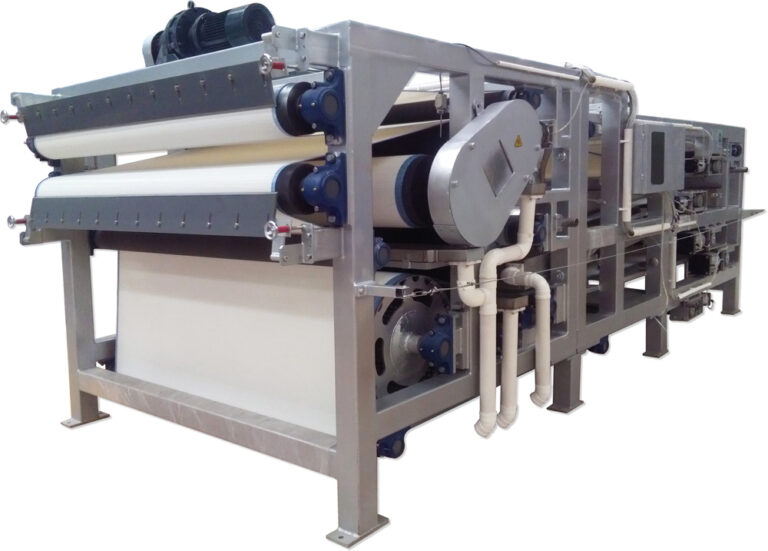
Other parameters worth trending on a shift-by-shift basis include thickener influent flow rate and solids concentration, polymer feed rate to the thickener, underflow withdrawal rate and density, and overflow turbidity. The value of trending these together — rather than in isolation — is that it allows operators to see the combination of conditions that precedes a dewatering performance drop, rather than reacting to the drop after it has already propagated through the system. For plants running kayışlı filtre presi configurations, the gravity drainage zone performance is particularly sensitive to feed quality variation, making upstream trending even more directly actionable. A consistent pattern in the thickening data that correlates with downstream problems is evidence that the front end, not the press, is where the intervention needs to happen.
The most expensive decision a plant can make in solids handling is replacing a dewatering press based on performance symptoms that originate upstream. Before that capital commitment moves forward, the solids balance should be closed across both thickening and dewatering stages, underflow consistency should be characterized across a representative operating period, and recycle stream loads should be assessed at actual peak timing rather than daily averages. Those three steps will either confirm that the press is genuinely the limiting factor — or they will reveal a front-end control problem that can be corrected at significantly lower cost and without the commissioning risk of new major equipment.
The practical next step is audit-based rather than procurement-based: trend the six or seven parameters discussed here for two to four weeks with enough measurement resolution to see shift-level variation, then close the solids balance. The resulting picture will tell you whether you are managing a dewatering problem or a thickening problem wearing a dewatering problem’s label — and that distinction is worth confirming before any capital decision is made.
Sıkça Sorulan Sorular
Q: What if our plant doesn’t have shift-level instrumentation — can we still run a useful solids balance?
A: A meaningful balance is still possible, but its diagnostic resolution will be limited. Daily composite samples at influent, underflow, and cake points can establish whether the system is broadly in balance, but they will mask the shift-to-shift variability that is usually the actual cost driver. Start with whatever sampling frequency is achievable, then use any recurring dewatering performance drops to identify which shifts to prioritize for denser manual sampling — this builds the case for permanent instrumentation without requiring it upfront.
Q: At what point does improving thickener control stop paying back and more thickening capacity genuinely become necessary?
A: When the thickener is running at or above its hydraulic and solids loading design limits while underflow control is already tight, additional control work will not recover much. The boundary condition is hydraulic overload: if influent flows regularly exceed the thickener’s design surface loading rate, underflow concentration will be structurally thin regardless of how well withdrawal timing and polymer feed are managed. Confirm actual hydraulic loading against the original design basis before concluding that capacity — rather than control — is the constraint.
Q: We use gravity thickening but our sludge SVI has been trending above 150 mL/g — should we be looking at flotation thickening instead?
A: Not necessarily as a first move. Elevated SVI reflects a biological treatment condition, and addressing the upstream biology — filamentous organism control, selector addition, aeration adjustment — can recover thickener performance without capital investment in flotation. Flotation thickening is the right comparison only after confirming that the SVI problem is chronic and unresponsive to biological corrections, and that gravity consistently fails to reach the underflow concentration the dewatering machine requires. Switching thickening technology without resolving the biological driver will shift the problem, not eliminate it.
Q: Once we have closed the solids balance and identified the front-end as the problem, what is the correct sequence of corrective actions?
A: Begin with underflow withdrawal control — tighten the density or timer-based withdrawal setpoint before touching anything else, because this has the fastest effect on feed consistency at the dewatering stage. Once underflow concentration is more stable, re-baseline the polymer dose to the dewatering machine against the new feed range rather than the historical variable one. Only after those two steps are stable should you assess whether thickener polymer feed rate, overflow management, or structural equipment changes are still needed. Sequencing matters because each upstream correction changes the conditions the next step is optimizing against.
Q: Is the two-to-four week trending period recommended in the article realistic when management is already pushing for a press replacement decision?
A: It is the minimum defensible period for distinguishing a thickening problem from a dewatering problem, and compressing it creates real capital risk. A press replacement decision made on two or three days of data during an acute performance event will frequently misattribute the root cause. The business case for the trending period is the cost of the decision itself: if a new press runs $500,000 to $1.5 million installed, four weeks of structured trending at existing operating cost is a negligible hedge. Framing it as due diligence before capital commitment, rather than as a delay, is usually the most effective way to hold the timeline.