Many plants discover the mismatch between dewatering output and downstream handling only after a press is commissioned — when trucks are waiting, temporary storage is full, and the cake coming off the belt or plate is wetter than the disposal contractor expected. At that point, correcting storage capacity, loading logistics, or even the cake solids target becomes a retrofit problem rather than a design decision, and the cost is absorbed in operational disruption rather than capital planning. The decision that prevents most of this is straightforward but rarely made explicitly: before selecting or commissioning mechanical dewatering equipment, fix what the output must be and confirm that the entire chain after the press — storage, transfer, loading, and final route — can sustain that output daily. What follows will help you judge where the real constraints sit and which planning gaps are most likely to surface as operational failures once the system is running.
What output from mechanical dewatering must be fixed before downstream planning
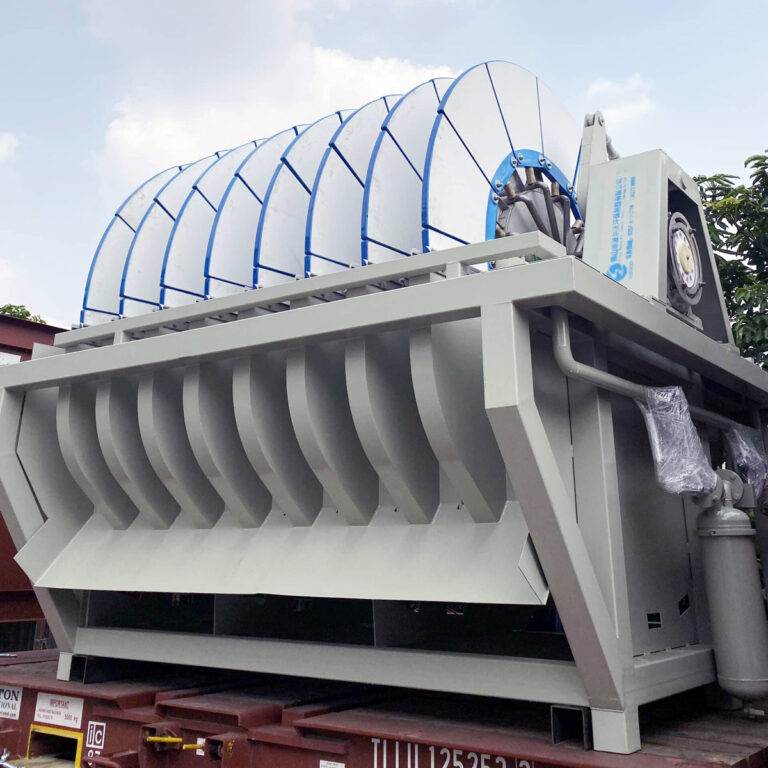
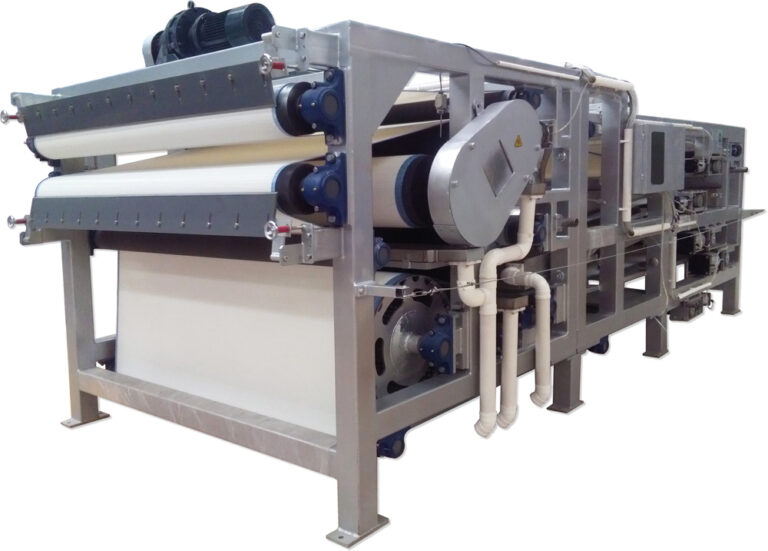
Mechanical dewatering does not produce a single consistent output. Cake total solids content ranges from roughly 25% to 75% depending on equipment type, sludge character, and conditioning practice, and the position of actual performance within that range determines whether the downstream system needs to handle a material that behaves like a solid or one that still behaves like a liquid. The threshold is consequential: above 75% moisture — that is, below 25% total solids — sludge remains in liquid territory, and the loading, transfer, and storage equipment must be sized and selected accordingly. A plant expecting solid cake handling but receiving output below that threshold will find that conveyor belts, floor bins, and loading skips are simply the wrong tools for the material.
The disposal route must be identified before the solids target is fixed, not after. Incineration, landfill, and agricultural use each impose different requirements on cake dryness, pathogen reduction, and metals content, and no single cake solids target satisfies all three. A target optimized for incineration thermal load may be entirely incompatible with a land application permit, and vice versa. Choosing the press and setting its operating parameters before the disposal route is confirmed is the planning sequence that most often produces a mismatch — because the equipment ends up optimized for an output the downstream route cannot accept.
Good characterization practice, consistent with the sampling guidance in ISO 5667-13:2011, should support the establishment of baseline solids content and variability across representative production cycles before those targets are formalized.
| Output to Fix | Typical Range or Requirement | Why It Must Be Fixed |
|---|---|---|
| Cake total solids content | 25–75% TS depending on equipment and sludge type | Determines whether downstream equipment handles liquid or solid, influencing transport, pump selection, and storage design. |
| Moisture threshold for liquid handling | >75% moisture (solids <25%) | Defines the point where sludge behaves as a liquid rather than a solid, changing piping, holding tank, and loading requirements. |
| Final disposal route | Incineration, landfill, or agricultural use | Each route imposes specific solids, pathogen, and metal criteria that dictate cake quality targets for commissioning and daily operation. |
How cake solids, tonnage, and storage time interact in real operations
These three variables form a dependency chain, and changes in any one of them propagate constraints on the other two. A plant producing higher daily tonnage at lower cake solids needs more storage volume to buffer the same number of production hours. A plant that achieves drier cake reduces tonnage per unit of sludge treated but may not change hauling frequency if the truck scheduling is set by calendar rather than by load weight. Understanding these relationships as an interconnected system — rather than as separate performance metrics — is what separates a workable operating plan from one that looks efficient on paper but backs up in practice.
Holding capacity is the point where this interaction becomes visible. Sludge holding tanks in operational plants typically provide somewhere between half a day and several days of storage depending on plant scale, with larger plants generally running shorter residence times relative to their daily output. That window defines how long the system can absorb mismatches between press discharge rate and truck availability before temporary storage fills and the press must stop. When cake solids are lower than expected — either because feed conditions changed or conditioning chemistry underperformed — the same tonnage occupies more volume, and a storage buffer that was adequate at design performance may be inadequate under everyday operating conditions.
The tonnage figure matters equally for hauling cost and for understanding what a contractor is actually being asked to manage. Wet cake at 30% total solids weighs substantially more per dry tonne than cake at 45% total solids, and that weight difference directly drives truck trip frequency, disposal fees charged by weight, and landfill gate rates. A plant that underestimates actual wet tonnage when scoping hauling contracts will either run over contracted volumes quickly or find itself negotiating additional trips under time pressure. Neither outcome is avoidable once the operating conditions are established; both are avoidable if tonnage is calculated against realistic cake solids ranges rather than best-case press performance.
When chasing extra dryness improves disposal economics and when it does not
Achieving drier cake is not a universally correct optimization. The reasoning that often drives it — fewer truck trips, lower disposal cost per tonne — is directionally sound, but the return depends on whether the downstream route actually requires higher solids, and whether the energy and cycle time added to achieve them can be recovered through disposal savings.
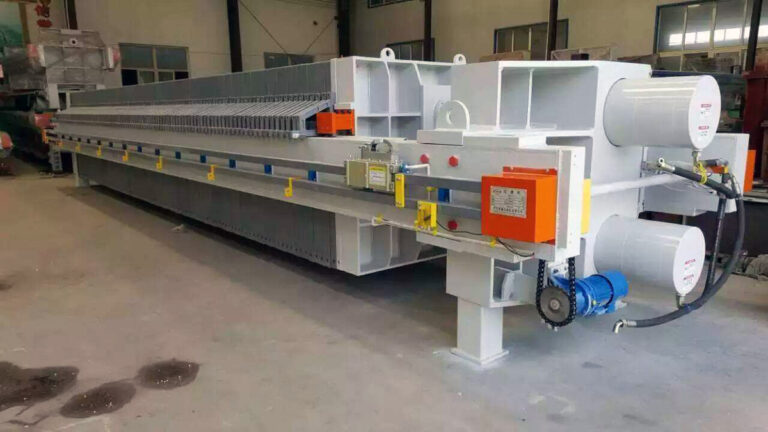
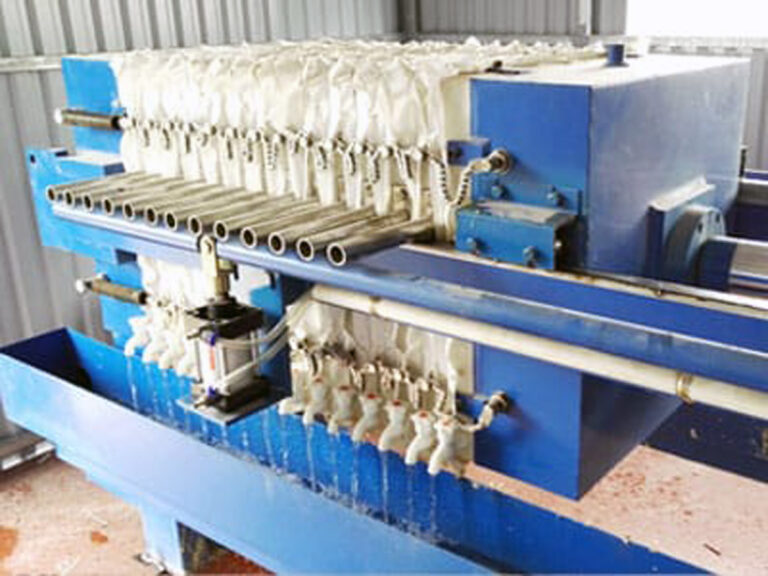
The case for pushing toward higher solids content is strongest when disposal cost is tied directly to wet weight or volume, when the hauling distance is long enough that trip frequency has real budget impact, and when the additional press cycle time or squeeze pressure does not create maintenance patterns that erode throughput over a season. Membrane filter presses, for example, can achieve meaningfully higher cake solids than recessed plate designs for the same feed material, and that difference is worth capturing when disposal economics support it — but it adds mechanical complexity and an additional utility requirement that must be accounted for in the operating cost comparison, not just the press capital cost. Comparing dewatering efficiency and ROI across press types for specific slurry compositions is one way to establish whether the solids gain is worth the equipment investment before committing to a configuration.
The case weakens when the downstream route would accept a wetter cake without penalty. If a landfill or contractor accepts material at 35% total solids and the plant is spending additional cycle time and energy to reach 45%, the added dryness is producing no measurable disposal benefit. The same logic applies when incineration is the route: there is a point at which the moisture remaining in the cake exceeds what the thermal process can efficiently recover energy from, and beyond that threshold, further dewatering energy rarely pays back through improved incineration performance. That crossover is site-specific and depends on the combined heat value of the feed, so no fixed solids percentage applies universally — but the directional risk of diminishing returns at higher solids is consistent enough across contexts to treat as a real planning constraint rather than a theoretical edge case.
The practical instruction is to define what the downstream route actually needs, then set the press target to meet that specification reliably under normal operating conditions, rather than chasing the highest solids the equipment can theoretically produce.
Why conveyors, bins, and loading logistics often set the real system limit
The press capacity figure on a technical datasheet describes what the dewatering machine can do under controlled conditions. It does not describe what the system can sustain when cake discharge, transfer conveying, bin accumulation, and truck loading are all running in sequence under actual site constraints. In most operating plants, the real throughput ceiling is somewhere in that transfer chain — not in the press itself.
Positive displacement pumps used to convey sludge between process steps are a recurring failure point. They are prone to blockage at higher solids concentrations, and when a pump clogs, the interruption affects everything downstream simultaneously. A blockage that takes an hour to clear represents an hour of lost discharge capacity that cannot be recovered by running the press faster. The planning implication is that pump selection, sizing, and contingency measures for clearing blockages without extended downtime should be treated as system-design decisions, not ancillary equipment choices. Knowing the expected viscosity range of the conditioned sludge and how that changes with seasonal feed variation helps establish whether a given pump design can handle the actual operating range reliably.
| Issue | What Happens | What to Clarify |
|---|---|---|
| Positive displacement pump blockage | Sludge pumps are prone to clogging, causing interruptions in the transfer chain and limiting the flow to downstream storage or loading. | Clarify pump type, expected sludge viscosity range, and whether contingency measures exist for clearing blockages without extended downtime. |
| Filter press batch discharge scheduling | Batch‑based filter presses must stop to discharge cake, creating timing gaps that can desynchronize continuous loading and hauling operations. | Verify that intermediate cake storage buffers and loading logistics are sized to absorb batch discharge cycles and avoid idle trucks or overflow. |
Poorly drained loading areas compound this problem in ways that are easy to underestimate during design but expensive to manage in operation. Wet cake that accumulates on loading floors, around bin discharge points, or beneath conveyor transfer zones creates housekeeping loads, drainage demands, and slip hazards that grow with throughput. When those conditions force slower loading operations or periodic shutdowns for cleanup, the effect on truck scheduling is the same as a mechanical failure — trucks wait, bin capacity is consumed faster than expected, and the press must eventually slow or stop to avoid overflow. Designing floor drainage and bin geometry for the actual cake characteristics, rather than for a dry or idealized material, is one of the decisions most commonly deferred until problems are visible.
How to connect press performance to hauling and contractor assumptions
Contractors taking dewatered cake — whether for landfill, land application, or thermal processing — are making their pricing and scheduling assumptions against a set of cake quality expectations. When the cake delivered does not match those expectations, the consequences range from rejected loads to renegotiated contracts to regulatory compliance failures at the point of application. The gap between what the press can produce and what the contractor expects is where most of the preventable operational problems sit.
The problem is not that contractors need perfect information — variability in cake quality is expected and manageable. The problem is when contractors are working from outdated, incomplete, or assumed quality data rather than current characterization results. A land application contractor calculating spreading schedules against an assumed nitrogen content that has shifted due to a change in feed composition will miscalculate the acreage required. A landfill contractor pricing based on expected solids content will face economic exposure if wet tonnage is consistently higher than the agreed specification.
| Cake Information | Why It Matters for Contractors | What to Confirm |
|---|---|---|
| Total solids content (%) | Affects hauling weight, volume, and whether the cake meets the solids specification for the chosen disposal route. | Confirm that press performance consistently achieves the target TS% under normal daily operation. |
| Pathogen classification (e.g., Class A or B) | Land application permits require specific pathogen reduction levels; misclassification can lead to load rejection or regulatory action. | Verify that cake pathogen levels meet the specified class for the intended land application. |
| Metal concentrations | Metals must stay below regulatory thresholds, especially for land application; exceedances can make the cake unacceptable for the planned disposal route. | Test periodically and provide current metal analysis to the contractor before hauling. |
| Nitrogen content | Application rates are capped by crop nitrogen needs, so nitrogen content directly controls spreading schedules, acreage required, and hauling frequency. | Include nitrogen analysis in cake quality data to allow contractors to calculate compliant application rates. |
For land application specifically, pathogen classification is a compliance boundary that the contractor cannot manage on the plant’s behalf. Whether cake qualifies as Class A or Class B biosolids under applicable regulatory criteria is determined by how sludge is treated and characterized before handoff — not by the contractor’s handling after pickup. Misclassification or failure to provide current pathogen data before a load is transported is the kind of gap that produces load rejection in the field and can trigger regulatory attention. Periodic metal concentration testing should be treated similarly: results need to be current enough to reflect feed changes, and they need to be in the contractor’s hands before hauling, not after a load is already at the application site. The EPA’s Industrial Effluent Guidelines provide useful compliance-safety context for understanding what industrial discharge requirements apply upstream of these handling decisions.
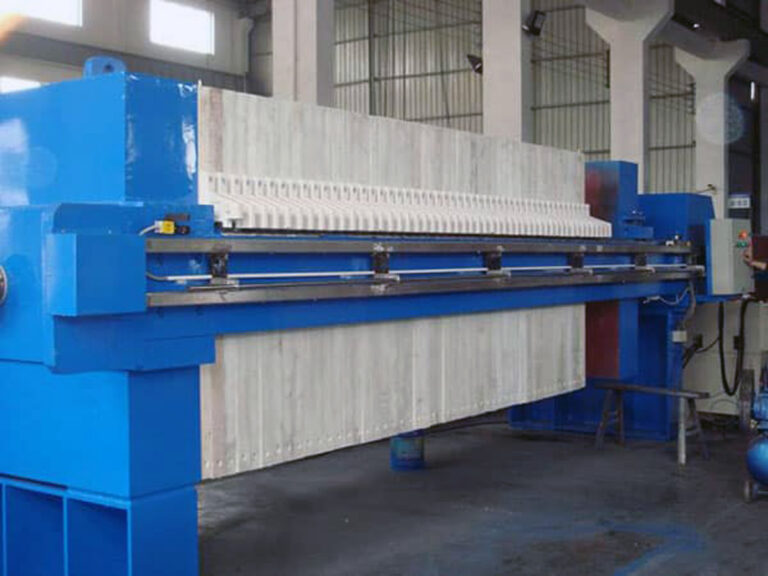
For plants using a recessed plate filter press or similar batch dewatering equipment, the total solids data provided to contractors should reflect the typical operating range across normal production, not peak performance from a well-conditioned batch. Contractors build logistics plans around what they consistently receive, not around best-case outputs.
What handoff checklist should exist between dewatering and final solids handling
The handoff from mechanical dewatering to final solids handling is not a single moment — it is a set of verifications that should occur before any load moves off-site, and at regular intervals during normal operation. Treating it as a formal checkpoint rather than an informal transfer is what makes the verification defensible when a load is questioned or a disposal record is audited.
The verification is organized around three categories, all of which depend on the disposal route already established earlier in planning. For incineration, the primary concern is solids content relative to the thermal process requirements — cake that is too wet may reduce combustion efficiency or require auxiliary fuel that was not budgeted. For landfill, the relevant checks are solids content and whether the material meets acceptance criteria for the specific site, which vary by jurisdiction and facility permit. For land application, pathogen classification and metals concentrations must be confirmed against applicable regulatory thresholds before the load is scheduled for transport.
The practical checklist should confirm, at minimum: current cake solids measurement against the agreed specification range; pathogen classification status if land application is the route; recent metal concentration data if the feed has changed since the last full characterization; wet tonnage estimate for the day’s production against contracted hauling capacity; and confirmation that storage residence time has not exceeded the window that changes cake handling characteristics. None of these are complex to verify individually, but the failure pattern in practice is that they are treated as assumed rather than confirmed — because the press is running, the cake looks similar to yesterday’s, and no one has explicitly assigned responsibility for the check. Establishing that responsibility before the system is commissioned is far less costly than discovering the gap when a contractor rejects a load or a compliance audit surfaces missing records.
The most durable planning outcome in sludge processing is a cake specification that the downstream route will consistently accept and that the plant’s daily storage, transfer, and loading logistics can sustain without accumulating pressure on any single point in the chain. Reaching that outcome requires fixing the disposal route first, deriving the cake quality targets from it, and then verifying that the dewatering equipment, conveying system, and hauling schedule are all sized and sequenced against the same set of operating conditions — not against best-case performance or a contractor’s assumed inputs.
Before finalizing any press selection or contractor scope, confirm what the disposal route actually requires in terms of solids, pathogens, and metals; calculate wet tonnage across the realistic cake solids range rather than the target; and establish who is responsible for the handoff verification on each production day. Those three steps — modest in effort, significant in consequence — are what separate a dewatering system that performs on paper from one that holds up in daily operation.
Sıkça Sorulan Sorular
Q: Does this planning approach still apply if the plant has no fixed disposal route yet and is still evaluating options?
A: The planning approach applies most critically in that situation — but the sequence must run in reverse. Without a fixed disposal route, no meaningful cake solids target can be confirmed, which means any press selection or conveying layout made in the interim is being optimized against an unknown requirement. The practical step is to resolve the disposal route before finalizing equipment specifications, even if that delays commissioning. Selecting equipment first and retrofitting the cake target later is the exact sequence that produces the mismatch described in the article.
Q: What should happen immediately after the handoff checklist confirms everything is in order — who takes ownership of the load once it leaves the plant boundary?
A: Regulatory liability and documentation responsibility do not automatically transfer at the plant gate, and plants should confirm in writing, before hauling begins, which party holds responsibility for compliance documentation at each stage of transport and final placement. For land application especially, pathogen classification data originates at the plant, but application rate compliance is managed at the destination. Establishing a clear written record of who provided what data, and when, is the protection against disputed compliance claims after a load has already moved.
Q: At what point does temporary storage becoming full justify stopping the press rather than continuing to run it?
A: The press should be stopped before storage reaches capacity, not when it is already full — because overflow or forced cake accumulation outside designed containment creates handling and drainage problems that take longer to clear than a scheduled press pause. The practical threshold depends on how quickly trucks can clear the backlog, but the operating rule should be to define a stop-fill level below maximum storage capacity, at a point where the remaining buffer is enough to cover the longest realistic truck delay the plant has experienced in normal operations.
Q: Is a membrane filter press always the better investment when disposal cost is weight-based, or are there conditions where a recessed plate configuration holds its ground?
A: A recessed plate press holds its ground when feed variability is high, maintenance resources are limited, or the solids gain a membrane press delivers does not translate into fewer truck trips because hauling is scheduled by calendar rather than by load weight. The membrane configuration adds mechanical complexity and utility demand that erodes its disposal-cost advantage if the plant cannot consistently operate the squeeze cycle at design conditions. The correct comparison is not press capital cost alone but operating cost across the realistic cake solids range the plant will actually achieve, factored against what the disposal contractor charges for the wet tonnage difference between the two configurations.
Q: How often should cake characterization data be refreshed before sharing it with hauling or land application contractors?
A: Characterization data should be refreshed whenever feed composition changes materially — a new industrial discharge entering a municipal system, a shift in production chemistry at a manufacturing plant, or a seasonal change in biological activity that affects pathogen levels. Using data from the previous quarter when feed conditions have shifted is the most common reason contractors receive cake that does not match the agreed specification. As a baseline, metals and pathogen data should be re-confirmed at least at the frequency required by the applicable disposal permit, but operationally, any significant feed change should trigger a new characterization cycle before the next scheduled haul.