Toz kontrolü ile mücadele eden endüstriyel tesisler, çevresel düzenlemeler ve operasyonel verimlilik taleplerinin artan baskısıyla karşı karşıyadır. Geleneksel filtreleme sistemleri, yüksek toz yükleri veya farklı partikül boyutları ile çalışırken genellikle yetersiz kalmakta, bu da uyumluluk sorunlarına, ekipmanın çalışmama süresine ve artan işletme maliyetlerine yol açmaktadır. Uygun toz toplama özellikleri olmadan tesisler sadece yasal cezalarla değil, aynı zamanda işçi güvenliğinin tehlikeye girmesi ve ekipman ömrünün kısalması riskiyle de karşı karşıyadır.
Yetersiz toz toplamanın sonuçları ağır olabilir: ekipman arızası nedeniyle üretimin durması, çevre kurumlarından gelen ağır para cezaları ve işçiler için potansiyel sağlık tehlikeleri. Üretim tesisleri, toz toplama sistemleri beklenmedik bir şekilde arızalandığında saat başına ortalama $50.000 aksama süresi maliyeti bildirmektedir.
Bu kapsamlı kılavuz, etkin bir şekilde uygulamak için ihtiyaç duyduğunuz teknik özellikleri, performans ölçümlerini ve seçim kriterlerini sağlar puls jet torbalama sistemleri. Gerçek uygulamalarda sistem başarısını belirleyen CFM değerleri, filtrasyon verimliliği ve temizleme döngüleri gibi kritik parametreleri inceleyeceğiz.
Pulse Jet Baghouse Nedir ve Nasıl Çalışır?
PORVOO Endüstriyel toz toplama teknolojisinde altın standardı temsil eden pulse jet torbalı sistemler, sürekli çalışmayı sürdürürken filtre torbalarını temizlemek için basınçlı hava darbelerini kullanır. Çevrimdışı temizlik için bölümlere ayırma gerektiren ters hava sistemlerinin aksine, pulse jet teknolojisi hızlı, yüksek enerjili temizlik döngüleri sayesinde kesintisiz filtreleme sağlar.
Çalışma Prensibi ve Tasarım Mimarisi
Temel işlem, her filtre torbasının üzerine yerleştirilmiş venturi nozulları aracılığıyla verilen kısa süreli basınçlı hava darbelerine (tipik olarak 0,1-0,2 saniye) dayanır. Bu darbeler, torbaları dışa doğru genişleten, mekanik esneme ve ters hava akışı yoluyla birikmiş toz kekini yerinden çıkaran anlık basınç dalgaları oluşturur.
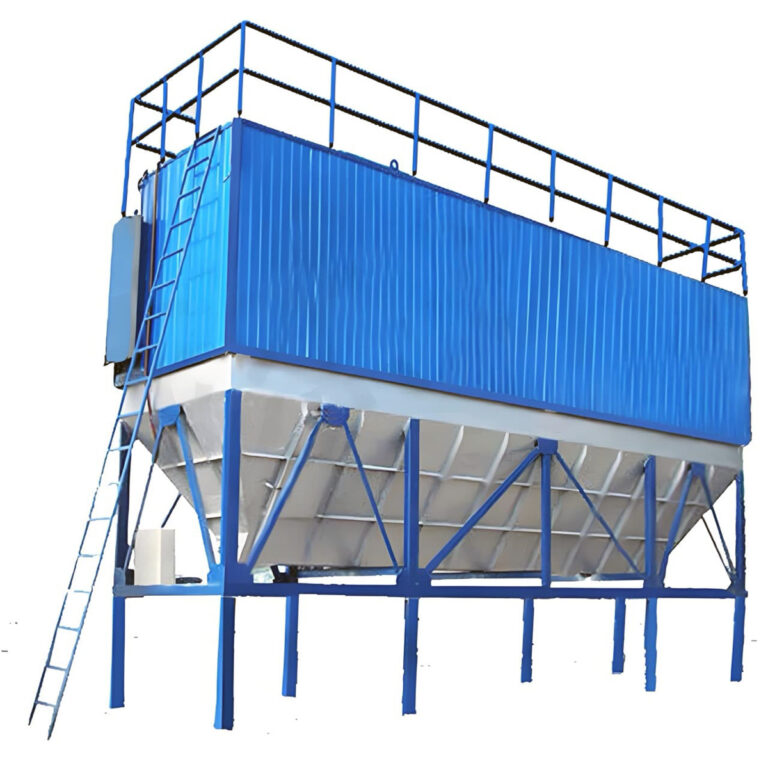
Temel bileşenler arasında temiz hava plenumu, tüp levha tertibatı, destek kafesli filtre torbaları, basınçlı hava manifold sistemi ve toz boşaltma mekanizması bulunur. Tüp levha, aşağıda asılı torbalar ve yukarıda temiz hava toplama ile temiz ve kirli hava bölgeleri arasında kritik bir bariyer görevi görür.
Darbe Zamanlama ve Kontrol Sistemleri
Modern pulse jet sistemleri sofistike zamanlayıcı tabanlı veya diferansiyel basınç kontrollü temizleme dizileri kullanır. Zamanlayıcı tabanlı sistemler torbaları önceden belirlenmiş aralıklarla (tipik olarak 30-120 saniye) darbelerken, basınç kontrollü sistemler torbalar arasındaki fark basıncı önceden belirlenmiş eşiklere (genellikle 4-6 inç su sütunu) ulaştığında temizliği başlatır.
Çeşitli kontrol stratejileriyle ilgili deneyimlerimiz, hem zamanlayıcı hem de basınç kontrolünü birleştiren hibrit sistemlerin, özellikle değişken toz yükleme koşullarına sahip uygulamalarda optimum performans sağladığını göstermektedir.
Pulse Jet Torbalı Sistemler için Temel Teknik Özellikler Nelerdir?
Anlamak baghouse tekni̇k özelli̇kleri̇ sistem performansını ve belirli uygulamalar için uygunluğu toplu olarak belirleyen birbirine bağlı çok sayıda parametrenin incelenmesini gerektirir.
Hava-Kumaş Oranı ve Filtrasyon Hızı
Hava-kumaş oranı (A/C oranı), hava akışı hacmi ile toplam filtre kumaşı alanı arasındaki ilişkiyi temsil eder ve tipik olarak dakika başına fit (fpm) olarak ifade edilir. Bu kritik özellik filtrasyon verimliliğini, basınç düşüşünü ve torba ömrünü doğrudan etkiler.
| Toz Tipi | Önerilen Klima Oranı (fpm) | Tipik Uygulamalar |
|---|---|---|
| İnce tozlar | 2.0-3.0 | Çimento, un değirmeni |
| Aşındırıcı malzemeler | 2.5-4.0 | Metal işleme, taşlama |
| Hafif tozlar | 3.0-5.0 | Ağaç işleri, paketleme |
| Ağır sanayi | 4.0-6.0 | Çelik üretimi, dökümhaneler |
Basınçlı Hava Gereksinimleri
Pulse jet sistemleri, etkili torba temizliği için 90-120 PSI'da temiz, kuru basınçlı hava gerektirir. Hava tüketimi, sistem boyutuna bağlı olarak önemli ölçüde değişir ve tipik gereksinimler 1000 CFM proses havası başına 2-8 SCFM arasında değişir. Saha değerlendirmelerinde karşılaştığımız en yaygın spesifikasyon hatalarından biri de yetersiz basınçlı hava sistemleridir.
Filtre Malzemesi Özellikleri
Filtre torbası seçimi geçirgenlik, gerilme mukavemeti, sıcaklık direnci ve kimyasal uyumluluk gibi çok sayıda teknik parametreyi içerir. Yaygın malzemeler arasında polyester (maksimum 275°F), polipropilen (maksimum 200°F), PTFE membran kompozitleri (450°F'ye kadar) ve aşırı sıcaklık uygulamaları için özel aramid elyaflar bulunur.
Gözeneklilik derecesi, 0,5″ su göstergesinde fit kare başına CFM cinsinden ölçülür ve hem filtreleme verimliliğini hem de temizleme etkinliğini önemli ölçüde etkiler. Daha yüksek gözenekli kumaşlar daha iyi darbeli temizliği kolaylaştırır ancak ince partikül tutma özelliğinden ödün verebilir.
Pulse Jet Filtre Performans Ölçütlerini Nasıl Değerlendiriyorsunuz?
Pulse jet filtre performansı değerlendirme, hem anlık operasyonel etkinliği hem de uzun vadeli sistem güvenilirliğini yansıtan çok sayıda ölçülebilir metriğin sistematik analizini gerektirir.
Filtrasyon Verimliliği Ölçümleri
Tek geçişte yakalanan partiküllerin yüzdesi olarak ölçülen birincil filtrasyon verimliliği, uygun şekilde tasarlanmış pulse jet sistemleri için tipik olarak 99,5% ile 99,99+ arasında değişmektedir. Ancak bu spesifikasyon, ilgili partikül boyutu verileri olmadan tek başına yetersiz performans karakterizasyonu sağlar.
Kesirli verimlilik eğrileri, farklı partikül boyutu aralıklarında performansı ortaya koyar ve çoğu endüstriyel pulse jet sistemi 1 mikronun üzerindeki partiküller için 99%'den daha yüksek verimlilik elde eder. Mikron altı performans büyük ölçüde filtre ortamı seçimine bağlıdır ve membran ile geleneksel keçe filtreler arasında önemli ölçüde farklılık gösterebilir.
Basınç Düşüşü ve Enerji Tüketimi
Temiz filtre torbaları boyunca operasyonel basınç düşüşü tipik olarak 1-2 inç su göstergesi arasında değişir ve temizleme aktivasyonundan önce 4-6 inçe çıkar. Sürekli olarak 6 inç su göstergesinin üzerinde çalışan sistemler, yetersiz filtre alanı, yetersiz darbeli temizlik veya uygun olmayan filtre ortamı seçimine işaret eder.
Büyük ölçekli kurulumlarla ilgili deneyimlerimize göre, basınç düşüşünü 5 inç su göstergesinin altında tutmak, daha yüksek fark basınçlarında çalışan sistemlere kıyasla fan enerji tüketimini yaklaşık 15-20% azaltır.
Temizlik Etkinliği ve Kalan Toz Keki
Etkili darbeli temizlik, membran koruması için yeterli kalıntı toz kekini korurken torba diferansiyel basıncını temiz torba değerlerinin 150% dahiline düşürmelidir. Kekin tamamen çıkarılması, temel filtre ortamını doğrudan partikül çarpmasına maruz bırakarak filtrasyon verimliliğini gerçekten azaltabilir.
| Performans Metriği | Kabul Edilebilir Aralık | Optimal Hedef |
|---|---|---|
| Artık basınç düşüşü | 1,5-2,5 inç WG | 2.0 inç WG |
| Temizleme basıncı | 90-120 PSI | 100-110 PSI |
| Pulse duration | 75-150 milliseconds | 100-120 milliseconds |
What Factors Determine Industrial Baghouse Efficiency?
Industrial baghouse efficiency depends on the complex interplay between design parameters, operational variables, and maintenance practices that collectively determine both particle capture performance and long-term reliability.
System Sizing and Residence Time
Proper baghouse sizing requires calculating both gross air volume and accounting for temperature corrections, moisture content, and altitude effects. The residence time within the baghouse housing affects settling of larger particles and provides opportunity for electrostatic attraction between charged particles and filter surfaces.
Undersized systems operating at excessive air-to-cloth ratios sacrifice efficiency for reduced capital cost, often resulting in higher long-term operational expenses through increased maintenance and shortened component life.
Inlet Design and Air Distribution
Uniform air distribution across all filter bags is crucial for maximizing efficiency and ensuring consistent bag life. Poor inlet design creates preferential flow patterns that overload specific bags while underutilizing others, reducing overall system capacity and creating maintenance complexity.
Effective inlet designs incorporate features such as perforated distribution plates, baffle systems, or cyclonic pre-separators that promote uniform flow while providing coarse particle separation upstream of the filter bags.
Temperature and Humidity Considerations
Operating temperature affects both filter media performance and dust characteristics. Higher temperatures increase filter media permeability but may compromise fabric strength and chemical resistance. Condensation from temperature fluctuations can cause dust accumulation and bag blinding, particularly with hygroscopic materials.
According to recent industry research, maintaining stable operating temperatures within 50°F of design conditions improves overall system efficiency by 8-12% compared to systems experiencing wide temperature variations.
How to Select the Right Dust Collector CFM Ratings?
Uygun seçim dust collector CFM ratings involves comprehensive analysis of process requirements, capture efficiency needs, and system integration factors that extend beyond simple volumetric calculations.
Process Air Volume Calculations
Base CFM requirements must account for actual process conditions rather than standard conditions, incorporating temperature corrections, barometric pressure adjustments, and moisture content effects. The correction factor can be substantial: air at 400°F and 50% relative humidity requires approximately 45% more volumetric capacity than the same mass flow at standard conditions.
Capture and Transport Velocities
Effective dust capture requires maintaining minimum transport velocities throughout the collection system to prevent particle settling and potential fire hazards. Transport velocities typically range from 3,500-4,500 FPM for light materials to 4,500-5,500 FPM for heavy or abrasive dusts.
Endüstriyel toz toplama sistemleri must provide sufficient capacity margin to accommodate varying process conditions while maintaining consistent capture performance across all operating scenarios.
System Pressure Losses and Fan Selection
Total system pressure drop includes losses through ductwork, inlet transitions, baghouse housing, filter bags, and outlet components. Typical pulse jet baghouse systems operate at 6-12 inches of total system static pressure, requiring careful fan selection to maintain design airflow across varying operational conditions.
It’s worth noting that oversizing CFM capacity by more than 20% can actually reduce efficiency by creating excessive air-to-cloth ratios and poor dust cake formation on filter surfaces.
What Are the Latest Advances in Filter Cleaning Technology?
Modern filter cleaning technology continues evolving through innovations in pulse delivery systems, control algorithms, and integrated monitoring capabilities that optimize performance while reducing energy consumption and maintenance requirements.
Advanced Pulse Control Systems
Recent developments in pulse control technology include variable pulse pressure systems that adjust cleaning intensity based on real-time dust loading conditions. These systems can reduce compressed air consumption by 30-40% while maintaining superior cleaning effectiveness compared to fixed-pressure systems.
Programmable logic controllers now enable sophisticated pulse sequencing that accounts for bag age, dust characteristics, and seasonal variations in process conditions. Industry consensus suggests that adaptive pulse control systems improve bag life by approximately 25% through optimized cleaning cycles.
Integrated Monitoring and Diagnostics
Modern baghouse systems incorporate continuous monitoring of differential pressure, temperature, vibration, and even acoustic signatures to provide early warning of developing problems. Predictive maintenance algorithms analyze trend data to forecast bag replacement needs and optimize cleaning parameters.
Energy Recovery and Efficiency Improvements
Heat recovery systems integrated with baghouse designs can capture waste heat from process exhaust streams, improving overall facility energy efficiency. Variable frequency drive fan controls automatically adjust airflow based on process demands, reducing energy consumption during low-production periods.
| Technology Advancement | Energy Savings | Performans İyileştirme |
|---|---|---|
| Adaptive pulse control | 25-35% | 15% longer bag life |
| VFD fan controls | 20-40% | Consistent performance |
| Integrated heat recovery | 10-25% | Reduced operating costs |
What Challenges Should You Consider When Implementing Pulse Jet Systems?
While pulse jet baghouses offer superior performance characteristics, successful implementation requires addressing several technical and operational challenges that can significantly impact long-term system effectiveness.
Maintenance Complexity and Accessibility
Pulse jet systems require regular maintenance of compressed air components, including solenoid valves, air lines, and venturi assemblies. Component accessibility for maintenance operations should be prioritized during system design, as restricted access significantly increases maintenance time and costs.
The compressed air system represents a potential single point of failure that can compromise the entire dust collection system. Backup air supply capabilities or alternative cleaning methods should be considered for critical applications.
Initial Capital Investment and Operating Costs
Higher initial costs associated with compressed air infrastructure, sophisticated control systems, and premium filter media can present budget challenges. However, our analysis of lifecycle costs typically shows favorable returns within 18-24 months through improved efficiency and reduced downtime.
Operating costs include compressed air generation (typically $0.25-0.35 per 1000 cubic feet), replacement filter bags, and electrical consumption for control systems and fans.
Environmental and Safety Considerations
Compressed air discharge during pulse cleaning can create noise levels exceeding workplace safety limits, requiring acoustic treatment or operational scheduling considerations. Additionally, rapid bag flexing during cleaning cycles can generate static electricity, requiring proper grounding and potentially explosion-proof electrical components for combustible dust applications.
Sonuç
Successful pulse jet baghouse implementation depends on thorough understanding of technical specifications including appropriate CFM ratings, air-to-cloth ratios, and pulse cleaning parameters matched to specific application requirements. Key performance metrics such as filtration efficiency above 99.5%, operational pressure drop maintained below 5 inches water gauge, and optimized cleaning cycles directly determine both immediate effectiveness and long-term operational costs.
The integration of advanced control systems, predictive maintenance capabilities, and energy recovery technologies positions modern puls jet torbalama systems as comprehensive solutions for demanding industrial applications. While initial investment and maintenance complexity present challenges, the operational benefits of continuous filtration, superior efficiency, and reduced downtime typically justify implementation costs within two years.
Future developments in filter cleaning technology will likely focus on artificial intelligence integration for autonomous operation optimization, advanced filter media with extended service life, and enhanced energy recovery systems for improved sustainability. Consider your specific dust characteristics, process conditions, and long-term operational goals when evaluating these sophisticated filtration systems.
For facilities ready to implement state-of-the-art dust collection solutions, comprehensive industrial dust collection systems provide the technical expertise and proven performance necessary for successful long-term operation.
Sıkça Sorulan Sorular
Q: What are the key Pulse Jet Baghouse Specifications | Technical Performance Metrics?
A: The primary specifications include filtration velocity (air-to-cloth ratio), surface area of filter bags, airflow capacity, and cleaning system type. Filtration velocity measures the airflow passing through the filter media per unit area and directly impacts dust removal efficiency. Surface area refers to the total fabric coverage allowing particle capture; larger areas improve performance and lifespan. Airflow capacity is the volume of air processed per minute, typically measured in cubic feet per minute (cfm). Pulse jet cleaning is the standard method used to remove dust from bags by bursts of compressed air to maintain filter effectiveness.
Q: How does filtration velocity affect Pulse Jet Baghouse performance?
A: Filtration velocity, or air-to-cloth ratio, is crucial for efficient particle capture. It is calculated by dividing the volumetric airflow rate by the total filter cloth area. High filtration velocity can cause excessive drag and reduce filtration efficiency, while too low velocity may lead to increased baghouse size and cost. Maintaining an optimal filtration velocity balances effective dust capture and operational cost, ensuring longer filter bag life and reliable system performance.
Q: What materials and construction features are typical in Pulse Jet Baghouse designs?
A: Common construction features include welded carbon steel housings, reinforced filter cages, and durable polyester or fiberglass filter media capable of handling temperatures up to around 275°F to 500°F depending on design. Pulse valves and compressed air manifolds are integral for cleaning. Many units include safety ladders, access platforms, and modular designs for easy installation and maintenance. The mechanical-assist seal systems and venturi-shaped cages enhance cleaning efficiency by focusing the pulse jet airflow on the filter bags.
Q: How is the surface area for filter bags determined in Pulse Jet Baghouse systems?
A: Surface area is calculated based on the number of bags, bag length, and bag diameter to achieve enough fabric area for the required airflow volume. For example, the total fabric area equals the number of bags multiplied by the surface area of each cylindrical bag (circumference times length). This total area is chosen to maintain an optimal air-to-cloth ratio for effective filtration and to distribute the dust load evenly, extending filter life and improving cleaning effectiveness.
Q: What maintenance or design considerations improve the technical performance metrics of Pulse Jet Baghouses?
A: Proper bag spacing is critical to avoid airflow interference and allow thorough cleaning. Using reinforced cages and venturi nozzles ensures efficient pulse cleaning. Programmable timer controls optimize pulse intervals, reducing air consumption and extending bag life. Additionally, internal pulse valves that prevent freeze-ups support consistent performance. Regular monitoring of pressure drop helps maintain efficient operation by indicating when bags need cleaning or replacement.
Q: What operating conditions do Pulse Jet Baghouses typically support?
A: These baghouses commonly operate with airflow capacities ranging from several thousand up to hundreds of thousands of cfm. They handle temperatures usually between ambient to around 275°F, with some versions capable of up to 500°F. The pulse jet cleaning system enables continuous filtration in dust-laden air streams, making them suitable for industrial applications requiring over 99% removal efficiency of fine particulate matter. Structural features support OSHA safety requirements and facilitate field assembly or modular configurations.
Dış Kaynaklar
- Baghouse Specifications: Sizing, Surface Area, and More – Provides detailed technical performance metrics, including cleaning systems, filtration velocity, surface area calculations, and performance capacities for pulse jet baghouses.
- Standard Pulse Jet Baghouse – Outlines technical specifications, including cloth area, operating temperature, construction features, and performance aspects of standard pulse jet baghouse systems.
- Astec Pulse Jet Baghouse – Describes technical details on pulse valve design, internal mounting for improved performance, and capacity ranges starting at 34,000 cfm for pulse jet baghouses.
- Baghouses – AirKnowledge Training Slides (PDF) – Provides an overview of pulse jet baghouse design, internal structure, and performance monitoring, suitable for technical training.
- Design and Sizing of Baghouse Dust Collectors (PDF) – Offers engineering calculations, air-to-cloth ratio formulas, and sizing guidelines specific to pulse jet baghouses, with technical performance metrics.
- Industrial Dust Collectors: Choosing the Right Baghouse System – Discusses performance characteristics, technical considerations, and application suitability for different baghouse types, including pulse jet systems.