Bir metal imalat atölyesinin hareketli ortamı, hem çalışan sağlığını hem de operasyonel verimliliği etkileyen kritik bir zorluk teşkil eder: metal üreti̇mi̇ toz kontrolü. Her taşlama işlemi, kaynak pasosu ve plazma kesimi, çalışma alanına mikroskobik partiküller ve zehirli dumanlar salarak ciddi solunum rahatsızlıklarına, üretkenliğin azalmasına ve maliyetli OSHA ihlallerine yol açabilecek görünmez bir tehdit oluşturur.
Amerikan Kaynak Derneği'ne göre, kaynakçıların akciğer kanserine yakalanma riski genel nüfusa kıyasla 40% daha yüksektir ve bunun başlıca nedeni metal dumanlarına ve partiküllere uzun süre maruz kalmalarıdır. Mesleki Güvenlik ve Sağlık İdaresi, metal işleme tesislerinin yetersiz toz kontrol önlemleri nedeniyle ihlal başına ortalama $38.000 para cezası ile karşı karşıya olduğunu bildirmektedir. Uygun müdahale yapılmadığı takdirde, havayla taşınan bu kirleticiler hızla birikerek verimli çalışma ortamlarını hem acil güvenliği hem de uzun vadeli işçi refahını tehdit eden sağlık tehlikelerine dönüştürür.
Bu kapsamlı kılavuz, etkili toz kontrol sistemlerinin uygulanması, en yeni ekstraksiyon teknolojilerinin karşılaştırılması ve imalat atölyenizin katı hava kalitesi standartlarını karşılamasını sağlamak için kanıtlanmış stratejileri ortaya koymaktadır. Önde gelen üreticilerin maliyet etkin operasyonları sürdürürken 99,9% partikül yakalama oranlarına nasıl ulaştıklarını, gerçek dünyadan vaka çalışmaları ve iş sağlığı uzmanlarının uzman görüşleri ile desteklenerek keşfedeceksiniz.
Metal İmalatında Başlıca Toz ve Duman Kaynakları Nelerdir?
Metal üretim prosesleri, hedefe yönelik kontrol stratejileri gerektiren çeşitli hava kaynaklı kirleticiler üretir. Bu kaynakların anlaşılması, tesis yöneticilerinin belirli tehlikeleri etkili bir şekilde ele alan kapsamlı toz toplama sistemleri tasarlamasını sağlar.
Kaynak İşlemleri ve Duman Oluşumu
Kaynak dumanı aspiratörleri kaynak proseslerinin 0,005 ila 20 mikron çapında partiküller ürettiği düşünüldüğünde çok önemli hale gelmektedir. MIG kaynağı tipik olarak tüketilen kilogram elektrot başına 5-25 gram duman üretirken, TIG kaynağı kilogram başına 1-5 gram ile önemli ölçüde daha az duman üretir. Uluslararası Kaynak Enstitüsü'ne göre, paslanmaz çelik kaynağı krom ve nikel içeriği nedeniyle en tehlikeli dumanı oluşturur.
Otomotiv imalat atölyeleriyle çalışma deneyimimize göre, kaynak arkının 6-12 inç yakınına yerleştirilen taşınabilir duman emme üniteleri, oluşan dumanın 85-95%'sini yakalar. Bununla birlikte, daha büyük operasyonlar, kaynakçı hareketini kısıtlamadan esnek konumlandırma sağlayan baş üstü bom sistemlerinden daha fazla yararlanır.
Taşlama ve Kesme Tozu Üretimi
Taşlama işlemleri, kaynağa kıyasla daha büyük partikül hacimleri oluşturduğundan benzersiz zorluklar ortaya çıkarır. Tipik bir 7 inçlik açılı taşlama makinesi dakikada yaklaşık 2-4 gram malzeme kaldırarak 0,1 ila 100 mikron arasında değişen partiküller oluşturur. Taşlama toz kontrolü sistemler hem ince hem de kaba partikülleri etkili bir şekilde yakalarken bu yüksek hacimleri idare etmelidir.
Plazma kesim dumanının giderilmesi, işlemin 0,1 mikronun altında ultra ince partiküller oluşturan yoğun ısı üretimi nedeniyle özel bir dikkat gerektirir. Bu partiküller akciğer dokusuna derinlemesine nüfuz eder ve etkili bir şekilde giderilmesi için HEPA sınıfı filtreleme gerektirir.
| İmalat Süreci | Partikül Boyut Aralığı (mikron) | Tipik Üretim Oranı | Birincil Sağlık Endişeleri |
|---|---|---|---|
| MIG Kaynağı | 0.005-20 | 5-25 g/kg elektrot | Manganez, Demir oksit |
| Taşlama (Çelik) | 0.1-100 | 2-4 g/dakika | Silika, Metal parçacıkları |
| Plazma Kesim | 0.01-10 | 1-3 g/dakika | Azot oksitler, Metal dumanları |
| Oksi-yakıt Kesimi | 0.1-50 | 0,5-2 g/dakika | Demir oksit, Karbon monoksit |
Malzemeye Özgü Kirlenme Riskleri
Farklı metaller, toz kontrol sistemi seçimini etkileyen farklı tehlike profilleri oluşturur. Alüminyum taşlama, patlamaya dayanıklı ekipman gerektiren yanıcı toz üretirken, paslanmaz çelik işleme kanserojen krom VI bileşikleri üretir. 2023 yılında yapılan bir NIOSH çalışması, birden fazla alaşım işleyen atölyelerin, değişen partikül özelliklerini etkili bir şekilde ele almak için çok aşamalı filtreleme sistemlerine ihtiyaç duyduğunu ortaya koymuştur.
Kaynak Dumanı Aspiratörleri İmalathane Hava Kalitesini Nasıl İyileştirir?
Modern kaynak dumanı emme sistemleri, tehlikeli partikülleri çalışma alanına dağılmadan önce uzaklaştırmak için sofistike mühendislik ilkelerini kullanır. Bu sistemler, ölçülebilir hava kalitesi iyileştirmeleri yoluyla hem mevzuata uygunluğu hem de çalışan verimliliğini doğrudan etkiler.
Kaynak Yakalama Teknolojisinin Avantajları
Kaynak yakalama sistemleri, emisyon kaynağında dakikada 100-200 fitlik yakalama hızlarına ulaşarak emme noktalarını duman oluşumuna mümkün olduğunca yakın konumlandırır. Amerikan Resmi Endüstriyel Hijyenistler Konferansı'nın araştırması, genel havalandırmanın 50-70% etkinliğine kıyasla kaynak yakalamanın kaynak dumanının 90-99%'sini giderdiğini göstermektedir.
Liderlik endüstri̇yel toz toplama si̇stemleri̇ kaynak akımına göre emişi otomatik olarak ayarlayan değişken frekanslı sürücüler içerir ve enerji tüketimini en aza indirirken yakalama verimliliğini optimize eder. Bu akıllı yaklaşım, sabit hızlı sistemlere kıyasla işletme maliyetlerini 25-40% oranında azaltır.
Çok Aşamalı Filtrasyon Performansı
Gelişmiş kaynak dumanı aspiratörleri farklı partikül boyutlarını ve türlerini ele almak için sıralı filtreleme aşamalarını kullanır. İlk aşama tipik olarak daha büyük partikülleri gidermek için bir ön filtre veya siklon ayırıcı kullanır ve aşağı akış bileşenlerini erken aşınmaya karşı korur. İkincil HEPA filtrasyonu 0,3 mikrona kadar olan partikülleri 99,97% verimlilikle yakalar.
“Endüstriyel Hijyen Enstitüsü'nde iş hijyeni uzmanı olan Dr. Sarah Chen, ”Etkili duman emişinin anahtarı, filtrasyon teknolojisini üretilen belirli kirleticilerle eşleştirmekte yatıyor“ diyor. ”Herkese uyan tek bir yaklaşım, çeşitli üretim ortamlarında nadiren en iyi sonuçları verir."
Ancak çok aşamalı sistemler, tek aşamalı alternatiflere kıyasla daha fazla bakım dikkati ve daha yüksek ilk yatırım gerektirir. Filtre değiştirme maliyetleri, kullanım yoğunluğuna ve kirlilik seviyelerine bağlı olarak ekstraksiyon ünitesi başına yıllık $500-2.000 arasında değişebilir.
Mobil ve Sabit Ekstraksiyon Sistemleri
Mobil emiş kolları, çeşitli iş parçası boyutları ve kaynak pozisyonları için esneklik sunarak özel imalat atölyeleri için idealdir. Bu sistemler tipik olarak 800-1.500 CFM hava akışı kapasitesi sağlar ve iş istasyonları arasında hızla yeniden konumlandırılabilir. Sabit baş üstü sistemleri, tutarlı kaynak konumlarına sahip üretim ortamlarında üstün yakalama oranları ve daha az operatör etkileşimi gereksinimi sunar.
Michigan'daki bir otomotiv parçaları üreticisi, hem yüksek üretim kaynak hücreleri hem de özel onarım işleri için kapsamı optimize eden mobil ve sabit ekstraksiyon noktalarının bir kombinasyonunu kurduktan sonra hava kalitesi ölçümlerinde 35% iyileşme bildirdi.
Ne Tür Metal İşleme Tozu Toplama Sistemleri En Etkilidir?
Metal işleme toz toplama sistemler tasarım, kapasite ve uygulama uygunluğu açısından önemli farklılıklar gösterir. En uygun sistemin seçilmesi, üretim gereksinimlerinin, alan kısıtlamalarının ve kontaminasyon özelliklerinin dikkatli bir şekilde analiz edilmesini gerektirir.
Centralized Collection System Benefits
Centralized systems serve multiple workstations through a network of ductwork, offering economies of scale for larger facilities. These systems typically feature 3,000-20,000 CFM capacity and can maintain consistent suction across 15-30 pickup points simultaneously. A structural steel fabricator in Texas achieved 18-month ROI after installing a centralized system that reduced individual unit maintenance by 60%.
The primary limitation involves higher upfront installation costs, typically ranging from $15,000-75,000 depending on facility size and complexity. Additionally, system shutdown for maintenance affects all connected workstations, requiring careful scheduling to minimize production disruption.
Portable Unit Applications
Portable dust collectors excel in smaller shops or applications requiring frequent equipment relocation. Units ranging from 500-2,000 CFM provide targeted collection for 1-3 workstations while maintaining mobility for changing production needs. These systems cost $2,000-15,000 per unit and offer simplified installation without permanent ductwork modifications.
Downdraft Table Integration
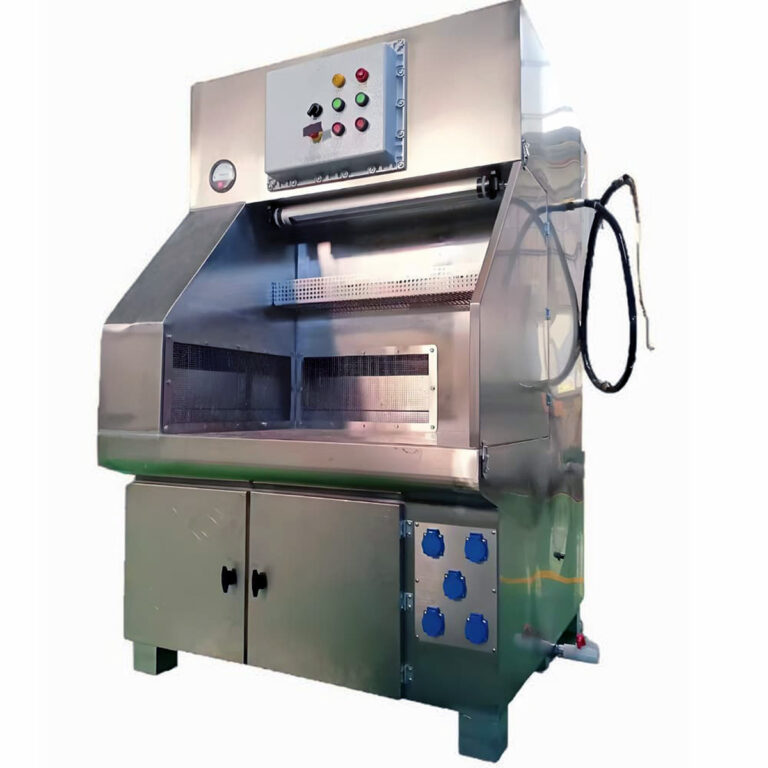
Downdraft tables combine work surface functionality with integrated dust collection, particularly effective for grinding, finishing, and light welding operations. These units achieve capture velocities of 150-300 FPM across the work surface, ensuring consistent particle removal regardless of operator position.
| Sistem Tipi | Typical Capacity (CFM) | Coverage Area | İlk Yatırım | En İyi Uygulamalar |
|---|---|---|---|---|
| Centralized | 3,000-20,000 | Facility-wide | $15,000-75,000 | High-volume production |
| Portable | 500-2,000 | 1-3 workstations | $2,000-15,000 | Custom fabrication |
| Downdraft Tables | 800-2,500 | Single workstation | $3,000-12,000 | Grinding, finishing |
| Overhead Arms | 600-1,500 | Flexible coverage | $1,500-8,000 | Welding applications |
How Can Fabrication Shops Optimize Plasma Cutting Fume Removal?
Plasma cutting fume removal presents unique engineering challenges due to the process’s high-temperature operation and diverse material compatibility. Effective control strategies must address both the volume and toxicity of generated emissions while maintaining operational efficiency.
Water Table Integration Strategies
Water-cooled plasma tables significantly reduce airborne particle generation by trapping sparks and molten material in the water bath. This approach reduces fume generation by 70-85% compared to dry cutting operations. However, water tables require regular maintenance to prevent bacterial growth and maintain cutting quality, with typical water change intervals of 2-4 weeks depending on usage intensity.
Modern water tables incorporate fine bubble diffusion systems that further enhance particle capture by creating a barrier between the cutting zone and operator breathing space. A shipbuilding facility in Louisiana reported 40% reduction in respiratory protection requirements after upgrading to water tables with integrated bubble systems.
Downdraft Exhaust Optimization
Downdraft systems installed beneath plasma cutting tables create negative pressure that draws fumes away from the operator breathing zone. Effective systems require 200-500 CFM per square foot of table surface area, with higher airflow needed for thicker material cutting operations. The key consideration involves balancing sufficient capture velocity against excessive air turbulence that can affect cutting quality.
In our experience, Variable Frequency Drive (VFD) controls allow operators to adjust exhaust rates based on material thickness and cutting speed, optimizing both fume capture and energy consumption. This approach typically reduces energy costs by 20-30% while maintaining effective emission control.
Filtration System Selection
Plasma cutting generates ultrafine particles that require specialized filtration approaches beyond standard baghouse technology. Cartridge filters with PTFE membrane coatings achieve 99.9% efficiency on submicron particles while providing longer service life in high-temperature applications. These filters typically cost 15-25% more than standard pleated media but offer 2-3x longer replacement intervals.
What Are the Key Considerations for Fabrication Shop Air Quality Management?
Kapsamlı fabrication shop air quality management extends beyond individual dust collection units to encompass facility-wide ventilation strategies, monitoring protocols, and regulatory compliance measures.
Ventilation System Design Principles
Effective facility ventilation requires careful balance between contamination control and energy efficiency. The American Society of Heating, Refrigerating and Air-Conditioning Engineers recommends minimum 4-6 air changes per hour for general welding areas, with higher rates needed for confined spaces or heavy production zones.
Strategic placement of makeup air units prevents negative pressure conditions that can draw contaminated air from adjacent areas. A best practice involves positioning makeup air inlets at least 25 feet from dust collection exhaust points to prevent short-circuiting and ensure proper air distribution throughout the workspace.
Real-Time Monitoring Implementation
Gelişmiş toz toplama si̇stemleri̇ incorporate real-time particulate monitoring that alerts operators to filter saturation or system malfunctions. These systems typically monitor particle concentrations in both the ambient air and exhaust streams, providing early warning of degraded performance.
Continuous monitoring also supports OSHA compliance documentation by maintaining permanent records of air quality measurements. This data proves invaluable during inspections and helps identify trends that guide preventive maintenance scheduling.
Personal Protective Equipment Integration
While engineering controls provide primary protection, respiratory protection remains necessary for many fabrication operations. Half-face respirators with P100 filters offer adequate protection for most grinding and light welding applications, while supplied-air systems become necessary for confined space welding or heavy production environments.
“The most effective approach combines engineered dust control systems with appropriate respiratory protection as a backup measure,” notes Mark Rodriguez, industrial hygienist and former OSHA compliance officer. “Neither approach alone provides complete protection in all fabrication scenarios.”
Training programs must emphasize that dust collection systems reduce but don’t eliminate exposure risks, particularly during maintenance operations or equipment malfunctions.
How Do You Implement Cost-Effective Metal Fabrication Dust Control Solutions?
Implementing comprehensive dust control requires strategic planning that balances initial investment against long-term operational benefits and regulatory compliance costs. Successful installations typically achieve full ROI within 12-24 months through reduced insurance costs, improved productivity, and avoided citation penalties.
Aşamalı Uygulama Stratejileri
Many fabrication shops benefit from phased dust control installation that prioritizes high-risk operations while spreading capital investment over multiple budget cycles. Beginning with welding operations typically provides the greatest immediate benefit due to the high toxicity of welding fumes compared to mechanical grinding dust.
A medium-sized structural steel fabricator in Ohio implemented a three-phase approach: Year 1 focused on welding booth extraction systems ($25,000 investment), Year 2 added grinding station collection ($18,000), and Year 3 completed the installation with plasma cutting controls ($12,000). This approach generated positive cash flow by Year 2 through reduced workers’ compensation costs and improved productivity.
Energy Efficiency Optimization
Modern dust collection systems consume significant electrical power, typically adding $5,000-15,000 annually to facility operating costs. Variable frequency drives, high-efficiency motors, and optimized ductwork design can reduce these costs by 30-40% while maintaining collection performance.
Demand-based control systems that activate collection only during active production operations provide additional savings in facilities with intermittent production schedules. These systems typically feature magnetic starters or current sensors that detect welding or grinding equipment operation, automatically engaging appropriate dust collection zones.
Yatırım Getirisi Analizi
Quantifiable benefits of effective dust control extend beyond regulatory compliance to include measurable improvements in productivity, equipment longevity, and worker satisfaction. Clean air environments typically experience 15-25% reduction in respiratory-related sick days and 10-20% improvement in overall worker productivity due to reduced fatigue and improved comfort levels.
Equipment maintenance costs also decrease significantly in controlled environments, with welding equipment lasting 20-30% longer when protected from excessive dust accumulation. This factor becomes particularly important for precision equipment such as robotic welding systems that require consistent performance for quality control.
| Maliyet Kategorisi | Without Dust Control | With Effective Control | Yıllık Tasarruflar |
|---|---|---|---|
| Workers’ Comp Claims | $8,000-15,000 | $2,000-4,000 | $6,000-11,000 |
| OSHA Citation Risk | $5,000-50,000 | $0-1,000 | $5,000-49,000 |
| Equipment Maintenance | $12,000-25,000 | $8,000-18,000 | $4,000-7,000 |
| Productivity Loss | $15,000-30,000 | $5,000-12,000 | $10,000-18,000 |
Sonuç
Etkili metal üreti̇mi̇ toz kontrolü represents a critical investment in both worker safety and operational excellence that delivers measurable returns through improved productivity, regulatory compliance, and reduced long-term costs. The integration of source capture technology, multi-stage filtration systems, and intelligent controls creates comprehensive protection that addresses the diverse contamination challenges inherent in modern fabrication operations.
The evidence clearly demonstrates that facilities implementing systematic dust control solutions achieve 85-95% reduction in airborne contaminants while generating positive ROI within 12-24 months. Key success factors include proper system sizing, strategic equipment placement, and ongoing maintenance protocols that ensure sustained performance over multi-year service life.
As regulatory standards continue tightening and worker safety awareness increases, fabrication shops that proactively invest in comprehensive air quality management position themselves for sustainable competitive advantage. The choice between reactive compliance and proactive protection ultimately determines both immediate operational costs and long-term business viability.
For fabrication facilities ready to implement world-class dust control solutions, PORVOO offers comprehensive system design and installation services backed by decades of industrial air quality expertise. The question isn’t whether your shop needs effective dust control—it’s how quickly you can implement solutions that protect your most valuable assets: your workers and your business reputation.
What specific dust control challenges does your fabrication operation face, and how might targeted engineering solutions transform both your air quality and bottom-line performance?
Sıkça Sorulan Sorular
Q: What is metal fabrication dust control and why is it important?
A: Metal fabrication dust control involves managing and reducing the dust generated during metalworking processes like cutting, grinding, and welding. It is important because dust can pose serious health risks to workers, such as respiratory problems, and can create safety hazards, including fire and explosion risks. Effective dust control also protects machinery from damage and helps maintain a clean, compliant workplace environment.
Q: How does welding fume extraction work in metal fabrication?
A: Welding fume extraction systems capture and remove harmful fumes and particulate matter generated during welding. These systems use localized extraction arms or hoods positioned near the weld to collect fumes before they disperse into the air. The contaminated air is then filtered through specialized filters to trap hazardous substances, ensuring cleaner air for workers and compliance with workplace safety regulations.
Q: What are common dust control solutions used in metal fabrication?
A: Common solutions include:
- Downdraft tables that pull dust downward at the source
- Fume extraction arms which provide flexible local extraction for welding fumes
- Enclosed CNC machines equipped with integrated dust collection systems
- Wet scrubbers that capture fine particulate and mists via liquid filtration
- Inertial separators which use directional airflow to remove dust from the airstream
Choosing the right solution depends on the type of metal cutting or welding processes and dust characteristics.
Q: How do dust control needs differ between manual and automated metal cutting?
A: Manual metal cutting (e.g., shearing, manual plasma cutting) exposes operators directly to dust and fumes, requiring localized extraction methods like fume arms or downdraft tables. Automated cutting, such as CNC laser or plasma cutting, often uses enclosed machines with built-in dust collection systems or external ducted units to handle dust safely and efficiently at a production scale.
Q: What are the best practices for maintaining metal fabrication dust control systems?
A: Best practices include:
- Capturing dust at the source to prevent dispersion
- Regular cleaning of hidden and hard-to-reach areas to avoid buildup
- Designing the workspace to minimize dust accumulation
- Routine inspection and maintenance of extraction equipment and filters
- Promptly addressing any leaks or system inefficiencies to maintain optimal performance and worker safety
Q: Can metal fabrication dust control improve overall workplace safety and efficiency?
A: Yes, effective dust and fume extraction systems improve air quality, reduce fire and health hazards, and extend the lifespan of equipment. Cleaner environments enhance worker comfort and productivity, reduce downtime caused by equipment contamination, and help manufacturers comply with health and safety regulations, ultimately leading to safer and more efficient operations.
Dış Kaynaklar
- Metal Dust Collectors | Laguna Tools – Offers a range of innovative metal dust collectors to ensure clean, safe, and efficient workspaces in metal fabrication environments.
- Industrial Dust Collector for Metal Grindings, Live Sparks, & Dust – Manufactures specialized industrial dust collectors designed for controlling dust, sparks, and grindings in metal fabrication and welding applications.
- Metal Dust Collection Systems for Machine Shops – Provides customized fume and dust collection solutions for machine shops, focusing on protecting employees from toxic and explosive metal dust as well as welding fumes.
- Metal Dust Collector Systems | Grinding Dust Removal | JET Tools – Supplies metal dust collection systems and equipment for safe removal of grinding and fabrication dust, enhancing air quality in metalworking operations.
- Metalworking Dust Collection System – RoboVent – Delivers dust and welding fume collection systems for metalworking industries, including portable units and facility-wide custom solutions to maintain workplace safety and air quality.
- Metal Fume Extraction & Dust Control Solutions | Donaldson Torit – Provides comprehensive solutions for extracting welding fumes and controlling metal dust, helping businesses comply with health and safety regulations in metal fabrication.