For quarry managers and stone fabrication plant operators, wastewater treatment is a persistent operational bottleneck. The traditional approach—large, land-intensive settling ponds—creates significant environmental liability, consumes valuable real estate, and offers inconsistent water recovery. This inefficiency turns a necessary process into a major cost center and compliance risk.
The regulatory and economic landscape is shifting. Water usage scrutiny is intensifying, and the value of industrial land continues to rise. Implementing a closed-loop water system is no longer just about compliance; it’s a strategic move for operational resilience and sustainability. A modern silo-based treatment system represents a fundamental shift from passive containment to active, automated resource recovery.
How a Silo System Works: Core Principles & Components
The Sedimentation Engine
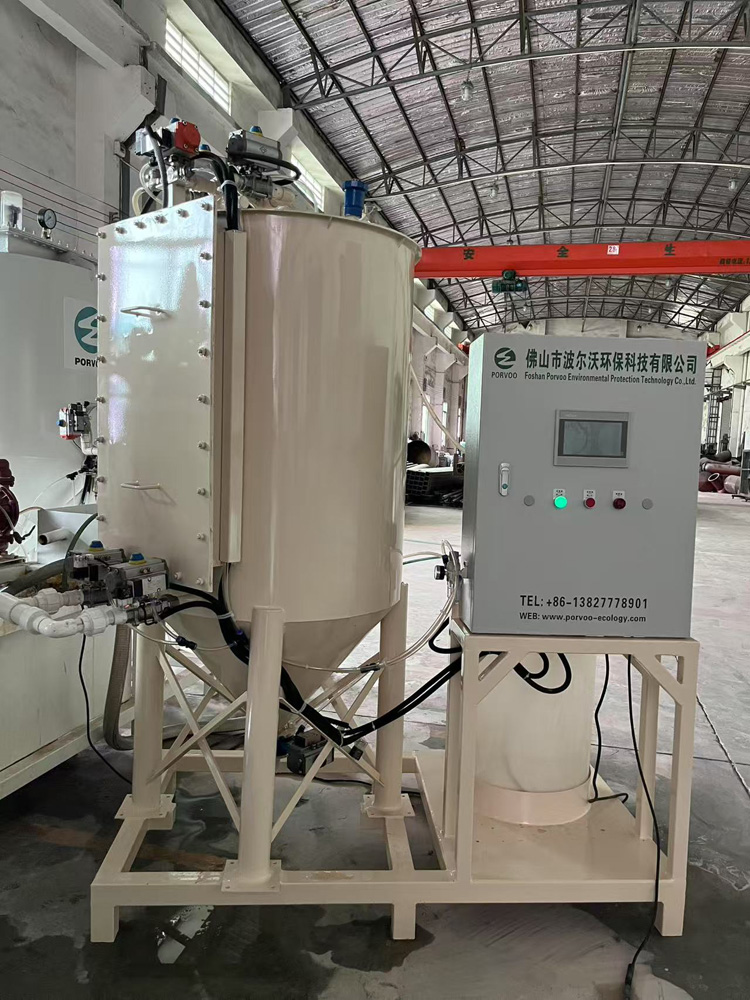
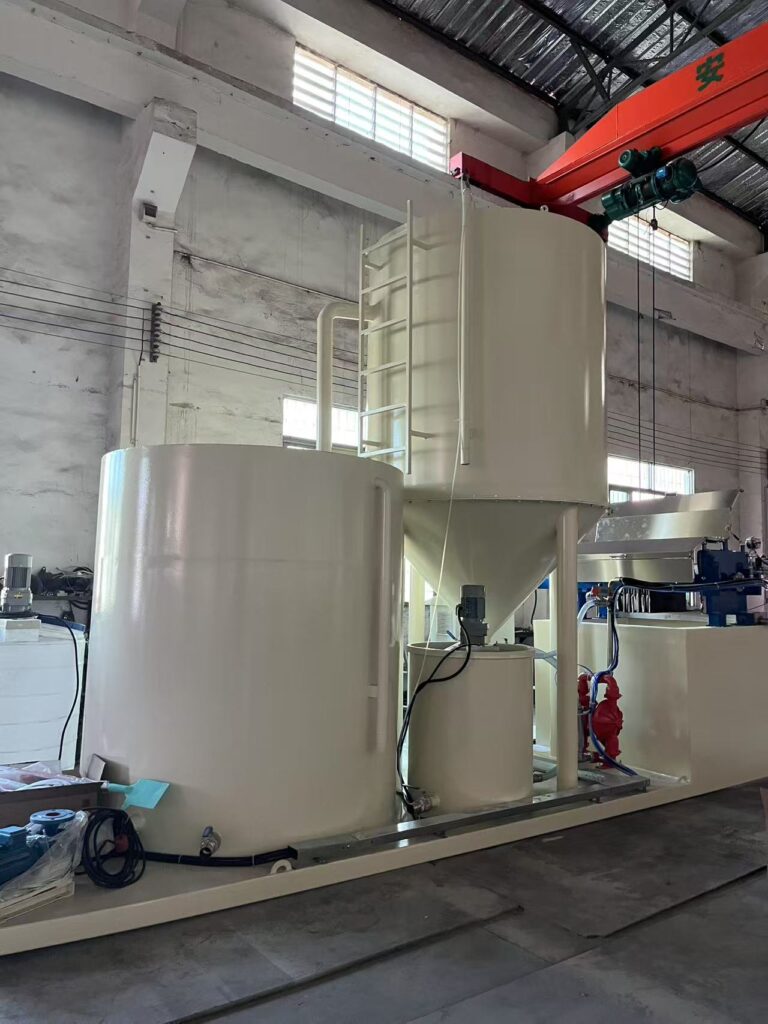
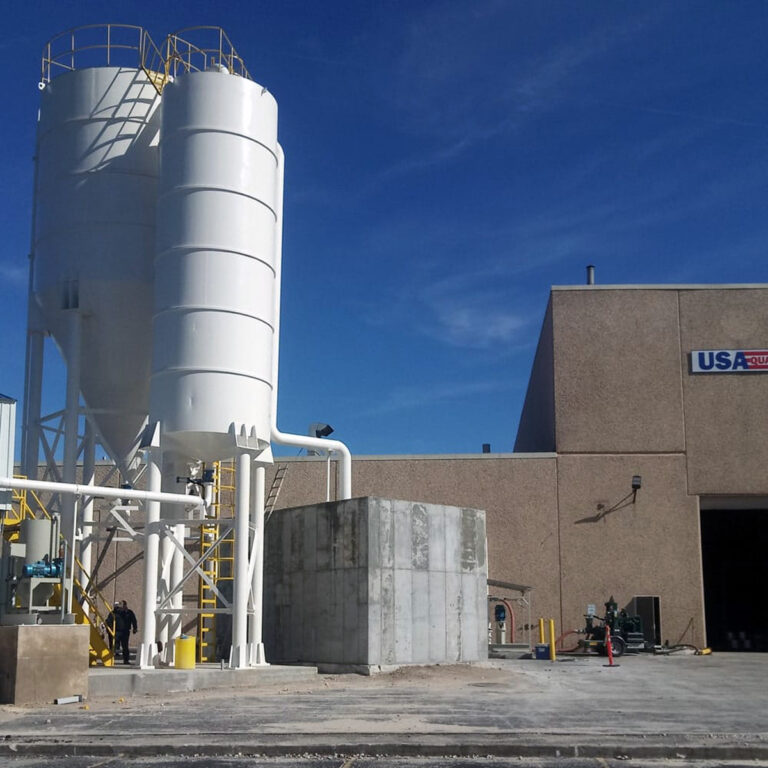
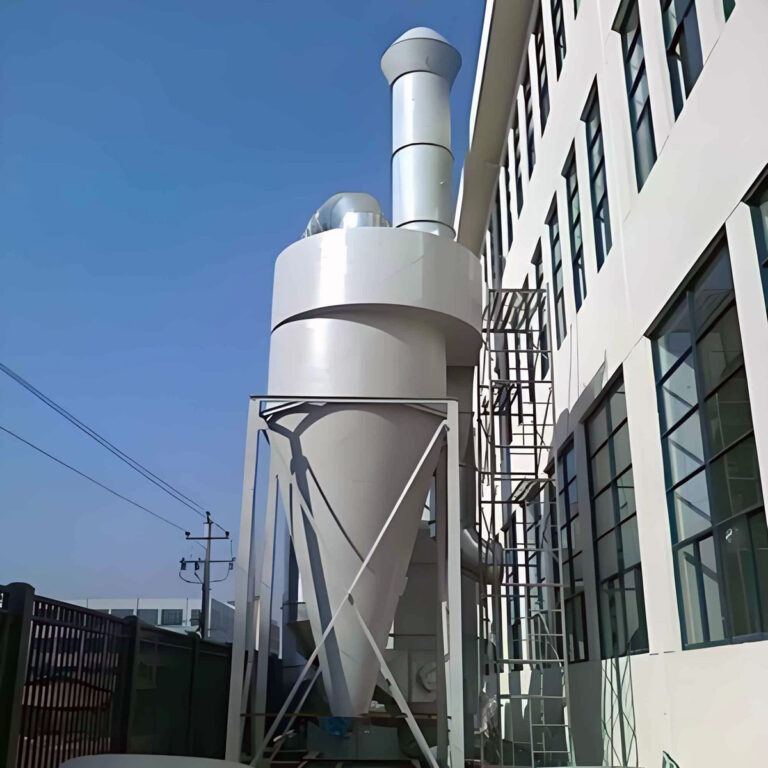
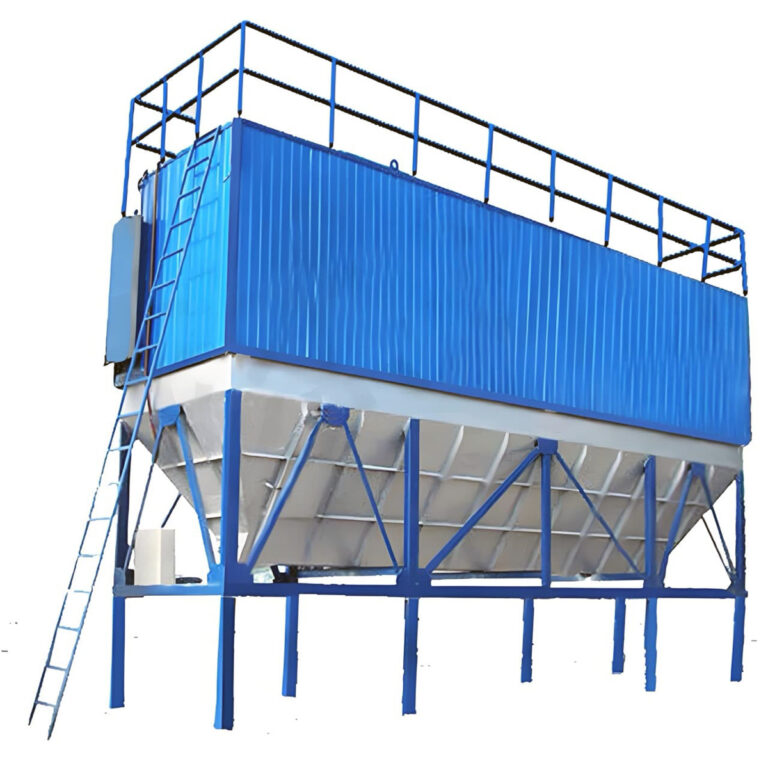
At its core, a silo system accelerates gravity. Wastewater slurry is pumped into the top of a vertical tank. Inside, a lamellar pack—a stack of inclined plates—creates a vast effective settling area within a compact footprint. Solids slide down the plates and collect in the conical bottom as thickened sludge. Clarified water flows upward and overflows at the top for immediate reuse or further polishing. This continuous process is the system’s efficiency driver.
From Collection to Extraction
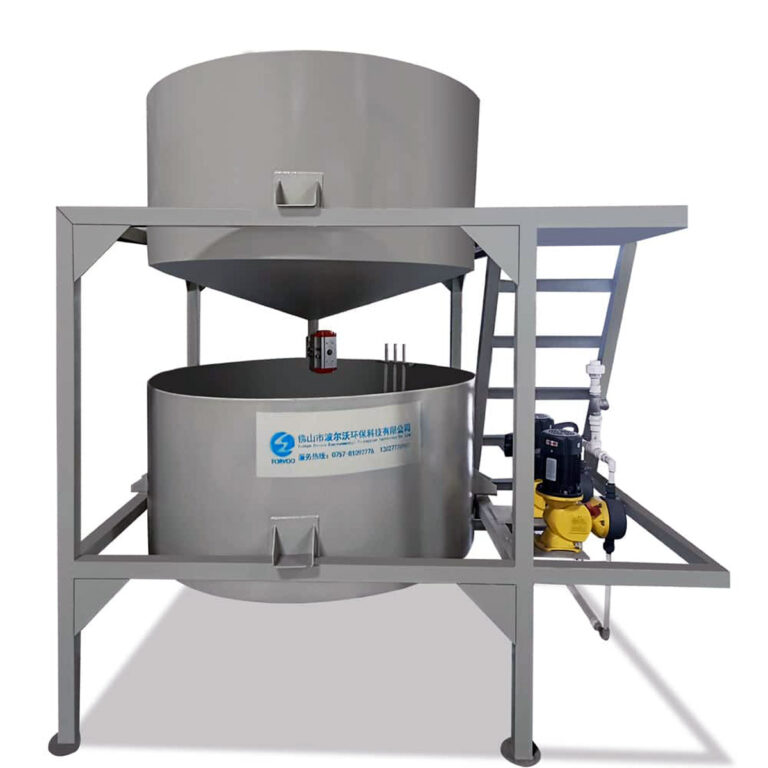
The process begins with slurry collection from saws and polishers. A polymer dosing system may be integrated to flocculate fine particles, though flocculant-free patented processes are a valuable alternative. The key to consistent operation is automated sludge extraction. Using timers or, preferably, density meters, a pump removes the concentrated sludge from the silo bottom only when optimal density is reached. This automation ensures steady-state operation and protects downstream dewatering equipment.
System Synergy
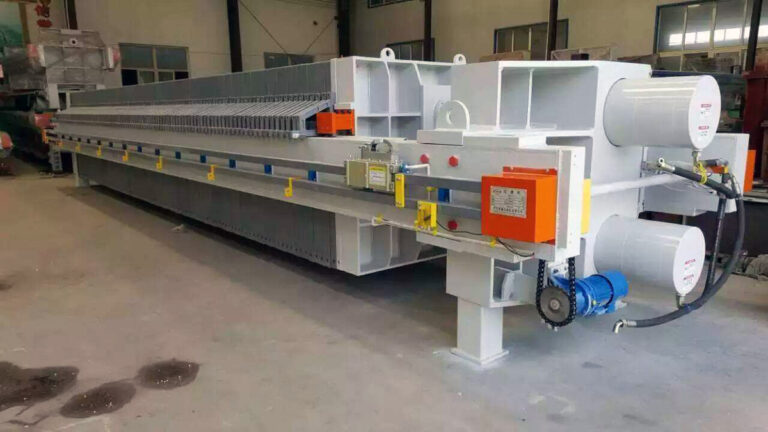
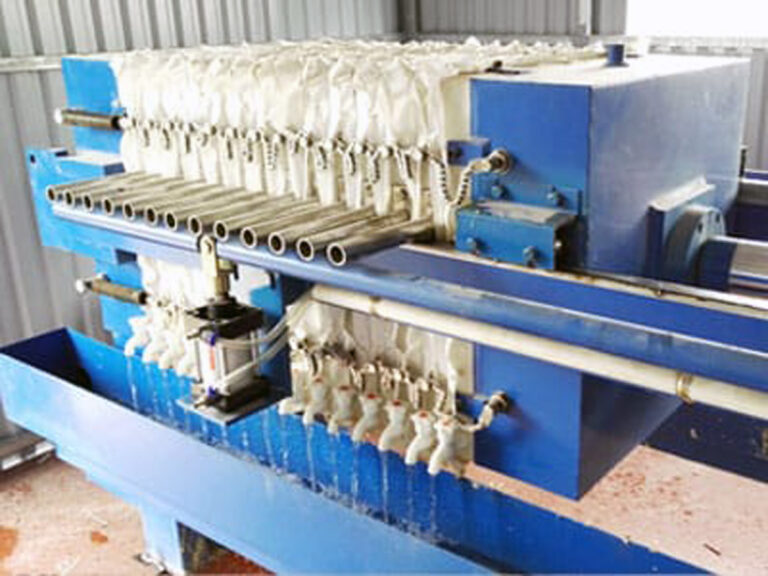
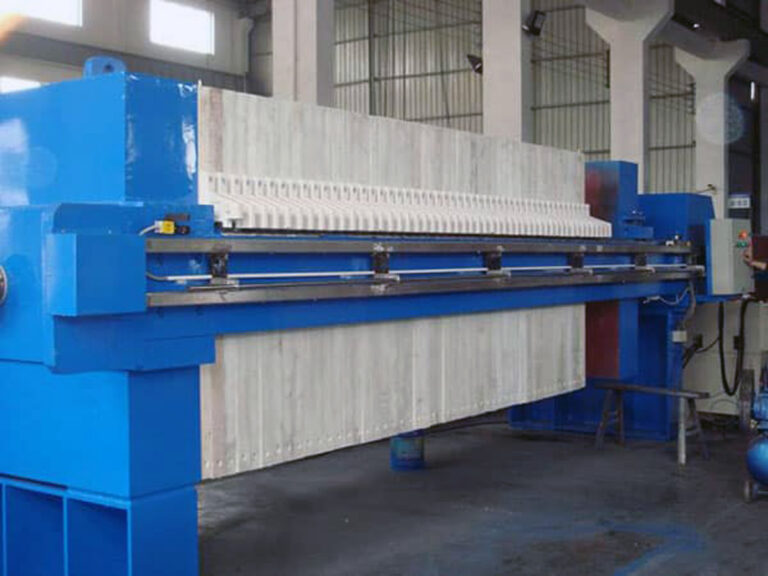
The silo is not a standalone unit. It functions as the clarifier and pre-thickener for a filter press. By delivering denser sludge, it reduces the load and cycle time on the press, which is the most maintenance-intensive component. In our experience commissioning these systems, the single most common oversight is undersizing the slurry collection and equalization pit upstream of the silo, which can lead to pump cavitation and inconsistent feed.
Key Advantages vs. Traditional Settling Ponds
Footprint and Operational Transformation
The most immediate advantage is spatial efficiency. A silo system typically requires 90% less area than a settling pond of equivalent capacity. For urban quarries or indoor fabrication shops, this reclaims high-value real estate for production. Operationally, the shift is from batch, manual sludge removal to continuous, automated clarification. This eliminates the periodic production shutdowns required for pond cleaning.
Economic and Sustainability Gains
The financial model changes from cost management to value creation. Achieving 95-98% water recovery drastically reduces freshwater intake and sewer discharge fees. Furthermore, pre-thickening sludge optimizes the filter press, extending cloth life and reducing energy consumption per cycle. This turns the treatment process into a potential marketing asset, demonstrating sustainable practices to clients and regulators.
The quantitative benefits of this technological shift are clear when compared side-by-side with legacy methods.
Key Advantages vs. Traditional Settling Ponds
| Özellik | Silo System | Geleneksel Gölet |
|---|---|---|
| Ayak İzi Gereksinimi | 90% reduction | Very large |
| Su Geri Kazanım Oranı | 95-98% | Typically lower |
| Clarification Process | Continuous, automated | Batch, manual |
| Sludge Pre-treatment | Optimizes filter press | Often minimal |
| Operational Intensity | Low (automated) | High (manual) |
Kaynak: Teknik dokümantasyon ve endüstri spesifikasyonları.
Critical Sizing & Space Planning for Your Facility
Basing Capacity on Reality
System sizing cannot be based on average flow. Capacity must be calculated for peak wastewater generation when all saws, polishers, and CNC machines operate simultaneously. Undersizing leads to overflow and system failure. A detailed water audit is non-negotiable. This involves measuring flow from each source and characterizing the slurry’s solids content and particle size distribution, which influences lamellar pack selection.
The Modular Advantage
Modular design is a strategic asset, not just a technical feature. Modules can operate in parallel to scale capacity with business growth, or in series for multi-stage purification. This design also ensures business continuity; individual modules can be isolated for maintenance without a full plant shutdown. Planning must account for more than the silo’s footprint—include space for ancillary tanks, the filter press, and access for sludge removal vehicles.
Effective planning requires a framework that considers both physical and strategic factors.
Critical Sizing & Space Planning for Your Facility
| Planning Factor | Önemli Hususlar | Strategic Implication |
|---|---|---|
| Capacity Basis | Peak wastewater flow | Prevents system overload |
| Modüler Tasarım | Parallel or series operation | Enables future scalability |
| Layout Requirement | Stable foundation, access | Ensures operational feasibility |
| Business Continuity | Isolatable sections | Maintenance without shutdown |
Kaynak: Teknik dokümantasyon ve endüstri spesifikasyonları.
System Cost Analysis: Capital Expense vs. Total Ownership
Moving Beyond CAPEX
Capital expenditure (CAPEX) for a silo system ranges from approximately $50,000 for small shop-welded units to over $1,000,000 for large, site-bolted quarry installations. Basing a procurement decision solely on this initial number is a critical error. The true cost is revealed through a 20-year Total Cost of Ownership (TCO) model, which includes energy, polymer consumption, maintenance labor, spare parts, and final sludge disposal costs.
The Hidden Cost of Materials
Material selection is a primary TCO driver. A lower-cost carbon steel system with a protective coating may have a higher long-term cost due to potential coating failure and corrosion repairs in an abrasive, wet environment. A stainless steel system for internal wetted parts often presents a lower TCO despite a higher initial price. Similarly, opting for a flocculant-free process eliminates ongoing chemical procurement and reduces sludge handling complexity and cost.
A disciplined financial analysis breaks down the components that define long-term value.
System Cost Analysis: Capital Expense vs. Total Ownership
| Maliyet Bileşeni | Range / Key Factor | Impact on 20-Year TCO |
|---|---|---|
| Capital Expense (CAPEX) | $50,000 – $1,000,000+ | Initial investment only |
| Malzeme Seçimi | Carbon vs. stainless steel | Major maintenance variable |
| Chemical Process | Flocculant-free patented option | Reduces sludge handling cost |
| Ownership Model | Toplam Sahip Olma Maliyeti (TCO) | True financial comparison tool |
Kaynak: Teknik dokümantasyon ve endüstri spesifikasyonları.
Selecting Materials & Automation for Long-Term Durability
Corrosion is the Enemy
The operating environment is relentlessly corrosive and abrasive. Material specification is paramount. For all internal wetted parts—the lamellar pack, weirs, and sludge cone—stainless steel (e.g., 304 or 316 grade) is the benchmark for durability. Heavily coated carbon steel is an alternative but carries the risk of coating degradation. The choice directly impacts maintenance intervals, system longevity, and overall TCO.
The Role of Intelligent Control
Automation via a Programmable Logic Controller (PLC) is recommended for consistent, repeatable performance. The PLC manages pump sequences, sludge extraction based on density, and automatic backflushing cycles for the lamellar pack. This shifts the labor requirement from manual chemical handling and valve operation to system monitoring and data interpretation. It mitigates the risk of human error and reduces dependence on highly specialized operational skills.
Durability is engineered through specific material and control choices, each serving a distinct purpose.
Selecting Materials & Automation for Long-Term Durability
| Bileşen | Recommended Specification | Birincil Fayda |
|---|---|---|
| Wetted Parts Material | Stainless steel / Coated carbon | Corrosion resistance |
| Control System | Programmable Logic Controller (PLC) | Consistent, automated performance |
| Critical Maintenance Feature | Automatic lamellar pack backflushing | Prevents clogging, maintains efficiency |
| Labor Shift | Monitoring & data interpretation | Reduces manual operation skills gap |
Kaynak: Teknik dokümantasyon ve endüstri spesifikasyonları.
Integration, Installation, and Commissioning Steps
Pre-Installation Interface Audit
Successful integration requires a thorough audit of existing infrastructure. This includes assessing slurry collection pits for adequate volume, verifying water piping pressure and composition, and ensuring electrical supply meets the new system’s requirements. The rise of pre-wired, containerized “plug-and-play” systems lowers technical barriers, but vendor selection remains crucial. Prioritize suppliers with proven local service partnerships and accessible spare parts inventories.
The Commissioning Handover
Installation involves foundation preparation, modular placement, and utility hookup. Commissioning is the critical phase where the system is tuned and validated. This includes calibrating flow meters and density sensors, conducting a 72-hour continuous run test, and comprehensive operator training. The goal is a seamless handover where your team can operate the integrated industrial wastewater treatment silo system with confidence. We’ve observed that skipping the full load test to accelerate startup often leads to unresolved performance issues discovered during actual production peaks.
Ongoing Maintenance, Sludge Handling, and Optimization
Preserving Core Efficiency
Routine maintenance focuses on preserving the sedimentation process. This includes inspecting and cleaning the lamellar pack, checking pump seals and valve operation, and replacing filter press cloths on schedule. The silo’s role as a pre-concentrator is key here; by delivering thicker sludge, it significantly reduces the mechanical wear and cycle frequency of the filter press, lowering its long-term maintenance cost.
From Waste to By-Product
Handling the final dewatered cake (70-85% dry solids) is the end point. Flocculant-free systems offer a distinct advantage here, as the resulting sludge cake is less contaminated and often easier to dispose of or even repurpose in accordance with local regulations. Continuous optimization involves tracking key performance indicators like clarified water turbidity and sludge density, using this data to fine-tune automated cycles and schedule predictive maintenance, thereby maximizing uptime.
Implementing Your System: A Phased Project Roadmap
Phase 1: Analysis and Definition
Begin with a comprehensive site audit to analyze water flows, slurry characteristics, and space constraints. For non-standard slurry types, pilot testing with a mobile unit may be necessary to confirm treatability and gather design data. This phase defines the performance specifications and forms the basis for an accurate TCO model, moving the project from concept to quantified investment.
Phases 2-4: Design, Build, and Validate
Phase 2 covers detailed engineering design and procurement, using the TCO model to evaluate bids. Phase 3 is site preparation and installation. The final phase, commissioning and performance validation, is where the system proves its value. A vendor with a strong service network is essential throughout this roadmap to ensure the solution delivers on its promises of efficiency, compliance, and sustainability.
The decision to modernize your wastewater treatment hinges on three priorities: evaluating true cost through TCO, not just capital expense; selecting materials and automation for decades of reliable service; and choosing an implementation partner with local support. This approach transforms a compliance requirement into a source of operational advantage. Need professional analysis and robust solutions for your stone processing water challenges? PORVOO provides the engineering expertise and partnership to navigate this transition. For a detailed consultation on your specific application, you can also Bize Ulaşın.
Sıkça Sorulan Sorular
Q: How does a silo system’s design achieve such a high water recovery rate in a small footprint?
A: The system uses a vertical silo containing a lamellar pack, a stack of inclined plates that multiplies the effective settling surface area. This design accelerates gravity sedimentation, allowing continuous clarification and sludge concentration within a compact structure. For operations constrained by expensive real estate, this 90% footprint reduction is a primary driver for selecting silo technology over traditional ponds.
Q: What is the most critical factor for correctly sizing a wastewater silo system for a fabrication shop?
A: You must base system capacity, measured in cubic meters per hour, on the peak wastewater flow from all concurrently operating equipment like saws, polishers, and CNC machines. Underestimating this peak flow will compromise clarification performance. This means your initial site audit must accurately measure or model the maximum simultaneous discharge, not just average daily water use.
Q: Why is a 20-year Total Cost of Ownership analysis essential when comparing system quotes?
A: Capital expense alone is misleading, as long-term costs for energy, polymer, maintenance, and sludge disposal dominate the financial outcome. A carbon steel system with a lower upfront price but high maintenance can ultimately cost more than a premium stainless steel alternative. For a sound procurement decision, your evaluation model must project all operational and disposal expenses over two decades.
Q: How does automation via a PLC change the operational staffing model for a treatment plant?
A: Implementing a Programmable Logic Controller shifts the primary labor requirement from manual chemical handling and valve operation to system monitoring and data interpretation. Features like automatic backflushing maintain performance with minimal intervention. This reduces reliance on highly specialized operators and mitigates the risk that a skills gap will undermine your system’s efficiency gains.
Q: What are the key advantages of a flocculant-free silo process for final sludge handling?
A: Systems that operate without polymer flocculants produce a residual sludge cake that is less chemically contaminated. This simplifies compliance with waste regulations and can lower disposal costs and liability. If your local landfill has strict acceptance criteria or charges premium rates for chemical waste, a flocculant-free process offers significant long-term operational and financial benefits.
Q: How does a modular silo system design support future expansion and maintenance?
A: Modular units can be arranged in parallel to incrementally increase capacity or in series for enhanced purification. This design also allows you to isolate individual modules for maintenance without causing a complete plant shutdown. For facilities anticipating growth or where continuous operation is critical, specifying a modular architecture preserves future flexibility and ensures business continuity.
Q: What should we prioritize in a vendor beyond the equipment specifications?
A: Prioritize suppliers with proven local service partnerships and reliable spare parts supply chains, as your system’s uptime depends entirely on accessible support. The strength of this integrated ecosystem is a key differentiator. This means your vendor selection process must evaluate regional service response capabilities as rigorously as you assess the technical design of the silo itself.