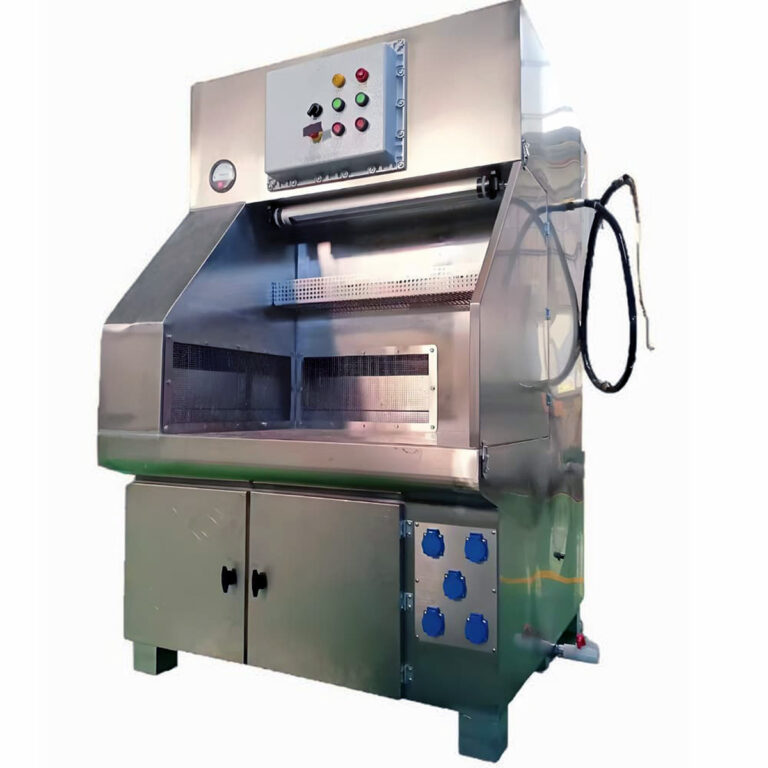
For professional metalworking shops, the decision to implement a downdraft table for heavy grinding is not about basic dust control. It’s a critical engineering investment in compliance, productivity, and operator safety. The central challenge is specifying a system with sufficient airflow—often exceeding 3450 CFM—to capture dense, hazardous metal particulate at the source, without succumbing to inefficient, energy-wasting designs.
The stakes are higher than ever. Regulatory scrutiny on airborne metal dust, particularly combustible fines, is intensifying. Simultaneously, rising energy costs make operational efficiency a primary ROI driver. Selecting a downdraft table now requires moving beyond generic CFM ratings to a precise understanding of airflow dynamics, filtration mandates, and intelligent design that matches performance to your specific workflow.
Key Airflow Parameters: CFM, Velocity & Static Pressure
Defining the Performance Triad
Effective capture in heavy grinding hinges on three interdependent parameters. Airflow volume (CFM) is the total cubic feet of air moved per minute; industrial applications demand 3450+ CFM to entrain dense particulate. Face velocity, the downward air speed through the table surface, must be between 150-250 feet per minute to overcome particle inertia and thermal updrafts from hot workpieces. Static pressure is the resistance the blower must overcome from filters, ductwork, and the table itself.
The Interdependence in Practice
These parameters are not independent. A blower selected for high CFM at zero resistance may see its output plummet under the static pressure of a loaded filter. This reveals a critical strategic insight: the vast CFM range from light to heavy-duty work forms a severity spectrum. Selecting a table based on material type alone is insufficient. Precise CFM, velocity, and pressure matching to the particle generation rate is the essential engineering specification for safety and compliance. Industry experts recommend a systems approach, where the blower’s performance curve is analyzed against the system’s pressure profile.
Parameter Benchmarks for Specification
The following table outlines the core parameters that must be evaluated when specifying a system for heavy grinding applications.
| Parametre | Typical Range for Heavy Grinding | Anahtar Fonksiyon |
|---|---|---|
| Airflow Volume (CFM) | 3450+ CFM | Captures dense particulate |
| Face Velocity | 150-250 fpm | Overcomes particle inertia |
| Statik Basınç | High (system-dependent) | Overcomes filter/duct resistance |
Kaynak: ISO 15012-4:2023 Health and safety in welding and allied processes — Requirements, testing and marking of equipment for air filtration — Part 4: Stationary capture devices. This standard specifies performance requirements for stationary capture devices, including the need for sufficient airflow and velocity to effectively capture fumes and dust at the source, directly relating to the CFM and face velocity parameters for downdraft tables.
Calculating Required CFM for Your Grinding Operation
The Baseline Formula
Accurate CFM calculation begins with the fundamental formula: CFM = Face Velocity (fpm) x Table Surface Area (sq ft). For a standard 5′ x 3′ (15 sq ft) table targeting 200 fpm, a minimum of 3,000 CFM is required. This is a starting point, not a final specification. We’ve compared project specifications and found this baseline consistently requires upward adjustment for real-world conditions.
Critical Adjustment Factors
The calculated baseline must be adjusted to account for system losses. Static pressure losses from ductwork, filter loading over a shift, and the efficiency of design features like vented backstops all demand additional blower capacity. A comprehensive process assessment is crucial, evaluating metal type, tool aggression, particle generation rate, and continuous operational hours. This calculation underscores a key inference: successful implementation is complex, shifting the vendor value proposition from selling equipment to guaranteeing an air-quality outcome.
Sizing Guide for Common Tables
Use the following guide to establish your minimum CFM requirement based on table size and target velocity.
| Table Size (ft) | Surface Area (sq ft) | Minimum CFM (at 200 fpm) |
|---|---|---|
| 5′ x 3′ | 15 sq ft | 3,000 CFM |
| 6′ x 4′ | 24 sq ft | 4,800 CFM |
| 8′ x 5′ | 40 sq ft | 8,000 CFM |
Not: Baseline CFM = Face Velocity x Surface Area. Adjust upward for pressure losses and filter loading.
Kaynak: Teknik dokümantasyon ve endüstri spesifikasyonları.
High-CFM Downdraft Table Design & Efficiency Features
Engineered Capture Geometry
Achieving high CFM efficiently requires intelligent design beyond a powerful fan. Vented backstops create a combined downdraft/backdraft airflow pattern, dramatically improving capture for tall workpieces like fabricated assemblies. This demonstrates that capture efficiency is a function of engineered airflow geometry, not just fan power. Easily overlooked details include the plenum design and grate open area, which directly impact face velocity uniformity.
The Shift to Demand-Based Airflow
For large tables, a zoned plenum design is paramount. By partitioning the plenum and opening dampers only where the workpiece sits, available CFM is concentrated where needed. This approach prevents the energy waste of moving air across an entire empty surface. This technology signals a strategic shift toward smart, demand-based airflow management, future-proofing operations against rising energy costs and making constant high CFM across a full table a legacy approach.
Filtration Systems for Metal Dust: Cartridge vs. Wet Tables
The Standard for High-Volume Operations
The filtration system is the primary cost and safety driver. For most high-CFM applications involving steel or iron, cartridge filters with automated pulse-jet cleaning are standard. They offer high surface area and sustained airflow for multi-shift operations. This positions automated maintenance as an operational necessity to defend system throughput and control pressure drop.
Mandated Systems for Combustible Risks
For combustible metal dusts (e.g., aluminum, magnesium, titanium), compliance with NFPA 484 ve ANSI/ASSP Z9.5-2022 standards mandates a systemic approach. Wet scrubber (wet table) systems use a water curtain to capture and neutralize sparks and fine particles, representing a tested, pre-engineered solution for high-hazard scenarios. The strategic implication is clear: mitigating explosion risk requires purchasing certified systems, transferring critical liability to the OEM.
Selecting the Right Filtration Technology
The choice between filtration types is dictated by hazard analysis, not preference. The table below outlines the primary applications for each system.
| Sistem Tipi | Birincil Uygulama | Önemli Hususlar |
|---|---|---|
| Cartridge Filters (Pulse-Jet) | Most high-CFM operations | Automated maintenance required |
| Wet Scrubber (Wet Table) | Combustible metals (Al, Mg) | NFPA compliance essential |
| Standard Filter | Light-duty, non-combustible | Daha düşük başlangıç maliyeti |
Kaynak: ISO 15012-4:2023 Health and safety in welding and allied processes — Requirements, testing and marking of equipment for air filtration — Part 4: Stationary capture devices. The standard outlines safety and performance requirements for filtration equipment, including considerations for different hazard types, which informs the selection between cartridge and wet systems for combustible versus non-combustible dusts.
Cost Analysis: Capital Investment vs. Operational Efficiency
Toplam Sahip Olma Maliyetini Anlama
Total cost analysis must extend beyond the purchase price. The filtration module represents the core capital and operational expense, making accurate hazard analysis vital to avoid under-specification or overspending. High-CFM systems with 3+ HP blowers also carry significant electrical demands, which compound over the system’s lifespan.
The Efficiency Dividend
The emergence of zoned technology highlights how intelligent design reduces lifetime energy consumption. By concentrating airflow, these systems can cut energy waste by over 50% compared to open plenum designs. This reflects a deepening market bifurcation: low-cost tables manage debris, while industrial-grade investments address regulated health, safety, and liability. Crossing this investment threshold is non-negotiable for professional operations.
Breaking Down Cost Drivers
A clear view of cost components is essential for accurate budgeting and ROI calculation.
| Maliyet Bileşeni | Karakteristik | TCO üzerindeki etki |
|---|---|---|
| Filtration Module | Core capital expense | Highest long-term cost driver |
| Blower Power | 3+ HP, three-phase | Significant electrical demand |
| Zoned Technology | Smart airflow management | Reduces energy waste >50% |
| Filter Life & Labor | Bakım gereksinimleri | Defends long-term productivity |
Kaynak: Teknik dokümantasyon ve endüstri spesifikasyonları.
Zoned vs. Open Plenum Designs: Which Is More Efficient?
The Fundamental Design Choice
The choice between zoned and open plenum designs is fundamental to system efficiency and operating cost. An open plenum requires a blower sized to deliver target face velocity across the entire table surface at once. This often leads to oversized, energy-intensive systems that operate at full capacity regardless of workpiece size or position.
How Zoned Technology Works
A zoned design uses internal dampers to dynamically direct airflow only to active work areas. This allows a large table to operate effectively with a smaller, right-sized blower, concentrating CFM where it’s needed. For facilities grinding variable workpiece sizes or multiple small parts, the zoned approach is unequivocally more efficient. It embodies the shift toward smart airflow management that aligns performance with sustainability goals.
Efficiency Comparison
The operational difference between the two designs is significant and quantifiable.
| Tasarım Tipi | Blower Sizing Principle | Operasyonel Verimlilik |
|---|---|---|
| Open Plenum | Sized for entire surface | Constant, high energy use |
| Zoned Plenum | Sized for active zones | Concentrates CFM dynamically |
| Zoned Result | Right-sized blower | ~50% less energy waste |
Kaynak: Teknik dokümantasyon ve endüstri spesifikasyonları.
Installation & Maintenance Requirements for 3450+ CFM Systems
Pre-Installation Planning
High-CFM systems impose specific installation demands. They are typically permanent, stationary assets requiring 230/460V three-phase power. Noise levels ranging from 70-85 dBA necessitate planning for operator exposure or facility placement. Proper ductwork design, often 8-inch diameter or larger, is critical to minimize static pressure losses that erode performance.
The Maintenance Imperative
Ongoing maintenance is dominated by the filtration system. Automated pulse-jet cleaning is not a luxury but a requirement to sustain CFM and control pressure drop without constant manual intervention. Regular inspection schedules for filters, spark arrestors (if equipped), and blower components are essential to prevent unplanned downtime. This operational reality reinforces that for high-volume shops, procurement decisions must prioritize designs that minimize maintenance labor.
Key Operational Requirements
Meeting these requirements is non-negotiable for sustained, safe performance.
| Gereksinim | Şartname | Gerekçe |
|---|---|---|
| Power Supply | 230/460V three-phase | Drives high-HP blowers |
| Noise Level | 70-85 dBA | Requires planning for exposure |
| Filter Cleaning | Automated pulse-jet | Sustains CFM, controls pressure |
| Inspection Regime | Regular (filters, blower) | Prevents downtime, ensures safety |
Kaynak: ANSI/ASSP Z9.5-2022: Laboratory Ventilation. While focused on labs, this standard provides foundational principles for the design, operation, and maintenance of local exhaust ventilation (LEV) systems, including requirements for adequate power, noise consideration, and sustained performance through maintenance—all critical for high-CFM downdraft tables.
Selecting the Right Downdraft Table: A Buyer’s Checklist
Hazard and Performance Analysis
Selecting the correct system requires a disciplined, multi-factor evaluation. First, conduct a thorough hazard analysis covering material combustibility and toxicity to dictate the mandatory filtration type. Second, calculate required CFM based on your largest common workpiece size and a target velocity of at least 200 fpm. Third, choose a design—zoned plenum, vented backstop, or standard—that matches your workflow and part geometry for optimal efficiency.
Verification and Certification
Fourth, verify the blower specifications provide both the high CFM and, critically, the static pressure to maintain that CFM as filters load. Fifth, ensure all necessary safety certifications (NFPA, UL) for your specific hazard class are documented. This due diligence transfers liability and ensures regulatory compliance.
Evaluating the Complete Workstation
Finally, evaluate the table as an ergonomic workstation. Features like adjustable height, task lighting, and tool management reflect an evolution from simple extraction to integrated productivity centers. In our assessment of shop floor layouts, operator comfort directly ensures consistent use of the safety device and justifies higher capital expenditure by protecting your most valuable asset: skilled labor. For operations requiring robust capture of heavy particulate, exploring industrial-grade downdraft sanding tables designed for metal grinding is a necessary step.
Specifying a 3450+ CFM downdraft table is a technical procurement focused on outcome guarantees. The decision hinges on three points: accurately matching CFM and static pressure to your process, selecting a filtration system that meets both performance and compliance mandates, and investing in an efficient design that controls lifetime operational costs. This moves the purchase from commodity equipment to a capital asset that defends health, safety, and productivity.
Need professional guidance to navigate these specifications and implement a solution that meets both your operational and compliance needs? The engineering team at PORVOO specializes in translating complex airflow and hazard requirements into effective, efficient dust collection systems.
Sıkça Sorulan Sorular
Q: How do we calculate the required CFM for a downdraft table in a metal grinding application?
A: You calculate the baseline CFM by multiplying your table’s surface area in square feet by your target face velocity, which should be 150-250 feet per minute for heavy grinding. For a 15 sq ft table at 200 fpm, this yields 3,000 CFM. You must then increase this figure to account for static pressure losses from filters and ductwork. This means facilities must perform a detailed process assessment of particle generation before specifying a blower, as under-sizing compromises safety and compliance.
Q: What are the key differences between zoned and open plenum downdraft table designs?
A: An open plenum requires a single, powerful blower to pull air across the entire table surface at all times, often wasting energy. A zoned design uses internal dampers to concentrate airflow only on active work zones, allowing effective capture with a smaller, right-sized blower. This smart airflow management can cut energy consumption by over 50%. For operations with variable workpiece sizes or multiple small parts, the zoned approach is unequivocally more efficient and reduces long-term operational costs.
Q: When is a wet scrubber (wet table) system mandatory versus using standard cartridge filters?
A: Wet tables are a compliance-driven solution for grinding combustible metals like aluminum or magnesium, where they neutralize sparks and capture fine particulate in water to mitigate explosion risk. For non-combustible metals, high-efficiency cartridge filters with automated pulse-jet cleaning are standard for sustaining 3450+ CFM airflow. This means your metal hazard analysis dictates the filtration type, and for high-hazard scenarios, you must purchase pre-engineered, certified systems to transfer critical liability to the OEM, as per NFPA standards.
Q: What are the critical installation and maintenance demands for a 3450+ CFM downdraft table?
A: These high-performance systems typically require permanent installation, 230/460V three-phase power, and planning for operational noise levels of 70-85 dBA. Maintenance is dominated by the filtration system, where automated pulse-jet cleaning is a operational necessity to sustain CFM and control pressure drop across shifts. Regular inspection of filters, spark arrestors, and blower components is essential. This operational reality means procurement must prioritize designs that minimize manual labor and downtime to defend long-term shop productivity.
Q: How do face velocity and static pressure interact with CFM in system performance?
A: These three parameters are interdependent: CFM is the total air volume moved, face velocity (150-250 fpm) is the speed that captures particles, and static pressure is the resistance the blower must overcome from filters and ductwork. A robust blower must maintain high CFM as filter loading increases static pressure. This reveals that selecting a table requires matching all three parameters to your specific particle generation rate, a fundamental engineering principle for effective local exhaust ventilation outlined in standards like ANSI/ASSP Z9.5.
Q: What should be on a technical checklist for selecting an industrial downdraft table?
A: A disciplined checklist starts with a hazard analysis for material combustibility and toxicity. Next, calculate required CFM based on workpiece size and target velocity, then choose a design (zoned, vented backstop) matching your workflow. Verify the blower provides both high CFM and static pressure, and ensure all necessary safety certifications (ISO 15012-4, NFPA, UL) are met. Finally, evaluate ergonomic features like adjustable height. This process shifts the purchase from simple extraction to investing in an integrated productivity center that justifies higher capital expenditure.
Q: Why is the filtration module the primary cost driver in a downdraft table system?
A: The filtration module represents the core capital expense and the ongoing operational cost for replacement filters and maintenance energy. Its specification is dictated by your hazard analysis—getting this wrong leads to costly under-specification or overspending. Furthermore, high-CFM systems with 3+ HP blowers have significant electrical demands. This reflects a market split where industrial-grade investments address regulated health and safety liability, making the total cost of ownership—factoring in energy, filter life, and labor—the true metric for ROI.