Most recycled-water projects in ceramic and stone plants do not fail at the treatment stage — they fail earlier, when the loop is sized against a single quality assumption that no one has formally agreed on. By the time procurement starts, that assumption has usually been applied uniformly across saw cooling, floor wash, slurry make-up, and polishing support, forcing a treatment train capable of serving the most demanding use point to carry water destined for applications that would tolerate far lower quality. The cost consequence is not immediately visible during scoping; it surfaces at equipment selection, when the polishing and chemical dosing capacity required for the sensitive steps gets applied to the full system flow. What resolves this is a prior decision: naming every reuse destination, defining an acceptable quality band per destination, and locking those targets before any equipment basis is committed. The sections below give you the framework to make those definitions, identify where internal misalignment tends to block projects, and understand what a tiered architecture can realistically save.
Which reuse points in ceramic and stone plants need different water-quality limits
The planning failure that drives most loop over-engineering is treating reuse destinations as a single category. Saw cooling, floor wash, slurry make-up, and polishing support water each operate under different conditions — different solids exposure, different contact time with the product surface, different equipment sensitivity — and that variation translates directly into different treatment requirements. Designing to the tightest specification across all of them does not produce a safer outcome; it produces an oversized system that penalizes every lower-sensitivity use point with treatment it does not need.
The four parameters that must be resolved per reuse point before loop sizing can begin are: the maximum tolerable total suspended solids, the acceptable conductivity range, the storage-age limit before water quality degrades, and the worst-case production event that recycled water still has to survive. Each of these is a planning criterion specific to that application, not a universal regulatory floor. A reuse destination that tolerates 200 mg/L TSS should not be designed to receive water polished to 10 mg/L simply because another destination in the same loop requires it.
| What to Define per Reuse Point | Почему это важно | What to Clarify |
|---|---|---|
| Required solids tolerance | Sets required filtration stage and prevents nozzle or pipe blockages | What is the maximum acceptable total suspended solids (mg/L) for this specific use? |
| Conductivity tolerance | Affects corrosion and scaling risk in pipework and equipment | What conductivity range (µS/cm) is acceptable for this application without causing damage? |
| Acceptable storage age | Prevents nutrient breakdown and odour formation that renders water unfit for reuse | How many hours can recycled water be stored before it must be used or sent to further treatment? |
| Worst-case production event to survive | Ensures the loop remains usable even when upstream quality temporarily drops | What production upset would push the recycled water to its worst condition, and does it still have to meet this use point’s limits? |
The worst-case production event column deserves particular attention during scoping. It is the parameter most often skipped, and also the one that determines whether the loop remains functional during upstream upsets — glaze line changeovers, grit peaks from cutting operations, or temporary increases in slurry carry-over. A reuse point that has no defined tolerance for temporary quality drops cannot be properly protected by any loop design, because the treatment train cannot be sized for transient conditions that have never been documented.
How solids, turbidity, and storage age shape the usable loop design
Total suspended solids and turbidity are related but not interchangeable as design inputs. TSS governs pipe and nozzle blockage risk and sets the required filtration stage, while turbidity — measured as a light-scattering index under frameworks like ISO 7027-1:2016 — provides a faster, continuous-monitoring signal for process control. Neither metric can substitute for the other in loop sizing: a stream with low turbidity can still carry settleable solids above the tolerance of a sensitive spray application, and a high-turbidity reading does not always indicate solids at a problematic size fraction. Treating them as equivalent during scoping leads to a loop that appears correctly monitored but is actually sized against the wrong indicator for the most critical reuse point.
Storage age is a constraint that loop designers often underestimate because it does not appear as an equipment specification — it appears as an operational boundary. In practice, recycled water held beyond roughly 24 hours before reuse carries a meaningful risk of odor formation as residual organics and nutrients in the stream begin to break down. That threshold is not a codified regulatory limit; it is an operational figure from practice that should be treated as a design boundary when sizing storage tanks and establishing recirculation schedules. A loop designed with four days of buffer storage because the civil team wanted flexibility may produce water that the production team considers unusable. Storage capacity and turnover rate are therefore loop-design decisions, not just infrastructure decisions.
The interaction between these three parameters — solids load, turbidity profile, and storage age — defines the actual usable window of the recycled water for each destination. A loop that clears solids adequately but stores water too long before it reaches polishing support will still cause surface defects. A loop sized for 24-hour turnover but without adequate solids removal upstream will still block nozzles in saw cooling. Both failure modes are avoidable, but only if the parameters are defined together rather than sequentially by separate teams. For plants managing high-TSS ceramic wastewater streams, understanding the relationship between coagulant dosing and downstream turbidity control is a prerequisite for setting realistic loop targets — a point covered in more detail in Каков оптимальный диапазон дозировки PAC для сточных вод с высоким содержанием ТСС при глазуровании керамической плитки?.
When one central recycled-water target creates unnecessary cost
A single central recycled-water target is not an inherently wrong design choice — it is a trade-off with a specific cost profile. When every litre of recycled water is treated to the most stringent specification in the loop, the outcome is technically valid: all use points receive water that meets or exceeds their requirements. The problem is that this approach applies the polishing, chemical, and energy costs of the most demanding application to the full system flow, regardless of where the water ends up.
Floor wash, for example, typically tolerates solids concentrations well above what polishing support water requires. In a single-target loop, water headed for floor wash receives the same treatment as water headed for a sensitive tile-finishing step. The cost difference is not trivial, because polishing stages — fine filtration, advanced coagulation, or conductivity correction — carry both capital and operating cost that scales with flow volume, not just with outlet quality. Applying them to the full system flow, including the fraction that tolerates higher solids, means the plant is effectively paying for unnecessary treatment capacity on a continuous basis.
The issue surfaces visibly at procurement, not at scoping. During concept-stage discussions, a single-target loop is the simpler description and the easier internal agreement to reach. It is only when filtration unit sizing, chemical dosing volumes, and energy consumption projections are priced that the magnitude of the over-engineering becomes apparent — at which point the project either continues with the cost penalty accepted, or gets value-engineered under schedule pressure in ways that sometimes compromise the sensitive steps the system was actually designed to protect. Identifying this trade-off before procurement is the reason tiered quality targets must be established per use point during the basis-of-design phase, not afterward.
Why cross-team quality definitions often block the project late
When a recycled-water loop is in concept or front-end engineering, the question of what counts as acceptable recycled water tends to be deferred. Production is focused on not disrupting output, maintenance is concerned with equipment protection, and environmental is working through permit conditions. Each team applies a different frame to the same recycled stream, and because those frames are rarely reconciled in writing before equipment sizing begins, the conflict tends to surface at the worst possible stage: when a supplier’s technical submittal forces a specification decision and there is no agreed internal standard to reference.
| Team | Typical Water Quality Priority | What to Clarify Early |
|---|---|---|
| Production | Process stability and product quality | What solids and conductivity limits will prevent defects, stains, or surface issues on the final product? |
| Техническое обслуживание | Equipment longevity and fouling protection | What recycled water limits will avoid scaling, corrosion, or fouling of pipes, pumps, and spray nozzles? |
| Окружающая среда | Regulatory permit compliance | What are the enforceable discharge or reuse quality parameters that the recycled water must always meet? |
The consequence of deferred alignment is not just delay — it is design instability. If production defines acceptable recycled water based on surface defect risk and maintenance defines it based on scaling potential, and those definitions have not been cross-checked against the permit parameters the environmental team is working from, there is a realistic chance that a treatment basis agreed with one team will need to be reopened when another team reviews it. That reopening, at procurement or detailed engineering stage, typically requires rework that compounds both cost and schedule. The pattern is common enough that it should be treated as a default failure risk in any loop project where the basis-of-design meeting did not explicitly include all three functions.
The practical resolution is a joint quality-definition session held before any equipment basis is committed — not as a formality, but as the mechanism through which each team’s tolerance for recycled water is converted into a shared numeric target that can be written into a design specification. Without that session, the loop design is built on assumptions rather than agreements.
How tiered reuse architecture can lower both capex and opex
A tiered reuse architecture separates the recycled-water loop into treatment trains calibrated to the quality requirements of specific consumption groups, rather than treating the full flow to a single peak specification. The capital saving comes from sizing each train to its actual outlet requirement; the operating saving comes from not running polishing, fine dosing, or conductivity correction on water that will be consumed by low-sensitivity applications before it ever reaches a quality-critical step.
This is not a novel engineering approach — the EPA’s Guidelines for Water Reuse documents that state-level reuse frameworks already apply tiered treatment specifications based on end use, with higher-contact or more sensitive applications assigned more stringent quality tiers. That existing regulatory structure confirms the architectural logic, even though it does not mandate that all plants adopt tiered loops. The business case must still be made on each project’s actual flow split, cost differential between treatment tiers, and the capital cost of operating two separate supply circuits versus one.
| Approach | Capex Impact | Opex Impact | Согласование нормативных требований | Suitability to Use Points |
|---|---|---|---|---|
| Single central recycled-water target | High: all water treated to the strictest end-use specification | High: ongoing chemical and energy costs applied to the full flow, including low-spec uses | Meets or exceeds all regulatory limits but may over-treat many streams | Over-engineered for low-sensitivity uses (e.g., floor wash), wasting treatment capacity |
| Tiered reuse architecture | Lower: treatment trains sized to each quality tier, matching demand | Lower: no polishing applied to water intended for uses that tolerate higher solids or conductivity | Aligns with state regulations that already use tiered treatment specifications by end use | Matches water quality precisely to each consumption point, avoiding unnecessary cost |
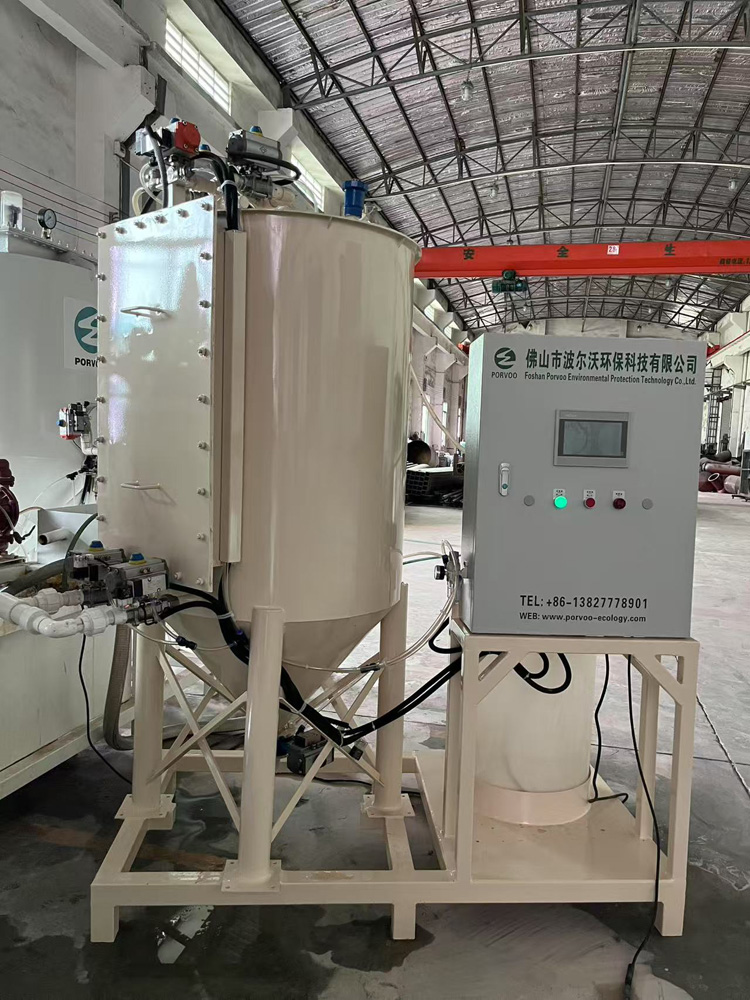
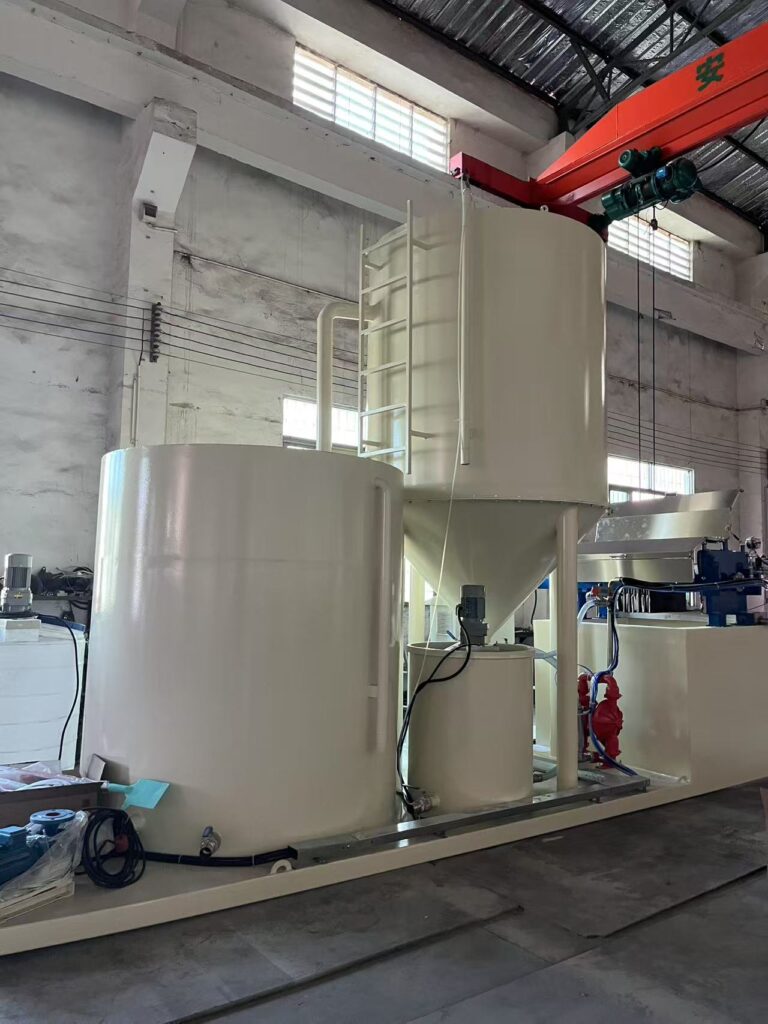
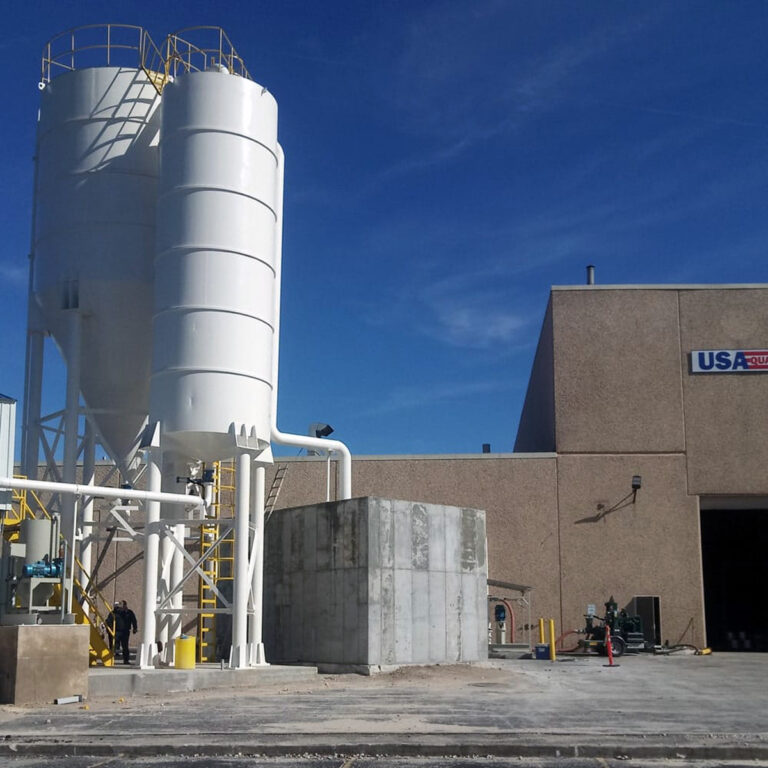
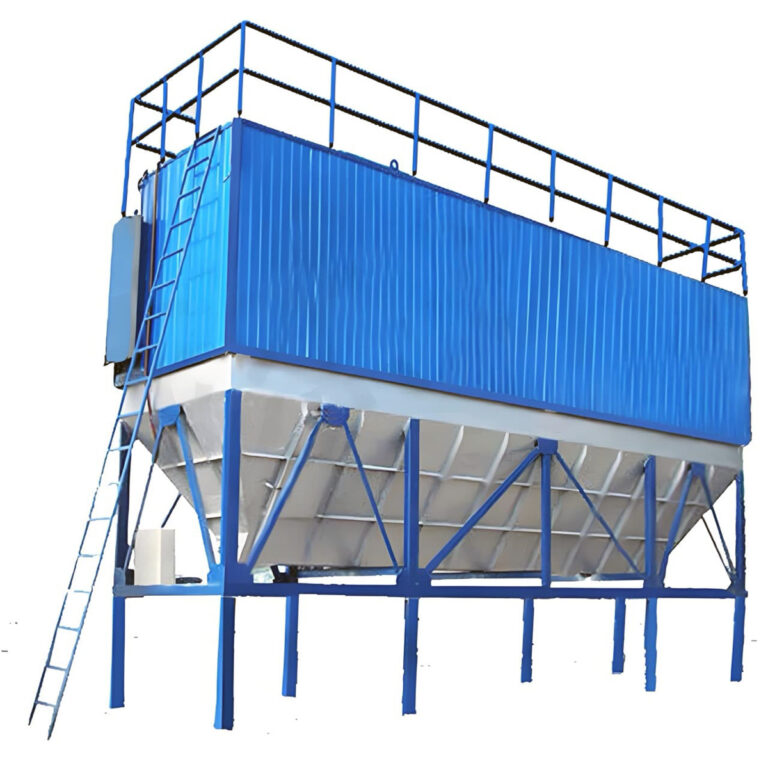
The implication drawn from the table is directional: tiered architecture lowers both capex and opex relative to a single-target loop, but only if the flow volumes and quality thresholds per tier are defined accurately before sizing. An imprecise split between tiers — one that moves too much volume into the higher-quality train because the quality boundaries were not defined carefully — can erode the saving. The architecture requires the same upstream work as the single-target approach: every reuse destination must have a confirmed quality target before the tier boundaries can be drawn. For plants evaluating compact silo-based treatment for the solids-removal tier, the Компактная силосная система для очистки промышленных сточных вод из керамики и камня is one format designed for this application.
What approval table should exist before equipment sizing starts
Equipment sizing should not begin against targets that exist only in meeting notes or in one team’s working assumption. The approval table described here is a defensibility check — a document that fixes, per reuse point, the permitted quality targets, the internal tolerance bands, and the source of each requirement, before any supplier receives a technical specification. Its function is to prevent the most common and most expensive rework pattern in loop projects: a treatment basis that is re-opened after detailed engineering has started because a quality target was never formally confirmed.
The practical starting point for compiling permitted targets is the EPA’s REUSExplorer tool, which surfaces reuse quality parameters aligned with state permit conditions by end use. This is not a governing standard in itself, but it provides a structured review mechanism that can identify gaps between what the plant intends to reuse and what its permit conditions actually allow. Internal plant standards — equipment fouling limits, surface quality specifications, maintenance replacement intervals — contribute the remaining columns. The output is a table that consolidates both regulatory and operational requirements in a form that an equipment supplier can price against without ambiguity.
| End Use | Permitted Water Quality Target(s) | Source of Requirement |
|---|---|---|
| (Plant-specific reuse point 1) | Solids: X mg/L, Conductivity: Y µS/cm, [additional parameters] | EPA REUSExplorer tool, state permit conditions |
| (Plant-specific reuse point 2) | Solids: X mg/L, Conductivity: Y µS/cm, [additional parameters] | EPA REUSExplorer tool, internal plant standard |
| (Additional rows as needed) | … | … |
The approval table creates one additional benefit that is often underappreciated: it makes the consequence of out-of-spec recycled water explicit. When the table is completed, it is no longer possible to treat the quality target as a guideline — the consequence of exceedance is documented alongside the target. That specificity changes how the treatment system is designed, because it removes the ambiguity that often leads to under-engineered monitoring or inadequate bypass logic. A loop designed without named consequences for quality exceedance tends to be under-monitored; a loop designed with them tends to include the automated response logic — divert, alarm, or shutdown — that protects both the product and the equipment. For plants selecting grit removal upstream of the recycled-water loop, aligning that equipment choice with the quality targets fixed in the approval table is a prerequisite, not an afterthought — a decision framework covered in Как выбрать правильную систему удаления зернистости для сточных вод керамического производства.
The most defensible position before equipment sizing begins is a documented quality target for every reuse destination, reviewed and confirmed by production, maintenance, and environmental together. That document does not need to be elaborate — it needs to be specific enough that a supplier can size a treatment train against it, and specific enough that an out-of-spec event has a defined response rather than an improvised one.
What to confirm before the basis-of-design is frozen: that each reuse point has a named TSS limit, a conductivity tolerance, a maximum storage age, and a documented worst-case event it must survive. Where those four parameters are missing for any destination, the loop architecture — single-target or tiered — cannot be responsibly sized. The cost of resolving those gaps before procurement is a few hours of cross-functional alignment; the cost of resolving them after detailed engineering has started is measured in weeks and rework.
Часто задаваемые вопросы
Q: What happens if internal teams cannot agree on a shared quality target before the sizing deadline arrives?
A: Freeze only the targets that have confirmed cross-team sign-off and treat any unresolved destination as out of scope until agreement is reached — do not substitute a working assumption for a confirmed number. Proceeding with an unconfirmed target is the exact condition that forces treatment-basis rework after detailed engineering has started, which costs more in schedule and redesign than a short delay to resolve the gap before procurement opens.
Q: Does a tiered reuse architecture still save money when the plant’s high-sensitivity flow volume is a large fraction of total recycled water use?
A: The saving compresses significantly as the higher-quality tier grows relative to total flow, and at some split point a single-target loop becomes the lower-cost option. The threshold depends on the actual cost differential between treatment tiers and the capital cost of running two separate supply circuits; if the high-sensitivity fraction exceeds roughly two-thirds of total recycled volume, the tiered architecture should be re-evaluated against a refined single-target cost model before the design basis is committed.
Q: If a plant operates under a national discharge standard such as GB 8978-1996 rather than a state-level reuse permit, does the approval table approach still apply?
A: Yes, but the permitted-targets column is populated from the applicable discharge standard rather than a state reuse permit framework. The internal tolerance columns — equipment fouling limits, surface quality specifications, storage-age boundaries — remain unchanged. The approval table’s function is to consolidate both regulatory and operational requirements in one reviewable document; the regulatory source that populates it does not alter the process or the defensibility requirement.
Q: Once the approval table is finalized and equipment sizing begins, what is the immediate next step to prevent quality drift during commissioning?
A: Translate each approved quality target into an automated monitoring and response rule — divert, alarm, or shutdown — before the control philosophy is written, not after. Commissioning is the stage where monitoring thresholds are most often softened under schedule pressure; having the consequence of each quality exceedance already documented in the approval table makes it significantly harder to omit or defer the corresponding automated response logic during control system configuration.
Q: Is a water recycling system worth pursuing if the plant currently discharges to a municipal treatment facility and faces no immediate regulatory pressure to reuse?
A: The answer depends on discharge cost trajectory and water intake cost at that specific site, not on current regulatory status alone. Plants paying volumetric discharge fees on high-TSS ceramic or stone slurry streams typically recover system cost faster than the capital payback period suggests, because the savings combine reduced intake volume with avoided discharge surcharges. Where both costs are low and stable, the business case weakens materially, and the more defensible position is to design the treatment infrastructure for discharge compliance now while preserving the option to add a reuse loop when cost conditions shift.