В камнеобработке основным узким местом часто является управление водными ресурсами. Тонкий шлам, образующийся при резке и полировке искусственного камня, гранита и мрамора, содержит коллоидный кремнезем и пыль, которые не поддаются гравитационному осаждению. Это приводит к переполнению бункеров, остановке производства и росту затрат на утилизацию. Распространенное заблуждение заключается в том, что силос сам по себе является решением проблемы очистки; это всего лишь емкость для хранения. Без правильно спроектированной системы дозирования химических веществ осаждение неэффективно, показатели повторного использования воды снижаются, а весь процесс управления сточными водами превращается в центр постоянных затрат.
Внимание к интегрированному дозированию химикатов сейчас крайне важно в связи с ужесточением правил утилизации кремниевой пыли и шлама. Достижение рециркуляции воды >95% - это уже не просто экологическая цель, а финансовый императив, который напрямую влияет на стоимость оснастки и непрерывность производства. Стратегическая интеграция коагулянтов и флокулянтов превращает сточные воды из обязательства в восстанавливаемый актив, но только если система спроектирована с учетом точности, долговечности и автоматизации.
Основные компоненты системы дозирования химикатов для каменных силосов
Инженерное ядро станции
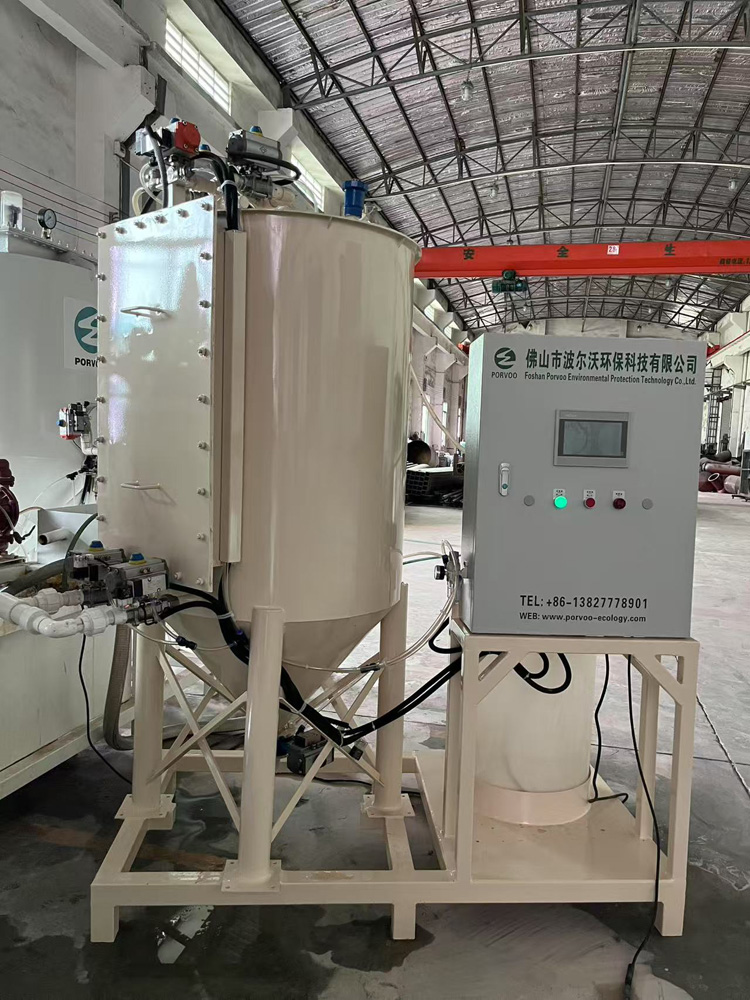
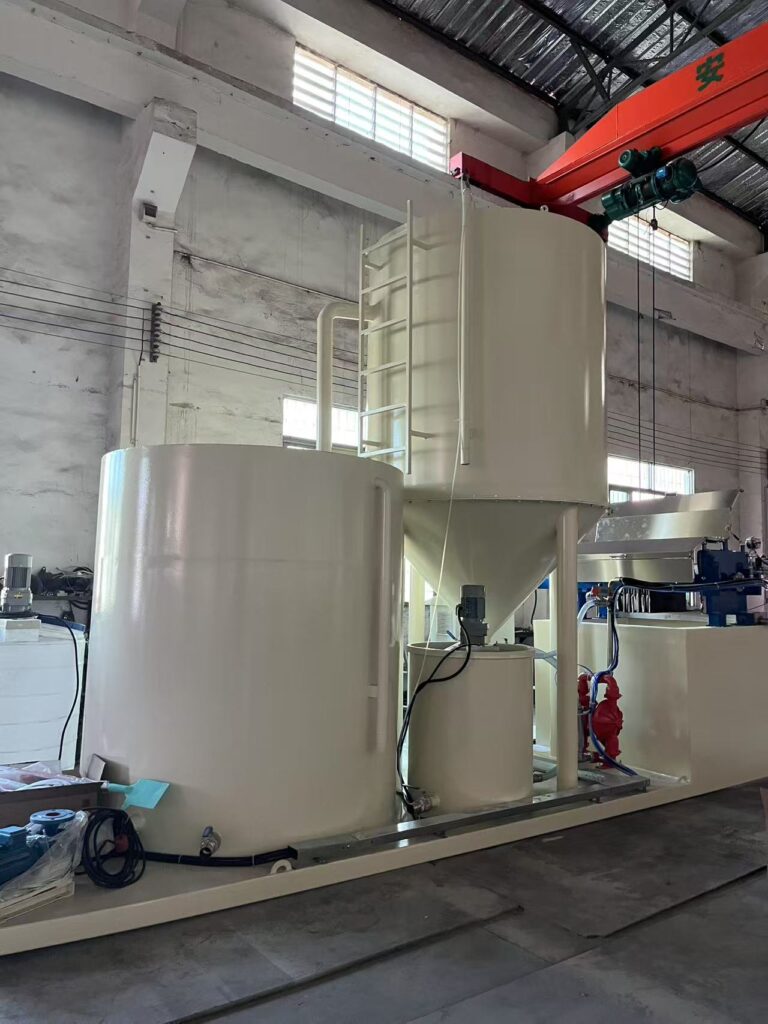
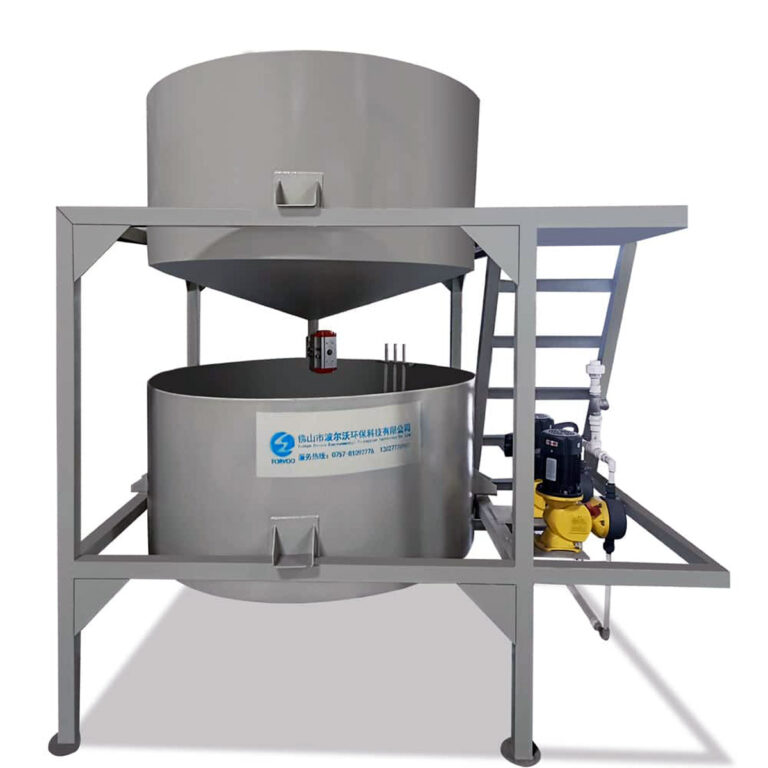
Система дозирования химических веществ - это инженерный узел, созданный для обеспечения точности и надежности. Ее основой является станция дозирования, в которой размещено оборудование для подготовки и впрыска. Она включает градуированный резервуар с механической мешалкой, необходимой для правильного растворения полимера в пресной воде - этот этап, который часто упускают из виду и который определяет конечную эффективность. Сердцем системы является прецизионный дозирующий насос, как правило, мембранного или электромагнитного типа, который подает химический раствор в поток сточных вод. В дополнение к этому имеются специальные системы хранения: бункер для сухого флокулянта и контейнеры для жидкого коагулянта.
Интеграция и императив агитации
Эффективная интеграция требует, чтобы эти компоненты вводились в трубу для подъема грязной воды или в специальную смесительную камеру перед силосом, обеспечивая достаточное время контакта. Из наших полевых оценок следует, что такая химическая система неэффективна без дополнительного механического перемешивания шлама. Поэтому ямные смесители, механические или гидравлические, являются основным компонентом, а не дополнительным оборудованием. Они поддерживают твердые частицы во взвешенном состоянии для равномерного протекания химической реакции и предотвращают образование осадка, который снижает общую производительность системы и плотность осадка.
Материал и контроль
Долговечность компонентов зависит от совместимости материалов. Поверхности, находящиеся в постоянном контакте с концентрированными химикатами, должны быть изготовлены из коррозионностойких материалов, таких как нержавеющая сталь (AISI 304 или 316) для рам и насосов и специализированные гладкостенные пластики для резервуаров и трубопроводов. Не менее важна интеграция системы управления; система дозирования должна быть связана с главным контроллером установки, позволяя регулировать дозировку на основе данных о расходе в режиме реального времени, что позволяет перейти от фиксированного заданного значения к быстро реагирующему процессу.
Коагулянт и флокулянт: Функции и последовательность дозирования
Определение различных ролей
Коагуляция и флокуляция - это последовательные, не взаимозаменяемые процессы. Коагулянты, обычно растворы на основе полиаминов, дозируются в первую очередь для нейтрализации отрицательных электрических зарядов на коллоидных частицах, таких как мелкий кремнезем. Эта дестабилизация позволяет микрочастицам образовывать микрофлокулы. Затем добавляются флокулянты - длинноцепочечные полиэлектролиты - для соединения этих микрофлокул в крупные, плотные макрофлокулы, которые быстро оседают. Использование обоих агентов позволяет охватить более широкий диапазон размеров частиц, получить более плотный осадок и более чистую воду, чем при использовании одного химического метода.
Последовательность, не подлежащая обсуждению
Последовательность дозирования имеет решающее значение. Изменение порядка - добавление флокулянта первым - не дает результата, поскольку заряженные частицы отталкивают полимерные цепи, препятствуя эффективному соединению. Коагулянт всегда должен подготавливать суспензию для флокулянта. Эта последовательность действий является обязательной для достижения целевой чистоты воды и скорости оседания, особенно для синтетических материалов, таких как искусственный камень. Для достижения такого синергетического эффекта в конструкции системы должны быть предусмотрены отдельные, точно контролируемые точки дозирования для каждого типа химикатов.
Проверка процесса с помощью данных
Функциональное различие и необходимый порядок лучше всего проиллюстрировать на сравнительном примере.
Коагулянт и флокулянт: Функции и последовательность дозирования
| Функция | Химический тип | Порядок дозирования |
|---|---|---|
| Нейтрализация заряда | Коагулянт на основе полиаминов | Первый |
| Образование микрофлокуса | Коагулянт | Первый |
| Соединение частиц | Полиэлектролитный флокулянт | Второй |
| Образование макрофлокуса | Флокулянт | Второй |
| Широкий захват частиц | Оба агента | Последовательный |
Источник: Техническая документация и отраслевые спецификации.
Эта таблица поясняет стратегию поэтапного применения химикатов. На практике мы наблюдаем, что предприятия, пытающиеся использовать только флокулянт, сталкиваются с повышенным расходом химикатов, ухудшением прозрачности и увеличением объема осадка, что напрямую влияет на их итоговые затраты на обработку отходов.
Полуавтоматические и полностью автоматические дозирующие станции
Определение оперативной интенсивности
Выбор между полуавтоматическими и полностью автоматическими станциями определяет ежедневную интенсивность эксплуатации и долгосрочную структуру затрат. Полуавтоматические станции состоят из подготовительного резервуара, смесителя и дозирующего насоса. Они требуют от операторов вручную готовить партии химикатов, следить за их уровнем и запускать циклы дозирования. Несмотря на более низкие первоначальные капитальные затраты, они требуют более высоких переменных трудозатрат и несут риск непоследовательного дозирования из-за человеческой ошибки или задержки в приготовлении партии.
Преимущество автоматизации
Полностью автоматические станции оснащены сдвоенными резервуарами для приготовления раствора и автоматической подачей полимера через шнековую систему. В одном резервуаре готовится свежий раствор, в то время как другой активно питает насос, обеспечивая непрерывную и бесперебойную работу. Это исключает ручное вмешательство при порционном смешивании. Основным фактором окупаемости инвестиций в производство является автоматизация, которая сокращает трудозатраты до 90% и минимизирует простои производства, связанные с проверкой системы или задержкой приготовления партии.
Система принятия финансовых решений
Финансовое сравнение показывает смещение стратегических инвестиций с капитальных затрат на операционную эффективность.
Полуавтоматические и полностью автоматические дозирующие станции
| Характеристика | Полуавтоматическая станция | Полностью автоматическая станция |
|---|---|---|
| Первоначальная стоимость | Нижний | Выше |
| Требование к рабочей силе | Высокий | Снижение до 90% |
| Режим работы | Ручное приготовление партий | Непрерывный, двухбаночный |
| Химическая консистенция | Риск несоответствия | Бесперебойная, точная |
| Основной фактор окупаемости инвестиций | Экономия капитальных затрат | Эксплуатационная эффективность и время безотказной работы |
Источник: Техническая документация и отраслевые спецификации.
На предприятиях, работающих в несколько смен, окупаемость полностью автоматической станции часто достигается в течение 12-18 месяцев только за счет экономии на рабочей силе и предотвращения остановок производства. Решение выходит за рамки соблюдения требований и позволяет добиться значительной предсказуемости операционных затрат.
Интеграция системы с силосами и осветлителями
Hydraulic and Control Integration
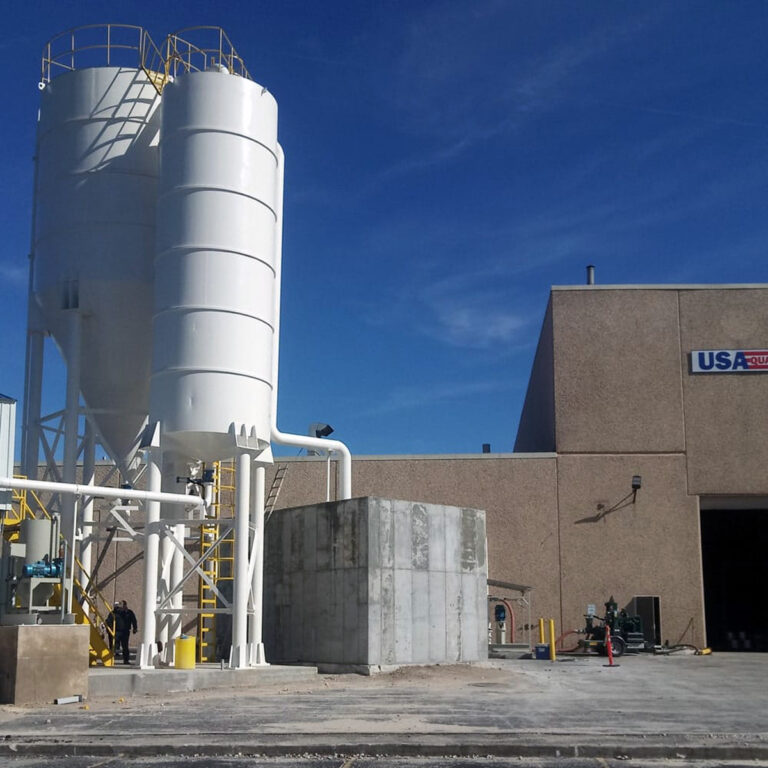
Effective integration ensures the chemical and mechanical processes function as a unified treatment train. The dosing system’s injector must be placed to promote turbulent mixing in the wastewater line before entry into the silo or clarifier, ensuring adequate dispersion. Control logic should be linked to the main plant controller or flow meter, allowing dose rates to be adjusted proportionally. The silo itself must be sized for adequate retention time—typically 45-60 minutes—and feature a deep conical bottom to facilitate sludge collection.
Safety-Driven Design Considerations
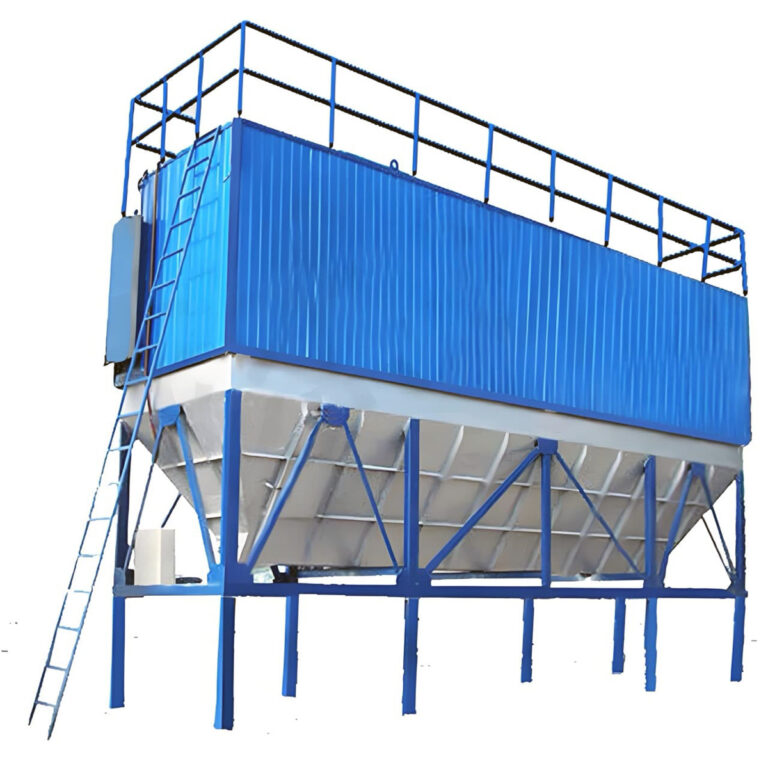
A critical layer influencing design is that these silos are OSHA-recognized confined spaces. This classification imposes stringent safety protocols for entry, inspection, and manual cleaning. This strategically influences design choices toward automated sludge purge (blowdown) valves and external access platforms with fixed ladders and guardrails. Minimizing the need for hazardous manual entry is not just a safety benefit; it reduces procedural downtime and liability. Proper integration includes specifying equipment like automated silo blowdown valves that enable remote sludge management.
Performance Feedback Loops
Advanced integration incorporates feedback mechanisms. While not always required initially, specifying piping and connections compatible with future online sensors, governed by standards like ISO 15839:2003 for water quality analyzers, creates a pathway for closed-loop control. This allows the system to adjust chemical dosing based on real-time turbidity or pH, optimizing consumption and consistency.
Chemical Selection and Jar Testing for Optimal Results
The Data-Driven Selection Process
Chemical selection is not a one-size-fits-all decision; it is a data-driven process specific to each shop’s wastewater stream. The optimal flocculant and coagulant formulas—varying in ionic charge, molecular weight, and polymer structure—must be determined through jar testing on actual process water. This bench-scale test identifies the precise dosage, sequence, and mixing energy required for the particular stone mix being processed, whether it’s granite, quartz, or marble.
Mitigating Supply Chain Risk
Chemical purity is a parallel risk factor. Using diluted or “cut” chemicals can lead to under-dosing, poor performance, and even long-term damage to pump seals and wetted parts due to unknown fillers or contaminants. Supplier vetting and validated Safety Data Sheets (SDS) are a necessary procurement strategy. This transforms chemical sourcing from a simple cost-based decision into a technical risk mitigation effort to protect capital equipment and ensure process stability.
From Testing to Implementation
The jar test provides the foundational data, but field calibration is essential. The optimal dose identified in the lab must be fine-tuned during system commissioning, accounting for full-scale mixing dynamics and flow variations. Establishing a regular jar testing protocol—quarterly or when stone mixes change—ensures the chemical program remains optimized as raw material inputs evolve.
Material Compatibility and System Longevity
The Corrosion Resistance Mandate
Material compatibility is paramount for system durability and preventing catastrophic, costly failures. Components in constant contact with concentrated liquid coagulants or prepared polymer solutions are under constant chemical stress. Constructing these wetted parts from non-reactive materials is a fundamental design requirement. This includes stainless steel (AISI 304 or 316) for pump heads, valve bodies, and structural frames.
Plastics and Installation Integrity
For tanks, piping, and fittings, specialized smooth-walled plastics like HDPE or PP are standard. Their non-reactive nature prevents degradation and allows for easy cleaning. The installation integrity of these plastic systems is critical, governed by standards such as ISO 12176-1:2017 for butt fusion and ISO 12176-2:2008 for electrofusion jointing. These standards ensure leak-free, reliable joints that contain chemicals and prevent environmental seepage or system failure.
A Framework for Specification
The selection of appropriate materials should follow a defined framework to ensure longevity.
Material Compatibility and System Longevity
| Компонент | Recommended Material | Key Property |
|---|---|---|
| Frames & pumps | Stainless steel (AISI 304/316) | Corrosion-resistant |
| Tanks & piping | Specialized smooth-walled plastics | Non-reactive, easy-clean |
| Contact surfaces | Коррозионностойкие материалы | Prevents degradation |
| System design focus | Совместимость материалов | Long-term operational stability |
Source: ISO 12176-1:2017 Plastics pipes and fittings — Equipment for fusion jointing polyethylene systems — Part 1: Butt fusion. This standard ensures reliable, leak-free installation of PE piping systems, which are critical for the safe transport of chemicals and wastewater in dosing systems, directly supporting longevity and containment. ISO 12176-2:2008 provides complementary requirements for electrofusion jointing.
This focus directly supports the long-term operational stability promised by automated systems, protecting the capital investment and maintaining the consistent shop water supply central to production continuity.
Operational Costs and Performance ROI Analysis
Modeling the Full ROI Spectrum
Justifying a chemical dosing system requires an ROI analysis that looks beyond simple water bill savings. The primary financial drivers are labor reduction and production uptime, as automation minimizes daily manual tasks. Performance gains provide compounding value: faster clarification increases system throughput, denser sludge reduces dewatering and disposal costs, and clearer recirculated water extends diamond tool life by reducing abrasive particulate content.
Transforming Water into an Asset
The financial model is fundamentally reframed by high-efficiency water reuse. Shifting to 95%+ recirculation transforms water management from a consumable utility cost into a capitalized asset. ROI should therefore be modeled on long-term infrastructure depreciation, not just annual savings. This model must also factor in the value of operational predictability and compliance assurance against evolving regulations concerning airborne silica and slurry disposal, which represent significant future liability risks.
Quantifying the Value Drivers
A comprehensive analysis breaks down the contributing factors to build a convincing business case.
Operational Costs and Performance ROI Analysis
| ROI Factor | Основная выгода | Финансовое воздействие |
|---|---|---|
| Сокращение трудозатрат | Automation minimizes manual tasks | Major cost savings |
| Production uptime | Eliminates downtime for checks | Increased throughput revenue |
| Sludge density | Reduces dewatering/disposal costs | Lower waste handling costs |
| Water clarity | Extends tool life | Reduced consumable cost |
| Повторное использование воды | >95% recycling rate | Transforms cost to asset |
Источник: Техническая документация и отраслевые спецификации.
In our evaluations, the combined impact of reduced disposal costs and extended tooling life frequently exceeds the savings from reduced water procurement, making it a critical part of the total value proposition.
Внедрение вашей системы: Пошаговое руководство
Phase 1: Assessment and Design
Implementation begins with a jar test on current process water to define chemical needs and optimal dosage. Next, select a system architecture. This is a strategic fork: a fully integrated, proprietary solution offers seamless operation and single-source accountability, while a modular approach may offer flexibility for upgrading legacy systems. Design must ensure proper placement of the dosing station near the lift pump and chemical storage, with defined integration points for mixing and control signals.
Phase 2: Installation and Commissioning
Installation includes setting up all mechanical components: the dosing station, chemical storage, and pit mixers for essential slurry homogenization. Commissioning is the critical phase for realizing design performance. It involves calibrating dosing pumps to the jar test results, setting purge valve timers on the silo based on observed sludge accumulation rates, and programming the system controller for automated sequences. This phase requires close collaboration between the facility’s operators and the system provider.
Phase 3: Optimization and Data Utilization
The final, ongoing phase leverages system data for continuous improvement. Modern controllers provide data on chemical consumption, cycle times, and error logs. This operational data becomes a strategic asset, allowing for trend analysis, optimization of chemical use, and the move toward predictive maintenance. Establishing key performance indicators (KPIs) for water clarity, sludge density, and cost per gallon treated turns the wastewater system from a black-box utility into a managed, value-retaining process.
The core decision points are the commitment to automation over manual operation and the selection of an integrated system versus modular components. Prioritize material compatibility and safety-by-design to ensure the solution delivers long-term operational stability, not just immediate compliance. The sequence of jar testing, precise integration, and data-driven commissioning is non-negotiable for achieving the promised ROI.
Need professional guidance on designing a chemical dosing system that aligns with your production goals and safety requirements? The engineering team at PORVOO specializes in turn-key wastewater treatment solutions that integrate chemical dosing, silo management, and control automation. We can help you model the specific ROI for your facility. For a detailed consultation, Свяжитесь с нами.
Часто задаваемые вопросы
Q: How do you determine the correct flocculant and coagulant for a specific stone slurry?
A: You must conduct jar testing on your actual process water to identify the optimal polymer type, ionic charge, and molecular weight. This data-driven process defines the precise dosage and sequence for your specific stone mix. For projects where water quality consistency is critical, plan to integrate online sensors that meet performance specifications like those in ISO 15839:2003 to provide feedback for automated dosing control.
Q: What are the key material compatibility requirements for a durable dosing system?
A: Components in constant contact with chemicals must use corrosion-resistant materials like stainless steel (AISI 304 or 316) for frames and pumps, and smooth-walled plastics for tanks and piping. This prevents degradation and ensures easy cleaning for long-term performance. This means facilities handling aggressive chemicals should prioritize material specifications over initial cost to protect their capital investment and ensure operational continuity.
Q: When should we choose a fully automatic over a semi-automatic dosing station?
A: Choose a fully automatic station with twin tanks and an automated polymer feed when your priority is maximizing production uptime and reducing labor costs. This system eliminates manual batch preparation, cutting labor by up to 90% and preventing downtime. If your operation requires consistent water quality and predictable operational costs, the higher initial investment in automation delivers a stronger long-term ROI.
Q: How does system integration impact safety for stone wastewater silos?
A: Effective integration must account for the fact that these silos are OSHA-recognized confined spaces. Design choices should therefore include automated sludge purge valves and safe access platforms to minimize the need for hazardous manual entry and cleaning. This means your implementation plan must strategically prioritize engineering controls that reduce procedural safety risks for maintenance personnel.
Q: What standards ensure reliable piping for chemical and wastewater transport in these systems?
A: For polyethylene (PE) piping networks, reliable installation is achieved by following equipment standards for fusion jointing. Use ISO 12176-1:2017 for butt fusion and ISO 12176-2:2008 for electrofusion jointing equipment. This ensures leak-free containment of chemicals and wastewater, so you should verify your installer’s procedures align with these specifications to prevent failures.
Q: Why is slurry agitation considered a core component, not an accessory, for chemical dosing?
A: Pit mixers are essential because they maintain solids in suspension, enabling uniform chemical reaction and preventing sedimentation that degrades treatment performance. Without effective agitation, even a precisely dosed chemical system will fail. This means your design must integrate mechanical or hydraulic mixers as a foundational element, not an optional add-on, to achieve target water clarity and settling rates.
Q: How should the ROI for a chemical dosing system be calculated beyond water savings?
A: Model ROI on labor reduction from automation, increased production uptime, and lower sludge disposal costs from denser flocs. Furthermore, achieving 95%+ water reuse transforms water management into a capital asset depreciated over time. For operations facing evolving regulations on silica, you should also factor in the value of compliance assurance and operational predictability in your financial analysis.