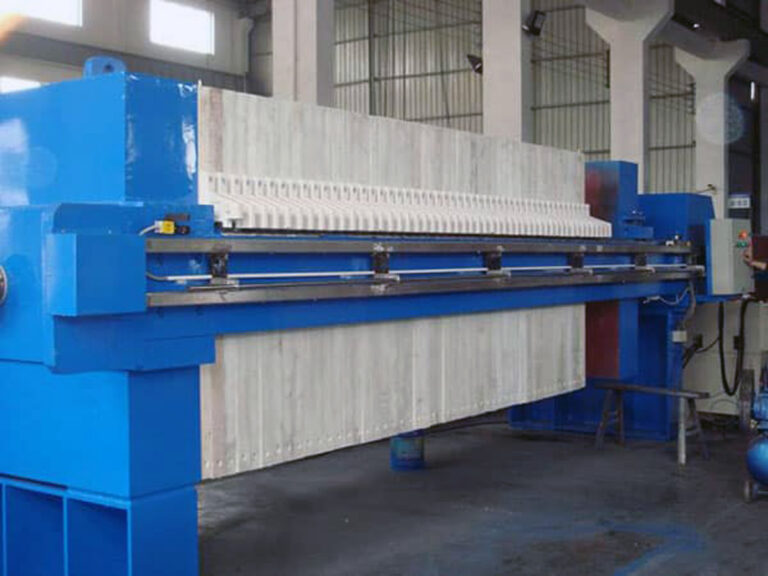
Selecting the right filter press technology is a critical capital decision that directly impacts your bottom line and operational efficiency. The choice between a membrane filter press and a traditional chamber press is often oversimplified to a basic cost comparison, leading to significant long-term miscalculations. Professionals must move beyond initial price tags to evaluate total lifecycle performance.
The pressure to optimize dewatering—driven by rising disposal costs, stringent environmental regulations, and the need for process water recovery—makes this technical evaluation more urgent than ever. Understanding the eight key performance differences between these systems is essential for making an investment that aligns with both immediate operational goals and long-term financial strategy.
Membrane vs Chamber Filter Press: The Core Difference Explained
Defining the Filtration Mechanism
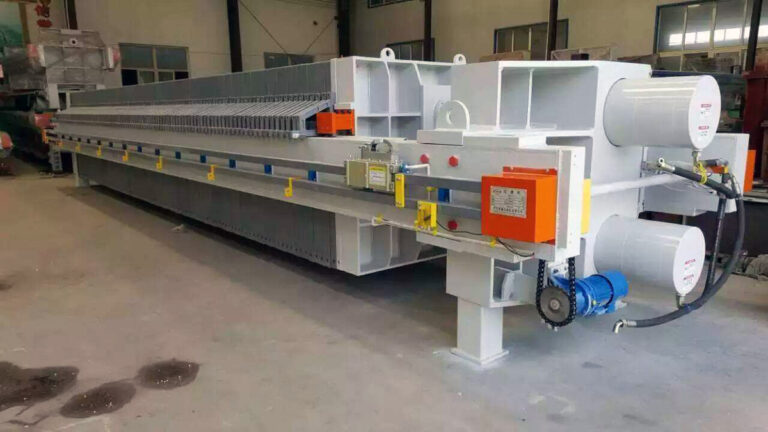
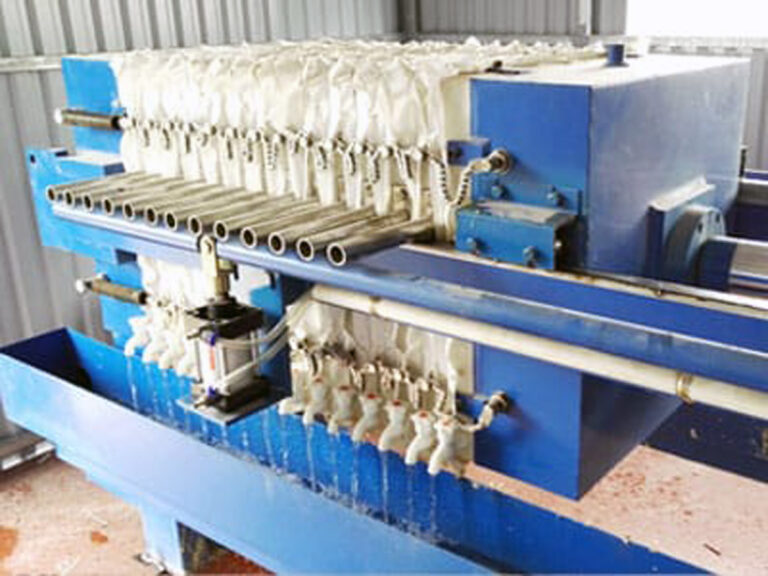
The fundamental operational distinction is passive versus active dewatering. A traditional chamber press operates on a single-stage principle: slurry is pumped into fixed-volume chambers, and liquid is forced through filter cloths solely by feed pump pressure. Filtration stops once the chambers are physically full of solid cake. This process is entirely dependent on hydraulic pressure from the feed system.
Introducing Active Compression
A membrane filter press incorporates a decisive second stage. After the initial feed cycle, an inflatable diaphragm or membrane lining each chamber is pressurized, typically with water or air at around 15 bar. This applies uniform, mechanical squeezing force directly onto the pre-formed cake. According to the JB/T 4333.3-2017 Membrane filter press standard, this secondary compression stage is the defining feature that separates the technology from basic chamber designs.
The Impact on Process Control
This core difference—adding active compression—decouples final cake dryness from the limitations of feed pump pressure alone. It transforms the process from a passive fill-and-drain operation into a controlled, two-phase dewatering sequence. The membrane’s ability to conform to the cake applies isostatic pressure, closing internal voids and forcing out additional capillary water that pump pressure cannot reach. In our analysis of pilot test data, this mechanical action consistently delivers a step-change in dryness that hydraulic pressure alone cannot achieve.
Capital Cost vs Operational Cost: A Total Investment Analysis
Evaluating the Initial Investment
A membrane filter press commands a higher initial capital expenditure. The increased complexity of membrane plates, the dedicated high-pressure inflation system (pump, valves, controls), and often more robust frame construction are the primary cost drivers. A traditional chamber press, with its simpler plate design and absence of an inflation system, presents a lower upfront financial barrier, as outlined in the component requirements of JB/T 4333.2-2017 Chamber filter press.
Calculating Operational Expenditure
The financial narrative shifts when analyzing operational costs. The superior dryness from a membrane press directly reduces wet cake mass and volume. For high-tonnage operations, this translates into substantial savings on transportation and landfill or incineration fees, which are typically the largest recurring cost in sludge management. Furthermore, membrane presses can achieve target dryness with moderate-pressure feed pumps (6-7 bar), whereas a chamber press may require expensive, high-pressure pumps to approach similar performance, increasing energy consumption.
The Lifecycle Cost Framework
This represents a deliberate CapEx-for-OpEx trade-off. A proper evaluation requires a total cost of ownership model projected over the equipment’s lifespan. The following table breaks down the key financial differentiators.
| Cost Category | Membrane Filter Press | Traditional Chamber Press |
|---|---|---|
| Initial Capital Cost | Higher | Lower |
| Key Cost Driver | Membrane plates, inflation system | Simpler plate design |
| Feed Pump Pressure | Moderate (6-7 bar) | Potentially high-pressure |
| Largest OpEx Impact | Lower disposal costs | Higher disposal costs |
| Strategic Trade-off | Higher CapEx for OpEx savings | Lower CapEx, higher OpEx |
Source: JB/T 4333.3-2017 Membrane filter press and JB/T 4333.2-2017 Chamber filter press. These standards define the technical requirements and components for each press type, directly informing the complexity and cost drivers that underpin the capital expenditure (CapEx) differences.
Which Filter Press Achieves Drier Cake Solids?
Quantifying the Dryness Advantage
Membrane filter presses consistently produce cakes with higher dry solids content. The improvement is sludge-type dependent. For well-conditioned mineral sludges, such as those treated with lime or cement, dryness gains of 4 to 5 percentage points over a chamber press are common. For compressible organic sludges from wastewater treatment, conditioned with polymer, gains of 2 to 3 percentage points are typical. These figures are not theoretical; they are the measurable outcome of the active compression phase specified in performance tests.
Assessing Cake Homogeneity
Beyond the percentage point gain, the uniformity of compression is critical. The membrane’s even squeeze eliminates the wet, sticky core or “pudding” often found in the center of chamber press cakes. This produces a homogeneous, friable cake that discharges cleanly from the cloths. This consistency is a major operational benefit, reducing hang-up in hoppers and improving downstream handling or feeding into incinerators.
The Technical Basis for Performance
The performance gap stems from the fundamental mechanisms. A chamber press relies on diminishing filtration rates as cake builds up and resistance increases. A membrane press overcomes this by applying a new, higher pressure gradient after cake formation. The table below details this comparative performance.
| Performance Metric | Membrane Filter Press | Traditional Chamber Press |
|---|---|---|
| Typical Dryness Gain (Mineral Sludge) | +4 to +5 percentage points | Baseline |
| Typical Dryness Gain (Organic Sludge) | +2 to +3 percentage points | Baseline |
| Compression Mechanism | Active diaphragm squeeze | Pump pressure filtration only |
| Cake Consistency | Homogeneous, no wet patches | Can be inconsistent |
| Key Enabling Feature | Decouples dryness from pump pressure | Dryness limited by feed pressure |
Source: JB/T 4333.3-2017 Membrane filter press. This standard specifies the performance and testing methods for membrane filter presses, including the secondary compression stage that is the technical basis for achieving higher, more consistent cake dryness compared to traditional designs.
Throughput Compared: Cycle Time and Processing Capacity
Analyzing Cycle Time Components
Throughput is a function of total cycle time: filling, squeezing, cake release, and cloth washing. In a chamber press, the filling/filtration phase is often the longest, as the system must wait for pressure-driven filtration to completely fill the chambers. The process cannot be shortened without sacrificing cake solidity.
The Membrane Press Efficiency Gain
The membrane press introduces a faster, more efficient path to final dryness. The initial filtration phase can be terminated earlier, once a sufficient cake base is formed. The high-pressure squeeze phase then acts rapidly—often in minutes—to achieve the target moisture content. On readily filterable sludges, this can reduce overall cycle time by 30-40%, significantly increasing daily processing capacity for a given plate area.
The Critical Caveat: Sludge Filterability
This throughput advantage is not universal. For problematic, slow-filtering organic sludges with high compressibility, the filtration phase remains the limiting bottleneck for both technologies. In these cases, the membrane press still delivers drier cake, but the cycle time reduction may be marginal. Industry experts consistently emphasize that accurate capacity projections are impossible without representative sludge testing under both filtration and compression conditions, a principle embedded in the general testing methods of GB/T 34331-2017 Filter press.
| Throughput Factor | Membrane Filter Press | Traditional Chamber Press |
|---|---|---|
| Cycle Time Reduction (Filterable Sludge) | 30-40% faster | Baseline cycle |
| Limiting Phase | Rapid high-pressure squeeze | Slow pressure filtration |
| Capacity Determinant | Sludge filterability testing required | Sludge filterability testing required |
| Problematic Sludge Impact | Throughput benefit may be negligible | Consistently slower |
Source: GB/T 34331-2017 Filter press. As the general standard for filter presses, it establishes the foundational test methods for evaluating key performance parameters like cycle time and processing capacity, which are essential for this comparative analysis.
Maintenance, Complexity, and Long-Term Reliability
Comparing System Complexity
Mechanical simplicity favors the traditional chamber press. Its system comprises plates, cloths, a closing mechanism, and a feed pump. The membrane press adds significant complexity: the membrane plates themselves (elastomer diaphragms bonded to polypropylene), a high-pressure inflation media system (pump, accumulators, piping), and more sophisticated controls to manage the two-stage cycle.
Evaluating Maintenance Overhead
Complexity dictates maintenance. Chamber press maintenance focuses on cloth replacement, plate inspection, and pump upkeep. Membrane press maintenance includes all of that plus the critical inspection and replacement of membranes, which are wear items subject to fatigue and chemical attack. The inflation system also requires regular servicing. This translates to higher routine maintenance costs and a greater need for skilled operational oversight, a factor addressed in standards for automated systems like JB/T 4333.4-2017 Automatic filter press.
Debunking the “Fully Automatic” Claim
Both systems can be automated for cycling, but cake discharge often remains a supervisory task. Sticky or cohesive cakes may not release cleanly without operator intervention, regardless of press type. Assuming a membrane press is a “hands-off” solution is a common strategic error. The reliability of the entire system hinges on a robust maintenance program tailored to its specific components.
| System Aspect | Membrane Filter Press | Traditional Chamber Press |
|---|---|---|
| Mechanical Complexity | Higher | Lower |
| Key Wear Components | Membranes, inflation system | Filter cloths, plates |
| Routine Maintenance | Higher overhead | Lower overhead |
| Operational Oversight | Requires more skilled labor | Simpler to operate |
| Automation Potential | High, but discharge may need supervision | Can be automated |
Source: JB/T 4333.4-2017 Automatic filter press. This standard outlines requirements for automatic control systems and safety, which relate directly to the operational complexity, labor requirements, and reliability considerations for both types of presses when automated.
Space Requirements and System Footprint Comparison
Assessing the Press Frame
For equivalent filtration area, the physical footprint of the press frame itself is often similar between the two technologies. The size is dictated by the number and dimensions of the plates. The difference lies in the ancillary systems that support the core dewatering function.
Accounting for Ancillary Equipment
A membrane filter press requires dedicated floor space for its membrane inflation unit—a high-pressure pump or air compressor system with associated tanks and controls. A traditional chamber press may require space for larger, higher-horsepower feed pumps if high pressure is needed to maximize dryness. The ancillary footprint is technology-dependent and must be included in plant layout planning.
Considering Downstream Footprint
The drier, more compact cake produced by a membrane press can reduce the required size of downstream handling infrastructure. Conveyor systems, storage bunkers, and transport containers can be sized for a lower volumetric flow. This secondary space saving is frequently overlooked in initial layout designs but contributes to overall plant efficiency.
Best Applications: Which Sludge Type Is Right for Each?
Optimal Applications for Membrane Presses
Membrane filter presses deliver maximum value where dryness, throughput, and cake consistency are paramount. They are the preferred solution for municipal wastewater treatment sludges, where drier cake directly slashes disposal costs. They excel on fine mineral tailings in mining, enhancing water recovery and tailings stack stability. Their adaptability also makes them suitable for variable chemical and industrial sludges. For operations considering advanced sludge dewatering equipment like membrane filter presses, the justification is strongest in these areas.
Ideal Uses for Traditional Chamber Presses
Traditional chamber presses remain a robust, cost-effective choice for less demanding applications. They are well-suited for coarse, fast-draining mineral concentrates, certain pretreatment stages where ultimate dryness is not critical, and operations with limited maintenance capabilities or capital budgets. Their simplicity is an asset in environments where operational complexity is a liability.
Making the Application-Specific Choice
The decision matrix must be driven by sludge characteristics and process economics. The following table provides a guideline based on common industry applications.
| Application / Sludge Type | Recommended Press Type | Primary Driver |
|---|---|---|
| Municipal Wastewater (Organic) | Membrane Filter Press | Disposal cost savings |
| Mineral Tailings (Fine) | Membrane Filter Press | Water recovery, stability |
| Non-demanding Mineral Processing | Traditional Chamber Press | Cost-effectiveness |
| Chemical Sludges | Membrane Filter Press | Adaptability to variability |
| Pretreatment Stages | Traditional Chamber Press | Dryness not critical |
Source: Technical documentation and industry specifications.
Key Selection Criteria for Your Dewatering Operation
Defining Non-Negotiable Outcomes
Begin by establishing fixed requirements: target cake dryness percentage, minimum daily throughput (in dry tons), available operator skill level, and allowable footprint. These are your boundary conditions. Any technology that cannot meet these thresholds is eliminated from consideration.
Conducting Representative Testing
Generic performance data is insufficient. A detailed sludge characterization study, including bench-scale or pilot testing with both technologies, is non-negotiable. Test with your actual, conditioned sludge to generate reliable data on filtration rate, achievable dryness, and optimal cycle time. This data feeds the financial model and de-risks the capital investment.
Executing a Total Lifecycle Cost Analysis
Build a financial model that spans the expected asset life. Factor in capital cost, installation, energy consumption (feed and inflation pumps), routine maintenance, membrane/cloth replacement costs, labor, and—most significantly—projected disposal costs based on the cake dryness achieved. This model will reveal the true cost differential and payback period for a membrane press investment.
The choice between a membrane and chamber filter press is a strategic trade-off between capital expenditure and long-term operational efficiency. Prioritize definitive sludge testing over manufacturer claims, and let a total lifecycle cost analysis—not just an equipment quote—guide the final decision. For operations where disposal costs are dominant or water recovery is critical, the membrane press offers a compelling return on investment.
Need professional guidance to specify the right filter press technology for your specific sludge and operational goals? The engineering team at PORVOO can help you navigate this critical analysis with data-driven recommendations. Contact us to discuss your dewatering challenges and explore performance-based solutions.
Frequently Asked Questions
Q: How does the core operating mechanism of a membrane filter press lead to better dewatering results?
A: The key difference is the addition of an active compression stage. After initial slurry feed, an inflatable diaphragm pressurizes to around 15 bar, applying direct mechanical force to the pre-formed cake. This active squeeze decouples final dryness from feed pump limitations, enabling more controlled moisture reduction. This means facilities targeting minimal residual moisture for disposal cost savings should prioritize the membrane press’s mechanical compression capability over a chamber press’s passive filtration.
Q: What is the total cost of ownership trade-off between a membrane and a chamber filter press?
A: Membrane presses require higher capital investment for their complex design and inflation system, but they strategically lower operational expenses. The drier cake reduces disposal and transport costs, and they often use less energy with moderate-pressure feed pumps. For projects where sludge disposal fees are a major cost driver, a detailed lifecycle analysis that quantifies these downstream savings is essential to justify the initial capital outlay.
Q: How much drier can we expect cake solids to be with a membrane press for municipal wastewater sludge?
A: For polymer-conditioned organic sludges like those from municipal wastewater, membrane presses typically achieve dry solids content 2 to 3 percentage points higher than chamber presses. This performance is sludge-dependent, making detailed feed characterization mandatory for accurate projections. If your operation requires minimized cake volume for cost-effective landfill disposal or incineration, the membrane press provides a clear technical advantage in final dryness and cake homogeneity.
Q: Do membrane filter presses always process sludge faster than traditional chamber presses?
A: Not universally. While the high-pressure squeeze phase can shorten overall cycle time by 30-40% on well-conditioned sludges, this throughput gain diminishes with problematic, slow-filtering feeds. Capacity projections must be based on site-specific testing rather than generic claims. For operations with highly variable or difficult sludge, the potential cycle time benefit should be validated with pilot testing before final equipment selection.
Q: What are the long-term maintenance implications of choosing a more complex membrane filter press?
A: The added complexity of the inflation system and the membranes themselves increases maintenance overhead. Membranes are wear items needing periodic inspection and replacement, requiring more skilled operational oversight. While automation is common, fully automatic cake discharge is not guaranteed for all sludge types. This means facilities with limited technical staff should carefully evaluate the ongoing maintenance demands and potential labor costs against the performance benefits.
Q: Which technical standards should we reference when specifying a membrane filter press for a project in China?
A: The primary standard for membrane filter press design and testing is JB/T 4333.3-2017. For general filter press requirements including safety and marking, consult the foundational GB/T 34331-2017. This means your procurement specifications and performance guarantees should align with these standards to ensure equipment meets recognized technical and safety benchmarks for the region.
Q: How should we select the right filter press technology for a mining tailings application?
A: For mineral tailings where water recovery and tailings stability are priorities, membrane presses are often preferred due to their superior dryness and consistent cake. Start by defining non-negotiable outcomes like target solids content and throughput, then conduct a detailed sludge characterization study. If your operation values process adaptability and can support the system’s complexity, the membrane press’s performance typically justifies its use in demanding mineral processing environments.