A bid that shows strong cake dryness and high throughput can look convincing right up to the point where commissioning reveals the polymer dose was calibrated against a sludge profile that never existed at your plant. The cost consequence is not just a performance shortfall — it surfaces as wetter cake than projected, higher hauling volume, unexpected recycle-loop instability, and in some cases, solids targets that fail to meet the minimum threshold required before landfilling. The judgment that resolves this is not choosing the highest-dryness bid; it is verifying that every performance figure in the submission is tied to a disclosed conditioning basis, a named polymer strategy, and an explicit filtrate return path. A buyer who completes that verification before awarding can compare offers meaningfully; one who skips it is essentially comparing numbers that were generated under incompatible assumptions.
Which test conditions make dewatering bids comparable
Performance claims in dewatering bids are only as reliable as the test conditions that produced them, and those conditions are rarely disclosed unless the buyer requires it. Sludge age, mineralization, and hydraulic retention time all determine how readily the solids will respond to conditioning — and they shift the achievable outcome significantly. A bid based on young sludge may cite cake solids approaching 15%, while a test run against an older or biologically degraded feed might reach only 12% under the same equipment and chemical settings. Without that history disclosed, there is no reliable basis for comparing numbers across vendors.
Feed solids concentration is equally critical as a comparison baseline. A thickened sludge entering the dewatering stage at 4–6% solids is the planning range most commonly used to normalize throughput and dryness claims; a vendor who tested at a higher feed concentration will report a more favorable dewatering result for reasons unrelated to equipment or polymer performance. Deviations from this range are a flag that warrants clarification, not immediate disqualification — but they must be investigated before treating the bid figures as equivalent to those generated at standard inputs.
The conditioning chemistry itself must also be named. Mineral salts, organic coagulants, and flocculants each produce different floc structures, and floc structure governs drainage behavior regardless of what the machine is rated to handle. A bid that lists performance without specifying the chemical family used is asking the buyer to accept a result that may not be reproducible with the chemicals available or approved at the actual plant.
| What to Confirm | Why It Matters | Benchmark/Threshold |
|---|---|---|
| Sludge conditioning history (age, mineralization, retention time) | Without disclosure, performance claims are not comparable | Young sludge max 15% solids, sick sludge 12% solids, 30 days retention optimal |
| Conditioning chemicals (mineral salts, organic coagulants, flocculants) | Chemical selection directly impacts floc formation and drainage behavior | Must be specified in the test matrix |
| Feed solids concentration (typically 4-6% after thickening) | Deviations in feed solids skew dryness and throughput comparisons | 4-6% solids baseline |
The practical rule is that bids cannot be ranked on dryness and throughput alone until all three input variables — sludge history, feed concentration, and conditioning chemistry — have been disclosed and normalized. When that normalization is missing, the bid review becomes a comparison of test setups rather than equipment or process performance.
How polymer family and dose should be reviewed with drainage time
Polymer selection is not a background detail in a dewatering proposal — it determines whether the floc structure produced during conditioning can survive the mechanical conditions the equipment will impose on it. This is where polymer family and machine type must be reviewed together, because a floc that performs well under one pressure-and-time profile may fail completely under another.
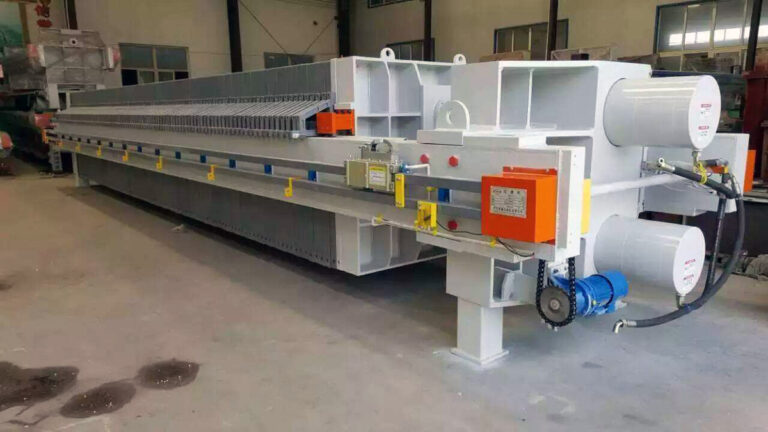
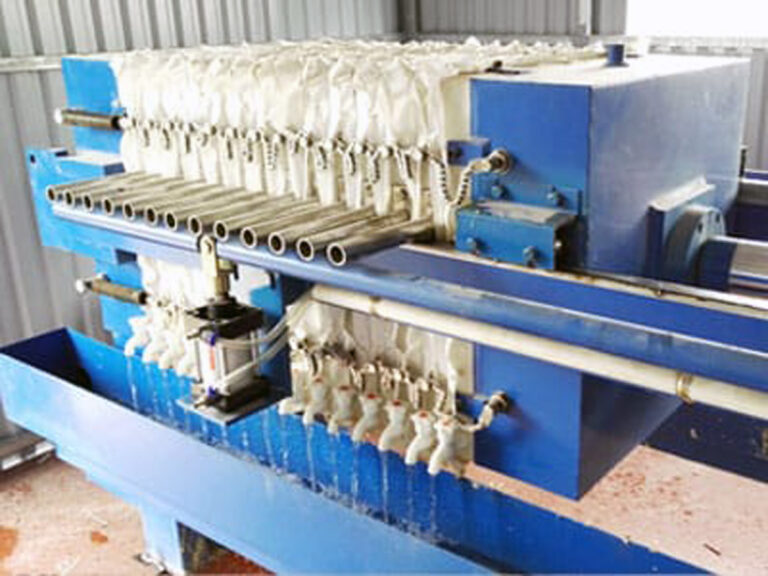
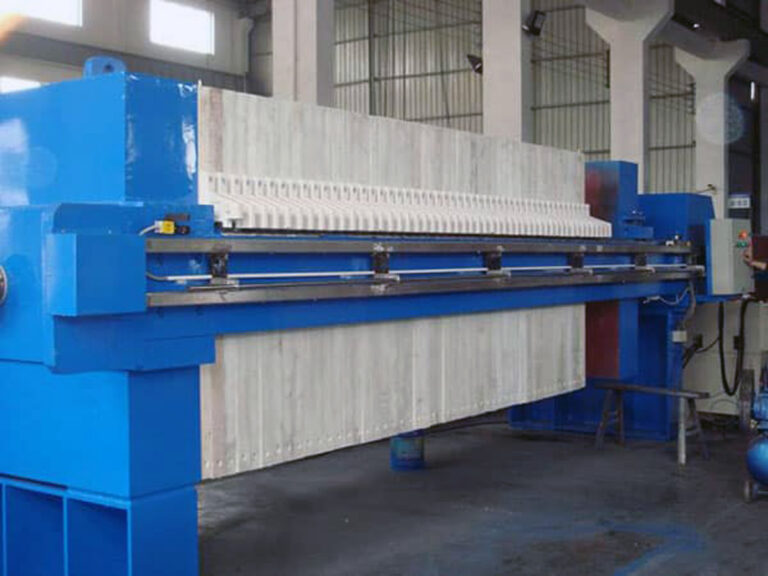
A filter press operating at 7 to 20 bar over a one-to-two-hour cycle imposes sustained high pressure on the floc network. If the polymer produces a fragile or loosely structured floc, that floc will compress and blind the filter media rather than allow drainage, cutting capture rate and extending cycle time beyond what the vendor projected. A rotary press, by contrast, operates at 0.1 to 0.5 bar with continuous low-shear drainage — a different failure mode applies there, where insufficient floc integrity under shear leads to solids migration through the drainage zone. These are not edge cases; they are predictable failure patterns when the polymer selection is treated as independent of the machine’s operating profile.
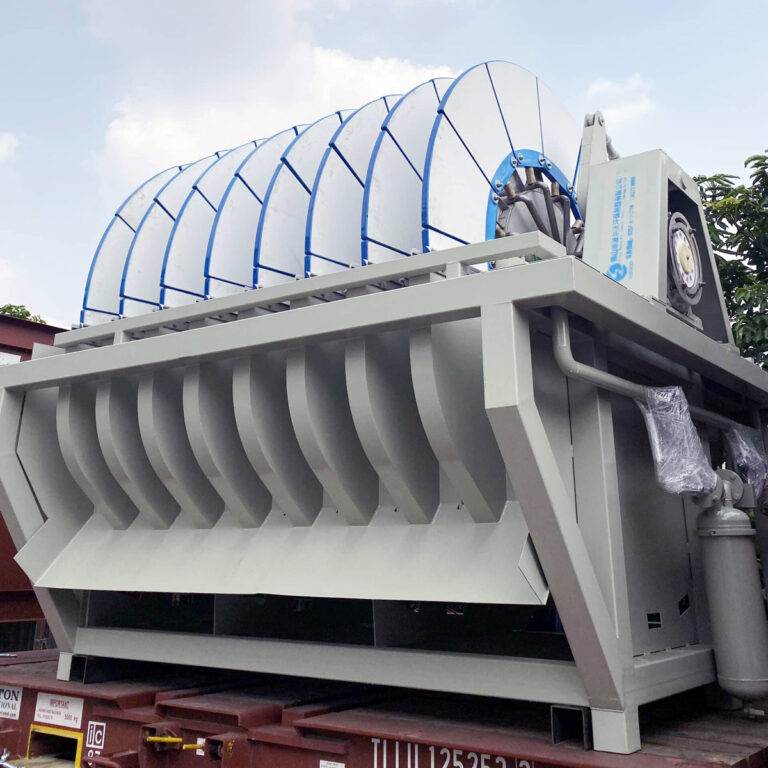
Vacuum filtration introduces a third reference point. A well-conditioned feed entering at 6–8% solids should produce cake solids in the 13–15% range after vacuum dewatering. A bid that falls meaningfully short of that benchmark on a vacuum system is signaling either an inefficient conditioning step or feed assumptions that will not hold at the actual plant — both worth pressing the vendor to explain before the evaluation advances.
| Type d'équipement | Pressure/Time Profile | Key Benchmark | What to Verify |
|---|---|---|---|
| Filtre-presse | 7-20 bar, 1-2 hours | Not specified; floc must withstand high pressure | Polymer floc strength adequate for long pressure hold |
| Rotary Press | 0.1-0.5 bar | Not specified; low shear drainage | Polymer suitability for low-pressure, continuous drainage |
| Vacuum Filtration | Vacuum-driven drainage | Feed solids 6-8%, cake solids 13-15% after conditioning | Bids meet the 13-15% cake solids benchmark as a conditioning-efficiency check |
The dose dimension of this review is where cost surprises are most likely to emerge later. A vendor may calibrate dose conservatively to show a lower chemical cost per cycle, but the drainage time consequence of that choice will only become visible under real operating conditions. Asking vendors to show drainage time curves — not just endpoint cake solids — at multiple dose levels makes the trade-off visible during the bid stage rather than after commissioning. For plants using automated chemical addition, an automatic dosing system can help maintain the dose precision that vendor testing assumes, but only if the target dose is correctly defined in the first place.
Why filtrate solids matter beyond the dewatering machine itself
The machine boundary is where most dewatering evaluations stop, but the filtrate that leaves the dewatering stage continues to move through the treatment train — and its solids content determines what happens next. Filtrate with elevated suspended solids reintroduces a solids load that downstream biological or chemical treatment was not sized to absorb, and the cost consequence is not always immediate or obvious. It may appear as a gradual increase in chemical consumption in a downstream coagulation step, as reduced performance in a biological reactor receiving recycle water, or as compliance exposure if filtrate solids contribute to a discharge parameter exceedance.
The measurement question matters here. Suspended solids in filtrate should be reported against a defined method — ISO 11923:1997 provides the framework for gravimetric determination of suspended solids in water — and bids that cite filtrate quality without specifying how it was measured are presenting an unanchored number. That distinction becomes important when the same filtrate figure might be read differently depending on whether the vendor used a coarse filter or a fine membrane in the test setup.
Elevated filtrate solids are not a guaranteed outcome in every scenario where conditioning is imperfect, but they are a predictable consequence of poor polymer selection, under-dosing, or mechanical bypass in the dewatering stage. The procurement implication is that filtrate solids should appear as a specified performance parameter in the bid evaluation, with a method reference and a defined upper limit tied to downstream process capacity — not as a footnote in the vendor’s test report.
Where returned water should re-enter the treatment train
The return point for filtrate is a process design decision that vendors rarely raise unless the buyer forces it, yet it carries more operational risk than most line items in the equipment specification. Filtrate that appears acceptable at the machine outlet — based on visual clarity or a quick turbidity check — may still introduce a concentrated intermittent solids pulse that the upstream equalization basin cannot absorb without disrupting residence time or chemical balance.
The risk is specifically about timing and load concentration. Dewatering cycles produce filtrate in discrete, high-volume intervals rather than as a steady flow. If that filtrate is returned directly to a thickening stage or a biological treatment basin without buffering, it can temporarily overwhelm the hydraulic or chemical capacity of that unit. The EPA Guidelines for Water Reuse addresses return-water quality and placement as a planning and operational consideration, reinforcing that the return point must be selected in relation to the treatment train’s load tolerance — not simply directed to the nearest available inlet.
For practical procurement purposes, the return point should be specified as part of the dewatering scope, not resolved informally during installation. The decision logic is straightforward: filtrate should re-enter the treatment train at a point upstream enough to allow dilution and equalization, but not so far upstream that it bypasses units that were sized without accounting for the recycle load. In most configurations, this means re-entering after primary equalization but before the coagulation or thickening stage that will next see that water. Vendors who leave this unspecified are leaving a hydraulic risk open that only becomes visible once the plant is running.
How to compare chemical cost against hauling and stability risk
The most common procurement error in dewatering evaluation is treating polymer chemical cost as an isolated line item. The dose decision has downstream consequences that dwarf the chemical expense itself — specifically hauling volume, disposal cost, and regulatory compliance — and those consequences are almost never included in the vendor’s cost summary.
The cake solids difference between a conservative and an aggressive polymer strategy illustrates the trade-off directly. A lower dose may reduce chemical spend per cycle, but if the result is cake at 12% solids instead of 21%, the hauling volume roughly doubles. Depending on disposal route, this can reverse the apparent cost advantage of the conservative dose within the first several months of operation. The stability dimension adds another layer: wetter cake is more prone to biological decomposition during storage and transport, increasing odor risk and the operational friction that comes with it.
Regulatory requirements on minimum cake solids before landfilling compound the risk further. If a jurisdiction restricts disposal of organic waste below a solids threshold, a conservative dose that reliably produces 12% solids may disqualify the output from the intended disposal route entirely — converting what looked like a cost saving at commissioning into a compliance problem that requires either a chemical adjustment or an alternative disposal arrangement at higher cost.
| Cost & Risk Factor | Lower Polymer Dose (Wetter Cake) | Higher Polymer Dose (Drier Cake) |
|---|---|---|
| Chemical cost | Lower upfront expense | Higher upfront expense |
| Cake solids (example) | ~12% solids | ~21% solids |
| Hauling and disposal | Higher volume, increased transport and disposal cost | Lower volume, reduced hauling cost |
| Stability and odor | Greater decomposition and odor risk during storage/transport | Improved stability, lower odor complaints |
| Conformité réglementaire | May fail to meet landfill solids targets, risking non-compliance | Meets higher solids targets, supports compliance |
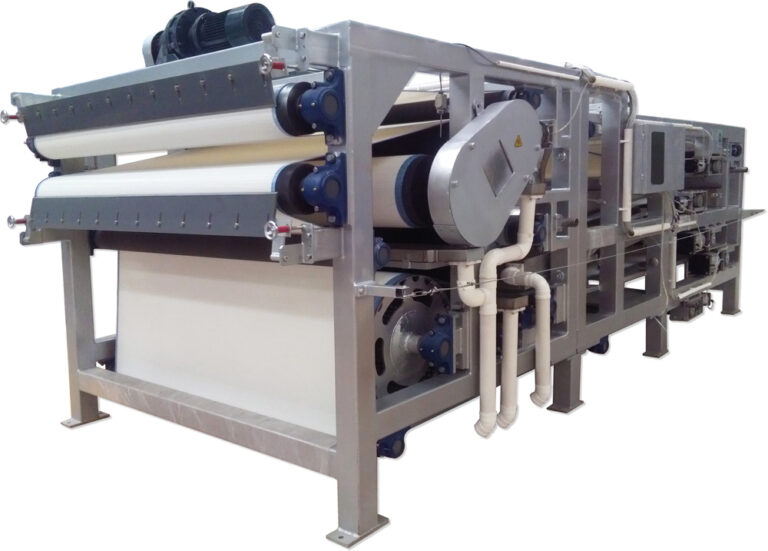
The correct evaluation frame is total cost of dewatering, not chemical cost of dewatering. That calculation requires hauling rate, disposal cost, and regulatory risk to be made explicit in the bid comparison, not inferred after award. A filtre-presse à bande selected at the right throughput and polymer pairing can consistently reach the drier end of the performance range — but only if the conditioning strategy was evaluated at the right dose level from the start.
What evidence belongs in the final procurement clarification sheet
A procurement clarification sheet for a dewatering project serves one function: it makes the performance claims in competing bids defensible and comparable. That requires specific evidence on record — not a vendor’s summary of results, but the inputs and outputs of the test conditions that produced those results.
The most common gap is conditioning history. If a vendor cannot provide the sludge age, mineralization level, and retention time used in the test, there is no way to assess whether the sludge that produced the quoted performance figures resembles the sludge that will enter the machine at the actual plant. A claim of 25% cake solids based on young, lightly mineralized sludge may be technically accurate and completely unachievable at a plant receiving heavily stabilized or mixed-source feed. Without that context, the clarification sheet cannot support a defensible award decision.
Feed solids concentration must be documented as a normalization baseline — 4–6% after thickening is the planning reference range, and deviations require explanation. Polymer dose, including type, product family, and amount per dry ton of solids, must be linked explicitly to the reported cake solids outcome. Cake solids themselves should be compared against both the vendor’s own target and the design range typical for the equipment type; the 20–40% range represents the achievable spread across configurations, with the actual result depending on sludge type, pressure profile, and conditioning chemistry. For projects involving coagulation-flocculation chemistry decisions, the detailed mechanism analysis available in the PAM and PAC chemical mechanisms guide provides additional grounding for evaluating polymer family claims.
| Evidence to Include | Why It Matters | Example or Specification |
|---|---|---|
| Sludge conditioning history (age, mineralization, chemicals used) | Validates performance claims are based on representative plant sludge | Age, mineralization, retention time, polymer/coagulant details |
| Target cake solids range and actual test results | Enables direct dryness comparison across bids | 20-40% target; actual achieved |
| Concentration des solides d'alimentation | Provides the baseline for dewatering efficiency comparison | Reported 4-6% solids after thickening |
| Polymer dose (type and amount) | Links conditioning chemistry to performance outcomes | Dose per dry ton, product name/family |
| Vendor test data: cake solids, throughput, chemical consumption | Allows total cost of operation analysis beyond dryness alone | Measured dry solids, kg/h throughput, chemical kg/dry ton |
A submission that cannot populate all five evidence categories — conditioning history, target and actual cake solids, feed solids, polymer dose, and measured throughput with chemical consumption — is incomplete for comparison purposes. Accepting an incomplete submission and adjusting the evaluation subjectively is precisely the pathway by which a technically plausible bid produces an unstable or non-compliant system after commissioning.
A dewatering bid that cannot be traced back through its conditioning inputs, polymer dose, and filtrate return logic is not a comparable offer — it is a performance claim with missing assumptions. The practical test before any award is whether the clarification sheet can answer three questions simultaneously: what sludge was tested, at what polymer strategy, and where does the filtrate go? If any of those answers are missing or inconsistent across bids, the comparison is unreliable.
The total cost calculation — chemical expense, hauling volume, disposal cost, and regulatory exposure — should be finalized only after those three questions are closed. A bid that holds up under that scrutiny is materially stronger than one that presents favorable dryness and throughput numbers in isolation, because it is the only offer that can be held to account when the plant is running.
Questions fréquemment posées
Q: What happens if the sludge at our plant changes character seasonally or due to upstream process shifts — does the polymer strategy from the bid still hold?
A: Not automatically. A polymer strategy calibrated against a fixed sludge profile will drift in performance when feed characteristics change, because floc formation and drainage behavior are directly tied to sludge age, mineralization, and biological stability. The practical safeguard is to require vendors to specify the dose adjustment logic — not just a target dose — so the conditioning strategy has a defined response path when sludge properties shift outside the test envelope.
Q: After the procurement clarification sheet is complete and a bid is awarded, what is the first operational step to confirm the vendor’s performance claims hold at the actual plant?
A: Run a structured commissioning test against the same input variables documented in the clarification sheet — using your plant’s actual sludge, at the specified feed solids concentration, with the named polymer at the documented dose. Record cake solids, drainage time, and filtrate suspended solids measured against ISO 11923:1997. This is the only way to verify that the test-based claims transfer to real operating conditions before the system is accepted into full service.
Q: At what point does improving cake dryness stop producing meaningful savings on hauling and disposal cost?
A: The return on higher cake solids compresses significantly once you move past the minimum threshold required for your disposal route. Beyond that threshold, each percentage point of additional dryness requires a disproportionately higher polymer dose, longer drainage time, or more aggressive mechanical pressure — and the incremental hauling savings become smaller while chemical and energy costs continue to rise. The practical ceiling is defined by your disposal route’s solids requirement and your hauling rate, not by the maximum dryness the equipment can theoretically achieve.
Q: Is a belt filter press or a filter press the better choice when filtrate return load on the upstream treatment train is the primary concern?
A: The better choice depends on which filtrate characteristic is creating the upstream load problem. A filter press operating at high pressure generally produces lower filtrate solids due to more complete cake consolidation, which reduces the suspended solids pulse returning to the treatment train. A belt filter press produces filtrate more continuously at lower pressure, which can be easier to buffer hydraulically but may carry higher suspended solids. Neither is universally superior — the decision should be driven by whether your upstream constraint is hydraulic surge tolerance or solids loading capacity.
Q: How should a plant with limited equalization capacity evaluate a dewatering bid when the vendor has not specified a filtrate return point?
A: Treat the unspecified return point as an incomplete bid requiring mandatory clarification before evaluation, not a minor detail to resolve during installation. For a plant with constrained equalization, an uncontrolled return point carries a real hydraulic upset risk because dewatering cycles generate intermittent high-volume filtrate pulses. Ask the vendor to model the return flow against your equalization basin’s hydraulic residence time and specify the return point in relation to your coagulation or thickening stage — only then can the bid be assessed on an equivalent basis to submissions that have already resolved this.