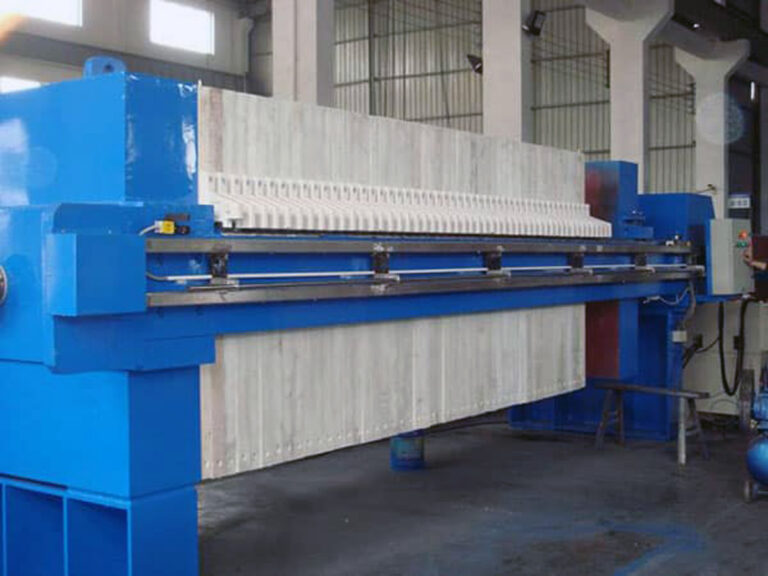
Most dewatering projects that end in commissioning disputes trace the problem back to a conversation that happened too early—before anyone had fixed feed solids range, cake moisture target, or disposal endpoint, a vendor proposed capacity, and the shortlist formed around it. The consequence is not always obvious at the equipment stage. It surfaces when the filter press cycle stretches past four hours because the feed was never pre-thickened adequately, or when the belt press produces cake too wet for the contracted hauler, or when the polymer system runs at three times the design dose because conditioning was sized on a different sludge. Each of these is a retrofit problem with a cost attached—either in added equipment, in operating budget overruns, or in renegotiated disposal contracts. What changes the outcome is fixing the right inputs before the shortlist is built, and then holding those inputs consistent across every system boundary, from thickening through filtrate return, rather than letting each subsystem be sized in isolation.
Which sludge properties should be fixed before machine selection starts
Machine selection starts failing before any vendor is contacted when the feed description is left open-ended. A sludge described as “biological secondary effluent at roughly 1–2% solids” is not a design basis—it is a range wide enough to support two entirely different thickening configurations and at least three dewatering technology choices, none of which will necessarily work well across the full variability the plant actually produces.
The two properties that carry the most weight early in the process are feed solids concentration and sludge character. Feed solids concentration determines whether upstream pre-thickening is needed at all, what type of thickener fits, and how the thickener discharge must be controlled to keep the dewatering unit within its stable operating window. A feed that swings between 0.6% and 5% solids across shifts is not a single design case—it is two cases, and a machine sized for the midpoint will underperform at both ends. Sludge character—whether fibrous, biological, mineral-heavy, or mixed—determines which dewatering mechanisms can generate consolidation pressure and whether conditioning chemistry will hold the floc intact through the machine’s shear environment.
The reason these two inputs gate everything else is practical: a machine optimized for fibrous pulp sludge will not reliably dewater a fine-particle biological sludge to the same target, even at identical throughput. Getting this wrong at the shortlisting stage means the subsequent evaluation—pilot results, vendor guarantees, polymer trials—is being conducted on the wrong machine for the actual process stream.
| Property to Fix | Why It Matters |
|---|---|
| Feed solids concentration range (e.g., 0.6–5% solids) | Dictates the need for and sizing of upstream pre-thickening equipment. |
| Sludge type and press-stability (e.g., fibrous vs. biological) | Directly influences suitable machine concepts, as different models are optimized for different sludge characters. |
Beyond the two primary properties, ash content, viscosity at operating temperature, and seasonal variability all belong in the same characterization exercise. Sampling for sludge characterization should capture the range of operating conditions the plant actually runs, not a single composite grab from an average day. ISO 5667-13:2011 provides practical guidance on structured sampling approaches for sludge streams, which is useful when characterization data needs to be defensible in a vendor performance guarantee negotiation.
How cake moisture targets change the economic shortlist
Cake dryness is where the technology shortlist should be built, not where it should be confirmed after the machine is already specified. The practical reason is that different technology families are not interchangeable across dryness targets—and the gap between what a standard mechanical press achieves and what a higher-dryness technology achieves is not a fine-tuning margin. It is a structural difference that changes the capital configuration, operating cost profile, and downstream disposal logic simultaneously.
Mechanical presses and centrifuges typically produce cake in the range of 15–23% solids under practical operating conditions. That range is achievable at reasonable energy input and without complex auxiliary systems, which is why it represents the dominant design case for municipal and industrial secondary sludge. Thermal drying pushes toward 40% solids and above, but introduces energy intensity and safety considerations that belong in a separate capital and operating cost model. Screw press configurations with features such as shaft dewatering or steam-assisted heating can achieve cake dryness up to 65% on some sludge types—but these figures are achievable ranges on compatible streams, not guaranteed performance across all feeds. The right way to use these figures is as shortlisting logic: if the disposal or reuse endpoint requires 35%+ solids, the shortlist should begin with technologies capable of that range under the actual sludge conditions, not with equipment that achieves 20% and might be pushed higher.
| Type de technologie | Solides de gâteaux typiques (%) | Implication for Selection |
|---|---|---|
| Mechanical presses / centrifuges | 15–23% | Creates a cost/performance gap that defines the technology shortlist for a given dryness target. |
| Thermal dryers | ~40% | Creates a cost/performance gap that defines the technology shortlist for a given dryness target. |
| Sludge screw presses with specific features (e.g., shaft dewatering, steam heating) | Up to 65% | High dryness targets require specific technology features, not just a generic machine type. |
The cost/performance gap matters most when disposal cost is the dominant operating line item. A plant paying for landfill by wet tonnage has a direct financial stake in every percentage point of cake solids—and the calculation is not linear. Moving from 18% to 36% solids roughly halves the wet mass being hauled, which at real landfill rates can reframe whether the additional capital or energy burden of a higher-dryness technology pays back inside the planning horizon. That trade-off belongs in the technology selection conversation, not in the post-purchase operating review.
For projects where the shortlisting logic for filter press configurations is not yet clear, the Filter Press Sizing and Capacity Calculation Guide covers how to match chamber volume, cycle time, and feed conditions to capacity requirements.
When continuous and batch dewatering architectures lead to different ROI
The choice between continuous and batch dewatering is not primarily a technology preference—it is a capacity, labor, and capital structure question that has different answers depending on throughput variability, shift coverage, and downstream cake handling logistics.
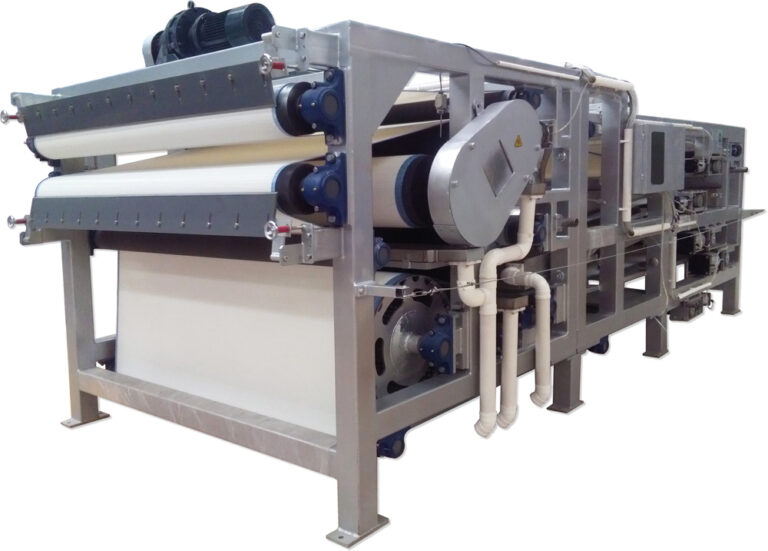
A belt filter press runs continuously as long as feed flow, polymer conditioning, and washwater supply stay within operating bounds. That continuity is an advantage when the upstream process generates a relatively steady sludge flow and the plant has the operator attention to maintain consistent conditioning quality across a shift. The economic case for continuous operation strengthens when capital is constrained, throughput is moderate, and cake discharge can be managed to a conveyor or bin that handles variable output without intervention.
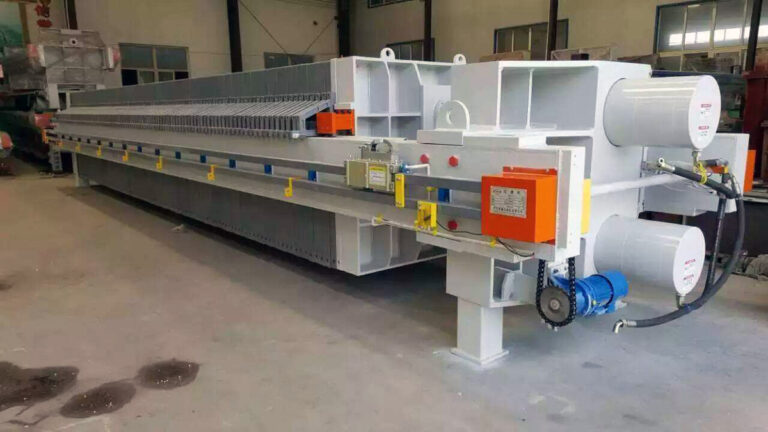
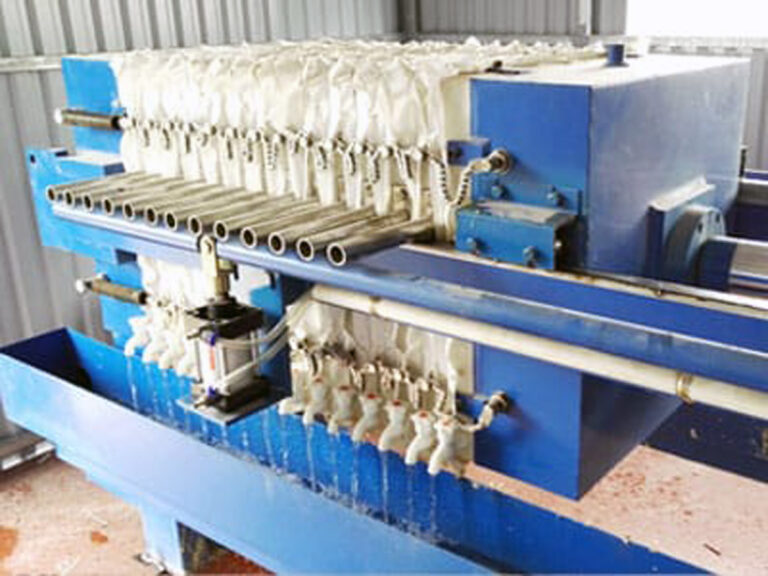
A filter press operates in discrete cycles, typically ranging from 1.5 to 4 hours per cycle depending on sludge compressibility, chamber pressure, and the target cake solids. That cycle time is not a defect—it is the mechanism by which a filter press achieves cake dryness and filtrate clarity that continuous machines often cannot match. The ROI case for a filter press shifts in favor when disposal cost is high enough that the additional dryness directly reduces hauling expense, when filtrate quality must meet a specific clarity standard for return or reuse, or when the sludge is difficult enough that consistent conditioning across a continuous belt would require more operator intervention than a batch cycle eliminates.
The planning failure in this comparison is treating nameplate throughput as the comparison metric. A belt press rated at a given throughput and a filter press rated at a similar throughput do not offer the same economics if the filter press produces 30% solids cake and the belt press produces 18%—because the downstream disposal volume, the hauling frequency, and the tipping cost are all different. The correct comparison unit is cost per dry tonne of solids processed, inclusive of polymer, energy, labor, and disposal, not cubic meters per hour of feed capacity. For a side-by-side evaluation of how these architectures compare under different operating conditions, the Belt Filter Press vs Filter Press vs Centrifuge comparison works through the performance and cost trade-offs in detail.
Why polymer strategy and upstream thickening belong in the same decision model
Polymer cost is one of the largest and most controllable operating cost lines in a dewatering system. It is also one of the most frequently underestimated, because polymer trials are usually conducted on a single sludge sample at a single solids concentration—not across the operating range the plant will actually run. When thickening performance drifts, the dewatering unit receives feed outside its conditioning design point, and the operator response is typically to increase polymer dose rather than correct the upstream cause. That pattern compounds polymer spend without addressing the root problem.
The connection between upstream thickening method and polymer demand is direct. Gravity thickening and gentle pre-dewatering approaches—such as a gravity table before a screw press or belt press—remove free water without applying shear to the floc structure. That preserved floc structure requires less polymer to re-condition at the dewatering stage. By contrast, aggressive mechanical thickening that shears the sludge before it reaches the press typically requires higher polymer doses to re-establish the floc needed for cake formation and filtrate clarity.
| Strategy | Objectif | Key Benefit / System Impact |
|---|---|---|
| Gentle pre-dewatering (e.g., gravity table) | Keep flocculant consumption low. | Reduces polymer demand, a major operating cost. |
| Filtrate recycling for polymer preparation | Reduce fresh water consumption. | Integrates filtrate return into the chemical make-down system, reducing fresh water use. |
Filtrate recycling for polymer make-down is an example of a system boundary interaction that produces savings in two places simultaneously—it reduces fresh water demand and integrates filtrate quality into the conditioning loop, which also helps stabilize the conditioning environment across shifts. These strategies do not belong in the polymer vendor’s scope alone; they belong in the same process model as thickening selection and dewatering machine sizing. Projects that treat polymer procurement as a separate operational decision after equipment is installed routinely find that polymer optimization options are structurally limited by the equipment configuration already in place.
Which utilities and auxiliaries quietly reshape total project cost
The utilities required to run a dewatering system reliably are rarely fully costed in the initial project budget, because they are often scoped by different engineering teams than the main equipment package and their interactions are not stress-tested against a shared operating scenario until commissioning.
Washwater demand is the most commonly underestimated utility requirement for belt filter presses. Belt washing is continuous and the water quality, pressure, and volume must stay within specification to maintain belt permeability and prevent blinding. If the plant’s general service water supply cannot sustain that demand during peak wash cycles, the belt press will underperform—not because the machine is wrong, but because the auxiliary supply was sized at average demand rather than peak demand. The same logic applies to compressed air for membrane filter presses during the squeeze cycle: supply pressure variability directly affects cake solids consistency and cycle repeatability.
Ventilation is a utility requirement that carries safety implications specifically for belt press installations. Biological sludges, particularly those from anaerobic digestion or high-organic industrial streams, can release hydrogen sulfide and methane during the open-belt dewatering process. Adequate ventilation—including enclosed installation areas with forced air exchange and gas monitoring where warranted—is a practical safety necessity that adds to the facility’s HVAC scope and operating cost. This is not a universal defect of belt press technology, but it is a risk that must be planned for explicitly during layout and utility design, not discovered during commissioning.
Electrical supply capacity, steam availability for heated-press configurations, and drainage capacity for filtrate and washwater return all belong in the same utility audit. The pattern that creates budget surprises is when these items are handled by checklist rather than by tracing the actual flow path and peak demand of each utility against the real plant infrastructure. GB/T 30176-2013 establishes structured performance measurement methods for liquid filtration equipment, which provides a useful framework for specifying how auxiliary systems should be documented in acceptance testing rather than left to verbal agreement.
How to compare disposal cost against energy, labor, and maintenance burden
The disposal cost calculation is where technology selection decisions become financially decisive—and where the most common analytical error occurs. Projects typically compare technology options on capital cost and energy consumption while treating disposal cost as a fixed background assumption. When the disposal cost is in fact the largest operating cost driver, this ordering inverts the correct priority.
| Facteur de coût | Example / Calculation | Implication for Decision |
|---|---|---|
| Disposal cost reduction | At $60 per wet ton landfill cost, doubling solids content can cut disposal costs in half. | High cake dryness directly reduces hauling and disposal expenses. |
| Energy burden for intermediate dryness | Electro-osmosis (ELODE) systems use about 120 kW-h per ton of wet cake. | Energy consumption must be weighed against the disposal savings when evaluating technologies that achieve intermediate dryness. |
To make this comparison work correctly, the calculation needs a shared operating scenario. At a landfill rate of $60 per wet ton (used here as an illustrative figure to demonstrate the method, not as a universal benchmark), moving from 18% solids cake to 36% solids cake roughly halves the wet mass being transported and disposed of. For a plant generating 10 tonnes of dry solids per day, that dryness improvement reduces wet cake mass from approximately 56 tonnes to 28 tonnes per day—a difference that, at $60 per wet ton, produces daily disposal savings of around $1,680. Annualized, that saving has a capital equivalent that may fully justify the incremental cost of higher-dryness equipment or a supplementary drying stage.
The counter-weight to that calculation is the energy burden of technologies that achieve higher dryness through non-mechanical means. Electro-osmotic dewatering systems, as one example, can consume approximately 120 kWh per tonne of wet cake processed—a figure that must be converted to an energy cost and compared directly against the disposal savings at the plant’s actual electricity rate. This trade-off does not resolve the same way for every plant: a facility with low electricity cost and high landfill tipping fees will reach a different conclusion than a facility with the inverse cost structure. The correct analytical step is to run both calculations against the same operating scenario before the technology shortlist is finalized.
Labor cost and maintenance burden belong in the same model. A filter press with automated plate shifting and high-pressure membrane squeeze capability achieves better cake dryness but requires more preventive maintenance than a simpler belt press configuration. That maintenance cost, including filter cloth replacement frequency, membrane inspection, and cycle monitoring, must be estimated against real labor rates and real spare parts pricing—not assumed to be negligible because the machine is automated. For industrial applications where both technologies are under consideration, the filtre-presse à membrane et filtre-presse à bande product pages detail the operational characteristics relevant to this comparison.
EPA industrial water reuse guidance is a useful reference when filtrate recovery and recycling are being evaluated as part of the operating cost model—particularly where filtrate quality is good enough to reduce fresh water consumption in polymer make-down or process washing, which directly reduces both utility cost and effluent treatment load.
What acceptance data should exist before the purchase order is released
A purchase order released on nameplate capacity and a vendor’s verbal performance assurance is not an accepted purchase order—it is a deferred argument about what the machine was supposed to do. The acceptance data package that should exist before the PO is signed is not an administrative exercise. It is the mechanism by which the project team confirms that the machine being purchased will perform on the sludge the plant actually produces, at the throughput the plant actually needs, under the utility conditions the plant can actually sustain.
The minimum verified data set before release should include confirmed outlet consistency ranges tested against project-specific sludge samples—not against a reference sludge from the vendor’s test facility. Thickener discharge targets in the range of 8–16% solids and screw press cake dryness up to 65% are benchmark figures from supplier data that must be validated against the actual feed stream before they can anchor a performance guarantee. If the project sludge has not been tested at pilot or full scale, those figures should be treated as indicative rather than contractual until testing confirms them.
Polymer window testing—the dose range over which conditioning produces acceptable cake and filtrate simultaneously—must be documented as a range, not a single point. Real plants operate with sludge variability, and a conditioning system designed for a single polymer dose will drift outside the acceptable window when feed character changes. Acceptance documentation should include the tested upper and lower dose limits and the observable parameters that indicate the system is operating within that window.
Utility confirmation should be structured as a compatibility check between the machine’s peak demand and the plant’s verified supply capacity—not an assumption that design-rated utilities will be consistently available. This includes washwater volume and pressure, compressed air consistency for membrane squeeze cycles, electrical supply capacity, and ventilation airflow where gas risk has been identified. GB/T 30176-2013 provides a framework for how performance measurement for liquid filtration equipment should be structured, which is a useful starting point for building an acceptance test protocol that covers these interactions systematically.
Sludge variability data is the acceptance input most often missing. If the characterization data used to specify the machine was collected over a short period or from a single process condition, it may not capture the seasonal or operational variability the plant will actually present. Documenting the variability range and confirming that the specified machine handles the full range—not just the median—is the check that prevents commissioning disputes from becoming retrofits.
The decision that matters most in sludge dewatering system selection is made before the shortlist is built: fixing feed solids range, sludge character, cake moisture target, and disposal endpoint as a shared design basis that every subsystem is then sized against. When those inputs are held consistent across thickening, polymer conditioning, dewatering, filtrate return, and cake handling, the system can be evaluated as an integrated cost model rather than as a collection of individually specified components. When they are left open or split across different engineering scopes, the dewatering unit may perform within its own specification while the surrounding system creates the operational and financial failure.
Before releasing any purchase order, confirm that sludge variability data, polymer dose window, utility supply capacity, and cake disposal assumptions have all been tested against the same operating scenario. The difference between a system that performs as designed and one that requires costly modification after commissioning is almost always traceable to inputs that were assumed rather than verified at the point when the technology decision was still reversible.
Questions fréquemment posées
Q: What should we do if our sludge composition changes significantly between seasons or process campaigns?
A: Treat the full variability range as the design basis, not the average condition. A machine specified against a single mid-season sample may perform within its rated window while the surrounding system—pre-thickening, polymer conditioning, cake discharge—fails at the extremes. Before finalizing any technology shortlist, document the upper and lower bounds of feed solids concentration, sludge character, and viscosity across the actual operating calendar, then confirm with the vendor that the specified configuration handles the full range, not just the median case.
Q: Once the sludge dewatering system is commissioned and running, what is the most important operational discipline to establish early?
A: Monitor thickener discharge consistency as the first upstream control point, and treat polymer dose drift as a symptom rather than a setpoint to chase. The most common post-commissioning failure pattern is operators increasing polymer dose to compensate for feed variability that originates upstream in pre-thickening. Establishing a routine that traces dose increases back to feed solids fluctuations—rather than treating them as a conditioning problem—will protect both polymer spend and dewatering performance over time.
Q: At what disposal cost level does investing in higher-dryness technology actually change the capital decision?
A: The breakeven depends on your specific dry solids load and electricity rate, but the structure of the calculation is consistent: convert the wet mass reduction from higher cake solids into annual disposal savings, then compare that saving against the incremental capital and energy cost of the higher-dryness technology. For energy-intensive options such as electro-osmotic systems, which can consume around 120 kWh per tonne of wet cake, the trade-off only favors the upgrade when landfill tipping fees are high relative to the plant’s electricity cost. Facilities with the inverse cost structure—low tipping fees, high electricity rates—will generally find that standard mechanical pressing at 15–23% solids is the more defensible economic choice.
Q: Is a belt filter press still the right architecture if the plant runs on a single shift rather than continuously?
A: Single-shift operation weakens the core economic argument for a continuous belt press and generally strengthens the case for a batch filter press. A belt press sized for continuous throughput that sits idle for two shifts still incurs maintenance obligations—belt tension, wash nozzle upkeep, polymer system readiness—without generating the utilization that justifies those costs. A filter press running discrete cycles during a single shift can be matched more precisely to the actual daily dry solids load, and its higher cake dryness typically reduces the disposal volume that accumulates between shifts, which matters when cake storage space is limited.
Q: How should the project team handle a situation where the vendor’s pilot data was generated on a reference sludge rather than the plant’s actual stream?
A: Do not allow reference-sludge data to anchor contractual performance guarantees. Outlet consistency figures—whether 8–16% for thickener discharge or higher dryness targets for press configurations—are indicative benchmarks until validated on the actual feed under real operating conditions. Before the purchase order is released, require either a site-specific pilot trial or a structured performance test on representative samples collected in accordance with ISO 5667-13:2011 sampling guidance. If neither is possible before PO release, the performance guarantee language must explicitly reference the tested sludge range and exclude conditions outside it, so that variability the vendor never saw cannot later become a disputed acceptance criterion.