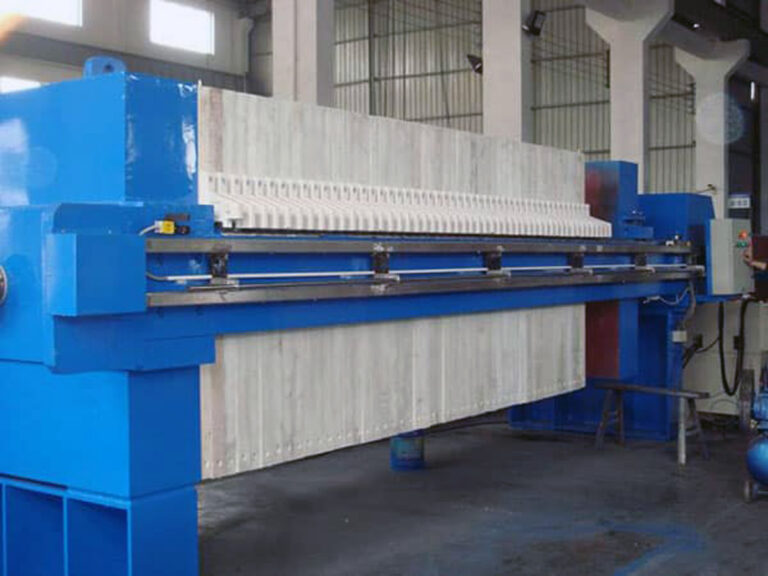
Plants that commission a filter press for high-volume, continuously flowing sludge often discover the mismatch only after startup — when batch cycling creates queue pressure, operators spend shifts managing plate packs instead of monitoring process parameters, and hauling costs that were supposed to drop stay flat because the machine never reaches its rated throughput in real daily operation. The error rarely shows up in the equipment specification. It shows up in the gap between rated cycle output and actual daily solids processing, which only becomes visible once the live feed exposes how poorly the press handles a load it was never sized to absorb continuously. The decision that resolves this — belt press versus filter press — is not primarily a question of which machine produces drier cake. It is a question of whether your sludge type, flow pattern, conditioning discipline, and downstream handling economics favor continuous drainage or high-pressure batch extraction. By the end of this article, procurement teams and process engineers should be able to define the conditions under which a belt press holds its throughput advantage, and where that advantage breaks down before they commit capital to either path.
Which sludge conditions favor continuous belt pressing over batch filtration
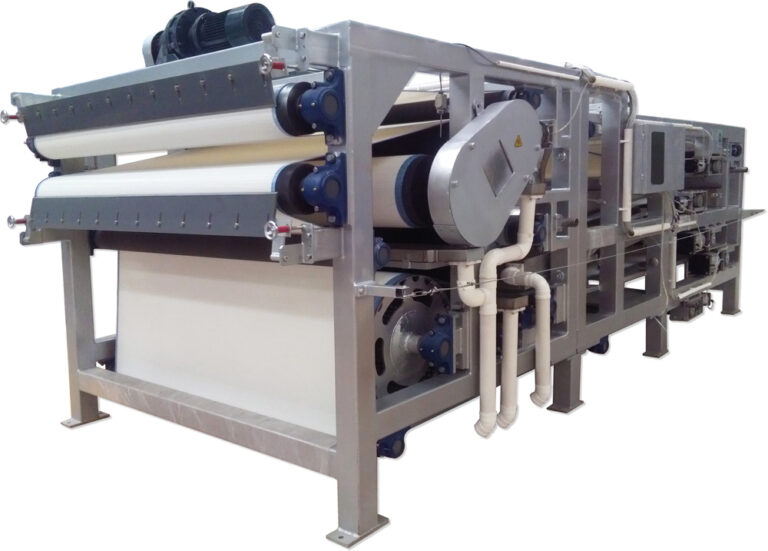
Continuous belt pressing works best when three conditions align: feed consistency stays within a manageable range, the sludge responds predictably to polymer conditioning, and flow is sustained rather than intermittent. When those conditions hold, gravity drainage across the belt’s free zone does most of the dewatering work before the sludge even reaches the pressure rollers — reducing the mechanical load and keeping throughput stable.
Feed consistency is the practical gating factor. A gravity drainage table can pre-thicken incoming sludge from roughly 0.6–5% feed consistency up to 10–18% discharge consistency before the material enters the belt press proper. This pre-dewatering step is not cosmetic. It concentrates solids, reduces the liquid volume the belt must drain, and — critically — stabilizes flocculant consumption by giving the polymer a more uniform feed to work with. Treating these figures as fixed targets for every plant would be wrong; they represent design-range benchmarks drawn from process practice, and actual operating targets depend on sludge type and polymer system. But the principle they reflect is important: belt pressing is a continuous drainage process, and its efficiency is directly proportional to how well the upstream conditioning and feed concentration keep the sludge cooperative across shifts, not just during a trial run.
Where batch filtration tends to win is when sludge characteristics are irregular, flow is episodic, or disposal economics strongly favor drier cake. A filter press doesn’t require the same moment-to-moment feed consistency because each cycle resets. That batch tolerance has real value in plants where feed solids concentration varies widely, polymer response shifts between production runs, or the plant generates sludge in surges rather than a continuous stream. Choosing belt pressing in those conditions without acknowledging the drainage instability risk is the most common early mistake in this decision.
How throughput stability changes the real value of each machine type
Throughput value is not a fixed property of a machine type — it is conditional on what the feed actually does over a full operating shift. A belt press rated for high continuous output delivers that value only when the feed quality, polymer conditioning, and belt tension management stay stable enough for drainage to remain predictable. When they don’t, throughput drops and the apparent capacity advantage over batch filtration narrows or disappears.
The same conditionality applies to alternatives. Continuous screw presses, for example, use self-adjusting backpressure mechanisms to handle variable feed characteristics and can reach throughputs in the range of 180 tonnes per day under suitable conditions. That figure comes from vendor and operational data and should be treated as a planning-level design reference rather than a guaranteed output — actual performance depends heavily on sludge type and conditioning quality. The relevance of this comparison is not the specific throughput number but the underlying principle: equipment designed to tolerate feed variability maintains throughput stability without constant operator correction. The practical implication for buyers is that a machine’s nominal capacity is only defensible if the plant can reliably deliver feed within the range the machine was designed to handle.
| Type d'équipement | Key Feature for Stability | Primary Use Case for Value |
|---|---|---|
| Continuous Screw Press | Self-adjusting backpressure for variable feed | High throughput (up to 180 t/d) with variable characteristics |
| Mobile/Containerized Continuous Unit | Rapid deployment and setup | Maintaining process continuity during plant overloads or equipment failures |
Mobile and containerized continuous dewatering units illustrate a narrower but commercially relevant application of this principle: when a plant faces overload conditions or primary dewatering equipment fails, continuous units can be deployed rapidly to maintain process continuity. That use case makes visible what is often invisible in standard procurement — the value of continuous equipment is partly its throughput and partly its ability to hold that throughput through operational variability without a manual reset cycle.
Where cake dryness gains stop paying back the extra complexity
The assumption that drives most filter press selections in high-volume applications is that drier cake justifies the added complexity. That assumption holds under specific conditions — when disposal costs are high enough per tonne that incremental dryness gains reduce total hauling volume meaningfully, when the downstream handling step requires a minimum cake dryness that continuous equipment cannot reliably reach, or when regulatory constraints on landfill moisture content make the dryness gap decisive.
The comparison matters when those conditions are absent.
| Dewatering Method | Typical Dryness / Volume Reduction | Implication for Complexity & Cost |
|---|---|---|
| Continuous Screw Press | Up to ~65% dryness | Lower operational complexity, suited for continuous flow |
| Plate & Frame (Filter) Press | Up to ~95% volume reduction | Higher mechanical complexity, batch operation, more operator involvement |
A continuous screw press can reach roughly 65% cake dryness under favorable conditions, while a plate and frame press can achieve volume reductions approaching 95% — a substantial gap on paper. But the operational cost of reaching that drier endpoint includes longer cycle times, more mechanical complexity, higher plate maintenance frequency, and batch cycling that interrupts throughput. For plants handling high-volume, continuously generated sludge, the question is whether the disposal cost savings from incremental dryness gains outweigh the aggregate cost of downtime, plate handling, and the operator attention that batch cycling requires across a full work week.
The break-even point shifts depending on hauling distance, disposal gate fees, and the plant’s actual cycle utilization rate. Plants that run filter presses at less than full daily cycle utilization — because sludge generation doesn’t match batch cycle timing — often discover in retrospect that their effective dryness advantage was much smaller than projected, because the press spent time idle between cycles instead of processing. That is where the complexity premium stops paying back.
Why pilot conditioning quality must match plant reality
Pilot trials for sludge dewatering equipment produce the most misleading results in this equipment category, not because vendors manipulate them, but because the test conditions are almost always better controlled than the plant will ever be. Polymer is prepared carefully, mixing energy is optimized, and the sludge sample is relatively fresh and uniform. The belt press drains cleanly, the cake looks good, and the project team signs off on the selection with confidence.
What the pilot cannot replicate unless it is deliberately designed to do so is the live plant’s conditioning quality on a normal shift. That includes variation in polymer preparation, inconsistent mixing energy when operators are managing multiple tasks, and feed fluctuations that reflect real production variability rather than a steady test feed. Research on alum sludge dewatering (Evaluation of Dewatering Performance and Fractal Characteristics of Alum Sludge, PMC4487249) illustrates the sensitivity of dewatering outcomes to conditioning variables — a reminder that these effects are not hypothetical and that conditioning quality can drive performance differences that dwarf equipment-type differences.
| Conditioning Factor | Risk if Pilot Doesn’t Match Plant | What to Confirm During Testing |
|---|---|---|
| Polymer Preparation & Mixing Energy | Poor floc formation leads to inefficient dewatering | Replicate exact plant polymer dosing and mixing energy on-site. |
| Process Fidelity (e.g., Two-Stage Flocculation) | Short-circuited conditioning yields non-representative results | Ensure the pilot replicates the full, multi-step conditioning process. |
| Feed Fluctuations & Consistency | Stable pilot feed hides real-world variability that disrupts drainage | Test with sludge that matches the plant’s real feed quality and fluctuation patterns. |
The practical safeguard is to run the pilot on-site rather than at a test facility, and to deliberately introduce realistic variability into the test feed rather than stabilizing it. If the process uses a two-stage flocculation sequence — fast mixing followed by slow mixing — that sequence must be replicated at the same energy inputs and retention times as the plant uses, not approximated. Where a pilot cannot replicate plant conditioning fidelity, the results should be treated as directional guidance rather than performance guarantees. The risk of ignoring this is specific: a belt press that clears a pilot trial under good conditioning conditions can produce unstable cake and rising polymer costs within the first quarter of live operation when the plant’s normal conditioning quality is weaker than the test setup. That failure pattern does not get diagnosed as a procurement error — it gets managed as an operational problem, which is more expensive and harder to resolve after equipment is installed.
How operator attention and cleaning load change lifecycle cost
Belt presses and filter presses make different demands on operators, and those demands accumulate into lifecycle cost differences that procurement models often undercount. The comparison is not just about maintenance intervals or part costs — it is about how much daily operator time each machine consumes and how that time cost compounds across shifts, years, and operator turnover.
A belt press running continuously requires consistent monitoring of belt tension, belt tracking, roller alignment, and polymer dosing. Belt washing is a high-frequency maintenance task — belts must be washed continuously or at regular short intervals to prevent blinding, and wash water consumption and pressure must be managed actively. When a belt press is well-run by disciplined operators, these demands are manageable. When operator attention is inconsistent — which is the normal condition in most plants, not the exception — belt blinding, tracking failures, and polymer overdosing become recurring cost drivers. Equipment design features that reduce these demands, such as automated belt tracking systems, self-cleaning spray bars, and quick-release roller mechanisms, are not cosmetic upgrades; they are lifecycle cost levers that should be evaluated against their purchase premium.
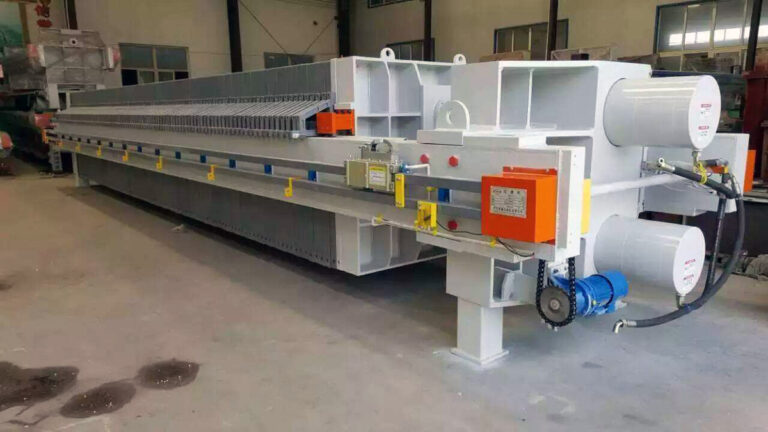
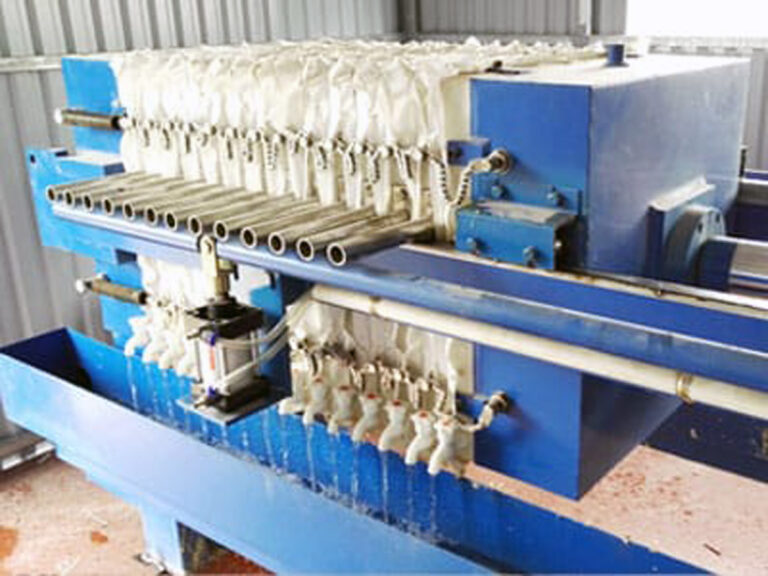
Filter presses impose a different kind of operator burden. Cycle management, plate inspection, cloth replacement, and cake discharge all require direct operator involvement. In plants with high sludge volumes, the cumulative time spent on these tasks per day can substantially reduce effective throughput — a filter press nominally capable of multiple cycles per day may achieve fewer in practice if operators are also managing other equipment. Cloth replacement frequency depends on sludge abrasivity and cake release characteristics, and in chemically aggressive sludge streams, cloth life can be significantly shorter than vendor estimates suggest. The lifecycle cost implication is that both machine types carry hidden labor loads; the question is which load better matches the plant’s actual staffing model and operator discipline level.
What commercial data buyers should request before selecting the final machine
The procurement mistake most likely to create expensive downstream problems is selecting sludge dewatering equipment based on performance data from a different sludge type or a different plant context. Vendor reference cases are useful for understanding what a machine can do under favorable conditions, but they cannot substitute for site-specific data that reflects the actual feed, space constraints, regulatory environment, and operational capacity of the plant making the purchase.
| Data Category | Specific Information to Request | Why It Matters for Selection |
|---|---|---|
| Fundamental Site & Process Data | Type of solids, flow rate, available space, regulatory requirements | Ensures the machine fits basic site constraints and compliance needs. |
| Customizable System Features | Options for filtration media, chemical pretreatment | Allows the system to be tailored to specific sludge characteristics and process goals. |
The fundamental site data — solids type and concentration, flow rate and variability pattern, available footprint, and applicable regulatory requirements — establishes the boundary conditions that any equipment selection must satisfy before performance comparisons become meaningful. In regions where GB/T 26114-2024 or equivalent filtration equipment standards apply, buyers should confirm that proposed equipment meets the relevant technical specifications for their application category; this is a regulatory context point rather than a universal selection standard, but it matters for compliance defensibility in applicable markets. For ASTM-referenced testing environments, requesting that vendor performance claims be supported by standardized sediment concentration or solids measurement methods, such as those outlined in ASTM D3977-97, adds discipline to how performance data is compared across vendor proposals.
Beyond the baseline site data, buyers should ask vendors specifically about customizable system features — filtration media options, chemical pretreatment configurations, and belt or cloth specifications matched to the sludge type. Customization is not a solution to fundamental sludge incompatibility, but it is a meaningful variable in long-term performance fit. A belt press specified with the wrong belt porosity for a fine-particle sludge will underperform consistently; requesting the vendor’s recommendation and rationale for media selection, along with reference data for comparable sludge types, gives buyers a basis for evaluating whether the vendor’s proposal is genuinely tailored or generic. For detailed technical background on belt press configuration variables, the Belt Filter Press Technology Guide for Industrial Dewatering covers selection and optimization criteria in depth.
The final data request that buyers most commonly omit is the vendor’s performance warranty structure: specifically, what dryness, throughput, and polymer consumption figures are guaranteed under defined feed conditions, and what happens to those guarantees when the feed falls outside spec. The answer to that question — more than any reference case or pilot result — reveals how confident the vendor actually is that their equipment will perform in the buyer’s specific conditions.
The belt press versus filter press decision resolves most clearly when buyers stop treating it as a performance ranking and start treating it as a process fit question. The belt press holds its throughput advantage in plants where sludge quality is consistent, polymer conditioning is reliable across shifts, and the downstream handling step can tolerate the cake dryness that continuous drainage produces — not just on the best day, but on the median day of a normal operating week.
Before finalizing the selection, the team should be able to answer four things with real data rather than assumptions: what the feed consistency range actually looks like across a full production cycle, how polymer response behaves when preparation is less careful than during a pilot trial, whether the minimum dryness requirement downstream is truly a hard constraint or a preference, and whether the plant’s staffing model can sustain the specific operator discipline that the chosen machine requires. If any of those four remain uncertain at the point of equipment commitment, the risk is not that the machine fails — it is that the machine performs exactly as specified while the plant fails to operate it within spec, which produces the same outcome at higher total cost.
Questions fréquemment posées
Q: What happens if our sludge generation is seasonal or batch-driven rather than continuous — does a belt press still make sense?
A: Intermittent or seasonally variable sludge generation typically shifts the advantage toward a filter press. Belt presses are designed to sustain throughput across continuous feed; when flow is episodic, the machine spends time idle, belts still require washing and tension management between runs, and the conditioning discipline that keeps drainage stable is harder to maintain when operators are not running the system regularly. If your plant generates sludge in surges or operates on a campaign basis, a filter press’s batch-reset tolerance is a genuine operational fit advantage, not just a performance trade-off.
Q: After selecting the equipment, what is the first operational step that determines whether the belt press actually delivers the throughput it was sized for?
A: Establishing a stable polymer conditioning protocol before the machine reaches full load is the most consequential first step. Belt press throughput is directly dependent on conditioning quality across every shift, not just during commissioning. That means setting validated polymer dose rates, mixing energy targets, and feed consistency checkpoints as standing operating procedures — not guidelines — before daily production ramps up. Skipping this step is the most common reason belt presses that perform well during startup begin underperforming within the first quarter of live operation.
Q: Is there a point where hauling distance or disposal gate fees are low enough that the dryness difference between belt press and filter press becomes irrelevant to the business case?
A: Yes, and it is closer than most procurement models assume. When disposal gate fees are low or hauling distances are short, the marginal tonnage reduction from higher cake dryness produces correspondingly smaller cost savings — often not enough to offset the cycle downtime, plate handling labor, and batch scheduling complexity that a filter press adds in high-volume continuous applications. The break-even shifts further against the filter press if the plant’s actual daily cycle utilization rate is below its rated potential, which is common when sludge generation does not align neatly with batch cycle timing. Plants in low-disposal-cost environments should calculate the dryness premium against fully loaded operational costs, not just hauling line items.
Q: How does a belt press compare to a continuous screw press for plants where feed variability is the primary concern rather than raw throughput?
A: For plants where feed variability is the dominant operational constraint, a continuous screw press with self-adjusting backpressure handles inconsistent feed characteristics more tolerantly than a belt press, which requires feed consistency to stay within a manageable range for drainage to remain predictable. The trade-off is that screw presses and belt presses occupy different positions on the dryness and footprint spectrum, and the right choice depends on whether the plant’s variability is primarily in solids concentration, polymer response, or flow rate. A belt press is the stronger option when variability can be controlled upstream through consistent conditioning; a screw press is more forgiving when it cannot.
Q: How should a procurement team evaluate a vendor’s performance claims if they cannot run a full on-site pilot before the purchase decision?
A: Request performance guarantees tied to defined feed conditions rather than accepting reference case data from other installations. Specifically, ask vendors to specify the dryness, throughput, and polymer consumption figures they will warrant, the feed consistency range and conditioning inputs those figures assume, and the contractual consequence when feed falls outside that range. Reference cases from different sludge types or plant contexts are directional at best; a vendor confident in their equipment’s fit for your specific sludge will be willing to define the boundary conditions their warranty covers. Where applicable, also ask that sediment concentration and solids measurement methods used in vendor testing align with standardized protocols so that performance data across proposals is compared on a consistent basis.