For process engineers and plant managers, the choice between a plate and frame and a recessed chamber filter press is often framed as a simple matter of dewatering efficiency. This perspective leads to a common oversight: selecting a recessed chamber press for applications where filtrate clarity, not cake dryness, is the primary objective. The result is compromised product quality, frequent media blinding, and costly process bottlenecks in polishing and fine filtration duties.
This distinction is critical now as industries from pharmaceuticals to specialty chemicals face tighter purity specifications and lower tolerance for process variability. The strategic revival of plate and frame technology in high-value manufacturing underscores that equipment selection is not about finding a universal workhorse, but about matching core design philosophy to a specific process goal.
Plate and Frame vs. Recessed Chamber: Core Design Differences
Mechanical Architecture
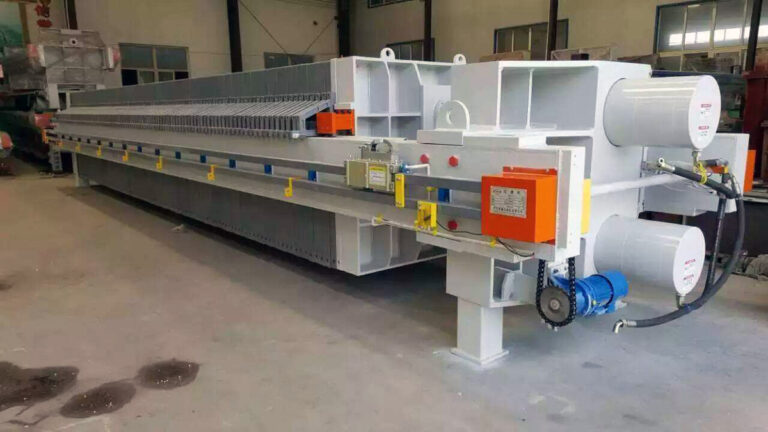
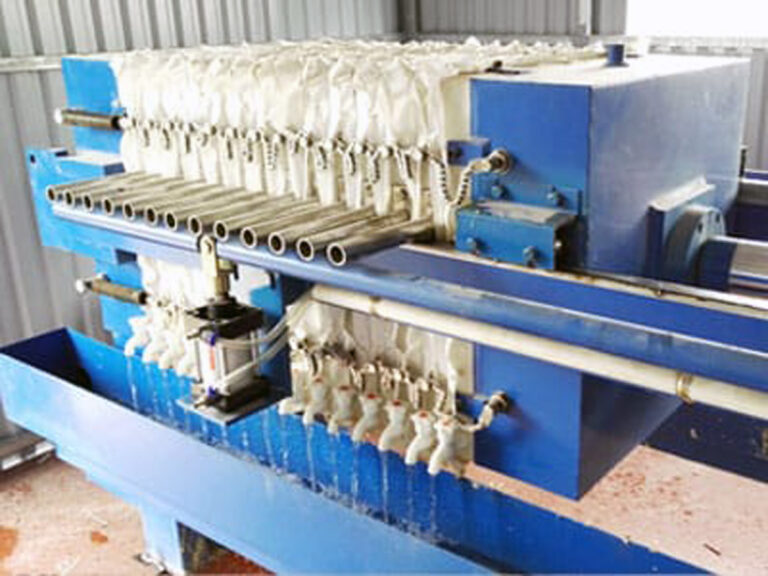
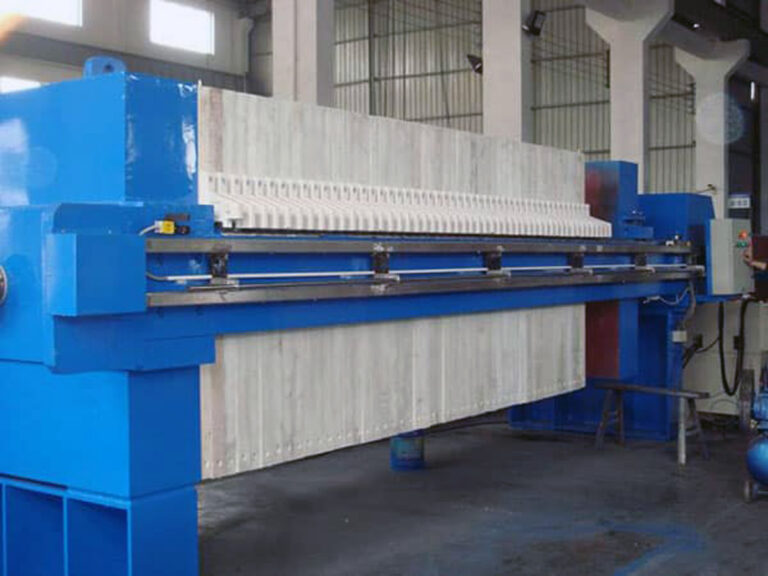
The operational divergence stems from a fundamental mechanical difference. A recessed chamber press uses plates with molded cavities; when clamped, these cavities form the filtration chambers, typically fed through a central port. A plate and frame press employs alternating solid flush plates and hollow frames. Filter cloths are draped over the plates, and the frame creates the chamber when the stack is compressed. This modularity of separate components is not a complexity but a strategic feature.
The Flexibility Advantage
This separate frame-and-plate design enables a key capability: the interchangeability of frames of different thicknesses. For process development or handling variable batch compositions, this allows engineers to adjust cake volume and washing characteristics without changing the entire plate set. Industry experts recommend this flexibility for pilot-scale operations or multiproduct facilities where process parameters are still being optimized. It transforms the press from a fixed asset into a tunable process component.
Implications for Feed and Flow
Easily overlooked details include the feed mechanism. Recessed chamber designs, with large center feed holes, handle high-solids slurries efficiently. The plate and frame’s smaller corner feed ports create a potential bottleneck. This necessitates rigorous pre-filtration to prevent clogging and ensures even distribution is more challenging, a trade-off for its other advantages in fine filtration.
Cost Comparison: Capital, Operating, and Total Cost of Ownership
Beyond the Purchase Order
A true financial analysis must scrutinize Total Cost of Ownership (TCO), where the operational profiles of each design create divergent cost trajectories. While a recessed chamber press may have a lower initial capital cost for equivalent filtration area, this is rarely the complete picture for polishing applications. Capital planning here must prioritize filtration area and flux rate calculations, often requiring redundant press capacity to maintain continuous flow—a different calculus than volume-driven dewatering projects.
The Operational Cost Trade-Off
The plate and frame’s defining advantage—media versatility—introduces a significant operational trade-off. The ability to use disposable filter papers or pads for superior clarity creates a recurring consumable cost. Furthermore, the more frequent media change-outs increase downtime. Compared to the reusable cloths standard on recessed chamber presses, this directly elevates operating expenses. We compared lifecycle costs for a bio-pharma application and found media costs could exceed 30% of the 5-year TCO for a plate and frame system.
Hidden Infrastructure and Labor Costs
The non-gasketed design of traditional plate and frame presses presents a leakage risk. This isn’t just a housekeeping issue; it mandates investment in secondary containment infrastructure like grated platforms and drainage systems, adding to facility capital costs. The subsequent increase in cleaning and maintenance labor further impacts operating budgets. The table below breaks down these cost components.
Analyzing Cost Drivers
The following comparison highlights where costs accumulate differently for each system. A comprehensive TCO model must account for these categories to avoid budgetary surprises.
| Componente de custo | Plate and Frame | Câmara rebaixada |
|---|---|---|
| Equipamento de capital | Moderado | Normalmente mais baixo |
| Media/Consumables | High (disposable papers) | Low (reusable cloths) |
| Containment Infrastructure | Required (leakage risk) | Mínimo |
| Housekeeping Labor | Mais alto | Inferior |
Fonte: Documentação técnica e especificações do setor.
Which Design Is Better for Polishing and Fine Filtration?
Defining the Primary Objective
For polishing and fine filtration, the plate and frame design is often technically superior. Its engineering prioritizes filtration area over cake volume, making it ideal for processing large volumes of low-solids (<1%) streams to achieve high-clarity filtrate. The recessed chamber, optimized for solids holding, is inherently less efficient in this duty.
The Critical Role of Media
The plate and frame’s most decisive advantage is media versatility. It easily accommodates disposable media like filter papers or pads, which are essential for capturing sub-micron particles and achieving sterile-grade filtrate. These media can be discarded after blinding, a practice less feasible in recessed chamber designs. This positions the plate and frame not just as separation equipment, but as an integrated process-quality component. In my experience, this capability is non-negotiable for final product specifications in sensitive industries like electronics chemicals or injectable pharmaceuticals.
Integrated Process Design
This design also enables sophisticated configurations. Using food-grade plates and divider plates, a single plate and frame unit can perform dual-stage coarse and fine filtration, streamlining process flow and maintaining hygiene in sanitary industries. This compact, integrated approach reduces footprint and potential contamination points.
Performance Compared: Capacity, Cake Dryness, and Filtrate Clarity
A Clear Trade-Off
Performance metrics reveal a definitive trade-off, not a hierarchy. Recessed chamber presses excel in solids-holding capacity per cycle and typically produce drier cakes due to efficient cavity filling and effective squeeze pressure. Their design is for consolidation.
The Clarity Benchmark
For filtrate clarity—the paramount goal in polishing—the plate and frame press is superior. Its design facilitates the use of fine media and ensures effective solids capture across a large surface area. This performance divergence underscores the niche application of each system. The revival of plate and frame systems in high-value, low-volume precision markets like craft brewing and nutraceuticals is direct validation: ultimate clarity outweighs dewatering throughput.
Quantificando a diferença
The table below summarizes this core performance split. Selecting the wrong press based on a single metric guarantees suboptimal process performance.
| Métrica de desempenho | Plate and Frame | Câmara rebaixada |
|---|---|---|
| Primary Strength | Clareza do filtrado | Cake dryness |
| Solids-Holding Capacity | Lower per cycle | Higher per cycle |
| Ideal Feed Solids | <5%, especially <1% | High concentration |
| Aplicação típica | Polimento, esclarecimento | Bulk dewatering |
Fonte: Documentação técnica e especificações do setor.
Key Use Cases: When to Choose Plate and Frame Over Recessed
Scenario 1: Polishing Low-Solids Streams
Select a plate and frame when filtrate quality is the critical KPI. This includes polishing catalyst recovery streams, clarifying chemical intermediates, or final product filtration where trace solids are unacceptable. Its large filtration area relative to chamber volume is key.
Scenario 2: Sterile or Specialty Media Requirements
When the process demands disposable media for sterility, or specialty media to handle extremely blinding fines, the plate and frame is the only practical choice. This is common in food, pharma, and advanced material synthesis.
Scenario 3: Process Flexibility and Sanitary Design
For R&D, product washing, or variable batch sizes, the flexibility to change frame thickness is invaluable. Furthermore, for sanitary industries, configurations using divider plates allow for compact, multi-stage processing that aligns with standards for hygienic design. The Chinese industry standard HG/T 4338-2012 Plate and frame filter press for chemical industry outlines requirements for materials and design for compatibility with demanding chemical and sanitary processes, reinforcing the suitability of plate and frame designs for these use cases.
Reference for Application Selection
The following table provides a quick-reference guide for common scenarios favoring plate and frame technology.
| Cenário do aplicativo | Principais requisitos | Rationale for Plate & Frame |
|---|---|---|
| Polishing Low-Solids Streams | Critical filtrate quality | Large filtration area |
| Sterile-Grade Filtration | Disposable media | Media versatility |
| R&D or Variable Batches | Flexible cake thickness | Interchangeable frames |
| Sanitary Multi-Stage Processing | Hygienic, compact unit | Divider plate configuration |
Source: HG/T 4338-2012 Plate and frame filter press for chemical industry. This standard establishes requirements for filter presses in chemical processes, including materials and design for compatibility with demanding applications like sanitary processing, which aligns with the use cases described.
Operational Considerations: Maintenance, Space, and Staffing
Labor Profile and Maintenance
The plate and frame design presents a labor trade-off. Filter cloth and media change-out is generally simpler and faster. However, cake discharge can be more manual, often requiring scraping from the four-sided frames compared to the easier, automated drop from tapered recessed chambers. This impacts staffing requirements and cycle time.
Facility and Layout Impact
The inherent leakage risk of non-gasketed plate and frame presses demands dedicated floor space with proper drainage and containment. This influences overall facility layout and capital cost. The recessed chamber’s more sealed operation offers greater placement flexibility.
Process Vigilance Requirements
The small corner feed ports are a critical operational vulnerability. They risk clogging and can lead to uneven chamber filling, which places asymmetric stress on plates and can cause damage. This necessitates rigorous pre-filtration and vigilant operator monitoring, adding a layer of operational complexity not present with center-feed recessed chamber designs. Ensuring proper feed pump selection and pressure management is crucial, principles supported by fluid power component standards like ISO 2941:2022 which verify pressure integrity.
How to Select the Right Filter Press for Your Specific Application
Define the Primary Goal
Selection begins with a binary question: Is the primary goal maximum cake dryness or pristine filtrate? Answering this eliminates one design category immediately. For polishing, subsequent calculations focus on required filtration area based on flow rate and target flux, not on cake volume.
Conduct a Process Audit
Audit your slurry: determine solids concentration, particle size distribution, and temperature. Assess ancillary needs like cake washing or sanitary construction. Critically, evaluate the supply chain strategy; the plate and frame’s modular, standardized parts may offer greater aftermarket adaptability, while custom-molded recessed chamber plates can lead to vendor lock-in.
Execute a Rigorous TCO Analysis
Move beyond equipment quotes. Model the Total Cost of Ownership, factoring in consumable media costs, potential need for redundant systems to ensure uptime, and the capital for required containment infrastructure. This financial model often reveals the true cost-benefit profile for your specific duty.
Decision Framework: Final Selection Criteria and Next Steps
Final Selection Matrix
Use this framework to make a definitive choice. If multiple criteria point in different directions, the primary process goal should be the tiebreaker.
| Selection Driver | Choose Recessed Chamber If… | Choose Plate & Frame If… |
|---|---|---|
| Primary Process Goal | Maximize cake dryness | Achieve pristine filtrate |
| Concentração de sólidos na alimentação | Alta | Low (<5%) |
| Media Requirement | Standard reusable cloth | Disposable/specialty media |
| Operational Preference | Automated, robust operation | Flexible, precision operation |
Fonte: Documentação técnica e especificações do setor.
The Non-Negotiable Step: Pilot Testing
The final step before procurement is non-negotiable: pilot testing with your actual process slurry. This validates assumptions on filtrate clarity, cake characteristics, cycle time, and media life. It is the only way to ensure the strategic operational trade-offs are justified for your application. Testing also provides critical data for scaling up to full-size equipamentos de filtragem industrial.
The decision hinges on aligning equipment design philosophy with process priority. For bulk dewatering, the recessed chamber’s efficiency is clear. For polishing and fine filtration, the plate and frame’s focus on clarity and media flexibility makes it the specialized tool of choice. Prioritize pilot testing to de-risk the capital investment and confirm operational assumptions.
Need professional guidance to specify the right filtration system for your polishing application? The engineers at PORVOO can help you navigate these trade-offs based on your specific slurry characteristics and production goals. For a detailed consultation, you can also Entre em contato conosco.
Perguntas frequentes
Q: How do you calculate the required filtration area for a polishing application versus a dewatering project?
A: For polishing, base your calculation on flow rate and target flux rate to achieve filtrate clarity, often requiring redundant press capacity for continuous operation. For dewatering, the primary calculation focuses on solids volume per cycle. This means facilities planning for high-clarity output must budget for a larger total filtration area and potentially a secondary system, unlike operations focused solely on volume reduction.
Q: What are the key operational trade-offs in maintenance between plate and frame and recessed chamber presses?
A: Plate and frame designs simplify filter media changes but often require manual scraping for cake discharge from four-sided frames. Recessed chamber presses typically enable easier, automated cake drop but have more complex cloth sealing systems. For projects where labor costs are high and process streams are consistent, the recessed chamber’s lower manual intervention often justifies its higher initial cost.
Q: When is the media flexibility of a plate and frame filter press a decisive advantage?
A: This flexibility is critical when you need disposable filter papers or pads to capture blinding fines or achieve sterile-grade clarity, a setup less feasible in recessed chamber designs. It transforms the press into a process-quality component. If your operation requires final product specifications in sensitive industries like nutraceuticals or food, the plate and frame’s media versatility is a primary selection criterion.
Q: How do Chinese industry standards define the technical requirements for plate and frame filter presses?
R: Padrões como JB/T 4333.2-2017 detail technical conditions, test methods, and inspection rules for manufacturing and acceptance. For chemical applications, HG/T 4338-2012 adds requirements for material compatibility and safety. This means specifying compliance with these standards ensures equipment reliability and suitability for your specific industrial environment.
Q: What facility modifications are needed to mitigate leakage risks from a plate and frame press?
A: Its non-gasketed design typically requires installing grated platforms with integrated drainage systems to contain potential seepage. This adds to facility capital costs and increases ongoing housekeeping labor. If your plant layout lacks space for dedicated containment infrastructure, you should factor this into your total cost of ownership analysis or consider a recessed chamber design with better sealing.
Q: Why is feed solids concentration a primary filter press selection criterion?
A: Recessed chamber presses excel with high solids concentration for dewatering, while plate and frame systems are engineered for low-solids streams (below 5%, especially under 1%) where filtrate quality is paramount. This performance divergence dictates the core application. If your feed slurry exceeds 5% solids and your goal is dry cake, a recessed chamber design will likely deliver better throughput and operational efficiency.
Q: How does the plate and frame design enable flexible process development?
A: Its modular construction allows you to interchange frames of different thicknesses, providing variable cake depth within the same press. This is vital for optimizing washing efficiency or testing variable batch sizes in R&D. For operations with frequent product changes or ongoing process development, this adaptability can prevent costly equipment changes later.