For plant managers and process engineers, the optimal filtration cycle time is a persistent operational puzzle. It represents a critical balance between throughput, product quality, and cost, yet is often treated as a fixed parameter. Misconceptions abound, from chasing the absolute shortest cycle at the expense of cake dryness to accepting inefficiently long cycles as an unavoidable cost of production. This focus on a single number overlooks the dynamic, multivariate nature of the process.
Achieving the true operational optimum is not an academic exercise. It directly dictates production capacity, energy consumption per unit, and overall plant profitability. In an era of tightening margins and increasing emphasis on sustainable operations, systematic cycle time optimization has transitioned from a “nice-to-have” to a core competitive necessity. The goal is a data-informed, repeatable process that delivers target specifications at the maximum sustainable rate.
Defining the Optimal Filtration Cycle Time
The Core Operational Metric
The optimal filtration cycle time is the shortest duration required to achieve target cake dryness and filtrate clarity without compromising equipment integrity. It is a dynamic target, not a fixed number, representing a precise equilibrium between feed pressure, cloth permeability, and chemical conditioning. This optimum directly dictates throughput and cost-efficiency. Achieving it demands a holistic, data-driven approach to process tuning, as adjusting one parameter in isolation is insufficient.
A Strategic Balance
The strategic intent is to meet minimum product specifications at the maximum sustainable production rate. This balance is application-specific; a mineral tailings dewatering operation prioritizes different metrics than a pharmaceutical intermediate recovery process. Industry experts recommend defining “optimal” first by the non-negotiable quality parameters, then by the economic drivers of throughput and energy use. The target is therefore a range defined by upper and lower control limits for both product quality and cycle duration.
The Data-Driven Reality
Easily overlooked is the need for a performance baseline. According to operational research, you cannot optimize what you do not measure. Establishing this baseline requires tracking each phase—closing, filling, filtration, squeeze, blow, discharge, cleaning—individually. We compared operations with and without phase-level monitoring and found that targeted improvements reduced total cycle time by 15-25% without sacrificing cake dryness. This systematic dissection is the first step toward a true optimum.
Key Factors That Determine Your Cycle Duration
The Foundation: Slurry Properties
Cycle duration is governed by an interplay of material characteristics and process control. Slurry properties are foundational. A fine particle distribution creates a low-permeability cake that inherently extends the filtration phase. Conversely, a higher feed solids concentration can accelerate initial cake formation, potentially shortening the initial feed segment. The chemical composition also affects particle agglomeration and cloth compatibility, indirectly influencing flow rates and cleaning frequency.
The Control Levers: Process Parameters
Process control is equally critical. Implementing a controlled “flash fill” philosophy—using high initial flow to quickly form a secondary filter layer—directly reduces the major time component of the feed phase. Furthermore, optimizing membrane squeeze pressure profile and cake blow duration is essential for efficient moisture extraction without wasting time or energy. Each parameter must be calibrated in concert, as their interaction defines the cycle’s ultimate speed and effectiveness. In my experience, a poorly tuned squeeze profile is a common source of extended cycles with marginal gains in dryness.
An Integrated View
The table below summarizes how key factor categories impact the overall cycle duration, illustrating that optimization requires a multi-variable approach.
| Factor Category | Parâmetro-chave | Typical Impact on Cycle |
|---|---|---|
| Slurry Properties | Fine particle distribution | Increases filtration phase |
| Slurry Properties | High feed solids concentration | Accelerates cake formation |
| Controle de processos | Controlled “flash fill” | Reduces feed phase time |
| Controle de processos | Membrane squeeze pressure | Critical for moisture extraction |
| Controle de processos | Cake blow duration | Balances efficiency & energy use |
Fonte: Documentação técnica e especificações do setor.
How to Optimize Each Phase of the Filtration Cycle
Deconstructing the Batch Process
Optimization requires dissecting the complete cycle into its sequential phases. Each phase offers distinct levers for improvement. The non-filtration phases—particularly mechanical closing, cake discharge, and cloth cleaning—are significant but often overlooked bottlenecks. Equipment featuring quick-opening technology and positive cake release mechanisms directly targets the discharge bottleneck, compressing the overall batch timeline. Systematic, data-informed adjustment of one variable at a time, while monitoring outcomes, is the proven path to phasic optimization.
Targeting the Filling and Filtration Core
The filling phase should be optimized via advanced feed control logic to achieve rapid cake formation. During the core dewatering phase, pressure must be managed to maximize flow without forcing solids through the cloth or causing blinding. A common mistake is ramping pressure too quickly, which can compress the cake structure and reduce permeability. Industry experts recommend a stepped pressure profile that maintains high flow rates for as long as possible before applying maximum compression.
The Critical Clean and Close
The cleaning and closing phases, while not productive, set the stage for the next cycle. Inefficient cloth washing leads to progressive blinding, which steadily increases subsequent filtration times. Automated high-pressure washing ensures consistency. Similarly, a reliable, fast closing mechanism prevents misalignment and leaks that can cause aborted cycles. Optimizing these “supporting” phases is as crucial as tuning the core filtration steps.
The Critical Role of Filter Cloth Selection & Maintenance
The Primary Interface
The filter cloth is the primary interface defining cycle performance. Its permeability sets the fundamental envelope for potential speed. A high-permeability cloth accelerates liquid flow but risks poor filtrate clarity if mismatched to particle size, creating a critical trade-off between cycle time and product quality. Material construction and weave pattern further influence cake release characteristics and cleaning ease, directly impacting discharge time and long-term performance.
The Maintenance Imperative
Beyond initial selection, proactive maintenance is paramount. Automatic high-pressure cloth washing is a direct operational efficiency lever, not merely a longevity measure. It prevents progressive blinding that steadily increases cycle times, ensuring consistent, repeatable performance. Regular inspection for tears or clogging is essential. We compared operations with scheduled preventive cloth maintenance versus reactive replacement and found the former maintained a 10-15% shorter average cycle time over a quarterly period.
Selection and Maintenance Synergy
The following table outlines how cloth characteristics and maintenance practices interact to impact overall cycle efficiency.
| Cloth Characteristic | Impacto primário | Key Trade-off Consideration |
|---|---|---|
| High permeability | Accelerates liquid flow | Risk of poor filtrate clarity |
| Material construction | Influences cake release | Compatibility with slurry chemistry |
| Weave pattern | Affects cleaning ease | Balance of strength & flow |
| Automatic high-pressure washing | Prevents progressive blinding | Ensures consistent performance |
Fonte: Documentação técnica e especificações do setor.
Automation vs. Manual Operation: Impact on Cycle Time
Beyond Labor Displacement
Automation’s impact transcends simple labor displacement. Programmable Logic Controller (PLC) systems deliver precise, repeatable sequencing of all cycle phases, eliminating human variability that risks both product quality and throughput predictability. This repeatability is key to achieving “consistent minimum moisture” cakes and stable cycle times. It transforms the press from a manual batch processor into a reliable, high-efficiency production unit.
Compressing Non-Productive Intervals
Automated plate shifters and cloth washers directly compress non-productive intervals. A manual discharge sequence might take 5-10 minutes, while an automated shifter can complete it in 60-90 seconds. This time savings compounds over hundreds of cycles. Similarly, integrated cleaning cycles ensure consistency without operator intervention. The return on investment for automation must be calculated based on the value of consistent output, increased throughput, and reduced process deviation, not just on labor savings.
Evaluating the Operational Shift
The contrast between manual and automated control is stark, as shown in the comparison below.
| Operational Feature | Manual Operation Impact | Automated Operation Impact |
|---|---|---|
| Cycle phase sequencing | Human variability | Precise, repeatable sequencing |
| Cake moisture content | Inconsistent results | Consistent minimum moisture |
| Non-productive intervals (e.g., plate shifting) | Longer duration | Compressed duration |
| Return on Investment (ROI) basis | Labor savings focus | Output consistency & process stability |
Fonte: Documentação técnica e especificações do setor.
Cost Implications of Cycle Time Optimization
The Synergy of Economy and Efficiency
Optimizing cycle time creates a powerful synergy between economic and environmental KPIs. A shorter cycle increases throughput and revenue capacity from existing assets while reducing energy consumption per unit of output. It also minimizes chemical usage if conditioning is employed. Producing a drier cake lowers disposal or downstream processing costs, a factor often underestimated in total cost calculations.
Investment with Operational Payback
Consequently, investments in technologies that enable optimization—such as automated cloth washing, intelligent feed systems, and efficient discharge designs—often pay for themselves through operational savings. This makes sustainability initiatives a compelling business case, as reducing water and energy use aligns perfectly with the goal of faster, more efficient cycles. The table details this direct relationship between action and cost impact.
| Optimization Action | Direct Cost Impact | Secondary Benefit |
|---|---|---|
| Shorter cycle time | Increased throughput capacity | Reduced energy per unit |
| Shorter cycle time | Minimized chemical usage | Lower consumable costs |
| Drier cake production | Lower disposal costs | Reduced downstream processing |
| Investment in enabling tech (e.g., automated washing) | Operational savings payback | Sustainability alignment |
Fonte: Documentação técnica e especificações do setor.
Optimizing for Specific Slurry Types and Industries
No Universal Solution
There is no universal “optimal” cycle; it is highly context-dependent on the slurry and industry. Specialization is therefore critical. For example, mineral processing slurries with abrasive particles demand robust cloths and may prioritize discharge reliability over ultimate clarity. Pharmaceutical or food-grade batches require impeccable cleanliness, cloth compatibility, and validation, often accepting longer cycles to guarantee product safety.
The Expertise Advantage
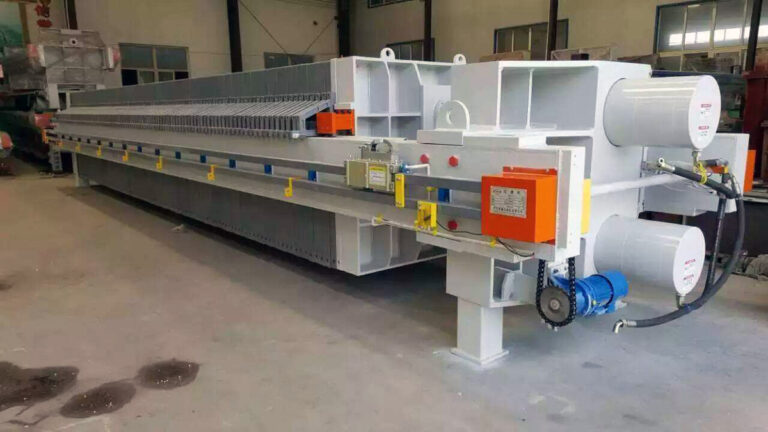
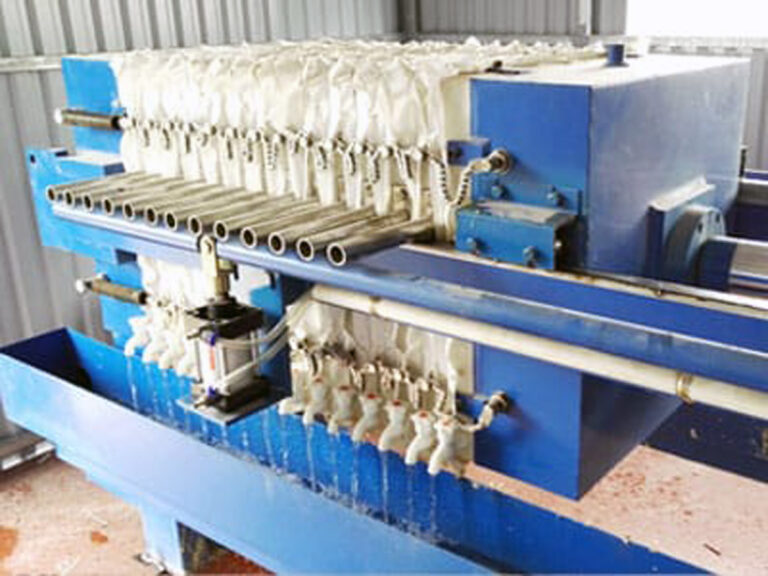
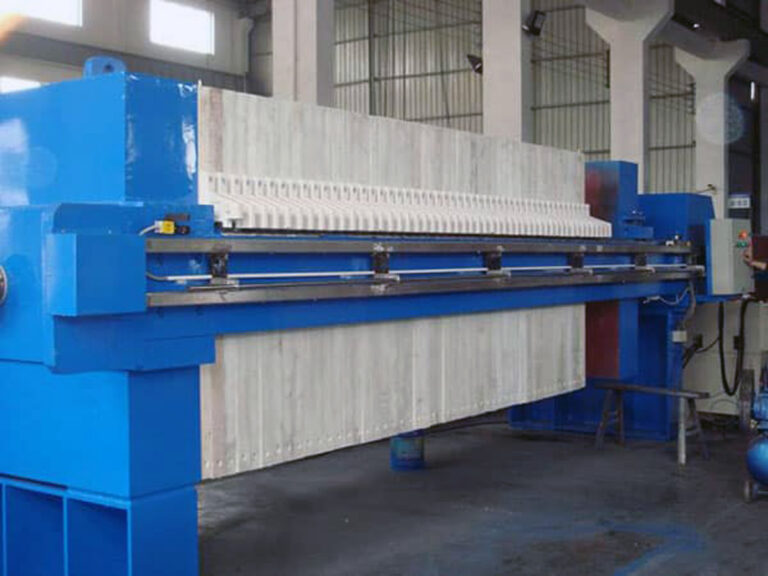
This application-specific nature fragments the solution market, favoring vendors with deep vertical expertise over general equipment manufacturers. Partners who understand the unique constraints of a specific slurry—be it in lithium extraction, chemical catalyst recovery, or wastewater treatment—can engineer solutions that balance cycle speed with precise quality and handling requirements. For instance, optimizing a recessed plate filter press for a sticky organic slurry involves different cloth selections and discharge aids than for a free-draining mineral concentrate.
Tailored Parameter Sets
The optimization levers themselves change priority. In a high-value product recovery, filtrate clarity might be the non-negotiable constraint, making cloth selection and gentle pressure profiles paramount. In a volume-driven tailings application, maximum cake dryness and discharge speed drive the cycle parameters. Recognizing these fundamental differences is the first step in application-specific optimization.
Implementing a Continuous Optimization Framework
Establishing the Baseline
Achieving the optimal cycle is not a one-time event but requires a framework for continuous improvement. This begins with establishing a performance baseline by measuring each phase’s duration and corresponding outcomes (cake moisture, filtrate turbidity). Without this data, changes are based on intuition, not evidence.
From Automation to Adaptive Control
The next frontier involves moving beyond basic PLC automation to integrated real-time analytics. By using sensor data on pressure, flow, and filtrate quality, advanced systems can dynamically adjust cycle parameters in response to changing feed conditions. This enables predictive, data-adaptive control, maintaining the optimum even as slurry characteristics vary. This shift from static hardware to adaptive process optimization represents the market’s evolution.
The Iterative Discipline
Maintaining the optimum demands a disciplined routine: proactive maintenance schedules, regular cloth inspection and performance review, and a commitment to using operational data for iterative fine-tuning. It transforms cycle time management from a reactive task into a core, value-driving engineering function.
The core decision points are clear: define optimal based on your specific quality and economic drivers, measure each phase to identify true bottlenecks, and recognize that cloth management and automation are not expenses but investments in throughput and consistency. Implementation requires a shift from a fixed-setpoint mentality to a continuous, data-informed tuning process.
Need professional guidance to implement a continuous optimization framework for your filtration operations? The engineers at PORVOO specialize in application-specific analysis and system integration to help you achieve maximum throughput and efficiency. Contact us to discuss a diagnostic review of your current cycle performance.
Perguntas frequentes
Q: How do you define the optimal cycle time for a filter press operation?
A: The optimal cycle is the shortest possible duration that still meets your targets for cake dryness and filtrate clarity, while preserving equipment condition. It is a dynamic balance of variables like feed pressure and cloth permeability, not a fixed number. This means your team should focus on achieving minimum product specs at the maximum sustainable rate, requiring a holistic, data-driven tuning process rather than adjusting single parameters in isolation.
Q: What is the most significant bottleneck in the filter press cycle, and how can it be addressed?
A: The cake discharge phase is often the primary bottleneck in the overall batch timeline. This non-filtration step can be compressed by investing in equipment with quick-opening mechanisms and positive cake release systems. Targeting this specific phase with advanced mechanical design directly reduces total cycle time. For projects where throughput is constrained, you should prioritize evaluating discharge speed during the equipment selection process.
Q: Why is filter cloth maintenance a direct lever for operational efficiency, not just equipment care?
A: Progressive cloth blinding steadily increases cycle times by reducing permeability, which directly lowers throughput. Implementing an automatic high-pressure washing system prevents this performance decay, ensuring consistent and repeatable cycle durations. This means facilities aiming for stable, high-efficiency output should treat automated cloth washing as a core operational investment, not just a maintenance task for extending cloth life.
Q: How does automation impact cycle time beyond simply replacing manual labor?
A: Automation with a Programmable Logic Controller (PLC) delivers precise, repeatable sequencing of all cycle phases, eliminating human variability that risks product quality and throughput. This repeatability is key to achieving consistent minimum moisture cakes and stable cycle times. Therefore, calculate the return on investment based on the value of predictable output and reduced process deviation, not solely on labor cost savings.
Q: What is the business case for investing in cycle time optimization technologies?
A: Optimizing cycle time creates a powerful synergy between economic and environmental performance. A shorter cycle increases throughput and revenue capacity while reducing energy and chemical consumption per unit of output. Consequently, investments in enabling technologies like intelligent feed systems often pay for themselves through these operational savings. This makes sustainability initiatives a compelling business case, as reducing resource use aligns perfectly with faster, more efficient production cycles.
Q: Is there a universal optimal cycle time, or does it vary by application?
A: There is no universal optimum; cycle time is highly dependent on your specific slurry and industry requirements. For instance, mineral processing may prioritize discharge reliability with abrasive particles, while pharmaceuticals demand impeccable cloth cleanliness. This means you should seek vendors with deep vertical expertise in your industry, as they can engineer solutions that balance speed with your precise quality and handling constraints.