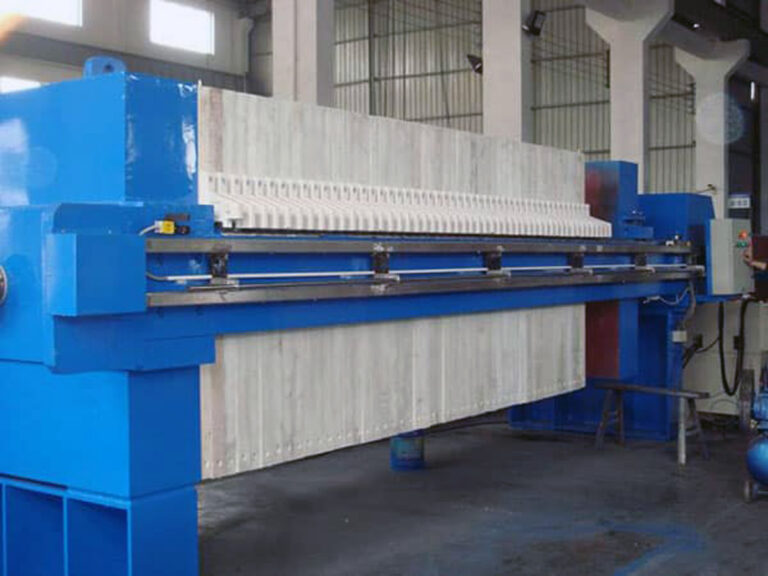
For plant managers and process engineers, the decision between a membrane and recessed chamber filter press is often reduced to a simple capital cost comparison. This approach overlooks the critical operational and financial dynamics that unfold over the equipment’s lifespan. The true cost difference is not found on the initial invoice but in the compounding effects of throughput, cake dryness, and maintenance over five years of continuous operation.
Selecting the wrong technology locks in higher operational expenses, limits capacity, and inflates waste disposal budgets. A strategic evaluation requires moving beyond upfront price to analyze total cost of ownership, where the engineering differences between these systems create divergent financial outcomes.
Membrane vs. Recessed Chamber: Core Design Differences
The Hydraulic-Only Foundation
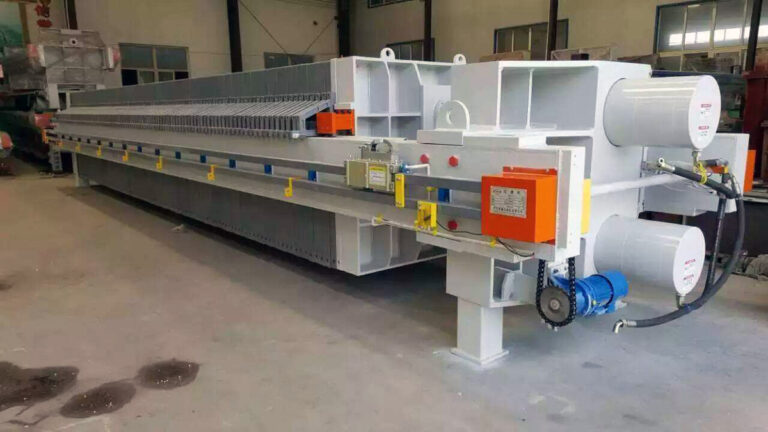
A recessed chamber press operates on a single-phase principle. Solid plates with recessed surfaces form cavities when clamped. Slurry is pumped into these chambers at high hydraulic pressure, typically 6-7 bar. Dewatering relies solely on this pressure until the chambers are completely full, forming a cake of fixed, predetermined thickness. The process is straightforward but faces inherent inefficiency as cake resistance increases.
The Two-Stage Mechanical Advantage
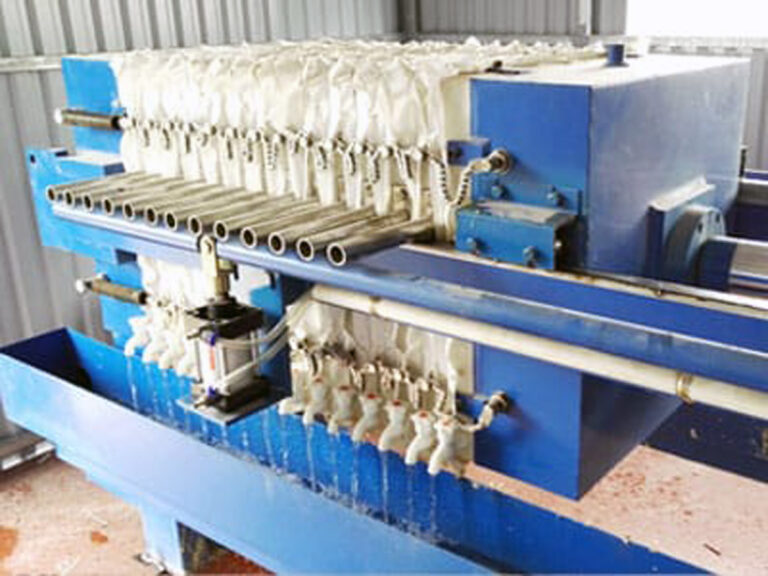
The membrane filter press introduces a critical engineered component: flexible diaphragms bonded to the plates. Its cycle is deliberately bifurcated. First, slurry is fed to form a pre-cake, similar to the initial phase of a recessed press. The second phase is where the cost and performance divergence originates. High-pressure water or air, at 15-25 bar, inflates the membranes, applying uniform mechanical compression directly onto the cake. This active squeeze targets the residual moisture that hydraulic pressure alone cannot economically remove.
Engineering Implications for Cost
This core design difference dictates all downstream financial comparisons. The membrane system’s complexity increases capital expenditure but re-engineers the dewatering curve. It directly attacks the slow, energy-intensive final phase of filtration. The recessed chamber’s simpler design offers lower upfront cost but accepts the limitations of a one-dimensional process. The choice is fundamentally between a lower-cost, fixed-outcome tool and a higher-investment, optimized process.
5-Year Total Cost of Ownership (TCO) Compared
Breaking Down Capital vs. Operational Spend
A five-year TCO analysis forces a shift from CAPEX to OPEX. Recessed chamber presses present a clear upfront advantage, with a simpler plate pack and no squeeze circuit. Membrane presses command a 20-40% higher initial investment for the diaphragm system, high-pressure pumps, and controls. This premium is the entry fee for enhanced performance. Industry experts recommend modeling this not as a pure cost, but as a capital deployment designed to generate operational returns.
The Dominant Lever: Disposal Cost
For most applications, disposal is the largest recurring cost. Drier cake from a membrane press reduces mass and weight, directly lowering landfill fees or transportation costs. These savings compound annually. According to operational data from mineral processing plants, the reduction in hauling cycles alone can justify the membrane premium within two years for high-volume sites. This turns waste management from a pure expense into a variable cost actively managed by equipment selection.
Modeling the Payback Trajectory
The financial question centers on payback. The following table outlines the key cost components that determine the 5-year outcome.
| Componente de custo | Recessed Chamber Press | Prensa de filtro de membrana |
|---|---|---|
| Initial Capital (CAPEX) | Menor custo inicial | 20-40% higher CAPEX |
| Operational Savings (OPEX) | Minimal from cake dryness | High from drier cake |
| Disposal Cost Impact | Higher mass, higher cost | Lower mass, major savings |
| Payback Period | Not typically applicable | Often 3-5 years |
| 5-Year TCO Outcome | Can be higher long-term | Often lower total TCO |
Fonte: Documentação técnica e especificações do setor.
A membrane press represents a classic CAPEX-for-OPEX trade-off. The net present value of five years of lower disposal and higher throughput often reveals a lower total TCO for the membrane system, even with its higher maintenance costs factored in. The breakeven point is highly sensitive to local disposal fees and production volume.
Throughput & Cycle Time: Which System Is More Efficient?
The Inefficiency of Hydraulic Dewatering
The recessed chamber process suffers from diminishing returns. Filtration rate slows exponentially as cake builds and resistance rises. A standard press is often 80% full halfway through its cycle, with the final consolidation of the remaining 20% taking an equal amount of time. This long tail period consumes significant energy for marginal additional dewatering, creating a bottleneck in batch processing.
Strategic Cycle Interruption
Membrane technology strategically interrupts this inefficient tail. By initiating the mechanical squeeze at approximately 80% chamber capacity, it replaces slow, pressure-based dewatering with rapid, mechanical compression. This re-engineered process typically reduces total cycle time by 30-50%. For compressible materials like organic sludges, reductions of up to 75% are achievable. In our analysis of plant data, this efficiency gain is the single largest driver of membrane press ROI in capacity-constrained facilities.
Throughput as a Capacity Strategy
Faster cycles translate directly into higher throughput. This allows a membrane press to complete more batches per day, effectively increasing plant capacity without a larger footprint.
| Métrico | Recessed Chamber Press | Prensa de filtro de membrana |
|---|---|---|
| Cycle Time Reduction | Baseline (0%) | 30-50% faster |
| Extreme Case Efficiency | Slow final dewatering phase | Up to 75% faster cycles |
| Chamber Fill Strategy | Full hydraulic fill only | Squeeze at ~80% capacity |
| Throughput Impact | Fixed cycles per day | More cycles per day |
| Estratégia de capacidade | Larger press needed | Smaller press possible |
Fonte: Documentação técnica e especificações do setor.
The implication is profound: a membrane press can often handle a given volume with a smaller unit, or it can defer capital expenditure for a capacity expansion. This turns a filtration decision into a strategic capacity planning tool.
Cake Dryness Compared: Impact on Disposal & Transportation Costs
Dryness as a Direct Cost Variable
Final cake dryness is not just a technical specification; it is a direct line-item cost. A recessed chamber press achieves a baseline dryness dictated by pump pressure and slurry compressibility. The membrane’s squeeze phase applies significantly higher and more uniform pressure, consistently yielding a drier solids cake. This difference directly reduces the mass sent for disposal.
Application-Specific Financial Impact
The magnitude of dryness improvement—and thus cost savings—varies substantially by material. Generic claims are unreliable, which is why pilot testing with your specific slurry is non-negotiable for accurate forecasting.
| Application Sludge Type | Dryness Improvement (Membrane) | Primary Cost Impact |
|---|---|---|
| Organic Sludges | 2-3 percentage points | Moderate disposal savings |
| Mineral Sludges | 4-5+ percentage points | High disposal savings |
| Lime-Conditioned Sludges | 4-5+ percentage points | High disposal savings |
| General Outcome | Drier cake overall | Lower hauling weight |
Fonte: Documentação técnica e especificações do setor.
For example, a 5-point increase in dry solids content can reduce cake mass by 15-20%. When disposal is charged by the ton, this creates substantial annual savings. Reduced moisture also lowers transportation costs for off-site hauling and can transform a waste stream into a material suitable for beneficial reuse or recycling, potentially creating a revenue offset.
Operational Costs: Energy, Labor, and Maintenance Compared
Energy Consumption Profiles
The energy cost profile differs fundamentally. A recessed chamber pump runs at high pressure for the entirety of its long cycle. A membrane press’s feed pump operates for a shorter period, after which the separate squeeze circuit engages. While the squeeze pump operates at higher pressure, its duration is brief. The net result is often a lower energy cost per ton of dry solids processed by the membrane press, thanks to its significantly faster cycle.
Labor and the Automation Trade-Off
Labor cost is tied to throughput. Faster membrane cycles reduce the labor cost per unit processed. However, this benefit intersects with the automation decision. Automated plate shifters, cloth washers, and cake discharge systems reduce manual labor but add substantial mechanical complexity. This increases both capital cost and long-term maintenance liabilities. The trade-off is clear: automation buys labor savings at the price of higher maintenance cost and potential downtime.
Maintenance Complexity and Key Wear Items
Maintenance regimes diverge sharply. A recessed chamber press requires upkeep of the hydraulic system, cloths, and plates. It is mechanically simpler. The membrane press demands all that plus maintenance of the squeeze circuit, associated pumps and valves, and the membranes themselves.
| Cost Type | Recessed Chamber Press | Prensa de filtro de membrana |
|---|---|---|
| Energy Consumption Profile | High pressure, long cycle | Shorter feed, squeeze phase |
| Labor Cost per Ton | Higher (slower cycles) | Lower (faster throughput) |
| Complexidade da manutenção | Simpler: hydraulics, cloths | Complex: squeeze circuit, membranes |
| Key Wear Item | Cloths | Membranes (major item) |
| Automation Trade-off | Adds cost & complexity | Adds cost & complexity |
Fonte: Documentação técnica e especificações do setor.
Membranes are the critical wear item in a membrane press. Their lifespan and replacement cost are major variables in the OPEX model. A robust maintenance protocol and strategic spare parts inventory are essential for controlling long-term operating costs.
Key Decision Factors: When to Choose Each Filter Press Type
The Case for Recessed Chamber Technology
A recessed chamber filter press is the financially sound choice over five years under specific conditions. It wins when disposal costs are low and not a primary concern. It is suitable for applications with minimal throughput demands where cycle time is not a constraint. It is also the appropriate choice for incompressible slurries, such as some mineral tailings, where the membrane squeeze offers negligible improvement in cake dryness, providing no return on the added investment.
The Case for Membrane Technology
Conversely, a membrane filter press delivers superior long-term value in several key scenarios. It is decisive when disposal or hauling costs are high, as drier cake delivers immediate, quantifiable savings. It is critical where faster cycle time is needed to meet production capacity or debottleneck a process. It is also essential when maximum cake dryness is a requirement for downstream processing, thermal drying, or to meet landfill criteria for stable placement.
Aligning Technology with Business Objectives
The decision is not purely technical; it’s strategic. In high-throughput scenarios, the productivity gains of a membrane press rapidly amortize its higher initial cost. For a plant manager, choosing a membrane press can be a capacity expansion strategy that avoids a larger capital project. The choice ultimately aligns the filtration method with the primary business objective: minimizing cost per ton processed or maximizing total plant output.
Evaluating Membrane Durability & Long-Term Maintenance Costs
Plate Design as a Risk Mitigation Tool
The long-term cost and reliability of a membrane press are dictated by plate design. Membranes will eventually fail; the financial impact of that failure is a key variable. Welded polypropylene membranes are common, but their failure mode is costly—a rupture typically requires full plate replacement. This leads to expensive parts procurement and extended downtime.
The Strategic Advantage of Removable Diaphragms
Selecting plates with removable, elastomer diaphragms (like rubber) is a direct operational risk mitigation move. This design allows for in-field diaphragm replacement using stocked parts, dramatically reducing repair cost and downtime. While the upfront plate cost may be higher, the total lifecycle maintenance cost is often lower. It transforms a catastrophic plate failure into a manageable maintenance event.
Engineering for Even Wear
Feed port design also influences longevity and cost. For membrane plates, a corner feed design is superior to center feed.
| Fator de projeto | Costly / High-Risk Option | Strategic / Lower-Cost Option |
|---|---|---|
| Tipo de membrana | Welded polypropylene | Removable rubber diaphragms |
| Failure Mode Consequence | Full plate replacement | Field repair with stocked parts |
| Feed Design (Membrane Plates) | Center feed | Corner feed |
| Impacto primário | Higher lifecycle cost | Reduced operational risk |
Fonte: Documentação técnica e especificações do setor.
Corner feed promotes more even cake formation and pressure distribution during the squeeze phase. This reduces stress concentrations that can tear cloths or damage membranes, lowering the frequency and cost of replacements. Specifying the right plate design is a critical step in controlling the long-term OPEX of a membrane filter press system.
Making the Final Choice: A Framework for Your Application
Step 1: Establish Application-Specific Data
Generic performance claims are a liability. The first step is non-negotiable: conduct pilot testing with your specific slurry to generate reliable data on achievable cake dryness and cycle times for both technologies. This data forms the only credible foundation for financial modeling. Without it, you are guessing.
Step 2: Build a Detailed Financial Model
Model the net present value of costs over five years. Input your pilot data, local utility rates, labor costs, and—most importantly—your actual disposal fees. Factor in realistic maintenance costs, including membrane or cloth replacement cycles. This model will clearly show the crossover point where membrane OPEX savings overcome its CAPEX premium.
Step 3: Scrutinize the Technical Proposal
Evaluate the proposed plate pack configuration. Vendors often use a mixed pack of alternating membrane and recessed plates to balance performance with capital cost. Understand the ratio and how it affects the performance metrics you modeled. Furthermore, consider specifying a membrane press with smart controls and data output capability. This enables future integration into process optimization systems, allowing for real-time adjustments that continuously improve efficiency and lower cost per cycle.
Step 4: Align with Operational Philosophy
Finally, match the system’s complexity to your team’s capabilities and maintenance philosophy. A highly automated membrane press reduces labor but requires more sophisticated upkeep. The quality and responsiveness of your vendor’s support network become a critical part of the long-term cost equation. The right partner is as important as the right technology.
The five-year cost difference hinges on your specific operational parameters. For high-volume, high-disposal-cost applications, the membrane press’s operational savings typically drive a lower total cost of ownership, justifying the initial investment. For lower-throughput, simpler applications, the recessed chamber press remains a cost-effective and reliable workhorse.
Need professional guidance to model the TCO for your specific slurry and operational context? The engineering team at PORVOO specializes in application analysis and can provide detailed pilot test data to inform your capital decision. Entre em contato conosco para discutir os requisitos de seu projeto.
Perguntas frequentes
Q: How does the two-stage dewatering process of a membrane filter press create a lower total cost of ownership?
A: A membrane press first forms a pre-cake with slurry feed, then uses high-pressure water (15-25 bar) to inflate flexible diaphragms, applying mechanical compression. This two-stage process yields a significantly drier final cake than a recessed chamber press, which relies solely on hydraulic pressure (6-7 bar). This means facilities with high waste disposal fees should prioritize the membrane press, as the mass reduction from drier cake often offsets its higher initial cost within 3-5 years.
Q: When does a recessed chamber filter press offer a more cost-effective five-year investment?
A: A recessed chamber press delivers better long-term value when your slurry is incompressible, disposal costs are low, or production throughput is not a constraint. Its simpler design results in lower upfront capital and reduced maintenance complexity compared to a membrane system. For projects where cycle time flexibility exists and cake dryness gains are minimal, expect the recessed chamber’s operational simplicity to yield a lower total cost of ownership.
Q: What specific plate design features reduce long-term maintenance costs for a membrane filter press?
A: Opt for plates with removable rubber diaphragms instead of welded polypropylene membranes, as they allow for cheaper, faster field repairs. Also, select a corner feed design over center feed to ensure even pressure distribution during the squeeze phase, which minimizes cloth and membrane wear. If your operation requires high uptime, plan for this strategic plate specification during procurement to control lifecycle maintenance expenses and downtime risk.
Q: How can we accurately model the financial payback for a membrane press on our specific sludge?
A: You must conduct pilot testing with your actual slurry, as dryness improvements from membrane squeezing vary widely—from 2-3% for organic sludges to over 5% for mineral sludges. Use the resulting cycle time and solids content data to calculate net present value, factoring in local disposal, energy, and labor rates. This means generic vendor claims are unreliable; your financial model hinges on application-specific performance data.
Q: Does automating a filter press with plate shifters always reduce operational costs?
A: Not necessarily. While automation features like plate shifters and cloth washers reduce manual labor, they add mechanical complexity, increasing both initial capital expenditure and long-term maintenance costs. The net effect on cost-per-ton processed depends on your labor rates and throughput volume. For operations with high labor costs or multiple shifts, the automation investment often pays off, but it introduces more potential failure points to manage.
Q: What is a “mixed pack” plate configuration, and when is it used?
A: A mixed pack alternates membrane plates with recessed chamber plates within the same filter press. This hybrid approach controls the higher capital cost of a full membrane plate pack while still providing some mechanical squeezing capability for improved cake dryness and cycle time. This configuration is a strategic compromise for applications seeking a balance between performance uplift and budget constraints, allowing you to target specific dewatering benefits.