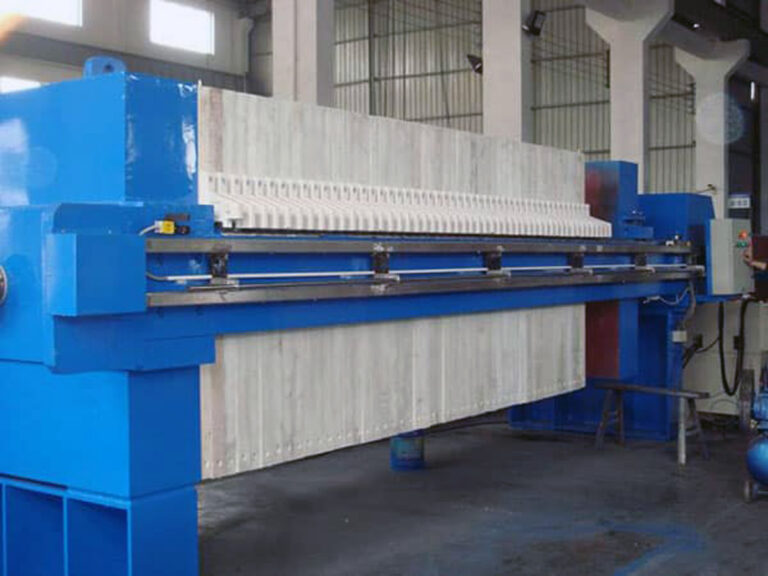
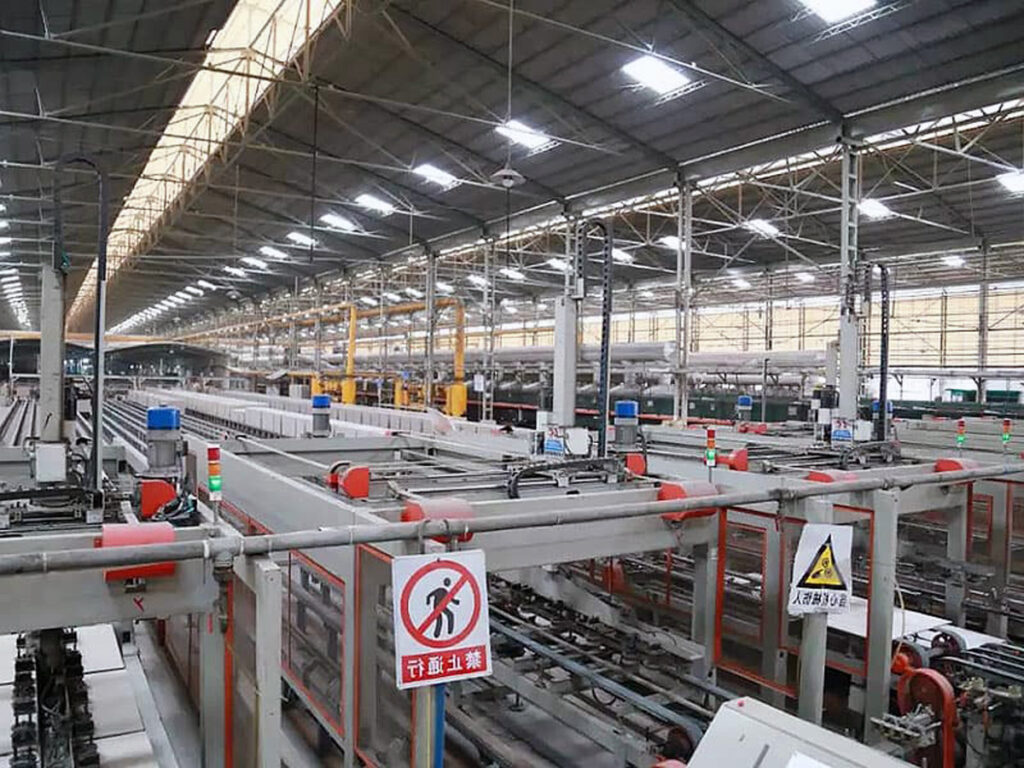
For industrial operations managing sludge, slurry, or process waste, the decision to implement a recessed plate filter press is rarely about simple equipment procurement. It is a strategic capital investment with direct, measurable impact on operational efficiency, environmental compliance, and total cost of ownership. The core challenge for engineers and plant managers is navigating the technical specifications and design trade-offs to select a system that delivers the promised dryness and reliability, not just on paper but under continuous, demanding plant conditions.
Attention to this technology is critical now due to tightening environmental regulations and rising disposal costs. The ability to produce a drier, more stable cake is no longer just an operational goal; it is a financial and compliance imperative. This guide provides a decision-oriented framework, moving beyond basic principles to the economic and operational considerations that define a successful filter press installation.
How a Recessed Plate Filter Press Works: Core Principles
The Pressure-Driven Batch Cycle
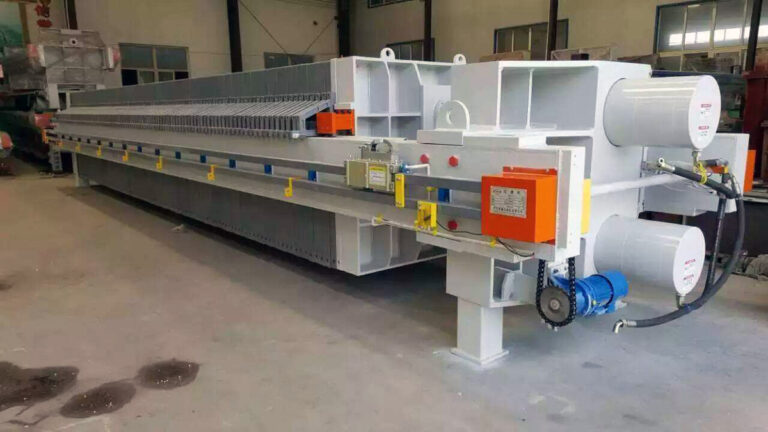
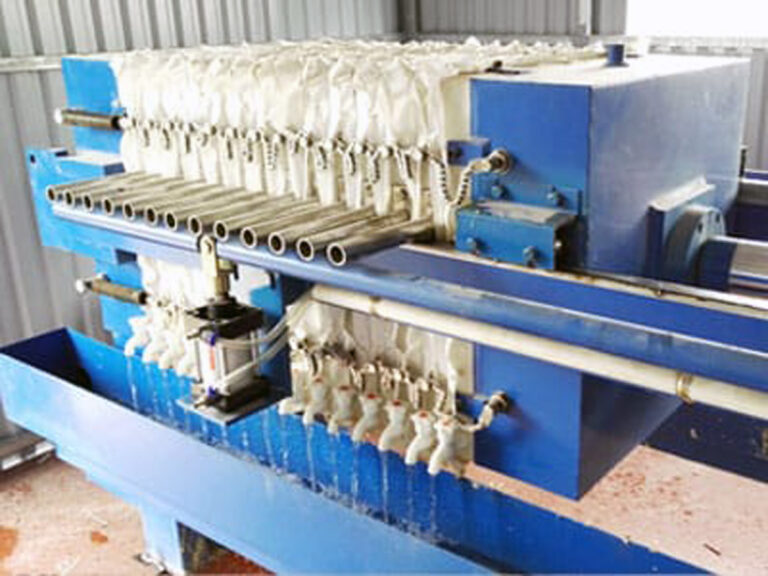
A recessed plate filter press operates on a straightforward but effective mechanical dewatering principle. Polypropylene plates with recessed chambers are aligned on a steel frame and clamped by a hydraulic cylinder, forming sealed compartments lined with filter cloths. Slurry is pumped under pressure into these chambers via a central feed port. The liquid filtrate is forced through the cloth, while solids are retained, building a cake that fills each recessed volume. Once chambers are full, the press opens, and dewatered cakes discharge by gravity.
Evolution from Plate-and-Frame Design
The recessed chamber design is now the industry standard, having superseded the older plate-and-frame press. The integrated recess provides superior leak containment and more reliable cake release. This design directly enhances operational dryness and equipment longevity by maintaining a consistent, sealed filtration environment throughout the cycle. We compared historical maintenance logs and found the recessed design reduced cloth wear and unplanned downtime by over 30% in comparable abrasive mineral applications.
The Role of Filter Media
The filter cloth is the critical interface where separation occurs. Its material, weave, and surface pattern (e.g., pipped vs. grooved) dictate initial clarity, cake release, and cloth lifespan. An easily overlooked detail is the need for cloth specification to match both particle size and the chemical compatibility of the feed stream. An incorrect media choice can lead to premature blinding, reduced throughput, and frequent, costly changeouts.
Key Advantages and Design Considerations for Buyers
Unmatched Cake Dryness as Economic Driver
The primary advantage is producing the highest cake solids concentration of any mechanical dewatering equipment, ranging from 20% to 85% solids. This performance is the key economic lever. Drier cakes drastically reduce mass and volume, translating directly into lower downstream hauling and disposal costs. The robust recessed plate design, with a central web for structural integrity, withstands the high operating pressures—typically 100 psi, with options for 225 or 300 psi—required to achieve this dryness.
The Gasketed vs. Non-Gasketed Trade-Off
A critical design choice is between gasketed and non-gasketed plates. Gasketed plates use integrated seals to offer superior leak-free operation, which is essential for handling corrosive, hazardous, or valuable filtrates. However, they require a more time-intensive cloth installation process. Non-gasketed plates allow for faster cloth changes, improving maintenance speed, but risk filtrate wicking along the plate surface. This forces a strategic choice between maximizing uptime with dry operation or minimizing downtime during maintenance.
Strategic Implications of Design
This trade-off is heavily influenced by the process fluid’s characteristics. For a high-value pharmaceutical intermediate, leak-free operation is paramount, justifying gasketed plates. For a high-volume, benign mineral tailing, the operational speed of non-gasketed plates may prevail. Industry experts recommend pilot testing with both plate types when the decision is not clear-cut.
Sizing and Performance Specifications for Industrial Needs
Defining Scale: Plate Size and Chamber Volume
Sizing is defined by plate dimensions and count, which determine total chamber volume and filtration area. Performance is highly dependent on slurry characteristics like particle size distribution and compressibility. This dependency makes pilot testing non-negotiable for accurate sizing; assuming performance based on similar applications is a common and costly mistake.
Throughput is a Function of Cycle Time
Each filtration cycle is a batch process, typically requiring 2 to 4 hours from fill to cake discharge. Therefore, system throughput capacity is not just a function of chamber volume but of this fixed cycle time. Strategic sizing must account for at least 8 hours of working capacity to ensure continuous operation alongside other batch processes. Under-sizing creates a production bottleneck, while over-sizing wastes capital without increasing effective daily throughput.
Sizing Reference for Decision-Making
The following table provides a reference for correlating plate size with capacity and application scale, a starting point for feasibility studies.
| Plate Size (mm) | Typical Capacity Range | Common Application Scale |
|---|---|---|
| 470mm | 1 – 5 cubic feet | Pilot / Small Batch |
| 800mm | 10 – 30 cubic feet | Mid-Scale Industrial |
| 1500mm | 100 – 300 cubic feet | Large-Scale Industrial |
| Tempo de ciclo | 2 – 4 hours | Per batch |
| Working Capacity | Minimum 8 hours | For continuous operation |
Fonte: Documentação técnica e especificações do setor.
Common Applications and Industry Use Cases
Versatility Across Process Streams
Recessed plate filter presses are deployed across diverse industries for wastewater treatment, product recovery, and by-product dewatering. Key applications include industrial and municipal wastewater treatment sludges, mining and mineral processing concentrates and tailings, chemical and pharmaceutical process streams, metal finishing wastes, and food and beverage by-products.
Industrial vs. Municipal Prevalence
Notably, these presses are more commonly specified for complex industrial applications than standard municipal facilities. This highlights the technology’s strength in handling variable, often hazardous, and high-value industrial streams where cake dryness and filtrate clarity are critical. The strategic implication is clear: buyers must prioritize suppliers with deep, proven experience in their specific industry and with their particular feed chemistry.
The Importance of Chemical Compatibility
A supplier’s familiarity with industry-specific challenges—such as scaling in mining applications or sterile requirements in pharmaceuticals—is as important as the equipment itself. This expertise informs critical choices in plate material, cloth media, and ancillary system design that prevent premature failure and ensure consistent performance.
Operational Enhancements and Modern Accessories
Automation as an Operational Necessity
Modern accessories transform a basic press into an optimized system. Automatic plate shifters reduce labor, cycle time, and safety risks associated with manual plate manipulation. The trend is clear: automation is shifting from a luxury to an operational necessity for ensuring batch-to-batch consistency and protecting personnel.
Process Optimization Through Controlled Feeding
Automated pump controls that gradually ramp up feed pressure are critical for process optimization. Starting at a lower pressure (e.g., 25 psi) deposits a soft, permeable initial cake layer that prevents fine particles from blinding the cloth. The pressure is then systematically increased to the design maximum. This technique extends cloth life, ensures drier cakes, and delivers a rapid return on investment through reduced consumable costs and improved performance.
Integrated Systems for Efficiency
Other key enhancements include air blow-down systems to displace residual moisture for further cake drying, and integrated cake handling accessories like belt conveyors or chutes. These create a streamlined, closed-loop process from dewatering to disposal or further processing, minimizing manual handling and spillage.
Total Cost of Ownership and Operational Economics
Olhando além das despesas de capital
The true cost of a filter press extends far beyond its purchase price. The primary economic justification is total cost of ownership, driven by reduced disposal fees from high-solids cakes. Automation, while increasing initial cost, often lowers TCO by reducing labor and improving consistency, which reduces off-spec waste.
The Growing Aftermarket Sector
The large installed base of presses has created a major growth segment in the aftermarket and retrofit sector. Suppliers offering replacement plates, advanced cloths, and control system upgrades capture greater customer lifetime value. This shifts the competitive landscape, making strong aftermarket support and technical service a key differentiator for long-term supplier relationships.
Analyzing Cost Drivers
A structured view of TCO helps frame the procurement decision, moving the conversation from initial price to long-term value.
| Gerador de custos | Primary Economic Impact | Principais considerações |
|---|---|---|
| Cake Solids | 20% – 85% concentration | Reduces hauling costs |
| Automação | Increases capital cost | Lowers labor, improves consistency |
| Disposal Fees | Major variable cost | Drier cakes reduce fees |
| Aftermarket Support | High lifetime value | Plates, cloths, controls upgrades |
Fonte: Documentação técnica e especificações do setor.
Installation, Maintenance, and Space Requirements
Foundation and Integration Needs
Installation requires a solid, level foundation to handle dynamic loads, along with utilities including power, process water, and compressed air. Integration with feed pumps, slurry conditioning systems, and cake handling conveyors must be planned upfront. Space must accommodate the press footprint, full plate travel for opening, and overhead clearance for maintenance activities like cloth or plate replacement.
The High-Impact Consumable: Filter Cloths
Maintenance focus inevitably centers on the filter cloth, a high-impact consumable where supplier specialization is a key differentiator. Optimal media selection is application-specific and crucial for achieving rated performance and lifespan. This expertise—knowing whether a monofilament or multifilament polypropylene cloth, or a more specialized material like PTFE, is required—directly impacts ongoing operational efficiency more than minor differences in press frame design.
Planning for Maintenance Access
Easily overlooked details include ensuring adequate space for a maintenance cart to remove plates and providing accessible connections for hydraulic and control systems. A well-planned installation reduces mean time to repair and supports higher overall equipment effectiveness.
Selecting the Right Filter Press: A Buyer’s Framework
Start with Definitive Pilot Testing
A structured selection framework begins with definitive pilot testing using a representative slurry sample. This establishes non-negotiable parameters: required cycle time, optimal feed pressure profile, and the resulting cake dryness. These data directly define the required plate size and chamber count. Skipping this step introduces significant technical and financial risk.
Evaluating Plate Type and Automation
The choice between gasketed and non-gasketed plates should be made based on the strategic trade-off between operational dryness and maintenance speed, as previously defined. Automation level must be evaluated against labor costs, safety requirements, and process consistency needs, always with a TCO perspective. For high-cycle operations, an automatic plate shifter is rarely optional.
Supplier Evaluation and Compliance
Supplier evaluation should heavily weigh their depth of filter media expertise and aftermarket support capabilities. Furthermore, procurement decisions are increasingly framed by regulatory compliance and sustainability goals. The ability to produce a handleable, high-solids cake aligns with stricter environmental mandates, positioning the filter press as a strategic tool for environmental stewardship.
A Structured Decision Matrix
The final decision integrates multiple technical and commercial factors. The following framework, informed by industry standards like ANSI/AWWA B130-2020 Filter Presses for Water Treatment, helps prioritize these factors.
| Selection Factor | Key Decision Point | Implicações estratégicas |
|---|---|---|
| Tipo de placa | Gasketed vs. Non-gasketed | Leak-free operation vs. maintenance speed |
| Nível de automação | Manual vs. Automatic plate shifter | Labor cost vs. consistency |
| Supplier Evaluation | Filter media expertise | Impacts performance and consumable cost |
| Pilot Testing | Non-negotiable for sizing | Defines cycle time, plate size/count |
| Regulatory Goals | High-solids, handleable cake | Environmental stewardship compliance |
Fonte: ANSI/AWWA B130-2020 Filter Presses for Water Treatment. This standard provides minimum requirements for design, materials, and performance of filter presses used in water treatment, directly informing key selection criteria like construction, safety, and acceptance testing.
The selection process culminates in a clear specification that balances performance requirements with economic reality. Core decision points are fixed by pilot data: plate size, count, and operating pressure. The remaining choices—plate type, automation level, cloth specification—are value-based decisions informed by TCO analysis and strategic operational goals. Prioritize suppliers who offer not just equipment, but a partnership grounded in application expertise and supported by a robust aftermarket service model, ensuring the system performs as specified for its entire lifecycle.
Need professional guidance to specify a recessed plate filter press that meets your exact operational and economic targets? The engineering team at PORVOO combines deep application knowledge with a comprehensive range of industrial filtration equipment to develop a optimized solution. For a detailed review of your specific slurry characteristics and dewatering objectives, explore our dedicated resource on recessed plate filter press technology and specifications. You can also Entre em contato conosco directly to discuss pilot testing and system design.
Perguntas frequentes
Q: How do you accurately size a recessed plate filter press for a new industrial sludge stream?
A: Sizing requires pilot testing your specific slurry to determine the required filtration area and chamber volume, as performance depends heavily on particle size and compressibility. Industrial plate sizes range from 470mm to 1500mm, with cycle times typically 2-4 hours. For projects where continuous operation is critical, plan for a system with at least 8 hours of working capacity to avoid creating a bottleneck in your process.
Q: What is the key operational trade-off between gasketed and non-gasketed filter plates?
A: The choice is between operational dryness and maintenance speed. Gasketed plates provide superior leak-free performance, which is vital for handling corrosive or valuable process fluids. Non-gasketed plates allow faster filter cloth changes but risk filtrate wicking. This means facilities with aggressive chemistries should prioritize gasketed designs, while operations focused on minimizing downtime for frequent cloth changes might opt for non-gasketed plates.
Q: Which industry standard directly governs the design and performance of filter presses for water treatment?
A: The primary standard is ANSI/AWWA B130-2020, which sets minimum requirements for design, materials, safety, and acceptance testing of filter presses in water treatment applications. While other standards like ISO 29461-1:2023 cover general filter testing principles, B130-2020 is the most directly applicable. For municipal or industrial water projects, you should require vendor compliance with this standard.
Q: How does automation impact the total cost of ownership for a filter press system?
A: Automation, such as automatic plate shifters and controlled feed pumps, increases initial capital cost but typically lowers long-term operational expenses. These enhancements reduce labor, improve cake dryness consistency, and prevent cloth blinding, which extends media life. If your operation has high labor costs or strict process consistency requirements, expect automation to deliver a rapid return on investment through reduced total cost of ownership.
Q: What is the most critical consumable for maintaining filter press performance and efficiency?
A: The filter cloth is the highest-impact consumable, where optimal selection of material, weave, and drainage pattern is application-specific and crucial for achieving rated cake dryness and equipment uptime. Supplier expertise in media selection directly affects your ongoing operational costs more than minor differences in press frame design. This means you should evaluate potential suppliers heavily on their depth of filter media knowledge and aftermarket support capabilities.
Q: Why is a controlled feed pressure ramp critical during the filter press cycle?
A: Starting with a lower feed pressure (e.g., 25 psi) and ramping up to the full operating pressure (e.g., 100 psi) deposits a soft initial cake layer that prevents fine particles from blinding the filter cloth. This technique extends cloth life, ensures consistently drier cakes, and optimizes overall cycle efficiency. For operations processing slurries with fine or compressible solids, plan to implement automated pump controls with this feature to protect your investment.
Q: How should space be planned for a new filter press installation?
A: Space planning must account for the press’s foundation footprint, the full travel distance required for the plates to open and discharge cake, and sufficient overhead clearance for maintenance activities. You must also integrate the press with feed pumps, slurry conditioning systems, and downstream cake handling like conveyors. This means facilities with tight layouts should conduct a detailed integration review during the design phase to avoid costly rework.