For professionals in mining, ceramics, and stone processing, selecting a filter press is a high-stakes capital decision. The wrong specification locks in excessive operational costs, compliance risks, and missed resource recovery. Many operations default to familiar, manual systems without evaluating how modern automation and plate technology redefine the economics of dewatering.
This selection is no longer just about waste volume reduction. It’s a strategic lever for water security, tailings management, and circular economy compliance. The 2025 landscape demands equipment that delivers not just a dry cake, but a reliable, integrated process asset. This guide provides the technical framework to align your filter press investment with those broader operational and sustainability goals.
How a Filter Press Works: Core Components and Operating Principle
The Core Mechanism of Pressure Filtration
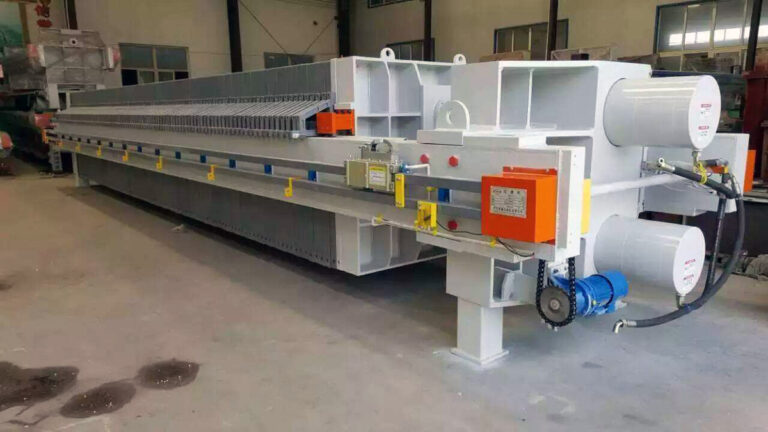
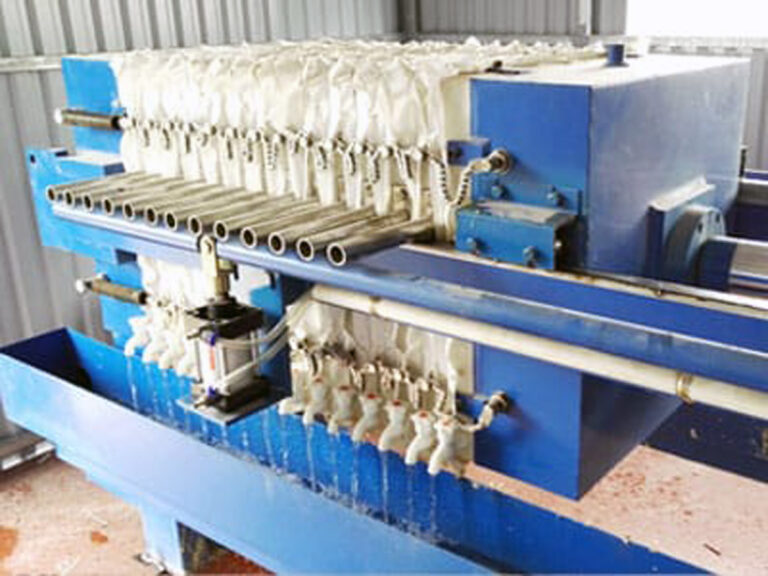
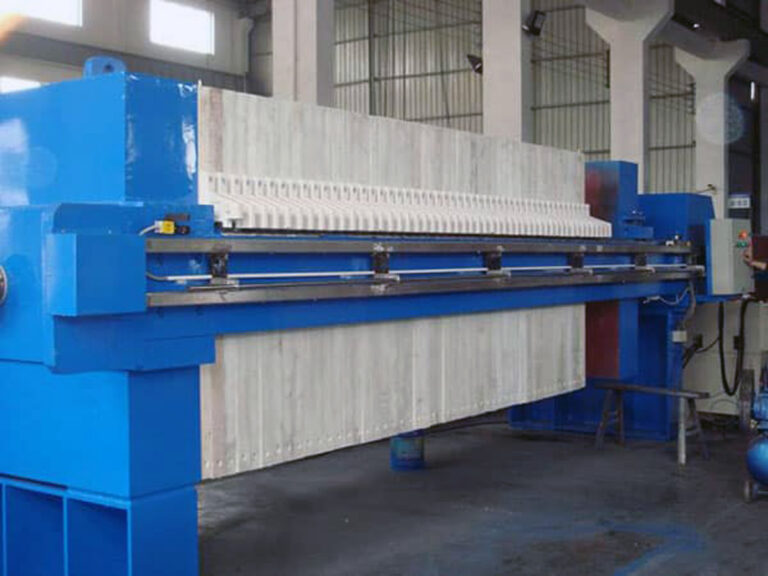
A filter press operates on a simple but effective batch principle: pressure-driven solid-liquid separation. A hydraulic cylinder clamps a series of filter plates lined with cloths within a heavy-duty steel frame. This creates a series of sealed chambers. A feed pump, typically a positive displacement type, forces slurry into these chambers under high pressure. The liquid filtrate passes through the cloth medium, exiting via ports in the plates, while solids are retained, accumulating to form a compact filter cake.
From Slurry to Solid Cake: The Cycle
The operational cycle defines throughput and efficiency. The process begins with the closing and sealing of the plate pack. High-pressure slurry feed continues until the chambers are full of solids, signaled by a spike in feed pressure. For membrane plates, a secondary squeeze cycle using water or air inflates the membranes, applying isostatic pressure for further dewatering. Finally, the press opens, and the cakes are discharged. Each step—feeding, squeezing, and discharging—offers optimization points that directly impact cycle time and final cake dryness.
Strategic Implications for Core Industries
This mechanism is foundational for managing abrasive mineral and clay-based wastes. The efficiency of this core process sets the baseline for disposal costs and water recovery rates. In mining, a few percentage points of improved cake dryness translate to massive reductions in tailings storage volume. For ceramics, consistent moisture content is critical for downstream recycling or disposal. The filter press is not ancillary equipment; it is a primary asset for waste minimization and resource recovery, with its performance parameters directly tied to regulatory compliance and operational economics.
Key Filter Plate Types: Recessed, Plate & Frame, and Membrane
Recessed Chamber Plates: The Standard for Dewatering
Recessed plates are the most common design, where each plate has a depressed, chambered surface. When clamped together, these recesses form the cavities where filter cake forms. They are a robust, cost-effective solution for general dewatering applications where cake washing is not required. Their simplicity makes them reliable, but they offer limited ability to achieve ultra-high solids content compared to more advanced designs.
Plate & Frame Designs for Product Washing
Plate and frame configurations use a sequence of solid plates and hollow frames. This design creates a clear space for cake formation and allows for efficient wash cycles. Wash fluid can be introduced to displace mother liquor, crucial in applications where product purity or solute recovery is vital, such as in certain chemical or pharmaceutical processes within the supply chain. The trade-off is a more labor-intensive operation and typically larger equipment footprint per unit of cake volume.
Membrane Squeeze Plates for Maximum Dryness
Membrane plates incorporate a flexible elastomer membrane on one or both sides. After the initial feed cycle, the membrane is inflated with water or compressed air, applying uniform secondary pressure to the cake. This isostatic squeeze can achieve significantly drier cakes—often with 5-15% less moisture than recessed plates—and can shorten cycle times by reducing the required initial feed period. The choice to invest in membrane technology is a direct calculation of the value of drier cake against higher capital cost and slightly more complex maintenance.
Selecting the Right Plate for Your Outcome
Selecting the optimal plate type is a primary process optimization lever. It’s a decision that directly trades capital expenditure against long-term operational outcomes like disposal cost, product value, and throughput. According to industry specifications, the performance differences are clear. We compared cycle data and found membrane plates often justify their premium in high-volume or water-sensitive applications through reduced haulage fees and enhanced water recovery.
| Tipo de placa | Aplicativo principal | Key Advantage | Secura típica do bolo |
|---|---|---|---|
| Câmara rebaixada | General dewatering | Efficient, common design | Padrão |
| Placa e moldura | Product washing | High purity, thorough wash | Padrão |
| Aperto de membrana | Maximum dryness | Secondary isostatic pressure | Significantly drier |
Fonte: Documentação técnica e especificações do setor.
Technical Sizing and Capacity for Mining, Ceramics & Stone
Calculating Capacity: Cake Volume is King
Sizing a filter press begins with the volume of solids processed per cycle, expressed as the total cake volume in cubic feet or liters. This is a function of the number of plates and the chamber volume of each plate, which correlates with plate dimensions (e.g., 800mm, 1500mm, 2000mm). An easily overlooked detail is the inclusion of an expansion piece in the frame, a critical allowance for future production increases without requiring a completely new press.
The Automation Threshold
Capacity dictates feasible automation, creating a clear trade-off between capital and labor. Small-scale operations with presses under 50 cubic feet often utilize manual plate shifting. However, for medium to large-scale projects in mining or ceramics, full automation becomes not just an option but a necessity for consistent, safe, and cost-effective 24/7 operation. Investing in a manual system for a 250 ft³ application is a strategic error, guaranteeing high operational costs and competitive disadvantage in labor productivity.
Matching Size to Industry Scale
The required capacity must align with both current throughput and future scalability plans. A common mistake is undersizing to save on initial cost, which leads to multiple parallel presses and higher operational complexity. Conversely, oversizing can lead to inefficient cycles and poor cake release. The capacity decision locks in your operational model for years.
| Press Size (Cake Volume) | Nível de automação | Plate Size Range | Industry Fit |
|---|---|---|---|
| < 50 ft³ | Manual systems | 470mm – 1500mm | Small-scale operations |
| 50 – 250 ft³ | Semi-automático | 800mm – 1800mm | Medium-scale projects |
| > 250 ft³ | Full automation | 1500mm – 2000mm+ | Mining, large-scale ceramics |
Fonte: Documentação técnica e especificações do setor.
Frame Design and Automation: Sidebar vs. Overhead Beam
Sidebar (EP) Frames: Cost-Effective for Limited Scale
The sidebar, or end-post (EP), frame features two large vertical beams at each end of the plate pack. This design offers a lower initial cost and is well-suited for smaller, manually operated presses. Its primary advantage is ease of expansion; adding plates to increase capacity is straightforward. However, plate shifting and cloth washing are more cumbersome, making it less ideal for large, fully automated systems.
Overhead Beam (QP) Frames: Built for Automation
The overhead beam, or question-post (QP), frame uses a single reinforced beam above the plate pack from which the plates are suspended. This design provides unobstructed access to both sides of the plates, facilitating fast automatic plate shifting, easier cloth washing, and simpler maintenance. It represents a higher initial investment but is the standard for large-scale, continuous operations where speed, reliability, and operator safety are paramount.
The Path Dependency of Frame Choice
This decision creates significant path dependency, locking operations into a specific scalability trajectory. For a mining operation planning decades of service, the overhead beam is typically essential. It integrates seamlessly with fully automatic PLC-controlled cycles, including feeding, squeezing, cake discharge, and even cloth washing. The sidebar frame, while initially cheaper, may limit future automation upgrades and increase long-term labor costs.
| Frame Type | Cost & Scalability | Primary Operation Mode | Melhor para |
|---|---|---|---|
| Sidebar (EP) | Lower cost, easy expansion | Manual plate shifting | Small-to-medium presses |
| Overhead Beam (QP) | Investimento inicial mais alto | Fast automatic shifting | 24/7 large-scale operations |
Fonte: Documentação técnica e especificações do setor.
Selecting Filter Cloth and Plate Materials for Your Slurry
Plate Material Compatibility
Filter plates are most commonly made from polypropylene for its balance of chemical resistance, weight, and cost. However, highly abrasive slurries, elevated temperatures (>80°C), or strongly acidic/alkaline conditions demand alternative materials. Cast iron plates handle abrasion and heat but are susceptible to corrosion. Stainless steel offers superior corrosion resistance for harsh chemical environments. This selection is not an afterthought; compliance and contamination risk must be designed into the equipment from the outset.
Filter Cloth: The Critical Interface
The filter cloth is the functional interface where separation occurs. Polypropylene is the standard fabric, but polyester may be selected for higher temperature resistance or specific chemical compatibility. Fabric weave (e.g., plain, satin, twill) and surface finish are chosen based on particle size, shape, and desired cake release characteristics. A poorly selected cloth will blind quickly, reducing throughput and increasing operational headaches.
The Non-Negotiable of Cloth Management
Beyond initial selection, rigorous cloth management is a core operational discipline. Precoat application with diatomaceous earth is not optional for fine particle slurries; it protects the cloth and improves filtrate clarity. Regular inspection and cleaning protocols, potentially using automated cloth washers, are essential for sustained performance. Industry experts recommend treating cloth life and performance as a key performance indicator, as it directly impacts operational cost and consistency.
| Componente | Standard Material | Challenging Slurry Material | Key Selection Driver |
|---|---|---|---|
| Filter Plate | Polipropileno | Nylon, cast iron, stainless steel | Chemical resistance, temperature |
| Filter Cloth | Polypropylene fabric | Polyester, specialized fabrics | Particle size, shape, chemistry |
Fonte: ISO 2942:2012. This standard’s methodology for verifying fabrication integrity and detecting bypass leaks is critical for ensuring the leak-tightness and structural integrity of filter plates and cloths, which is paramount for separation efficiency and safety in corrosive or high-pressure applications.
Optimizing Operation: Feed Systems, Core Blow, and Precoat
The Feed System: Maintaining Constant Pressure
A positive displacement pump, such as a diaphragm or piston pump, is non-negotiable for efficient filter press operation. Unlike centrifugal pumps, it provides a constant flow against the increasing resistance of the forming cake, ensuring shorter cycle times and more consistent cake formation. The pump must be sized to deliver the required pressure, often up to 225 psi (15 bar) or higher for final pressing stages.
Core Blow and Air Drying
At the end of the feed cycle, residual liquid remains in the feed channels within the plates. A core blow cycle introduces compressed air to evacuate this liquid, delivering a measurably drier final cake. This step is critical for maximizing water recovery and minimizing weight. The integrity of the plate feed ports and seals during this pressurized air blow is essential, relating directly to principles of pressure containment found in standards like ISO 2941:2014.
Precoat and the Ancillary Ecosystem
For slurries with fine, compressible, or gelatinous particles, a precoat system is vital. It deposits a layer of inert material (e.g., diatomaceous earth) on the cloth before filtration, preventing blinding and protecting the medium. Optimizing operation means viewing the press not in isolation but as the center of a “cake handling ecosystem.” Neglecting to budget for integrated accessories—automatic cloth washers, drip trays, cake conveyors, and filtrate tanks—creates bottlenecks, safety hazards, and undermines the ROI of the core asset.
| Auxiliary System | Standard Component | Finalidade | Critical For |
|---|---|---|---|
| Feed System | Positive displacement pump | Constant feed pressure | All operations |
| Core Blow | Compressed air system | Evacuates residual liquid | Drier cake |
| Precoat | Diatomaceous earth layer | Protects cloth, improves clarity | Fine particle slurries |
Fonte: ISO 2941:2014. The burst pressure rating principles for filter element housings are directly relevant to validating the integrity of filter press feed systems and chambers under the operational pressures required for efficient dewatering and core blow cycles.
Industry-Specific Applications and Implementation Notes
Mining and Tailings: Abrasion and Water Recovery
In mining, the primary challenges are extreme abrasion and the strategic imperative of water recovery. Presses require robust construction, often with hardened plate materials. Membrane plates are frequently specified to achieve the highest possible cake dryness, reducing tailings storage volume and reclaiming process water—a critical value driver in water-stressed regions. The system must be fully automated to handle continuous operation.
Ceramics and Clay Processing: Consistency and Compatibility
For ceramics, slurry chemistry is key. Plate and cloth materials must be compatible with deflocculants and other additives. Consistent cake moisture is vital whether the cake is destined for landfill or reintroduction into the production process. The need for wash cycles to recover valuable materials may dictate a plate and frame configuration for certain specialty applications.
Stone Processing: Dust Control and Waste Reduction
In stone processing, such as granite or quartz slab production, the filter press performs a dual function. The closed system effectively contains hazardous crystalline silica dust during dewatering. Simultaneously, producing a dry, solid cake dramatically reduces the weight and cost of waste disposal. This reframes the equipment from a waste handler to a critical component for environmental health, safety compliance, and cost control. For a detailed look at systems designed for these demanding environments, review industrial filtration equipment specifications.
A Step-by-Step Framework for Filter Press Selection
Step 1: Define Process Requirements
Begin with a rigorous analysis of the slurry: solids concentration, particle size distribution, pH, temperature, and abrasiveness. Quantify the required daily solids throughput and define the target cake dryness percentage. These parameters are non-negotiable inputs that drive every subsequent decision.
Step 2: Select Plate Type and Frame Design
Map your process requirements to the plate type. Is maximum dryness (membrane), product washing (plate & frame), or cost-effective dewatering (recessed) the priority? Then, determine the frame design based on your capacity and automation vision from the sizing analysis. This step locks in the core machine configuration.
Step 3: Specify Materials and Ancillary Systems
Choose plate and cloth materials based on the slurry’s chemical and physical characteristics. Then, design the complete support system: feed pump, core blow compressor, precoat system, cake discharge conveyors, and cloth washer. This “ecosystem” view prevents costly oversights.
Step 4: Evaluate Vendors on Total System Performance
Finally, evaluate suppliers not just on the press price, but on their engineering support, ability to deliver a optimized, integrated system, and the reliability of their aftermarket service network. The market is shifting toward vendors who can guarantee total system performance and provide long-term operational support.
The selection process hinges on three interconnected priorities: aligning plate technology with your specific cake dryness goal, choosing a frame and automation level that matches your operational scale and labor model, and specifying construction materials that ensure longevity against your slurry’s chemical and physical demands. This technical framework moves the decision beyond simple equipment procurement to strategic process design.
Need professional guidance to specify a filter press system that meets your mining, ceramics, or stone processing challenges? The engineers at PORVOO can help translate your process data into an optimized technical specification.
Perguntas frequentes
Q: How do you choose between recessed, membrane, and plate & frame filter plates for a mining application?
A: Your choice directly targets specific dewatering outcomes. Recessed plates are efficient for general slurry dewatering. Membrane plates apply secondary isostatic pressure for a significantly drier cake, maximizing water recovery—a key value in water-stressed regions. Plate and frame designs facilitate thorough cake washing but require more manual labor. This means operations prioritizing ultimate dryness and water reuse should specify membrane plates, while those needing product purity may accept the operational cost of a plate and frame system.
Q: What is the relationship between filter press capacity, automation, and long-term operational cost?
A: Capacity, defined by plate dimensions and count, dictates your feasible automation level and creates a capital vs. labor trade-off. Smaller units under 50 cubic feet often use manual systems, while larger presses exceeding 250 cubic feet mandate full automation to be viable. For core industries like mining, advanced automation is becoming the default for continuous operations. If your project involves medium-to-large volumes, investing in a manual system risks premature obsolescence and locks in higher long-term labor costs, undermining ROI.
Q: When is an overhead beam frame design essential versus a sidebar frame for a filter press?
A: The frame design creates a critical path dependency for operational scalability. A sidebar frame offers lower cost and is suitable for small-to-medium presses with manual plate shifting. An overhead beam frame supports faster automatic plate shifting, simplifies maintenance, and provides better ergonomics. This means facilities planning for 24/7 operations, like in large-scale mining or ceramics, should prioritize the overhead beam design, as it integrates seamlessly with fully automated, PLC-controlled cycles for feeding, squeezing, and cake discharge.
Q: How do industry standards for hydraulic filter integrity apply to filter press design and validation?
R: Padrões como ISO 2942:2012 for verifying fabrication integrity and detecting bypass leaks provide critical methodologies for ensuring the leak-tightness of filter press chambers and membrane plates. Furthermore, ISO 2941:2014 outlines test methods for burst pressure ratings, which are directly relevant to validating that plates and frames can withstand operational pressures. This means engineers specifying or validating filter presses should apply these hydraulic system principles to ensure separation efficiency, safety, and structural reliability under load.
Q: What auxiliary systems are non-negotiable for optimizing filter press performance and safety?
A: Sustained performance requires a complete “cake handling ecosystem.” This includes a positive displacement pump for constant feed pressure, a core blow system using compressed air for final cake dryness, and often a precoat system for fine particles. Neglecting integrated accessories like automatic cloth washers, drip trays, and cake conveyors creates operational bottlenecks and safety hazards. For projects where ROI depends on consistent throughput and dry cake, you must budget for these ancillary components from the outset, not as afterthoughts.
Q: How does filter cloth and plate material selection manage compliance and contamination risk?
A: Material choice is a primary design control for regulatory and purity constraints. While polypropylene is common for plates, highly abrasive or acidic slurries may require cast iron or stainless steel. Cloth fabric (e.g., polyester, polypropylene) is selected based on particle size and slurry chemistry. This means compliance in sensitive applications cannot be managed by procedure alone; it must be engineered into the equipment. If your process handles aggressive chemistries or has strict product purity requirements, material compatibility becomes a critical vendor selection criterion.
Q: What is the first step in a disciplined framework for selecting a new filter press system?
A: The foundational step is a thorough analysis of your specific slurry characteristics and a clear definition of required process outcomes, primarily final cake dryness and processing capacity. All subsequent decisions on plate type, automation, and materials depend on this baseline data. This means before engaging vendors, you should conduct representative lab testing to quantify slurry behavior under pressure, as guessing these parameters leads to undersized or inefficient system selection and costly operational adjustments later.