Ceramic and stone processing facilities face a persistent operational challenge: achieving consistent, compliant wastewater treatment while controlling escalating chemical and labor costs. Manual dosing of coagulants and flocculants is inherently reactive, leading to treatment upsets, chemical waste, and regulatory risk during production surges. The complexity of managing fine colloidal particles from cutting and polishing further complicates this task, demanding a level of precision beyond manual intervention.
The shift toward automation is no longer a luxury but a strategic necessity for operational efficiency and sustainability. An automatic PAM/PAC dosing system transforms wastewater treatment from a variable cost center into a controlled, data-driven process. This guide details the technical implementation, from core components to financial justification, providing a framework for engineering and procurement decisions.
Core Components of an Automatic Dosing System
Defining the System Architecture
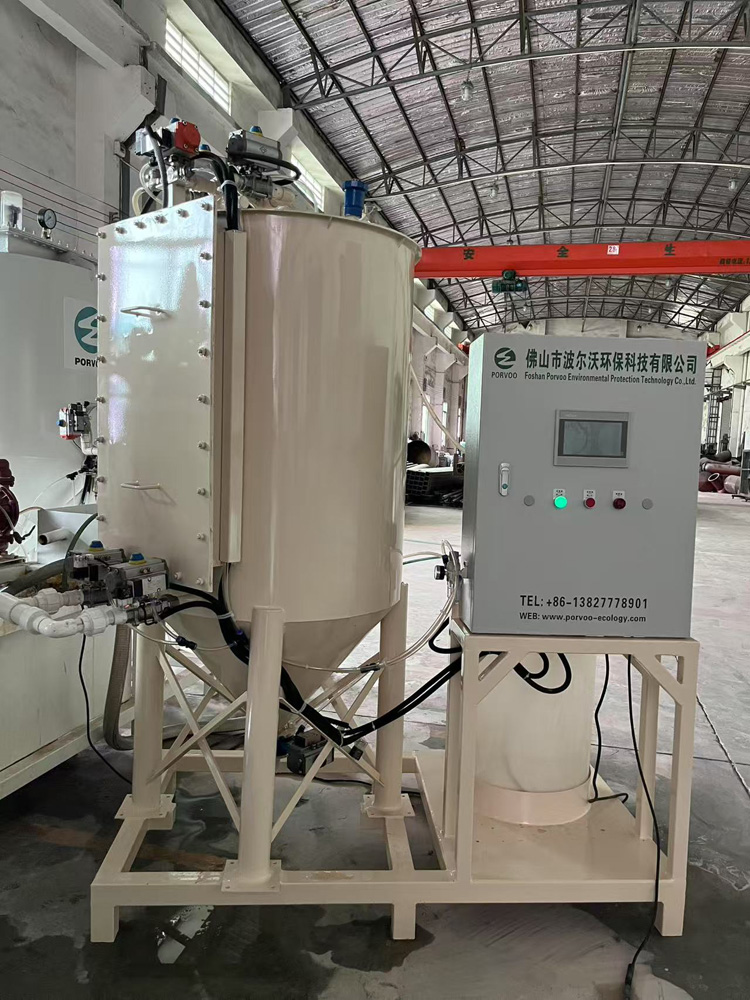
An automatic dosing system is an integrated assembly of mechanical, electrical, and control subsystems. Its primary function is to store, prepare, and inject precise quantities of Polyaluminum Chloride (PAC) and Polyacrylamide (PAM) into a wastewater stream. The reliability of the entire treatment process hinges on the compatibility and durability of each component, selected specifically for the aggressive chemical environment of ceramic wastewater.
Critical Hardware Selection
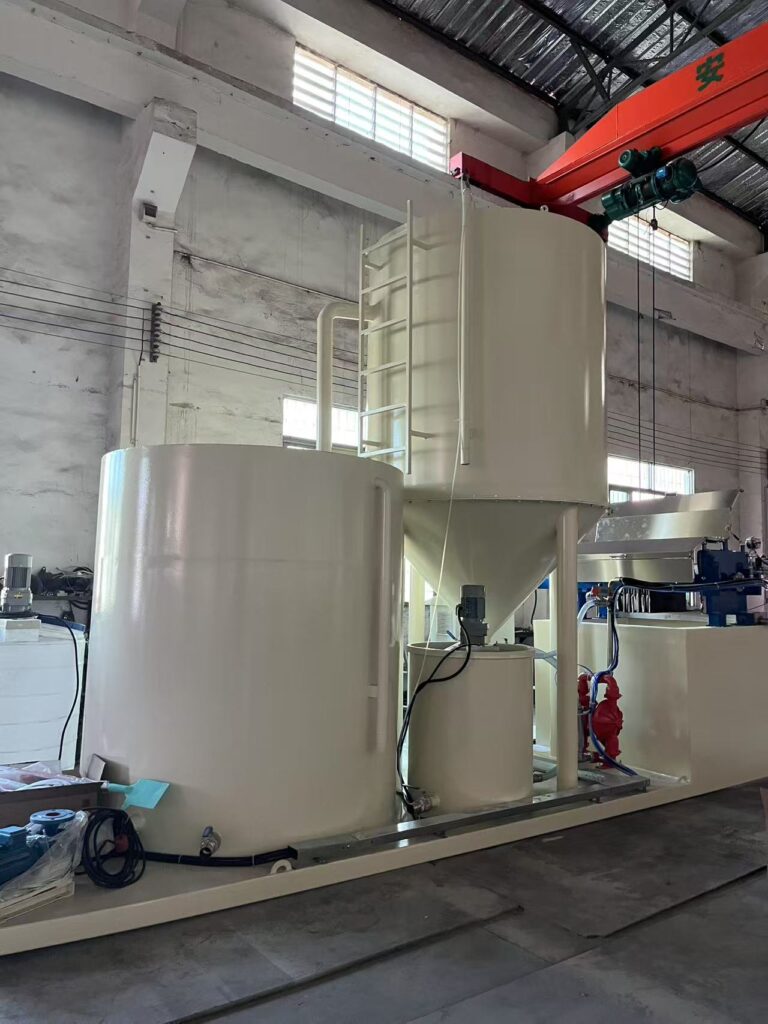
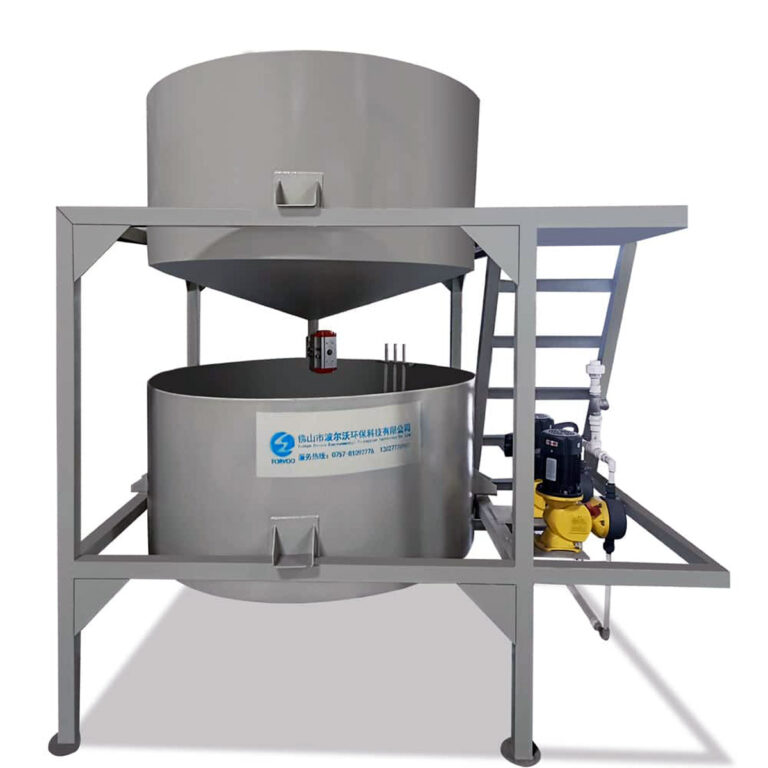
The hardware layer consists of chemical storage tanks, dosing pumps, and preparation units. Tanks must be constructed from materials resistant to both acidic PAC and viscous PAM solutions. Dosing pumps—often progressive cavity or diaphragm types—are selected for their precision and chemical compatibility. For dry polymer, an automatic PAM preparation unit with a wetting funnel and controlled maturation tank is non-negotiable to ensure complete activation and prevent clogging. A common oversight is underestimating the supply chain complexity for these specialized components; partnering with an integrator who ensures interoperability is often more critical than sourcing the cheapest individual parts.
The Intelligence Layer: Control and Sensing
System intelligence is delivered by a Programmable Logic Controller (PLC) and Human-Machine Interface (HMI). This layer processes real-time signals from inline flow meters and, in advanced setups, process analyzers like turbidimeters. The PLC executes the dosing logic, commanding the pumps. The selection of sensors and their integration into the control loop is what separates basic automation from intelligent process management. We’ve observed that the most frequent point of failure in new installations is not the pump itself, but the calibration drift of the supporting flow meter or pH probe.
Component Interoperability Framework
The performance of an automatic dosing system depends on the seamless interaction of its parts, as defined by technical specifications.
| Componente | Função principal | Principais critérios de seleção |
|---|---|---|
| Chemical Storage Tanks | Hold PAC & PAM solutions | Materiais resistentes à corrosão |
| Dosing Pumps | Precision chemical injection | Chemical compatibility (PAC/PAM) |
| PAM Preparation Unit | Automatic polymer dissolution | Wetting funnel & maturation tank |
| PLC & HMI | System intelligence & control | Process signals from sensors |
| Flow Meters | Measure wastewater flow | Real-time signal to PLC |
Fonte: GB/T 32154-2015 Technical specification of automatic dosing device for water treatment. This national standard specifies the technical requirements and performance criteria for automatic dosing devices, directly governing the design and integration of the core components listed, such as pumps, controllers, and their interoperability.
How Automatic Dosing Systems Work in Wastewater Treatment
The Coagulation-Flocculation Process
The system automates the fundamental physical-chemical process of coagulation and flocculation. PAC, a coagulant, neutralizes the electrical charges on fine suspended and colloidal particles (like silica and clay), allowing them to begin aggregating into microflocs. Subsequently, PAM, a flocculant, bridges these microflocs into large, dense aggregates that settle rapidly in clarifiers or are easily captured by filtration. Automation ensures this two-stage reaction occurs with consistent timing and chemical ratios, which is impossible to maintain with manual batch dosing.
Integration into the Treatment Train
Operationally, the dosing system is integrated between primary screening/sedimentation and the final clarification stage. Injection points are critical: PAC requires a high-energy, rapid mix zone for immediate dispersion, while PAM must be introduced into a gentle, slow-mix environment to build flocs without shearing them apart. The system’s PLC receives a continuous 4-20 mA signal from a flow meter on the main wastewater line, using this data as the primary input for chemical feed rate calculation.
From Automation to Optimization
The baseline operation is flow-proportional dosing. However, the true value is realized when the system incorporates feedback control. By adding a turbidity or streaming current analyzer on the clarified effluent, the PLC can automatically trim the chemical dose in response to actual water quality, not just flow. This closed-loop control compensates for the highly variable solids load typical in ceramic processing, optimizing chemical use and guaranteeing effluent consistency during production changeovers.
Key Control Strategies: Flow-Paced vs. Feedback Systems
Foundational: Flow-Proportional Control
The most straightforward strategy is flow-paced control. The operator sets a target dose in milligrams per liter (mg/L). The PLC multiplies this setpoint by the real-time influent flow rate to calculate and command the required pump speed. This strategy provides a essential baseline, ensuring chemical feed increases or decreases with production wastewater flow. It is effective for stabilizing processes with relatively consistent contaminant concentrations.
Advanced: Feed-Forward with Feedback Trim
For ceramic wastewater with highly variable solids loads, a feed-forward with feedback trim strategy is superior. Flow-pacing sets the base dose, but a process analyzer provides a corrective signal. If the effluent turbidity rises above setpoint, the controller increases the dose; if it falls below, the dose is reduced. This dynamic adjustment manages the core challenge of variable inlet quality. Industry experts recommend this strategy as the minimum for achieving reliable compliance and chemical savings in this sector.
The Future: Predictive Process Control
The innovation trajectory, evidenced by patents in sensor analytics, points toward predictive optimization. Future systems will use historical and real-time data to model process behavior, anticipating influent changes based on production schedules or upstream events. This allows preemptive dosage adjustments, maximizing chemical yield and reducing process lag times. It represents the shift from reactive correction to proactive, data-driven intelligence.
Comparing Control Methodologies
The choice of control strategy directly impacts system performance, chemical efficiency, and compliance reliability.
| Estratégia de controle | Primary Input | Key Advantage |
|---|---|---|
| Flow-Proportional | Influent wastewater flow rate | Baseline response to flow |
| Feed-Forward with Feedback Trim | Flow rate + effluent quality (e.g., turbidity) | Compensates for variable contaminant load |
| Predictive Optimization (Future) | Historical & predictive process data | Anticipates influent changes |
Fonte: HJ 2001-2018 Technical specification of coagulation-flocculation process for wastewater treatment. This industry standard outlines the operational requirements for coagulation-flocculation processes, which are fundamentally enabled and optimized by the advanced control strategies described for automatic dosing.
Optimizing Chemical Use: PAM and PAC Selection & Dosing
Chemical Selection for Ceramic Wastewater
Optimization starts with matching the chemistry to the waste stream. For ceramic and stone wastewater laden with negatively charged colloidal silica and clay, a high-basicity PAC is often the most effective coagulant. It is typically followed by a high-molecular-weight, anionic PAM to form large, shear-resistant flocs. Using cationic PAM as a primary flocculant here is a common error, as it can re-stabilize particles instead of bridging them. Jar testing with actual plant effluent remains the definitive method for selection.
The Criticality of Dosing Accuracy
Precise chemical selection is wasted without equally precise delivery. Dosing accuracy is a function of pump calibration, flow meter accuracy, and consistent solution viscosity. PAC solutions are corrosive and can crystallize; PAM solutions age and lose viscosity. These factors cause pump performance to drift. Strategic operational budgets must therefore include resources for regular calibration of this instrumentation layer. The return on this investment is direct chemical savings.
Operational Parameters for Mixing and Injection
Dosing point optimization is non-negotiable. PAC requires rapid, high-energy mixing (G-value > 500 s⁻¹) for instantaneous dispersion. PAM requires gentle, slow mixing (G-value 20-50 s⁻¹) to grow flocs without breakage. Injecting both chemicals at the same point or using inadequate mixing energy leads to poor floc formation and chemical overuse by 20% or more. A well-designed system manages these separate, optimized injection points.
Chemical Specifications and Performance
The efficacy of the dosing process is built upon the quality and proper application of the chemicals themselves, as defined by national standards.
| Química | Primary Role | Critical Operational Parameter |
|---|---|---|
| Polyaluminum Chloride (PAC) | Coagulant for colloidal particles | Rapid, high-energy mixing |
| Polyacrylamide (PAM) | Flocculant for aggregate formation | Gentle, slow mixing |
| System Performance | Dosing accuracy & efficiency | Calibration of pumps & meters |
Fonte: GB/T 22627-2022 Water treatment chemicals – Polyaluminium chloride e GB/T 17514-2017 Water treatment chemicals – Polyacrylamide. These standards define the technical specifications and quality of PAC and PAM chemicals, ensuring their performance and compatibility, which is the foundation for the selection and dosing optimization strategies detailed.
Addressing Ceramic & Stone Wastewater’s Unique Challenges
High and Variable Solids Load
The primary challenge is the fluctuating volume and concentration of suspended solids from cutting, grinding, and polishing cycles. An automatic system must have a turndown ratio and response time capable of matching these surges. A flow-paced system alone may under-dose during high-concentration, low-flow periods. This is why feedback control based on effluent quality is particularly valuable for this application, as it responds to the contaminant load, not just the water volume.
Prevalence of Fine and Colloidal Particles
The wastewater contains a significant fraction of sub-micron particles that resist settling. These colloids require effective charge neutralization with PAC and often higher polymer doses for effective bridging. The system design must accommodate the potential for higher chemical consumption rates compared to wastewater with larger particle sizes. In our comparisons, systems designed for general industrial wastewater often fail to achieve target clarity for ceramic slurry without significant recalibration and component upgrades.
Chemical Compatibility and System Resilience
The system wetted parts face a dual assault: acidic, corrosive PAC and viscous, adhesive PAM. Valve seats, pump heads, and tubing must be specified for this specific combination. Furthermore, the abrasive nature of the slurry itself can wear injection nozzles and erode mixing paddles. Design for resilience means selecting materials like PTFE, PVDF, and specific stainless-steel grades, and planning for easier access to wear parts during maintenance.
System Maintenance and Operational Best Practices
Non-Negotiable Instrumentation Calibration
System performance degrades with sensor drift. A disciplined maintenance regimen must include scheduled calibration of all critical instrumentation: the main flow meter, dosing pump stroke length/speed, and any process analyzers. This is not optional; it is the foundation of dosing accuracy. We recommend a monthly verification check and a full quarterly calibration using certified standards.
Polymer-Specific Preventative Care
PAM systems demand specific attention to prevent gel formation and line blockages. This includes ensuring complete powder wetting in the preparation unit, maintaining correct maturation time, and implementing automatic line flushing cycles during standby periods. For PAC systems, monthly visual inspections of tanks and lines for corrosion and crystallization are essential to prevent leaks and pump failures.
Data-Driven Predictive Maintenance
Modern systems with SCADA/HMI log vast amounts of operational data. Moving beyond preventive maintenance involves analyzing these trends. Increasing pump stroke frequency to maintain dose indicates wear. Gradual drift in a flow meter signal may predict failure. Leveraging this data transforms maintenance from a scheduled task to a predictive, condition-based activity, minimizing unplanned downtime.
Sustained Performance Through Upkeep
A systematic maintenance schedule is essential to preserve the accuracy and reliability that justifies the system’s automation.
| Foco na manutenção | Atividade principal | Frequency / Goal |
|---|---|---|
| Instrumentation Calibration | Pump & flow meter verification | Regular, non-negotiable |
| PAM System Care | Prevent polymer clogging | Routine line flushing |
| PAC System Care | Corrosion inspection | Regular tank & line checks |
| Data Utilization | SCADA/HMI trend analysis | Manutenção preditiva |
Fonte: GB/T 32154-2015 Technical specification of automatic dosing device for water treatment. The standard includes requirements for inspection, operation, and maintenance of automatic dosing devices, providing the authoritative framework for the calibration and upkeep procedures essential to sustained system accuracy and reliability.
Implementação de seu sistema: Um guia passo a passo
Phase 1: Assessment and Specification
Begin with a detailed wastewater characterization study over a full production cycle. Define peak and average flow rates, pH ranges, temperature, and solids load. Use this data to develop technical specifications that go beyond pump capacity to include required turndown ratios, control strategy (e.g., feedback trim), material compatibility, and cybersecurity requirements for networked components. This phase mitigates the risk of undersizing or specifying incompatible equipment.
Phase 2: Procurement and Partner Selection
Procurement should prioritize suppliers who offer integrated solutions with single-point responsibility. The key question is not just component cost, but the availability of local technical support for commissioning and troubleshooting. Evaluate potential partners on their experience with ceramic industry applications and their ability to provide references for similar installations, such as a specialized automatic polymer dosing system for industrial wastewater.
Phase 3: Installation, Commissioning, and Training
During installation, enforce the design specifications for dosing point locations and mixing energy. Commissioning must include loop checks, calibration of all instruments, and tuning of PID control loops for stable operation. The final, critical step is comprehensive operator training that covers not only HMI navigation but also the underlying mechanical and chemical principles, empowering them to troubleshoot basic issues and understand system alarms.
Evaluating ROI and Total Cost of Ownership
Calculating Direct Operational Savings
The direct financial return comes from three areas: reduced chemical consumption through optimization (typically 15-30%), elimination of manual labor for dosing and monitoring, and decreased sludge disposal volumes due to more efficient flocculation and drier sludge cakes. These recurring savings directly offset the capital investment and are the most straightforward component of the ROI calculation.
Accounting for Total Cost of Ownership
A realistic TCO model must include ongoing costs beyond chemicals. Budget for annual calibration services, periodic replacement of sensors (pH probes, turbidimeter lenses), spare parts inventory (pump heads, tubing), and potential software support contracts. Neglecting these costs in the financial analysis leads to unrealistic operational budgets and undermines the perceived long-term value of the system.
Quantifying Risk Mitigation and Strategic Value
The ROI analysis should also factor in risk mitigation: avoiding fines for non-compliant discharge and preventing production downtime caused by treatment process upsets. Strategically, the system enables longer-term sustainability goals. The precise control and data it provides form the foundation for water recycling initiatives, reducing freshwater intake and transforming wastewater management into a pillar of circular economy operations.
Comprehensive Financial Justification
A full evaluation of an automatic dosing system requires looking beyond the initial purchase price to all associated costs and savings.
| Cost/Saving Category | Exemplos | Impacto financeiro |
|---|---|---|
| Direct Savings | Optimized chemical consumption | Reduced operational expenditure |
| Direct Savings | Reduced manual labor | Lower staffing costs |
| Direct Savings | Lower sludge disposal volume | Reduced waste handling costs |
| Ongoing TCO | Sensor replacement, spare parts | Recurring capital expenditure |
| Risk Mitigation | Avoided compliance fines | Contingency cost avoidance |
Fonte: Documentação técnica e especificações do setor.
Implementing an automatic PAM/PAC dosing system requires three core decisions: selecting a control strategy that handles variable loads (prioritize feedback trim), budgeting for the full TCO including calibration, and choosing an integration partner with application-specific expertise. These choices determine long-term operational success and return on investment.
Need professional guidance to specify and implement a system tailored to your ceramic or stone processing effluent? The engineering team at PORVOO can provide a detailed assessment based on your wastewater profile and production targets. Entre em contato conosco para discutir os requisitos de seu projeto.
Perguntas frequentes
Q: What are the key technical standards for specifying an automatic PAM/PAC dosing system in China?
A: System design must comply with GB/T 32154-2015 for the dosing device itself. Chemical specifications are governed by GB/T 22627-2022 for PAC and GB/T 17514-2017 for PAM. This means your procurement specifications should explicitly reference these standards to ensure component interoperability and chemical performance.
Q: How do flow-paced and feedback control strategies differ for ceramic wastewater treatment?
A: Flow-paced control adjusts the chemical dose linearly with influent flow rate, providing a baseline response. A feed-forward with feedback trim strategy adds a corrective signal from a process analyzer, like a turbidimeter, to adjust for variable contaminant loads. This means facilities with highly variable slurry solids should budget for the added sensors and control logic to maintain compliance without chemical overuse.
Q: What specific maintenance tasks are critical for ensuring dosing accuracy over time?
A: You must perform regular calibration of all metering pumps and flow meters, and validate controller sensor signals. For PAM, prevent clogging by ensuring complete polymer dissolution and flushing injection lines. This disciplined focus on the instrumentation layer means operational budgets must allocate for calibration equipment and spare sensors to protect your system’s performance and chemical yield.
Q: Why is a generic off-the-shelf dosing system insufficient for stone and ceramic processing wastewater?
A: This wastewater contains a high, variable load of very fine colloidal particles like silica, requiring rapid system response and precise coagulant selection. Chemical compatibility is also critical, as wetted parts must resist both acidic PAC and viscous PAM. For projects where flow and solids concentration spike, you need application-specific engineering to handle peak loads without process upsets.
Q: What factors should we prioritize when selecting a vendor for an integrated dosing system?
A: Prioritize partners who offer complete integrated solutions and local technical support over simple component suppliers. Your technical specifications must also emphasize cybersecurity for connected components and data integration capabilities. This means you should evaluate vendors on their ability to ensure long-term subsystem interoperability and protect against network-based process failures.
Q: How does the coagulation-flocculation process standard relate to automatic dosing system operation?
A: The HJ 2001-2018 standard provides the technical framework for the entire treatment process that dosing systems automate, covering design, operation, and maintenance. Your system’s control logic and dosing points must align with the mixing energy and sequence requirements defined for effective floc formation. This ensures your automated system meets the core engineering and compliance expectations for the treatment stage.
Q: Beyond chemical savings, how do you justify the ROI for an advanced automatic dosing system?
A: Justification includes reduced labor, lower sludge disposal costs from efficient flocculation, and mitigated risk of non-compliance fines. The system’s data also enables future closed-loop water recycling. If your operation requires strong sustainability reporting, plan for this investment as a foundation for circular economy goals, not just a treatment cost.