Most industrial water recycling projects that underperform were scoped correctly on paper. The recovery rate looked reasonable, the treatment train seemed matched to the contaminant profile, and the supplier had comparable references. What the specification missed was the specific quality window each reuse point actually requires, how much buffer storage the production schedule genuinely demands, and what happens to the loop when a batch cleaning event hits the system at full slurry load on a Monday restart. The downstream consequence of that omission rarely surfaces at commissioning — it surfaces months later as polishing line stoppages, solids accumulation in buffer tanks, or reuse water that drifts out of spec during the exact production conditions it was sized to handle. The decisions that prevent those failures need to be fixed before procurement, not negotiated during retrofit. What follows gives buyers the criteria to make those calls with defensible grounding.
Which reuse-water quality targets should be fixed before system sizing
Sizing a recycling system before defining distinct quality targets for each reuse point inverts the design sequence in a way that is difficult to correct later. Treatment train selection, membrane or filtration stage placement, and buffer tank sizing all depend on knowing what the water needs to achieve at the point of use — not on a plantwide average that blends requirements from cooling circuits, process washing, and boiler feed into a single, often over-specified target.
The practical planning step is to map each intended reuse point and assign it a quality window based on what that application can actually tolerate. Boiler makeup water demands low suspended solids and conductivity control. Cooling tower makeup can tolerate a broader solids band. Process rinsing in low-contact applications may accept parameters that would be unacceptable upstream. Treating all of these to the most demanding spec in the plant adds cost and treatment complexity without improving outcomes for the less demanding users — and it makes the system more fragile, because any deviation in the influent that pushes water below the strictest target takes the entire reuse loop offline rather than just redirecting flow away from the sensitive endpoint.
Where suspended solids measurement is needed to verify quality at defined reuse points, ISO 11923:1997 provides a consistent testing framework — useful for setting measurement discipline at each endpoint, though the targets themselves must be defined by the process requirements of each specific application. The quality targets that matter most are the ones the buyer defines before the treatment architecture is proposed, because once the system is sized to a wrong or generic spec, realigning it costs more than setting the spec correctly at the start.
How buffer storage changes the true stability of the recycle loop
Buffer storage is consistently treated as a secondary sizing parameter — something adjusted late in the design process to fit available footprint or capital budget. That sequencing is a structural vulnerability. The buffer tank is what separates a recycle loop that holds quality during production variability from one that contaminates downstream processes the first time influent conditions deviate from steady state.
From operational practice, a buffer storage ratio below 0.33 days of daily treatment capacity creates high risk of contamination and process upset during minor surges. The recycle loop in that range has no meaningful ability to absorb short-duration quality excursions — a batch cleaning pulse, a slurry surge at shift change, or a restart after a weekend shutdown can push degraded water directly into the reuse stream before treatment has time to respond. At 0.33 to 0.48 days, the loop stabilizes: that range functions as a structural minimum for plants operating under standard production fluctuations. Above 0.48 days, the system gains additional margin to dampen variable flow peaks and elevated solids loading events, which matters most for plants with high-intensity batch processing or irregular production schedules.
| Buffer Storage Ratio (days of daily treatment capacity) | Expected Recycle Loop Stability | Implication for Contamination & Upset Risk |
|---|---|---|
| <0.33 | Unstable | High risk of contamination and process upset; loop prone to disruption from minor surges |
| 0.33–0.48 | Stabilizes | Contamination risk substantially reduced; minimum operational buffer for standard fluctuations |
| >0.48 | Stable with additional margin | Further dampens variable flow peaks and solids loading; supports higher production rhythm assurance |
The implication for procurement is direct: treat the 0.33-day threshold not as an optional design preference but as a minimum below which the recycle loop’s stability is operationally difficult to defend. Suppliers who size buffer based on footprint constraints alone, without referencing production rhythm data, are likely to deliver a system that performs adequately under average conditions and degrades under the exact conditions — peak loads, cleaning events, restarts — that stress it most.
When fit-for-purpose reuse is better than one strict plantwide target
The appeal of a single strict plantwide target is administrative simplicity: one quality spec, one set of treatment controls, one compliance position. The operational cost of that simplicity is that the system must treat every water stream to the ceiling of the most demanding reuse point, even when most of the plant’s water demand could be met with lower-grade recycled water at substantially lower treatment intensity.
The fit-for-purpose approach disaggregates that assumption. Where a plant can operationally separate critical water users — boiler makeup, precision rinsing, chemical dosing dilution — from noncritical users such as floor washing, equipment cooling, or dust suppression, applying distinct quality windows to each avoids over-treatment for applications where it adds no process value. EPA water reuse guidance supports this as a design principle: allowing less stringent treatment for water with limited human contact reduces cost and energy intensity without compromising the streams that genuinely require higher purity. The trade-off is that stream segregation must be operationally feasible and maintained. If piping, valve logic, or operational discipline cannot reliably keep segregated streams separate, fit-for-purpose quality windows create contamination risk rather than resolving it.
| Approach | Treatment Cost & Energy Intensity | Freshwater Demand | Uptime & Operational Complexity | When It Fits Best |
|---|---|---|---|---|
| Single strict plantwide target | Higher – treats all water to the most demanding reuse spec | Lower – all streams can be reused at highest quality | Lower uptime if any stream fails; high complexity from rigid control | All water users need identical high purity and segregation is impractical |
| Fit‑for‑purpose quality windows | Lower – avoids over‑treatment for non‑critical uses | May be slightly higher; still meets overall savings goals through stream segregation | Higher uptime because non‑critical uses tolerate variability; moderate complexity | Plant can separate critical (e.g., boiler) from non‑critical users and define distinct quality bands |
The failure mode to watch for is applying a fit-for-purpose architecture to a plant where stream segregation is theoretically possible but practically inconsistent. In those environments, the single strict plantwide target — despite its higher treatment cost — often delivers better uptime because it removes the dependency on operational discipline to maintain stream separation. The right choice depends on whether the plant can actually enforce the segregation, not on which approach looks better in a design document.
Why production rhythm matters as much as average daily flow
Average daily flow is a useful planning input, but sizing a treatment system to that figure alone creates a predictable failure pattern: the system handles steady-state operation without issue, then is overwhelmed the moment production generates a short-duration surge that exceeds its instantaneous capacity. The consequences — treatment overload, solids breakthrough into the reuse tank, contamination of downstream processes — are proportional to how far the peak demand exceeds what the system was designed to absorb.
Batch cleaning events are the most common source of that gap. A pressure washing cycle drawing 80 GPM presents a very different hydraulic demand than the same volume of water spread across an eight-hour shift. If the treatment system and buffer tank are sized to the average, the peak event has nowhere to go except through the loop partially treated or directly to drain — neither of which is operationally acceptable when the reuse stream is feeding active production equipment. Weekend shutdowns create a related risk: restart loads often include accumulated solids from idle tanks, cleaning residues, and re-suspension events that hit the treatment system simultaneously rather than sequentially.
| Design Basis | What It Captures | Risk if Used Alone | What Procurement Should Specify |
|---|---|---|---|
| Average daily flow only | Steady‑state continuous demand | System overwhelmed by batch cleaning, peak slurry loads, or equipment surges; production stoppage and contaminated reuse loop | Demand that supplier demonstrate capacity at peak flow points (e.g., 80 GPM to a pressure washer) and prove storage buffering for batch events |
| Production‑rhythm and peak‑flow aware | Surges, batch‑cleaning pulses, and weekend‑shutdown re‑start peaks | Lower risk of undershooting during high‑demand periods | Reduced shutdown risk and better water quality consistency |
The procurement implication is that suppliers should be required to demonstrate capacity at peak flow conditions representative of the buyer’s actual production schedule, not just at average daily demand. That means providing real production data — batch schedules, cleaning event durations and flow rates, shutdown and restart sequences — as part of the design brief, and requiring the supplier to show how those events are absorbed by the treatment train and buffer storage without degrading reuse quality. A supplier whose performance claim is based on average flow data alone has not been tested against the conditions that will actually stress the system.
How fallback discharge and bypass logic protect plant uptime
A recycling system without a credible fallback discharge path is not a resilient system — it is a single point of failure in the plant’s water balance. When influent quality exceeds treatment capacity, when buffer tanks are exhausted during a prolonged surge, or when a treatment component fails during a live production shift, the only available response without bypass logic is to shut down either the treatment system or the production line it serves. In practice, that decision almost always goes against the treatment system, which means degraded water enters the reuse loop under pressure to keep production running.
Bypass and fallback discharge provisions should be treated as failure-risk mitigation planning criteria rather than add-on features. The absence of a defined bypass path is an operational vulnerability — not a design preference that can be addressed post-commissioning. The design question is not whether to include bypass logic, but where to route water that falls outside the reuse quality window, at what trigger conditions the bypass activates, and how the plant returns the loop to normal operation after a bypass event without accumulating solids in storage or contaminating the reuse tank.
Fallback discharge also carries regulatory standing that needs to be resolved before the system is approved, not after. The discharge path must align with the plant’s existing permits — routing temporarily off-spec water to a location or receiving body not covered by the permit creates compliance exposure that is harder to defend retroactively. Confirming that the fallback path is permitted, sized correctly, and integrated into the operating model before procurement locks in the architecture is a verification step that protects both uptime and audit defensibility.
How ceramic and stone production benchmarks should shape reuse expectations
Ceramic and stone processing plants generate wastewater profiles that place specific and often underestimated demands on recycling systems. Cutting slurries, polishing effluents, and abrasive wash streams carry high suspended solids concentrations, fine particle fractions that resist rapid settling, and pH variability tied to chemical addition during processing. These characteristics mean that reuse quality targets appropriate for lighter manufacturing contexts may be inadequate to prevent solids accumulation in buffer storage or abrasion in downstream equipment.
The Ceramic Manufacturing Industry BREF provides process-reference benchmarks for contaminant loading and reuse quality considerations in these operations. Used as a comparator, BREF-derived benchmarks help buyers pressure-test supplier performance claims against known industry operating conditions — not as guaranteed performance targets transferable to every facility, but as a realistic range against which proposed system specifications can be evaluated. If a supplier’s claimed treated-water quality or solids removal efficiency sits well outside the range that comparable ceramic or stone operations have documented, that gap warrants explanation before the architecture is approved.
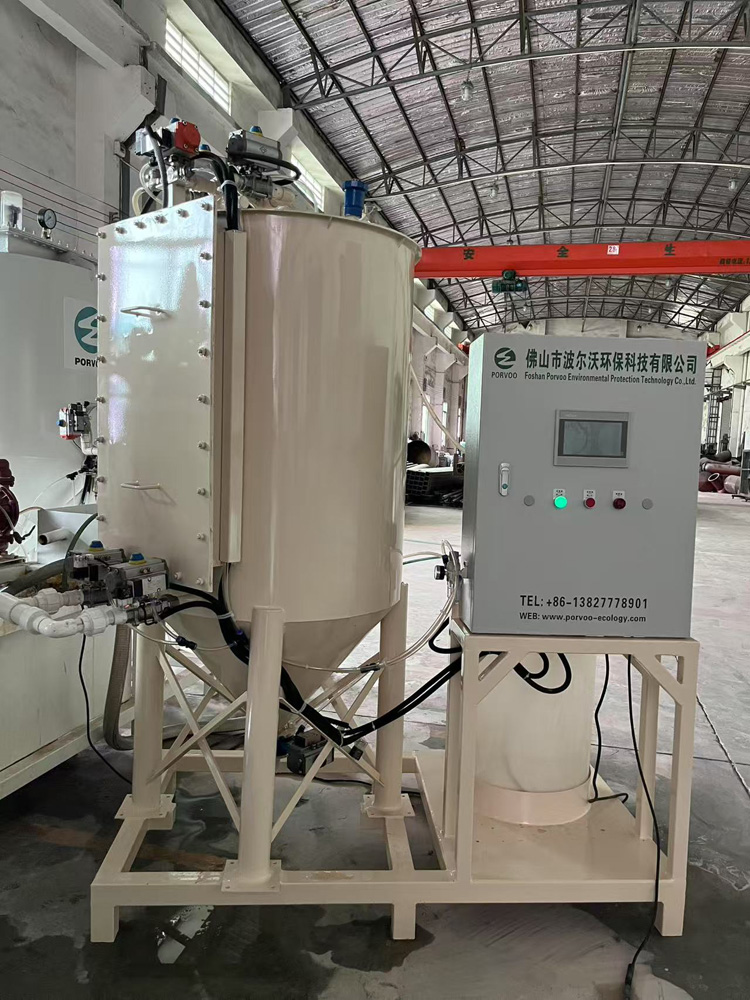
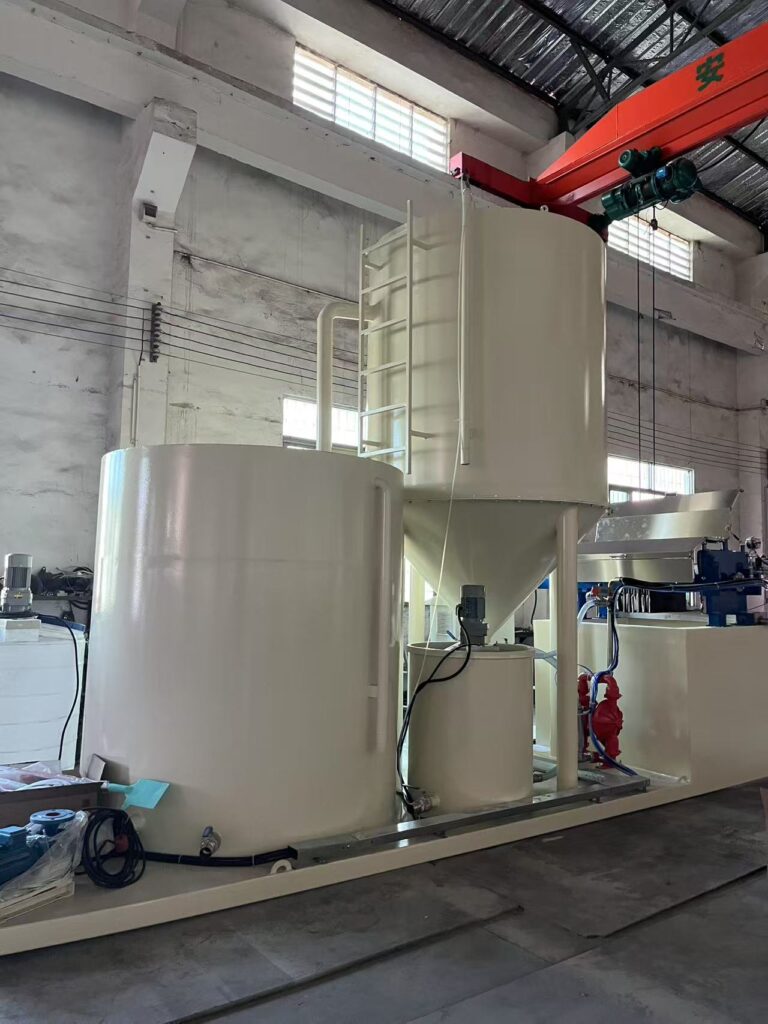
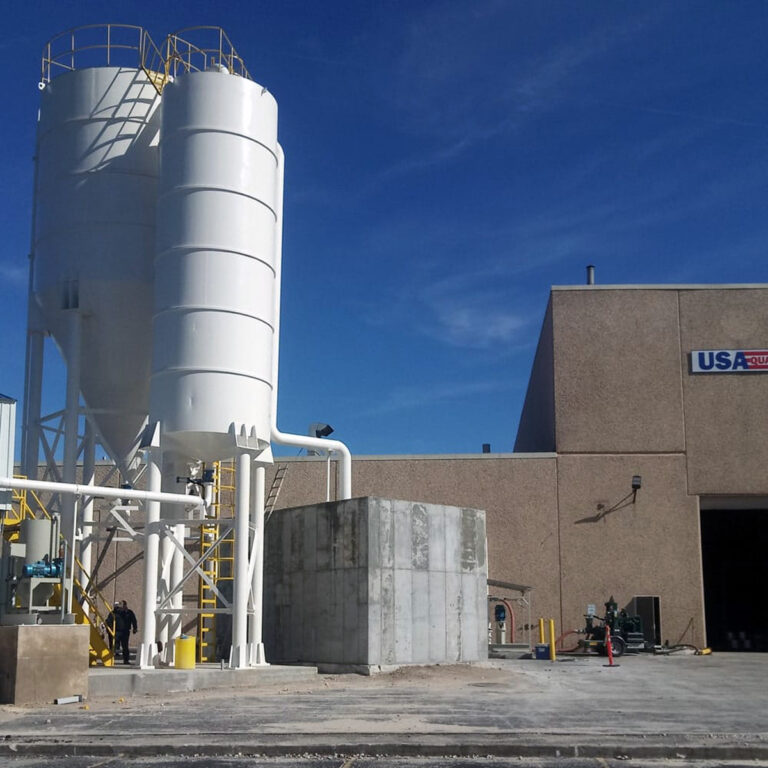
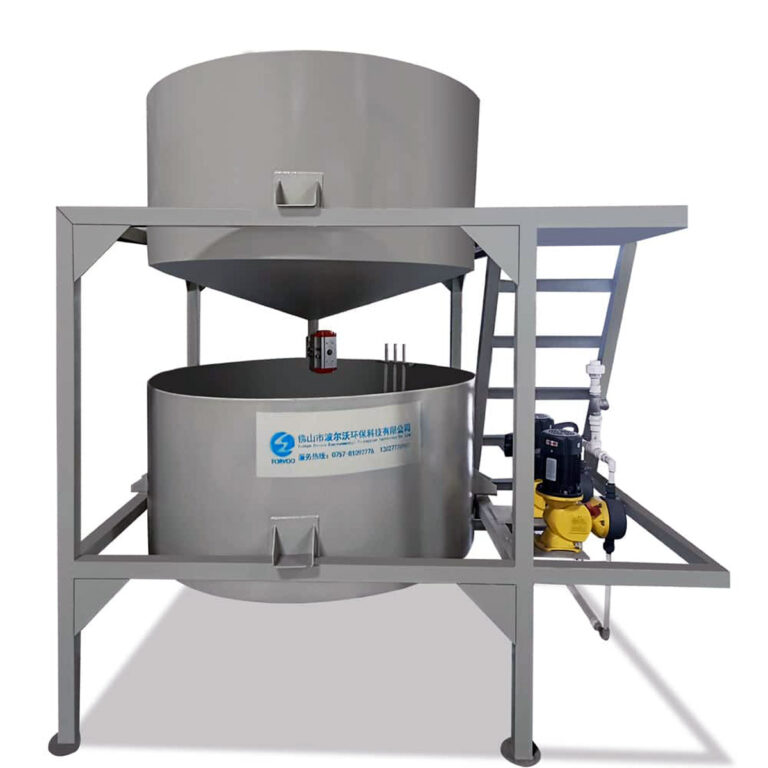
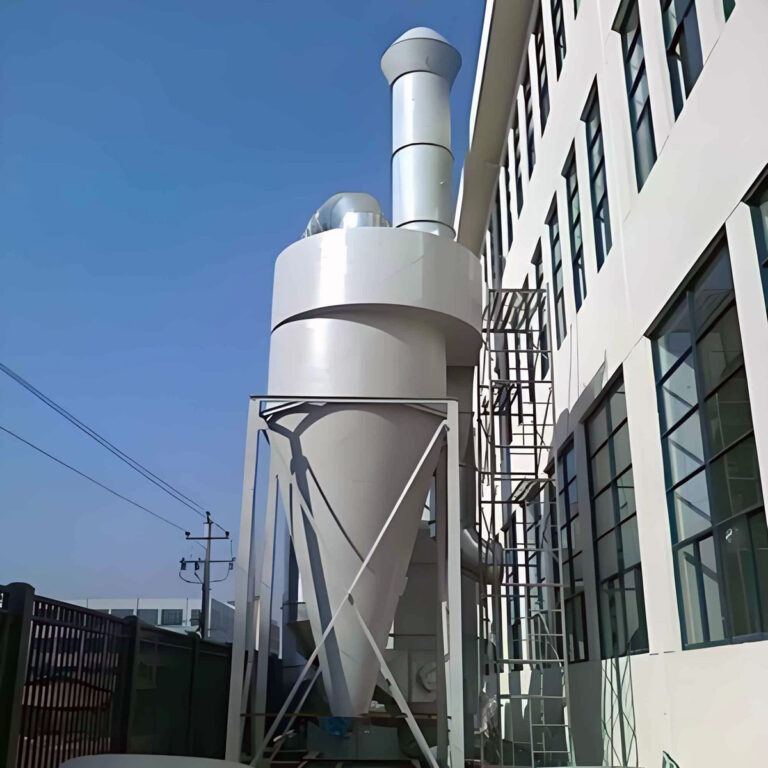
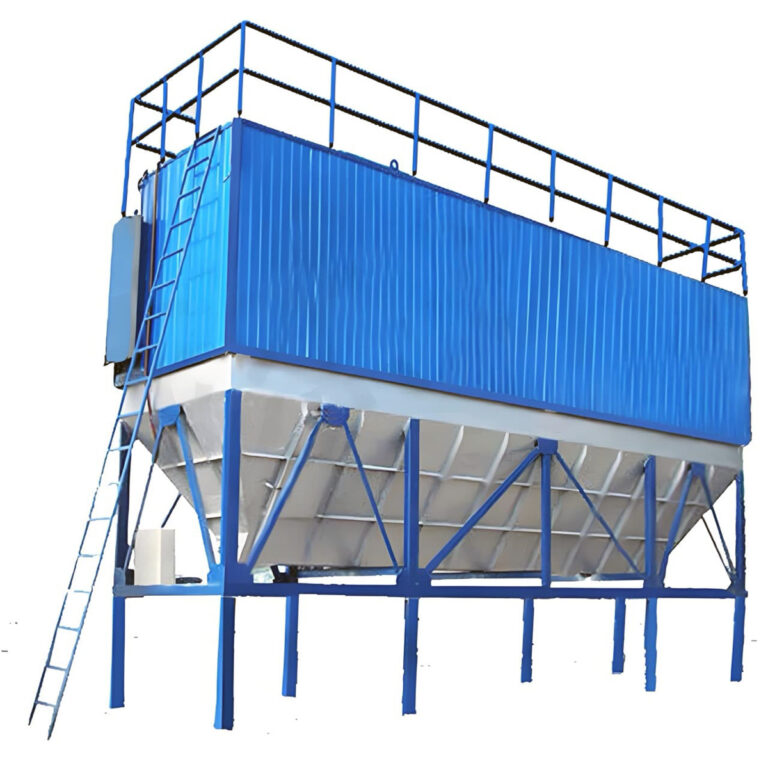
For buyers considering compact silo-based systems designed specifically for ceramic and stone wastewater profiles, the Sistema de silo compacto para tratamento de efluentes industriais de cerâmica e pedra and the Sistema de silo para tratamento de águas residuais de processamento de pedras industriais represent configurations engineered around the solids-loading and footprint constraints common in these industries. The relevant planning check is whether the proposed system’s treatment stages and storage capacity reflect the actual contaminant profile from the plant’s specific production process, not a generic ceramic or stone processing average.
The deeper risk in this sector is assuming that a system performing well on light ceramic wash water will hold quality through a heavy polishing cycle or a slurry tank cleanout. Those events generate solids loads and fine particle concentrations that can overwhelm buffer tanks and bypass treatment capacity in ways that average influent data will not predict. Process-realistic loading assumptions — drawn from the plant’s own production records, not from supplier-supplied reference cases — are the only reliable basis for validating that the proposed system will hold reuse quality through the full production cycle.
What evidence buyers should request before approving the recycle architecture
The approval point for a recycling system architecture is where most of the consequential mistakes become locked in. Treatment train selection, buffer sizing, bypass logic, and reuse quality targets are all substantially harder to revise after procurement than before it. The evidence review at this stage is not a formality — it is the last practical point at which the buyer can verify that supplier claims are grounded in production-realistic conditions rather than steady-state design assumptions.
Reuse quality verification at each endpoint. Ask the supplier to specify the expected treated-water quality at each defined reuse point, with the measurement methodology used to verify it. ISO 11923:1997 provides a consistent testing framework for suspended solids verification and is a reasonable reference for confirming that the supplier’s solids measurement approach is methodologically sound. Quality claims expressed only as system-level averages, without endpoint-specific verification, are difficult to defend during an operational audit when a specific reuse point is found to be out of spec.
Buffer storage sizing documentation tied to production rhythm. Request the calculation basis for buffer tank sizing, and confirm that it references peak flow events and batch schedules from actual production data rather than average daily flow. A buffer ratio below 0.33 days of daily treatment capacity should be treated as a flag requiring explicit justification, since operational practice suggests that threshold is where recycle loop stability becomes difficult to maintain under normal production variability.
Peak flow demonstration. Require the supplier to show how the system handles peak demand events comparable to the plant’s actual production schedule — including batch cleaning durations, flow rates, and restart loads. Performance data based only on average conditions does not demonstrate capacity at the moments when the system is most likely to fail.
Bypass and fallback discharge confirmation. Confirm that a defined bypass path exists, that it is sized to handle the maximum credible surge condition, and that the discharge destination is covered by the plant’s existing permits. A system without a tested fallback path has not been evaluated under failure conditions.
Contaminant loading assumptions. Ask the supplier to document the influent quality assumptions used in the design — including suspended solids range, fine particle fraction, pH variability, and peak loading events. Compare those assumptions against the plant’s own process data and, where relevant, against process-reference benchmarks from comparable operations. For ceramic and stone applications, the Ceramic Manufacturing Industry BREF provides a documented comparator for realistic contaminant loading ranges. A design built on assumptions that underestimate actual loading will underperform from the first high-intensity production run.
More detailed ROI and design-specification context for evaluating treatment architectures against these criteria is available in the Compact Silo Wastewater Treatment Systems design specifications and ROI analysis.
The decisions that determine whether an industrial water recycling system holds quality through real production conditions are not made during commissioning — they are made during planning, before a supplier architecture is approved. Fixing reuse quality targets per endpoint, sizing buffer storage against production rhythm rather than daily averages, confirming that bypass logic is integrated and permitted, and validating that influent loading assumptions reflect actual process conditions are all decisions that compound: getting any one of them wrong creates failure modes that the others cannot compensate for.
Before approving a recycle architecture, the most useful question to ask is whether the system has been tested — at least analytically, and ideally against real plant data — as a single operating model that includes reuse quality, storage buffer, fallback path, and production rhythm together. A system that performs well under average conditions but has not been evaluated under batch events, peak loads, or weekend restarts has not been evaluated under the conditions that will define its actual performance record.
Perguntas frequentes
Q: What happens if the plant cannot reliably maintain stream separation between critical and noncritical water users?
A: Default to a single strict plantwide quality target rather than a fit-for-purpose architecture. Fit-for-purpose reuse only delivers its cost and energy advantages when piping, valve logic, and operational discipline can consistently keep segregated streams apart — if that discipline is inconsistent in practice, stream separation creates contamination risk rather than resolving it, and the higher treatment cost of a uniform target is the more defensible operating position.
Q: Once buffer sizing, quality targets, and bypass logic are confirmed, what is the right immediate next step before finalizing supplier selection?
A: Run all four variables — reuse quality, buffer storage ratio, fallback discharge path, and production-rhythm loading assumptions — together as a single integrated operating model before committing to an architecture. Validating each element in isolation is not sufficient; the failure modes that surface post-commissioning typically emerge from interactions between them, such as a bypass event that exhausts permitted discharge capacity precisely when a peak slurry load is also hitting the buffer tank.
Q: Does the 0.33-day buffer threshold still apply if the plant operates on a continuous rather than batch production schedule?
A: The 0.33-day threshold is a structural minimum for plants with standard production fluctuations, but continuous production schedules with minimal batch events may be able to justify the lower end of that range — provided influent quality is genuinely stable and peak-to-average flow variation is narrow. The threshold becomes more conservative, not less, as batch intensity increases; for plants with high-frequency cleaning cycles, slurry surges, or irregular shutdowns, operational practice suggests targeting above 0.48 days to maintain loop stability through those events.
Q: Is a compact silo-based system still appropriate if the ceramic or stone plant generates highly variable slurry concentrations across shifts rather than a consistent solids profile?
A: High solids variability is precisely the condition that makes influent loading assumptions most critical to verify before procurement. A silo-based configuration engineered for ceramic and stone wastewater profiles — such as those designed around compact footprint and high-solids loading — should be evaluated against the plant’s own peak slurry concentration data, not a production average. If the supplier’s design assumptions were built on steady-state or average influent conditions, the system is likely to be undersized for the high-concentration events that define actual stress on buffer storage and solids removal stages.
Q: At what point does pursuing a higher freshwater recovery rate start working against reuse quality and loop stability?
A: Recovery rate optimization creates diminishing returns — and active risk — when it is pursued without a corresponding increase in buffer storage capacity and treatment intensity. Pushing recovery higher concentrates contaminants in the recycle loop faster than average-flow-based treatment can clear them, which means solids accumulate in buffer tanks and reuse water quality drifts out of spec under the same production conditions the system was sized to handle. Recovery rate is a useful output metric, but it should be derived from a validated operating model rather than used as the primary design target.