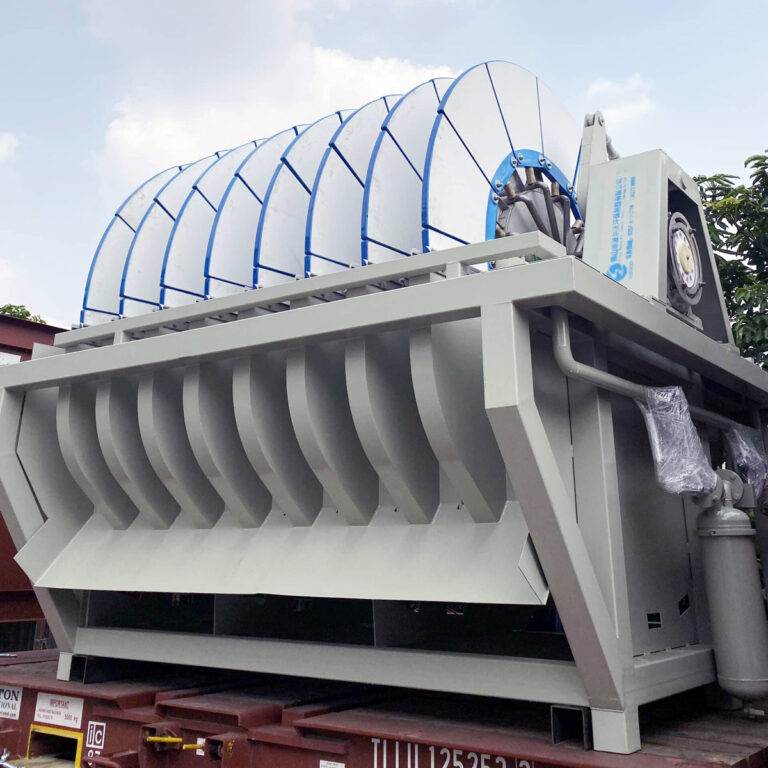
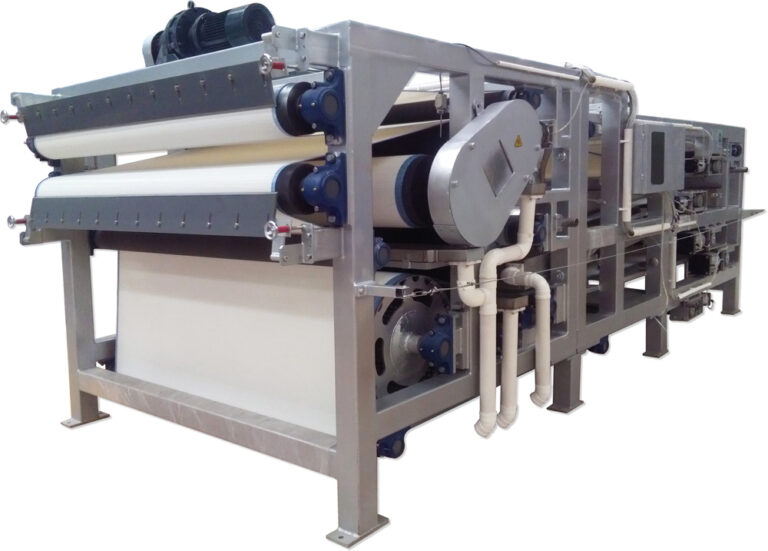
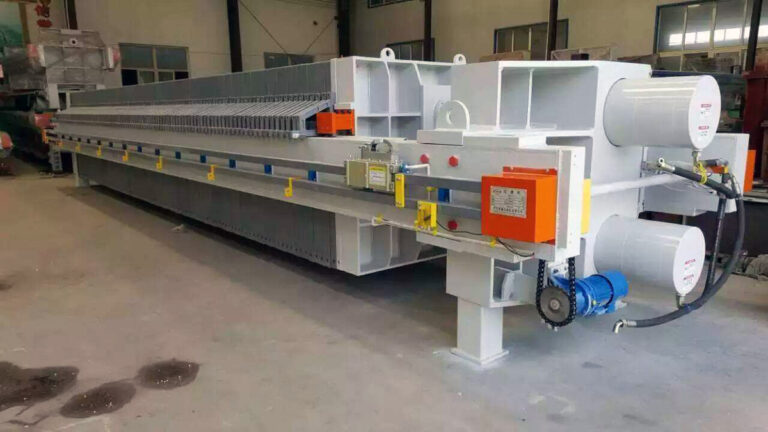
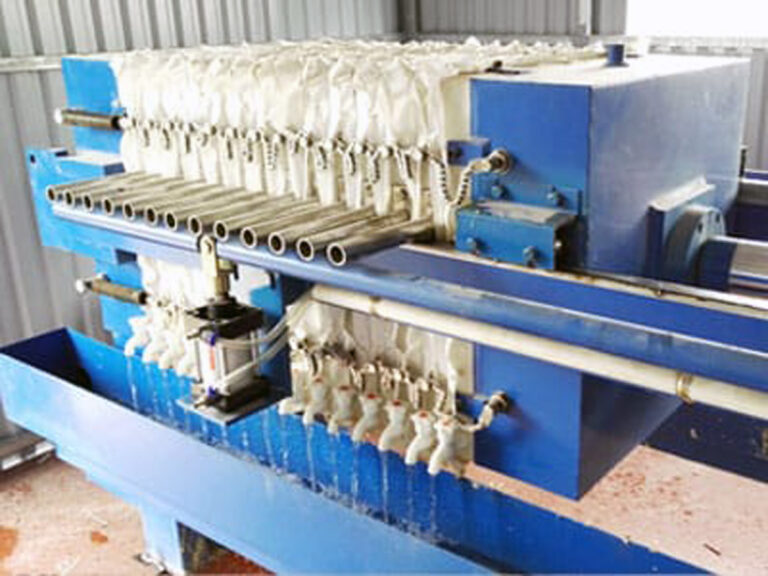
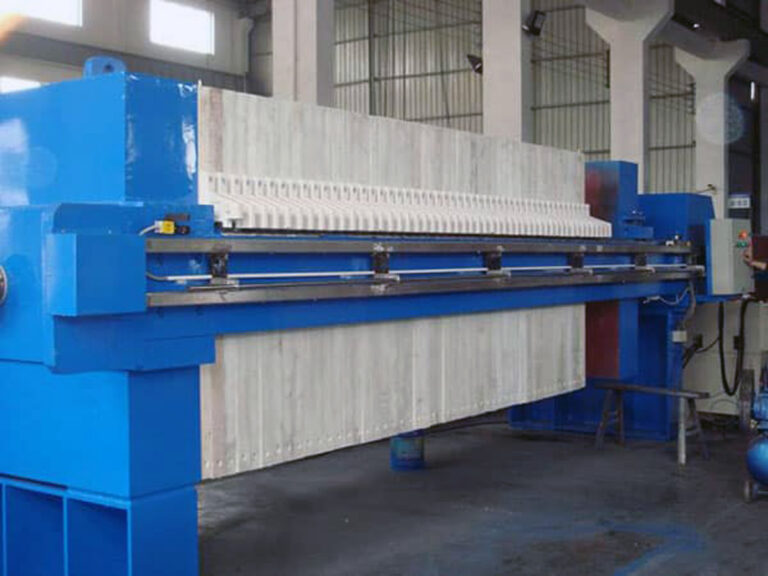
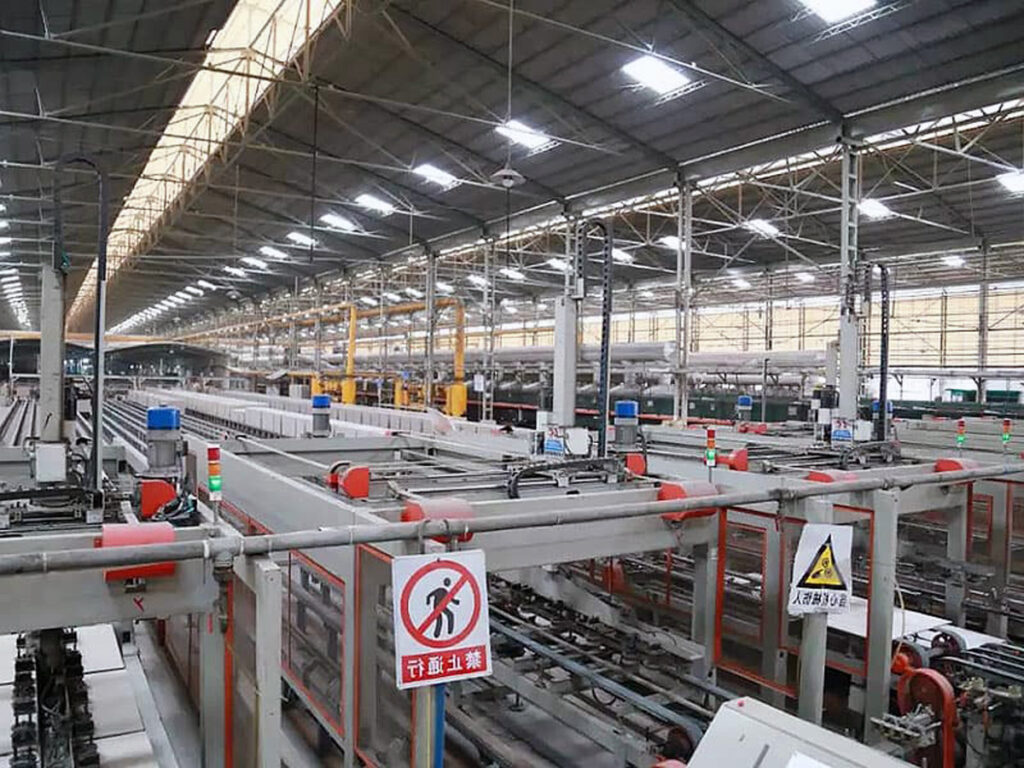
For mining engineers and plant managers, sizing a ceramic vacuum filter for iron ore tailings is a high-stakes capital decision. The wrong specifications lead to underperformance, missed moisture targets, and a total cost of ownership that erodes the promised return on investment. This process moves beyond simple equipment selection to a fundamental re-engineering of the dewatering circuit’s economics and reliability.
The shift towards processing lower-grade ores with finer particle distributions makes this analysis critical. Legacy filtration technology often fails under these conditions, making the precise sizing and justification of a ceramic filter a strategic imperative for operational viability, water stewardship, and cost control in modern mining.
Key Specifications for Sizing a Ceramic Vacuum Filter
The Core Capacity Parameters
Sizing hinges on two interdependent parameters: total filtration area and dry solids throughput. The filtration area, the total active surface area of the ceramic plates, is the primary capacity determinant. Industrial modules range from 1 m² to over 120 m². Throughput is calculated via the formula: Throughput (t/h) = Filtration Area (m²) × Specific Filtration Rate (t/h/m²). This rate, typically 0.3 to 0.8 t/h/m² for iron ore tailings, is not a constant. It is an empirically determined variable influenced by particle size distribution, slurry density, and the target cake moisture.
Engineering for Material Specifics
Other vital specifications include operating vacuum levels (0.09 – 0.098 MPa) and adjustable cycle times. The ceramic plate’s 1-10 micrometer capillary pores are specifically engineered to handle ultra-fine particles (<20μm), a capability essential for modern, lower-grade ore bodies. Specifying the correct ceramic composition—alumina or silicon carbide—based on slurry abrasiveness and pH is a non-negotiable prerequisite. This choice directly impacts the ability to achieve the promised 5-10+ year plate lifespan in harsh mining environments. In our evaluations, overlooking slurry chemistry during specification has led to premature wear, invalidating the long-term OPEX model.
A Framework of Critical Metrics
The following table consolidates the key technical parameters that form the foundation of any sizing exercise. These ranges provide the initial framework, but final specification requires project-specific validation.
| Parâmetro | Typical Range for Iron Ore Tailings | Key Influence / Note |
|---|---|---|
| Filtration Area (Module) | 1 m² to 120+ m² | Primary capacity determinant |
| Specific Filtration Rate | 0.3 to 0.8 t/h/m² | Particle size, slurry density |
| Operating Vacuum Level | 0.09 – 0.098 MPa | High efficiency capillary action |
| Ceramic Plate Pore Size | 1 – 10 micrometers | For ultra-fine particles (<20μm) |
| Ceramic Plate Lifespan | 5 – 10+ years | In harsh mining environments |
Fonte: JB/T 11211-2011 Technical specification for ceramic filter. This standard provides the technical requirements and test methods for ceramic filters, directly governing the specifications for parameters like filtration area, vacuum levels, and ceramic plate performance critical for sizing.
How to Calculate Required Filtration Area and Throughput
Moving Beyond the Basic Formula
Accurate calculation is a feedstock-specific engineering exercise. The specific filtration rate variable encapsulates material behavior. It is influenced by particle morphology, slurry chemistry, and the target cake moisture. For instance, targeting ≤10% moisture versus 15% may necessitate a longer drying cycle or a larger filtration area for the same throughput. Generic sizing is insufficient for guaranteeing return on investment.
The Non-Negotiable Step: Pilot Testing
A comprehensive pilot testing campaign on actual tailings is a critical risk mitigation step. This testing de-risks the high-CAPEX decision. It provides the empirical data needed for precise scale-up and validates performance claims for the unique tailings stream. The goal is to ensure the selected filter area delivers both the required tonnage and the economic moisture content. We compared theoretical calculations with pilot data and found discrepancies of up to 25% in predicted throughput, a variance that would severely impact plant balance.
Factors Governing the Calculation
The table below outlines the critical factors and actions that transform a simple formula into a reliable engineering specification.
| Calculation Factor | Description / Impact | Critical Action |
|---|---|---|
| Dry Solids Throughput Formula | Area (m²) × Rate (t/h/m²) | Core sizing equation |
| Specific Filtration Rate | 0.3 – 0.8 t/h/m² range | Empirically determined variable |
| Target Cake Moisture | ≤10% vs. 15% | Dictates cycle time, area |
| Particle Morphology & Slurry Chemistry | Major rate influencers | Requires feedstock analysis |
| Pilot Testing Campaign | Non-negotiable for ROI | De-risks CAPEX, validates scale-up |
Fonte: Documentação técnica e especificações do setor.
Ceramic vs. Traditional Vacuum Filters: A Cost-Benefit Analysis
A Fundamental Shift in Cost Engineering
The choice represents a fundamental shift in cost engineering. Ceramic filters command a higher initial capital expenditure. This premium is strategically justified by a dramatically different operational cost profile and output quality, redefining the total cost of ownership. Evidence points to a potential 12-month ROI, driven by 30-40% energy savings and component lifespans of 5-10 years versus 1-2 years for cloth media.
Quantifying Downstream Value
The downstream value is significant. Achieving ≤10% moisture directly reduces transportation weight, disposal fees, and tailings stabilization costs. Case studies show annual savings exceeding $480,000. For operations processing finer tailings or facing stringent economic and environmental controls, legacy equipment faces growing obsolescence. Ceramic technology becomes a strategic modernization imperative.
A Side-by-Side Financial Comparison
The financial divergence is clear when comparing cost factors side-by-side. This analysis must form the basis of any procurement justification.
| Fator de custo | Filtro a vácuo de cerâmica | Traditional Cloth Filter |
|---|---|---|
| Initial Capital (CAPEX) | Higher premium | Menor custo inicial |
| Media Replacement Cycle | 5 – 10 years | 1 – 2 years |
| Consumo de energia | 30 – 40% lower | Higher, progressive blinding |
| Typical Cake Moisture | ≤10% | 15% or higher |
| Annual Downstream Savings (Case) | >$480,000 | Significativamente menor |
Fonte: Documentação técnica e especificações do setor.
Observação: Downstream savings from lower moisture include reduced transport weight and disposal fees.
What Are the Operational Costs and Energy Requirements?
Dominated by Energy and Maintenance
Operational costs are dominated by energy consumption and maintenance, areas where ceramic filters excel. Energy use is optimized because the capillary action of the microporous plates works synergistically with the vacuum pump. It requires less energy to maintain high vacuum efficiency compared to cloth filters that fight progressive blinding. Maintenance shifts from frequent, labor-intensive cloth replacement to predictable, long-interval servicing of the robust ceramic plates.
The Strategic Cost of Longevity
The 5-10 year lifecycle of these plates makes their eventual replacement a predictable, high-cost event. Operators must therefore negotiate long-term parts supply agreements during procurement. This avoids future budget volatility and ensures operational reliability. Factoring this into the TCO model is essential for accurate financial forecasting over the asset’s life.
Breaking Down the OPEX Drivers
Understanding the operational cost structure is key to building an accurate financial model.
| Operational Cost Driver | Ceramic Filter Characteristic | Considerações estratégicas |
|---|---|---|
| Dominant Energy Consumer | Vacuum pump | Optimized by capillary action |
| Foco na manutenção | Predictable, long-interval | Not frequent cloth changes |
| Key Component Lifespan | Ceramic plates: 5-10 years | Defines long-term cost profile |
| Major Replacement Cost | Ceramic plate set | High-cost, predictable event |
| Procurement Mitigation | Long-term parts agreements | Avoids future budget volatility |
Fonte: Documentação técnica e especificações do setor.
Optimizing Filtration Cycle and Cake Moisture for Tailings
The Key Lever: Cycle Control
Cycle optimization is the key lever for balancing throughput and cake moisture. Adjusting the rotation speed controls time in filtration, drying, and discharge zones. Adequate drying zone time is crucial for driving moisture to the ≤10% target that unlocks major downstream savings. This process is often managed manually, but that introduces variability.
From Manual Adjustment to Strategic Automation
Modern PLC-based control systems can dynamically optimize vacuum pressure and cycle time in response to slurry variability. This transforms the filter from a passive separator into an active process optimizer. It ensures consistent, low-moisture cake quality, reduces human error, and stabilizes the entire dewatering circuit. This operational stability is a core part of the technology’s value proposition. Industry experts recommend this level of automation not as a luxury, but as a baseline requirement for achieving guaranteed moisture specifications.
Critical Installation, Integration, and Space Considerations
Integration as a System Node
Successful installation extends beyond the filter itself to its integration as a system node. The filter requires consistent feed, typically from a pre-thickener, and integrates with vacuum pumps, filtrate receivers, and cake conveyors. A pivotal integration advantage is the filtrate quality. With solid content often below 50 ppm, the filtrate can be recycled directly within the plant.
The Value of Closed-Loop Water Recovery
This closed-loop water recovery reduces freshwater intake and wastewater volumes. It is a critical benefit for water-stressed sites or those with strict environmental licenses. Space planning must account not only for the filter footprint but also for ancillary equipment and future plate maintenance access. Easily overlooked details include ensuring adequate overhead clearance for crane access to remove the plate stack for maintenance or replacement.
Long-Term Performance: Maintenance and Plate Lifecycle
Defined by Plate Lifecycle
The long-term performance and cost profile are defined by the ceramic plate lifecycle. The plates’ inherent resistance to abrasion and blinding underpins the 5-10 year service life. Performance is sustained through periodic cleaning cycles using dilute acid or ultrasonic systems. This focus on longevity is part of a broader industry shift toward lifecycle engineering.
The Shift to Lifecycle Engineering
Suppliers now compete on long-term performance metrics, not just upfront throughput. Engineering evaluations must prioritize sustainable operation and predictable maintenance costs from the feasibility stage. The strategic management of the plate replacement cycle becomes a cornerstone of long-term asset reliability and cost forecasting. Standards like JB/T 11211-2011 provide a framework for evaluating these long-term performance expectations.
Metrics for Sustainable Operation
Evaluating long-term performance requires a specific set of metrics focused on sustainability and cost predictability.
| Performance Aspect | Metric / Method | Implicações estratégicas |
|---|---|---|
| Plate Service Life | 5 – 10 year range | Cornerstone of TCO model |
| Sustained Performance | Periodic cleaning cycles | Acid or ultrasonic systems |
| Industry Shift Focus | Lifecycle engineering | Beyond upfront throughput |
| Supplier Evaluation Metric | Long-term performance guarantees | Sustainable operation key |
| Plate Replacement Cycle | Predictable, high-cost event | Must be forecasted in feasibility |
Fonte: JB/T 11211-2011 Technical specification for ceramic filter. This standard outlines inspection rules and technical requirements for ceramic filters, providing a framework for evaluating long-term performance, maintenance protocols, and plate lifecycle expectations.
Selecting the Right Filter: A Decision Framework for Buyers
A Structured Four-Phase Framework
Selecting the optimal ceramic vacuum filter requires a structured decision framework that transcends basic specifications. First, conduct a comprehensive slurry analysis to inform ceramic grade selection and mandate pilot testing. Second, shift the financial analysis from CAPEX to a detailed Total Cost of Ownership model. This model must incorporate energy savings, reduced disposal costs from lower moisture, and long-term maintenance forecasts.
Alignment with Strategic Goals
Third, evaluate the supplier’s automation and control philosophy for its ability to deliver consistent results. Finally, assess the technology’s role in strategic goals like water conservation and the ability to process challenging, fine tailings from lower-grade ores. This holistic framework ensures the investment is justified by operational payback, risk mitigation, and alignment with broader site sustainability objectives. For detailed specifications on industrial filtration equipment that meets these rigorous criteria, review the available ceramic vacuum filter systems.
The decision pivots on three points: validating performance through pilot testing with your specific tailings, modeling the true TCO over a 10-year horizon, and ensuring the system’s automation capability delivers consistent, low-moisture cake. These steps move the purchase from a speculative capital expense to a calculated investment in dewatering circuit modernization.
Need a professional analysis for your iron ore tailings filtration project? The engineers at PORVOO specialize in translating site-specific slurry data into optimized, cost-justified filtration solutions. Contact us to initiate a pilot test program or a detailed TCO modeling session.
Perguntas frequentes
Q: How do you accurately size a ceramic vacuum filter for a specific iron ore tailings stream?
A: Sizing requires calculating the dry solids throughput using the filtration area and a material-specific filtration rate, which typically falls between 0.3 and 0.8 t/h/m² for iron ore tailings. This critical rate depends on particle size, slurry density, and your target cake moisture, making pilot testing on your actual feedstock essential for reliable scale-up. For projects where fine particles (<20μm) are prevalent, you must prioritize a filter with the appropriate ceramic plate pore structure to guarantee performance.
Q: What is the total cost of ownership justification for choosing a ceramic filter over a traditional cloth-based vacuum filter?
A: The justification lies in a transformed operational cost profile that offsets higher initial capital expenditure. Ceramic filters deliver 30-40% energy savings and eliminate frequent cloth replacement, with component lifespans of 5-10 years enabling a typical ROI within 12 months. If your operation processes fine tailings and has strict economic or environmental controls, this technology represents a strategic modernization with a compelling long-term financial case.
Q: How does achieving a lower filter cake moisture content with a ceramic filter create downstream value?
A: Producing a cake with ≤10% moisture directly reduces transportation weight, lowers disposal fees, and decreases tailings stabilization costs. Case studies indicate these combined savings can exceed $480,000 annually. This means facilities aiming to minimize logistics expenses and environmental liabilities should prioritize moisture optimization as a key performance metric in their dewatering equipment evaluation.
Q: What long-term maintenance consideration is critical for budgeting the lifecycle of a ceramic vacuum filter?
A: The predictable, high-cost event of ceramic plate replacement after their 5-10 year service life is the dominant long-term consideration. You must negotiate guaranteed long-term parts supply agreements during procurement to lock in costs and ensure operational reliability. For operations where budget forecasting is critical, this planned capital outlay must be integrated into your total cost of ownership model from the start.
Q: How can automation improve the operation of a ceramic vacuum filter for tailings?
A: Modern PLC-based control systems dynamically optimize vacuum pressure and cycle time in response to real-time slurry variability. This automation ensures consistent, low-moisture cake quality, maximizes throughput, and reduces manual intervention. If your plant experiences feed variability, investing in advanced controls transforms the filter from a passive separator into an active process optimizer that stabilizes your entire dewatering circuit.
Q: What installation factor turns ceramic filter filtrate into an environmental and economic asset?
A: The exceptional clarity of the filtrate, often containing solids below 50 ppm, allows it to be recycled directly back into the plant process. This closed-loop water recovery slashes freshwater consumption and reduces wastewater volumes. For sites in water-stressed regions or with stringent environmental licenses, this capability is a decisive advantage that contributes directly to sustainability goals and operational permits.
Q: Which technical standards are relevant for evaluating the performance of ceramic filters and their downstream product?
A: Equipment construction and testing should align with industry specifications like JB/T 11211-2011 Technical specification for ceramic filter. Furthermore, the quality of dewatered concentrate used for pelletizing is assessed by strength tests such as ISO 4700:2015 e ASTM E382-22. This means your vendor selection and quality assurance plan should reference these standards to ensure equipment integrity and product suitability for blast furnace feed.