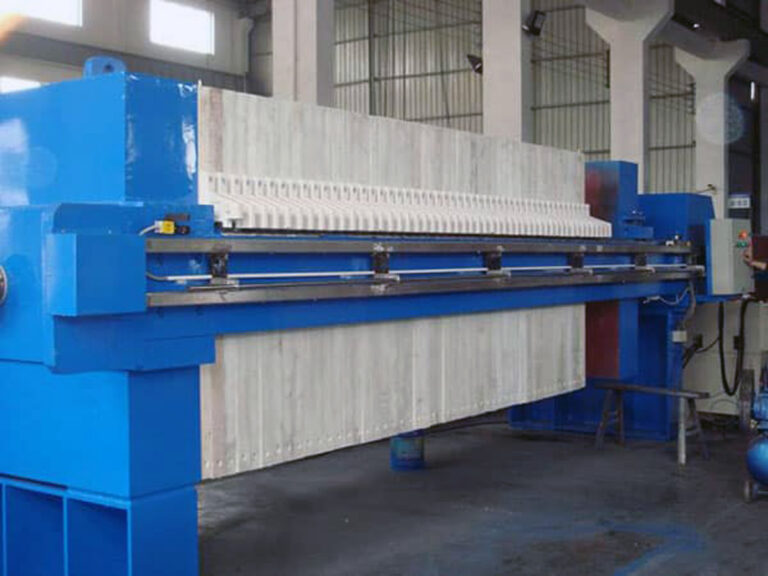
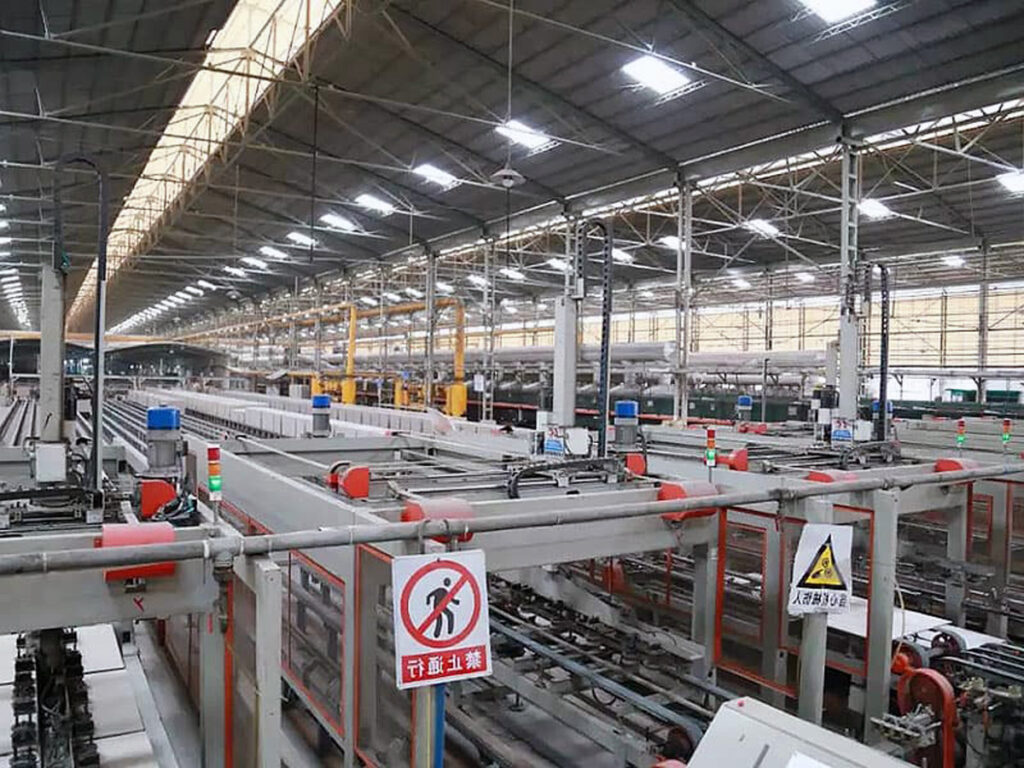
For copper mining operations, achieving a filter cake with 18-25% solids content is a critical operational and economic benchmark. This target dictates the entire dewatering technology selection, from capital justification to logistics and disposal costs. Many operations struggle with inconsistent moisture levels, leading to higher transportation expenses, handling difficulties, and potential environmental compliance issues.
The pressure to optimize dewatering performance is intensifying. Declining ore grades produce finer, more difficult-to-filter slurries in larger volumes. Simultaneously, stringent regulations on tailings management and escalating water scarcity are transforming dewatering from a simple waste-handling step into a strategic imperative for water recovery and site compliance. Mastering the variables that control cake moisture is now essential for operational viability.
How a Belt Filter Press Achieves 18-25% Solids in Copper Mining
The Multi-Stage Dewatering Process
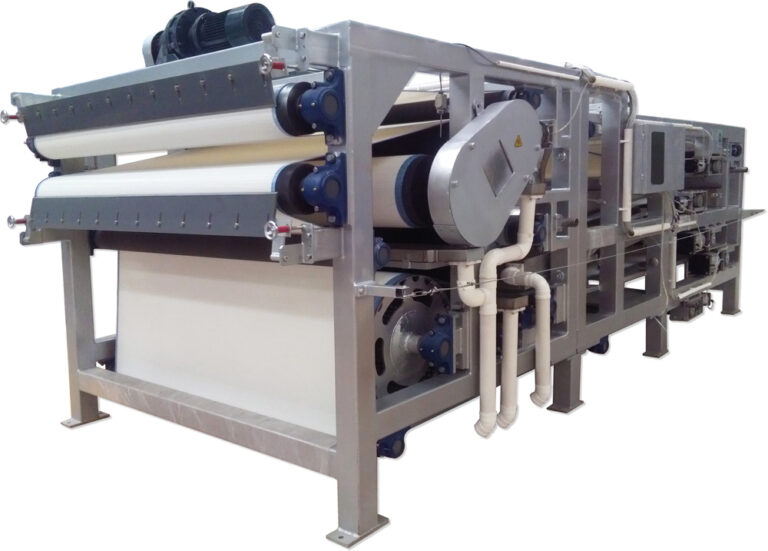
A belt filter press operates as a continuous system of progressive pressure application. Pre-conditioned slurry is first distributed onto a moving filter belt for gravity drainage. The solids then enter a converging wedge zone where two belts apply initial pressure, forming a coherent cake. The final and most critical stage is the high-pressure section, where the cake travels through an ‘S’-shaped path of rollers. These rollers exert increasing compressive and shear forces, mechanically squeezing out bound water to achieve the target dryness. This continuous process is engineered specifically for the high-volume streams typical in copper mining, handling both concentrate and tailings efficiently.
The Moisture Target as a Technology Gate
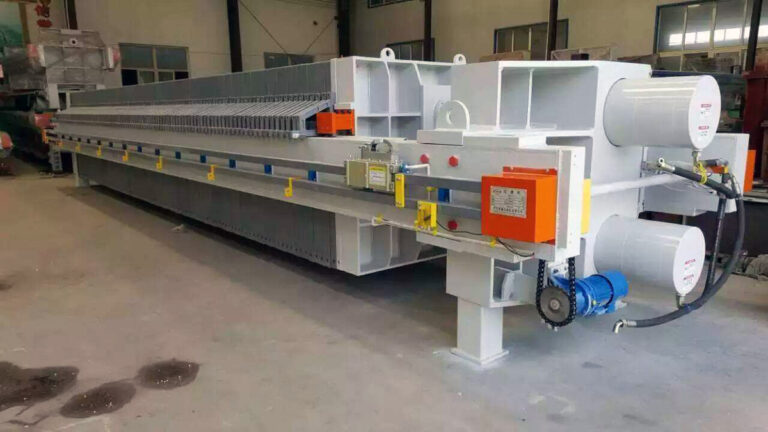
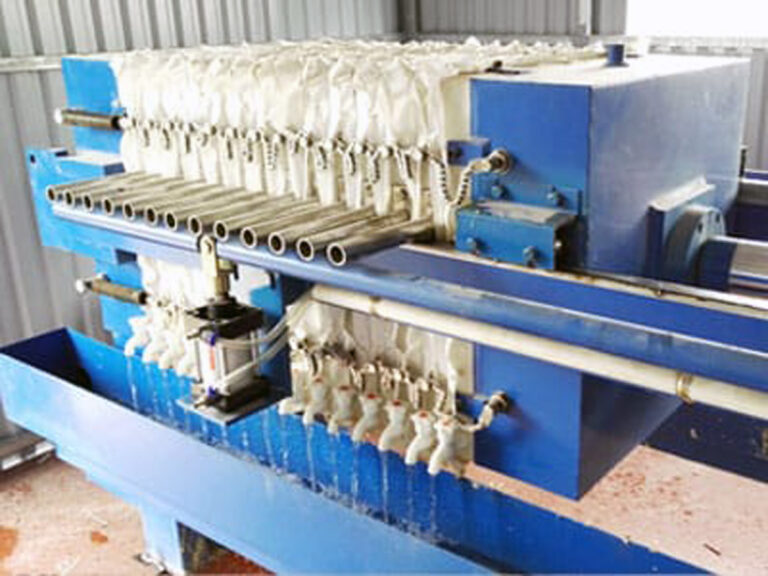
The 18-25% solids range is not arbitrary; it serves as the primary performance gate for technology selection. This specific target makes high-pressure membrane filter presses a viable option, as they can operate within this spectrum. Conversely, it effectively rules out technologies like standard vacuum filters or chamber presses that typically yield wetter cakes or operate in batch mode unsuitable for large volumes. Every capital and operational decision for the dewatering circuit is anchored to this precise moisture specification. In our analysis of project justifications, we found that failing to anchor the business case to a defensible, site-specific moisture target is a common oversight that leads to suboptimal technology selection.
Key Factors Influencing Filter Cake Moisture Performance
The Interdependence of Feed and Machine
Final cake dryness is a function of interdependent variables, not a fixed machine output. Feed slurry characteristics are the foundational variable. Coarser particles dewater readily, while ultrafine slimes retain water and form compressible cakes that resist pressure. The solid concentration and slurry chemistry, particularly clay content, directly impact drainage rates and polymer demand. On the machine side, mechanical parameters like belt tension, roller configuration, and belt speed control the pressure profile and residence time. Optimizing performance requires viewing the press not in isolation but as a reactor whose output is dictated by its feed stock and tuning.
The High-ROI Lever of Filter Cloth
One of the most direct operational cost and performance levers is the filter cloth. Its permeability, weave pattern, and surface treatment dictate filtrate clarity and, crucially, cake release. A blinded cloth drastically reduces dewatering efficiency and increases cycle time. Specialized, abrasion-resistant cloths designed for copper slurries can dramatically extend service life. This directly reduces consumable replacement frequency, associated maintenance downtime, and waste. Investing in premium cloth technology often presents a high-ROI opportunity, lowering operating expenses and improving production stability more effectively than major mechanical adjustments.
The table below summarizes the primary factors affecting moisture and their key characteristics:
Summary of Critical Performance Factors
| Fator | Impact on Moisture | Característica-chave |
|---|---|---|
| Particle Size | Coarse: Low moisture Fine: High moisture | Dewatering ease |
| Solid Concentration | Higher: Better drainage | Slurry feed density |
| Clay Content | High: Water retention | Slurry chemistry |
| Belt Tension | Higher: Drier cake | Mechanical pressure control |
| Velocidade da correia | Slower: Drier cake | Residence time |
| Filter Cloth | Permeability dictates clarity | High-ROI consumable |
Fonte: VDI 2762 Blatt 1 – Mechanical solid-liquid separation by filtration and expression; belt filter presses. This guideline covers the fundamental principles and operational parameters, such as belt speed and tension, that directly influence the dewatering performance and final cake dryness of belt filter presses.
Optimizing Chemical Conditioning for Target Solids Content
The Role of Polymer Flocculation
Reaching the drier end of the 18-25% solids spectrum, especially with finer materials, often necessitates optimized chemical conditioning. The correct polymer type and dosage agglomerate fine particles into larger, stronger flocs. These flocs release water more readily during gravity drainage and resist re-dispersion under the shear forces in the pressure zone. Under-dosing leads to poor floc formation and cloudy filtrate; over-dosing creates slippery, gelatinous cakes that blind cloths and reduce throughput. The optimization process is iterative and must account for seasonal changes in ore composition.
The Imperative of Integrated Process Design
Chemical optimization cannot be confined to the feed box of the filter press. The most significant performance gains come from integrated process design. This means ensuring consistent, optimally flocculated feed from upstream thickeners. Variability in thickener underflow density or flocculation directly destabilizes filter press performance. The next frontier for operations is to optimize the entire solid-liquid separation train as a single system. Operators should seek vendor collaboration that spans thickener and filter press units, guaranteeing integrated performance rather than isolated equipment guarantees. This systems approach yields greater improvements than focusing on the filter press alone.
The key parameters for an effective chemical program are outlined below:
Parameters for Effective Conditioning
| Parâmetro | Target | Finalidade |
|---|---|---|
| Tipo de polímero | Floculante | Fine particle agglomeration |
| Dosage | Fine-tuned | Optimize floc size |
| Application Point | Pre-thickener stage | Integrated process design |
| Feed Consistency | Consistente | Upstream control requirement |
| Target Solids | 18-25% range | Primary performance benchmark |
Fonte: Documentação técnica e especificações do setor.
Mechanical Adjustments: Belt Speed, Tension, and Pressure
Operational Levers for Moisture Control
Operators have direct mechanical levers to tune a belt press toward moisture targets. Reducing belt speed increases cake residence time in all zones, typically yielding a drier product at the cost of reduced throughput. Increasing belt tension enhances the compressive and shear forces applied by the roller configuration, squeezing more water out. The geometry of the wedge zone itself controls the initial pressure gradient and cake formation. These adjustments are not independent; increasing tension may require adjustments to tracking and wash systems. The balance must be continuously managed against feed characteristics to avoid belt damage or process upsets.
Designing for Reliability in Demanding Conditions
The industry-wide trend of processing lower-grade ores has a direct mechanical implication. Finer, more abrasive slurries in larger volumes demand more robust equipment. This forces the selection of larger frames, higher-grade wear materials on rollers and guides, and more powerful drive systems. The goal is to ensure mechanical reliability and maintain plant capacity over the long term under increasingly demanding conditions. Specifying equipment with adequate design margins for abrasion and corrosion is no longer a luxury but a necessity for avoiding premature failure and protecting overall plant availability.
The effects of key mechanical adjustments are summarized in the following table:
Adjustments and Their Operational Trade-offs
| Ajuste | Effect on Cake | Trade-off |
|---|---|---|
| Reduce Belt Speed | Lower moisture | Reduced throughput |
| Increase Belt Tension | Enhanced compression | Higher mechanical load |
| Wedge Zone Geometry | Initial pressure gradient | Controlled cake formation |
| Roller Configuration | Shear force application | Cake release efficiency |
Fonte: VDI 2762 Blatt 1 – Mechanical solid-liquid separation by filtration and expression; belt filter presses. This standard details the design and operational adjustments of belt filter presses, including the control of belt speed, tension, and pressure zones, which are critical for achieving desired cake dryness.
Belt Filter Press vs. Alternative Dewatering Technologies
A Nuanced CAPEX/OPEX Landscape
Technology selection is a fundamental CAPEX/OPEX trade-off analysis. Belt filter presses offer continuous operation and excel at high-volume applications, but they exist within a broader dewatering ecosystem. Compared to vacuum filters, belt presses generally produce a drier cake without the need for ancillary thermal drying systems. Compared to high-pressure membrane filter presses, belt presses offer continuous processing but may achieve slightly higher moisture content. The “workhorse” status of any technology is entirely context-dependent on feed properties and the required final cake specification.
The Necessity of Application-Specific Analysis
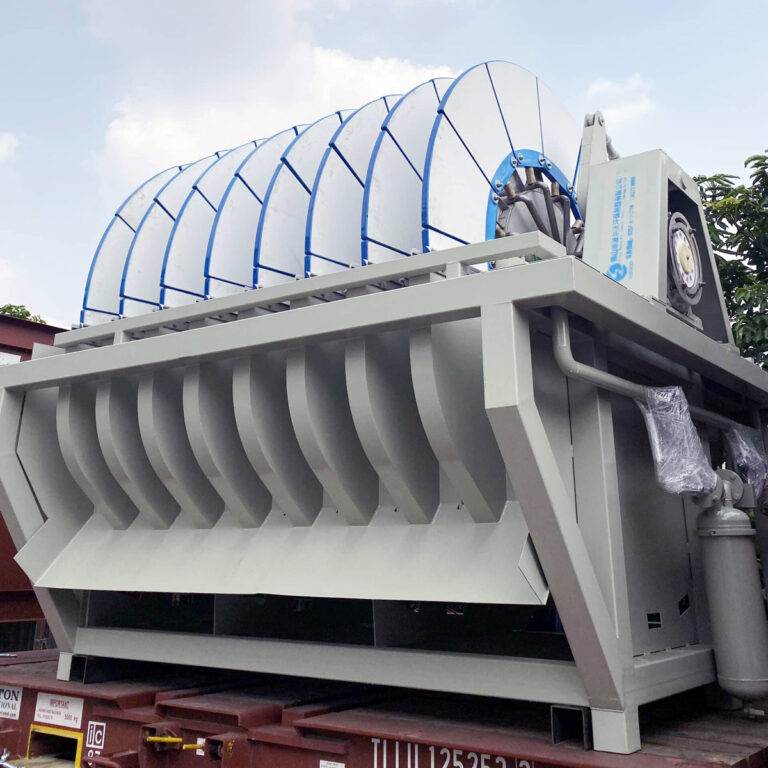
A blanket preference for one technology is misguided. For example, where ultra-low moisture is not critical and capital is constrained, a vacuum disc or horizontal belt filter might offer a lower initial investment. The decision matrix must include not just moisture, but also factors like feed particle size, volumetric throughput, available footprint, and automation requirements. A detailed, site-specific trade-off analysis between pressure, vacuum, and centrifugal technologies is essential for optimal investment. This analysis should be grounded in pilot test data using actual site slurry, not just generic specifications.
The comparative overview below highlights key differentiators:
Technology Comparison Overview
| Tecnologia | Umidade do bolo | Key Operational Mode |
|---|---|---|
| Prensa de filtro de correia | 18-25% solids | Continuous, high-volume |
| Vacuum Filters | Higher moisture | Continuous, thermal drying possible |
| Chamber Filter Press | Lower moisture | Batch operation |
| Vacuum Disc Filter | Higher moisture | Lower capital cost option |
Observação: Technology selection requires a detailed CAPEX/OPEX trade-off analysis specific to the application.
Fonte: Documentação técnica e especificações do setor.
Abrasion, Corrosion, and Other Operational Considerations
Designing for the Copper Slurry Environment
Copper mining slurries present a uniquely challenging environment, often being both abrasive and acidic. This demands a design philosophy centered on robustness. Critical components like rollers, guide rails, and spray nozzles require wear-resistant materials such as high-chrome alloys or polyurethane coatings. Frames and covers need corrosion protection, often through specialized paints or stainless-steel cladding. This focus on material selection is not an optional upgrade but a core requirement for achieving acceptable service life and minimizing unplanned downtime in a continuous operation.
The Strategic Consumables Ecosystem
This reliance on specialized components creates a strategic vulnerability—and opportunity. The performance and longevity of the system are dependent on consumables like filter cloths, spray nozzles, and wear strips. This allows specialized suppliers to capture significant value, but it also presents a supply chain risk for mines. Developing a strategic sourcing strategy is crucial. This may involve long-term performance-based partnerships with suppliers who can guarantee quality, provide technical support, and collaborate on continuous improvement. Securing this ecosystem is as important as selecting the initial equipment for lifecycle cost control and reliability.
Implementing a Reliable, Automated Dewatering System
Automation as an Economic Imperative
For large-scale, continuous operations, high-level automation is a non-negotiable for economic viability. Automated controls for belt tracking, tensioning, and high-pressure washing are now standard. This reduces labor requirements from multiple operators per shift to a single attendant monitoring several units, delivering dramatic operational cost savings. This is particularly impactful at remote sites where labor is scarce and expensive. Automation also enforces consistency, removing human variability from adjustment processes and helping to maintain the cake moisture within the target band.
The Rise of Remote Operational Expertise
The complexity of automated systems creates a growing need for remote operational support. The ability of vendors to provide remote diagnostics, real-time performance monitoring, and data analytics is becoming a key differentiator. When a process upset occurs, immediate access to expert analysis can minimize downtime. Therefore, when selecting a dewatering equipment and filtration system, evaluating the vendor’s remote support infrastructure and capability is as critical as assessing the mechanical specifications of the hardware itself. This shift turns the vendor relationship into a long-term technical partnership.
Selecting the Right Dewatering Technology for Your Site
Aligning Technical and Strategic Drivers
The final technology choice must satisfy both technical performance and broader strategic imperatives. The required cake moisture content remains the primary technical driver, but the decision framework has expanded. Stringent environmental regulations on tailings storage facility (TSF) safety and water discharge are making traditional slurry deposition increasingly difficult to permit. Advanced dewatering is transitioning from an operational choice to a compliance necessity for securing a social license to operate.
Reframing the Business Case with Water Value
Intensifying water scarcity is fundamentally reframing the dewatering business case. The recovered filtrate is no longer just a waste stream; it is a valuable resource for reuse in processing. This shifts the economics, where credits for water recovery can significantly offset operating costs and improve project ROI. The dewatering system becomes a strategic hedge against water supply risks and regulatory pressures. The investment justification thus moves beyond mere disposal savings to encompass water security and regulatory compliance, areas governed by strict measurement standards like ASTM D2216-19 for moisture content and ISO 15587-1:2002 for analyzing process water quality.
The decision pivots on a clear moisture target, a rigorous analysis of slurry characteristics, and an honest assessment of site-specific strategic pressures like water scarcity and regulatory trajectory. Pilot testing remains the only way to de-risk technology selection with definitive data. Need professional guidance to navigate these complex trade-offs for your copper operation? The engineering team at PORVOO specializes in tailoring solid-liquid separation solutions to meet precise moisture and reliability targets within a full lifecycle cost framework. Entre em contato conosco to discuss your application data and site constraints.
Perguntas frequentes
Q: How do you accurately measure the moisture content of copper filter cake to verify it meets the 18-25% solids target?
A: You determine the moisture content by mass using the standardized procedure in ASTM D2216-19. This method provides the precise, repeatable data needed for process control and meeting contractual specifications. For operations where analyzing metal content in process water is also critical, the digestion method in ISO 15587-1:2002 is relevant. This means your quality control lab must implement these specific standards to generate reliable performance data for optimization and reporting.
Q: What are the most critical operational adjustments for reducing cake moisture in a belt filter press?
A: The primary mechanical levers are reducing belt speed to extend dewatering time and increasing belt tension to apply greater compressive force. These adjustments must be balanced against feed slurry characteristics and required throughput. This means operators chasing a drier product within the 18-25% range must be prepared to accept a potential reduction in processing rate or invest in a larger press to maintain volume.
Q: When should chemical conditioning be optimized, and what is the broader process implication?
A: Polymer flocculation is essential for agglomerating fine particles, especially when targeting the drier end of the 18-25% solids spectrum. Optimizing this requires tuning polymer type and dosage in concert with ensuring consistent feed from upstream thickeners. This means achieving your moisture target is not just a press issue; it demands an integrated process design strategy with vendor collaboration across the entire solid-liquid separation train.
Q: How does the industry trend toward lower ore grades impact belt filter press selection and operation?
A: Declining grades produce larger volumes of finer, more difficult-to-dewater slurries, which directly challenges mechanical systems. This forces the use of larger, more robust equipment designed for higher reliability under these demanding conditions. This means new projects or expansions must size and specify presses not just for current throughput but for the anticipated future feed characteristics to ensure long-term plant capacity.
Q: What role do filter cloths play in operational costs and system reliability?
A: Filter cloth performance is a major operational cost lever, as its permeability and anti-blinding properties dictate cake release, filtrate clarity, and replacement frequency. Specialized cloths can significantly extend service life, reducing downtime and waste. This means developing a strategic sourcing plan for these consumables is crucial for controlling lifecycle costs and minimizing production disruptions.
Q: Why is vendor remote support capability a critical selection criterion for a new dewatering system?
A: High-level automation is standard for economic operation, but it increases system complexity. A vendor’s ability to provide remote diagnostics, data analytics, and technical support is key for minimizing unplanned downtime and maintaining performance. This means when evaluating suppliers, you should assess their remote support infrastructure as rigorously as you review the equipment’s mechanical specifications.
Q: Beyond cake dryness, what strategic factors are now driving dewatering technology selection?
A: The decision is increasingly framed by water scarcity and environmental compliance. Regulations are making slurry deposition harder to permit, and water recovery for reuse provides both a compliance benefit and a financial offset. This means the business case for advanced dewatering now includes water recovery credits and social license to operate, enhancing ROI beyond simple disposal savings.