Selecting the right filter press for industrial dewatering is a high-stakes capital decision. The choice between plate and frame, recessed chamber, and membrane squeeze technologies directly impacts plant throughput, operational costs, and long-term project viability. Misunderstanding their core differences can lead to significant underperformance, inflated operating expenses, or a mismatch with your specific slurry characteristics.
This comparison is critical now as operational efficiency and waste minimization become primary economic drivers. Modern recessed chamber and membrane presses offer performance and reliability that often eclipse traditional plate and frame designs, making an informed, lifecycle-based evaluation essential for any new installation or upgrade.
Plate and Frame vs Chamber vs Membrane: Core Design Differences
The Architectural Foundation
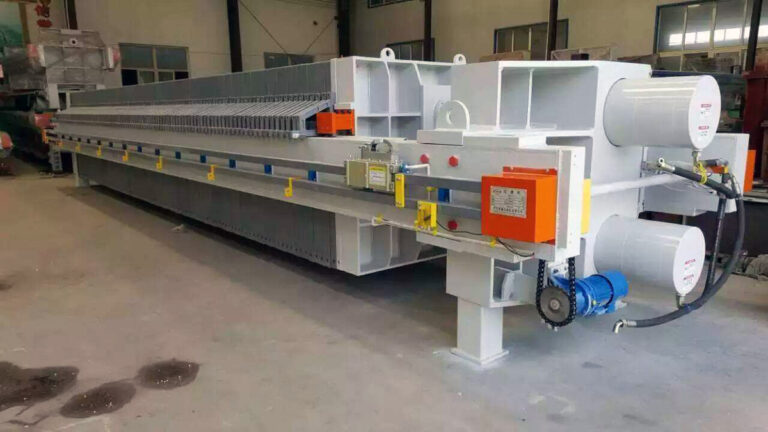
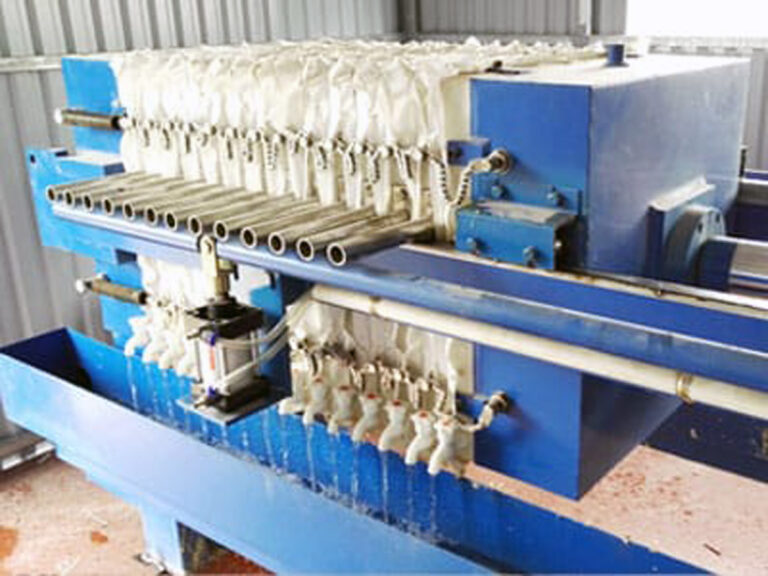
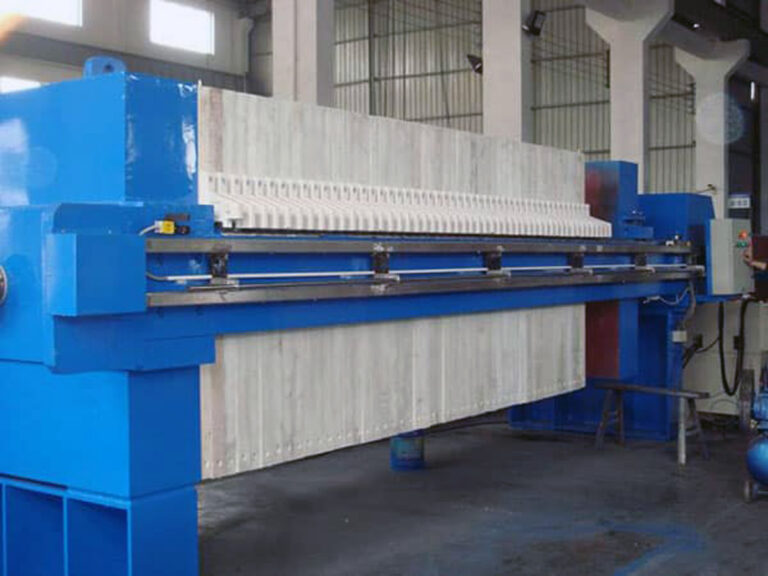
The operational profile of any filter press is dictated by its plate pack construction. The traditional plate and frame design uses alternating solid plates and hollow frames, with filter cloth draped over each plate. Slurry feeds through small corner ports into the frames. This design inherently risks uneven filling and dangerous pressure imbalances that can destroy plates if not meticulously managed. In contrast, the modern recessed chamber press utilizes single-piece plates with recessed cavities that form chambers when compressed together, typically fed via a large, clog-resistant center port for more uniform filling.
The Evolution to Advanced Dewatering
The membrane squeeze press represents a specialized evolution of the recessed chamber. It incorporates a “mixed pack” of standard plates and membrane plates equipped with an elastic surface. After the initial filtration cycle, this membrane is inflated with water or air, applying a secondary, isostatic compression to the cake. This segmentation aligns with core industry priorities: operational flexibility for batch processes, reliability for high-volume dewatering, and premium performance for maximum dryness.
Why the Core Design Matters
This fundamental mechanical difference cascades into every aspect of performance. The feed system influences cycle consistency and maintenance frequency. The chamber formation affects cake integrity and discharge ease. The potential for secondary action, as in a membrane press, dictates the ultimate dryness achievable. Selecting a press begins with understanding which of these architectural approaches best serves your process outcome.
Which Filter Press Has the Lowest Total Cost of Ownership?
Looking Beyond the Purchase Price
A true cost analysis must capture hidden operational variables. While plate and frame presses often have the lowest capital cost, their operational expenses can be significantly higher. These stem from labor-intensive cleaning, constant leak management, and the financial risk of catastrophic plate damage from pressure imbalances. Industry experts recommend modeling the full lifecycle, including drainage infrastructure for leaks and the complexity of cloth replacement.
The Balanced Performer
Recessed chamber presses, particularly gasketed (CGR) models, frequently represent the optimal TCO balance. They carry a moderate capital cost but offer lower operational expenses through efficient, leak-free operation and more reliable, automated cake discharge. Their design minimizes the labor and ancillary costs that plague plate and frame systems, making them the cost-effective workhorse for continuous operations.
Justifying a Premium Technology
The membrane squeeze press carries the highest capital cost due to its specialized plates and squeeze medium system. Its TCO justification is unique and hinges on downstream economics. Higher utility costs for squeeze water or air are directly offset by substantially reduced disposal or transportation costs due to a drier cake. For compressible sludges where disposal is the primary cost driver, the membrane press often delivers the lowest net operating cost despite its higher initial investment.
Performance Comparison: Cake Dryness, Cycle Time & Throughput
Quantifying the Output Metrics
Performance is a direct function of mechanical design. For final cake dryness, plate and frame and standard recessed chamber presses deliver moderate to good results, primarily dependent on applied feed pressure and cycle time. The membrane squeeze press is superior, with its secondary isostatic squeeze stage often achieving 5-15% lower moisture content. However, this advantage is not universal; it depends entirely on the slurry’s compressibility. A compressibility test is a critical prerequisite to validate this potential moisture reduction.
The Cycle Time Equation
Cycle time directly impacts throughput. Plate and frame cycles are typically longer due to the fixed-volume nature of the frames. Recessed chamber designs offer standard, efficient cycles. Interestingly, a membrane press can shorten the overall cycle time by accelerating the dewatering phase through mechanical squeezing, thereby increasing potential throughput for the same footprint. In our evaluations of automated systems, this throughput gain, combined with drier cake, often defines the business case.
A Data-Driven Performance View
The interplay between dryness, cycle time, and throughput is best understood through comparative data. The following table synthesizes key performance metrics across the three technologies, highlighting their inherent strengths and limitations.
| Metric | Plate & Frame | Recessed Chamber | Membrane Squeeze |
|---|---|---|---|
| Cake Dryness | Moderate to good | Moderate to good | Superior (5-15% drier) |
| Cycle Time | Typically longer | Standard, efficient | Can be shorter |
| Throughput Potential | Lower | High | Highest (with automation) |
| Key Limiting Factor | Fixed-volume frames | Feed pressure & time | Slurry compressibility |
Source: Technical documentation and industry specifications. Performance metrics are derived from operational data and manufacturer specifications for each filter press design, correlating mechanical action with dewatering outcomes.
How to Match Each Filter Press Type to Your Sludge or Slurry
The Niche Application: Plate and Frame
The plate and frame press suits specific, often batch-oriented applications. Its strength lies in accommodating variable cake thickness within a single press or enabling fine filtration with specialty media. This makes it relevant for niche pharmaceutical or specialty chemical production. However, for most high-volume industrial dewatering, its operational costs and reliability risks are increasingly difficult to justify against modern recessed chamber alternatives.
The Industrial Workhorse: Recessed Chamber
The recessed chamber press is the versatile default for continuous dewatering of most industrial sludges. It is the proven solution for mining tailings, municipal wastewater biosolids, and many chemical slurries where consistent, reliable operation and predictable cake dryness are paramount. Its design, governed by standards like GB/T 32707-2016 Chamber filter press, prioritizes robustness and efficiency for demanding duty cycles.
The Specialized Solution: Membrane Squeeze
Justification for a membrane press is specific and economic. It is optimal for compressible sludges where achieving the absolute driest cake translates directly into significant savings. This applies when downstream costs are dominant, such as for thermal drying energy, hazardous waste disposal by weight, or long-haul transportation. If your slurry is not compressible, the additional capital and complexity of a membrane system will not yield a sufficient return.
Operational & Maintenance Requirements Compared
Daily Operational Vigilance
Daily demands vary dramatically. Plate and frame presses require vigilant monitoring of feed to prevent port plugging and dangerous pressure imbalances, alongside frequent cleanup of leakage from cloth-sealed plates. Recessed chamber presses, especially with CGR plates, offer cleaner operation with gasketed seals, reducing daily labor. Membrane presses inherit this cleaner base but add the need to monitor the squeeze medium system (pressure, pumps).
The Maintenance Hierarchy
Maintenance complexity escalates with technology. Plate and frame maintenance involves manually handling individual, heavy frames and plates. For recessed chamber presses, cloth changes are more systematized, though the choice between CGR and Non-Gasketed (NG) plates presents a clear trade-off: leak-proof operation versus simpler cloth replacement, as detailed in industry standards like JB/T 4333.1-2019 Chamber filter press technical conditions. Membrane presses add the maintenance of squeeze medium pumps and manifolds, and require careful inspection of the elastic membranes for wear.
The Critical Role of Filter Cloth
A commonly overlooked detail is that the filter cloth is an active sealing component, not just a filter medium. Using the incorrect cloth type or tension for the specific plate design—be it plate and frame, chamber, or membrane—compromises the entire system’s performance, leading to leaks, blinding, or premature failure. This operational variable is as important as the mechanical selection itself.
The following comparison outlines the key daily and upkeep requirements, providing a practical view of the long-term resource commitment for each type.
| Requirement | Plate & Frame | Recessed Chamber | Membrane Squeeze |
|---|---|---|---|
| Daily Monitoring | Vigilant (pressure, plugging) | Standard process checks | Standard + squeeze system |
| Cleanup Labor | Frequent (leakage management) | Reduced (gasketed seals) | Reduced (inherits chamber base) |
| Cloth Change Complexity | Manual handling | Systematized (CGR vs NG trade-off) | Critical (active sealing component) |
| Added System Maintenance | None | None | Squeeze medium pumps/manifolds |
Source: JB/T 4333.1-2019 Chamber filter press technical conditions and JB/T 4333.2-2019 Plate and frame filter press technical conditions. These industry standards detail technical conditions, including construction and sealing methods (e.g., gasketed vs. non-gasketed), which directly inform operational and maintenance protocols for chamber and plate & frame presses.
Space, Utility, and Staffing Needs: A Practical Comparison
The Facility Footprint
Installation practicality influences total project cost. Plate and frame presses often necessitate dedicated drainage pits or containment areas due to expected leakage, increasing civil work and effective footprint. Recessed chamber presses enable cleaner plant layouts, frequently operating without secondary containment. Membrane presses require additional floor space adjacent to the press for the squeeze medium pump skid and related components.
Consumption and Labor Profiles
All press types require utilities for hydraulic power and feed pumps. Membrane presses add significant consumption of water or compressed air for the squeeze cycle. Staffing needs show the greatest divergence. Plate and frame systems have higher manual labor requirements for operation and cleanup. Both recessed chamber and membrane presses, especially when automated, drastically reduce direct operator attention, shifting the role to system monitoring and preventative maintenance.
The Automation Multiplier
Automation’s impact transcends labor reduction. For all press types, it evolves into a core process control mechanism that enhances cycle consistency, optimizes cloth life, and ensures repeatable cake quality. This transforms the staffing need from manual labor to technical oversight, a key consideration for modern facilities. The table below summarizes these practical installation and operational factors.
| Facility Need | Plate & Frame | Recessed Chamber | Membrane Squeeze |
|---|---|---|---|
| Floor Space (Ancillary) | Dedicated drainage pits | Cleaner layout, less containment | Extra space for squeeze pumps |
| Utility Consumption | Hydraulic power, feed pumps | Hydraulic power, feed pumps | Adds water/compressed air |
| Staffing (Manual) | Higher (operation, cleanup) | Reduced (efficient cycles) | Reduced (with automation) |
| Automation Impact | Labor reduction | Process control & consistency | Integral for ROI optimization |
Source: Technical documentation and industry specifications. Practical installation and operational footprints are based on typical system configurations, ancillary equipment requirements, and the impact of automation on labor intensity for each press type.
Key Decision Criteria for Industrial Dewatering Projects
Define the Non-Negotiable Outcome
Strategic selection starts by weighting your primary driver. Is it ultimate cake dryness to minimize disposal cost? Is it maximum throughput for a high-volume stream? Or is it operational flexibility for variable batch processes? This priority immediately skews the evaluation toward one technology archetype.
Characterize the Feed, Model the Costs
Second, rigorously characterize your feed slurry. Particle size distribution, solids concentration, and, most critically, compressibility will validate or rule out membrane technology. Third, model full lifecycle costs. Use pilot data to factor in hidden expenses: containment infrastructure, expected cloth lifespan and changeover time, and the fully burdened cost of labor for operation and maintenance.
Align with Plant Philosophy
Finally, consider your plant’s operational philosophy. Is it a highly automated, high-reliability facility where uptime is paramount? This favors a modern recessed chamber or membrane press with comprehensive automation. Is it a batch plant that values the ability to handle variable cake thicknesses? This may point to the niche flexibility of a plate and frame. View the press not just as a separator but as a potential platform for integrated steps like cake washing, which points toward more advanced recessed chamber configurations.
Next Steps: Validating Your Filter Press Selection
From Analysis to Action
After narrowing your choice, definitive validation is essential. For any press type, conduct pilot testing with a representative slurry sample to confirm performance metrics like cake dryness and cycle time. For membrane squeeze candidates, a compressibility test is a non-negotiable prerequisite to quantify potential moisture reduction.
Engage in Detailed Modeling
Engage qualified suppliers to provide detailed TCO models based on your pilot data, local utility and labor rates, and projected disposal costs. For recessed chamber presses, use this phase to decide on the CGR vs. NG plate seal based on your operational tolerance for potential leakage versus desired cloth change simplicity. Review automation options as an integral component for achieving consistent performance and optimizing the ROI of your selected technology.
The decision between plate and frame, recessed chamber, and membrane filter presses hinges on a weighted analysis of process outcome, slurry characteristics, and total lifecycle cost. Prioritize defining your non-negotiable performance metric—be it dryness, throughput, or flexibility. Let slurry compressibility guide membrane consideration, and let a comprehensive TCO model, not just capital cost, reveal the most economical path.
Need professional guidance to specify the right dewatering technology for your specific slurry? The engineering team at PORVOO can help you navigate this critical capital decision, from pilot testing to full-scale implementation of reliable industrial filter press solutions. For a detailed discussion of your application, you can also Contact Us.
Frequently Asked Questions
Q: How do the core design differences between plate and frame, recessed chamber, and membrane filter presses impact operational risk?
A: The plate and frame design uses separate plates and hollow frames fed by small corner ports, which can cause uneven filling and dangerous pressure imbalances that risk catastrophic plate failure. Recessed chamber presses use single-piece plates with large center ports for uniform filling, while membrane presses add an elastic surface for secondary compression. This means facilities prioritizing operational safety and reliability should avoid traditional plate and frame designs for high-pressure applications, as detailed in their technical specifications JB/T 4333.2-2019.
Q: What is the most accurate method for comparing the total cost of ownership between these three filter press types?
A: A true TCO analysis must extend beyond initial purchase price to include hidden operational variables. While plate and frame units have lower capital cost, they incur higher expenses from leak management, labor-intensive cleaning, and plate damage risk. Recessed chamber presses offer a balanced cost profile, and membrane presses justify higher capital and utility costs through major savings on downstream disposal from drier cake. For projects where final disposal is the primary cost driver, you should model the offset between higher utility consumption and reduced transport or thermal drying expenses.
Q: When is a membrane squeeze filter press technically and economically justified over a standard recessed chamber press?
A: A membrane press is specifically justified for compressible sludges where its secondary isostatic squeeze can reduce cake moisture by 5-15% more than a standard chamber press. This performance gain directly translates to savings on disposal, transport, or subsequent thermal drying costs. If your slurry characterization and pilot testing confirm high compressibility, the membrane technology’s higher capital and utility costs can deliver a strong return on investment; otherwise, a standard chamber press is the more cost-effective workhorse.
Q: How do operational and maintenance requirements differ, particularly regarding filter cloth management?
A: Plate and frame presses demand frequent cleanup of leakage and manual handling of individual components. Recessed chamber designs, especially with gasketed (CGR) plates, provide cleaner operation but introduce a trade-off between a leak-proof seal and simpler cloth replacement. Crucially, the filter cloth acts as an active sealing component, and using the incorrect type for your specific plate design will compromise the entire system’s performance and cloth life, as outlined in chamber press standards GB/T 32707-2016.
Q: What are the critical first steps to validate a filter press selection for a new industrial dewatering project?
A: Definitive validation requires pilot testing with a representative slurry sample to confirm key metrics like cake dryness and cycle time. For membrane press candidates, a specific compressibility test is a mandatory prerequisite to quantify potential moisture reduction. You should then engage suppliers to build detailed TCO models based on your pilot data. This means your project timeline must allocate resources for comprehensive bench-scale testing before finalizing any equipment specification or capital request.
Q: How does automation change the staffing and performance profile of a modern filter press installation?
A: Automation transforms the press from a manually operated unit to a consistent process control mechanism. It significantly reduces direct operator attention for cycle initiation and cake discharge, shifting the staffing role toward system monitoring and preventive maintenance. Furthermore, automated control enhances consistency in cake dryness and optimizes cloth life. For facilities designing high-reliability, continuous operations, you should budget for automation as an integral performance component, not as an optional labor-saving add-on.
Q: What practical installation factors, like space and utilities, differ most between these press types?
A: Plate and frame presses often require dedicated drainage containment for expected leakage, increasing civil work and footprint. Recessed chamber presses enable cleaner layouts, typically without secondary containment. Membrane presses need additional space for squeeze medium pumps and related components. All types need hydraulic and feed pump utilities, but membrane presses add consumption of water or air for the squeeze cycle. If your plant floor space is constrained or utility costs are high, these ancillary requirements become significant decision criteria.