Selecting the right solid-liquid separation technology is a critical capital decision with decades-long operational consequences. The choice between a plate and frame filter press and a decanter centrifuge is not about finding a universally “better” machine, but about matching a technology’s inherent strengths to your specific process economics, feedstock, and plant constraints. A misapplication can lock in excessive disposal costs, labor overhead, or throughput bottlenecks.
This comparison is essential now as industries face intensifying pressure on waste reduction, operational efficiency, and total cost of ownership. The right choice directly impacts your bottom line through sludge hauling fees, energy consumption, maintenance budgets, and labor allocation. Understanding the core trade-offs between pressure filtration and centrifugal force is the first step toward a defensible, long-term investment.
Plate and Frame Filter Press vs Centrifuge: Core Differences
Separation Mechanics Defined
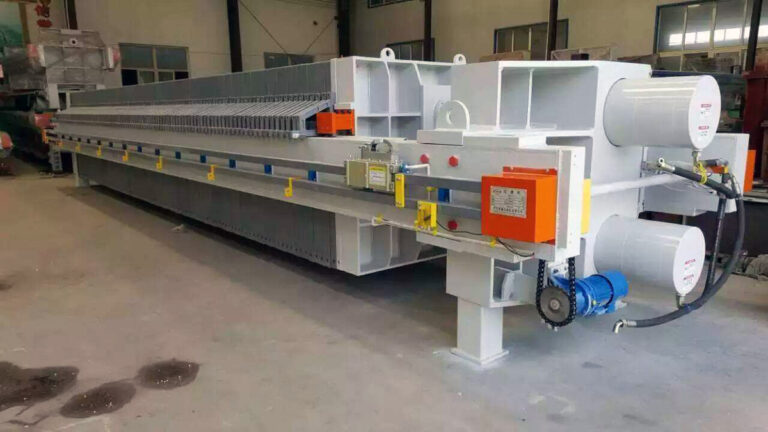
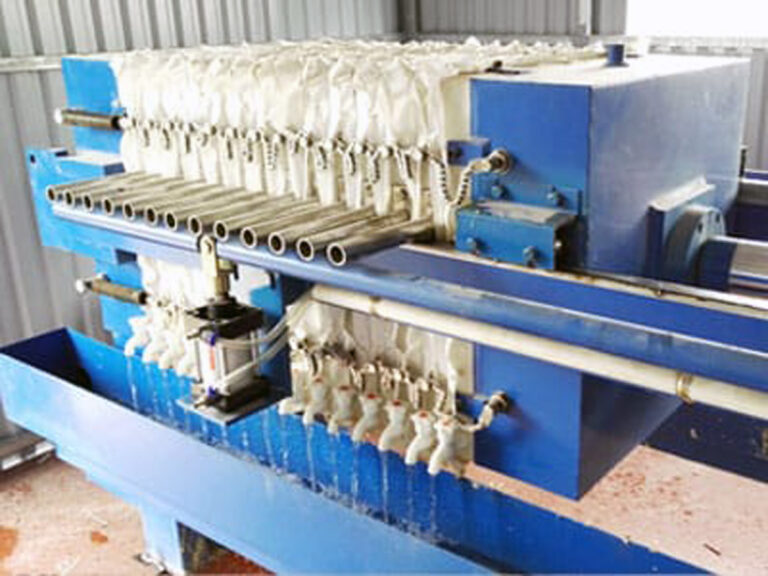
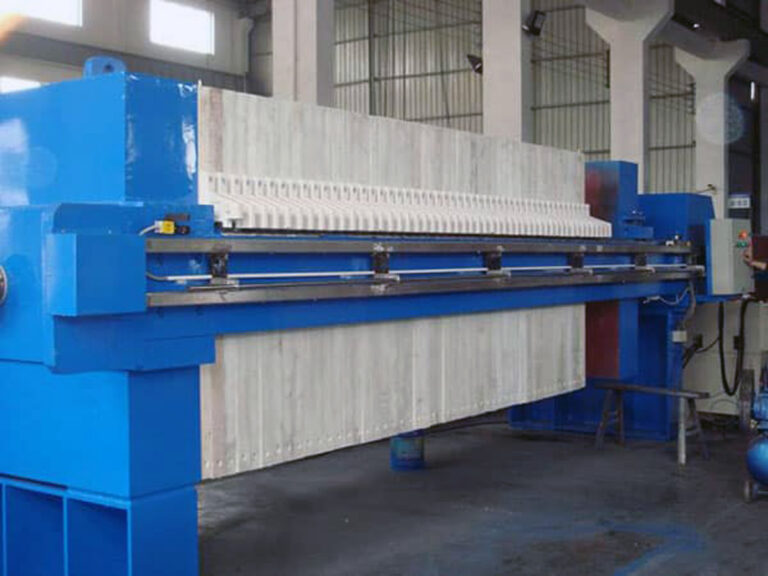
The fundamental operational divergence is mechanical: pressure versus centrifugal force. A plate and frame filter press is a batch pressure filtration system. Slurry is pumped at high pressure (typically 6-15 bar) into a series of recessed chambers lined with filter cloths. Solids are retained, building a cake, while filtrate exits through the cloth. A decanter centrifuge operates continuously, using high-speed rotation (generating 2,000-6,000 G) to separate solids via centrifugal sedimentation, with an internal scroll conveyor discharging the solids.
The Throughput-Automation Trade-off
This mechanical difference creates the primary operational trade-off. Centrifuges offer continuous, high-throughput processing, ideal for 24/7 operations with flow rates from 5 to over 100 m³/h. Filter presses create a controlled batch process. While effective, this introduces a natural bottleneck between cycles for cake discharge and cloth preparation. The centrifuge prioritizes flow continuity and automation; the filter press prioritizes achieving the ultimate possible cake dryness, even at the expense of continuous operation.
Impact on Process Design
Your choice automatically dictates your plant’s flow management. A centrifuge integrates into a continuous pipeline, often with minimal buffer capacity needed upstream. A filter press requires batch feed tanks, cycle timing controls, and often more extensive cake handling logistics. This difference influences everything from upstream chemical conditioning to downstream material handling system design.
Operating Cost Comparison: Capital, Energy, and Labor
Understanding Total Cost of Ownership
A comprehensive analysis must look beyond the purchase order. Filter presses often present a lower capital cost barrier, making them attractive for initial budgeting. However, their ongoing expenses for consumables like filter cloths and more frequent, labor-intensive maintenance can be significant. Centrifuges demand a higher initial investment but typically offer lower long-term operating costs due to higher automation and less frequent wear part replacement cycles.
Energy and Labor Profiles
Energy consumption differs fundamentally. Centrifuges have a higher continuous power demand to maintain rotation. Filter presses consume energy primarily during the batch feed and compression phases. The more decisive factor is often labor. Automated centrifuges can run for shifts with minimal operator intervention beyond monitoring. Filter presses traditionally require more hands-on attention for cycle initiation, cake discharge, and cloth inspection—a cost that compounds over years.
A Comparative Cost Breakdown
To move beyond generalizations, a side-by-side analysis of key cost drivers is essential. The following table quantifies the operational expenditure differences between these two systems.
| Cost Component | Plate & Frame Filter Press | Decanter Centrifuge |
|---|---|---|
| Capital Cost | Lower initial investment | Higher initial investment |
| Energy Consumption | 8-25 kWh/m³ (batch) | 15-45 kWh/m³ (continuous) |
| Labor Requirement | Higher, more operator attention | Minimal, automated operation |
| Long-term Operating Cost | Higher (cloths, labor) | Lower (automation, less frequent parts) |
Source: HG/T 20570.6-1995 Centrifuge selection and specification. This standard provides guidelines for centrifuge selection and specification, including economic and operational considerations relevant to the cost factors outlined in this table.
Which Achieves Better Cake Dryness: Filter Press or Centrifuge?
Dryness as an Economic Driver
Cake dryness isn’t just a performance metric; it’s a direct lever on disposal economics. A drier cake means less mass and volume to haul, leading to significantly lower transportation and landfill tipping fees. This financial benefit often becomes the central calculation, potentially offsetting a technology’s higher operational costs. In our experience, plants that underestimate this relationship often regret prioritizing upfront savings over long-term waste cost reduction.
The Compression Advantage
Plate and frame filter presses are engineered for superior cake solids. They achieve this through sustained high-pressure compression, literally squeezing more water from the sludge matrix. This results in a firm, compact cake. Centrifuges rely on centrifugal force alone, which, while effective for separation, does not apply the same compressive action, typically yielding a wetter, paste-like consistency.
Performance Benchmarks
The performance gap is clear when reviewing typical output ranges. For municipal sludges, the difference can determine whether a cake is suitable for direct landfill or requires further drying.
| Metric | Plate & Frame Filter Press | Decanter Centrifuge |
|---|---|---|
| Typical Cake Solids (Municipal) | 25% – 45% dry solids | 20% – 35% dry solids |
| Typical Cake Solids (Industrial) | Up to 70% dry solids | Generally lower than filter press |
| Separation Mechanism | Sustained high-pressure compression | Centrifugal force |
| Cake Consistency | Firm, compact cake | Wetter, paste-like cake |
Source: JB/T 4333.1-2019 Plate and frame filter presses. This standard defines the technical conditions and performance requirements for plate and frame filter presses, including their capability to achieve high cake dryness, which is a key comparative metric.
Maintenance Requirements Compared: Frequency and Expertise
Two Distinct Maintenance Philosophies
The maintenance profiles diverge sharply. Filter press maintenance is characterized by higher frequency and hands-on labor. Tasks like cloth replacement, plate cleaning, and servicing hydraulic rams and feed pumps occur monthly or quarterly. While physically demanding, this work generally requires standard mechanical aptitude. Centrifuge maintenance is less frequent but demands specialized expertise. It revolves around disciplined preventive routines like weekly lubrication and vibration analysis, with major interventions for wear parts like scroll conveyor tips and main bearings.
The Specialization Factor
Repairing a centrifuge is not a general maintenance task. It involves precise dynamic balancing, laser alignment, and understanding high-speed rotating assembly tolerances. The enclosed design minimizes routine cleaning but complicates internal inspection. The filter press, with its modular plate stack, is inherently more accessible. This creates a clear trade-off: lower-frequency but higher-cost, specialized interventions for the centrifuge versus higher-frequency, lower-skill, but more labor-intensive upkeep for the filter press.
Comparing Maintenance Profiles
The following table outlines the key differences in maintenance approach, required skills, and cost structure for each technology.
| Aspect | Plate & Frame Filter Press | Decanter Centrifuge |
|---|---|---|
| Maintenance Frequency | Monthly/Quarterly (more frequent) | Less frequent, weekly checks |
| Primary Tasks | Cloth replacement, plate cleaning | Lubrication, vibration monitoring |
| Required Expertise | General mechanical skills | Specialized, precise alignment |
| Major Wear Parts | Filter cloths, hydraulic components | Scroll conveyor tips, main bearings |
| Intervention Cost Profile | Lower-cost, higher-frequency | Higher-cost, lower-frequency |
Source: GB/T 10894-2018 Separating machines. This standard establishes common technical and safety requirements for separating machines, providing a framework for understanding the maintenance and operational demands of both equipment types.
Space, Footprint, and Installation Considerations
Physical and Operational Logistics
Centrifuges have a compact, vertical footprint and are fully enclosed systems. This makes them ideal for space-constrained facilities or installations where containment of odors, aerosols, or volatile compounds is critical. The enclosed design enhances safety and reduces housekeeping. Filter presses require a larger horizontal footprint to accommodate the plate stack and the area needed for cake discharge. Their open design during the cake release cycle presents higher risks of spillage and aerosol generation.
Implications for Deployment
The centrifuge’s integrated, plug-and-play nature makes it inherently more suitable for rental markets and temporary deployment. Its compactness simplifies shipping and installation. The batch nature, larger footprint, and more complex ancillary systems (feed pumps, compressors, cake conveyors) of filter presses pose greater logistical challenges for mobile or temporary applications. This factor alone can dictate the choice for remediation projects or plant trial runs.
Footprint and Operational Comparison
The logistical differences extend beyond mere floor space to impact safety, containment, and operational flexibility.
| Consideration | Plate & Frame Filter Press | Decanter Centrifuge |
|---|---|---|
| Physical Footprint | Larger horizontal footprint | Compact, vertical footprint |
| Enclosure Design | Open during cake discharge | Fully enclosed system |
| Housekeeping & Safety | Higher spillage/aerosol risk | Enhanced containment, safer |
| Installation Mobility | Challenging for rental/temporary | Plug-and-play, suitable for rental |
| Throughput Nature | Batch process bottleneck | Continuous, high-throughput operation |
Source: Technical documentation and industry specifications.
Key Decision Factors for Your Specific Application
Start with Feedstock Analysis
No technology is universally superior. The most critical factor is your specific feedstock composition. Centrifuges handle greasy, oily sludges and fine particles like metal hydroxides effectively, as these materials are less likely to blind the machine. These same materials can rapidly blind filter press cloths, requiring frequent cleaning or pre-treatment. Conversely, filter presses excel with high-volume, less greasy streams like primary municipal wastewater sludge.
The Conditioning Chemistry Lock-in
Your equipment choice automatically determines your chemical conditioning strategy. To achieve high dryness, filter presses often require significant doses of lime and ferric chloride, which add to the cake mass. Centrifuges typically operate with lower polymer doses but may require specific anti-scaling additives to protect the rotating assembly. This interplay between machine selection and chemistry cost is a frequently overlooked detail in the procurement phase.
Building a Decision Matrix
Beyond feedstock, construct a decision matrix that weights: desired cake dryness (and associated disposal cost), required throughput (batch vs. continuous), available plant space and ceiling height, in-house maintenance capabilities and skill sets, and specific health, safety, and environmental (HSE) requirements for containment. This structured approach prevents over-optimizing for a single parameter.
Filter Press vs Centrifuge: Pros and Cons Summary
Clarifying the Core Trade-offs
A succinct summary of advantages and disadvantages helps crystallize the decision. Each technology represents a distinct set of compromises between performance, cost, and operational philosophy.
| Technology | Key Advantages | Key Disadvantages |
|---|---|---|
| Filter Press | Maximum cake dryness; Lower capital cost; Effective for batch | Batch operation bottleneck; Higher labor; Larger footprint |
| Centrifuge | Continuous, automated operation; Compact footprint; Lower labor | Wetter cake; Higher capital/energy; Specialized maintenance |
Source: Technical documentation and industry specifications.
The Strategic Implications
The filter press is a tool for minimizing downstream disposal cost, accepting higher operational labor to achieve that goal. The centrifuge is a tool for maximizing upstream process continuity and automation, accepting a wetter cake and higher energy use. Recognizing which priority aligns with your plant’s overarching strategy is more important than comparing individual specifications.
How to Choose the Right System for Your Plant
Implementing a Rigorous Selection Process
Begin with a detailed, data-driven analysis of your sludge. Conduct bench-scale tests or pilot trials with actual feedstock to generate reliable performance data on cake dryness, capture rate, and chemical demand. Simultaneously, model your total cost of ownership over a 10-15 year horizon, incorporating realistic figures for energy, labor, consumables (cloths or polymer), maintenance, and projected disposal costs.
Aligning Technology with Operational Priorities
If maximum cake dryness and the resulting minimization of hauling and landfill fees are your paramount concerns, a plate and frame filter press is likely optimal. If operational continuity, automation, space constraints, and labor reduction are your primary drivers, a decanter centrifuge is preferable. Consider future trends: increasing automation favors centrifuges, while stricter disposal regulations may favor the drier cake from filter presses.
The Critical Step of Expert Consultation
The high cost of technological misapplication justifies expert involvement. Consult with engineering firms or technology providers who can offer granular, application-specific guidance. They can help navigate standards like ISO 121763:2021 for material compatibility and ensure your selection is robust for your specific duty. This due diligence transforms the selection from a capital purchase into a strategic operational asset.
The decision hinges on aligning a technology’s inherent trade-offs with your plant’s dominant economic and operational drivers. Prioritize a full lifecycle cost analysis over initial price. Validate all performance assumptions with your actual feedstock through testing. Finally, ensure your team’s skills and your plant’s infrastructure can support the maintenance and operational profile of your chosen system. This disciplined approach mitigates risk and secures long-term value.
Need professional guidance to pilot test these technologies with your specific sludge stream? The engineers at PORVOO specialize in application-based selection and can provide the data you need for a confident decision. Review detailed specifications and application notes for solid-liquid separation equipment to inform your next steps.
Contact Us to discuss your project parameters and arrange a technical consultation.
Frequently Asked Questions
Q: How do the operating cost structures for a filter press and a centrifuge differ over the system’s lifetime?
A: The total cost of ownership diverges significantly from the initial capital outlay. Filter presses usually have a lower purchase price but incur higher recurring costs for frequent cloth changes and labor-intensive maintenance. Centrifuges demand greater upfront investment but typically yield lower long-term operational expenses due to automation and less frequent wear part replacement. This means facilities focused strictly on capital expenditure may lean towards a filter press, while those prioritizing predictable, lower long-term operating budgets should model the centrifuge’s lifecycle costs.
Q: Which technology delivers drier cake, and how does that impact disposal economics?
A: Plate and frame filter presses consistently achieve superior cake dryness, often producing solids between 25% and 70% depending on the application, compared to a centrifuge’s typical 20% to 35% paste-like cake. This performance stems from sustained high-pressure compression during the batch cycle. The resulting reduction in sludge mass and volume directly lowers transportation and landfill fees. If minimizing disposal cost is your primary financial driver, a filter press is likely the optimal choice, even with its higher operational labor.
Q: What are the key maintenance differences in terms of frequency and required expertise?
A: Maintenance profiles are fundamentally different. Filter press upkeep is more frequent, involving monthly or quarterly tasks like cloth replacement and plate cleaning that demand hands-on labor but not highly specialized skills. Centrifuge maintenance is less frequent but requires expert intervention for critical wear parts and precise dynamic balancing, guided by standards like GB/T 10894-2018 Separating machines. This means plants with strong mechanical and vibration analysis teams can support a centrifuge well, while those relying on general maintenance staff may find a filter press’s routine more manageable.
Q: How does feedstock composition dictate the choice between a filter press and a centrifuge?
A: Feedstock characteristics are the most critical technical selection factor. Centrifuges handle greasy, oily sludges and fine particles effectively, while these same materials can rapidly blind the filter cloths of a plate and frame press. Conversely, filter presses excel with high-volume, less greasy streams like municipal wastewater. This decision also locks in your chemical conditioning strategy. For projects with variable or challenging feedstocks, pilot testing is essential to avoid the high cost of misapplying either technology.
Q: What space and installation factors should we consider when comparing these systems?
A: Centrifuges offer a compact, vertical, and fully enclosed footprint, ideal for space-constrained plants or applications requiring odor and aerosol containment. Filter presses need a larger horizontal area for the plate stack and cake discharge, and their open design during cycling increases housekeeping demands. The centrifuge’s plug-and-play nature also makes it more suitable for rental or temporary deployment. If your facility has severe space limitations or requires a mobile solution, the centrifuge’s compact and enclosed design provides a significant operational advantage.
Q: Are there specific material standards for the plastic components used in these separation systems?
A: Yes, critical plastic components like polypropylene plates and fittings must meet material integrity standards to ensure performance under operational stress and corrosion. Relevant specifications include ISO 121763:2021 Plastics pipes and fittings for piping elements. When evaluating equipment, verify that vendors design and fabricate these components in compliance with such standards to guarantee durability and prevent premature failure in harsh processing environments.
Q: How do we choose between a filter press and centrifuge for a new plant installation?
A: Start with a rigorous analysis of your sludge characteristics, target cake dryness, and required throughput (batch vs. continuous). Prioritize a filter press if maximizing cake solids to cut disposal costs is paramount. Choose a centrifuge if operational continuity, automation, labor reduction, or a small footprint are primary drivers. Crucially, conduct a full lifecycle cost analysis covering capital, energy, labor, and consumables. This strategic balance ensures your investment aligns with long-term operational and economic goals.