For wastewater treatment plant managers and procurement specialists, the choice between a plate and frame filter press and a belt filter press is a critical capital decision with decades-long financial implications. The common misconception is to prioritize upfront equipment cost. This approach overlooks the profound operational and disposal cost differences dictated by their core technologies. A true evaluation requires a total cost of ownership (TCO) lens.
As landfill fees escalate and operational budgets tighten, the economic gap between these systems widens. The drier cake from one technology can slash disposal tonnage, while the other’s continuous operation demands constant labor and chemical input. This analysis provides the decision framework to move beyond initial price quotes and model the true 5-10 year financial impact on your facility.
Plate and Frame vs Belt Press: Core Operating Principles Compared
Defining the Fundamental Mechanisms
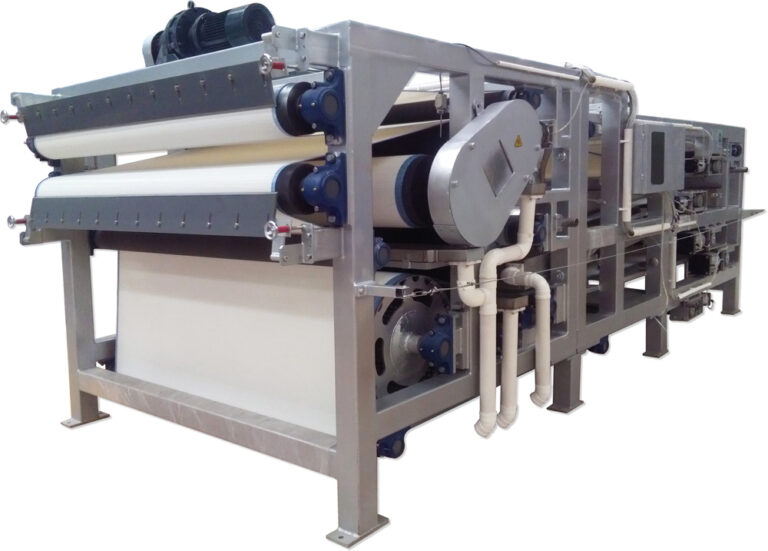
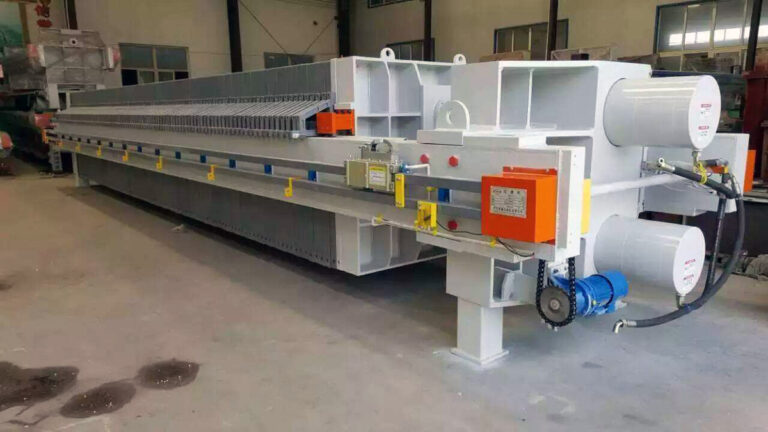
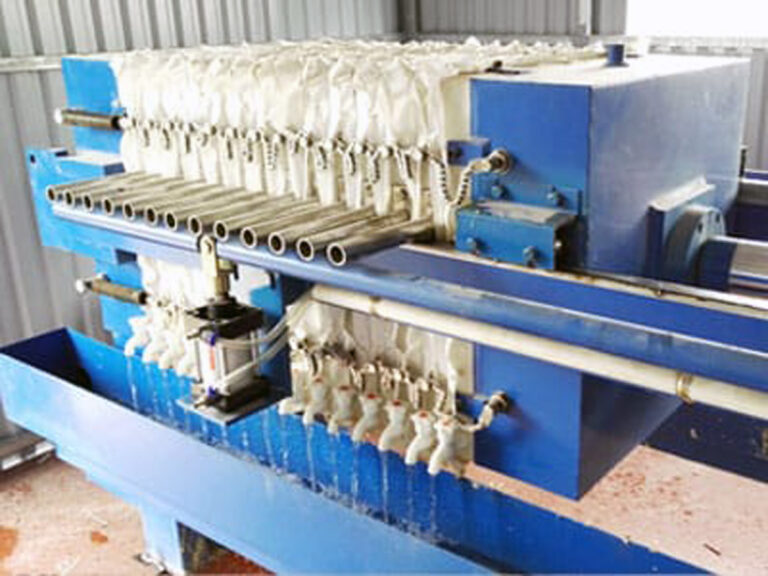
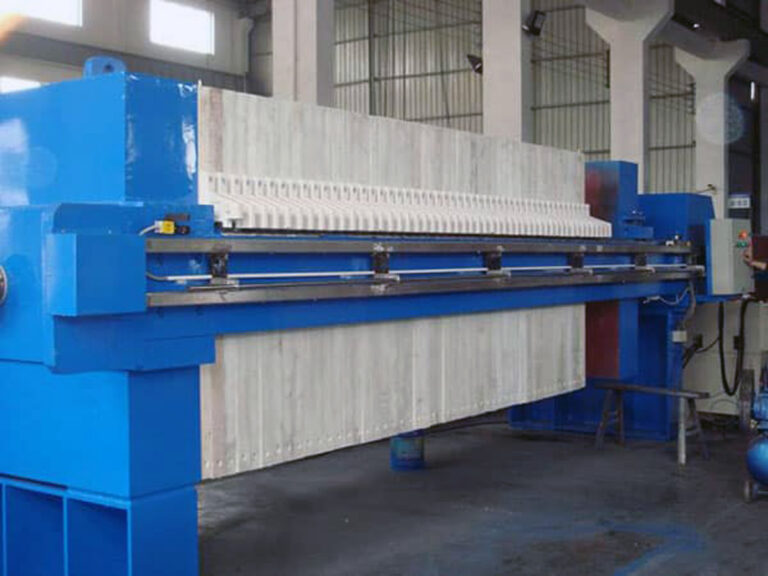
The operational divide originates in the dewatering mechanism. A belt filter press is a continuous, mechanical shear system. Conditioned sludge is gravity-drained on a moving belt before being pressed between two belts through a series of rollers. This process relies on mechanical pressure and water removal through belt pores. In contrast, a plate and frame filter press is a batch-operated, static pressure system. Sludge is pumped at high pressure into chambers formed between recessed plates, forcing liquid through filter cloths in a sealed environment.
Impact on Process Output and Control
This core difference dictates output characteristics. The belt press’s continuous shearing action typically yields a cake with 15-25% solids content. It is designed for constant throughput of consistent sludge streams. The filter press’s high-pressure, sealed filtration produces a significantly drier cake, often ranging from 30% to 70% solids. The batch nature of the filter press allows for precise adjustment of cycle time, pressure, and feed for each load, offering superior control for variable or difficult sludges.
The Throughput vs. Precision Trade-off
Your selection forces a fundamental operational choice. The belt press prioritizes volumetric throughput for high-volume, consistent feeds. The filter press prioritizes dewatering precision and cake dryness, often at the expense of continuous output. Industry experts note that facilities frequently err by selecting for maximum hourly capacity without considering the downstream cost of handling a wetter cake. In our evaluations, we’ve found that the optimal choice hinges on whether the primary constraint is processing speed or the total mass of waste for disposal.
Total Cost of Ownership (TCO) Comparison: Key Cost Drivers
Moving Beyond Capital Expenditure
A meaningful TCO analysis must transcend the initial purchase price. For dewatering equipment, the primary financial drivers are recurring operational costs: chemical consumption, labor, maintenance, energy, and disposal fees. These are not incidental; they are locked in by the chosen technology’s operating principles. The belt press’s mechanical complexity and continuous operation inherently lead to higher consumable use and labor. The filter press’s automated cycles and efficient filtration reduce these variable costs.
Modeling the Full Lifecycle
Facility procurement must prioritize detailed operational cost modeling. The drier cake from a filter press directly reduces mass for disposal, a cost that compounds annually. Easily overlooked details include ancillary system costs: belt wash water systems for belt presses or high-pressure feed pumps for filter presses. A comprehensive TCO model projects these costs over a 5-10 year horizon, revealing that operational budgets, not capital outlay, are the primary levers for long-term financial performance.
Quantifying the Cost Drivers
The following table summarizes the key TCO drivers that differentiate the two technologies, providing a baseline for financial modeling.
| Cost Driver | Plate & Frame Filter Press | Belt Filter Press |
|---|---|---|
| Chemical Consumption | Low (0.2 kg/dry ton) | High (0.5 kg/dry ton) |
| Labor Demand | Minimal (monitoring) | High (continuous attention) |
| Annual Maintenance Hours | Low (scheduled) | Up to 8x higher |
| Cake Solids Content | 30-70% | 15-25% |
| Disposal Cost Impact | Major reduction | Higher mass/volume |
Source: Technical documentation and industry specifications.
Chemical Consumption & Operational Cost Analysis Compared
Polymer Dosage and Process Sensitivity
Chemical use, specifically polymer for sludge conditioning, represents a major recurring expense where the technologies diverge sharply. The belt press’s continuous, shear-sensitive process requires a higher polymer dose to maintain floc integrity as the sludge is moved and sheared between belts. The static, high-pressure environment of a plate and frame filter press is less disruptive to flocs, often requiring a lower dose primarily for upstream thickening.
Annual Cost Implications
For a facility processing 20 dry tons per hour, the differential in polymer consumption can be substantial. The belt press typically requires approximately 0.5 kg of polymer per dry ton, while the filter press often uses only 0.2 kg per dry ton. This variance directly translates to operational budgets. According to industry cost analyses, this polymer differential alone can amount to over $45,000 in annual savings for the filter press in this scenario. This evidence underscores that the choice of technology locks in a specific chemical cost structure.
Strategic Conditioning Considerations
The primary conditioning need differs. Belt press operation focuses on maintaining floc integrity against shear. Filter press operation focuses on creating a stable, drainable feed. The following table details the operational cost analysis for chemical consumption.
| Metric | Plate & Frame Filter Press | Belt Filter Press |
|---|---|---|
| Polymer Dose | 0.2 kg per dry ton | 0.5 kg per dry ton |
| Process Sensitivity | Low (static pressure) | High (shear-sensitive) |
| Annual Polymer Cost (20 TPH) | Lower | ~$45,000 higher |
| Primary Conditioning Need | Upstream thickening | Maintain floc integrity |
Source: Technical documentation and industry specifications.
Which System Delivers a Drier Cake & Reduces Disposal Costs?
Cake Dryness as an Economic Metric
Cake dryness is the most direct driver of downstream logistics and waste management economics. A belt press typically produces a cake with 15-25% solids, meaning 75-85% of the hauled weight is water. A filter press routinely achieves 30-50% solids or higher, effectively halving the water content in the cake. This is not just a technical specification; it is a primary lever for cost control.
Direct Impact on Disposal Expenses
The reduction in mass and volume directly decreases disposal and hauling costs. For a 20 TPH operation, this can translate to annual savings of approximately $30,000 when using a filter press. Furthermore, a sufficiently dry cake may eliminate the need for secondary drying beds or additional dewatering steps, reducing capital and space requirements elsewhere in the plant.
Long-Term Compliance and Cost Hedging
As landfill costs rise and regulations on waste moisture tighten, the economic and compliance advantage of a drier filter press cake compounds. It acts as a strategic hedge against future cost inflation and regulatory changes. The table below quantifies the disposal advantages.
| Parameter | Plate & Frame Filter Press | Belt Filter Press |
|---|---|---|
| Typical Cake Solids | 30-50% (or higher) | 15-25% |
| Water Content in Cake | Halved | 75-85% water |
| Annual Disposal Savings (20 TPH) | ~$30,000 | Baseline |
| Landfill Cost Hedge | Strong advantage | Limited |
| Secondary Drying Need | Often eliminated | May be required |
Source: Technical documentation and industry specifications.
Labor, Maintenance, and Automation: Operational Demands
Automation Defines the Staffing Model
The level of automation dictates the operational philosophy. Belt presses require continuous, skilled operator attention to manage belt tracking, tension, wash systems, and feed consistency. This often demands a dedicated full-time role. Modern plate and frame filter presses are highly automated, with PLC-controlled cycles for filling, pressing, and cake release. Once initiated, they require minimal intervention.
Translating Automation to Labor Cost
This automation shift moves personnel from active operation to monitoring and scheduled maintenance. For a 20 TPH operation, it can translate to direct labor savings of roughly $25,000 annually for the filter press. The maintenance profile also differs significantly. A belt press’s numerous moving parts—belts, rollers, bearings, spray nozzles—create multiple points of failure and require frequent adjustment and replacement.
Comparing Maintenance Complexity and Cost
A belt press can require up to eight times the annual maintenance hours of a filter press. The filter press’s primary wear items are filter cloths and plates, which are replaced on a predictable schedule. Implementing a systematic maintenance approach, as supported by frameworks like ISO 14001:2015, is easier with the filter press’s predictable, scheduled needs versus the belt press’s reactive maintenance demands.
| Operational Aspect | Plate & Frame Filter Press | Belt Filter Press |
|---|---|---|
| Automation Level | High (PLC-controlled cycles) | Low (manual operation) |
| Operator Attention | Minimal intervention | Dedicated, skilled role |
| Annual Labor Savings (20 TPH) | ~$25,000 | Baseline |
| Maintenance Complexity | Predictable, scheduled | High (moving parts) |
| Primary Wear Items | Filter cloths, plates | Belts, rollers, wash systems |
Source: ISO 14001:2015. This standard’s framework for systematic environmental management and resource efficiency supports evaluating operational demands like labor and maintenance, which are key to long-term cost and performance.
Space Requirements, Flexibility, and Facility Fit
Physical and Operational Footprint
The physical footprint influences facility design. Belt presses offer continuous output and can have a smaller footprint per unit of continuous throughput, suiting high-volume plants with consistent streams. Filter presses operate in batches, which may require more floor space for the press itself and for cake handling logistics. However, the batch process allows for flexibility in processing different sludge types in separate cycles within the same unit.
Feedstock Compatibility is Critical
Feedstock characteristics are the ultimate selection arbiter. Belt presses can struggle with greasy, oily, or highly variable sludges that blind belts and disrupt dewatering. Filter presses are generally better suited for high-solids, difficult-to-dewater, or abrasive materials due to their sealed, high-pressure operation. A comprehensive sludge characterization is therefore a non-negotiable prerequisite for selection; choosing the wrong technology for the feed guarantees operational failure and cost overruns.
Decision Factors for Facility Integration
The choice extends beyond the press. Consider ancillary systems: belt presses require clean water for belt washing, adding to water consumption. Filter presses require robust, high-pressure feed pumps. The table below outlines key fit considerations.
| Consideration | Plate & Frame Filter Press | Belt Filter Press |
|---|---|---|
| Operation Mode | Batch processing | Continuous output |
| Process Flexibility | High (per-cycle adjustment) | Low (fixed process) |
| Ideal Sludge Type | High-solids, variable, abrasive | Consistent, high-volume |
| Problematic Feeds | Handles difficult sludges | Struggles with greasy/oily |
| Footprint Priority | Flexible batch space | Throughput per square foot |
Source: Technical documentation and industry specifications.
Selecting the Right Press: A Decision Framework for Your Facility
Foundational Step: Sludge Analysis
The first step is a detailed sludge analysis. Parameters like solids concentration, particle size, volatility, and grease content will immediately disqualify one technology or confirm the suitability of the other. Do not proceed with financial modeling until this technical feasibility is established.
Core Activity: Multi-Year TCO Modeling
Second, model TCO over a 5-10 year horizon. Use realistic projections for local chemical, labor, disposal, and maintenance costs—not just catalog pricing. Factor in projected inflation for disposal fees, which disproportionately impact technologies producing wetter cake. This model must include the fully burdened cost of labor for continuous operation versus monitoring.
Evaluating Vendor Partnership
Finally, evaluate vendors as long-term filtration partners. The quality of technical service, training, spare parts logistics, and process support is critical for long-term uptime and cost control. The best technical specification is undermined by poor aftermarket support. Ensure your selected partner can provide the lifecycle support your operational model requires.
Key Takeaways and Next Steps for Your TCO Analysis
The evidence indicates that for facilities prioritizing long-term operational cost minimization and drier cake, the plate and frame filter press often delivers a superior TCO. Annual savings from chemicals, labor, maintenance, and disposal can exceed $100,000, readily justifying a higher initial investment. The belt press remains a viable solution for high-volume, consistent streams where ultimate cake dryness is a secondary concern to continuous throughput.
Your next steps should be systematic. First, characterize your sludge stream thoroughly with multiple samples. Second, build a detailed, multi-year TCO model using the cost drivers outlined here. Third, engage vendors with your sludge data and TCO model, evaluating their proposed industrial filtration solutions within this rigorous financial and technical framework.
Need professional support to model the TCO for your specific application or to explore high-performance dewatering equipment? The engineering team at PORVOO can provide data-driven analysis and technical specifications to inform your capital planning process. Contact Us to discuss your project parameters and sludge characterization data.
Frequently Asked Questions
Q: How does the dewatering mechanism of a plate and frame press affect its total cost of ownership compared to a belt press?
A: The batch-operated, high-pressure filtration of a plate and frame press produces a drier cake (30-70% solids) versus the continuous, lower-pressure shearing of a belt press (15-25% solids). This fundamental difference drives lower chemical use, reduced mass for disposal, and less labor due to automation. This means facilities prioritizing long-term operational cost reduction should model the significant savings in polymer, hauling, and staffing that a filter press enables over a 5-10 year horizon.
Q: What is the typical difference in polymer consumption between these two dewatering technologies?
A: Polymer use is a major recurring cost where the technologies diverge sharply. A belt press requires about 0.5 kg per dry ton to maintain floc integrity during its continuous, shear-sensitive process. A plate and frame press, with its static high-pressure environment, often needs only 0.2 kg per dry ton. For a 20 dry ton per hour facility, this can mean over $45,000 in annual polymer savings, locking in a specific chemical cost structure from the start.
Q: Which system is better for reducing sludge disposal and hauling expenses?
A: A plate and frame filter press directly lowers disposal costs by producing a significantly drier cake, routinely achieving 30-50% solids or higher. This can cut hauled mass by approximately two-thirds compared to a belt press’s 15-25% solids cake, saving an estimated $30,000 annually in a 20 TPH scenario. If your operation faces rising landfill fees or tightening moisture regulations, the drier cake from a filter press provides a strategic hedge against future cost inflation.
Q: How do labor and maintenance demands compare for automated filter presses versus belt presses?
A: Modern plate and frame presses with PLC-controlled cycles require minimal intervention, shifting personnel to monitoring and scheduled maintenance of less than one shift per week. Belt presses demand continuous, skilled operator attention for belt tracking and feed consistency. Maintenance hours for a belt press can be up to eight times higher due to its numerous moving parts. For projects where skilled labor is scarce or expensive, the automated filter press offers direct operational savings and reliability.
Q: How should sludge characteristics influence the choice between a belt press and a filter press?
A: Feedstock compatibility is the ultimate selection arbiter. Belt presses can struggle with greasy, oily, or highly variable sludges that blind the belts. Filter presses are better suited for difficult-to-dewater, high-solids, or abrasive materials due to their high-pressure, batch-based operation. This means your next step must be a comprehensive sludge characterization; choosing a technology incompatible with your waste stream guarantees operational failure and negates any TCO calculations.
Q: What role do environmental management systems play in equipment selection for wastewater facilities?
A: Implementing a structured Environmental Management System (EMS) like ISO 14001:2015 provides a framework for systematically managing environmental responsibilities, including resource efficiency and waste reduction. This systematic approach directly influences the total cost of ownership by prioritizing technologies that minimize waste mass and chemical use. If your facility is pursuing or maintains ISO 14001 certification, selecting a dewatering system that produces a drier cake aligns with the standard’s goals for improved environmental performance and compliance.