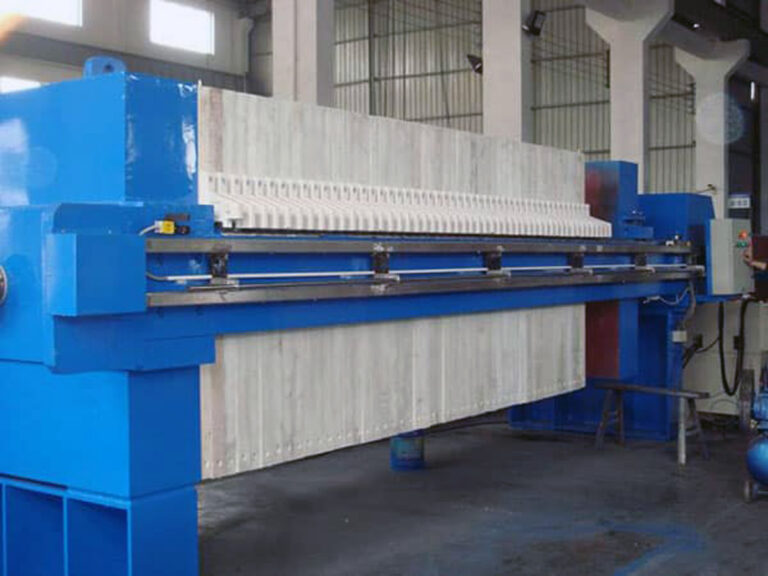
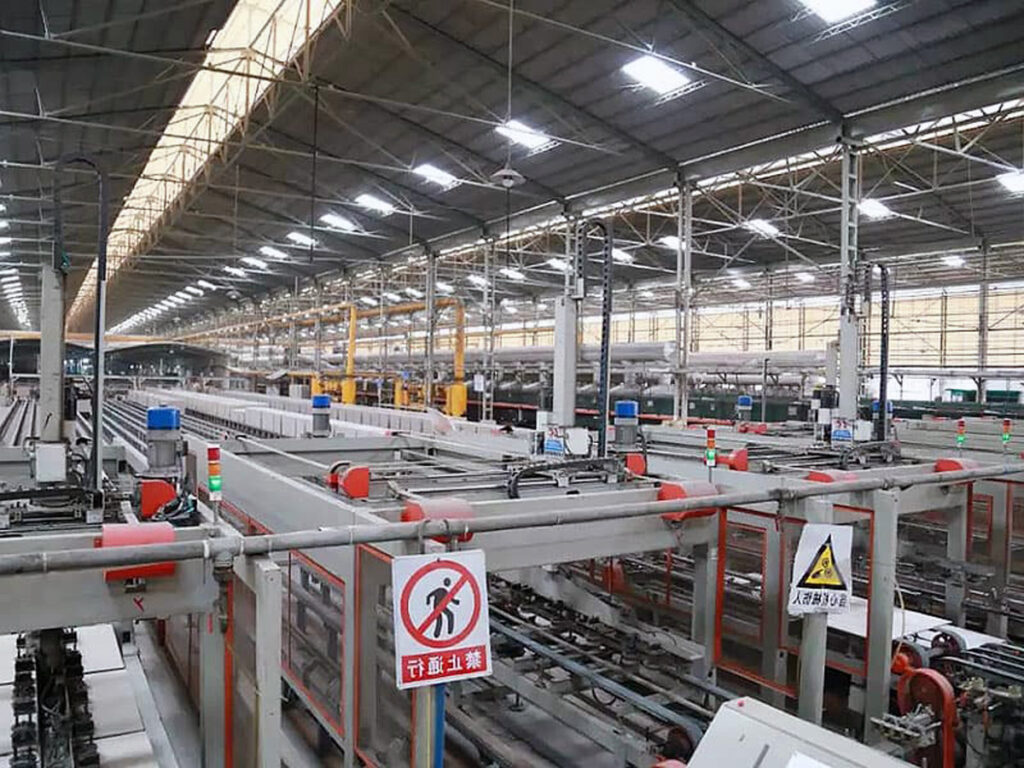
For ceramic manufacturers, achieving the lowest possible moisture content in filter cake is not just an operational metric—it is a direct driver of profitability. The choice between a membrane filter press and a standard recessed chamber press defines the ceiling of your dewatering performance. This decision impacts energy consumption in downstream dryers, transportation costs, and final product quality. Many operations default to the lower capital cost of a recessed press, overlooking the total cost of ownership and the technical limitations it imposes on challenging materials like ceramic clay.
The colloidal nature of ceramic and kaolin clays makes them tenaciously retain water. As energy costs rise and sustainability mandates tighten, the efficiency of your primary dewatering stage becomes a strategic priority. Selecting the right press technology is a capital decision with decades-long operational consequences, demanding a clear understanding of mechanism, performance, and long-term economics.
Membrane vs. Recessed Press: Core Mechanism Differences
Defining the Dewatering Process
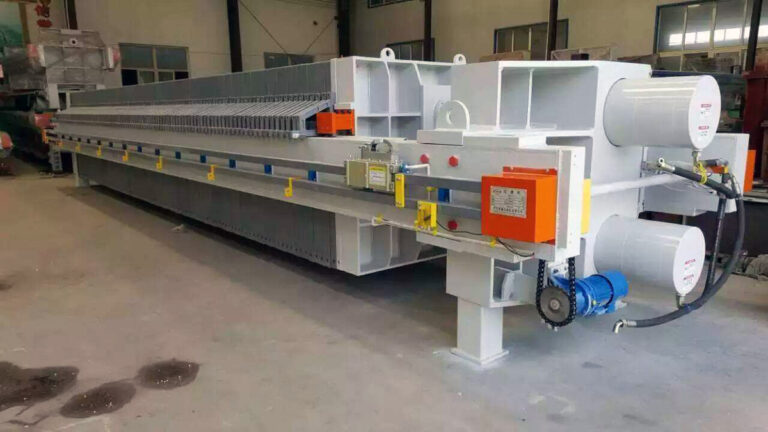
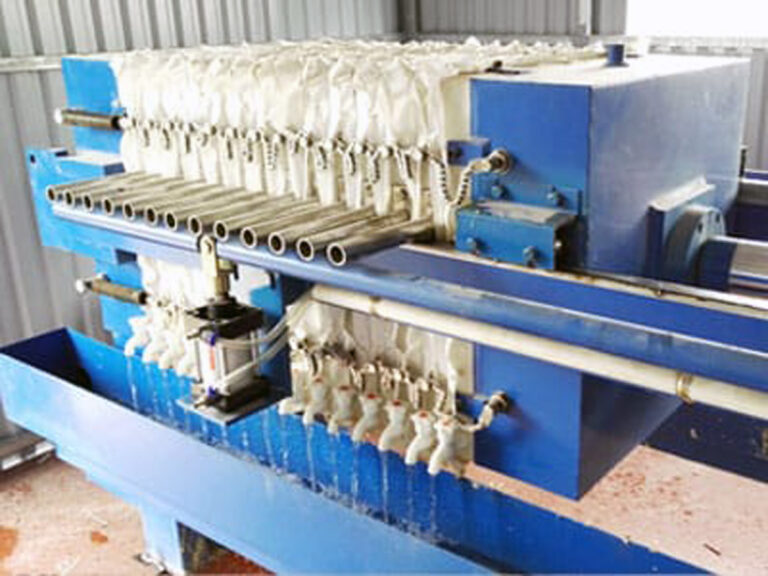
Both press types operate on pressure-driven solid-liquid separation. Slurry is pumped into chambers lined with filter cloth, where the liquid filtrate passes through, leaving a solid cake. The standard recessed chamber press relies solely on the initial feed pump pressure, typically 4-7 bar, to form and dewater the cake. Once chambers are full, the cycle ends. The final moisture is dictated by this single pressure phase and the slurry’s inherent filterability.
The Membrane’s Two-Phase Advantage
The membrane filter press introduces a definitive, sequential operation. After an identical filling phase, a secondary squeeze cycle is initiated. A flexible membrane lining each chamber is inflated with hydraulic oil or compressed air, applying direct mechanical compression to the cake from both sides. This allows for significantly higher pressures, routinely reaching 16-24 bar. This separates cake formation from active mechanical dewatering, a functionally different capability. In our analysis of clay dewatering, this two-phase process is the non-negotiable feature for targeting low residual moisture.
Impact on Cake Structure
The mechanical squeeze does more than apply higher pressure; it reshapes the cake. It forcibly expels interstitial water and eliminates moisture-retaining channels that form during simple filtration. The uniform compression physically rearranges particles, reducing porosity and creating a more consolidated, handleable cake. This structural difference is why a membrane press output is fundamentally drier and more consistent than what a recessed press can produce from the same feed material.
Cost Comparison: Capital Investment vs. Operational ROI
Understanding Total Cost of Ownership (TCO)
The financial analysis must extend beyond the purchase price. Membrane filter presses command a higher capital expenditure (CAPEX) due to complex plate construction with integrated membranes, advanced controls, and robust auxiliary components. However, the economic calculus strongly favors membrane technology for high-volume ceramic processing. The superior dewatering performance directly converts into substantial operational expenditure (OPEX) savings, impacting drying energy, transportation weight, and disposal fees.
Quantifying the Operational Savings
A drier cake from a membrane press can reduce downstream thermal dryer energy by 50% or more. For a plant running continuously, this saving alone can justify the CAPEX premium within 18-36 months. Furthermore, lower cake moisture means less mass to transport for off-site disposal or to subsequent processing stages, compounding the savings. We compared the two technologies and found that for operations processing over 50 tons of clay per day, the membrane press consistently delivers a lower TCO.
The ROI Decision Framework
The return on investment is not universal; it scales with volume. For smaller or batch-oriented plants with low throughput, the extended payback period of a membrane press may not be justifiable. For large-scale, continuous operations where minimizing moisture is paramount, the recurring OPEX savings create a compelling strategic argument. The key is to model your specific energy, logistics, and disposal costs against the equipment premium.
Cost Analysis Data
| Cost Factor | Membrane Filter Press | Standard Recessed Press |
|---|---|---|
| Capital Expenditure (CAPEX) | High | Moderate to Low |
| Operational Expenditure (OPEX) | Low (Energy, transport) | High (Downstream drying) |
| Cake Solids Content | 50-100% greater | Baseline |
| Total Cost of Ownership (TCO) | Lower long-term | Higher long-term |
| ROI Justification Timeframe | Shorter (High volume) | Longer / Not applicable |
Source: Technical documentation and industry specifications.
This table illustrates the fundamental financial trade-off: higher initial investment for the membrane press is offset by significantly lower ongoing operational costs, leading to a superior long-term TCO for suitable applications.
Which Achieves Lower Moisture Content in Ceramic Clay?
The Pressure Differential
For the explicit goal of minimizing moisture, the membrane filter press holds a definitive advantage. The key driver is the order-of-magnitude difference in applied pressure. A recessed press is limited to feed pump pressure (4-7 bar), while a membrane’s mechanical expression applies 16-24 bar or more. This higher force is critical for expelling bound water that hydraulic pressure alone cannot remove from colloidal clay particles.
Validating Performance with Standards
The definitive method for measuring this key performance indicator is outlined in GB/T 34335-2017 Test method for filter press cake moisture. Applying this standard in comparative testing consistently shows membrane presses achieving significantly lower moisture percentages. The standard’s rigorous procedure validates that the membrane’s uniform compression eliminates moisture-retaining channels and produces a drier, more consolidated cake, which is a fundamental capability gap for the recessed press.
Performance Data Comparison
| Performance Parameter | Membrane Filter Press | Standard Recessed Press |
|---|---|---|
| Primary Dewatering Mechanism | Mechanical squeeze + hydraulic | Hydraulic pressure only |
| Maximum Operating Pressure | 16-24 bar (up to 30 bar) | 4-7 bar |
| Final Cake Consistency | Drier, more consolidated | Higher residual moisture |
| Water Removal Capability | Interstitial & bound water | Free water primarily |
| Uniformity of Compression | High, eliminates channels | Variable |
Source: GB/T 34335-2017 Test method for filter press cake moisture. This standard provides the definitive method for measuring cake moisture content, the key performance indicator that validates the superior dryness claims for membrane presses in ceramic clay applications.
The data confirms the membrane press’s technical superiority in both the mechanism and the measurable outcome—lower final moisture content.
Performance Compared: Cycle Time, Cake Dryness & Throughput
Evaluating Cycle Efficiency
A common misconception is that the added squeeze phase lengthens the membrane press cycle. In practice, the total cycle time is often shorter or comparable. The membrane press achieves target dryness more efficiently than a recessed press running a prolonged feed cycle to approach a similar moisture level. This efficiency, combined with consistently drier output, directly enhances plant throughput.
The Role of Automation
Automation shifts the cost-benefit analysis from labor to throughput and consistency. Semi- or fully-automatic membrane presses with PLC control, as referenced in JC/T 2570-2020 Filter press for ceramic clay, ensure repeatable squeeze cycles and precise timing. This guarantees predictable cake dryness and shorter, consistent cycles. It transforms the press from a variable cost center into a reliable capacity driver, maximizing output for the operational footprint.
Throughput and Consistency Data
| Metric | Membrane Filter Press | Standard Recessed Press |
|---|---|---|
| Cycle Phases | Two-phase (fill + squeeze) | Single-phase (fill) |
| Cycle Time Efficiency | Shorter for target dryness | Longer for similar dryness |
| Output Cake Dryness | Consistently high | Variable, lower |
| Plant Throughput Impact | Higher for same footprint | Lower |
| Process Consistency | High (PLC automated) | Moderate to low |
Source: JC/T 2570-2020 Filter press for ceramic clay. This industry-specific standard classifies and defines performance requirements for ceramic clay filter presses, encompassing the cycle time, throughput, and cake quality metrics central to this comparison.
The data underscores that the membrane press delivers higher performance not just in dryness, but in overall operational efficiency and predictability.
Key Use Cases: When to Choose Each Filter Press Type
The Case for the Recessed Chamber Press
The standard recessed press remains a valid choice for specific scenarios. It is suitable where moderate cake moisture is acceptable, capital budget is severely constrained, and the processed slurry is inherently free-filtering. It serves well in simpler, smaller-scale, or batch-oriented operations where the operational savings from a drier cake cannot justify a higher upfront investment. Its simplicity is its virtue in low-throughput, non-critical applications.
The Strategic Choice for Membrane Technology
The membrane filter press is essential when minimizing moisture is paramount. This is non-negotiable for poor-filtering, colloidal materials like ceramic clay. It is the strategic choice to reduce downstream drying energy, lower logistics costs, or meet strict product specifications. Furthermore, its integrated cake washing capability—using a low-pressure pre-squeeze to create a uniform cake—provides a secondary benefit for processes requiring efficient impurity removal, addressing both product quality and environmental goals. For operations focused on efficiency and scale, exploring advanced industrial filtration and dewatering systems is a logical next step.
Decision Drivers
The choice hinges on material characteristics and process economics. If your clay is easily dewatered and your operation is cost-sensitive, a recessed press may suffice. If you are battling high drying costs, transportation fees, or stringent moisture specs with a challenging material, the membrane press is not an upgrade—it is the necessary tool.
Maintenance, Downtime, and Operational Complexity
Simplicity vs. System Complexity
Operational demands differ. The recessed chamber press, with its solid plates, has lower maintenance requirements. Its primary wear items are filter cloths, and it lacks a high-pressure inflation system. This simplicity translates to easier operator training and potentially lower maintenance costs, though often at the expense of manual intervention and cycle variability.
Maintaining the Membrane System
Membrane presses introduce additional considerations centered on membrane integrity and the inflation system. The membranes, while durable, are subject to wear under repeated high-pressure cycles. The hydraulic or pneumatic system requires monitoring. However, modern automated designs mitigate downtime. PLC-controlled sequences prevent operational errors, and features like core blow devices keep cloths cleaner longer. Investing in robust plate construction, as governed by standards like GB/T 34334-2017 Membrane filter press, is a direct investment in reliability and reduced lifetime maintenance.
Maintenance and Operational Comparison
| Aspect | Membrane Filter Press | Standard Recessed Press |
|---|---|---|
| System Complexity | High (membranes, HPU) | Low (solid plates) |
| Primary Wear Items | Filter cloths, membranes | Filter cloths |
| Inflation System Maintenance | Required (hydraulic/air) | Not applicable |
| Automation & Downtime Mitigation | PLC controls, core blow | Manual intervention likely |
| Operational Skill Requirement | Higher | Lower |
Source: GB/T 34334-2017 Membrane filter press. This standard outlines the technical and safety requirements for membrane filter presses, including the construction and durability of membranes and auxiliary systems, which directly informs maintenance and operational complexity.
The table highlights the trade-off: the membrane press demands more sophisticated maintenance but offers greater automation to reduce unplanned downtime and improve consistency.
Space & Utility Requirements: A Practical Layout Analysis
Footprint and Ancillary Systems
For equivalent chamber volume, both press types have similar physical footprints. The primary spatial difference lies in the ancillary systems. A membrane press requires a Hydraulic Power Unit (HPU) or a dedicated high-pressure air compressor. This may necessitate additional floor space or a dedicated utility area adjacent to the press. This holistic system view is critical during plant layout planning.
Utility and Integration Demands
Utility demands diverge significantly. Beyond standard electrical and slurry feed connections, the membrane press requires a reliable source of high-pressure hydraulic fluid or air. This underscores that the filter press is the core of a dewatering system. Optimal performance depends on integration with specialized feed pumps, safety systems, and media supplies. Procurement must evaluate vendor capability in system design, as mismatched components will bottleneck the performance of even the best press.
Layout and Utility Requirements
| Requirement | Membrane Filter Press | Standard Recessed Press |
|---|---|---|
| Press Footprint | Comparable chamber volume | Comparable chamber volume |
| Ancillary System Space | Hydraulic Power Unit (HPU) / Air | Minimal |
| Key Utilities | Slurry, electricity, high-pressure fluid/air | Slurry, electricity |
| System Integration Need | Critical for performance | Less critical |
| Holistic Design Priority | High | Moderate |
Source: Technical documentation and industry specifications.
Ignoring these ancillary requirements during planning is a common oversight that leads to installation delays and performance shortfalls.
Decision Framework: Selecting the Right Press for Your Plant
Quantify the Economic Value
First, model the economic value of a drier cake. Calculate potential savings in drying energy, transportation, and disposal against the CAPEX premium of a membrane press using a detailed TCO model. This establishes the financial viability and payback period. If the savings are substantial, the membrane press becomes an investment, not an expense.
Specify Based on Technical Performance
For ceramic clay, maximum membrane squeeze pressure (e.g., 16 vs. 24 vs. 30 bar) is a critical, performance-graded specification. Align the automation level with your labor availability and consistency requirements; full automation offers future-proofing for data-driven optimization. Engage with manufacturers who demonstrate strong system integration expertise and R&D capability, as the ceramic industry’s needs often drive specialized innovation.
Finalize with Practical Constraints
Ensure the chosen platform fits within existing spatial and utility constraints. Confirm power, compressed air or hydraulic capacity, and floor space for all auxiliary components. Review compliance with relevant equipment standards like GB/T 34333-2017 Ceramic filter press to ensure baseline quality and safety. Finally, select a partner capable of supporting the entire system lifecycle, from design to commissioning and maintenance.
The membrane filter press delivers definitively lower moisture content for ceramic clay, transforming OPEX through energy and logistics savings. Its two-phase mechanical dewatering addresses the colloidal nature of clay in a way hydraulic pressure alone cannot. The recessed chamber press remains a cost-effective solution for simpler, smaller-scale applications where ultimate dryness is not critical.
Your choice ultimately balances upfront capital against long-term operational efficiency. For high-volume plants where cake dryness directly impacts the bottom line, the membrane press is the clear technical and economic choice. Need professional dewatering solutions tailored to your ceramic processing line? The engineering team at PORVOO can help you model the ROI and specify the optimal system. Contact Us to discuss your specific slurry characteristics and production goals.
Frequently Asked Questions
Q: How does the dewatering mechanism of a membrane filter press achieve lower moisture content in ceramic clay compared to a standard press?
A: The membrane press uses a two-phase cycle, first forming the cake with hydraulic pressure and then applying direct mechanical compression via an inflatable membrane. This secondary squeeze phase exerts far higher pressure, typically 16-24 bar, to forcibly expel bound and interstitial water that a standard press’s 4-7 bar feed pressure cannot remove. This means operations where final cake dryness directly impacts downstream drying energy or logistics costs must prioritize the membrane’s mechanical expression capability.
Q: What are the key financial considerations when comparing the total cost of ownership between these two filter press types?
A: While membrane presses require a higher initial capital investment, their superior dewatering performance often delivers a compelling operational ROI. The significantly drier cake reduces energy consumption in thermal dryers and lowers transportation and disposal costs. For projects where high-volume ceramic processing is the goal, you should conduct a detailed TCO analysis, as these recurring OPEX savings typically justify the CAPEX premium within a reasonable payback period.
Q: How do industry standards govern the performance and testing of filter presses for ceramic clay applications?
A: Equipment selection and validation should reference specific industry standards. The JC/T 2570-2020 Filter press for ceramic clay defines requirements for presses used in this sector, while GB/T 34335-2017 Test method for filter press cake moisture provides the standardized procedure for measuring the key performance metric of cake dryness. This means procurement specifications must align with these standards to ensure equipment meets defined performance and quality benchmarks.
Q: When is a standard recessed chamber press the more appropriate technical choice over a membrane press?
A: A recessed press is suitable when capital budget is highly constrained, the processed slurry is inherently free-filtering, and achieving the lowest possible moisture content is not a critical economic driver. It serves well in smaller-scale or batch operations where the operational savings from a drier cake cannot offset a higher upfront investment. If your material is easy to dewater and your process can tolerate moderate cake moisture, the simpler recessed design offers a lower-complexity solution.
Q: What additional maintenance and utility factors should we plan for when implementing a membrane filter press system?
A: Beyond standard filter cloth replacement, membrane press maintenance focuses on the integrity of the elastomer membranes and the hydraulic or pneumatic inflation system, which requires monitoring. You must also allocate space and utility connections for a high-pressure hydraulic power unit or dedicated air compressor. If your operation requires maximum uptime, plan to invest in robust plate construction and vendor support for the integrated auxiliary systems that are critical for reliable performance.
Q: How does automation impact the operational performance and consistency of a membrane filter press?
A: Automation, typically via PLC control, ensures repeatable squeeze cycles with precise timing and pressure profiles, guaranteeing predictable cake dryness and shorter, consistent cycle times. This transforms the press from a variable manual operation into a reliable, high-throughput capacity driver. For facilities aiming to maximize throughput per footprint and ensure product consistency with limited labor, you should prioritize automation as a key specification in the procurement process.
Q: What is the most critical technical specification to evaluate when selecting a membrane press for challenging ceramic clays?
A: The maximum membrane squeeze pressure is the primary performance-graded specification. Systems are available at 16, 24, or up to 30 bar, with higher pressure capable of achieving lower final moisture in tenacious, colloidal materials. This means you must match the press’s pressure rating to your specific material characteristics and dryness targets, as this parameter defines the fundamental dewatering capability gap between different membrane press models.