For plant managers in the ceramic and stone processing industry, selecting a primary grit removal system is a foundational decision with long-term operational and financial consequences. The choice between hydrocyclones and gravity settling tanks is often oversimplified to a basic cost comparison, neglecting critical performance factors specific to dense, abrasive industrial waste streams. This misstep can lead to underperforming systems, excessive maintenance costs, and compromised downstream processes.
The unique nature of ceramic wastewater—characterized by fine, dense particles like silica, alumina, and clay fragments—demands a more nuanced evaluation. These abrasives rapidly wear down equipment, and their particle size distribution directly impacts separation efficiency. With tightening discharge regulations and rising costs for waste disposal and energy, the right grit removal technology is not just about protection; it’s a strategic lever for operational resilience and cost control.
Hydrocyclone vs Gravity Settling: Core Separation Mechanisms Compared
Defining the Fundamental Forces
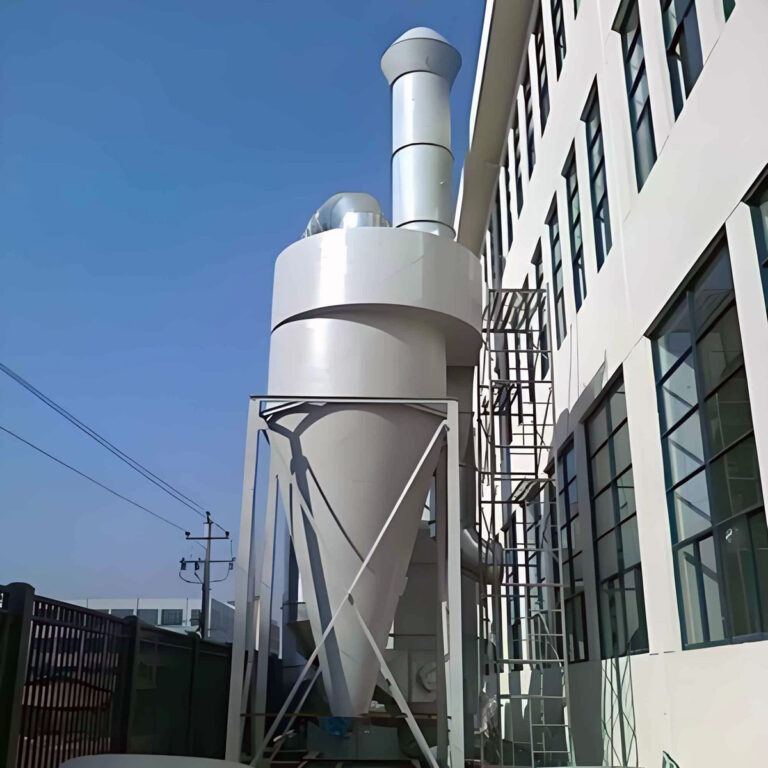
The operational principle of each technology dictates its capabilities and limitations. Gravity settling tanks rely on quiescent conditions where particles denser than water sink under gravitational force alone. Systems are designed with controlled horizontal flow velocity and detention times to allow target grit to settle while keeping lighter organic solids in suspension. In contrast, hydrocyclones generate centrifugal force by pumping feed slurry tangentially into a conical chamber, creating a rapid vortex.
Application in Ceramic Waste Streams
This distinction is critical for industrial applications. Ceramic wastewater often contains a high fraction of fine, dense particles that settle slowly. Gravity systems struggle with these fines, as their settling velocity may be too low for practical tank dimensions. The centrifugal force in a hydrocyclone, however, can be orders of magnitude greater than gravity. Industry experts highlight that this force effectively reduces the apparent viscosity of the slurry, enabling the separation of fine particles that gravity cannot reliably capture. This capability is paramount for preventing abrasive wear in downstream equipment.
Impact on System Design and Performance
The chosen separation force directly shapes the entire treatment train. A gravity-based system dictates a large, low-velocity footprint. A centrifugal system mandates a pumped feed loop with pressure control. We compared pilot data from similar mineral processing applications and found the core mechanism choice influences everything from pump selection to grit handling design, setting the trajectory for total plant layout.
Total Cost of Ownership (TCO): Capital & Operational Cost Analysis
Unpacking the Cost Components
A true financial comparison extends far beyond the purchase order. Gravity settling tanks typically incur high initial civil costs for large concrete or steel basins but can operate with minimal energy if designed for gravity flow. Hydrocyclones present a lower footprint-related capital outlay but require a dedicated, continuously operating feed pump, leading to higher operational energy expenditure. The balance between capital and operational cost is plant-specific.
The Abrasion Cost Paradigm
For ceramic wastewater, the dominant TCO factor is abrasive wear. This is not merely a maintenance line item but a core cost driver that reframes material selection. Investing in advanced wear linings—such as ceramic, stellite, or tungsten carbide for critical hydrocyclone components—is a direct and cost-effective response to severe abrasion. For gravity systems, wear focuses on mechanical extraction parts like screws and flights. A lifecycle analysis over 15-20 years must heavily weight these material costs against replacement frequency and downtime.
A Framework for Financial Modeling
The following table provides a structured comparison of key TCO components, essential for building a financial model.
| Cost Component | Gravity Settling Tank | Hydrocyclone |
|---|---|---|
| Capital Cost | High (civil basins) | Lower (compact footprint) |
| Energy Cost | Low (gravity flow) | High (feed pump required) |
| Key Wear Factor | Mechanical extraction parts | Abrasive wear on linings |
| Durability Investment | Standard materials | Ceramic/tungsten carbide linings |
| Lifecycle Analysis | Essential (15-20 years) | Essential (15-20 years) |
Source: Technical documentation and industry specifications.
Which System Offers Better Particle Removal & Grit Quality?
Performance Benchmarks and Limits
Efficiency is defined by cut-point and consistency. Gravity settlers are typically engineered to remove particles larger than 150–200 µm, with a practical lower limit around 75–100 µm. Their efficiency is sensitive to fluctuations in flow and organic content, which can hinder settling. Hydrocyclones generally target particles above 75–100 µm, with the cut-point adjustable via design and feed pressure. They can achieve significant removal of fines down to 20–40 µm, offering superior capture of the most abrasive ceramic particles.
Evaluating the End Product: Grit
The quality of the removed grit affects handling and disposal costs. Gravity tanks, especially aerated or vortex types, shear off some organics but often produce a grit with higher putrescible content, frequently necessitating secondary washing. Hydrocyclones provide an inherent washing effect from intense internal shear forces, yielding a cleaner, drier grit with lower organic content directly from the underflow. This reduces odor and landfill leachate potential.
The Regulatory and Future-Proofing Lens
Cleaner grit is an immediate disposal benefit, but performance on fines has broader implications. Easily overlooked details include the role of fine particulates as carriers for dissolved metals or other regulated pollutants. Capturing finer particles may become crucial for meeting future, more stringent discharge limits on particulate-bound pollutants, making the hydrocyclone’s efficiency a potential compliance advantage.
The comparative performance data below clarifies these operational differences.
| Performance Metric | Gravity Settling Tank | Hydrocyclone |
|---|---|---|
| Target Particle Size | >150–200 µm | >75–100 µm |
| Lower Removal Limit | 75–100 µm | 20–40 µm |
| Grit Cleanliness | Often requires secondary washing | Inherent washing effect |
| Grit Organic Content | Higher | Lower, drier product |
| Efficiency Sensitivity | Flow & organic content | Feed pressure consistency |
Source: Technical documentation and industry specifications.
Space & Footprint Requirements: A Critical Layout Comparison
The Drivers of Physical Design
Footprint is dictated by the core separation mechanism. Gravity systems require sufficient residence time—typically 2 to 5 minutes at peak flow—for particles to settle, necessitating large surface areas and volumes. Hydrocyclones perform separation almost instantaneously via centrifugal force, confining the process to a compact vessel. This fundamental difference has profound implications for plant design and cost.
Quantifying the Space Demand
The scale disparity is significant. Circular gravity settling tanks often range from 3 to 8 meters in diameter. A hydrocyclone unit for equivalent flow might be under 2 meters in total height and diameter. The primary spatial requirement for a hydrocyclone system shifts to housing the feed pump station and associated piping. This compactness is a primary advantage for retrofitting or upgrading existing facilities where space is at a premium, directly lowering civil construction costs.
Layout Implications for Plant Managers
In my experience consulting on plant upgrades, the available footprint often becomes the deciding constraint. A gravity system may require extensive and costly structural modifications, while a hydrocyclone system can frequently be integrated into the existing headworks with minimal disruption. This flexibility allows for more efficient use of real estate, a critical factor in capacity-constrained facilities.
The following comparison table quantifies the spatial implications of each technology.
| Parameter | Gravity Settling Tank | Hydrocyclone |
|---|---|---|
| Primary Driver | Residence time (2-5 min) | Centrifugal force |
| Typical Diameter | 3-8 meters | Under 2 meters |
| Layout Advantage | Suits gravity flow | Retrofits space-constrained sites |
| Major Space Need | Large concrete basin | Feed pump & piping |
| Civil Construction Cost | Higher | Lower |
Source: Technical documentation and industry specifications.
Operational Complexity: Energy, Control, and Maintenance Compared
Daily Control and Monitoring
Operational stability requires different approaches. Gravity tank control is hydraulic, involving weirs, baffles, and often air diffusion systems to maintain optimal scouring velocity without resuspending settled grit. Hydrocyclone operation is controlled by maintaining a consistent feed pressure, typically between 20–50 psi, to sustain the essential vortex. Deviations from this pressure range collapse the vortex and degrade performance.
Maintenance Regimes and Reliability
The mechanical profile of each system dictates its maintenance needs. Gravity tanks incorporate moving parts within the slurry—scraper arms, screw conveyors, or chain-and-flight systems—which are subject to abrasive wear and require regular inspection and repair. Hydrocyclones have no moving internal parts, simplifying mechanical maintenance. However, they transfer the maintenance focus to the feed pump and critical wear zones like the inlet head, apex nozzle, and vortex finder, which endure extreme abrasive forces.
The Data Gap Challenge
A common operational hurdle for both technologies is the lack of real-time grit characterization data. This gap hinders the implementation of advanced adaptive control systems that could optimize performance against variable inflows. Without data on particle size distribution or grit concentration, operators often run systems at conservative, less efficient setpoints.
The table below summarizes key operational differences.
| Operational Aspect | Gravity Settling Tank | Hydrocyclone |
|---|---|---|
| Control Mechanism | Weirs, baffles, air diffusion | Consistent feed pressure (20–50 psi) |
| Moving Internal Parts | Yes (screws, scrapers) | No |
| Key Maintenance Items | Mechanical extraction equipment | Feed pump & wear nozzles |
| Data Gap Challenge | Lack of real-time grit data | Lack of real-time grit data |
| Energy Demand | Low (unless aerated) | High, continuous |
Source: Technical documentation and industry specifications.
Flow Rate Flexibility & Handling Hydraulic Surges
Sensitivity to Hydraulic Variation
Plant influent is rarely constant. Gravity tank performance is highly sensitive to flow rate changes, as the horizontal velocity must stay within a narrow band to allow settling without scouring. Significant surges can wash out settled grit, while low flows may allow organic solids to settle, contaminating the grit product. Hydrocyclones offer more consistent performance across a range, but only if feed pressure is maintained.
Strategies for Managing Variability
Flexibility is achieved through different design strategies. Gravity systems may use constant-level inlet weirs or multiple compartments. Hydrocyclone systems handle flow variation by operating multiple units in parallel, bringing cyclones online or offline as needed. However, both systems benefit significantly from upstream flow equalization. A dedicated feed sump or equalization basin that provides a steady pump suction is often the most effective way to protect separation efficiency from hydraulic shocks.
The Role of Modern Design Tools
Engineers are no longer limited to rules-of-thumb. Modern, model-based design using dynamic simulation tools allows for predictive analysis of system behavior under variable and diurnal load patterns. This enables a more optimized and resilient design for both technologies, ensuring they are sized and configured to handle expected surge conditions without over-design.
Hydrocyclone vs Settling Tank: Decision Criteria for Ceramic Wastewater
Prioritizing Plant-Specific Conditions
The optimal choice is not universal; it hinges on specific site conditions. Select a hydrocyclone system when space is severely limited, the capture of fine abrasive particles is critical for downstream protection, and a clean, dry grit product is desired. It is ideal where feed flows can be equalized to provide a consistent pumped supply. This approach is particularly effective for targeted grit removal in industrial wastewater.
When Gravity Settling Prevails
Opt for a gravity settling tank, particularly an aerated or vortex type, when the existing headworks layout favors gravity flow, minimizing pumping energy is a top priority, and raw influent flows are highly variable directly from the sewer. It is a robust, time-tested solution for plants with ample space and less severe fine grit challenges.
Reframing the Investment Justification
Crucially, grit removal is a protective, non-revenue generating mandate. Its value is quantified through risk mitigation—avoided maintenance costs, extended pump and equipment lifespan, and reduced downtime in downstream processes. The justification must focus on these avoided costs, not direct process revenue, framing the system as an insurance policy for the entire treatment train.
Selecting the Right System: A 5-Step Framework for Plant Managers
Step 1: Stream Characterization & Step 2: Site Audit
Begin with definitive data. Characterize the waste stream’s particle size distribution, density, and organic content. For dense ceramic slurries, assess rheological properties, as viscosity impacts centrifugal separation. Concurrently, audit the site: quantify available footprint and plot the existing hydraulic profile to determine if gravity flow is feasible. This data closes the operational knowledge gap and defines technical constraints.
Step 3: Define Output Goals & Step 4: Lifecycle TCO
Define the required grit quality based on disposal costs or potential reuse options. Then, conduct a rigorous lifecycle Total Cost of Ownership analysis over a 15-20 year horizon. This model must heavily weight abrasive wear, incorporating the cost of premium wear materials for hydrocyclones or hardened components for gravity extractors. Include all energy, maintenance, and disposal costs.
Step 5: Holistic Integration Review
Avoid the silo mentality. Evaluate how the grit removal system interacts with adjacent processes. An integrated design can solve secondary problems, such as reducing scaling in heat exchangers or improving dewatering performance downstream. Consider future adaptability; the system should not preclude later upgrades or the potential integration of resource recovery technologies.
The decision between hydrocyclones and gravity settling tanks for ceramic wastewater is not about finding a universally superior technology, but about matching engineering principles to specific plant realities. Prioritize accurate stream characterization and a rigorous lifecycle cost analysis that accounts for severe abrasion. The correct system is the one that reliably protects downstream assets within your spatial, hydraulic, and financial constraints.
Need professional guidance to analyze your ceramic wastewater stream and design a resilient grit removal solution? The engineering team at PORVOO specializes in developing customized industrial wastewater treatment systems that balance performance with pragmatic operational and economic goals. For a detailed consultation on your specific application, you can also Contact Us.
Frequently Asked Questions
Q: How does the separation mechanism affect which ceramic particles we can capture?
A: The core difference is gravitational versus centrifugal force. Settling tanks rely on gravity, typically removing particles larger than 150–200 µm. Hydrocyclones use a pumped vortex to generate centrifugal force, which can effectively capture finer abrasive particles down to 20–40 µm. This means facilities processing dense ceramic waste with high fines content should prioritize hydrocyclone technology to protect downstream equipment from wear.
Q: What are the major cost drivers in a lifecycle analysis for these grit removal systems?
A: The total cost of ownership is dominated by abrasive wear and energy. While gravity tanks have higher civil costs, hydrocyclones require continuous pumping energy. The critical factor is treating wear as a core cost paradigm; investing in advanced linings like tungsten carbide for hydrocyclone wear parts is a direct operational expense that significantly impacts long-term economics. For projects with severe abrasion, your financial model must prioritize durable material selection over initial capital outlay.
Q: Which system produces a drier, cleaner grit product for disposal or reuse?
A: Hydrocyclones inherently provide a cleaner grit product. The intense shear forces within the vortex wash organics from the particles, yielding drier underflow with lower organic content directly from the primary unit. Gravity tanks, especially aerated versions, often require secondary grit washers to achieve similar purity. If your landfill costs are high or you are evaluating grit for potential reuse, the superior cleanliness from a hydrocyclone becomes a decisive advantage.
Q: How do space constraints influence the choice between these two technologies?
A: Footprint is a primary differentiator. Gravity settling basins require significant area for 2-5 minute detention times, often needing diameters of 3-8 meters. Hydrocyclone separation vessels are compact, frequently under 2 meters in size, with the main space requirement being for the feed pump and piping. This means retrofitting or upgrading an existing, space-limited plant headworks strongly favors the hydrocyclone’s compact design to avoid costly civil expansion.
Q: Can these systems handle highly variable flow rates from our ceramic production lines?
A: Both technologies face challenges with flow variability. Gravity tank efficiency is highly sensitive to changes in horizontal velocity, while a hydrocyclone’s vortex can collapse if feed flow drops too low. Effective handling of surges typically requires a flow-equalization sump upstream to provide a steady feed, especially for pumped hydrocyclone systems. If your plant experiences direct, highly variable sewer flows, you should plan for and model this equalization step during initial design.
Q: What operational data is commonly missing for optimizing grit removal performance?
A: A key operational gap is the lack of real-time grit characterization data, such as continuous particle size and organic content measurement. This data deficiency hinders the implementation of advanced adaptive control systems that could dynamically optimize performance against variable inflows. Closing this gap requires instrumentation investment, but it enables facilities to move from fixed operation to predictive, efficiency-driven control for either technology.
Q: What is the first step in selecting the right system for our plant?
A: The essential first step is a detailed characterization of your specific waste stream. You must determine the particle size distribution, density, and organic content of your ceramic slurry. This foundational data directly informs technical feasibility for particle capture and is critical for any meaningful cost or performance modeling. Without this analysis, you risk selecting a system that is undersized or incapable of handling your actual abrasive load.