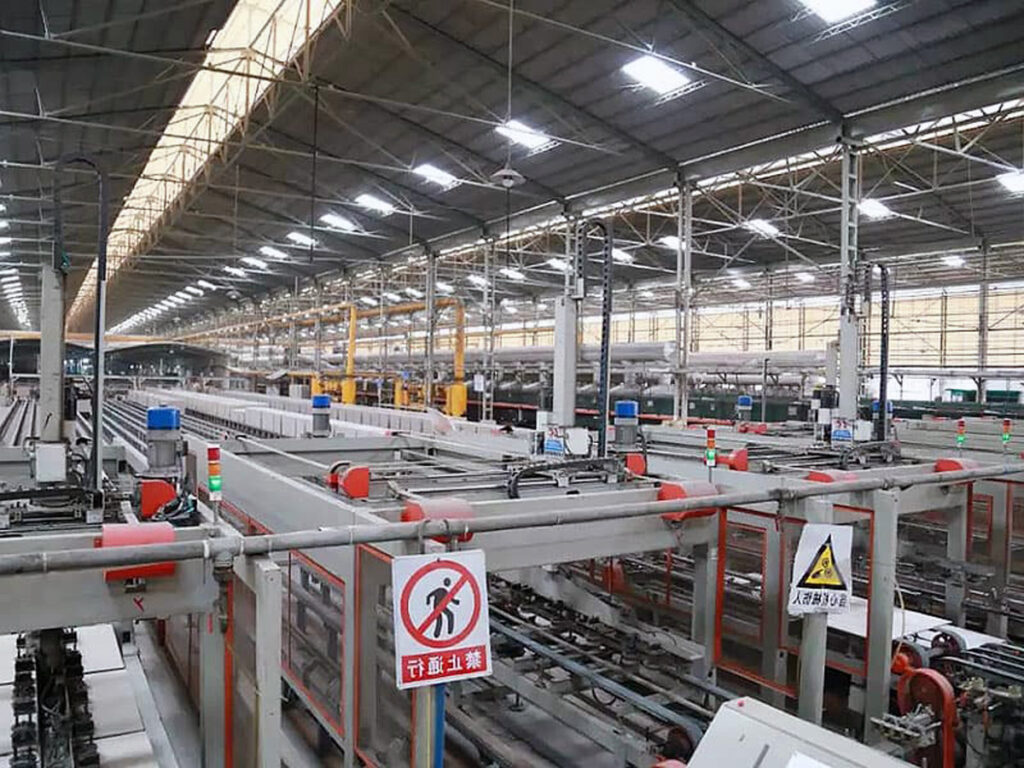
For ceramic and stone fabricators, the primary challenge isn’t just treating wastewater—it’s doing so within the severe spatial constraints of a modern, high-value production facility. Traditional settling ponds demand vast, unusable land, creating a direct conflict between operational footprint and profitability. This spatial inefficiency forces a compromise: sacrifice valuable production space for compliance or risk environmental penalties.
The urgency for a compact, closed-loop solution has never been greater. Stricter regulations on water discharge and sludge disposal are converging with rising freshwater costs and sustainability mandates. Facilities can no longer afford passive, land-intensive systems. The decision in 2025 centers on implementing active treatment technology that transforms wastewater from a costly liability into a controlled, space-efficient process, ensuring both regulatory compliance and operational resilience.
How a Compact Silo System Works: Core Components & Process
The Integrated Treatment Sequence
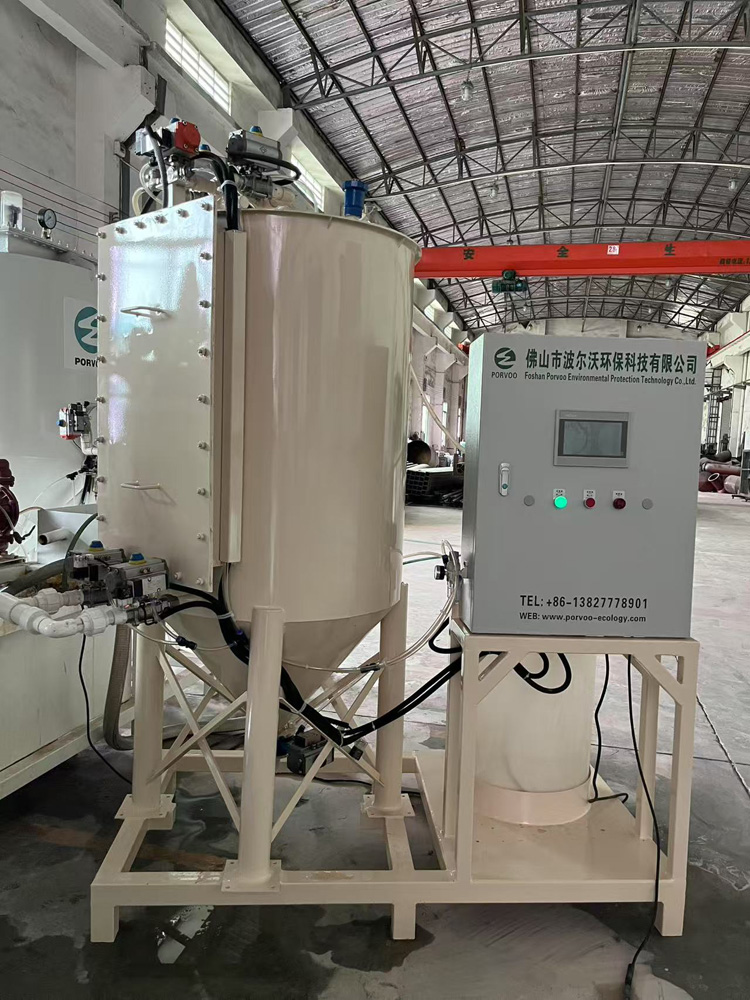
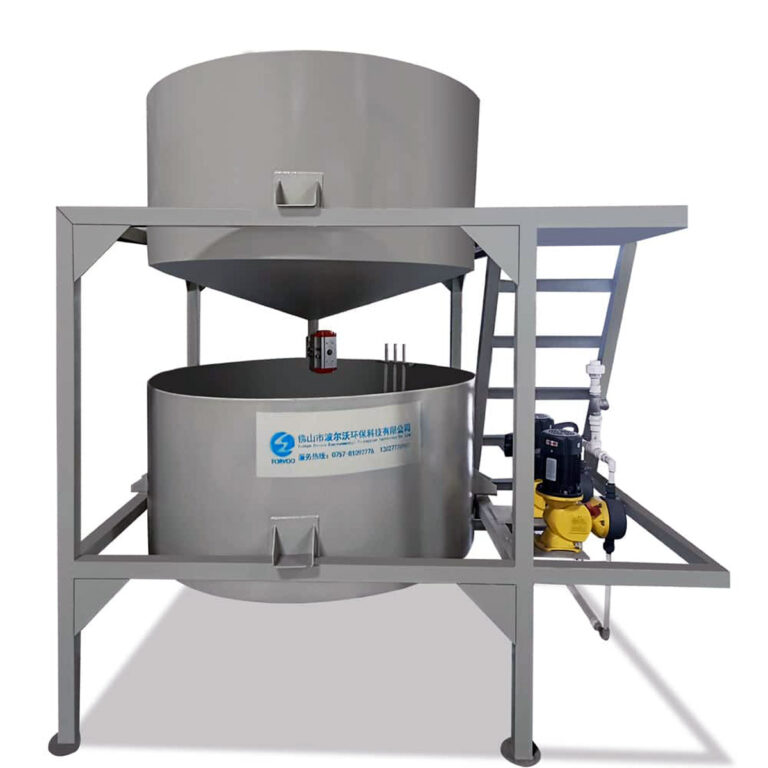
The process begins with centralized collection, where wastewater from cutting and polishing flows into a central pit. An agitator maintains a homogenized slurry, preventing solids from settling prematurely. This consistent feed is then pumped to the treatment module. Here, automated dosing systems inject precise amounts of coagulant and flocculant. The coagulant neutralizes the surface charges on fine ceramic and stone particles, while the flocculant binds them into dense, fast-settling aggregates.
Vertical Clarification & Sludge Concentration
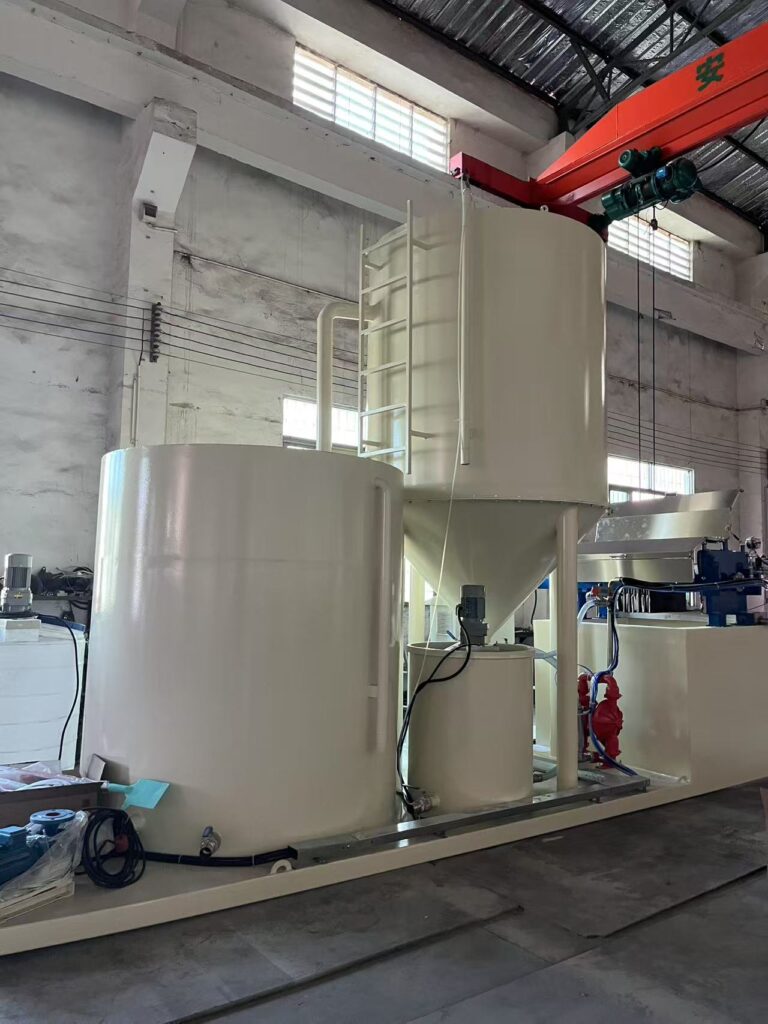
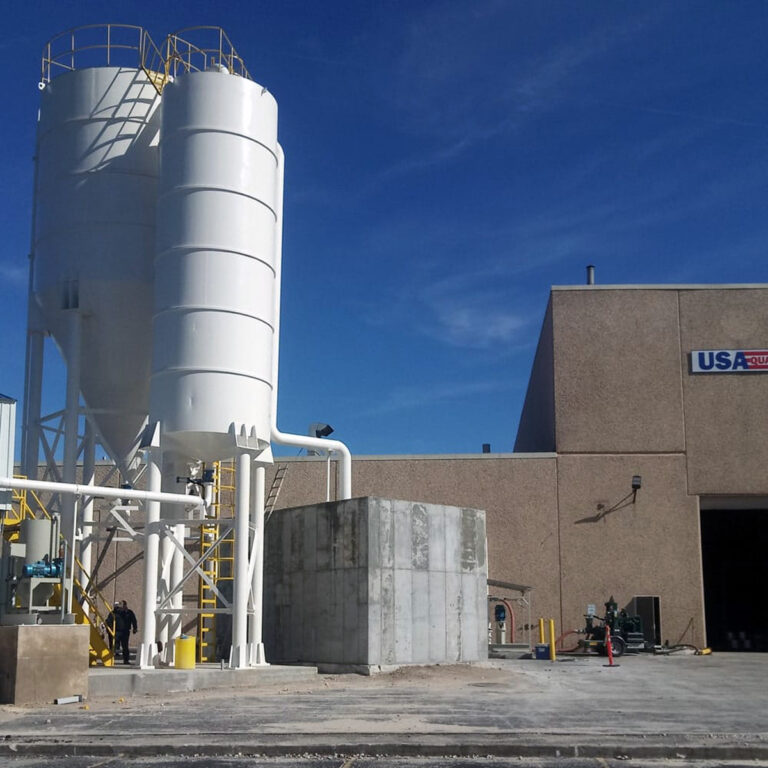
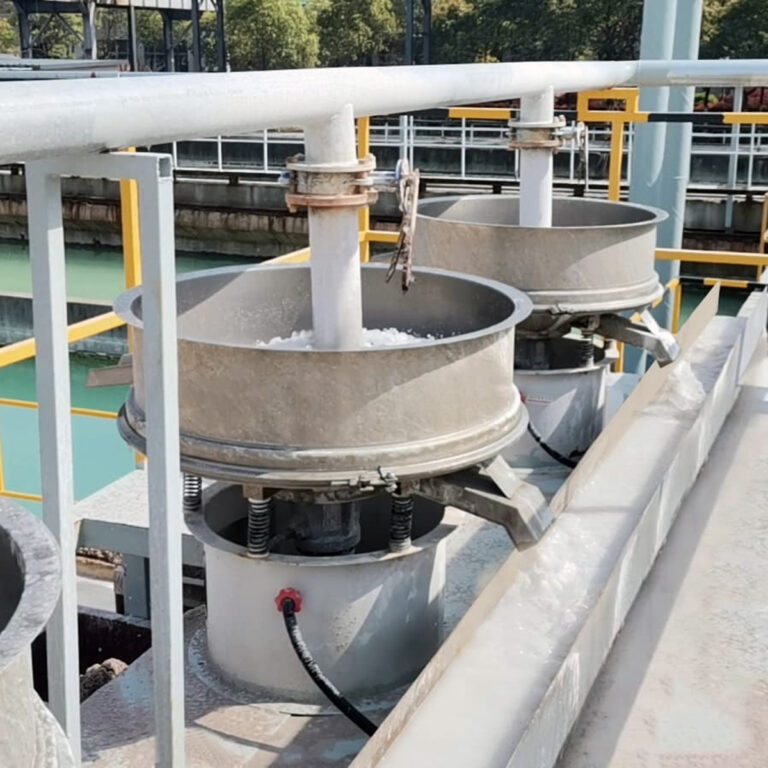
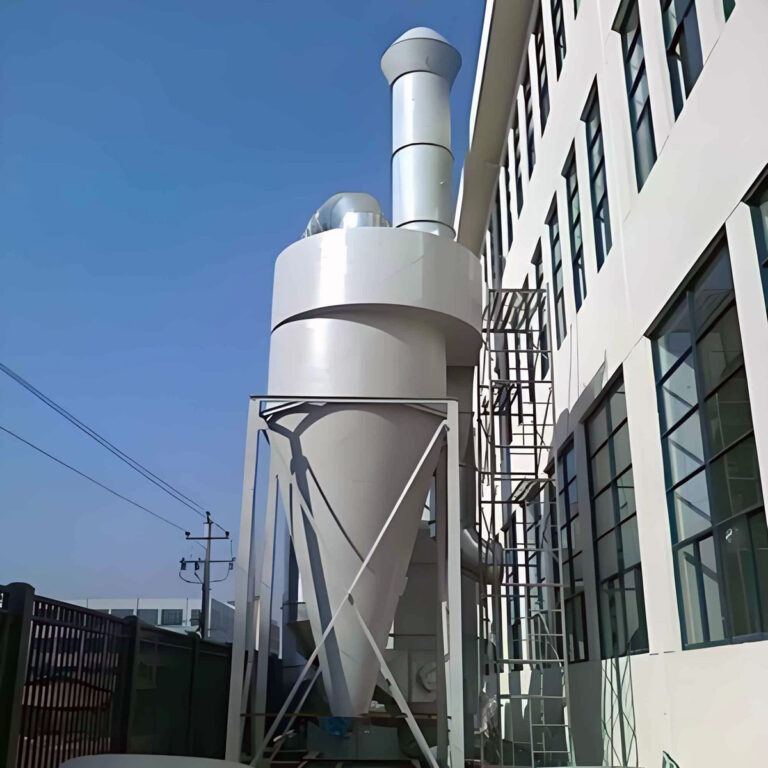
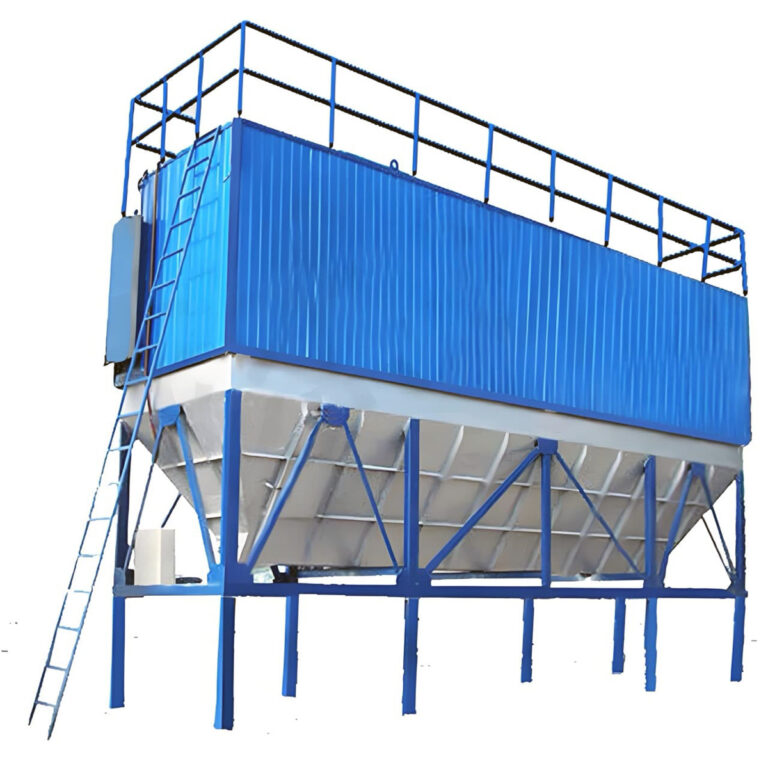
The core of the system is the vertical clarifier, which replaces expansive horizontal basins. This unit, often a silo or lamella plate stack, provides a controlled environment for rapid gravitational settling. The heavy flocs descend quickly, allowing clarified water to overflow at the top. Recovery rates consistently exceed 95%. The settled sludge is concentrated at the bottom and automatically transferred to the integrated dewatering stage. This closed, continuous flow eliminates the open, variable conditions of a pond.
Automated Dewatering & Water Relaunch
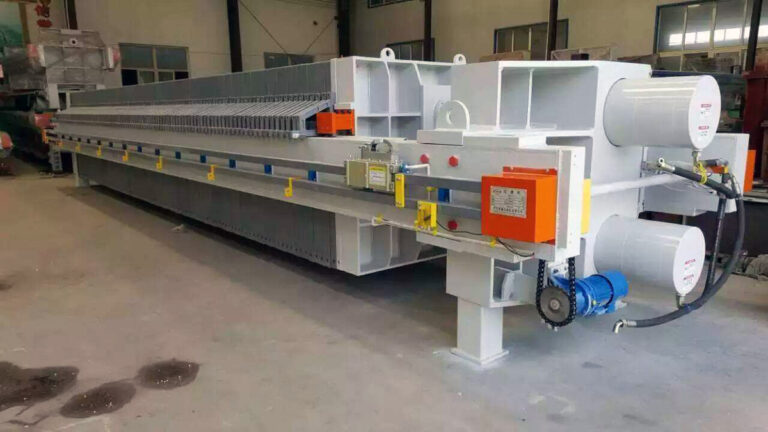
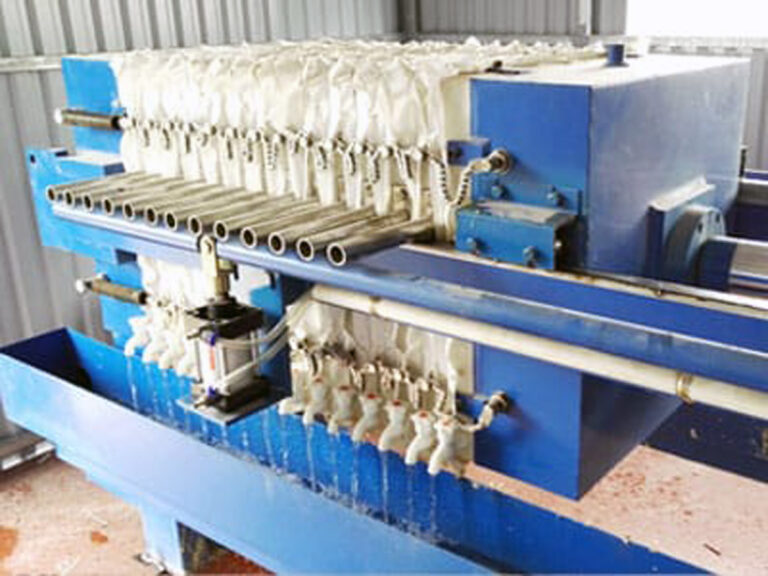
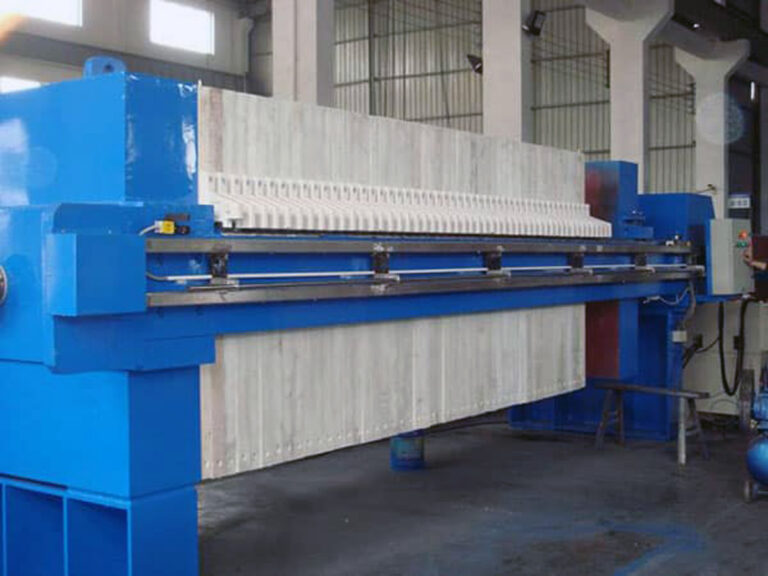
The final stage is high-pressure dewatering via an integrated filter press. The concentrated sludge is fed into the press, where it is compressed between plates. This extracts the remaining water, producing a solid filter cake with up to 85% dry solids content. The pressed water returns to the treatment loop, and the dry cake is discharged for disposal. A programmable logic controller (PLC) orchestrates this entire sequence—from chemical dosing to press cycles—shifting the operator’s role from manual labor to system supervision and data analysis.
Key Technical Specifications for Space-Constrained Facilities
Footprint and Flow Capacity
The defining metric is extreme space efficiency. A complete system can occupy as little as 6 square meters while processing flow rates over 600 liters per minute. This compact footprint is achieved through vertical design and component integration. Output for clarified water is scalable, typically ranging from 250 l/min for smaller workshops to over 2,100 l/min for large-scale operations. This scalability is often achieved through modular units that can be stacked or run in series, a critical feature for growing businesses.
Construction and Automation Standards
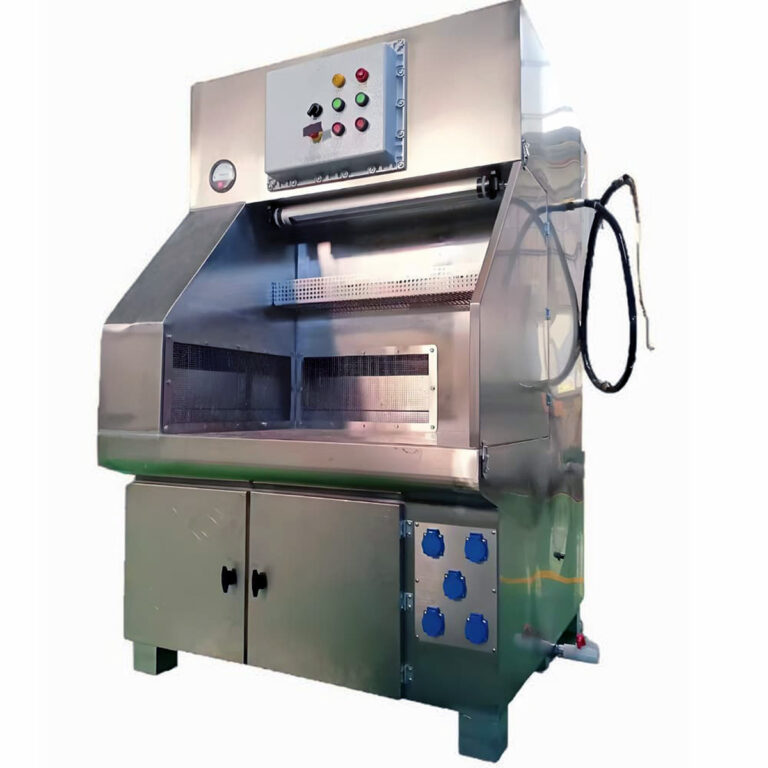
Durability is non-negotiable given the abrasive nature of ceramic and stone slurry. Filter presses are constructed from hot-dip galvanized or stainless steel, with plate sizes starting at 300×300 mm. Automation is not an add-on but the central nervous system. Operations are managed by a PLC with a 10-inch touchscreen interface running proprietary control software. This system handles precise dosing, cycle timing, and fault alarms. Remote connectivity via Local Area Network (LAN) enables suppliers to perform diagnostics and updates, transforming maintenance from reactive to predictive.
The table below summarizes the core technical specifications that enable this high-performance, compact design.
Technical Specifications Overview
| Feature | Specification / Range | Unit / Descriptor |
|---|---|---|
| Footprint | As low as 6 | Square meters |
| Flow Rate Capacity | Over 600 | Liters per minute |
| Clarified Water Output | 250 to 2,100+ | Liters per minute |
| Filter Press Plate Size | From 300×300 | Millimeters |
| Automation Interface | 10-inch touchscreen | PLC control |
Source: HJ 2008-2010 Technical specification for flocculation sedimentation. This standard provides design and control specifications for sedimentation processes, which are core to the vertical clarifier’s performance and sizing in these compact systems.
Implementation Steps for 2025: Sizing, Site Prep & Integration
Conducting a Precise Water Audit
Accurate implementation begins with data, not estimation. You must quantify your daily wastewater volume and, critically, the specific solid load from your materials—granite, porcelain, and quartz all have different characteristics. Leading suppliers often offer pilot testing with a mobile unit; this on-site trial determines the optimal chemical regimen and confirms system sizing. Skipping this step risks under-sizing the system or incurring excessive chemical costs.
Site Preparation and Infrastructure
Physical installation requires a level, reinforced concrete pad capable of supporting the system’s weight, including when the filter press is full of cake. A central collection pit, typically 2-3 cubic meters, must be constructed to receive all process water. If installing outdoors in colder climates, a simple shelter or insulation is mandatory to prevent freezing in pipes and tanks. Electrical integration requires a dedicated power supply meeting the system’s specifications. From my experience, coordinating the electrical and plumbing trades early prevents costly delays during the installation phase.
Strategic Integration and Partner Selection
The final step is operational integration. This involves planning for chemical supply logistics and filter cake storage/removal. Given the regulatory trajectory, implementing this system in 2025 acts as a strategic hedge against future zero-liquid-discharge mandates. The most critical decision is selecting a supplier that offers a true partnership—bundling the equipment, consumables, training, and remote service support into a single point of accountability for long-term performance.
Advantages vs. Traditional Ponds for Ceramic & Stone Wastewater
Operational and Spatial Efficiency
The contrast is transformative. Traditional ponds are passive, weather-dependent, and consume valuable real estate. A compact silo system is an active, automated process housed in a minimal footprint, freeing land for revenue-generating activities. The closed-loop design achieves near-total water recovery, drastically reducing freshwater purchase costs and eliminating sewer discharge fees. Consistency is guaranteed year-round, unaffected by temperature or evaporation.
Waste Transformation and Compliance
The most significant advantage is the fundamental change in waste output. Ponds produce a liquid sludge that is difficult to handle, transport, and dispose of, representing a recurring compliance risk. The integrated filter press dehydrates this sludge into a solid filter cake, reducing waste volume by over 90%. This turns a liquid liability into a manageable solid, simplifying logistics, lowering disposal frequency, and minimizing regulatory exposure.
The following table provides a direct comparison of key parameters between the two approaches.
System Comparison: Silo vs. Pond
| Parameter | Compact Silo System | Traditional Pond |
|---|---|---|
| Space Requirement | Minimal (6+ m²) | Extensive (large basins) |
| Water Recovery Rate | Exceeds 95% | Variable, often lower |
| Sludge Output Form | Dry filter cake (85% solids) | Liquid slurry |
| Waste Volume Reduction | Over 90% | Minimal reduction |
| Process Control | Automated, consistent | Passive, weather-dependent |
Source: GB/T 23484-2009 Sludge treatment and disposal. This standard highlights the advantages of dewatered sludge (filter cake) for disposal, directly supporting the key benefit of volume reduction and handling ease over liquid sludge.
Critical Considerations: Chemical Management & Automation
Optimizing Chemical Consumption
Chemical cost is the primary operational variable. The process relies on a precise, automated sequence: a coagulant like AMD500 to destabilize particles, followed by a flocculant like CSP80 to form settleable flocs. Incorrect dosing order or ratio wastes chemicals and compromises clarity. An automatic polymer preparation station enhances accuracy and safety. The return on investment hinges on continuously optimizing these consumables, not just the initial water savings. Monitoring usage per cubic meter treated is essential for cost control.
The Shift in Labor and Connectivity
Automation redefines the staffing model. It eliminates manual chemical handling and constant process adjustment, replacing it with supervisory monitoring. Operators must be trained to interpret the touchscreen interface, respond to alerts, and understand the PLC cycle logic. Remote connectivity is a force multiplier, allowing your supplier to perform immediate diagnostics. This requires ensuring your facility’s IT infrastructure can support the system’s LAN connection to fully leverage predictive maintenance and minimize downtime.
Sludge Handling & Filter Cake Disposal for Compliance
From Slurry to Stable Solid
The integrated filter press is the compliance engine. It transforms a pumpable sludge slurry into a handleable filter cake with a dryness up to 85%. This physical change is profound: it converts a wet, heavy, and costly-to-haul material into an inert solid that can be bagged or placed in a skip. This output aligns with treatment standards that prioritize sludge reduction and stabilization.
Streamlined Disposal and Reporting
This solid waste stream simplifies regulatory compliance. It eliminates liquid effluent discharge and drastically reduces the volume and environmental risk associated with waste transport. The system’s onboard data logging provides auditable records of sludge volume and cake consistency, essential for environmental reporting. While typically destined for landfill, the inert nature of the cake may present opportunities for reuse in construction materials, subject to local regulatory approval.
The metrics below outline the compliance outcomes achieved through effective sludge dewatering.
Sludge Handling and Compliance Metrics
| Metric | Target Value | Outcome |
|---|---|---|
| Filter Cake Dryness | Up to 85% | Dry solids content |
| Waste Volume Reduction | >90% | Vs. liquid sludge |
| Waste Form for Disposal | Inert solid | Landfill-suitable |
| Regulatory Reporting | Automated data logs | Auditable records |
| Potential Reuse | Construction materials | Subject to regulations |
Source: GB/T 23484-2009 Sludge treatment and disposal. This standard governs the treatment and final disposal of sludge, validating the system’s approach of dewatering to a stable, handleable solid for compliant management.
Maintenance, Staffing & Long-Term Operational Costs
Predictable Maintenance Regimen
Long-term reliability depends on a disciplined preventive maintenance schedule. Focus centers on mechanical components: inspecting and cleaning pump filters, checking the diaphragms on dosing pumps, and monitoring the seals on the filter press plates. The automated control system reduces daily touchpoints but requires a technician skilled in basic troubleshooting and these mechanical checks. Neglecting this scheduled upkeep is the fastest route to unexpected downtime.
Analyzing Total Cost of Ownership
The major operational cost drivers are chemical consumption and electricity for the feed pumps and filter press. The automation system provides direct control over the former, making data-driven optimization a continuous cost-saving activity. Over a 5-10 year horizon, the operational savings from water recycling, reduced disposal fees, and lower labor typically justify the capital investment. This financial model becomes even more compelling when factoring in potential future water restrictions or increased discharge tariffs.
The table below breaks down the key factors influencing long-term operational economics.
Operational Cost and Staffing Factors
| Cost/Staffing Factor | Characteristic | Impact |
|---|---|---|
| Daily Labor Need | Reduced | System supervision |
| Key Skill Requirement | Data interpretation, troubleshooting | Skilled technician |
| Primary Cost Drivers | Chemicals, electricity | Ongoing consumables |
| Maintenance Focus | Pumps, filters, press seals | Mechanical components |
| ROI Horizon | 5-10 years | Operational savings |
Source: Technical documentation and industry specifications.
Selecting the Right System: A Decision Framework for 2025
Foundational Assessment and Partner Evaluation
The selection process must be holistic. It begins with a rigorous water audit to establish true flow rates and solid load characteristics. The second step is evaluating suppliers not just as equipment vendors but as solution partners. Prioritize those who provide the complete package—engineering, chemical optimization, training, and remote support. Their lifecycle expertise directly impacts your long-term cost and performance. For facilities planning growth, ensure the system design is inherently scalable, allowing capacity expansion through modular additions.
Strategic Integration and Future-Proofing
Consider the data asset. The system’s sensors generate continuous information on water quality, sludge production, and chemical use. This data can inform production efficiency and material yield analytics. Ensure the control software offers the reporting and connectivity features your operation needs. Ultimately, view this investment through a strategic lens. It is a proactive measure against tightening environmental regulations, positioning your facility for compliance, sustainability leadership, and operational resilience. For a detailed analysis of how such a system integrates into a facility’s workflow, review this compact wastewater treatment solution for ceramic stone industries.
A structured decision framework ensures all critical factors are addressed.
System Selection Decision Framework
| Step | Key Action | Quantitative Focus |
|---|---|---|
| 1. Water Audit | Determine flow & solid load | Daily volume, material type |
| 2. Supplier Evaluation | Seek total solution partner | Equipment, chemicals, support |
| 3. Scalability Check | Prioritize modular design | Capacity expansion path |
| 4. Data Strategy | Leverage sensor outputs | Water quality, chemical use metrics |
| 5. Regulatory Hedge | Proactive compliance investment | Against future discharge tariffs |
Source: GB/T 31962-2015 Wastewater quality for reuse. This standard on reuse water quality informs the data strategy and compliance goals, ensuring selected systems can meet specific effluent quality benchmarks for recycling.
Implementing a compact silo system in 2025 requires prioritizing precise sizing through water auditing and selecting a partner that offers integrated chemical management and remote support. The decision must balance upfront capital with long-term operational control, focusing on total cost of ownership and the strategic value of water independence. This approach transforms wastewater from a cost center into a controlled, efficient process.
Need professional guidance on implementing a space-efficient, closed-loop water treatment system for your fabrication facility? The engineering team at PORVOO specializes in tailoring these solutions to the specific demands of ceramic and stone industries, ensuring compliance and operational efficiency. For a direct consultation on your project requirements, you can also Contact Us.
Frequently Asked Questions
Q: How does a compact silo system achieve high water recovery rates for ceramic wastewater?
A: The system uses a vertical clarifier, either a silo or lamella stack, where chemically-induced dense flocs rapidly settle, allowing clarified water to overflow. This closed-loop design enables over 95% water reuse, meeting quality benchmarks for non-potable applications as defined in standards like GB/T 18920-2020. This means facilities aiming for zero liquid discharge should prioritize systems with efficient vertical clarification to maximize freshwater savings and minimize sewer fees.
Q: What are the key space and capacity specifications for a compact system in a mid-sized fabrication shop?
A: These systems can occupy as little as 6 square meters while processing flows from 250 liters per minute for smaller operations to over 2,100 l/min for larger plants. Capacity is scalable through modular units installed in series. For projects where floor space is the primary constraint, expect to evaluate both the physical footprint and the modular expansion path to align with future production growth.
Q: What is the compliance advantage of producing a dry filter cake versus managing liquid sludge?
A: The integrated filter press dehydrates sludge into a solid filter cake with up to 85% dry solids, reducing waste volume by over 90%. This transforms a liquid handling liability into an inert solid suitable for disposal, simplifying compliance with sludge management guidelines like GB/T 23484-2009. If your operation faces strict discharge regulations, this waste transformation significantly lowers environmental risk and hauling costs.
Q: How does automation change the staffing model for operating a compact wastewater treatment system?
A: Automation via a PLC and touchscreen interface shifts daily labor from manual chemical handling and process adjustment to system supervision and data interpretation. This reduces manual errors but requires training staff for monitoring, basic pump maintenance, and alarm response. This means you should plan for upfront operator training to transition your team’s role from hands-on operators to technical overseers.
Q: What are the critical steps for sizing and implementing a system in 2025?
A: Accurate implementation starts with a water audit to determine daily volume and solid load, often followed by vendor pilot testing for chemical optimization. Site prep requires a level, reinforced floor and a central collection pit. If your facility is planning a 2025 installation, prioritize suppliers who offer pilot testing and bundled service to de-risk the chemical regimen and ensure a single point of accountability.
Q: How do you control long-term operational costs for a compact silo system?
A: The major cost drivers are chemical consumption and electricity, with the automated system providing direct control over polymer dosing for optimization. Predictive maintenance supported by remote diagnostics helps minimize unplanned downtime. For long-term budgeting, you should focus on selecting a system with strong data logging to continuously monitor and optimize these consumable costs, which typically outweigh the capital investment over 5-10 years.
Q: What standards govern the flocculation process critical to these compact treatment systems?
A: The chemical conditioning and sedimentation process is guided by technical specifications such as HJ 2008-2010, which covers design and operation requirements for effective coagulation. This ensures the process efficiently removes suspended solids and colloids. When evaluating system design, verify that the proposed chemical dosing and clarification sequence aligns with these industry standards for reliable performance.
Q: What criteria should be used to select a supplier beyond the initial equipment quote?
A: Evaluate suppliers on their ability to provide a total solution, including chemical optimization, training, and remote support. Prioritize systems with scalable modular designs and control software that provides actionable data on water and chemical use. This means facilities should choose an integrated partner whose expertise covers the entire lifecycle, turning the treatment system into a source of operational intelligence, not just compliance.