Selecting the right industrial dust collector is a critical capital decision with decades-long operational and financial implications. The choice between a baghouse and a cartridge system is often oversimplified to a cost comparison, leading to costly mismatches in filtration efficiency, maintenance burden, and application suitability. A misapplied system fails to protect worker health, risks regulatory non-compliance, and creates persistent operational headaches.
The decision is more urgent as air quality regulations tighten and operational efficiency becomes paramount. Understanding the fundamental performance trade-offs between these two technologies is essential for facility managers, plant engineers, and EHS professionals to make a defensible, long-term investment that aligns with specific dust characteristics, space constraints, and total cost of ownership goals.
Baghouse vs Cartridge Collector: Core Design Differences
The Foundation: Filter Element Geometry
The entire performance profile of a dust collector stems from its filter media design. Baghouse systems utilize long, cylindrical fabric bags supported by internal cages. Cartridge collectors employ tightly pleated, non-woven media packs. This is not merely a shape difference. The pleated design of a cartridge provides a dramatically larger filtration surface area within a comparable housing volume. This core geometric distinction dictates the system’s air-to-cloth ratio—the volume of air filtered per square foot of media.
Operational Impact of Air-to-Cloth Ratio
A lower air-to-cloth ratio, typical of cartridge systems, means lower air velocity through the media. This reduces the initial pressure drop across the filter. Lower pressure drop translates directly to reduced energy consumption from the system fan. According to research from leading industrial ventilation consultants, optimizing this ratio is one of the most effective ways to control long-term operating costs, especially for continuous 24/7 operations. Baghouses operate effectively at higher ratios, which can necessitate more powerful—and energy-intensive—fan systems.
Design Implications for System Footprint
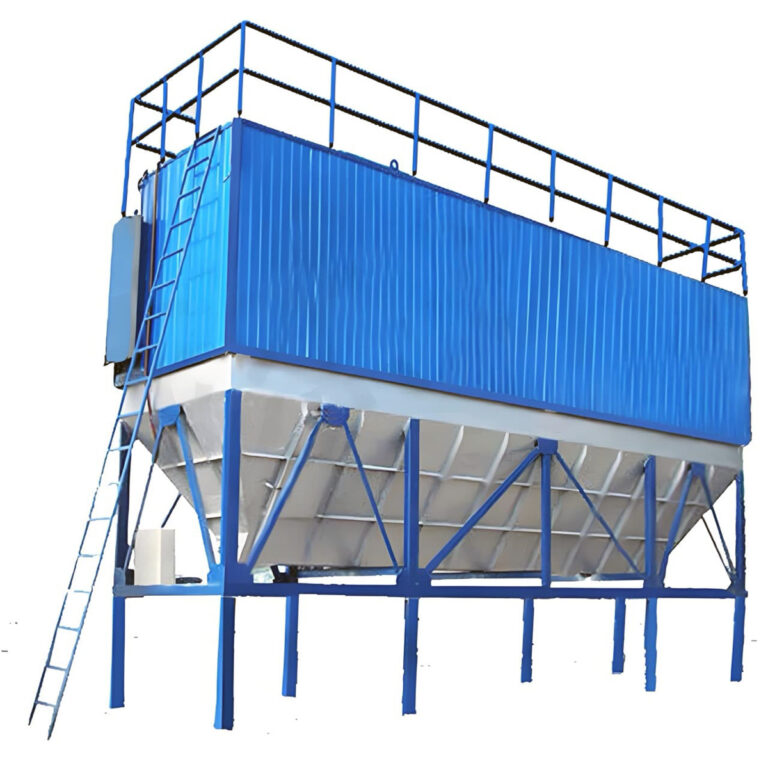
The high surface area density of cartridges creates a compact system. A cartridge collector can often handle the same air volume (CFM) as a baghouse in a significantly smaller footprint. This design efficiency is a primary driver for indoor installation and retrofitting into space-constrained existing facilities. The vertical bag arrangement of a baghouse requires substantial headroom and a larger structural footprint, often relegating it to outdoor installations or new construction where space is allocated upfront.
| Design Feature | Baghouse Collector | Cartridge Collector |
|---|---|---|
| Filter Element | Cylindrical fabric bags | Pleated non-woven cartridges |
| Filtration Surface Area | Lower per footprint | Substantially higher |
| Air-to-Cloth Ratio | 3:1 to 10:1 | 2:1 to 6:1 |
| Media Geometry | Woven/felted fabric | Compact pleated design |
Source: Technical documentation and industry specifications.
Capital Cost vs Long-Term Operating Expense Compared
Understanding the CAPEX/OPEX Trade-Off
The financial analysis reveals a classic capital expenditure versus operational expenditure model. For equivalent CFM capacity, cartridge collectors typically have a lower initial purchase price. Their compact design reduces costs for structural support, foundations, and installation labor. Baghouse systems command a higher upfront capital investment due to their larger size and more complex structural requirements.
The Lifecycle Cost Divergence
The total cost of ownership narrative changes over a five-to-ten-year horizon. Baghouse fabric bags are durable, often lasting several years in suitable applications, leading to lower long-term media replacement costs. However, their maintenance is labor-intensive. Cartridge filters have a shorter service life (typically 1-2 years) but are replaced via faster, external change-outs. The higher recurring media cost for cartridges is frequently offset by dramatically lower labor costs and reduced production downtime during maintenance. In our comparisons for metal fabrication clients, the labor savings from cartridge change-outs often neutralized the higher media cost within two cycles.
| Cost Factor | Baghouse Collector | Cartridge Collector |
|---|---|---|
| Initial Capital Cost (CAPEX) | Higher | Lower |
| Filter Life Expectancy | Several years | 1-2 year lifecycle |
| Media Replacement Cost | Lower long-term | Higher recurring |
| Maintenance Labor Intensity | High | Low, tool-free change-outs |
Source: Technical documentation and industry specifications.
The Hidden Cost of Energy
A frequently overlooked detail is the continuous energy cost tied to system pressure drop. The lower stable pressure drop of a properly sized cartridge system can result in significant fan energy savings. For a 10,000 CFM system running continuously, a difference of 2 inches water column in pressure drop can equate to thousands of dollars in annual electricity costs. This operational expense must be factored into any credible lifecycle analysis.
Which System Has Better Filtration Efficiency?
Efficiency is a Function of Particle Size
Filtration efficiency is not a blanket statement but a precise function of target particle size. Cartridge collectors are engineered for superior sub-micron filtration performance. They consistently capture particles down to 0.3 microns with efficiencies exceeding 99.9%. This makes them non-negotiable for applications generating fine dusts, fumes, or smoke, such as welding, laser cutting, or pharmaceutical powder handling.
Baghouse collectors are typically efficient for particles approximately 5 microns and larger. They excel at capturing coarse particulate like sawdust or grain dust. Their efficiency for finer particles can be high but often depends on the formation and maintenance of a stable dust cake on the fabric surface. Selecting a baghouse for a sub-micron fume application guarantees compliance failure and poor air quality.
| Performance Metric | Baghouse Collector | Cartridge Collector |
|---|---|---|
| Target Particle Size | ~5 microns and larger | Sub-micron (0.3 microns) |
| Typical Efficiency | High for coarse particulate | >99.9% for fine dust |
| Primary Application | Coarse dust capture | Fine dusts, fumes, smoke |
| Regulatory Future-Proofing | Moderate risk | Compliance-safe choice |
Source: ANSI/ASHRAE Standard 52.2-2017. This standard defines the MERV rating system for particle size removal efficiency, providing the standardized testing framework for comparing the filtration performance of different dust collector media types.
The Regulatory Trajectory
Air quality standards are continuously tightening. Permissible emission thresholds for PM2.5 and PM10 are falling globally under standards like ISO 16890-1:2016. This trajectory adds future regulatory risk to the selection of a baghouse for fine-dust applications. A cartridge system, with its inherent high efficiency on fine particulate, represents a more compliance-safe investment as regulations evolve.
Dust Load Capacity: Heavy-Duty vs Moderate Applications
Defining Application Boundaries by Load
Dust load capacity creates absolute application barriers. Baghouses are the industrial workhorses, engineered for heavy, continuous dust loading. They effectively handle large volumes of coarse, abrasive, or even slightly moist materials. The cylindrical bag design promotes better dust cake release and shedding.
Cartridge collectors are optimized for light to moderate dust loads. Their pleated design is vulnerable to specific material characteristics. Sticky, tacky, hygroscopic, or highly cohesive dusts can bridge between pleats, causing premature blinding and a rapid, irreversible rise in pressure drop. Ignoring these dust characteristics risks catastrophic system failure and frequent, costly filter changes.
| Application Characteristic | Baghouse Collector | Cartridge Collector |
|---|---|---|
| Recommended Dust Load | Heavy, large volumes | Light to moderate |
| Suitability for Coarse/Abrasive Dust | Excellent | Poor |
| Suitability for Sticky/Moist Dust | Effective | Highly susceptible to clogging |
| Common Pre-Filter Strategy | Cyclone for extreme loads | Cyclone for protection |
Source: Technical documentation and industry specifications.
The Strategic Role of Pre-Filtration
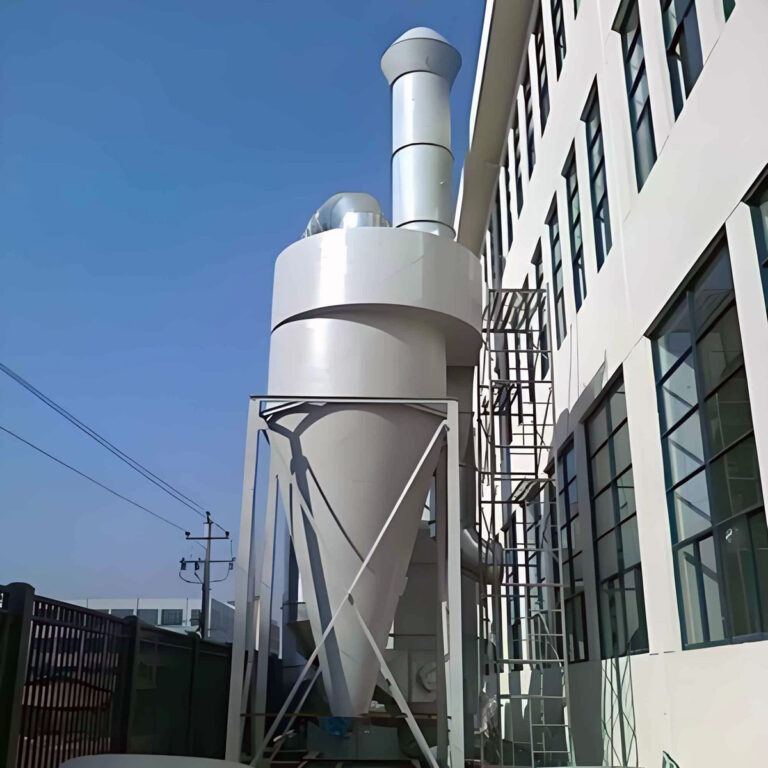
For challenging applications with mixed particle sizes or extreme loads, a pre-filter is not an option—it’s a necessity. A cyclone separator used upstream of the primary collector is a highly effective strategy. It removes the majority of large, abrasive particulates before they reach the filter media. This two-stage approach dramatically extends filter life, reduces maintenance frequency, and protects the investment in either a baghouse or cartridge system, making it a critical consideration for heavy-duty industrial dust collection systems.
Maintenance Access and Filter Change-Out Procedures
Safety and Labor: The Critical Differentiator
Maintenance protocol is a major differentiator impacting safety, cost, and uptime. Cartridge collectors are designed for external, clean-side service. Technicians replace filters from outside the unit, isolated from accumulated dust. This enables tool-free change-outs that are faster and comply with stricter occupational safety standards by minimizing dust exposure.
Baghouse filter replacement is an internal procedure. It typically requires entry into the dirty-air plenum to remove and install bags from the top. This process increases labor time, necessitates potential confined space entry protocols, and increases worker exposure to dust. The total cost of ownership must factor in these long-term labor safety requirements and the longer equipment downtime.
Calculating the True Cost of Downtime
The cost of maintenance extends beyond parts and labor. It includes production downtime. A cartridge change-out for a modular system might take a two-person crew a few hours. A full baghouse bag replacement can take a crew one to two days. For a production line generating $10,000 per hour in value, that difference represents a direct operational cost of tens of thousands of dollars, a figure that must be central to the financial model.
Space Requirements and Installation Flexibility Compared
Footprint as a Feasibility Constraint
The physical disparity between these systems can dictate the feasible technology choice. Cartridge collectors offer high filtration density in a compact, often modular, footprint. This facilitates indoor installation, placement near dust generation points, and retrofitting into brownfield sites where space is at a premium.
Baghouses require a larger, taller structure. Their significant footprint and need for bag removal clearance above the unit often mandate outdoor installation or dedicated, high-bay indoor spaces. The cost of constructing new infrastructure or modifying a building to house a baghouse can easily surpass the cost of the collector itself, making the compact cartridge the only viable solution for many urban or upgraded facilities.
The Modularity Advantage
Modern cartridge systems are frequently designed with modularity in mind. Banks of cartridges can be serviced independently, and system capacity can sometimes be expanded by adding modules. This scalability offers flexibility for growing operations. Baghouse expansions are generally more monolithic and structurally involved, offering less granularity in scaling capacity.
Application Suitability: Which Dust Type Is Right for You?
Matching Technology to Material Science
Suitability is dictated by particle size, morphology, and behavior. Baghouses are the established solution for coarse, fibrous, or abrasive dusts. They are standard in woodworking (sawdust), mining, cement production, and grain handling. A key, often decisive, advantage is their ability to handle higher inlet temperatures—sometimes exceeding 500°F with appropriate fabric media—and streams with higher moisture content.
Cartridge collectors dominate applications involving fine, dry, non-agglomerating particulates. This includes welding fume, plasma cutting smoke, pharmaceutical powders, fine metal grinding dust, and powder coating overspray. Their inability to handle moisture or stickiness is an absolute limitation.
| Dust Type / Industry | Recommended Collector | Key Reason |
|---|---|---|
| Coarse, Abrasive (Mining, Cement) | Baghouse | Robustness, heavy load capacity |
| Fine, Dry (Welding, Metal Grinding) | Cartridge | Superior sub-micron efficiency |
| High-Temperature (>500°F possible) | Baghouse | Appropriate fabric media |
| Fibrous (Woodworking, Grain) | Baghouse | Effective shedding characteristics |
Source: NFPA 654:2020. This standard for combustible dust safety is critical for application suitability, as the choice of collector directly impacts explosion risk mitigation based on dust characteristics like particle size and combustibility.
The Rise of Hybrid Solutions
An important industry trend is the hybridization of these technologies. Some manufacturers offer “pleated bag” filters or retrofit kits to convert existing baghouse housings to cartridge-style pleated media. This evolution blends the robust construction of a baghouse with the high efficiency and lower air-to-cloth ratio of cartridge media, creating a new category for users seeking to upgrade performance without replacing the entire collector structure.
Decision Framework: How to Choose the Correct System
Step 1: Rigorous Dust Characterization
Begin with non-negotiable data. Conduct a detailed analysis of your dust stream: particle size distribution (PSD), concentration (load), moisture content, temperature, and chemical composition (including combustibility per NFPA 654). This profile will immediately disqualify one technology for many applications. Guessing here guarantees a poor outcome.
Step 2: Facility and Operational Audit
Objectively assess spatial constraints, available utilities (compressed air for pulse cleaning, electrical), and installation feasibility. Determine if the system needs to be indoor or outdoor, and evaluate access for maintenance and filter delivery. Calculate the true cost of downtime for your operation to weight maintenance factors appropriately.
Step 3: Comprehensive Lifecycle Financial Modeling
Move beyond initial price. Build a 10-year total cost of ownership model that includes:
- Capital cost (equipment, installation, ductwork)
- Energy consumption (based on projected pressure drop and fan laws)
- Filter replacement costs and projected cycles
- Labor costs for routine maintenance and filter changes
- Cost of production downtime for servicing
- Disposal costs for spent filter media
Step 4: Partner with Application-Specific Expertise
The vendor landscape is fragmented. Seek suppliers with proven expertise in your specific industry and dust type, not general equipment distributors. Their application knowledge is invaluable for avoiding subtle pitfalls related to material behavior, safety standards, and optimal system configuration.
The optimal dust collector balances technical performance with economic reality over its entire service life. It must solve the immediate capture challenge while being sustainable to operate and maintain. The wrong choice creates a perpetual cost center; the right choice becomes a reliable, efficient component of your production infrastructure.
Need a professional analysis of your specific application to navigate these critical differences? The engineering team at PORVOO specializes in translating complex dust characteristics into reliable, efficient collection solutions. Contact us to develop a data-driven recommendation for your facility.
Frequently Asked Questions
Q: How do you calculate the operational cost difference between baghouse and cartridge dust collectors?
A: Analyze the total cost of ownership, which reveals a capital versus operational expense trade-off. Cartridge systems have lower initial costs but higher recurring media replacement expenses, while baghouses require greater upfront investment but offer longer-lasting filters. A lifecycle analysis must include energy consumption tied to system pressure drop, filter change labor, and downtime. For operations with stable, coarse dust, the baghouse’s durability often wins, but facilities handling fine dust should model the cartridge’s lower energy and labor costs.
Q: Which dust collector type is mandated for capturing sub-micron particles to meet modern air quality standards?
A: Cartridge collectors are engineered for superior sub-micron efficiency, reliably filtering particles down to 0.3 microns. Baghouses are typically effective for particles around 5 microns and larger. As permissible emission thresholds fall, cartridge technology becomes the compliance-safe choice for fine dusts like welding fume or pharmaceutical powder. This means selecting a baghouse for a fine-dust application introduces future regulatory risk and potential operational failure. Filter performance should be evaluated using standards like ISO 16890-1:2016 for modern particulate matter classification.
Q: What are the critical dust characteristics that would disqualify a cartridge collector from use?
A: Cartridge collectors are unsuitable for heavy, sticky, moist, or highly cohesive dust loads. Their pleated media is prone to clogging and blinding from materials that bridge between folds. Baghouses, with their robust cylindrical fabric bags, handle these challenging, abrasive, or high-volume materials effectively. Ignoring dust cohesiveness risks catastrophic system failure. If your process generates tacky or wet particulate, you should prioritize a baghouse design or plan for a robust pre-filtering stage.
Q: How does maintenance safety differ between these two collector types during filter changes?
A: Maintenance safety is a critical operational differentiator. Cartridge filters are replaced via external, clean-side access, isolating technicians from dust exposure. Baghouse maintenance requires entry into the dirty-air plenum, increasing labor time, dust contact risk, and often triggering confined space protocols. This fundamental difference makes cartridge systems advantageous where worker safety and minimal downtime are priorities. For baghouses, your total cost of ownership must factor in long-term safety training and longer equipment outage windows.
Q: When should a facility consider installing a cyclone pre-filter before the main dust collector?
A: Deploy a cyclone pre-filter for applications with mixed-particle streams or extremely heavy dust loads. This two-stage approach removes large, abrasive particulates before they reach the primary filter, dramatically reducing media wear and blinding. It extends service life and increases uptime for both baghouse and cartridge systems. If your operation processes high-volume or abrasive materials, plan for this upfront investment to lower long-term maintenance costs and prevent premature system failure.
Q: How do international standards like ISO 16890 apply to specifying industrial dust collector efficiency?
A: Standards like ISO 16890-1:2016 provide a globally recognized framework for evaluating filter efficiency against particulate matter (PM1, PM2.5, PM10). This modern classification system is central to specifying and comparing the fine particle capture performance of filter media in dust collectors. It supersedes older regional standards like EN 779:2012. When specifying a system, you should require performance data tested to these standards to ensure accurate comparisons and future regulatory alignment.
Q: What is the primary implication of a dust collector’s air-to-cloth ratio for operating costs?
A: The air-to-cloth ratio directly dictates system pressure drop and fan energy consumption. Cartridges operate at lower ratios (2:1 to 6:1), meaning lower air velocity through the media, which reduces pressure drop and extends filter life. Baghouses function at higher ratios (3:1 to 10:1). A lower ratio is a direct lever for cutting operational energy costs in continuous-duty applications. This means for high-volume operations, the cartridge’s design can lead to significant long-term energy savings despite potentially higher media costs.